
Micron MU vs Western Digital WDC: Which Logic Is Stronger, AI Memory or Data Center Hard Drives?





If you are comparing the memory bottleneck inside AI compute servers, Micron MU has the stronger logic, because HBM, DRAM, NAND, and data center SSDs directly serve AI GPUs, AI ASICs, training clusters, and high-performance inference. If you are comparing long-term AI data accumulation, cloud storage expansion, and low-cost capacity, Western Digital WDC has a clearer data center HDD logic. More precisely, MU represents the “AI memory wall” logic, while WDC represents the “AI capacity wall” logic.
Key Takeaways
- MU is more closely tied to HBM, DRAM, NAND, and AI server memory bottlenecks.
- WDC is more closely tied to nearline HDDs, cloud storage, and long-term AI data retention.
- MU’s upside comes from HBM supply, memory price increases, and data center revenue.
- WDC’s upside comes from high-capacity HDDs, cloud customer long-term agreements, and tight supply.
- AI training supports MU more directly, while AI data accumulation supports WDC more clearly.
- To compare the two companies, you need to look at cycles, margins, orders, and valuation expectations.
Start With Search Intent: Users Are Really Comparing “AI Compute Memory” With “AI Data Capacity”
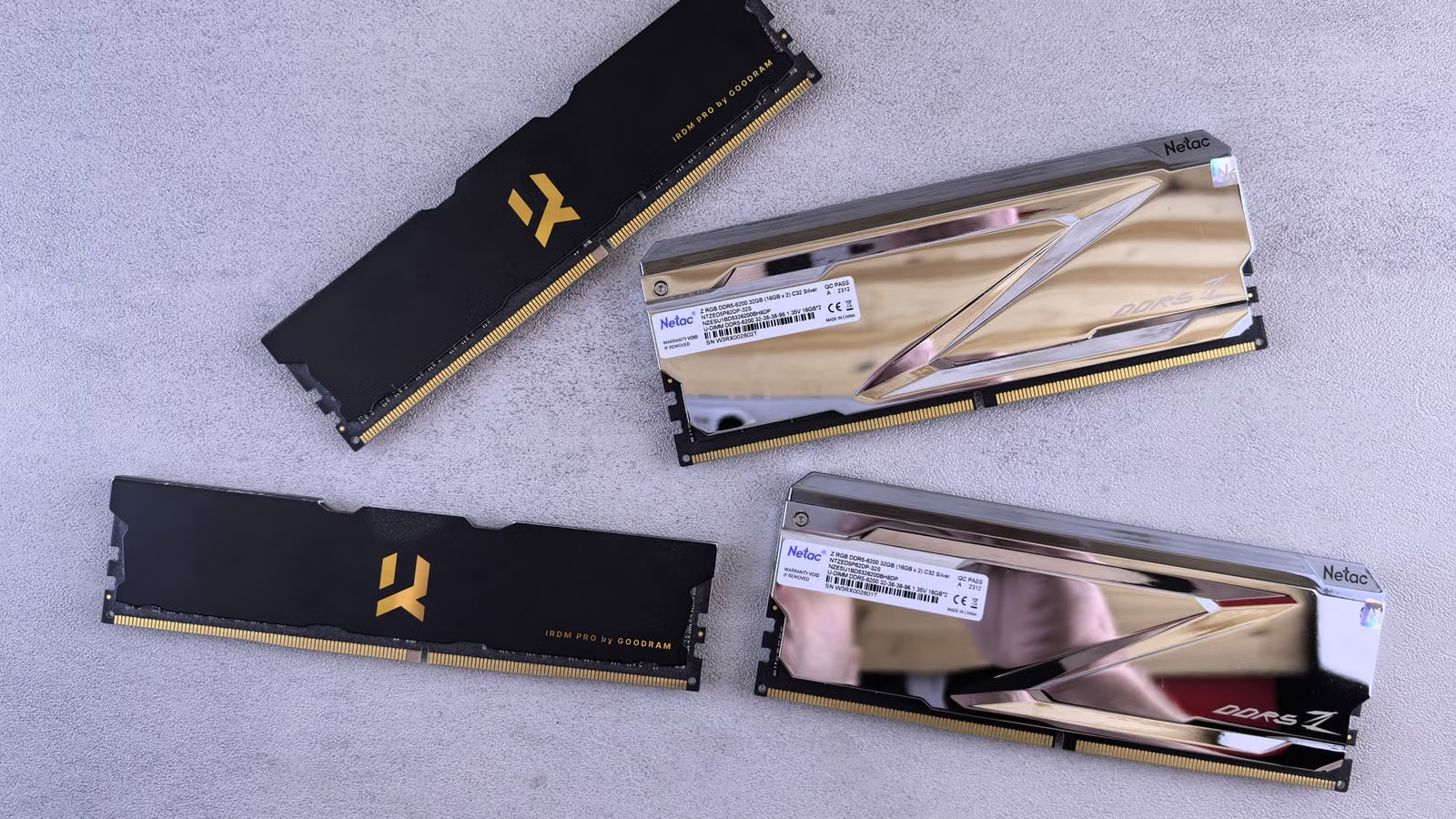
When you search for MU vs WDC, the real question is usually not which stock is stronger in the short term, but which AI infrastructure logic is more sustainable. MU represents HBM, DRAM, NAND, and data center SSDs, solving memory bandwidth, capacity, and high-speed access problems during AI computing. WDC represents nearline HDDs and high-capacity hard drives, solving long-term storage needs after AI training, inference, logs, backups, and archival data accumulate.
International market users often search around these topics:
| Search Intent | Common Search Term | What Users Actually Want to Know |
|---|---|---|
| AI storage stocks | Micron vs Western Digital AI stock | Which company benefits more from AI infrastructure |
| HBM demand | MU HBM AI memory revenue | Whether Micron’s HBM is becoming a core growth driver |
| Data center hard drives | WDC AI data center HDD demand | Whether AI will continue to drive HDD demand |
| Storage cycle | HBM vs nearline HDD AI infrastructure | Which is stronger: memory price increases or tight HDD supply |
| Cloud customer procurement | Western Digital cloud HDD sold out | Whether WDC has stronger order visibility |
The key difference is that MU is closer to the computing process inside AI servers, while WDC is closer to the data retention layer around AI data centers. When training large models, GPUs and AI accelerators need high-bandwidth, low-latency, high-capacity memory systems. As AI applications scale, they also generate huge amounts of inference logs, user interaction data, training samples, synthetic data, model versions, and backup data. Not all of this data can sit on the highest-performance storage media. Cloud providers need to balance cost across SSDs, HDDs, object storage, and archival systems.
You can first separate the two companies across four dimensions:
| Comparison Dimension | Micron MU | Western Digital WDC |
|---|---|---|
| Core products | HBM, DRAM, NAND, SSD | HDD, nearline HDD, high-capacity hard drives |
| AI position | Compute memory and storage chips | Data center capacity storage |
| Demand source | AI GPUs, servers, cloud, devices | Cloud providers, AI data centers, long-term archives |
| Key indicators | HBM supply, DRAM ASP, data center revenue | Exabyte shipments, HDD ASP, long-term agreements |
| Cycle type | Memory chip cycle | Hard drive capacity cycle |
Based on public information, Micron’s high-bandwidth memory is clearly positioned for next-generation AI systems, high-performance computing, and professional visualization. Western Digital, in its WD fiscal third quarter 2026 results, emphasized that AI training, inference, agentic AI, and physical AI all generate data that needs to be stored persistently and at low cost. One solves the “memory wall,” while the other solves the “capacity wall.” That is the foundation of the MU vs WDC comparison.
Summary: MU and WDC both sit in the AI storage infrastructure beneficiary chain, but their positions are different. MU is more directly inside AI servers, with deeper links to HBM, DRAM, NAND, data center SSDs, GPU memory, and AI accelerators. WDC is closer to the cloud data center capacity foundation, benefiting from nearline HDDs, data lakes, backups, archives, and low-cost per-TB storage demand. To judge which logic is stronger, you must first decide whether you are focusing on “AI computing faster” or “AI storing more data.”
Micron MU: The AI Memory Logic Is More Direct, Centered on HBM, DRAM, NAND, and Data Center SSDs
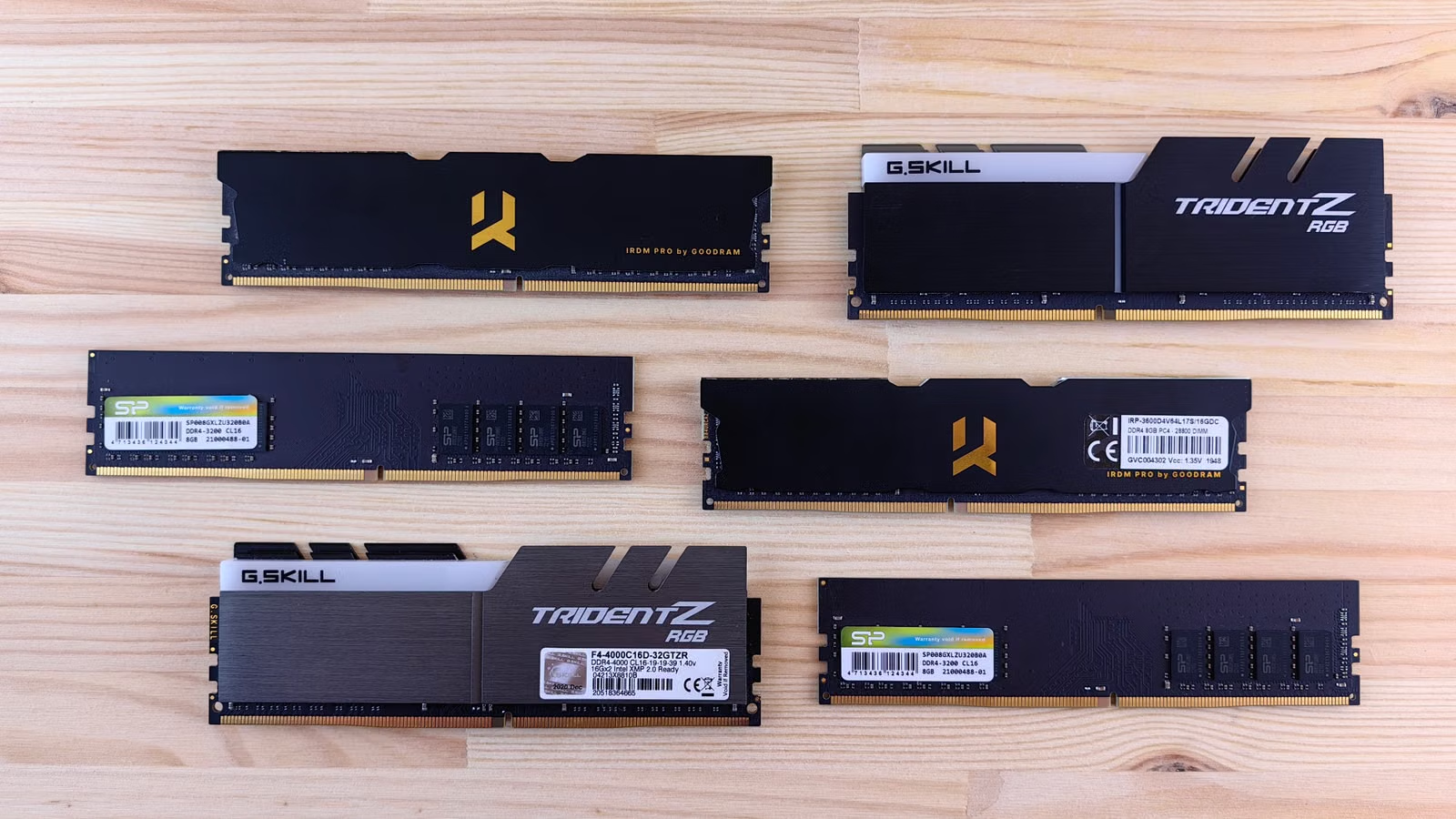
If your criterion is “which company benefits more directly from AI compute servers,” MU has the stronger logic. AI GPUs, AI ASICs, training clusters, and high-performance inference all rely on HBM, DRAM, NAND, and data center SSDs. Micron is no longer just a company tied to the traditional PC memory cycle. It has become more clearly positioned in the core supply layer of AI memory and data center storage chips.
HBM is MU’s strongest AI narrative entry point. Large-model training and high-performance inference face the memory wall: compute chips are powerful, but data cannot be fed to GPUs quickly enough. HBM uses 3D stacking, wide interfaces, and advanced packaging to improve bandwidth and energy efficiency, making it an important companion technology for AI accelerators. Micron’s disclosed Micron HBM4 has entered high-volume production in 36GB 12H form, with more than 2.8TB/s bandwidth per stack and significant bandwidth and energy-efficiency improvements compared with HBM3E.
Micron’s financial data also shows that AI demand has entered its reported results. The company’s fiscal 2026 third-quarter revenue reached USD 41.456 billion, higher than USD 23.860 billion in the previous quarter and USD 9.301 billion in the same period last year. GAAP gross margin reached 84.6%, significantly higher than a year earlier. By business segment, Cloud Memory Business Unit revenue reached USD 13.769 billion, while Core Data Center Business Unit revenue reached USD 11.524 billion, showing that cloud memory and core data center demand have become major growth engines.
| MU Logic Point | Benefit Path | Metrics to Track |
|---|---|---|
| HBM | Memory bandwidth for AI GPUs and AI ASICs | HBM supply, customer qualification, ASP |
| DRAM | Server and AI inference memory demand | DRAM pricing, bit demand |
| NAND | Data center SSD and AI storage demand | NAND ASP, SSD revenue |
| Data center SSD | Training data, cache, hot data access | Data center SSD growth |
| Long-term agreements | Reduce traditional cycle volatility | Customer commitments, price floors |
Another part of MU’s business that may be underestimated is data center SSDs. Micron’s 245TB Micron 6600 ION is designed for AI, cloud, enterprise, and hyperscale data center workloads. This shows that MU is not only an HBM supplier, but also covers the high-performance storage layer in AI data access. For AI training and inference, hot data, vector databases, caches, model loading, and intermediate results may all increase SSD demand.
However, MU’s risks are also concentrated. HBM capacity, yield, customer qualification, and pricing are key variables. Rising DRAM and NAND prices can lift profits, but if the cycle reverses, gross margins may be compressed quickly. Reuters reported that Micron has USD 22 billion in customer commitments and multiple strategic customer agreements, which can improve visibility, but may also cause the market to price in higher expectations earlier. If supply increases or customer procurement schedules change, valuation pressure may become more obvious.
Summary: MU is the more direct AI memory stock, with its logic centered on HBM, DRAM, NAND, and data center SSDs directly connected to AI servers. It solves memory bandwidth, memory capacity, and high-speed data access problems during AI computing, so it is more easily grouped by the market with Nvidia, AI GPUs, HBM, and the data center memory supply chain. The risk is that the memory industry is highly cyclical, capital expenditure is high, and market expectations are already elevated. If you are bullish on the AI memory bottleneck, MU has the more direct logic; if you are worried that the memory price cycle is overheating, you need to pay more attention to price declines and supply expansion risks.
Western Digital WDC: The Data Center HDD Logic Is More of a “Capacity Foundation,” Not a Compute Bottleneck
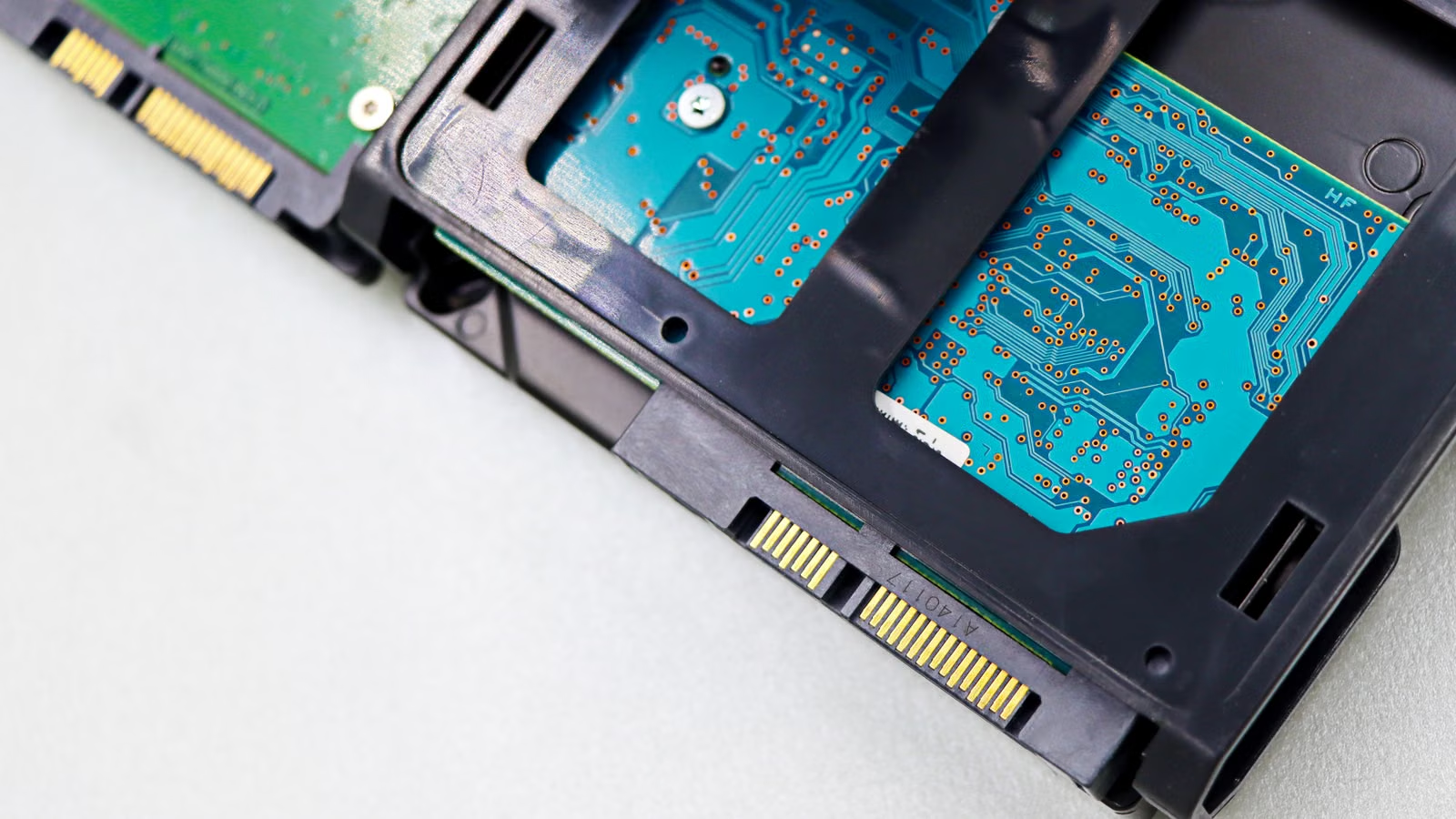
If your criterion is “where does AI-generated data ultimately get stored,” WDC has a strong logic. AI training data, inference logs, model versions, backups, archives, data lakes, and synthetic data all require low-cost, large-capacity storage. High-capacity HDDs do not solve GPU memory bottlenecks, but they remain an important tool for cloud providers to control long-term cost per TB.
WDC’s positioning is now clearer than in the past. Western Digital completed its Flash business separation in February 2025, making SanDisk an independent company and allowing WDC to focus more directly on HDDs. In other words, when analyzing WDC today, it is more appropriate to place it alongside Seagate, nearline HDDs, high-capacity hard drives, hyperscale cloud storage, and AI data infrastructure, rather than continuing to treat it as a mixed NAND/SSD storage company.
Why do AI data centers still need HDDs? The reason is simple: not all data needs SSD-level speed. Training samples, historical logs, model versions, backups, archives, object storage, and cold or warm data care more about capacity cost, reliability, energy consumption, and long-term scalability. In its fiscal third quarter 2026, WDC reported revenue of USD 3.337 billion, up 45% year over year. GAAP gross margin was 50.2%, and non-GAAP gross margin was 50.5%, reflecting improved high-capacity HDD supply-demand conditions and a strong pricing environment.
| WDC Logic Point | Benefit Path | Metrics to Track |
|---|---|---|
| Nearline HDD | Cloud data center capacity expansion | Exabyte shipments, ASP |
| High-capacity hard drives | Higher drive capacity, better TCO | 30TB, 40TB, 100TB+ roadmap |
| AI data accumulation | Training, inference, logs, archives | Cloud customer procurement pace |
| Long-term agreements | Better order visibility | Contract duration, pricing, customer concentration |
| Tight HDD supply | Supports pricing and gross margin | Utilization, lead times |
WDC’s technology roadmap is also moving around higher capacity. In Western Digital Accelerates Storage Innovation for AI Era, the company said its 40TB UltraSMR ePMR HDD had entered qualification with two hyperscale customers and was planned for volume production in the second half of 2026. HAMR HDDs are also in customer qualification, with ramp expected to begin in 2027. For cloud providers, higher areal density can improve rack space, energy consumption, physical footprint, and operating costs.
However, WDC’s logic is not that “AI computes faster,” but that “AI generates more data.” That means it depends more on long-term cloud customer procurement, HDD ASP, supply discipline, and execution of high-capacity roadmaps. If cloud providers slow capital expenditure, or if SSD prices fall too quickly in certain capacity tiers, WDC’s orders and gross margins may come under pressure.
Summary: WDC’s AI logic is valid, but it is not an AI compute bottleneck logic. It is an AI data capacity foundation logic. WDC benefits more from nearline HDDs, high-capacity hard drives, cloud customer long-term procurement, AI data lakes, backups, and archives. After the SanDisk separation, WDC’s investment narrative has become more focused and easier to value around tight HDD supply and capacity upgrades. Its weakness is that it is farther away from the GPU and HBM core theme, and its growth pace depends more on large cloud customer procurement and execution of the HDD technology roadmap.
MU vs WDC Core Comparison: One Solves the Memory Wall, the Other Solves the Capacity Wall
The biggest difference between MU and WDC is this: MU solves the memory wall during AI computation, while WDC solves the capacity wall after AI data grows. The former is closer to GPUs, AI accelerators, HBM, and server memory, with stronger earnings elasticity. The latter is closer to cloud data centers, long-term data retention, and low-cost capacity storage, with a logic more tied to infrastructure expansion.
From the perspective of AI training, MU is more direct. Training large models requires HBM, DDR5, CXL memory, data center SSDs, and high-speed data paths. Memory bandwidth directly affects GPU utilization. WDC also has value in the training process, but mainly through storing training samples, data lakes, and archived data, which is farther from the compute core.
From the perspective of AI inference, MU still ranks ahead, but WDC’s relevance increases. Inference systems need more server memory, SSD cache, model loading, and response data processing. At the same time, inference requests, user interactions, logs, monitoring data, and synthetic data continue to accumulate, creating cloud storage and HDD capacity demand.
From the perspective of long-term data retention, WDC is stronger. Not all AI data needs to sit on high-performance SSDs. Cold data, warm data, backups, compliance retention, and object storage depend more on low-cost capacity. The value of HDDs is not low latency, but cost efficiency for large-scale data retention.
| Comparison Dimension | MU Logic | WDC Logic | Stronger Side |
|---|---|---|---|
| Direct AI training relevance | High | Medium to low | MU |
| AI inference relevance | High | Medium | MU slightly stronger |
| Long-term data retention | Medium | High | WDC |
| Revenue elasticity | High | Medium to high | MU |
| Order visibility | Medium to high | High | Depends on long-term agreements |
| Cycle volatility | High | Medium to high | WDC relatively lower |
| Valuation sensitivity | High | Medium to high | MU more sensitive |
Price elasticity is also different. MU is more affected by DRAM, HBM, and NAND ASP. Price increases can quickly flow into gross margins and earnings expectations; but when prices fall, profit pressure is also more direct. WDC’s price elasticity comes from tight high-capacity HDD supply, cloud customer locked-in demand, capacity roadmap upgrades, and HDD ASP improvement. The pace is usually less intense than memory chips, but order visibility may be stronger.
In terms of market narrative, MU looks more like an AI core component company and is more easily tied to Nvidia, AI servers, HBM, and GPU memory. WDC looks more like an AI data infrastructure company, tied to cloud storage, nearline HDDs, hyperscalers, and AI data infrastructure. Both companies are affected by AI, but the market does not assign them the same valuation logic.
Summary: MU is stronger in the “memory wall,” while WDC is stronger in the “capacity wall.” If you are betting that AI training and inference will continue to drive high-bandwidth memory, server DRAM, and data center SSDs, MU has higher direct exposure. If you are betting that AI applications will generate massive data accumulation, backups, archives, and cloud storage capacity expansion, WDC has the cleaner logic. The two are not simple substitutes. They sit at opposite ends of the AI data chain: MU handles memory and storage when data is being computed at high speed, while WDC handles low-cost capacity when data is being stored for the long term.
Financial and Risk Framework: Do Not Look Only at the AI Theme; Watch Revenue Quality, Gross Margin, and Cycle Position
MU and WDC both benefit from AI infrastructure, but you should not look only at the theme. MU currently looks more like a high-elasticity memory cycle upturn company, while WDC looks more like a high-capacity HDD company under tight supply. When comparing the two, you need to watch revenue growth, gross margin, free cash flow, capital expenditure, long-term agreements, customer concentration, and the degree to which market expectations are already priced in.
For MU, the key variables to track include:
- The share and growth rate of data center revenue;
- Whether HBM supply remains tight;
- HBM4 and HBM4E customer qualification and production ramp;
- Whether DRAM and NAND ASP continue to rise;
- Whether data center SSDs continue to grow;
- Whether capex creates future supply pressure;
- Whether the customer base is overly concentrated in AI GPU and cloud customers.
For WDC, the key variables to track include:
- The share of cloud and high-capacity HDD revenue;
- Exabyte shipments, HDD ASP, and unit cost;
- Pricing, volume, and customer quality of long-term procurement agreements;
- Whether gross margin can remain in a high range;
- Balance sheet, cash flow, and shareholder returns after the separation;
- Whether ePMR, UltraSMR, and HAMR roadmaps execute as planned.
| Risk Type | MU | WDC |
|---|---|---|
| Cycle reversal | DRAM/NAND price decline | HDD ASP and order slowdown |
| Capital expenditure | High capex may create future supply | HDD capacity expansion and technology migration |
| Customer concentration | AI chip and cloud customers | Hyperscaler cloud customers |
| Technology substitution | HBM competition, alternative memory | SSDs, tape, object storage architecture |
| Valuation pressure | High-growth expectations decline | Long-term agreements underdeliver |
If you track volatile AI storage stocks such as MU and WDC, you should also pay attention to actual trading costs in addition to fundamentals. U.S. stock trading costs usually include more than commissions; they may also include platform fees, external institution fees, transaction activity fees, and order execution-related costs. Biya supports multi-asset trading across U.S. stocks, Hong Kong stocks, and digital assets. Under U.S. stock trading fees, Biya charges USD 0 commission for U.S. stock trades, while platform fees, external institution fees, and other charges are subject to the fee center and order-page display. Availability of related services depends on the user’s location, identity verification result, platform rules, and applicable laws and regulations.
This is especially important for semiconductor trading. MU and WDC can both experience large price swings around earnings, supply-demand news, cloud provider capex, pricing cycles, and analyst expectation changes. The more frequently you trade, the more you need to evaluate fee structure, order types, and slippage in advance.
Summary: The MU vs WDC comparison should not rely only on AI hype. MU’s strength lies in high elasticity and more direct AI memory exposure, while its risks are the memory price cycle, capex, and elevated expectations. WDC’s strength lies in tight HDD supply, cloud customer demand, and high-capacity roadmaps, while its risks are slower cloud procurement, delayed technology execution, and HDD price declines. To judge which logic is stronger, you ultimately need to look at revenue quality, gross margin, free cash flow, order visibility, and cycle position, not just the words “AI theme.”
Final Judgment: Is AI Memory Logic Stronger, or Is Data Center HDD Logic Stronger?
If you only compare direct exposure to the AI theme, MU’s AI memory logic is stronger. If you compare long-term data capacity growth, WDC’s data center HDD logic is more stable. A more accurate conclusion is not simply choosing one over the other. MU is more like a high-elasticity AI memory core stock, while WDC is more like an AI data infrastructure capacity stock.
When is MU more worth watching?
| Investment Assumption | Meaning for MU |
|---|---|
| HBM remains structurally tight | Directly benefits from the AI memory bottleneck |
| AI GPUs and AI ASICs continue to expand | Server memory and HBM demand rises |
| DRAM and NAND prices increase | Profit elasticity becomes stronger |
| Data center SSDs grow | NAND and enterprise storage demand improves |
| You can accept high volatility | Better fit for a high-elasticity AI supply-chain view |
When is WDC more worth watching?
| Investment Assumption | Meaning for WDC |
|---|---|
| AI data continues to accumulate | HDDs absorb long-term capacity demand |
| Cloud customers continue to expand | Nearline HDD orders receive stronger support |
| Cost per TB remains critical | High-capacity HDDs remain competitive |
| Long-term agreements improve visibility | Revenue volatility may be relatively more manageable |
| You want to avoid some HBM competition | Participate in the AI data center capacity chain |
From a portfolio perspective, MU and WDC are not complete substitutes. They sit at opposite ends of the AI data chain. MU represents the high-speed memory and high-performance storage needed when data is being computed. WDC represents the low-cost capacity needed when data is being stored. The larger AI infrastructure becomes, the more both may benefit, but the timing differs: MU may reflect training cluster construction and HBM shortages earlier, while WDC may reflect data accumulation, cloud storage, and long-term capacity procurement over a longer period.
The final judgment can be summarized as follows:
| Evaluation Criteria | Stronger Company | Reason |
|---|---|---|
| AI theme purity | MU | Closer to HBM, AI GPUs, and server memory |
| Revenue elasticity | MU | DRAM, HBM, and NAND price increases transmit faster |
| Long-term capacity demand | WDC | AI data retention drives nearline HDD demand |
| Order visibility | WDC | Cloud customer long-term agreements and capacity lock-ins matter more |
| Cycle volatility | WDC relatively lower | Less extreme than the memory price cycle |
| Valuation sensitivity | MU higher | Market expectations around HBM are more concentrated |
If you want to continue tracking AI storage-chain U.S. stocks such as MU, WDC, STX, SNDK, NVDA, and AVGO, you can put earnings reports, orders, ASP, gross margin, capex, and valuation volatility into one watchlist. Through U.S. stock information search, you can first check basic information on related U.S.-listed stocks, then cross-check company announcements and industry data. If the relevant services are available in your region, you can also download App to further review tradable assets, order displays, and fee details. The above content only introduces public market information, supply-chain relationships, and fee structures. It does not constitute investment advice. Semiconductor and storage stocks can be highly volatile, and before trading, you should fully understand company fundamentals, fee structures, order types, and risks.
Summary: MU has the more direct and higher-elasticity logic, making it better suited to the “AI memory bottleneck” framework. WDC has a logic more tied to long-term capacity demand, making it better suited to the “AI data center hard drive foundation” framework. If you only compare AI theme purity, MU is stronger. If you compare long-term data accumulation and low-cost capacity storage, WDC also has an independent logic. A more balanced interpretation is to view MU as a key memory and storage chip company when AI data is being computed at high speed, and WDC as a capacity infrastructure company when AI data is being stored for the long term.
FAQ
Does Micron MU benefit more directly from AI than Western Digital WDC?
Yes. From the perspective of AI compute memory, MU benefits more directly from AI than WDC. MU’s HBM, DRAM, NAND, and data center SSDs are directly related to AI training, inference, GPU memory, and server memory demand. WDC also benefits from AI, but mainly through data retention, cloud storage capacity, and nearline HDD demand, not the GPU memory bottleneck itself.
Is Western Digital WDC’s AI hard drive logic valid?
Yes, but WDC’s AI hard drive logic is not a compute logic; it is a data retention logic. AI training data, inference logs, model versions, backups, archives, and data lakes all require large-capacity, low-cost storage. High-capacity HDDs still have an advantage in cost per TB, so WDC is better analyzed under the framework of AI data center capacity foundations and cloud storage expansion.
How is MU’s HBM business different from ordinary DRAM?
HBM is more focused on high bandwidth, higher value, and AI accelerator support, while ordinary DRAM is more general-purpose. HBM uses multi-layer stacking and advanced packaging to provide higher bandwidth and better energy efficiency for GPUs, AI ASICs, and high-performance computing. Ordinary DRAM is more widely used in servers, PCs, smartphones, and general computing. Both are memory products, but their application positions, pricing elasticity, and technical barriers are different.
Is WDC still a memory chip stock after spinning off SanDisk?
After spinning off SanDisk, WDC is closer to an HDD storage infrastructure company rather than a memory chip stock. The Flash and NAND business is now handled independently by SanDisk. WDC should mainly be analyzed through high-capacity HDDs, nearline HDDs, cloud customer procurement, exabyte shipments, HDD ASP, and the HAMR/ePMR roadmap. It remains part of the storage supply chain, but it is not the main NAND chip theme.
How should ordinary investors compare MU and WDC valuation risks?
Ordinary investors can view MU as a high-elasticity memory cycle stock and WDC as a capacity storage cycle stock. MU should be evaluated through HBM supply, DRAM/NAND pricing, data center revenue, and capex. WDC should be evaluated through cloud customer long-term agreements, HDD ASP, exabyte shipments, and gross margin. Both companies may be affected by AI capex and changes in valuation expectations, so it is not enough to look only at the concept label.
Will AI data centers replace HDDs with SSDs?
AI data centers will not simply replace all HDDs with SSDs. Hot data, high-performance access, model loading, and caching rely more on SSDs, but large-scale low-cost capacity storage still requires HDDs. Data lakes, backups, archives, historical logs, and cold or warm data care more about cost per TB, capacity density, and long-term retention. SSDs and HDDs are better understood as tiered storage, not complete substitutes.
*This article is provided for general information purposes and does not constitute legal, tax or other professional advice from BiyaPay or its subsidiaries and its affiliates, and it is not intended as a substitute for obtaining advice from a financial advisor or any other professional.
We make no representations, warranties or warranties, express or implied, as to the accuracy, completeness or timeliness of the contents of this publication.
Related Blogs of

International Money Transfers: Methods, Requirements, and Costs


Online Bank-to-Bank Transfers: Account Linking, Steps, and Limits


Wire Transfer Requirements: Sender and Beneficiary Details Checklist



Choose Country or Region to Read Local Blog
 Australia
 Austria
 Belgium
 Canada
 Cyprus
 Czech Republic
 Denmark
 Estonia
 Finland
 France
 Germany
 Greece
 Hong Kong
 India
India Indonesia
 Ireland
 Italy
Italy Japan
Japan Latvia
 Lithuania
 Luxembourg
 Malaysia
 Malta
Malta Morocco
 Nepal
Nepal Netherlands
 New Zealand
 Norway
 Pakistan
 Philippines
 Poland
 Portugal
 Romania
 Singapore
 Slovakia
 Slovenia
 South Africa
 South Korea
 Spain
Spain Sweden
 Thailand
 United States
 Turkey
 United Arab Emirates
 United Kingdom
 Vietnam