Why Are Enterprise SSDs Gaining Attention in AI Data Centers? Hot Data, Training Data, and High-Speed Read/Write Demand





Enterprise SSDs are gaining attention in AI data centers not simply because AI needs more storage capacity, but because training, inference, data preprocessing, vector retrieval, and cache tiering all require lower latency, higher throughput, and more stable random read/write performance. If you want to understand why enterprise SSDs matter, the key is to look at their role between HBM, DRAM, HDDs, and object storage. Enterprise SSDs are not GPU-attached memory, and they are not the cheapest layer for cold data. They are the high-speed storage layer that supports hot data, training datasets, checkpointing, and high-concurrency access.
Key Takeaways
- AI data centers need high-speed storage to reduce GPU idle time.
- Enterprise SSDs are better suited for hot data, caching, and training datasets.
- HDDs still matter for cold data and will not be fully replaced by SSDs.
- NVMe, PCIe 5.0, QLC, and TLC are key technical terms to watch.
- Enterprise SSD demand can affect NAND pricing and the storage supply chain.
- Investors should separate real workload demand from memory-cycle expectations.
Why Do AI Data Centers Need Enterprise SSDs?
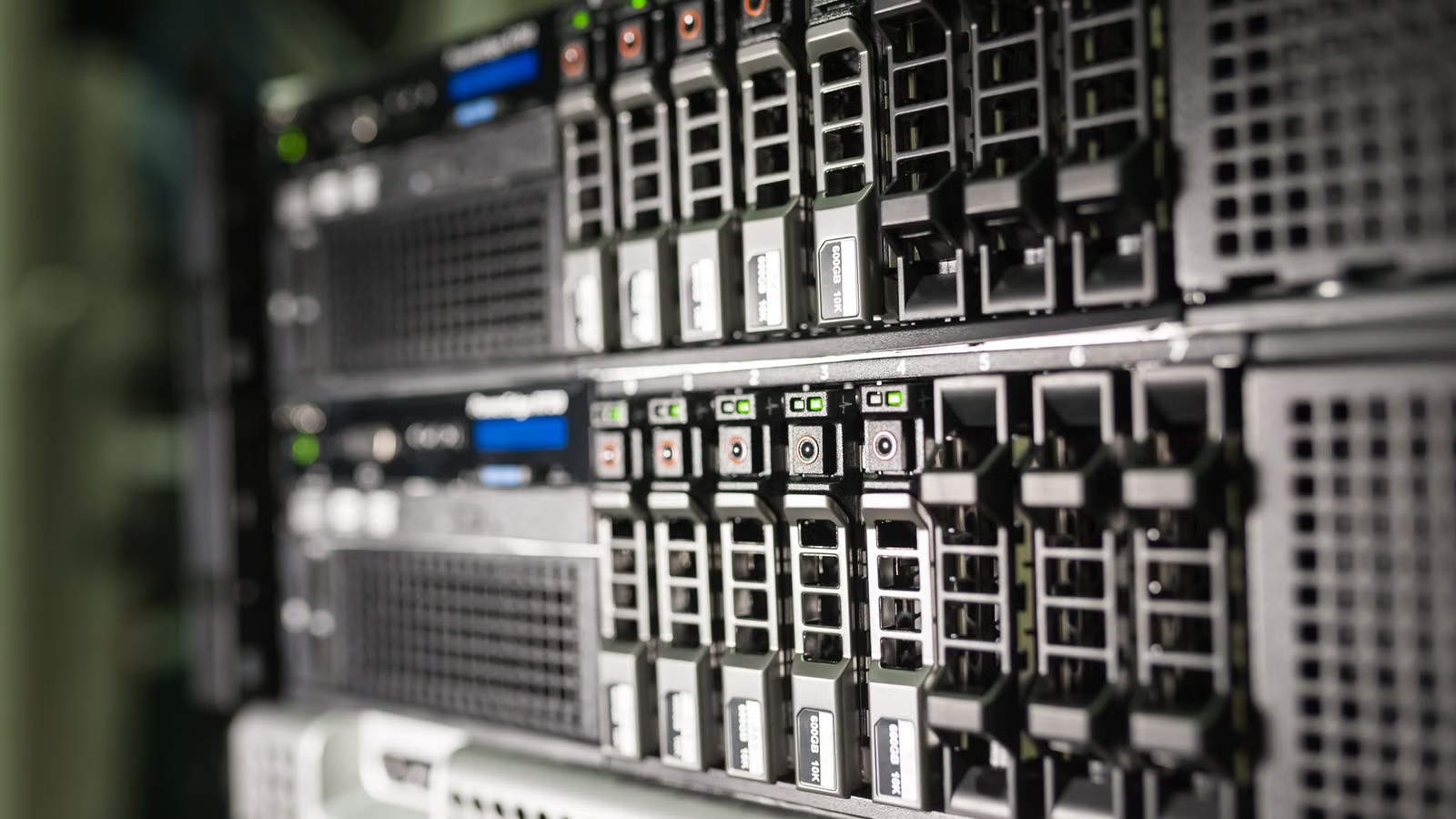
AI data centers need enterprise SSDs because the efficiency of a GPU cluster depends not only on compute power, but also on whether data can continuously, reliably, and quickly reach the compute layer. Large-model training repeatedly reads datasets and writes checkpoints, while inference systems frequently access vector indexes, caches, logs, and user context. If the storage layer cannot keep up, expensive GPUs may spend more time waiting for data, which can lengthen both model training cycles and inference response times.
In traditional data centers, storage is often discussed around databases, virtualization, backup, and file systems. In AI data centers, storage increasingly affects compute utilization directly. Multimodal training, recommendation models, long-context inference, and AI agent services need to process text, images, video, features, vectors, and state data at scale. As AI workloads expand, I/O bottlenecks can become a system-level constraint rather than a secondary infrastructure issue.
From an architecture perspective, enterprise SSDs usually sit between DRAM/HBM and HDD/object storage. HBM provides near-GPU bandwidth, DRAM supports host memory operations, HDDs and object storage provide low-cost large-scale capacity, while enterprise SSDs place frequently accessed data closer to compute. In NVIDIA’s DGX SuperPOD storage architecture, local NVMe storage can be used for caching or staging data, allowing data to be cached after the first read and reducing repeated reads from remote storage.
| Storage Layer | Typical Medium | Core Advantage | AI Data Center Use Case |
|---|---|---|---|
| GPU-near memory | HBM | Extremely high bandwidth and low latency | Model computation and tensor operations |
| Host memory | DRAM | Low latency and moderate capacity | Preprocessing, caching, scheduling |
| High-speed storage | Enterprise SSD | High throughput, low latency, high IOPS | Hot data, dataset caching, checkpointing |
| Capacity storage | HDD | Low cost per TB | Cold data, archive, backup |
| Distributed storage | Object storage / file system | Elastic scale and shared access | Data lakes, long-term storage, shared datasets |
This is also where enterprise SSDs differ from consumer SSDs. Data centers do not only care about peak speed. They care about consistent latency, write endurance, power-loss protection, error correction, manageability, and long-term service stability. The NVMe technology standard was designed for low-latency, scalable PCIe SSD access, which is why NVMe-based enterprise SSDs are well suited for modern server workloads with high concurrency.
Summary: Enterprise SSDs are gaining attention in AI data centers because AI workloads have made data delivery almost as important as compute capacity. GPUs, HBM, and high-speed networking solve compute and communication problems, while enterprise SSDs solve the high-speed read/write problem for hot data, training datasets, cache layers, and checkpoint files. Enterprise SSDs do not replace every storage medium. Instead, they serve as a fast and stable data buffer inside a tiered architecture. As training datasets grow, inference retrieval becomes more frequent, and AI agents store more context and task state, the role of enterprise SSDs will likely become more important.
How Do Hot, Warm, and Cold Data Decide the SSD-HDD Split?
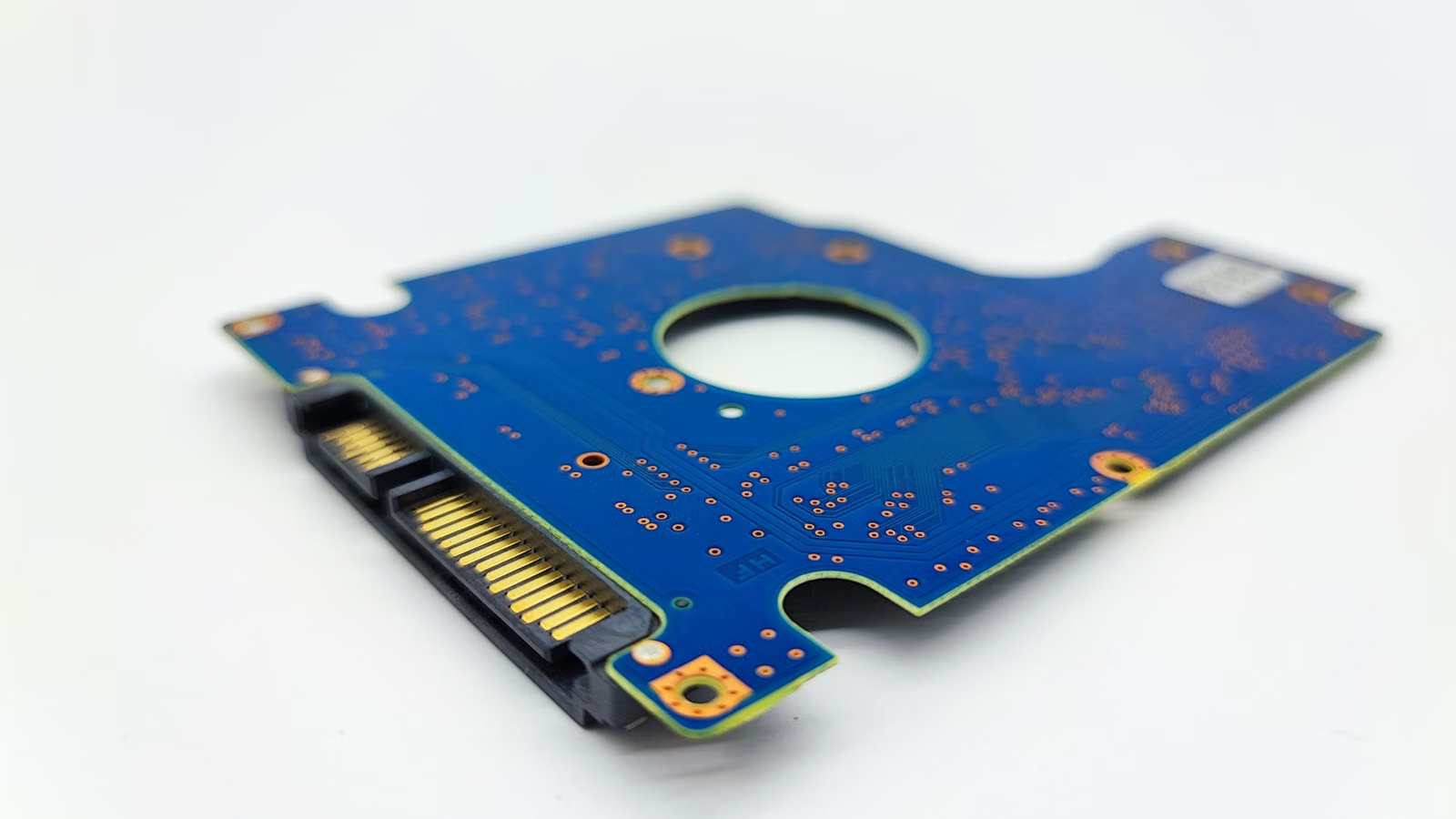
AI data centers will not simply replace all HDDs with SSDs. Instead, they divide storage by hot, warm, and cold data. Hot data requires frequent access, low latency, and high concurrency, making it better suited for enterprise SSDs. Cold data is accessed less often and is usually better served by HDDs, tape, or low-cost object storage. Warm data sits between the two and may be handled by QLC SSDs, capacity-oriented NVMe SSDs, or distributed storage. Whether this split is designed well directly affects cost, performance, and energy efficiency.
Hot data usually includes training samples that are repeatedly read during model training, vector indexes used in inference systems, popular features in recommendation models, user-session caches, frequently retrieved document chunks in RAG systems, and short-term logs for model services. These datasets share several features: high access frequency, strong latency sensitivity, many concurrent requests, and direct impact on business performance. If these datasets sit entirely on slower remote storage, GPU utilization and inference responsiveness can suffer.
You can judge whether a dataset is suitable for enterprise SSDs using several criteria:
- Access frequency: Is the data repeatedly read during training or inference?
- Latency sensitivity: Does slower access reduce GPU utilization or user response speed?
- Concurrency level: Is the data accessed by many nodes or tasks at the same time?
- Write pattern: Does the workload create continuous small writes or periodic large writes?
- Business impact: Does slow access create compute waste or user-experience issues?
HDDs still have an important role. Western Digital notes that SSDs can still carry a 5x–10x dollar-per-TB cost premium compared with HDDs. For cloud providers and AI data centers, original training data, historical logs, archives, low-frequency backups, and compliance records still need low-cost high-capacity storage. As long as cold data keeps growing, HDDs will remain relevant in the capacity layer.
QLC SSDs are becoming a compromise between hot and cold storage. Solidigm argues that QLC 3D NAND SSDs can fill the gap between slower HDDs and more expensive TLC SSDs, especially for read-intensive workloads such as machine learning, AI, CDN, analytics, and big data. In other words, QLC SSDs may not be suitable for every write-heavy training workload, but they can be effective for warm-to-hot data that needs higher capacity and better performance than HDDs.
| Data Type | Access Pattern | Better Storage Choice | Typical AI Scenario |
|---|---|---|---|
| Extremely hot data | Ultra-frequent, ultra-low latency | HBM / DRAM | Model computation, real-time cache |
| Hot data | Frequent, concurrent, latency-sensitive | TLC enterprise SSD | Training cache, vector index |
| Warm data | Medium-high access frequency, larger capacity | QLC enterprise SSD | Data lake acceleration, inference retrieval |
| Cold data | Low-frequency, long-term retention | HDD / object storage | Raw data, archive, backup |
| Compliance retention | Very low access, strong reliability | Tape / archive storage | Audit and historical records |
Summary: Enterprise SSD growth is not a simple story of “SSDs replacing HDDs.” The more realistic trend is more refined storage tiering in AI data centers. HDDs continue to handle low-cost cold data and long-term capacity. QLC SSDs take on read-intensive warm data. TLC or high-performance NVMe SSDs handle hot data and critical I/O paths. DRAM and HBM process the most latency-sensitive data close to compute. The real shift is that storage media are being reassigned according to access frequency, latency needs, write intensity, and cost constraints.
How Do Training Data, Checkpointing, and Inference Retrieval Drive SSD Demand?
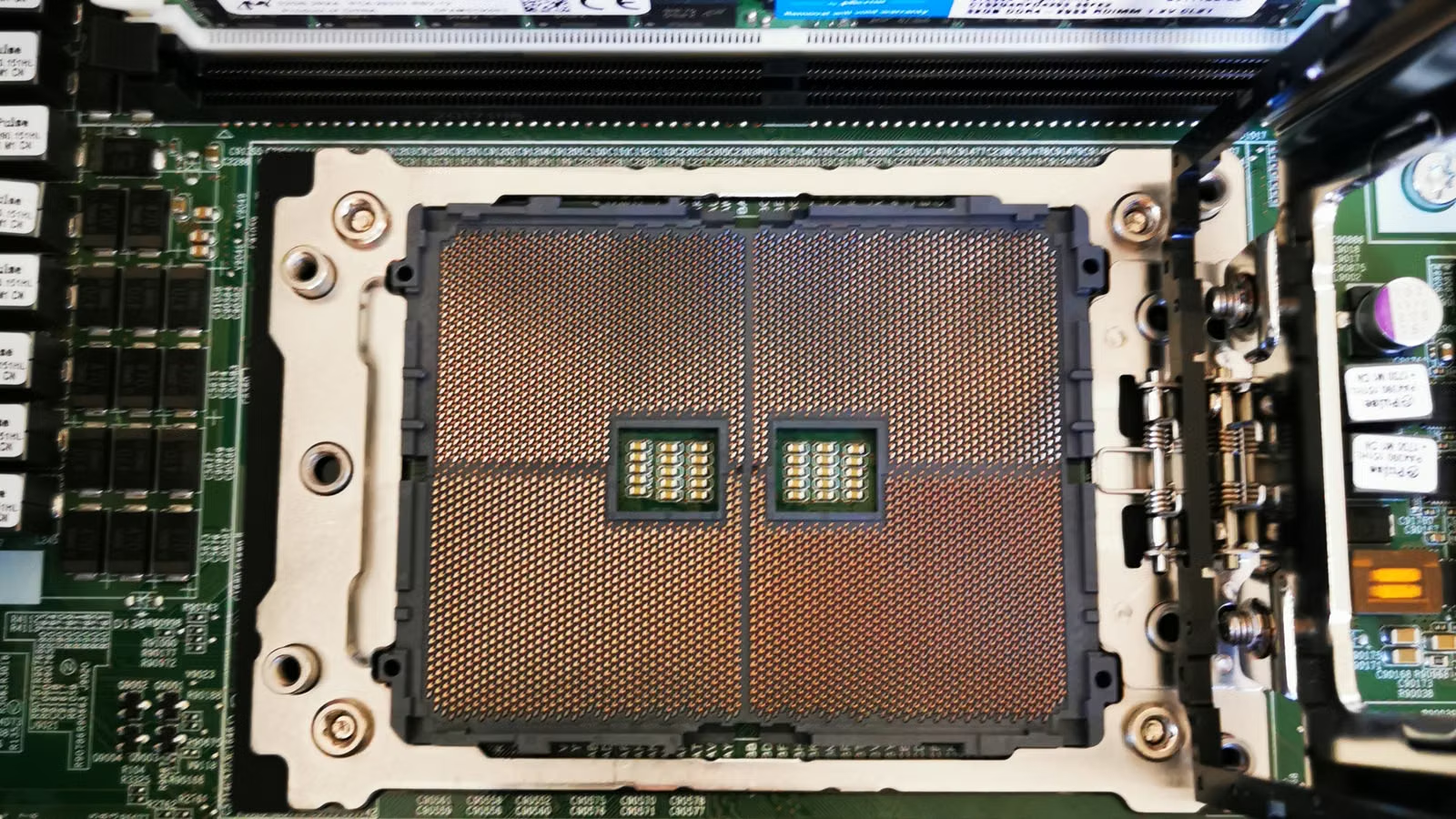
Training and inference both drive enterprise SSD demand, but in different ways. Training emphasizes large-scale data reads, preprocessing, shuffling, batch loading, and checkpoint writes. Inference emphasizes vector databases, RAG retrieval, hot caches, user context, and AI agent state management. The former requires throughput and write stability; the latter requires random reads, low latency, and high-concurrency response.
During training, models do not read a dataset once and stop. Across multiple epochs or continuous training cycles, images, video, audio, text, and structured features may be cleaned, filtered, augmented, and organized into batches again and again. If any part of the data loading pipeline slows down, GPU utilization may decline. NVIDIA’s DGX SuperPOD storage architecture emphasizes that different models and datasets create different I/O requirements, and storage performance can affect training efficiency.
Checkpointing is another important use case. Large-model training is long-running and expensive, so systems periodically save model weights, optimizer states, and training progress. If the cluster fails, checkpoints reduce the cost of restarting training. However, checkpoint writes can be large and bursty, and they may overlap with training reads. This means enterprise SSDs must be evaluated on write endurance, consistent latency, and QoS, not just headline sequential read speed.
Key enterprise SSD metrics include:
- Sequential read throughput: affects large dataset loading.
- Random read IOPS: affects small files, vector indexes, and feature access.
- Write endurance, DWPD, and TBW: affect long-running training and logging reliability.
- QoS and latency consistency: affect multi-tenant systems and inference stability.
- PLP, or power-loss protection: reduces data-corruption risk during abnormal shutdowns.
- Firmware and observability: support failure prediction, lifespan management, and cluster operations.
Inference creates a more subtle kind of storage pressure. Users may only see model-generated responses, but the backend may need to retrieve knowledge-base content, read vector indexes, load user history, cache intermediate outputs, write logs, and preserve task state for AI agents. TrendForce has noted that AI inference workloads are raising requirements for data storage systems, while general-purpose server upgrades and HDD supply constraints can also push some demand toward SSDs.
| AI Stage | Data Access Pattern | SSD Value | Key Metrics |
|---|---|---|---|
| Pretraining | Massive reads and batch loading | Faster data delivery | Throughput, concurrent reads |
| Fine-tuning | Medium-scale, multi-version datasets | Faster experimentation | Random read/write, capacity |
| Checkpointing | Periodic large writes | Lower restart loss | Write stability, DWPD |
| RAG inference | Frequent retrieval, low latency | Faster response | Random reads, QoS |
| AI agents | State storage and context reads | Longer task continuity | Latency, reliability |
Summary: Training data, checkpointing, and inference retrieval raise the value of enterprise SSDs from different directions. Training needs continuous data feeding. Checkpointing requires reliable large writes. Inference retrieval requires low-latency random reads. AI agents add state data and context caching. The key advantage of enterprise SSDs is not a single peak-performance metric, but their ability to maintain stable service quality under high concurrency, long runtime, and complex I/O patterns. As AI shifts from training clusters into large-scale production inference, SSD demand may expand across a broader range of service clusters.
Which Technical Metrics Matter Most for Enterprise SSDs?
To judge whether an enterprise SSD is suitable for AI data centers, you cannot look only at capacity or advertised read speed. Interface generation, protocol efficiency, NAND type, random IOPS, latency consistency, write endurance, form factor, power, and thermal design all matter. AI workloads require a system-level view: SSDs must be evaluated together with GPU servers, networking, file systems, cache strategy, and operations monitoring.
Interface and protocol are the first layer. Compared with older SATA or SAS SSDs, NVMe is better suited for modern SSDs because it was designed for PCIe, low latency, and high-concurrency queues. The NVMe technology specification supports many I/O queues and commands, which helps reduce bottlenecks and improve server application efficiency. For AI data centers, the transition from PCIe 4.0 to PCIe 5.0 is not only about faster single-drive speed; it also affects internal server data paths, JBOF systems, NVMe-oF architectures, and distributed cache design.
NAND type determines the balance between capacity, cost, and endurance. TLC usually offers a better balance of performance and endurance, making it suitable for enterprise workloads with heavier write pressure. QLC has stronger density and cost advantages, making it better suited for read-intensive, capacity-oriented, warm-data scenarios. Micron’s data center SSD portfolio covers high-performance, capacity-oriented, and cloud/AI/enterprise workloads, while Samsung’s data center SSD lineup shows the industry’s direction toward PCIe 5.0, PCIe 6.0, E1.S, E3.S, and higher-capacity products.
Form factor also matters. Traditional U.2 drives are convenient for hot-swapping and broad server compatibility, while E1.S and E3.S, part of the EDSFF family, are more suitable for high-density servers. SNIA’s discussion of EDSFF form factors highlights how E1.S was designed for hyperscale and enterprise compute nodes, improving on M.2 limitations in thermal management, serviceability, and high-capacity scaling. As AI data center rack power density rises, SSDs cannot simply “fit and run”; they must also support cooling, maintenance, signal integrity, and system-level power constraints.
| Metric | Why It Matters | AI Data Center Evaluation |
|---|---|---|
| PCIe generation | Determines single-drive bandwidth ceiling | Whether PCIe 5.0 is becoming the main configuration |
| NVMe protocol | Improves low latency and concurrency | Suitability for multi-queue access |
| TLC / QLC | Affects cost, capacity, and endurance | Tiering by hot or warm data |
| Random IOPS | Affects small files and vector retrieval | 4K random read/write performance |
| DWPD / TBW | Affects training-write lifespan | Checkpoint and logging pressure |
| PLP / QoS | Affects reliability and stability | Production latency consistency |
| E1.S / E3.S | Affects density and thermal design | Server form factor and rack design |
High-end SSD products are increasingly optimized for AI workloads. The Micron 9550 NVMe SSD is positioned as a PCIe Gen5 data center SSD for AI workloads, emphasizing performance and efficiency. Samsung’s PM1763 points toward PCIe 6.0, NVMe 2.1, E1.S/E3.S, and higher sequential read/write speeds. These products show that enterprise SSD competition is shifting from pure capacity upgrades to a combined race in performance, density, power efficiency, security, and AI workload fit.
Summary: Enterprise SSD metrics should be evaluated from a system perspective. PCIe and NVMe define the data path. TLC and QLC determine capacity and endurance trade-offs. E1.S and E3.S affect high-density deployment. QoS, PLP, and firmware management determine production stability. AI data centers do not simply buy the fastest SSD. They choose a balanced mix of performance, cost, lifespan, and power based on training, inference, caching, retrieval, and cold/warm/hot data tiering.
How Will Enterprise SSD Demand Affect the Storage Supply Chain?
Enterprise SSD demand can reshape the profit structure and demand focus of the NAND Flash supply chain. In the past, NAND cycles were heavily influenced by smartphones, PCs, and consumer SSDs. With the rise of AI data centers, enterprise SSDs, high-capacity QLC drives, PCIe 5.0/6.0 high-performance drives, and cloud-service-provider procurement cycles are becoming more important. However, this does not mean storage stocks will rise in a straight line. NAND remains a highly cyclical industry, and pricing, inventory, capacity expansion, and customer bargaining power all affect profitability.
TrendForce’s analysis of the 1Q26 enterprise SSD market showed that rapid adoption of AI agent services and strong CSP procurement pushed revenue for the top five enterprise SSD brands to USD 18.46 billion, up 86.1% quarter over quarter. It also noted that enterprise SSD contract prices rose roughly 80% during the quarter. This indicates that AI data center demand is no longer only a narrative; it is showing up in enterprise SSD revenue, pricing, and supply tightness.
The NAND supply side is also tightening. TrendForce’s 1Q26 NAND Flash industry analysis noted that SanDisk’s data center revenue grew more than 200% quarter over quarter, reflecting its shift toward a higher-value product mix. IDC’s analysis of the memory shortage outlook projected that DRAM and NAND supply growth in 2026 would be below historical levels, at 16% and 17% respectively. If AI demand continues to absorb high-end capacity, price pressure may also spread to consumer electronics, PCs, and general SSDs.
The supply chain can be divided into five beneficiary paths:
| Segment | Representative Direction | Benefit Logic | Key Risk |
|---|---|---|---|
| NAND manufacturers | Samsung, SK hynix/Solidigm, Micron, Kioxia, SanDisk | Higher enterprise SSD ASP and product mix | Capacity expansion, inventory, price reversal |
| Enterprise SSDs | High-performance drives, capacity drives, QLC SSDs | Training and inference procurement growth | Customer concentration, technology transition |
| Controllers and firmware | SSD controllers, FTL, QoS management | Higher complexity in high-end SSDs | Long qualification cycles |
| Server systems | OEM/ODM, JBOF, NVMe-oF | Higher storage configuration in AI servers | Margin and supply-chain pressure |
| Cloud providers / CSPs | AI infrastructure buyers | Scale procurement and performance-cost optimization | CapEx volatility |
For investors, the difficult part is separating “real industry demand growth” from “growth already priced in by the market.” Rising enterprise SSD prices may support NAND manufacturer margins, but they may also reduce downstream procurement or encourage customers to look for alternatives. Stronger demand for high-end enterprise SSDs can improve product mix, but if supply expands quickly, the pricing cycle can reverse. The memory industry often follows a cycle of price increases, capacity expansion, inventory buildup, and price declines. AI demand may change the shape of the cycle, but it does not eliminate cyclicality.
Summary: Enterprise SSD demand is shifting the NAND supply chain from a consumer-electronics-centered cycle toward an AI-infrastructure-centered cycle. High-performance enterprise SSDs, QLC capacity drives, controllers, firmware, and server storage systems may all benefit. But investment analysis should not rely only on AI demand. Contract pricing, inventory levels, capacity releases, CSP capital expenditure, product mix, and valuation still matter. AI has increased the strategic importance of enterprise SSDs, but it has not removed the cyclical nature of the storage industry.
How Should Retail Investors Analyze the Enterprise SSD Theme?
Retail investors should analyze the enterprise SSD theme by first identifying whether demand comes from training, inference, or general-purpose servers; then separating SSD, HBM, DRAM, and HDD investment logic; and finally judging whether valuation has already reflected growth expectations. Enterprise SSDs are one part of the AI storage chain. They are not the same as all AI storage, and they are not simply a proxy for NAND price increases. A more disciplined approach is to evaluate workload demand, product structure, and cycle position together.
The first step is to identify the source of demand. Training demand is usually more performance-intensive and involves sustained reads plus checkpoint writes. Inference demand leans more toward vector retrieval, caching, and low-latency random reads. General-purpose server demand focuses more on capacity, total cost of ownership, and replacement cycles. TrendForce has noted that AI inference workloads, general-purpose server upgrades, and some HDD supply constraints are jointly supporting enterprise SSD revenue growth, which shows that demand does not come from a single source.
The second step is to distinguish the logic behind different storage assets. HBM is more closely tied to GPU demand, bandwidth, advanced packaging, and leading-edge manufacturing. DRAM depends on server memory capacity and memory pricing. Enterprise SSDs depend on high-speed storage layers, NAND structure, and cloud procurement. HDDs depend on cold data and low-cost capacity. Grouping all of these assets under “AI storage stocks” can lead to misjudging timing, earnings sensitivity, and valuation.
The third step is to consider trading costs and portfolio management. If you follow enterprise SSD companies, NAND manufacturers, AI server suppliers, cloud infrastructure ETFs, or related U.S. stocks, you need to look beyond the industry story and understand actual trading costs. Biya charges USD 0 commission for U.S. stock trading, while platform fees, external institutional fees, and other costs should be checked through U.S. stock trading fees and order confirmation details. A USD 0 commission structure does not mean there are no costs at all. Before trading, you should review fee structure, order type, exchange-rate impact, and applicable rules in your location.
Six signals worth tracking include:
- CSP CapEx: whether cloud providers continue expanding AI infrastructure.
- Enterprise SSD contract prices: whether price increases reflect real scarcity.
- NAND bit shipment: whether shipment growth matches revenue growth.
- PCIe 5.0 penetration: whether high-performance products are becoming mainstream.
- QLC share: whether capacity-oriented SSDs are entering more AI scenarios.
- Inventory levels: whether the pricing cycle is approaching a peak or reversal.
| Asset Direction | Core Variable | Key Question to Ask |
|---|---|---|
| HBM | GPU demand, advanced packaging | Are AI accelerators still ramping? |
| DRAM | Server memory and pricing cycle | Is general server memory also tightening? |
| Enterprise SSD | NAND, PCIe, QLC/TLC | Does AI data need faster storage tiering? |
| HDD | Cold data and nearline drives | Is cloud capacity storage still expanding? |
| ETFs / stocks | Valuation, weight, liquidity | Has the theme already priced in expectations? |
If you need to monitor related U.S. stocks, Hong Kong stocks, or ETFs, you can use U.S. stock information to compare basic market information, or use Biya to manage a multi-asset watchlist. Availability of services depends on user location, identity verification, platform rules, and applicable laws and regulations. Public market data and fee information should be used as reference only and do not constitute investment advice.
Summary: When analyzing the enterprise SSD theme, the key is not to chase the “AI storage” label, but to break down demand source, product form, and cycle position. Training, inference, and general-purpose servers require different SSD features. SSDs, HBM, DRAM, and HDDs also benefit through different mechanisms. Investors should track cloud capital expenditure, enterprise SSD pricing, NAND supply and demand, QLC penetration, inventory changes, and valuation. The enterprise SSD theme becomes more meaningful when industry demand, financial results, and valuation expectations can be cross-checked.
Enterprise SSDs deserve attention because AI data centers are moving storage from the background of infrastructure to the foreground of compute efficiency. When you research NAND manufacturers, server supply chains, AI infrastructure ETFs, or related U.S. stock opportunities, you should look not only at industry demand, but also at trading costs, exchange-rate effects, and position records. Biya is a global multi-asset trading wallet that supports U.S. stocks, Hong Kong stocks, and digital asset trading, while also covering multi-currency payment and asset-management scenarios. If the relevant services are available in your location, you can download App to manage watchlists, bills, and transaction records. Any transaction should be based on platform rules, fee details, order confirmation information, and local regulatory requirements, rather than on AI data center theme momentum alone.
FAQ
What Is the Difference Between Enterprise SSDs and Consumer SSDs?
Enterprise SSDs focus more on stability, endurance, and manageability. Consumer SSDs are usually designed for personal-computer boot speed, gaming, and file loading. Enterprise SSDs need to support long-running high-concurrency workloads, stable latency, power-loss protection, error correction, QoS, and lifespan monitoring, making them better suited for data center production environments.
Why Can’t AI Data Centers Store All Training Data on HDDs?
AI data centers cannot rely only on HDDs for training data because training and inference require higher read throughput, random access, and latency stability. HDDs are suitable for cold data, archives, and low-frequency access. If frequently used training samples and vector indexes sit only on HDDs, GPU utilization and inference response speed may be affected.
Which AI Data Center Scenarios Are QLC SSDs Suitable For?
QLC SSDs are better suited for read-heavy, high-capacity, medium-to-high-frequency AI scenarios, such as data lake acceleration, inference retrieval, RAG knowledge bases, content delivery, and warm-data caching. For write-intensive training checkpoints or logging workloads, endurance, DWPD, and latency consistency still need careful evaluation.
Will Enterprise SSD Demand Push Up NAND Prices?
Enterprise SSD demand may push up NAND prices, but the outcome depends on capacity expansion, inventory levels, consumer electronics demand, and cloud-provider procurement cycles. AI demand can increase tightness in high-end NAND and enterprise SSDs, but the storage industry remains cyclical, so prices are not driven by a single factor.
How Should Investors Separate SSD, HBM, and HDD Logic in Storage Stocks?
Investors should separate SSD, HBM, and HDD logic by application layer. HBM supports near-GPU bandwidth, enterprise SSDs support hot data and high-speed storage tiers, while HDDs support cold data and low-cost large-capacity storage. All three may benefit from AI, but their revenue sensitivity, customer mix, and cycle positions are different.
Will Enterprise SSDs Fully Replace HDDs in Data Centers?
Enterprise SSDs are unlikely to fully replace HDDs in data centers in the near term. SSDs have advantages in hot data, warm data, and low-latency scenarios, while HDDs remain economical for cold data, long-term archives, and low-cost high-capacity storage. A more realistic trend is continued tiered coexistence between SSDs and HDDs in AI data centers.
*This article is provided for general information purposes and does not constitute legal, tax or other professional advice from BiyaPay or its subsidiaries and its affiliates, and it is not intended as a substitute for obtaining advice from a financial advisor or any other professional.
We make no representations, warranties or warranties, express or implied, as to the accuracy, completeness or timeliness of the contents of this publication.
Related Blogs of

What Is the Difference Between HBM3E and HBM4? What Do They Mean for Micron and AI Servers?


Why Is HDD Supply and Demand Tightening? AI Data Centers, Long-Term Agreements, and Western Digital/Seagate Pricing Power


What Is the Relationship Between ASMPT 0522.HK and HBM? The Role of Advanced Packaging Equipment in the AI Memory Supply Chain


Why Does AI Compute Growth Drive Storage Demand? The Difference Between Training, Inference, and Data Retention

Choose Country or Region to Read Local Blog
 Australia
 Austria
 Belgium
 Canada
 Cyprus
 Czech Republic
 Denmark
 Estonia
 Finland
 France
 Germany
 Greece
 Hong Kong
 India
India Indonesia
 Ireland
 Italy
Italy Japan
Japan Latvia
 Lithuania
 Luxembourg
 Malaysia
 Malta
Malta Morocco
 Nepal
Nepal Netherlands
 New Zealand
 Norway
 Pakistan
 Philippines
 Poland
 Portugal
 Romania
 Singapore
 Slovakia
 Slovenia
 South Africa
 South Korea
 Spain
Spain Sweden
 Thailand
 The United States
 Turkey
 United Arab Emirates
 United Kingdom
 Vietnam
Contact Us




BIYA GLOBAL LLC is registered with the Financial Crimes Enforcement Network (FinCEN), an agency under the U.S. Department of the Treasury, as a Money Services Business (MSB), with registration number 31000218637349, and regulated by the Financial Crimes Enforcement Network (FinCEN).
BIYA GLOBAL LIMITED is a registered Financial Service Provider (FSP) in New Zealand, with registration number FSP1007221, and is also a registered member of the Financial Services Complaints Limited (FSCL), an independent dispute resolution scheme in New Zealand.