
Micron, Sandisk, Western Digital, and Seagate Compared: How to Separate the Four Main AI Storage Themes




AI storage is not a single track. It is a system made up of performance memory, fast storage, and low-cost capacity storage. Micron is more aligned with HBM/DRAM and AI data center memory premium. Sandisk is more aligned with NAND Flash and enterprise SSD leverage. Western Digital is more aligned with nearline HDDs and cloud storage capacity. Seagate is more aligned with HAMR, Mozaic 3+, and high-capacity HDD technology migration. When comparing MU, SNDK, WDC, and STX, you should first decide whether you are focusing on compute bottlenecks, the NAND cycle, HDD pricing power, or long-term capacity density upgrades.
Key Takeaways
- Micron represents the HBM, DRAM, and AI data center memory premium theme.
- Sandisk represents the NAND Flash, enterprise SSD, and data center order leverage theme.
- Western Digital represents the nearline HDD, cloud storage capacity, and pricing power realization theme.
- Seagate represents the HAMR, Mozaic 3+, and high-capacity HDD technology migration theme.
- AI storage should be evaluated by layers: performance memory, fast storage, and capacity storage.
- Investment analysis should compare cycle position, gross margin, free cash flow, and customer contracts.
Why Should AI Storage Be Divided into Four Main Themes?
AI storage must be divided into four main themes because AI data centers need high-speed memory, fast read/write storage, and low-cost large-capacity storage at the same time. HBM/DRAM solves the bandwidth bottleneck of AI accelerators. NAND/enterprise SSDs solve high-speed access and caching. Nearline HDDs solve massive cold-data storage. HAMR represents the continued improvement of HDD capacity density. These four companies do not represent the same demand. They correspond to different parts of the AI data flow.
AI model training, inference, and agentic AI workloads continuously create and consume data. Model parameters, training samples, inference logs, vector databases, RAG document libraries, checkpoints, backups, and archives cannot all be stored on the same hardware. High-frequency reads and writes depend on memory and SSDs. Low-frequency long-term storage depends on HDDs. Cost, latency, power consumption, and capacity must be balanced through tiered storage.
TrendForce’s explanation of the memory wall points out that as AI model size and compute demand increase, memory bandwidth, data movement efficiency, and storage hierarchy are becoming system bottlenecks. According to TrendForce’s forecast on agentic AI and the memory market, AI inference, training, and agentic workloads are driving demand for both DRAM and NAND, and the global memory market is expected to continue growing significantly in 2026 and 2027.
You can use the following framework to understand the four themes:
| AI Storage Layer | Core Products | Representative Company | Valuation Keyword | Main Risk |
|---|---|---|---|---|
| Performance memory | HBM, DRAM, server memory | Micron MU | HBM premium, AI memory | HBM capacity expansion, slower AI CapEx |
| Fast storage | NAND, enterprise SSD, QLC SSD | Sandisk SNDK | NAND ASP, SSD mix | NAND cycle reversal, inventory changes |
| Capacity storage | Nearline HDD, cloud storage | Western Digital WDC | HDD pricing power, FCF | Customer destocking, SSD substitution |
| Technology upgrade | HAMR, Mozaic, mass-capacity HDD | Seagate STX | Areal density, TCO | Technology adoption, yield and cost |
This also explains why AI storage stocks should not be compared as if they were in one single basket. Micron and Sandisk both belong to the memory and storage chip direction, but Micron is closer to the AI accelerator memory bottleneck, while Sandisk is closer to the NAND and enterprise SSD cycle. Western Digital and Seagate both belong to the HDD direction, but Western Digital is more about current pricing power realization, while Seagate is more about high-capacity HDD technology upgrades.
Summary: AI storage is not a single-choice question about which storage company to buy. It requires breaking AI data centers into four layers: performance memory, fast storage, capacity storage, and high-capacity technology upgrades. Micron is closer to HBM/DRAM, Sandisk is closer to NAND/enterprise SSDs, Western Digital is closer to the nearline HDD capacity foundation, and Seagate is closer to the HAMR high-capacity roadmap. When evaluating these four companies, you should first determine whether you are focusing on AI training and inference bottlenecks, enterprise SSD leverage, or long-term massive data storage, instead of only looking at stock price moves or a single PE ratio.
Micron Theme: How to Understand HBM, DRAM, and AI Memory Premium
Among the four companies, Micron is more aligned with the “AI memory theme.” Its core is not traditional hard drives, nor is it only ordinary NAND. Instead, it is HBM, DRAM, server memory, and data center memory revenue. When evaluating MU, you should focus on HBM customer agreements, Cloud Memory revenue, Core Data Center revenue, non-GAAP gross margin, capital expenditure returns, and whether HBM supply remains tight.
Why HBM Is the Core of Micron’s Valuation
HBM is a key memory component for AI GPUs, AI accelerators, and AI servers. Through higher bandwidth, lower power consumption, and more compact packaging, it helps AI chips process model parameters, activation values, and high-speed data exchange. Compared with ordinary DRAM, HBM has higher technical barriers involving advanced packaging, yield, customer qualification, and supply chain coordination, so it is more likely to create an AI memory premium.
Micron’s AI narrative has shifted from being a traditional cyclical memory company to being a supplier of a compute infrastructure bottleneck. When customers worry about insufficient HBM supply, procurement logic shifts from simply pushing prices down to securing supply. This change affects valuation because higher revenue visibility and more stable gross margins usually support higher valuation multiples.
How Micron’s Financials Reflect the AI Memory Theme
According to Micron FY2026 Q3 results, the company reported third-quarter revenue of $41.456 billion, non-GAAP gross margin of 84.9%, and adjusted free cash flow of $18.3 billion. Cloud Memory Business Unit revenue was $13.769 billion, while Core Data Center Business Unit revenue was $11.524 billion, showing that data center-related businesses have become the core support for valuation.
Reuters’ coverage of Micron’s customer agreements reported that Micron received about $22 billion in supply commitments from 16 strategic customers. The agreements include take-or-pay terms, cash deposits, and pricing floor mechanisms. These terms can help reduce the traditional boom-bust volatility of the memory industry, but they do not completely eliminate demand risk.
Risk Boundaries of the Micron Theme
Micron’s main risks come from three areas. First, strong HBM demand may encourage SK hynix, Samsung, and Micron to expand capacity together, and future supply growth could compress the premium. Second, high capital expenditure supports growth, but it may also reduce free cash flow if demand falls short of expectations. Third, if AI data center capital expenditure cools, MU’s valuation may react before its financial results do.
To evaluate Micron’s AI memory theme, you can focus on:
- HBM3E/HBM4 customer adoption and share changes;
- Growth in Cloud Memory and Core Data Center revenue;
- Whether non-GAAP gross margin stays high;
- Whether strategic customer agreements continue to expand;
- Whether CapEx growth can translate into adjusted FCF.
Summary: Micron represents the HBM/DRAM performance memory theme within AI storage. Its advantage is that it is closer to the AI compute bottleneck. Customer agreements improve revenue visibility, while data center memory revenue and high gross margin support valuation. Its limits are HBM capacity expansion, AI CapEx volatility, and high capital expenditure pressure. When evaluating MU, the key is not simply whether the AI concept is strong, but whether HBM continues to translate into revenue, gross margin, customer lock-in, and free cash flow.
Sandisk Theme: How to Understand NAND Flash, Enterprise SSDs, and Data Center Storage Leverage
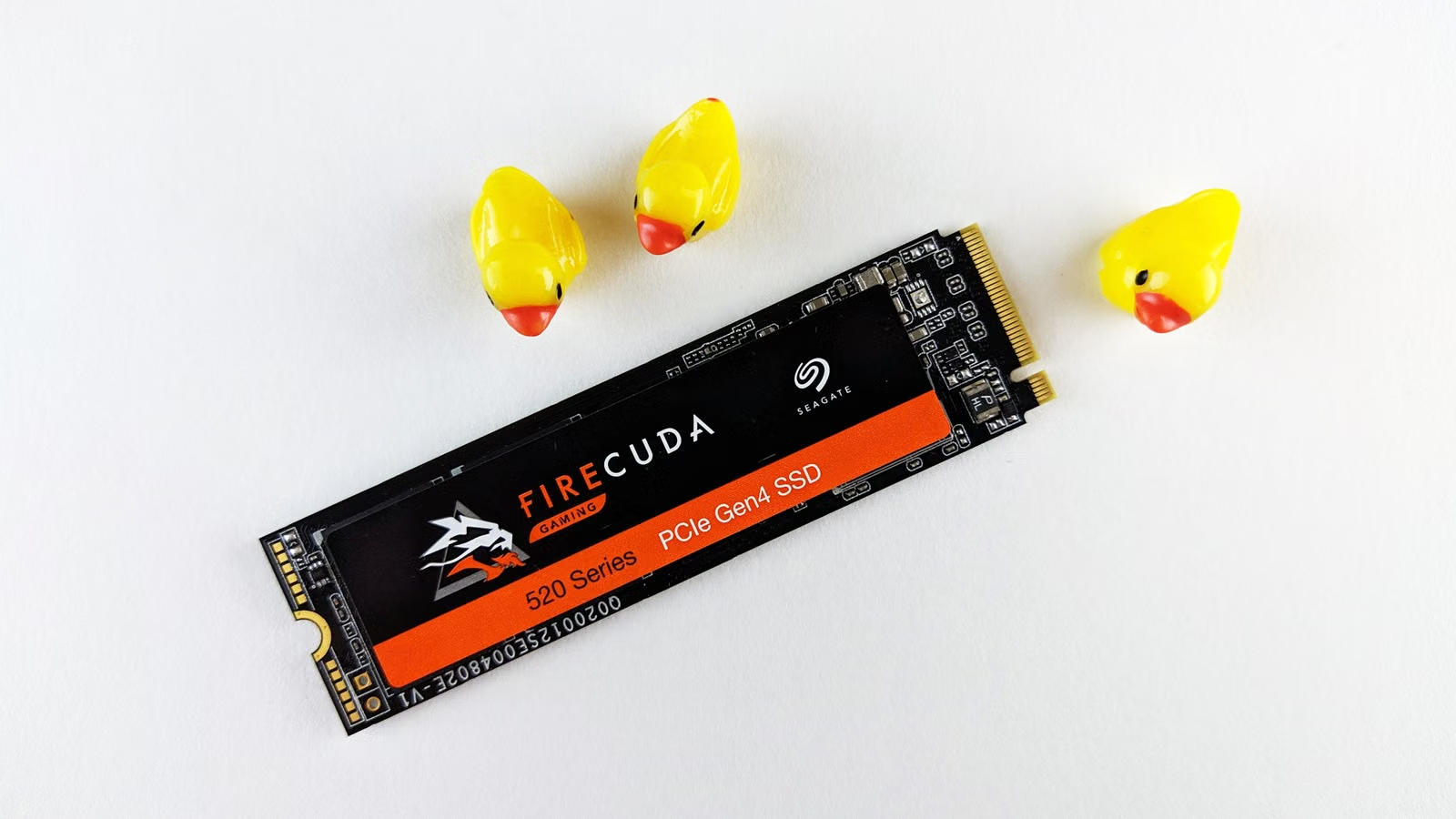
Among the four companies, Sandisk is more aligned with the “NAND and enterprise SSD theme.” It is not an HBM company, nor is it an HDD company. It benefits from rising NAND ASP, enterprise SSD ramp-up, better data center customer mix, and long-term customer agreements. When evaluating SNDK, you should focus on the NAND cycle, Datacenter revenue, NBM agreements, QLC SSD penetration, and free cash flow.
Why Sandisk Became an Independent NAND Theme After the WD Spin-Off
After Western Digital completed the separation of its Flash business in 2025, the investment logic for WDC and SNDK became clearer. After Western Digital completed the Flash spin-off, Western Digital became more focused on HDDs, while Sandisk became more focused on NAND Flash, SSDs, consumer storage, and data center storage.
This matters for investors. In the past, WDC included both HDD and Flash, so its valuation was affected by two different cycles. After the spin-off, SNDK is more directly exposed to NAND pricing, enterprise SSD demand, and higher-value customer mix. If you want to track NAND cycle leverage, Sandisk is more direct than Western Digital.
How Enterprise SSDs Change Sandisk’s Valuation
According to Sandisk FY2026 Q3 results, the company reported third-quarter revenue of $5.95 billion, up 97% sequentially and 251% year over year. Datacenter revenue increased 233% sequentially and 645% year over year. The company also disclosed that it had three NBM agreements at the end of Q3, signed two more in Q4, and expected Q4 revenue of $7.75 billion to $8.25 billion.
These figures show that Sandisk is not only relying on a recovery in consumer USB drives, memory cards, or portable SSDs. It is shifting toward enterprise SSDs, data center SSDs, and higher-value customers. AI data centers need not only HBM and DRAM, but also enterprise SSDs for high-speed caching, hot data, vector databases, and part of inference data access.
Why the NAND Cycle Amplifies Both Profit and Risk
The advantage of NAND is strong leverage. The risk is also strong leverage. TrendForce’s view on NAND Flash supply suggests that major NAND Flash suppliers are expected to add almost no new capacity in 2026, while AI demand remains strong and supply shortages are expected to continue throughout the year. Supply discipline combined with enterprise SSD demand can push ASP, gross margin, and EPS higher.
However, NAND downcycles can also arrive quickly. If customers build inventory in advance, channel inventory rises, or suppliers restart capacity expansion, NAND ASP and gross margin may fall quickly. SNDK’s valuation therefore depends more heavily on cycle position.
| NAND Theme Variable | Benefit for Sandisk | Potential Risk | Tracking Indicator |
|---|---|---|---|
| NAND ASP | Raises revenue and gross margin | Excessive price increases may pressure demand | Contract price, spot price |
| Enterprise SSD | Improves customer mix | Cloud purchasing can fluctuate | Datacenter revenue |
| QLC SSD | Drives high-capacity SSD demand | Competition and pricing pressure | Enterprise SSD penetration |
| NBM agreements | Improves order visibility | Risk of renegotiation | Number and value of agreements |
| Inventory | Low inventory supports price increases | Destocking compresses profits | Channel inventory, customer inventory |
Summary: Sandisk represents the NAND/enterprise SSD leverage theme within AI storage. Its advantages come from the NAND upcycle, enterprise SSD ramp-up, data center customer migration, and improved revenue visibility from NBM agreements. Its risk is that NAND is more sensitive to ASP, inventory, and supply recovery. When evaluating SNDK, you should not only look at current-quarter EPS or stock strength. You need to judge whether the NAND pricing cycle is still moving upward and whether enterprise SSD demand can extend the upcycle.
Western Digital Theme: How to Understand Nearline HDDs, Cloud Storage Capacity, and Pricing Power
Western Digital is more aligned with the “nearline HDD capacity theme” among the four companies. Its logic is not high-bandwidth memory or enterprise SSDs. Instead, after AI data centers generate massive amounts of data, they need low-cost, long-term, scalable nearline HDD storage. When evaluating WDC, you should focus on cloud customer demand, HDD pricing power, non-GAAP gross margin, free cash flow, and capacity allocation.
Why Nearline HDDs Are the Capacity Foundation of AI Data Centers
AI training and inference do not only generate hot data. They also generate a large amount of cold data that needs to be stored for long periods. Training corpora, inference logs, model versions, backups, compliance archives, RAG documents, and enterprise data lakes all require low-cost large-capacity storage. SSDs are better for high-frequency access, while HDDs are better for low-frequency access, long-term retention, and large-scale capacity deployment.
The core value of nearline HDDs is cost per terabyte, capacity density, reliability, and TCO. When hyperscalers plan cloud storage and AI data centers, they do not put all data on SSDs. They tier storage according to access frequency. For this reason, HDDs are not outdated technology in AI storage. They are a key part of the capacity cost structure.
How Western Digital’s Financials Reflect HDD Pricing Power
According to WD Q3FY26 results, Western Digital reported third-quarter revenue of $3.337 billion, up 45% year over year. Non-GAAP gross margin reached 50.5%, and free cash flow reached $978 million. The company also expected Q4FY26 revenue to grow 36%–44% year over year, with non-GAAP gross margin of 51%–52%.
For an HDD company, non-GAAP gross margin above 50% is a very important signal. It suggests that nearline HDD product mix, supply-demand tightness, customer purchasing, and pricing mechanisms are jointly improving profitability. After the Flash spin-off, WDC’s business became more focused on HDDs, making it easier for investors to judge whether HDD pricing power is being realized.
Limitations of the Western Digital Theme
WDC’s limitations are also clear. HDDs remain cyclical. Cloud customer purchasing schedules, long-term contracts, capacity allocation, and inventory changes can all affect performance. If hyperscalers purchase in advance and then enter a destocking phase, or if SSDs continue to replace HDDs in some scenarios, nearline HDD prices and shipments may come under pressure.
| Dimension | Western Digital WDC | Difference from the Other Three Companies | Tracking Indicator |
|---|---|---|---|
| Core product | Nearline HDD, cloud HDD | Not driven by HBM or the NAND theme | Nearline exabyte shipments |
| AI exposure | Cold data, archive, cloud storage capacity | More long-term storage than high-speed compute | Cloud customer purchasing |
| Profit signal | High gross margin, strong FCF | Pricing power realization is more visible | Non-GAAP gross margin, FCF |
| Risk source | HDD cycle, customer concentration | More capacity-cycle exposure than MU/SNDK | Inventory, contracts, ASP |
For these volatile U.S. stocks, trading costs also matter. When tracking WDC, STX, MU, and SNDK, you should consider not only industry logic and valuation multiples, but also actual costs such as commissions, platform fees, external institution fees, and transaction activity fees. If the relevant services are available in your region, you can review Biya U.S. stock trading fees. Biya charges $0 commission for U.S. stock trading, while platform fees, external institution fees, and other costs are subject to the fee schedule and order page display.
Summary: Western Digital represents the nearline HDD capacity theme within AI storage. Its value comes from AI data centers’ need for low-cost, long-term, large-capacity cloud storage, rather than from HBM or enterprise SSDs. WDC’s advantage is that HDD pricing power has already appeared in gross margin and free cash flow, and the business is more focused after the spin-off. Its risks are still tied to HDD cyclicality, customer destocking, supply recovery, and SSD substitution. When evaluating WDC, you should put gross margin, FCF, and cloud customer capacity allocation at the center.
Seagate Theme: How to Understand HAMR, Mozaic 3+, and High-Capacity HDD Technology Migration
Seagate is more aligned with the “high-capacity HDD technology upgrade theme” among the four companies. It benefits from the same HDD demand direction as Western Digital, but Seagate places more emphasis on HAMR, Mozaic 3+, areal density, and mass-capacity storage. When evaluating STX, you should focus on high-capacity drive mass production, nearline customer adoption, free cash flow, debt repair, and whether the technology roadmap can be executed.
Why HAMR and Mozaic 3+ Affect Seagate’s Valuation
HAMR stands for heat-assisted magnetic recording. Its goal is to continue increasing hard drive areal density through heat-assisted magnetic recording technology. Seagate’s technology narrative centers on Mozaic 3+ and high-capacity Exos products. Seagate Exos M, based on the HAMR-enabled Mozaic 3+ platform, offers capacities of up to 36TB, uses a 10-disk design, and claims 3.6TB per platter areal density.
The value of high-capacity HDDs for cloud customers is not simply “larger single drives.” They can reduce rack count, lower power and cooling cost per terabyte, and improve data center space utilization. If Seagate’s HAMR yield, reliability, and mass-production cost meet customer requirements, STX’s valuation can gain a medium- to long-term technology migration premium.
How Seagate’s Financials Reflect Mass-Capacity Demand
According to Seagate FY2026 Q3 results, the company reported third-quarter revenue of $3.112 billion, non-GAAP gross margin of 47.0%, and free cash flow of $953 million. The company also repaid $641 million of debt and returned $191 million to shareholders through dividends and buybacks.
These figures show that STX is not only telling a technology roadmap story. Its cash flow recovery has already appeared in the financial statements. For cyclical stocks, debt reduction, dividends, buybacks, and FCF stability are important indicators of downside resilience. A technology narrative needs cash flow support; otherwise, it can remain only a concept.
Difference Between Seagate and Western Digital’s HDD Themes
WDC and STX both benefit from AI data growth, but their narratives are different. Western Digital is more about current nearline HDD pricing power and UltraSMR/ePMR delivery. Seagate is more about the HAMR platform, higher capacity density, and medium- to long-term product roadmap. You can think of WDC as having clearer current profit realization, while STX has a more prominent high-capacity technology migration story.
| Dimension | Western Digital WDC | Seagate STX | Meaning for AI Storage |
|---|---|---|---|
| Technology roadmap | UltraSMR, ePMR, HAMR transition | HAMR, Mozaic 3+ | STX has a stronger technology narrative |
| Current gross margin | 50.5% | 47.0% | WDC has stronger current realization |
| Free cash flow | $978 million | $953 million | Both are strong |
| Valuation keyword | HDD pricing power, cloud customers | Mass capacity, areal density | Different narrative focus |
| Risk source | Customer cycle, SSD substitution | HAMR adoption, yield and cost | Different time horizons |
Summary: Seagate represents the HAMR high-capacity HDD technology migration theme within AI storage. Like Western Digital, it benefits from tight nearline HDD supply and demand, but STX’s core highlights are more tied to Mozaic 3+, HAMR, areal density improvement, and mass-capacity storage. Its advantages are a clear technology roadmap, improving cash flow, debt repair, and shareholder returns. Its risks are whether HAMR can scale, whether customers adopt it smoothly, and whether costs can be controlled. When evaluating STX, you should look at both technology progress and the cash flow safety cushion.
How to Divide the Four Companies: Which AI Storage Theme Should Different Investors Watch?
If you focus on AI compute bottlenecks, Micron is more central. If you focus on NAND price increases and enterprise SSD leverage, Sandisk is more direct. If you focus on low-cost massive data retention, Western Digital is clearer. If you focus on high-capacity HDD technology migration, Seagate has the stronger technology narrative. These four companies are not substitutes for one another; they sit at different layers of AI storage.
You can divide them by investment preference:
| Investment Preference | More Relevant to MU | More Relevant to SNDK | More Relevant to WDC | More Relevant to STX | Core Indicator |
|---|---|---|---|---|---|
| AI training bottleneck | Yes | Weaker | Weaker | Weaker | HBM, DRAM, GPU customers |
| AI inference storage | Yes | Yes | Yes | Yes | Memory, SSD, HDD tiered demand |
| Enterprise SSD leverage | Weaker | Yes | Weaker | Weaker | NAND ASP, Datacenter revenue |
| Cold data retention | Weaker | Weaker | Yes | Yes | Nearline HDD, exabyte shipments |
| HDD technology upgrade | Weaker | Weaker | Partial | Yes | HAMR, Mozaic, capacity density |
| Cash flow recovery | Yes | Yes | Yes | Yes | FCF, CapEx, debt and buybacks |
AI memory investors should focus on MU, watching HBM3E/HBM4, Cloud Memory, Core Data Center, customer agreements, and CapEx returns. NAND cycle-leverage investors should focus on SNDK, watching NAND ASP, enterprise SSDs, QLC SSDs, NBM agreements, and inventory. HDD pricing power investors should focus on WDC, watching nearline HDDs, cloud customers, gross margin, and free cash flow. High-capacity technology migration investors should focus on STX, watching HAMR, Mozaic, mass-capacity HDDs, and debt repair.
In terms of risk, none of the four companies can be separated from the cycle. If AI data center CapEx falls short of expectations, MU’s HBM premium may come under pressure. If NAND supply recovers or inventory reverses, SNDK may be affected. Changes in hyperscaler purchasing schedules may affect WDC and STX. If the market mistakenly treats storage stocks as “undervalued” at the top of the cycle, valuations may be repriced quickly when earnings decline.
If you track MU, SNDK, WDC, STX, semiconductor ETFs, cloud computing, and AI infrastructure at the same time, you can build a watchlist with Biya U.S. stock search, then review financial reports, valuations, industry supply and demand, and trading costs together. Stock prices are affected by market expectations, liquidity, cycle position, and company guidance. Public market information should be checked against company disclosures, order pages, and local regulatory requirements.
Summary: The four companies correspond to four different AI storage themes. MU is HBM/DRAM performance memory, SNDK is NAND/enterprise SSD cycle leverage, WDC is nearline HDD capacity and pricing power, and STX is HAMR high-capacity HDD technology upgrade. Which theme you choose depends on your investment horizon and risk tolerance. If you focus on long-term AI compute bottlenecks, MU is more relevant. If you focus on the NAND pricing cycle, SNDK is more relevant. If you focus on HDD profit realization, WDC is more relevant. If you focus on high-capacity technology migration, STX is more relevant.
Tracking AI storage stocks is not just about comparing the share prices of four companies. You need to put HBM, NAND, SSDs, HDDs, cloud capital expenditure, semiconductor equipment, and ETFs into one framework. When monitoring U.S. stocks, Hong Kong stocks, or a multi-asset portfolio, you can use Biya to record related tickers, trading costs, and capital changes, while checking actual expenses through fee details. Service availability depends on your location, identity verification results, platform rules, and applicable laws and regulations. Public market analysis does not constitute investment advice. Before trading, you should fully understand the security’s volatility, fee structure, and account rules.
FAQ
Why Should AI Storage Analysis Include Micron, Sandisk, Western Digital, and Seagate?
AI storage analysis should include all four companies because they represent four different themes: HBM/DRAM, NAND/enterprise SSDs, nearline HDDs, and HAMR high-capacity hard drives. Looking at only one company may miss the full tiered demand of AI data centers, from high-speed memory to low-cost capacity storage.
What Is the Difference Between Micron and Sandisk in AI Storage?
Micron is more aligned with AI memory and HBM, while Sandisk is more aligned with NAND Flash and enterprise SSDs. If you focus on AI accelerator memory bottlenecks, Micron is more direct. If you focus on data center SSDs and the NAND pricing cycle, Sandisk is more direct.
What Is the Difference Between Western Digital and Seagate in AI Storage?
Western Digital is more aligned with nearline HDD pricing power and cloud storage capacity, while Seagate is more aligned with HAMR, Mozaic 3+, and high-capacity HDD technology migration. Both benefit from AI data growth, but their valuation logic leans toward current profit realization and medium- to long-term technology upgrades respectively.
Why Do AI Data Centers Still Need HDDs?
AI data centers still need HDDs because training data, inference logs, backups, archives, and cold data require low-cost long-term storage. SSDs are better for high-frequency reads and writes and hot data, while HDDs are better for large-scale capacity storage. The two are complementary in a tiered storage architecture.
How Can Ordinary Investors Judge the Cycle Risk of AI Storage Stocks?
Ordinary investors should focus on ASP, inventory, capital expenditure, customer long-term contracts, gross margin, and free cash flow. During high cycles, memory and storage stocks may look inexpensive based on PE, but if supply recovers or customers destock, earnings and valuation can adjust quickly.
Are AI Storage Stocks Suitable for Comparison Using a Single Valuation Metric?
AI storage stocks should not be compared only with a single PE or PS metric because the four companies operate at different product layers and cycle positions. A better approach is to compare business structure, product cycle, profit margin, free cash flow, customer agreements, and technology roadmap together.
*This article is provided for general information purposes and does not constitute legal, tax or other professional advice from BiyaPay or its subsidiaries and its affiliates, and it is not intended as a substitute for obtaining advice from a financial advisor or any other professional.
We make no representations, warranties or warranties, express or implied, as to the accuracy, completeness or timeliness of the contents of this publication.
Related Blogs of

Choosing a Stock Trading App: Beginner Checklist


Online Bank-to-Bank Transfers: Account Linking, Steps, and Limits




Choose Country or Region to Read Local Blog
 Australia
 Austria
 Belgium
 Canada
 Cyprus
 Czech Republic
 Denmark
 Estonia
 Finland
 France
 Germany
 Greece
 Hong Kong
 India
India Indonesia
 Ireland
 Italy
Italy Japan
Japan Latvia
 Lithuania
 Luxembourg
 Malaysia
 Malta
Malta Morocco
 Nepal
Nepal Netherlands
 New Zealand
 Norway
 Pakistan
 Philippines
 Poland
 Portugal
 Romania
 Singapore
 Slovakia
 Slovenia
 South Africa
 South Korea
 Spain
Spain Sweden
 Thailand
 United States
 Turkey
 United Arab Emirates
 United Kingdom
 Vietnam