
Why Is Server DRAM Getting More Expensive? AI Inference, RDIMM, and Cloud Procurement Logic




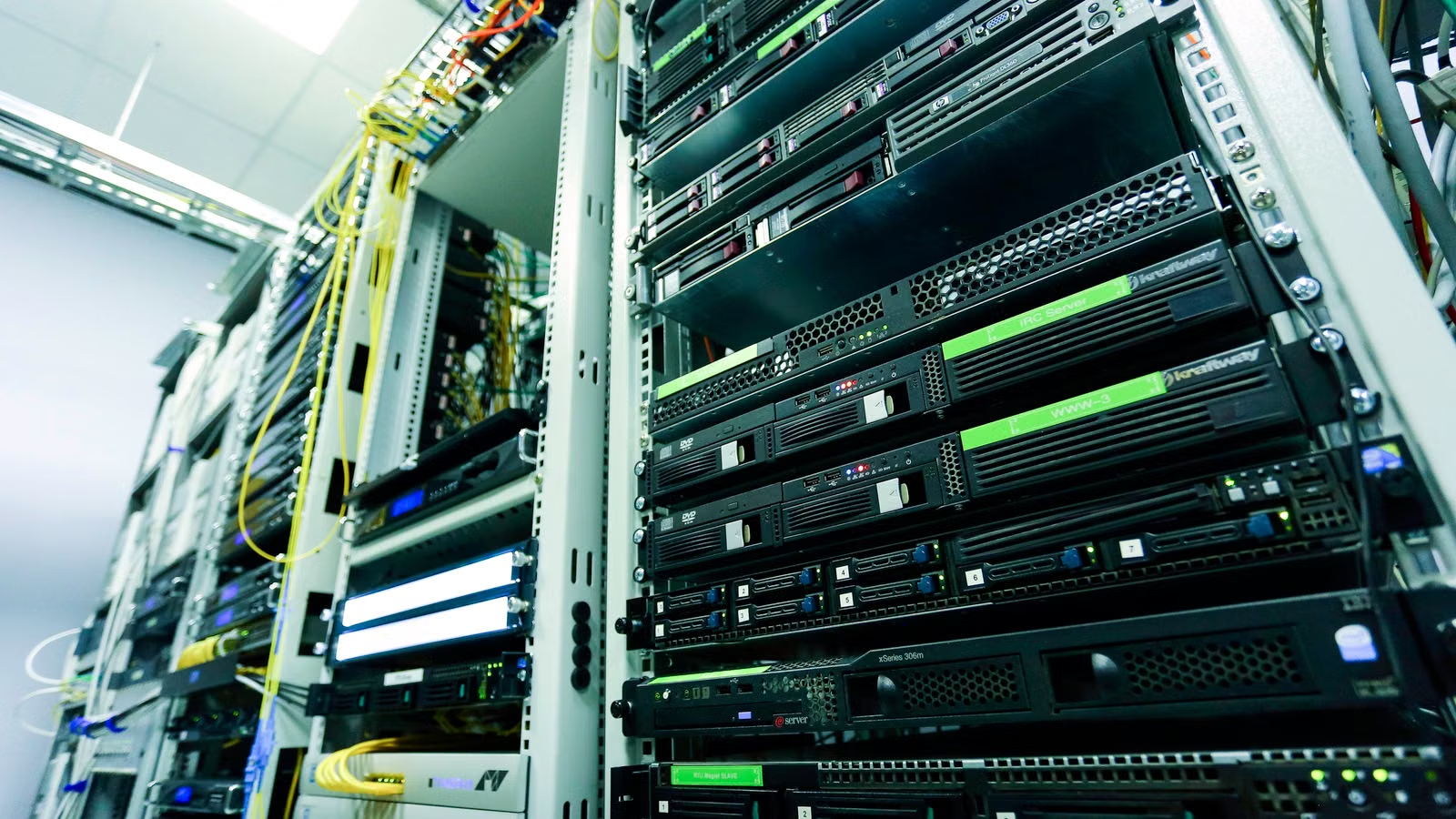
The rise in server DRAM prices is not just another round of “AI concept” speculation. It is the result of expanding AI inference workloads, cloud providers locking in supply early, the upgrade cycle toward DDR5 RDIMM, and memory vendors reallocating capacity toward HBM and high-end server memory. For you, the key is not simply tracking memory module prices. The more important question is why data centers need more high-capacity, high-bandwidth, highly reliable memory. Server DRAM has moved from being a traditional server component to becoming a key variable that affects AI inference throughput, cloud service costs, server delivery schedules, and memory vendors’ margins.
Key Takeaways
- Server DRAM price increases come from stronger AI demand and tight supply.
- AI inference makes memory capacity, bandwidth, cache, and concurrency more important.
- RDIMM is the mainstream server memory format, emphasizing stability and scalability.
- Early cloud provider orders can reshape DRAM contract pricing and supply priority.
- Server DRAM benefits from AI demand, but pricing cycles and inventory risks remain.
Why Is Server DRAM Getting More Expensive? The Core Issue Is Supply-Demand Mismatch and Product Mix Upgrade

Server DRAM is getting more expensive because AI servers and traditional cloud servers are increasing memory demand at the same time, while supply cannot expand quickly. DRAM vendors are also allocating more capacity and advanced process resources to HBM, DDR5 RDIMM, MRDIMM, and high-capacity server memory, which tightens supply for other server DRAM and consumer DRAM categories. Market research firm TrendForce reported that conventional DRAM contract prices rose about 93%–98% quarter over quarter in 1Q26 and projected another 58%–63% increase in 2Q26, showing that the price move has shifted from short-term spot fluctuations to a broader contract-price repricing.
Many investors equate AI memory demand with HBM, but server DRAM is also benefiting. HBM mainly serves AI GPUs and provides high-bandwidth memory close to the accelerator. Server DRAM sits on the CPU side and supports operating systems, virtualization, databases, caching, request scheduling, vector search, and multi-tenant management. As AI inference becomes a large-scale online service, system memory becomes more important. Even a GPU with powerful HBM cannot replace the need for DDR5 RDIMM across the full server system.
There is also a cyclical supply backdrop. During the 2022–2023 memory downturn, vendors reduced inventory, controlled capital expenditure, and delayed capacity expansion. When AI data center demand accelerated in 2025–2026, DRAM supply recovered more slowly than demand. TrendForce also noted in its 2Q26 assessment that DRAM suppliers continued to redirect capacity toward server-related applications, keeping overall supply tight.
| Price Driver | What It Looks Like | Impact on Server DRAM |
|---|---|---|
| AI inference demand | Long context, multi-user concurrency, higher cache demand | Increases capacity and bandwidth needs |
| Cloud provider capacity locking | CSPs sign longer-term supply deals | Raises contract prices and supply priority |
| DDR5 upgrade | New platforms shift from DDR4 to DDR5 | Lifts demand for high-end RDIMM |
| HBM capacity allocation | Vendors prioritize high-value AI memory | Tightens broader DRAM supply |
| Inventory cycle reversal | Vendors remain cautious after the downturn | Supply recovery lags demand |
The price increase also reflects a product mix upgrade. In the past, enterprise server buyers often focused mainly on capacity and price. Today, cloud providers evaluate memory capacity, bandwidth, power consumption, reliability, delivery timing, and long-term supply security together. In an AI data center, if memory supply is insufficient, expensive GPUs, network equipment, and rack resources may fail to come online as planned.
Summary: The rise in server DRAM prices is not a single event. It is being driven by supply-demand mismatch, changes in AI workloads, and a higher-value product mix. AI has turned memory from a supporting server component into a major factor in data center performance and cost structure. Cloud providers locking in capacity earlier makes contract prices reflect supply tightness more quickly. At the same time, memory vendors are shifting capacity toward HBM and high-end server memory, reducing room for other DRAM categories. To judge whether the price increase is sustainable, you need to watch AI inference demand, cloud capital expenditure, DDR5/RDIMM adoption, and new capacity releases together.
Why Does AI Inference Push Up Server DRAM Demand? Capacity, Bandwidth, and Cache Are the Key
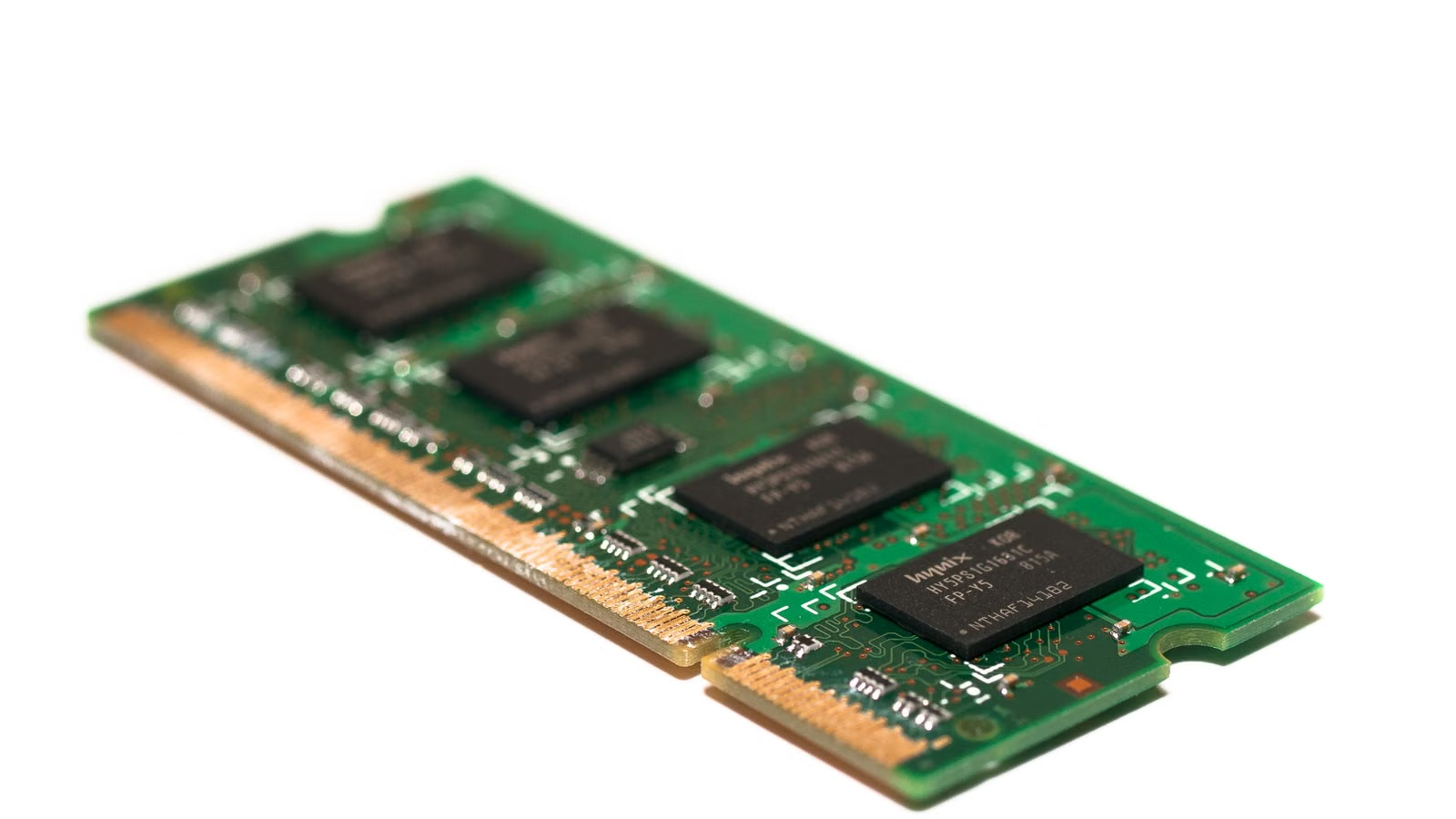
AI inference increases server DRAM demand because inference does not rely only on GPU HBM. It also needs CPU-side system memory to support data preprocessing, request scheduling, caching, vector databases, retrieval-augmented generation, model serving frameworks, and multi-tenant resource management. Long context and high concurrency amplify pressure on KV cache, memory pools, and data caches, turning server DRAM from a background resource into a meaningful part of AI inference cost.
Training and inference use memory differently. Training puts more emphasis on GPU clusters, HBM bandwidth, model parallelism, and gradient synchronization. Inference puts more emphasis on response speed, throughput, cache hit rate, resource scheduling, and cost per token. Once a large-model service goes live, it must process many requests at the same time. Each request involves context, session state, retrieval results, queue scheduling, and logging systems. Not all of these functions run inside GPU HBM; CPU-side server DRAM still handles a large amount of data organization.
Large language model inference also has a clear memory bottleneck. The HPIM research on LLM inference notes that deployment faces huge memory footprints, low arithmetic intensity, and strict latency requirements during autoregressive decoding. This is why memory bandwidth and cache structure can directly affect inference efficiency. In other words, when AI applications move from model training to online services, the bottleneck expands from “having enough GPUs” to “whether the whole server can process requests at low latency and high concurrency.”
Key sources of server DRAM demand in AI inference include:
- Request queues and scheduling systems
- KV cache and session state management
- RAG retrieval, vector databases, and cache layers
- Multi-model and multi-tenant inference environments
- CPU-side preprocessing and post-processing
- Data compression, logging, monitoring, and security services
RAG and vector databases further expand system-memory needs. Enterprise AI applications usually do not simply ask a model to generate answers. They often connect to internal documents, databases, logs, knowledge bases, and search systems. Retrieval, ranking, caching, permission checks, and result assembly all involve server-side memory. For cloud providers, inference is not about a single model call; it is about stable operation at scale. That means memory capacity, bandwidth, reliability, and power consumption all enter the TCO calculation.
CXL also shows that server memory bottlenecks are being redesigned. Research on Micron’s CXL type-3 memory expansion module shows that CXL can improve server system memory capacity and bandwidth through a PCIe interface, improving performance in HPC and AI workloads. CXL will not replace DDR5 RDIMM in the near term, but it shows that data centers are actively looking for more ways to expand system memory.
Summary: The impact of AI inference on server DRAM is more complex than simply “adding a few more memory modules to each server.” Inference services need to handle model weights, user requests, context cache, RAG retrieval, vector databases, multi-tenant scheduling, and monitoring systems at the same time. Many of these tasks do not live entirely inside GPU HBM. As AI applications move from training to large-scale online services, server DRAM capacity, bandwidth, stability, and power consumption all affect inference cost. Behind the rise in DRAM prices is the shift from single-point GPU performance competition to full-system throughput competition.
What Role Does RDIMM Play in Server DRAM Price Increases?
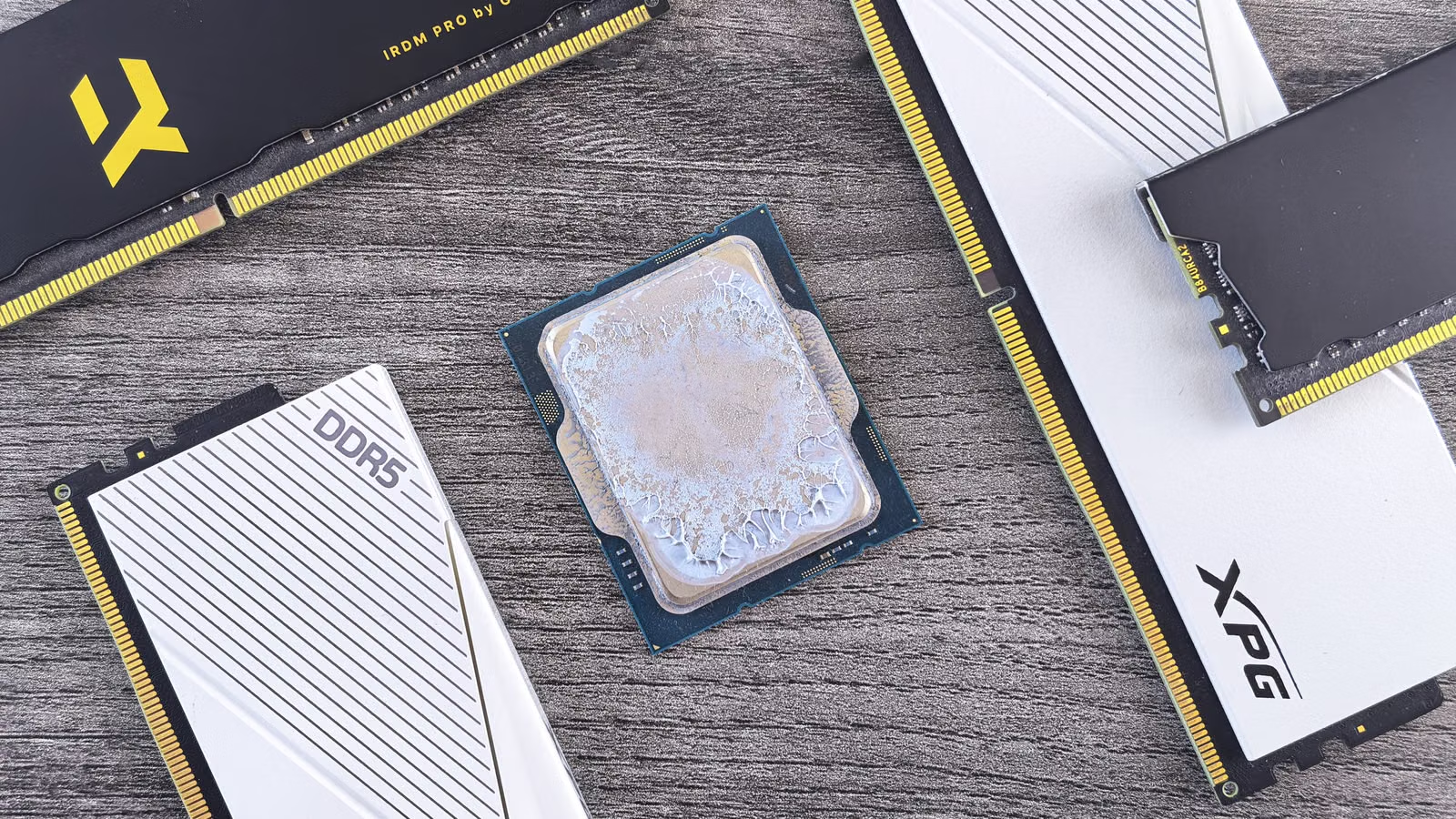
RDIMM is a core category in the current rise of server DRAM prices because it is the common memory module format used in enterprise servers, cloud data centers, and high-performance computing platforms. Unlike ordinary UDIMM, RDIMM buffers address and control signals through a register, improving stability and scalability when multiple memory modules are used in parallel. Micron RDIMM is positioned for enterprise servers, cloud environments, and data centers, where reliability and long-running stability matter more than in consumer memory.
Server memory is not only about frequency. Enterprise servers often run 24/7 and require multi-channel support, large capacity, ECC error correction, stronger stability, and stricter validation. RDIMM’s registered buffer reduces the load on the memory controller, allowing a server to remain stable even when more memory slots are populated. For databases, virtualization, AI inference, cache services, and high-performance computing, this stability can matter more than peak frequency alone.
DDR5 RDIMM is more expensive because it is not just a simple replacement for DDR4. It brings higher bandwidth, higher capacity, more complex power management, and stricter platform validation. Micron DDR5 materials show that DDR5 can provide higher effective bandwidth than DDR4 and support higher-capacity RDIMM. New-generation server CPU platforms are typically designed around DDR5 memory channels, so cloud server upgrades also drive DDR5 RDIMM demand.
MRDIMM represents a higher-end direction for server memory. Micron MRDIMM emphasizes high bandwidth, low latency, high capacity, and suitability for AI and HPC memory-intensive workloads. Compared with RDIMM, MRDIMM can expand main-memory bandwidth without simply raising the frequency of DRAM chips. It will not immediately replace RDIMM, but it raises the technical threshold and unit value of server memory.
| Memory Form | Main Use Case | Relationship to Server DRAM Price Increases |
|---|---|---|
| DDR5 RDIMM | Mainstream enterprise and cloud servers | Rising demand and stronger pricing power |
| High-capacity RDIMM | AI inference, databases, virtualization | Higher memory content per server |
| MRDIMM | Higher-bandwidth server memory | Represents the high-end upgrade path |
| CXL memory | Capacity expansion and memory pooling | Helps relieve some capacity bottlenecks |
| HBM | High-bandwidth memory for AI GPUs | Complements RDIMM while competing for production resources |
The essence of RDIMM price increases is that server memory is evolving from a standardized capacity component into a platform performance resource. When server CPUs, GPUs, networking, storage, and memory together determine AI data center throughput, the scarcity of high-capacity DDR5 RDIMM gets repriced. Cloud providers still care about price, but during AI server delivery windows, they are often more worried about key component shortages delaying entire system deployments.
Summary: RDIMM is the key entry point for understanding server DRAM price increases. GPU HBM receives more attention in AI, but cloud servers and AI inference infrastructure still depend heavily on DDR5 RDIMM. RDIMM’s value lies in stability, scalability, and long-running reliability, which is why data centers are willing to pay a premium for high-end server memory. With DDR5 platform upgrades, high-capacity modules, MRDIMM, and CXL developing together, server DRAM is moving from simple capacity expansion toward high-bandwidth, high-density, system-level memory design.
How Does Cloud Provider Procurement Push Up Server DRAM Contract Prices?
Cloud providers push up server DRAM contract prices by locking in key capacity early and prioritizing supply certainty. AI data center buildouts have long timelines, and GPUs, servers, networking, power, liquid cooling, and memory all need to be delivered in sync. To prevent memory from becoming the bottleneck in AI server deployment, cloud providers may use long-term purchases, prepayments, take-or-pay structures, or strategic agreements to secure supply, changing DRAM vendors’ pricing power and contract-price cadence.
Large CSPs are willing to place early orders because the opportunity cost of AI data centers is high. If GPUs arrive but server DRAM, enterprise SSDs, network switches, power systems, or liquid cooling are not ready, the full rack cannot come online on schedule. For a cloud provider, a small memory shortage can leave expensive GPU resources idle and affect compute delivery to model companies and enterprise customers. Memory is therefore no longer a routine line item in the procurement list. It has become a strategic resource that affects AI infrastructure delivery.
Server DRAM pricing also depends more on contract prices than on short-term spot fluctuations often seen in consumer electronics. Server customers usually negotiate quarterly, semiannual, or longer supply arrangements, with an emphasis on stable delivery, quality validation, and platform qualification. TrendForce’s analysis on Memory Makers Prioritize Server Applications noted that U.S. CSPs locking in capacity widened the DRAM supply-demand gap and pushed other buyers to accept higher prices to secure allocation.
Long-term agreements can improve revenue visibility, but they cannot fully eliminate memory cycles. Reuters’ coverage of AI memory supply deals reported that Micron, Samsung, and SK hynix are pushing AI-related long-term supply agreements in an effort to ease the severe boom-bust swings that historically characterized the memory industry. These agreements can help suppliers invest with more confidence and help customers lock in supply, but if AI demand disappoints, customers renegotiate, or new capacity is released in bulk, prices can still fluctuate.
| Procurement Behavior | Cloud Provider Objective | Impact on Server DRAM Pricing |
|---|---|---|
| Early capacity locking | Secure AI server delivery | Raises supplier pricing power |
| Long-term contracts | Lock price and quantity | Stabilizes revenue but can push up near-term prices |
| High-capacity priority | Support inference and cloud services | Strengthens demand for high-end RDIMM |
| Multi-supplier qualification | Reduce supply risk | Competition remains, but validation cycles are long |
| Synchronized data center delivery | Avoid idle GPUs | Turns memory into a strategic resource |
Cloud procurement also affects other customers. When CSPs accept higher prices to lock in supply, server OEMs, PC vendors, smartphone makers, and industrial customers may face tighter available supply. Reuters’ report on memory chipmakers noted that AI server demand for HBM has encouraged memory vendors to reallocate capacity, squeezing supply in other memory categories. This crowding-out effect means server DRAM price increases can influence not only data centers, but also consumer electronics and traditional IT budgets.
Summary: Cloud provider procurement is a major amplifier of server DRAM price increases. AI data center construction is not just about buying GPUs; it requires synchronized deployment of servers, networking, power, cooling, and memory. If memory is short, high-cost GPUs and rack resources may fail to go online as planned, so large CSPs are more willing to lock in capacity ahead of time. Long-term agreements and strategic procurement improve DRAM vendors’ revenue visibility and make server DRAM prices reflect supply tightness more quickly. However, the memory cycle has not disappeared. Prices are still affected by cloud capital expenditure, AI demand realization, customer bargaining power, and new capacity releases.
Which Companies and Supply Chain Segments Are Affected by Server DRAM Price Increases?
Server DRAM price increases mainly affect three groups. The first group is DRAM manufacturers such as Micron, SK hynix, and Samsung. The second group includes server ODMs, branded server vendors, and cloud infrastructure providers. The third group includes AI data center users, such as cloud providers, model companies, and enterprise customers. Price increases are generally positive for DRAM manufacturers’ revenue and margins, but they raise system costs, delivery pressure, and data center TCO for server buyers.
For Micron, SK hynix, and Samsung, the most direct impact is higher ASP and a better product mix. Micron FY2026 Q2 materials stated that AI and traditional server demand are constrained by DRAM and NAND supply shortages, and that 2026 server shipments and server DRAM content are expected to grow. Higher server DRAM content means each server carries more memory value, which benefits memory vendors’ revenue mix.
For server vendors and cloud customers, the impact is more complicated. Rising high-end RDIMM costs increase the server BOM, especially for AI inference servers, database servers, and high-memory virtualization platforms. If memory prices rise too quickly, server vendors may need to adjust pricing, while cloud providers may pass some of the cost into instance pricing, model API pricing, or enterprise service contracts.
For consumer electronics and traditional enterprise IT, server DRAM price increases may create a crowding-out effect. Reuters’ coverage of NVIDIA server memory shifts reported that NVIDIA’s move in some AI servers toward lower-power LPDDR routes could further increase server memory demand and pressure the supply chain. Even if this change does not represent all server DRAM, the underlying logic is clear: every major AI server memory architecture change can affect supply-demand balance across other memory categories.
Server DRAM price increases affect the following chain:
- DRAM manufacturers’ revenue and gross margin
- AI server BOM costs
- Cloud provider capital expenditure and deployment timing
- Model companies’ inference costs
- Enterprise server upgrade budgets
- Price transmission into PC, smartphone, and traditional memory markets
If you follow memory stocks, AI servers, or semiconductor ETFs, you should not stop at the idea that “higher prices benefit manufacturers.” You also need to watch whether higher prices suppress downstream demand, delay server purchases, cause cloud providers to reallocate capital expenditure, or have already been priced into related stock valuations. Server DRAM price increases are an important industry signal, but they are not a one-way conclusion.
Summary: The impact of server DRAM price increases extends beyond memory chipmakers. For Micron, SK hynix, and Samsung, higher high-end server DRAM prices can improve revenue mix and margins. For server vendors and cloud customers, they raise system costs and affect AI data center delivery schedules. For downstream enterprises and consumer electronics, if capacity continues shifting toward servers and HBM, other memory categories may face supply contraction and cost pass-through. Server DRAM price increases are therefore both a sign of memory industry recovery and a sign of rising AI infrastructure costs.
How Can Ordinary Investors Judge Whether Server DRAM Price Increases Are Sustainable?
To judge whether server DRAM price increases are sustainable, you should not focus only on a single quarter’s price increase. You need to evaluate AI inference demand, cloud capital expenditure, DDR5/RDIMM upgrades, DRAM vendor capacity expansion, inventory levels, and contract structures. If the price increase comes from real server demand and long-term capacity locking, it is more likely to last. If it mainly comes from channel inventory hoarding or short-term panic buying, the risk of later price volatility will be higher.
First, check whether demand is truly scaling. You can track cloud capital expenditure, AI server orders, GPU cluster deployments, inference call volumes, model API pricing, cost per token, and data center leasing demand. If inference demand continues to grow, server DRAM demand is usually better supported. If AI application monetization falls short of expectations, cloud providers may slow purchasing.
Second, check whether supply remains tight. DRAM is a capital-intensive industry, and expansion takes time. Micron, SK hynix, and Samsung’s capital expenditure, advanced process transitions, HBM and DDR5 capacity allocation, yield, and inventory levels all affect future pricing. If vendors expand quickly while demand growth slows, the price cycle could turn.
Third, check whether valuation has already priced in expectations. Server DRAM price increases usually raise earnings expectations for memory stocks, but stock prices may move ahead of fundamentals. If the market has already priced in higher ASP, higher gross margin, long-term contracts, and strong AI demand, then any weaker-than-expected price increase, customer renegotiation, or inventory reversal could create volatility.
| Question to Ask | Indicator to Watch | Risk Warning |
|---|---|---|
| Is the price increase driven by real demand? | Cloud capex, AI inference volume, server orders | Channel hoarding may reverse |
| Is supply still tight? | DRAM expansion, inventory, lead times | New capacity can pressure prices |
| Is the high-end mix improving? | RDIMM, MRDIMM, HBM share | Product mix may disappoint |
| Is gross margin improving? | DRAM ASP, cost, depreciation | CapEx and competition can compress profit |
| Has the stock price priced it in? | Earnings expectations, valuation, sentiment | Volatility can rise after good news is realized |
If you follow Micron, Samsung, SK hynix, NVIDIA, or the AI server supply chain, you also need to consider actual trading costs, not just stock price movement. U.S. stock trading costs often include more than commissions. They may also include platform fees, external institutional fees, transaction activity fees, fractional-share charges, and FX costs. Eligible users can review Biya U.S. stock trading fees: Biya charges zero U.S. stock trading commission, while platform fees, external institutional fees, and other charges are subject to the fee center and order page. Public market information and fee structures are for pre-trade reference only and do not constitute investment advice. Service availability depends on user location, identity verification results, platform rules, and applicable laws and regulations.
Summary: Server DRAM price increases have a real industrial logic, but ordinary investors should not treat higher memory prices as guaranteed investment returns. A more reasonable framework is to first confirm whether AI inference and cloud server demand are continuing to scale, then observe whether DRAM vendors can control supply and raise the share of high-end products, and finally evaluate whether related stock valuations already reflect the price increase. Server DRAM is an important variable in AI infrastructure, but it remains part of the memory cycle. Price increases, long-term agreements, and customer capacity locking can improve industry visibility, but they cannot eliminate demand fluctuations, inventory reversals, excessive capacity expansion, or valuation pullback risks.
If you continue to follow server DRAM, AI inference, Micron, SK hynix, Samsung, NVIDIA, and the AI server supply chain, memory price headlines alone are not enough. You also need to track earnings reports, contract prices, cloud capital expenditure, stock volatility, FX changes, and trading costs within the same framework. You can use Biya to follow relevant U.S. and Hong Kong stocks, and use U.S. stock information to review public-market information on semiconductor, AI server, and memory supply-chain companies. If your region is eligible for the relevant services, you can also download App to review multi-asset trading, billing records, and fee details. Before trading, you should still check platform rules, order pages, local regulatory requirements, and your own risk tolerance. Server DRAM price increases should not be treated as a guaranteed return for any stock.
FAQ
What Is the Difference Between Server DRAM Price Increases and HBM Price Increases?
Server DRAM price increases mainly affect CPU-side system memory such as DDR5 RDIMM and MRDIMM. HBM price increases mainly affect high-bandwidth memory used by AI GPUs. Both are driven by AI demand, but they differ in application location, packaging method, customer qualification, and pricing mechanism.
Why Does AI Inference Increase Server RDIMM Demand?
AI inference increases server RDIMM demand because online inference requires request scheduling, context caching, RAG retrieval, vector databases, multi-tenant resource management, and CPU-side preprocessing. GPU HBM accelerates computation, but system memory still handles a large amount of data organization.
Will Cloud Providers Locking in Supply Make Server DRAM Prices Rise Long Term?
Cloud providers locking in supply can support prices in the short to medium term, but it does not mean server DRAM prices will rise permanently. Prices still depend on AI demand realization, DRAM capacity expansion, inventory changes, long-term contract terms, and customers’ ability to renegotiate.
Are Server DRAM Price Increases Definitely Positive for Micron Stock?
Server DRAM price increases are usually positive for Micron’s revenue and gross margin, but they do not guarantee that the stock price will rise. Investors still need to evaluate HBM and RDIMM shipments, capital expenditure, inventory cycles, competition, and whether valuation has already priced in the good news.
How Is DDR5 RDIMM Different From Ordinary Memory Modules?
DDR5 RDIMM is designed for servers and data centers, emphasizing stability, scalability, ECC, signal integrity, and long-running reliability. Ordinary consumer memory focuses more on personal computer performance and price. The two categories differ in use case, validation standards, and procurement logic.
How Can Ordinary Investors Track the Server DRAM Price Cycle?
Ordinary investors can track DRAM contract prices, server shipments, cloud capital expenditure, DRAM vendor inventory, HBM/RDIMM capacity allocation, and earnings reports from companies such as Micron. Before trading, they should also consider risk tolerance, fee structures, and platform rules.
*This article is provided for general information purposes and does not constitute legal, tax or other professional advice from BiyaPay or its subsidiaries and its affiliates, and it is not intended as a substitute for obtaining advice from a financial advisor or any other professional.
We make no representations, warranties or warranties, express or implied, as to the accuracy, completeness or timeliness of the contents of this publication.
Related Blogs of
Crypto Trading Bots: Types, Costs, and Security Risks


Crypto Exchange Fees Comparison: Trading Fees, Spreads, and Withdrawals


International Wire Transfer Time: What Affects Delivery?


Choose Country or Region to Read Local Blog
 Australia
 Austria
 Belgium
 Canada
 Cyprus
 Czech Republic
 Denmark
 Estonia
 Finland
 France
 Germany
 Greece
 Hong Kong
 India
India Indonesia
 Ireland
 Italy
Italy Japan
Japan Latvia
 Lithuania
 Luxembourg
 Malaysia
 Malta
Malta Morocco
 Nepal
Nepal Netherlands
 New Zealand
 Norway
 Pakistan
 Philippines
 Poland
 Portugal
 Romania
 Singapore
 Slovakia
 Slovenia
 South Africa
 South Korea
 Spain
Spain Sweden
 Thailand
 United States
 Turkey
 United Arab Emirates
 United Kingdom
 Vietnam