Western Digital WDC Stock Analysis: How AI Data Centers Are Driving Demand for High-Capacity HDDs




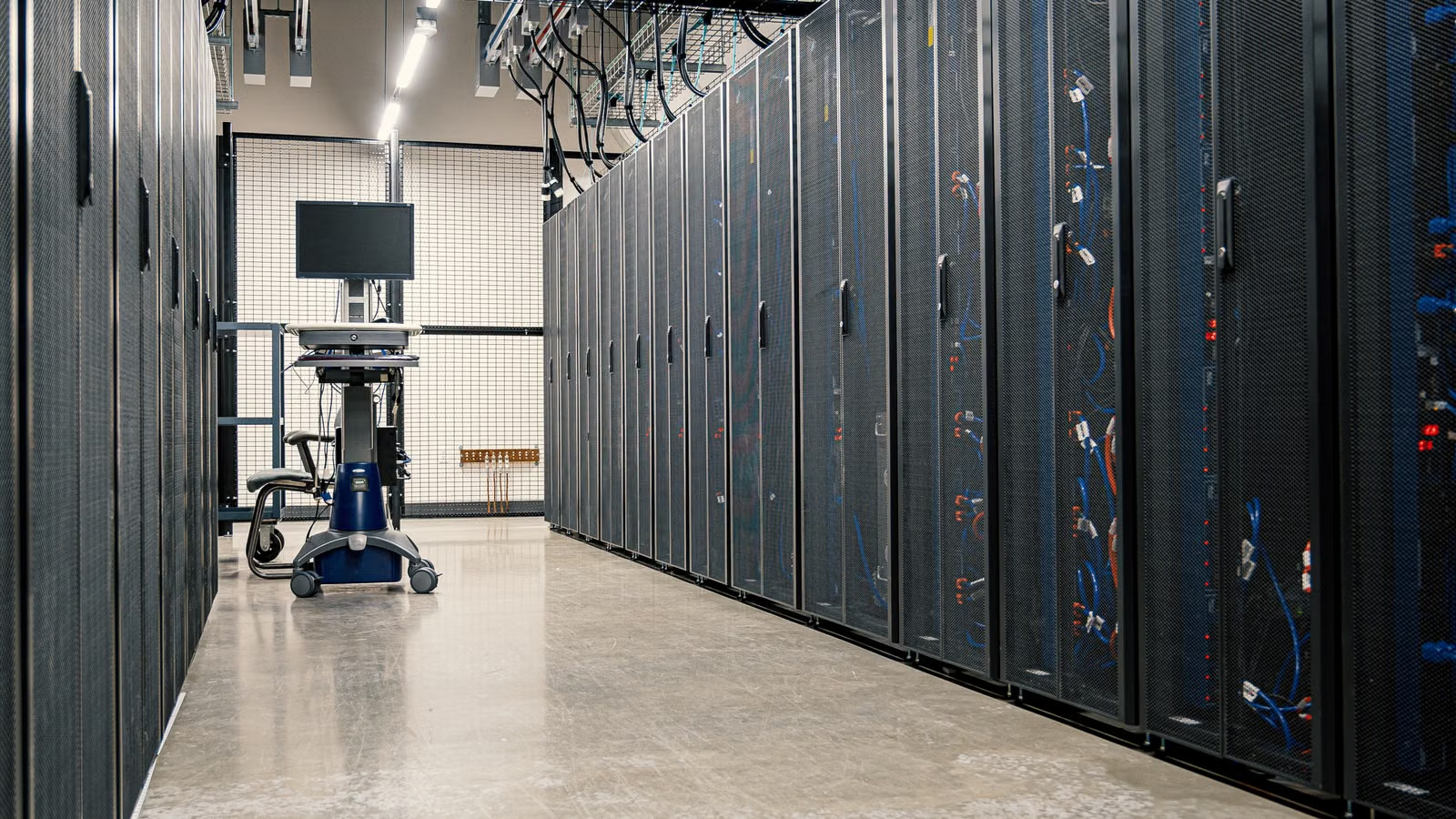
Western Digital’s WDC investment case has shifted from the old “HDD plus flash memory cycle” framework to a clearer “AI data center high-capacity HDD beneficiary” framework. If you follow AI infrastructure, U.S. storage stocks, cloud capital expenditure, and data center hardware, WDC deserves a place on your watchlist. But it is not a low-volatility asset. The key is to focus on cloud customer demand, Nearline HDD pricing, gross margin, free cash flow, and technology execution, rather than only looking at AI-related market enthusiasm.
Key Takeaways
- After separating its flash business, WDC’s analysis framework is now more focused on HDDs.
- AI data centers continue to create demand for low-cost, high-capacity storage.
- Nearline HDDs remain an important medium for cloud customers storing massive datasets.
- Key financial indicators include cloud revenue, gross margin, and free cash flow.
- QLC SSDs, customer concentration, and HDD cyclicality are major risks.
- WDC is better suited for investors who can tolerate cyclical volatility.
Why WDC Has Re-Emerged as an AI Data Center Storage Stock
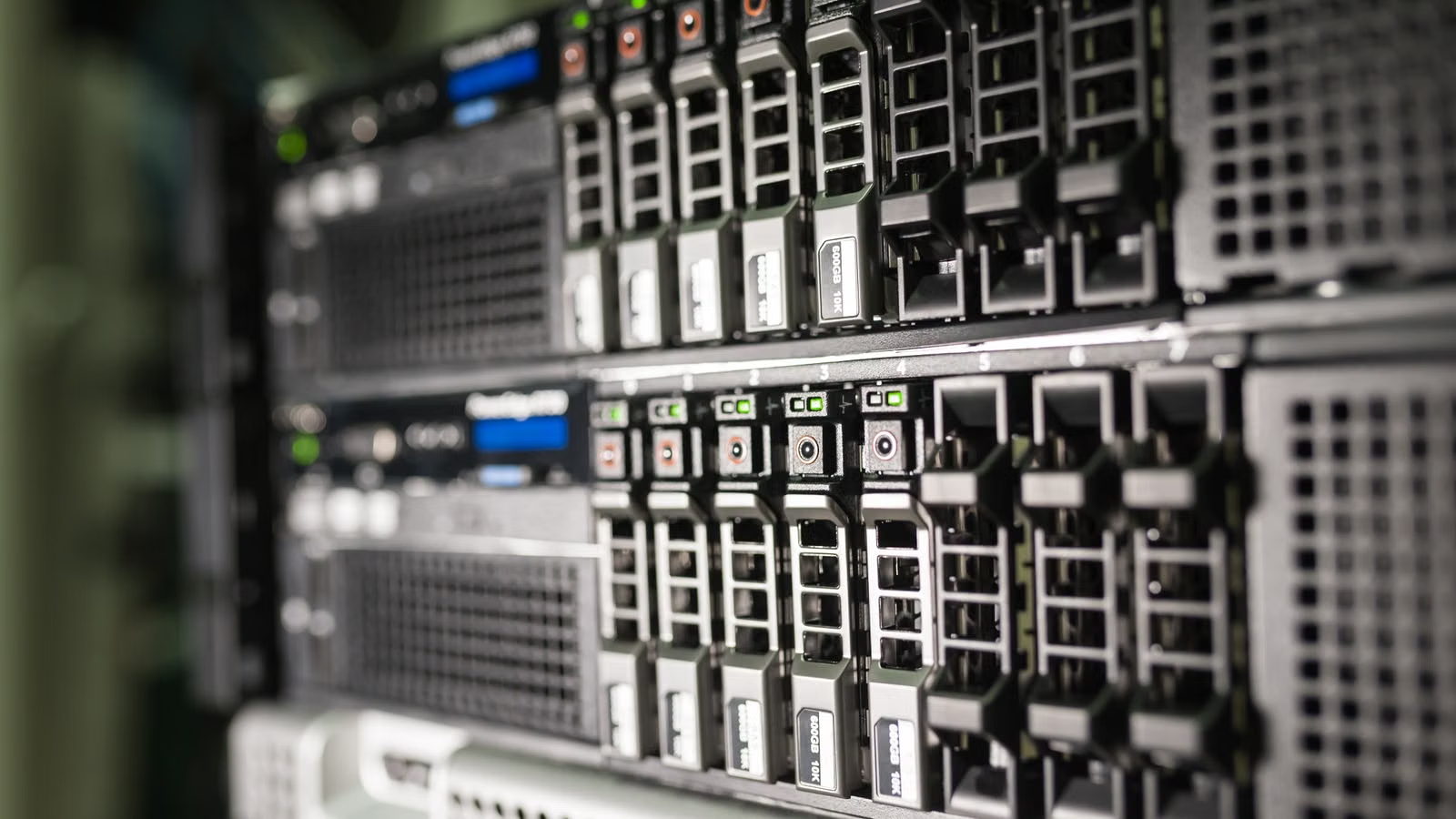
WDC is attracting renewed attention because AI does not only need GPUs, HBM, and high-speed networking. It also requires long-term storage for training data, inference logs, multimodal content, backups, and data lakes. After AI computation is completed, the data does not disappear. Cloud providers still need a low-cost, high-capacity, scalable storage layer to retain that data, which is exactly where HDDs have an advantage.
In the past, analyzing Western Digital usually required tracking both HDD and NAND Flash cycles. That framework has changed. WDC completed its flash business separation in 2025, and after SanDisk became an independent public company, WDC became more like a company focused on high-capacity HDDs, enterprise storage platforms, and cloud customer demand. For investors, this makes the business logic clearer, but it also means revenue is more dependent on the cloud HDD cycle.
AI’s impact on WDC is not as simple as “every AI company will buy WDC hard drives.” The real driver is the lengthening data lifecycle. Large model training requires datasets. Inference applications generate user interactions, logs, vector data, and content files. Enterprises also need to retain audit data, compliance records, backups, and archives. The more AI applications go live, the more cloud providers need tiered storage to place hot, warm, and cold data on different storage media.
In Investor Day 2025, WDC stated that generative AI, text-to-image, text-to-video, and large data lake demand are expected to drive HDD exabyte shipment growth. The keyword here is not the number of hard drives, but exabytes. In other words, what cloud providers are really buying is total capacity.
| AI Scenario | Data Generated | Demand for HDDs | Meaning for WDC |
|---|---|---|---|
| Large model training | Datasets, model checkpoints | Long-term storage and repeated access | Higher cloud capacity demand |
| AI inference | Logs, outputs, user data | Continuous writing and low-cost storage | Faster storage consumption |
| Multimodal AI | Images, audio, video | Larger files and faster growth | Drives high-capacity HDD demand |
| Enterprise data lakes | Structured and unstructured data | Centralized archiving and analysis | Strengthens cloud customer purchasing |
Summary: WDC’s AI logic is not about simply labeling it an “AI concept stock.” It should be understood as part of the AI data center infrastructure chain. GPUs handle computation, HBM supports high-bandwidth temporary data processing, and HDDs store massive datasets over the long term at lower cost. After separating its flash business, WDC’s business line is clearer. The advantage is that investors can track cloud HDD demand more directly; the drawback is that the company is more sensitive to large customer purchasing cycles, HDD supply-demand dynamics, and high-capacity product upgrades. When analyzing WDC, first determine whether AI data growth is truly converting into cloud customer orders, then evaluate whether gross margin and cash flow are following through. Do not buy it solely because the AI theme is popular.
How AI Data Centers Drive Demand for High-Capacity HDDs

The key reason AI data centers drive HDD demand is that cloud providers need to store massive amounts of data at a relatively low cost per unit of capacity. SSDs are faster, but their cost per TB is usually higher. HDDs are slower, but they are well suited for cold data, warm data, backups, logs, data lakes, and archives. As long as AI applications keep generating data, Nearline HDDs will continue to have infrastructure value.
Nearline HDDs are a common type of high-capacity hard drive used in cloud data centers. They are mainly used for data that does not require millisecond-level high-frequency access but still needs to remain online. AI training and inference can both generate large amounts of “not hot, but cannot be deleted” data. This type of data is not always suitable for long-term storage on higher-cost SSDs. For hyperscalers, the key is not the performance of a single drive, but cost per TB, power consumption, rack density, reliability, and supply stability.
TrendForce has noted that AI inference demand is tightening Nearline HDD supply because inference applications keep generating data after deployment, instead of creating only a one-time infrastructure buildout. More importantly, cloud provider procurement often involves long-term orders. Once supply tightens, HDD vendors may benefit from better pricing and stronger order visibility.
However, HDDs are not free from competitive pressure. TrendForce has also noted that as the HDD industry transitions toward technologies such as HAMR, manufacturing investment and supply constraints may push up HDD average selling prices, weakening the traditional cost advantage. At the same time, high-capacity QLC SSDs are entering the cloud nearline storage conversation. If HDD lead times become too long, cloud customers may accelerate evaluation of QLC SSD demand.
| Storage Medium | Main Advantage | Main Limitation | AI Data Center Use Case |
|---|---|---|---|
| HDD | Low cost per TB, large capacity | Higher latency, weaker random access | Cold data, backups, archives, data lakes |
| QLC SSD | Faster speed, higher density, power efficiency | Still more expensive than HDDs | Warm data, vector databases, nearline access |
| Tape | Low long-term storage cost | Slow access, automation requirements | Deep archives, compliance retention |
| High-performance SSD | Low latency, high throughput | High cost | Training cache, hot data, databases |
When evaluating how much WDC can benefit, you can watch four signals:
- Whether cloud providers continue increasing high-capacity HDD purchases;
- Whether Nearline HDDs remain in tight supply;
- Whether WDC can sustain pricing and gross margin;
- Whether QLC SSDs remain complementary in selected scenarios rather than broadly replacing HDDs.
Summary: AI data center demand for HDDs is essentially about data growth outpacing the supply of low-cost storage capacity. If AI inference, multimodal content, and enterprise data lakes continue to expand, cloud providers will need more Nearline HDDs to store data. WDC could benefit from capacity growth, pricing improvements, and a richer high-capacity product mix. But this logic has limits. If HDD prices rise too quickly or lead times become too long, QLC SSDs will gain more replacement opportunities. Therefore, WDC’s opportunity comes from HDDs maintaining their cost advantage, while its risk comes from that advantage being weakened by supply bottlenecks and SSD progress.
What Financial Indicators Matter Most in WDC Earnings
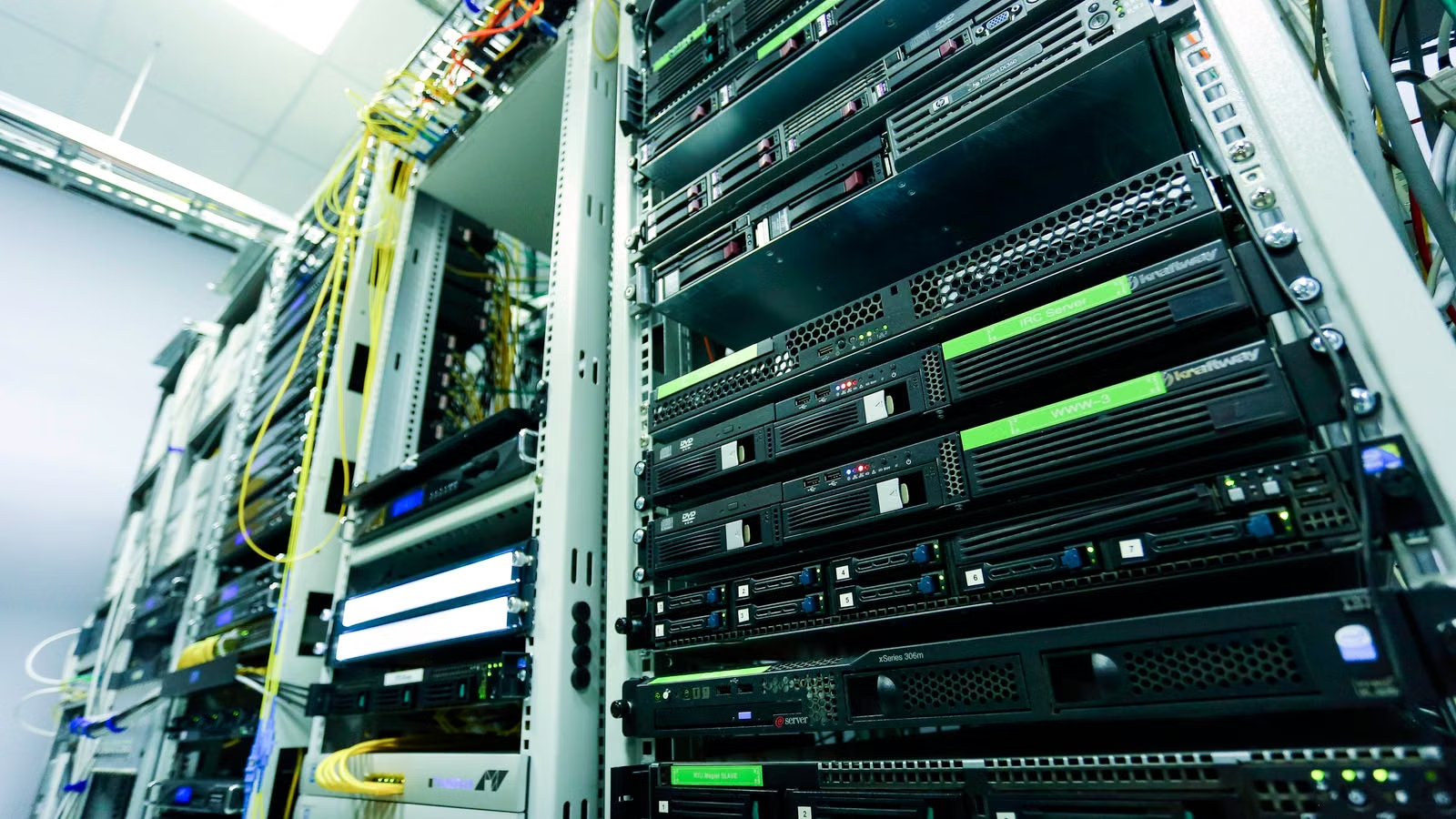
When analyzing WDC earnings, you should not only look at whether EPS beats expectations. More important indicators include whether cloud customer revenue continues to grow, whether gross margin remains elevated, whether free cash flow improves, and whether the next-quarter guidance is stronger than market expectations. WDC is a hardware company with clear cyclical characteristics, so earnings quality matters more than one-day stock price reaction.
WDC’s latest earnings already show the impact of AI storage demand on financial results. In its FY26 Q3 results, the company reported revenue of $3.34 billion, up 45% year over year. GAAP gross margin was 50.2%, while non-GAAP gross margin was 50.5%. For an HDD company, whether gross margin can stay high often says more about supply-demand conditions than revenue growth alone.
Cash flow is equally important. WDC’s operating cash flow for the quarter was $1.12 billion, and free cash flow was $978 million. Improved free cash flow means the company is not only selling more products during a strong demand cycle, but also converting profits into cash. That cash can be used to reduce financial pressure, support R&D, increase shareholder returns, or prepare for the next cyclical downturn.
Next-quarter guidance is a major source of stock price movement. WDC’s Q4 guidance indicated expected revenue growth of 36% to 44% year over year, with non-GAAP gross margin in the range of 51% to 52%. If future guidance continues to move higher, it suggests orders and pricing remain strong. If revenue growth slows or gross margin declines, investors should watch for signs that the HDD cycle is entering a high-level consolidation phase.
| Financial Indicator | Why It Matters | Positive Signal | Risk Signal |
|---|---|---|---|
| Cloud customer revenue | Reflects AI data center demand | Rising share and stable growth | Slowing large customer orders |
| Gross margin | Reflects pricing and product mix | Higher high-capacity product share | ASP decline or cost pressure |
| Free cash flow | Reflects earnings quality | Cash flow above net income | Inventory and capex consume cash |
| Guidance | Shapes market expectations | Revenue and margin guidance raised | Guidance below expectations |
| Technology progress | Determines long-term competitiveness | High-capacity HDD certification progresses | New technology delayed or low yield |
If you track both WDC stock volatility and actual transaction costs, you should not only look at earnings data. U.S. stock trading costs usually include more than commissions; they may also include platform fees, external agency fees, and transaction activity fees. Biya charges $0 commission for U.S. stock trading, while platform fees, external agency fees, and other charges are subject to the U.S. stock trading fee information and the order page. The higher your trading frequency, the more you need to factor fees, spreads, and FX costs into return calculations.
Summary: The core question in WDC earnings is whether AI storage demand is moving from narrative to financial results. Revenue growth shows that customers are buying. High gross margin shows favorable supply-demand conditions. Free cash flow shows stronger earnings quality. Strong guidance shows continued order visibility. Conversely, if cloud customer purchases slow, gross margin falls, inventory rises, or guidance weakens, the market may reprice WDC’s AI logic. Retail investors should not focus only on daily stock moves. Earnings indicators, industry supply-demand, and trading costs should all be part of the same decision framework.
Can WDC’s Technology Roadmap Support Long-Term Growth?
WDC’s long-term growth depends on two factors: whether it can keep increasing capacity per drive, and whether cloud customers can upgrade storage architecture at a relatively low migration cost. For data center customers, 40TB, 60TB, and 100TB are not just capacity numbers. They are tied to rack density, power consumption per TB, procurement cost, and system compatibility.
WDC’s technology roadmap focuses on ePMR, UltraSMR, and HAMR. At its 2026 innovation event, the company disclosed that 40TB UltraSMR ePMR HDDs had entered customer qualification. If these products are successfully adopted by hyperscalers, customers can store more data in the same physical space and improve total cost of ownership.
HAMR is the longer-term path for capacity improvement. WDC has said that its ePMR roadmap will extend to 60TB, while HAMR will expand toward 100TB around 2029. The significance of this roadmap is that if HDDs can keep improving areal density, they can continue defending the low-cost high-capacity storage layer and avoid being displaced too quickly by high-capacity SSDs.
Beyond capacity, power consumption and bandwidth also matter. AI data centers face bottlenecks not only in compute, but also in electricity, cooling, physical space, and operations. Higher-capacity HDDs can reduce the number of devices needed per unit of capacity, while lower-power designs can ease data center operating pressure. For cloud providers, stable upgrades are often more realistic than aggressive migration, because storage systems involve long certification cycles, data security, and operational compatibility.
Investors can track the following technology milestones:
- Progress of 40TB UltraSMR product qualification;
- HAMR customer validation and mass production timing;
- Whether the 60TB ePMR roadmap stays on schedule;
- Whether the long-term 100TB HDD roadmap remains clear;
- Whether power consumption per TB continues to decline;
- Whether high-capacity products improve gross margin.
Summary: WDC’s technology roadmap is not about showing off specifications. It is about helping cloud customers reduce unit capacity costs as AI data grows. If the company can successfully deliver 40TB, 60TB, and HAMR products to cloud customers while maintaining yield, reliability, and compatibility, WDC’s long-term valuation support will be stronger. Conversely, if high-capacity product qualification is delayed, HAMR production struggles, power improvements are limited, or customers move toward QLC SSDs faster than expected, WDC’s technology premium may shrink. WDC should not be judged only by demand. Technology execution is equally important.
What Are the Main Risks for WDC Stock?
WDC’s biggest risk is not that AI data demand does not exist. The bigger risks are that demand may be overestimated, customers may be too concentrated, HDD pricing may decline, and technology upgrades may take longer than expected. WDC is more like a cyclical AI infrastructure hardware stock than a stable consumer stock. When the stock rises, risks are often underestimated; when the cycle turns, valuation compression can happen quickly.
Customer concentration is the first major risk. In its 2025 annual report, WDC disclosed that the cloud end market accounted for 88% of annual revenue, the top ten customers accounted for 68% of net revenue, and three customers each represented more than 10% of revenue. This structure shows that WDC is deeply tied to cloud customers, but it also means the purchasing pace, inventory strategy, and price negotiations of a small number of customers can significantly affect revenue.
Cyclical risk also cannot be ignored. During periods of HDD undersupply, the industry may enjoy high ASPs and high gross margins. But when customer inventory is replenished, prices become too high, or demand growth slows, the cycle can reverse. AI data demand is real, but capital expenditure and purchase orders do not grow in a straight line. Cloud providers also adjust deployment schedules across different quarters.
Competitive risk comes from two directions: Seagate on one side and high-capacity QLC SSDs on the other. Seagate is also pushing into high-capacity HDDs. The company has launched 30TB drives for AI data center demand, showing that the industry opportunity is not exclusive to WDC. At the same time, if HDD shortages continue, cloud customers may evaluate SSD alternatives more aggressively.
| Risk Type | Trigger | Impact on WDC | Indicator to Watch |
|---|---|---|---|
| Customer concentration | Major cloud customers slow purchases | Revenue and guidance pressure | Large customer orders, cloud revenue share |
| Pricing cycle | HDD supply improves or demand slows | Gross margin declines | ASP, gross margin, inventory |
| Technology delay | HAMR or high-capacity product qualification slows | Long-term growth expectations fall | Qualification progress, mass production timing |
| SSD substitution | QLC SSD costs decline | HDD growth space narrows | SSD pricing, cloud deployment cases |
| Valuation decline | Market expectations become too high | Stock volatility increases | Forward P/E, earnings revisions |
Summary: WDC’s risk and opportunity come from the same source: cloud customers and AI data centers. When demand is strong, the company can benefit from capacity growth, better pricing, and gross margin expansion. When demand slows, customer concentration and cyclicality can amplify volatility. You should not treat WDC as a stock that will rise simply because AI develops. A more balanced approach is to compare it with Seagate, memory stocks, server stocks, and cloud computing ETFs within the same AI infrastructure framework, while continuously tracking orders, pricing, technology, and valuation instead of relying only on the AI label.
How Retail Investors Can Decide Whether WDC Fits Their Portfolio
WDC is more suitable for investors who want exposure to the AI data center storage chain, understand hardware cycles, and are willing to track earnings and industry supply-demand conditions. It is less suitable for investors who only want low volatility, cannot tolerate cyclical drawdowns, or hope to replace a broad-market ETF with a single stock. The key is to match WDC with your risk tolerance and investment framework.
If you are bullish on AI infrastructure but do not want to focus only on GPUs, WDC can serve as an observation target for the storage layer. Its logic differs from NVDA, AMD, AVGO, MU, and MRVL. GPUs benefit from compute expansion. HBM and DRAM benefit from high-bandwidth memory demand. WDC benefits from long-term AI data storage and cloud capacity growth. Its upside sensitivity may be higher, but its cyclical volatility is also more obvious.
Retail investors can place WDC into a three-layer framework:
| Investment Method | Suitable Investor | Advantage | Main Risk |
|---|---|---|---|
| WDC single stock | Investors who track earnings and cycles | High theme purity and strong sensitivity | Customer concentration and high volatility |
| STX and WDC combination | Investors bullish on the HDD industry | Reduces single-company risk | Still concentrated in the industry cycle |
| Semiconductor ETF | Investors seeking diversified AI hardware exposure | Broader coverage | Lower direct WDC exposure |
| Cloud computing ETF | Investors bullish on cloud capex | Wider theme exposure | Less direct link to HDD demand |
| Cash and watchlist | Investors waiting for valuation pullback | Preserves flexibility | May miss upside moves |
Before buying, you can build a checklist: WDC cloud customer revenue, Nearline HDD pricing, gross margin, free cash flow, technology qualification, Seagate competition, QLC SSD cost changes, market valuation, and your own position size. If you need to track U.S. stocks such as WDC, STX, MU, and NVDA at the same time, you can use U.S. stock information search to follow prices, industry categories, and trading information, then compare them with your account statements to verify actual costs.
WDC should not become a reason for unlimited concentration. A single stock should serve a portfolio goal: do you want to increase AI hardware exposure, bet on the HDD cycle, or simply add a cloud storage theme? Different goals imply different position sizes and holding periods. This content only discusses public market information, trading rules, and fee structures. It does not constitute investment advice.
Summary: For retail investors, the key question is not “Will WDC go up?” but “What role does WDC play in my portfolio?” If you can tolerate cyclical volatility and are willing to keep tracking earnings, orders, HDD pricing, and technology progress, WDC can be observed as a high-sensitivity AI data center storage stock. If you prioritize diversification and stability, semiconductor ETFs, cloud computing ETFs, or lower-volatility assets may be more appropriate. Single-stock investing requires position control, clear exit conditions, and consideration of trading fees, FX costs, and account rules in real return calculations.
If you follow AI infrastructure stocks such as WDC, STX, MU, MRVL, and NVDA, you need to manage more than just industry trends. Multi-market trading, fees, FX costs, and statement records also matter. Biya is a global multi-asset trading wallet that supports U.S. stocks, Hong Kong stocks, and cryptocurrency trading, while also covering multiple local currency payment scenarios. Biya charges $0 commission for U.S. stock trading, while platform fees, external agency fees, and other charges are subject to the fee center and order page. Service availability depends on the user’s location, identity verification results, platform rules, and applicable laws and regulations. Before trading, you should fully understand order types, fee structures, FX costs, and market volatility risks. If the relevant services are available in your region, you can also register an account to review available services.
FAQ
Is WDC Stock an AI Stock?
WDC can be considered an AI infrastructure-related stock, but it is not a large language model or GPU company. Its logic comes from AI data centers’ demand for low-cost, high-capacity storage, especially cloud customers’ purchases of Nearline HDDs, data lake storage, and backup archives. When evaluating WDC, focus on earnings and supply-demand conditions rather than only the AI label.
Why Do AI Data Centers Still Need HDDs?
AI data centers still need HDDs because not all data must remain on high-speed SSDs. Training datasets, inference logs, backup files, multimodal content, and archived data often prioritize capacity, cost, and reliability. HDDs still have a cost-per-TB advantage in cold and warm data scenarios, while high-access workloads may be handled by SSDs.
How Is WDC Different From Seagate Stock?
WDC and Seagate both benefit from high-capacity HDD demand, but they differ in technology roadmap, customer structure, gross margin, capital returns, and valuation sensitivity. After separating its flash business, WDC has a clearer HDD-focused profile. Seagate is also advancing HAMR and 30TB-plus products. Both stocks require earnings-based comparison and carry meaningful risk.
What Is the Biggest Investment Risk for WDC Stock?
The biggest risks for WDC stock are customer concentration, HDD cycle reversal, and weaker-than-expected technology execution. When cloud customer revenue is highly concentrated, a few customers’ procurement schedules can significantly affect results. If HDD pricing falls, QLC SSD substitution accelerates, or high-capacity product qualification is delayed, WDC’s valuation may face pressure.
How Should Retail Investors Track WDC Earnings?
Retail investors should focus on cloud revenue, gross margin, free cash flow, inventory, next-quarter guidance, and high-capacity HDD qualification progress. EPS beats or misses are only the result. The more important questions are whether demand is sustainable, pricing is stable, and cash flow is strong enough to withstand cyclical volatility.
Is WDC Better for Long-Term Holding or Short-Term Trading?
Whether WDC is better for long-term holding or short-term trading depends on your understanding of the HDD cycle and AI storage demand. Long-term investors need to tolerate cyclical drawdowns. Short-term traders need to pay closer attention to earnings, guidance, valuation, and industry pricing changes. Either approach requires position control and should not rely on a single theme alone.
*This article is provided for general information purposes and does not constitute legal, tax or other professional advice from BiyaPay or its subsidiaries and its affiliates, and it is not intended as a substitute for obtaining advice from a financial advisor or any other professional.
We make no representations, warranties or warranties, express or implied, as to the accuracy, completeness or timeliness of the contents of this publication.
Related Blogs of

How Is Shanghai Fudan 01385.HK Related to Memory Chips? EEPROM, NOR Flash, and SLC NAND Explained


Why Does AI Compute Growth Drive Storage Demand? The Difference Between Training, Inference, and Data Retention


Who Has Stronger HDD Pricing Power: Western Digital or Seagate? A Comparison of Nearline Drives, Long-Term Contracts, and Cash Flow


What Is the Relationship Between ASMPT 0522.HK and HBM? The Role of Advanced Packaging Equipment in the AI Memory Supply Chain
Choose Country or Region to Read Local Blog
 Australia
 Austria
 Belgium
 Canada
 Cyprus
 Czech Republic
 Denmark
 Estonia
 Finland
 France
 Germany
 Greece
 Hong Kong
 India
India Indonesia
 Ireland
 Italy
Italy Japan
Japan Latvia
 Lithuania
 Luxembourg
 Malaysia
 Malta
Malta Morocco
 Nepal
Nepal Netherlands
 New Zealand
 Norway
 Pakistan
 Philippines
 Poland
 Portugal
 Romania
 Singapore
 Slovakia
 Slovenia
 South Africa
 South Korea
 Spain
Spain Sweden
 Thailand
 The United States
 Turkey
 United Arab Emirates
 United Kingdom
 Vietnam
Contact Us




BIYA GLOBAL LLC is registered with the Financial Crimes Enforcement Network (FinCEN), an agency under the U.S. Department of the Treasury, as a Money Services Business (MSB), with registration number 31000218637349, and regulated by the Financial Crimes Enforcement Network (FinCEN).
BIYA GLOBAL LIMITED is a registered Financial Service Provider (FSP) in New Zealand, with registration number FSP1007221, and is also a registered member of the Financial Services Complaints Limited (FSCL), an independent dispute resolution scheme in New Zealand.