
When Following Popular Tech Stocks, How Should You Compare Trading Costs and Order Experience?





When following popular tech stocks, comparing trading costs and order experience should not focus only on commission. You also need to look at platform fees, regulatory fees, spreads and slippage, FX costs, order types, execution records, and cancellation experience. As of June 25, 2026, stocks such as Nvidia, Tesla, Apple, Microsoft, Meta, Amazon, and Alphabet, Google’s parent company, are usually actively traded, but during earnings releases, major news, pre-market and after-hours sessions, and high-volatility periods, the actual execution price may still differ from the quote shown on screen. Beginners comparing platforms should review both the “pre-order fee estimate” and the “post-execution statement review.”
Key Takeaways
- Popular tech stocks are usually liquid, but spreads and slippage may still appear during volatility.
- Low commission does not mean low total cost; platform fees and minimum charges also matter.
- Market orders, limit orders, and stop orders serve different purposes and should not be confused.
- Order experience depends on whether quotes, executions, cancellations, and partial fills are clear.
- Platform comparison should consider trading frequency, order size, and funding path.
Why Shouldn’t You Look Only at Commission When Buying Popular Tech Stocks?

You should not look only at commission when buying popular tech stocks, because commission is only one part of trading cost. Highly watched stocks such as Nvidia, Tesla, and Apple usually have high volume and active quotes, but that does not mean every trade will execute at the price you see. Earnings releases, AI-related news, macroeconomic data, stock split news, and pre-market or after-hours trading can all move prices rapidly.
Many users compare U.S. stock platforms by first asking whether “commission is zero.” This is useful, but incomplete. Actual trading results are also affected by platform fees, per-order minimum charges, external agency fees, sell-side regulatory fees, bid-ask spreads, slippage, exchange rates, and funding paths. For small trades, the per-order minimum charge can raise the cost rate. For short-term traders, spreads and slippage may matter more than commission. For cross-currency users, exchange rates and fund conversion records also need to be included in the cost calculation.
Popular tech stocks also have one common feature: users often place orders when the news flow is hottest. For example, after earnings, after product launches, or during pre-market surges or sell-offs, the last price shown on screen only represents the most recent trade. It does not guarantee that the next order will execute at the same price. Investor.gov’s explanation of trade execution reminds investors that market conditions, order types, and execution routes can all affect the final execution.
| Comparison Dimension | Easily Overlooked Point | Impact on Trading Result |
|---|---|---|
| Commission | May be displayed as 0 | Does not mean total trading cost is low |
| Platform fee | May be charged per share or per order | Significant for small or frequent trades |
| Spread and slippage | Not shown in the fee schedule | Affects actual buy and sell prices |
| FX and funding cost | Appears in fund flows | Affects cross-currency trading cost |
| Order experience | Not the same as a good-looking interface | Determines whether the execution process can be reviewed |
Summary: Although popular tech stocks are usually liquid, users should still compare platforms from a total-cost perspective instead of looking only at commission. Especially around earnings, news, pre-market and after-hours sessions, and the early minutes after the open, spreads, slippage, platform fees, and FX costs can all affect the real trading result. A more practical method is to compare the same stock, the same amount, and the same order type across platforms, then check whether the pre-order estimate matches the post-execution statement.
What Cost Items Should Be Compared When Trading Popular Tech Stocks?

Trading costs for popular tech stocks can be divided into three layers: explicit fees, regulatory and external fees, and implicit costs. Explicit fees include commission, platform fees, minimum charges, maximum charges, and fractional-share fees. Regulatory and external fees often appear on the sell side. Implicit costs include spreads, slippage, exchange rates, and funding paths. When comparing platforms, all three layers should be reviewed; otherwise, it is easy to reach the conclusion that a platform “looks cheap but may not actually be cheap.”
Explicit fees most often appear in the fee schedule and on the order page. Commission may be charged per order, per share, or by trade value. Platform fees may have a per-share standard, as well as per-order minimum and maximum charges. For small purchases or fractional-share trades, the minimum charge is especially important. For example, if you buy only a small amount of stock and the minimum charge represents a high percentage of the trade value, the per-trade cost rate may rise noticeably.
Sell-side fees should also be reviewed separately. As of June 25, 2026, the SEC Section 31 fee rate, effective April 4, 2026, is USD 20.60 per USD 1 million of covered sales. FINRA’s Trading Activity Fee is part of its regulatory fee framework, and FINRA’s fee adjustment schedule shows that the 2026 rate for covered equity securities is USD 0.000195 per share, capped at USD 9.79 per trade. Whether these fees are passed through, how they are displayed, and whether other items apply should be based on official rates, platform statements, and execution records.
If you follow trading opportunities in popular tech stocks, you also need to consider actual trading costs in addition to price volatility. U.S. stock trading costs often include not only commission, but also platform fees, external agency fees, trading activity fees, exchange rates, and fund conversion costs. Using Biya as an example, as of June 25, 2026, Biya charges USD 0 commission for U.S. stock trading, with a platform fee of USD 0.005 per share, a minimum of USD 0.99 per order, and a maximum of 1% of trade value. External agency fees and trading activity fees are USD 0.00396 per share. Relevant rates, fractional-share rules, fund conversion, and other fees should be based on the Fee Center and the order page display.
| Cost Type | Common Location | How to Check |
|---|---|---|
| Commission | Fee schedule, order page | Check whether it is charged per order, per share, or by amount |
| Platform fee | Order estimate, execution details | Check minimum and maximum charges |
| Regulatory fees | Sell-side execution record | Review SEC and FINRA-related items |
| Spread and slippage | Between quote and execution price | Compare limit price, last price, and execution price |
| FX cost | Conversion and fund flows | Check exchange rate, fee, and received amount |
Summary: When comparing the trading cost of popular tech stocks, explicit fees, regulatory fees, and implicit costs should be calculated together. Looking only at commission may miss platform fees, sell-side fees, spreads, slippage, and FX costs, especially for frequent trading, small trades, or earnings-season trades. The key to judging fee transparency is not how prominent one fee number looks, but whether the order estimate, execution record, and account statement match one another.
What Key Details Should Be Checked in Order Experience?
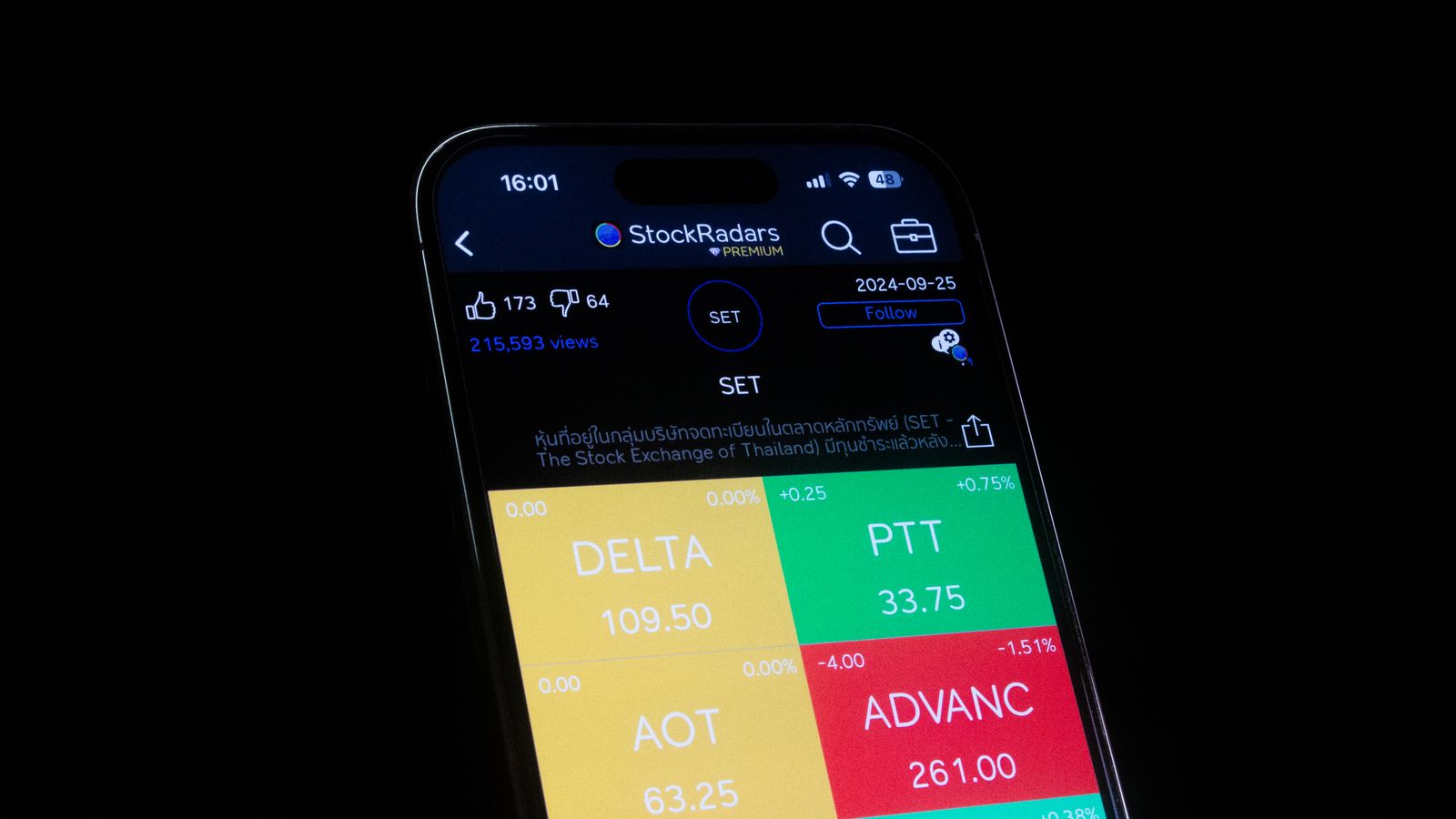
The core of order experience is not whether the interface looks attractive, but whether every step from quote, order placement, execution, cancellation, to statement review is clear and traceable. For popular tech stocks, you should especially check whether order types are complete, quotes refresh in time, execution records are detailed, cancellation status is clear, and partial fills show the remaining quantity.
Order type is the first item. Investor.gov’s explanation of order types is direct: market orders usually emphasize execution speed but do not guarantee execution price, while limit orders can control the maximum purchase price or minimum sale price but do not guarantee execution. When beginners buy popular tech stocks, if they do not understand the difference between market orders and limit orders, they may mistake the “latest price” they see during volatility for a “guaranteed execution price.”
Whether the execution process can be tracked is equally important. You need to see order submission time, order status, execution time, execution price, executed quantity, partial fills, cancellation records, and fee breakdowns. If a platform only shows a simple profit or loss figure and cannot break down execution and fees, users will have difficulty understanding where the cost came from. Especially in short-term trading, small differences in execution price and fees can accumulate into a meaningful effect after multiple trades.
For advanced comparison, you can also observe whether the platform explains order routing, price improvement, and execution quality. The SEC’s rule document on Payment for Order Flow indicates that disclosing order-flow payments and whether orders have opportunities for price improvement helps customers evaluate more effectively which markets their orders are routed to. Ordinary users do not need to study all market-structure details, but they should at least know that order experience does not start only after clicking a button. It is also related to where the order is routed and whether a better price is obtained.
High-volatility periods reveal order-experience differences most clearly. For example, when Microsoft and Meta release earnings, after-hours prices may move quickly. Popular tech stocks may also show quote jumps, cancellation delays, partial fills, and wider spreads during the first 30 minutes after the open, after earnings calls, or after major news. Whether the platform clearly displays order status in these scenarios is more meaningful than whether the interface feels smooth in calm markets.
| Order Experience Dimension | What to Observe | Why It Matters |
|---|---|---|
| Quote refresh | Whether last price, best bid, and best ask update in time | Affects order judgment |
| Order types | Whether limit, stop, pre-market, and after-hours orders are supported | Determines risk-control methods |
| Execution record | Whether execution price, quantity, and fees are shown | Helps review real cost |
| Cancellation experience | Whether cancellation status is visible | Avoids misjudgment during volatility |
| Partial fills | Whether remaining orders are shown clearly | Avoids assuming the entire order executed |
| Order routing | Whether execution quality and price improvement are explained | Helps judge whether execution can be reviewed |
Summary: The focus of order experience is not “whether you can buy,” but whether the order process can be understood. For popular tech stocks, order types, quote refresh, cancellation status, partial fills, order routing, and execution details become more important when the market moves sharply. A platform suitable for long-term use should let users know what order they submitted before execution and, after execution, know the price, quantity, and fees separately.
How Should Costs and Order Experience Be Balanced Across Different Trading Scenarios?
There is no single best platform for every trading scenario. When buying popular tech stocks for the long term, the focus is total cost, funding path, and clear statements. For short-term trading, the focus is slippage, cancellation, and execution speed. For small or fractional-share trades, the focus is minimum charges and fractional-share rules. Before comparing platforms, first clarify your trading frequency, order size, and trading session.
For long-term or staged purchases, users usually do not need to overemphasize second-level execution speed. Instead, they should check whether fund conversion is clear, platform fees can be verified, and statements are easy to keep for long-term records. If you follow Amazon or Alphabet as long-term popular tech stocks, staged purchases should focus more on whether each purchase has a consistent fee structure and whether fund flows are easy to reconcile.
Short-term trading is different. Earnings releases, news-driven moves, intraday breakouts, and pre-market or after-hours trading rely more on execution and quote quality. A market order may execute faster, but the price is not controlled. A limit order can control price, but may miss execution. A stop order may also execute at a price different from expectation after being triggered during a fast move. For short-term users, spreads, slippage, and cancellation status are often more sensitive than single-trade commission.
Small or fractional-share trades require extra attention to minimum charges. If the per-order minimum fee is high, the cost rate of a small trade can be magnified. Fractional-share orders also require checking whether both buying and selling are supported, whether a separate fee rate applies, and whether execution records can show the breakdown clearly. For beginners, a small test order can help them understand the process, but minimum charges and fractional-share rules should not be ignored.
| Trading Scenario | Cost Focus | Order Experience Focus |
|---|---|---|
| Long-term holding | Platform fee, FX, funding cost | Clear statement, staged records |
| Short-term trading | Spread, slippage, sell-side fees | Quote refresh, cancellation, limit order |
| Pre-market and after-hours | Spread, liquidity cost | Order limits, execution probability |
| Small test order | Minimum charge, fractional-share fee | Fractional-share execution and sale rules |
| Earnings trade | Slippage, price gaps | Stop order, limit order, partial fills |
Summary: Long-term investors, short-term traders, and small-account users have different platform needs. Long-term users care more about fee transparency and funding paths. Short-term users care more about execution speed and slippage. Small-account users care more about minimum charges and fractional-share rules. When comparing platforms, first write down your own trading scenario, then use the corresponding dimensions to check cost and order experience. The result will be more reliable than looking only at commission.
How Can You Use One Table to Compare Trading Costs and Order Experience Across U.S. Stock Platforms?
When using one table to compare platforms, the key is keeping conditions consistent. You can choose one popular tech stock as the sample, such as Nvidia, Tesla, or Apple, then set the same purchase amount, share quantity, order type, whether fractional shares are used, whether a sale is included, and whether currency conversion is involved. Only when the sample is consistent can platform fees and order experience be compared fairly.
Step one is to use the same stock as the sample. Do not use Nvidia on Platform A and Tesla on Platform B, then draw a conclusion about platform cost. Different stocks have different prices, share quantities, spreads, and liquidity, which can distort the comparison. A better method is to set consistent conditions, such as “buy USD 1,000 of Nvidia, use a limit order, do not use fractional shares, then sell one order after execution,” and record each platform’s fee estimate and post-execution statement.
Step two is to record both the pre-order estimate and the post-execution statement. Before placing the order, check whether the order page displays commission, platform fees, external fees, and estimated debit amount. After execution, check execution price, executed quantity, regulatory fees, platform fees, exchange rate, and fund flows. Both matter: the estimate shows whether you understand the cost before ordering, while the statement shows whether you can review the trade after execution.
Step three is to include multi-asset platforms in the comparison table. If related services are available in your location and meet the platform’s applicable conditions, Biya can be used as one of the multi-asset fee-checking tools. For users comparing U.S. stock trading fees, it allows fee information, order estimates, execution records, account details, and fund conversion records to be reviewed in one process, then compared with actual execution results through Biya Web Trading or Biya App.
| Comparison Item | What to Fill In | Judgment Standard |
|---|---|---|
| Sample stock | Such as Nvidia, Tesla, Apple | Same stock is needed for comparability |
| Order type | Market order, limit order, fractional-share order | Whether it matches trading habits |
| Fee estimate | Fees shown on the order page | Whether it is clear and itemized |
| Actual execution | Execution price, executed quantity | Whether it deviates from expectation |
| Fee statement | Platform fee, regulatory fee, FX | Whether it can be verified |
| Order experience | Cancellation, partial fills, status updates | Whether it is clear and traceable |
Summary: When comparing platforms, do not rely only on a screenshot of the fee schedule, and do not judge only by one trading impression. A more reliable method is to use the same popular tech stock, the same trading amount, and the same order type, then record both the pre-order estimate and the post-execution statement. Only then can you judge whether platform fees are transparent, whether order experience is stable, and whether trading records are convenient for long-term review.
What Boundaries and Risks Must Be Confirmed Before Choosing a Tech Stock Trading Platform?
Before choosing a tech stock trading platform, service boundaries, fee boundaries, and risk boundaries should all be confirmed. Transparent fees and clear order records do not mean the trading result will necessarily be better. They simply help users identify costs, review orders, and control the trading process more clearly. Popular tech stocks still involve price volatility, liquidity changes, and news-driven shocks.
Service boundaries include location, identity verification, account permissions, tradable securities, pre-market and after-hours access, and product rules. Some platforms support regular-hours U.S. stock trading but may not support pre-market or after-hours trading. Some support whole-share trading but have different fractional-share rules. Some show fee estimates, while fund conversion and deposit or withdrawal fees need to be checked separately. In actual use, the platform display, account status, and applicable laws and regulations should be the reference.
This comparison method applies to users who have already decided to compare trading platforms and order processes. It is not suitable for judging whether a specific tech stock is worth buying, and it cannot replace company financial reports, announcements, valuation research, personal risk assessment, or local regulatory requirements. Separating tool comparison from investment judgment helps reduce the risk of misreading platform experience as an investment conclusion.
Fee boundaries should also be made clear. Low fees can only reduce trading friction; they cannot change stock-price volatility risk. Good order experience also does not mean losses can be avoided. It only makes it easier to see how orders are executed, how fees are charged, and where slippage appears. Distinguishing platform capabilities from investment outcomes is a basic requirement for compliant financial content.
| Risk Check Item | Question to Confirm |
|---|---|
| Price volatility | Do you understand that popular tech stocks can rise or fall quickly? |
| Pre-market and after-hours | Do you know liquidity may be lower than in regular hours? |
| Market order | Do you understand that market orders do not guarantee execution price? |
| Fee review | Can you verify platform fees, regulatory fees, and FX costs? |
| Service scope | Do your location and account permissions meet platform rules? |
Summary: When choosing a tech stock trading platform, platform comparison is a tool-selection issue, not a stock recommendation. A platform with transparent fees, clear order records, and explicit service boundaries can help users better identify costs and review trades, but it cannot replace company research, risk assessment, or local compliance requirements. Before trading, beginners should check available services, fee items, order rules, and personal risk tolerance together.
FAQ
Why Shouldn’t You Look Only at Commission When Buying Popular Tech Stocks?
Commission is only one part of trading cost. Popular tech stocks may also involve platform fees, minimum charges, sell-side regulatory fees, spreads, slippage, FX, and funding costs. Order estimates, execution records, and account statements should be reviewed together.
How Can Ordinary Investors Compare Fee Transparency Across U.S. Stock Platforms?
Ordinary investors can check whether fees are estimated before ordering and whether commission, platform fees, regulatory fees, FX, and fund flows can be broken down after execution. Fee schedules, order pages, and statements should correspond with one another.
How Should Market Orders and Limit Orders Be Chosen When Trading Nvidia or Tesla?
Market orders emphasize execution speed but do not guarantee price. Limit orders can control the maximum buy price or minimum sell price, but may not execute. During volatility, users should first understand order rules and choose based on personal risk tolerance.
Why Can Short-Term Trading in Popular Tech Stocks Magnify Costs More Easily?
The more frequently short-term trades are placed, the more platform fees, minimum charges, sell-side fees, spreads, and slippage can accumulate. Even if a single fee is not high, repeated trades can materially affect the real trading result.
What Fees Should Small Trades in Popular Tech Stocks Focus On?
Small trades should focus on per-order minimum charges, fractional-share rules, platform fees, and FX costs. If the minimum charge accounts for a high percentage of the trade amount, the actual cost rate may still be high even when commission is low.
What Should Be Checked in Order Experience When Choosing a Tech Stock Trading Platform?
Quote refresh, order types, cancellation status, partial fills, execution details, and fee breakdowns should be checked. The key to good order experience is whether the trading process is clear, traceable, and reviewable.
Conclusion: Move Platform Comparison from “Low Commission” to “Reviewable”
When following popular tech stocks, platform comparison should not stop at whether commission is low. It should return to fee transparency, order traceability, and post-execution review. The truly important checks are whether you can see fee estimates before placing an order, whether the post-execution statement can be broken down, whether market orders and limit orders fit your trading habits, and whether fund conversion and account details can be reconciled.
If you need to observe U.S. stocks, Hong Kong stocks, digital assets, and other multi-asset scenarios in one process, while checking order estimates, execution records, fee details, and fund conversion records, Biya can be used as one of the tools for reviewing fees and trading records. In actual use, you can first review the Fee Center, then use Biya Web Trading or Biya App to compare the order page, execution records, account details, and fund flows. The point is not to pursue the lowest single fee item, but to make each trade’s price, order, and fee traceable.
The information above is only for introducing public market information, trading rules, and fee structures, and does not constitute investment advice. Whether related trading services are available depends on the user’s location, identity verification results, platform rules, and applicable laws and regulations. Investing in U.S. stocks and digital assets involves risks such as price volatility, liquidity, exchange rates, and regulatory restrictions. Specific rates and fee items should be based on the latest fee schedule, orders, and execution records of the platform you use. Past fee rates do not represent future rules.
*This article is provided for general information purposes and does not constitute legal, tax or other professional advice from BiyaPay or its subsidiaries and its affiliates, and it is not intended as a substitute for obtaining advice from a financial advisor or any other professional.
We make no representations, warranties or warranties, express or implied, as to the accuracy, completeness or timeliness of the contents of this publication.
Related Blogs of

Crypto Wallet to Fiat Wallet: Conversion Steps, Fees, and Withdrawals


Crypto Trading Bots: Types, Costs, and Security Risks




Choose Country or Region to Read Local Blog
 Australia
 Austria
 Belgium
 Canada
 Cyprus
 Czech Republic
 Denmark
 Estonia
 Finland
 France
 Germany
 Greece
 Hong Kong
 India
India Indonesia
 Ireland
 Italy
Italy Japan
Japan Latvia
 Lithuania
 Luxembourg
 Malaysia
 Malta
Malta Morocco
 Nepal
Nepal Netherlands
 New Zealand
 Norway
 Pakistan
 Philippines
 Poland
 Portugal
 Romania
 Singapore
 Slovakia
 Slovenia
 South Africa
 South Korea
 Spain
Spain Sweden
 Thailand
 United States
 Turkey
 United Arab Emirates
 United Kingdom
 Vietnam