
How to Choose a USD Exchange Platform? Differences Between Banks, Wise, Revolut, PayPal, and Brokerage Accounts




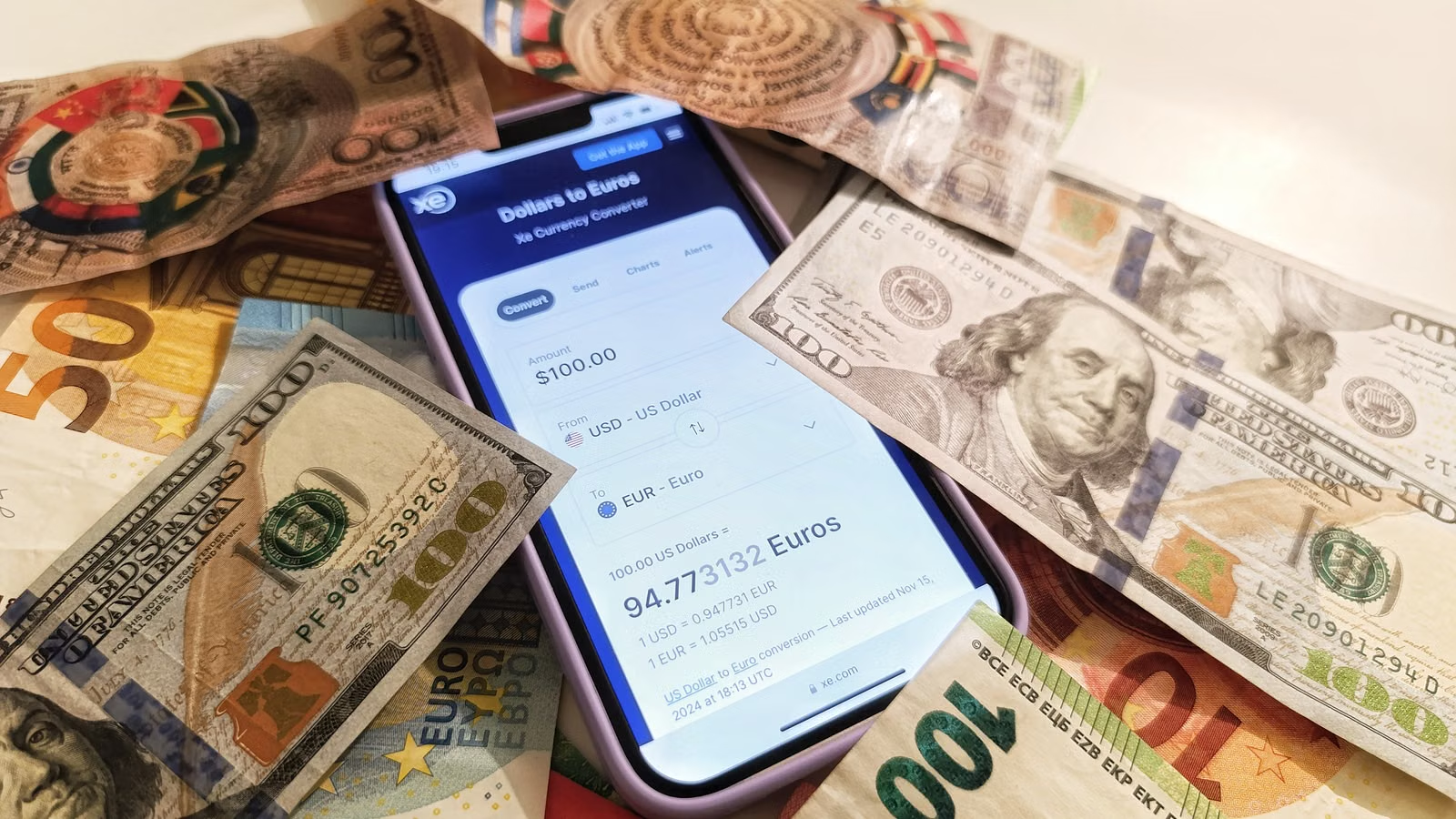
There is no single best USD exchange platform for every situation. The right choice depends on how you plan to use the funds. Banks are more suitable for large, formal transfers that require clear records; Wise is better for transparent multi-currency transfers and receipts; Revolut is more focused on travel spending, in-app currency exchange, and card use; PayPal works well for online payments and merchant receipts, but may not be ideal for low-cost large-amount currency exchange; brokerage accounts are more suitable for USD conversion related to investing. Before choosing, you should compare the final amount received, FX spread, fees, transfer speed, account availability by region, source-of-funds documentation, and withdrawal route, rather than only looking at the displayed USD exchange rate.
Key Takeaways
- Choose a USD exchange platform based on fund usage, not just displayed rates.
- Banks offer clearer records, but may involve spreads, wire fees, and intermediary costs.
- Wise and Revolut are useful for multi-currency management, but depend on region and plan.
- PayPal is more suitable for payments and receipts, not necessarily large low-cost FX.
- Brokerage FX is suitable for investment funding, but has a clearer usage boundary.
- Judge the true cost by final amount received, fee details, and withdrawal route.
Before Choosing a USD Exchange Platform, Clarify Your Funding Purpose

When choosing a USD exchange platform, the first step is not to find the platform with the “best exchange rate,” but to clarify where the USD will be used. Cross-border remittances, overseas spending, investment funding, online subscriptions, freelance income, and business payments all have different requirements for cost, speed, records, and compliance. Small consumer payments prioritize convenience; large transfers prioritize security and documentation; investment funding prioritizes same-name rules and broker acceptance; receiving payments prioritizes withdrawals and reconciliation.
The total cost of cross-border money movement is often underestimated. The World Bank Remittance Prices Worldwide report for Q3 2025 shows that the global average cost of sending US$200 was 6.36%, while the global average cost of sending US$500 was 4.08%. This shows that cross-border FX and transfers should not be judged only by the “displayed exchange rate.” Fixed fees, channel costs, and receiving-side deductions can all affect the final amount received.
Cross-Border Transfers, Overseas Spending, and Investment Funding Are Different Needs
If you are sending living expenses to family overseas, the key factors are transfer reliability, recipient options, and total cost. If you are paying for overseas subscriptions, the key factors are card acceptance, currency conversion fees, and refund paths. If you are funding a brokerage account, the key factors are same-name account requirements, transfer reference details, and whether the broker accepts the paying institution. If you are receiving cross-border e-commerce or freelance income, the key factors are receiving fees, withdrawal fees, account reviews, and reconciliation records.
Look at the “Final USD Received” Before the “Displayed Rate”
Many platforms emphasize low fees or preferential exchange rates, but what you really need to compare is how much USD the recipient receives after all costs are deducted. For the same US$1,000 conversion, a bank may involve wire fees and intermediary bank charges; an e-wallet may involve currency conversion fees and withdrawal fees; a multi-currency account may charge FX fees; a brokerage account may involve spreads or trading-related costs.
| Comparison Dimension | What to Check | Common Misconception |
|---|---|---|
| Exchange rate | Actual execution rate, spread, weekend markup | Only looking at mid-market rates |
| Fees | Fixed fees, percentage fees, withdrawal fees | Only looking at “zero fee” claims |
| Arrival time | Instant, same-day, 1–5 business days | Ignoring intermediary bank time |
| Use case | Spending, remittance, investing, receiving payments | Using one platform for all scenarios |
| Restrictions | Region, limit, KYC, account type | Assuming account opening means full usability |
| Records | Receipts, statements, source-of-funds proof | Keeping screenshots but not transaction documents |
If you only want to estimate whether a platform’s quote is reasonable, you can first use real-time exchange rates to check the current reference price between USD and the target currency, then compare it with the actual execution rate shown by banks, Wise, Revolut, PayPal, or brokerage accounts. Reference rates can only help you judge the approximate range. The final cost should still be based on the platform’s transaction confirmation page, statement, and actual amount received.
Summary: There is no universally best USD exchange platform. There is only a platform that is more suitable for your current funding purpose. Small and frequent spending should focus on convenience and card support. Medium and large transfers should focus on final received amount, route stability, and documentation. Investment funding should focus on same-name rules, broker acceptance, and withdrawal loops. Receiving payments should focus on withdrawals, reconciliation, and account review. Write down your funding purpose, recipient, currency, transfer deadline, and documentation needs before comparing platforms, so you are not misled by surface-level exchange rates.
Bank USD Exchange: Suitable for Large, Traditional, and Well-Documented Transfers
Bank USD exchange may not always be the cheapest option, but it still has advantages in large, formal, and traceable transfer scenarios. If you need to pay tuition, rent, business expenses, brokerage funding, or other payments that require source-of-funds documentation, banks can usually provide formal receipts, transfer records, and account statements. The downside is that spreads, fees, intermediary bank charges, and transfer time may be higher than some online platforms.
Main Advantages of Bank FX
Banks have a complete account system and are suitable for scenarios requiring formal documentation. For example, overseas tuition, immigration-related proof of funds, rental deposits, large family remittances, and brokerage funding often require the recipient to verify the payer’s name, bank receipt, and funding source. Taking a common Singapore banking route as an example, DBS international transfers explain that cross-border transfers may involve service fees, cable charges, and agent bank fees, with actual costs varying by destination, currency, and transfer method.
Main Costs of Bank USD Exchange
Bank costs usually consist of four parts. The first is the bid-ask spread, meaning the gap between the bank’s USD selling rate and the market mid-rate. The second is the wire transfer fee. The third is agent or intermediary bank deductions. The fourth is the receiving bank’s incoming fee. Some costs are visible when initiating the transfer, while others only appear after funds arrive. Therefore, when comparing bank FX, do not only look at the fee shown on the transaction page.
Who Is Bank FX Suitable For?
Banks are more suitable for users with larger amounts, lower transaction frequency, a need for formal receipts, and a possible future need to explain the source of funds. If you are paying a broker, school, landlord, or business account, the documentation value of a bank route may matter more than extremely low fees. By contrast, if you only convert a small amount of USD each month for spending or subscriptions, the bank route may feel slow, procedural, and complex.
| Bank USD Exchange Dimension | Main Characteristics |
|---|---|
| Advantages | Clear records, traditional route, suitable for large amounts, complete account system |
| Disadvantages | Spreads may be higher, fees are more complex, arrival may be slower |
| Suitable scenarios | Tuition, rent, brokerage funding, business payments, large remittances |
| Less suitable scenarios | Small frequent spending, temporary online payments, frequent multi-currency switching |
| Key checks | Exchange rate, fees, intermediary charges, payment reference, receipt |
When using a bank to exchange and send USD, carefully check the recipient name, receiving bank, SWIFT/BIC, account number, payment purpose, and reference field. If you need to verify bank identification information, Swift lookup can be used as an auxiliary check, but the final information should always follow what the recipient and bank transaction page display.
Summary: The core value of bank USD exchange is not the lowest cost, but formality, stability, and traceability. For medium and large transfers, investment funding, tuition, rent, and business payments, bank receipts, account statements, and source-of-funds records have practical value. When choosing a bank, compare the actual execution rate, fees, intermediary bank deductions, transfer time, and receipt completeness. If your need is small consumer spending or frequent currency switching, banks may not be the most efficient route. For formal funding needs, banks are still an important option to consider.
Wise vs Revolut: Differences and Use Cases for Multi-Currency Accounts

Wise and Revolut are both commonly used for USD exchange and multi-currency money management, but they are positioned differently. Wise is more focused on international transfers, multi-currency receipts, and transparent fees. Revolut is more focused on in-account multi-currency spending, travel, cards, and membership plans. Neither platform can be used unconditionally in every region, for every currency, or with every recipient. This is especially important when funds are intended for brokerage or institutional accounts, where you must separately confirm whether the recipient accepts that type of account.
Wise: More Focused on Cross-Border Transfers and Transparent FX
Wise states in its Singapore fee information that Wise Account can hold 40+ currencies for free, and account-to-account currency exchange uses the real exchange rate with a small fee. Wise is more suitable for users who need cross-border transfers, receipts, multi-currency balances, and clearer cost visibility. Its advantage is relatively straightforward fee disclosure: before converting, users can usually see the exchange rate, fee, and estimated amount received.
However, Wise features vary by country and region. Wise multi-currency accounts may support different account details, receiving currencies, and card features across markets. The Wise card also has specific availability by country. Being able to register for Wise does not necessarily mean you can use all USD receiving, card, or investment funding functions.
Revolut: More Focused on In-App Spending, Travel, and Plan Benefits
Revolut Singapore emphasizes in-app multi-currency holding, cross-border spending, and transfers to multiple countries, making it more suitable for travel spending, overseas card payments, in-app exchange, and everyday multi-currency management. Revolut’s fees depend heavily on region and account plan. For example, Revolut Singapore currency exchange fees state that Standard plan users have a fair usage allowance on weekdays, and amounts above S$5,000 or equivalent may incur a 1% fee.
Revolut Standard plan fees also show that different plans have different exchange allowances and fair usage fees. In other words, you should not only check whether Revolut supports currency exchange; you also need to check your region, account plan, exchange time, monthly allowance, and whether you exceed the fair usage limit.
Key Differences Between Wise and Revolut
| Dimension | Wise | Revolut |
|---|---|---|
| Core positioning | International transfers and multi-currency receipts | Spending, travel, and multi-currency card |
| Fee logic | Actual rate plus fee, shown before exchange | Plan allowance, fair usage rules, timing restrictions |
| Suitable scenarios | Cross-border transfers, receipts, transparent FX | Overseas spending, travel, in-app exchange |
| Regional limits | Account, card, and receiving details vary by region | Plans, features, and limits vary by region |
| Investment funding | Depends on broker acceptance | Depends on broker acceptance |
If you care more about cross-border transfers and fee transparency, Wise is usually easier to use as a comparison benchmark. If you care more about travel spending, card payments, and in-app account experience, Revolut is more relevant. Neither can replace all bank functions, and neither should be assumed to work for brokerage funding.
Summary: The difference between Wise and Revolut is not just the exchange rate; it is their product positioning. Wise is more like a cross-border transfer and multi-currency account tool, suitable for seeing FX fees, receiving details, and international transfer costs clearly. Revolut is more like a mobile financial account and travel wallet, suitable for multi-currency spending, card use, and membership benefits. Before choosing, check service regions, account plans, exchange allowances, card functions, and recipient acceptance. If the funds will ultimately be used for investing, the broker’s funding rules should take priority.
PayPal USD Exchange: Better for Payments and Receipts, Not Necessarily Low-Cost FX
PayPal is more suitable for online payments, cross-border receipts, subscription payments, and merchant settlement, rather than large low-cost USD exchange. If your core need is to pay overseas merchants, receive client payments, process e-commerce orders, or pay for subscriptions, PayPal may be convenient. If your goal is to exchange a large amount into USD, transfer it to a bank, fund investments, or hold USD long term, you should carefully compare currency conversion fees, withdrawal fees, and account restrictions.
PayPal’s Core Use Case Is Payments and Receipts
PayPal’s advantage lies in its payment network and merchant coverage. Many overseas websites, SaaS tools, freelance platforms, and cross-border e-commerce transactions support PayPal. You can think of it as a payment and receipt tool, not a bank wire or professional FX account. It is suitable for “completing a payment” or “receiving client money,” but not necessarily for “converting local currency into USD at low cost and managing it long term.”
PayPal FX Costs Need Careful Review
PayPal Singapore consumer fees state that buying goods or making commercial transactions is usually free when no currency conversion is involved, but related fees may apply when currency conversion occurs. Withdrawals to third-party service providers or local accounts may also involve currency conversion fees. PayPal also states that users can view exchange rates in the Currency Calculator in their wallet, and that the rate includes a fee.
This means PayPal’s FX cost should not be judged only by whether the payment succeeds. You need to check the payment currency, whether the card issuer performs a second conversion, PayPal’s exchange rate, the merchant’s receiving currency, the withdrawal route, and the account region. For large amounts, even a few percentage points of exchange rate difference or fees can significantly affect the final amount received.
When PayPal Is and Is Not Suitable
| Scenario | Is PayPal Suitable? | Reason |
|---|---|---|
| Overseas online shopping | Relatively suitable | Wide merchant coverage and convenient checkout |
| SaaS subscription payments | Relatively suitable | Supports recurring payments and online billing |
| Cross-border e-commerce receipts | Depends | Need to check merchant fees, withdrawal fees, and freeze risk |
| Large USD exchange | Usually not a priority | FX and withdrawal costs may not be advantageous |
| Brokerage funding | Usually unsuitable | Most brokers prioritize same-name bank accounts |
| Long-term USD cash management | Usually unsuitable | Account use case is more focused on payment and receipts |
PayPal accounts may also be affected by transaction type, account region, receiving behavior, and risk reviews. This is especially relevant for merchant receipts and frequent cross-border transactions. You should understand withdrawal time, reserves, dispute handling, and account restrictions in advance.
Summary: PayPal’s advantage is its payment network, not low-cost USD exchange. If you are paying overseas subscriptions, shopping online, or receiving client payments, PayPal can be an option. If you need large USD conversion, bank transfers, investment funding, or long-term USD money management, you should prioritize comparing banks, Wise, Revolut, or brokerage accounts. Before using PayPal, check the applicable market’s fees, actual exchange rate, withdrawal fees, and account restrictions, so you do not mistake payment convenience for FX cost advantage.
Brokerage Account USD Exchange: Suitable for Investment Funds, Not All USD Use Cases
Brokerage account USD exchange is suitable for situations where funds will be converted and used directly for investing, such as buying U.S. stocks, ETFs, bonds, or building a multi-market portfolio. It is not suitable as an ordinary spending wallet, cross-border receiving account, or tool for sending money to others. If your only goal is to trade USD assets, broker-side FX may reduce fund transfers between external accounts. If you only want to exchange USD for spending or transfers, banks and multi-currency accounts usually fit the purpose better.
Core Use Case of Brokerage FX
Brokerage FX serves investment settlement. For example, if your account holds HKD, EUR, or another currency and you want to buy USD-denominated U.S. stocks or ETFs, you may need to convert the funds into USD first, or the platform may automatically convert currency during trading. The benefit is that funds do not need to move repeatedly between multiple external accounts, while trades, cash balances, and monthly statements remain concentrated in the same account.
Costs and Restrictions of Brokerage FX
Brokerage FX costs may include spreads, currency trading commissions, minimum fees, automatic conversion markups, and cash account restrictions. For example, Interactive Brokers spot currency commissions state that its automatic currency conversion service typically applies a 0.03% markup or markdown to the applicable exchange rate and does not charge an additional auto-conversion trading commission. Specific fees, product permissions, and account restrictions still depend on your account type and local rules.
Brokerage trading costs also go beyond FX. For example, Schwab international pricing shows US$0 online commissions for U.S.-listed stocks and ETFs, but industry fees, ADR fees, foreign exchange transaction fees, and other charges may still apply. Investors should also check trading commissions, platform fees, regulatory fees, currency conversion costs, and deposit and withdrawal fees together.
Investment Funding Requires Attention to Third-Party Fund Restrictions
Brokers usually pay close attention to the source of funds and same-name rules. Schwab international account funding supports wire transfers, account transfers, or checks, and investors need to follow the receiving details shown in their account portal. If you try to fund with a third-party payment account, multi-currency account, or someone else’s account, the broker may return the funds or request additional documents. Whether funds can ultimately enter a brokerage account depends on whether the broker accepts that paying institution and account type.
| Brokerage USD Exchange Dimension | Explanation |
|---|---|
| Suitable for | U.S. stock trading, ETF investing, multi-market fund allocation |
| Not suitable for | Daily spending, sending money to others, business receipts and payments |
| Costs | FX spread, currency trading fees, platform fees, regulatory fees |
| Restrictions | Same-name funding, withdrawal account, product permissions, settlement rules |
| Key checks | Deposit currency, minimum conversion amount, withdrawal path, statement records |
If your USD exchange purpose is to trade overseas stocks or ETFs, you can also compare U.S. stock trading fees and other cost structures. Biya charges US$0 commission for U.S. stock trading, while platform fees, external agency fees, and other fees are subject to the fee center and order page. Before trading, you should consider FX cost, order fees, and holding risk together, rather than focusing on a single rate.
Summary: Brokerage account USD exchange is suitable for investment use, not every USD need. Its advantage is that FX, trading, and statement records are relatively centralized, making it suitable for U.S. stocks, ETFs, and multi-market asset allocation. Its limitation is that the purpose of funds is clearly bounded, and deposits and withdrawals usually need to comply with same-name, account type, and platform rules. If the funds will be used for consumption, receiving payments, or sending money to others, a brokerage account is not the right tool. Investment-related FX should also be compared together with exchange rate costs, trading fees, settlement cycles, and withdrawal paths.
How to Choose Among Five Types of USD Exchange Platforms: Decide by Amount, Speed, and Use Case
The five types of USD exchange platforms can be evaluated by amount, speed, use case, documentation, and withdrawal path. For small consumer payments and subscriptions, prioritize convenience and card support. For medium and large cross-border transfers, prioritize final amount received and receipts. For U.S. stock or overseas investment funding, prioritize whether the broker accepts the route, whether it is same-name, and whether withdrawal is possible. For online receipts, prioritize receiving fees, withdrawal paths, and account stability.
Small Consumer Spending and Subscription Payments
For small consumer payments, you do not need to over-optimize for the lowest exchange rate. Focus on payment success rate, refund path, and statement clarity. Multi-currency cards, credit cards, debit cards, and PayPal may all be suitable. You should compare card issuer currency conversion fees, platform exchange rates, merchant receiving currency, and refund methods after failed payments.
Medium and Large Cross-Border Transfers
Medium and large transfers are more suitable for banks, Wise, or compliant remittance service providers. Key factors include the final amount received by the recipient, transfer time, whether the receiving bank deducts fees, whether the payment purpose is clear, and whether the receipt is complete. If you need to send money to more than 190 countries or regions, you can also compare available remittance routes, currencies, payment methods, and service availability. Cross-border remittances involve regional rules, and actual service availability depends on location, identity verification, and platform requirements.
U.S. Stock or Overseas Investment Funding
Investment funding should not be judged only by USD conversion cost. You also need to check whether the broker accepts the funds. Bank wires, broker-side FX, and same-name funding accounts explicitly accepted by the broker are usually more reliable than third-party payments. You also need to check tax forms, monthly statements, withdrawal accounts, and trading fees. If a platform is not accepted by the broker, it is not suitable for investment funding even if its FX rate is cheaper.
| Platform Type | Best For | Cost Transparency | Documentation Ability | Investment Funding Fit | Main Limitation |
|---|---|---|---|---|---|
| Bank | Large transfers and formal payments | Medium | High | High | More procedures and possible intermediary fees |
| Wise | Cross-border receipts, payments, and multi-currency FX | High | Medium-high | Depends on broker | Regional and functional restrictions |
| Revolut | Travel spending and multi-currency cards | Medium-high | Medium | Depends on broker | Plan allowances and regional restrictions |
| PayPal | Online payments and merchant receipts | Medium | Medium | Low | FX and withdrawal costs |
| Brokerage account | Investment funding and trading settlement | Medium-high | High | High | Not suitable for daily receipts and payments |
Summary: The final decision method can be simplified into four principles: for small and frequent payments, focus on convenience; for medium and large transfers, focus on final amount received and documentation; for investment funds, focus on broker rules and withdrawal loops; for receiving payments, focus on withdrawals and reconciliation. Do not use one platform for every USD need, and do not use “best exchange rate” as the only decision factor. A more reasonable approach is to divide USD exchange needs into spending, remittance, investing, and receiving payments, then choose among banks, Wise, Revolut, PayPal, or brokerage accounts accordingly.
When you compare banks, Wise, Revolut, PayPal, and brokerage accounts at the same time, what you really need to manage is the entire funding chain: reference exchange rate, actual execution rate, fees, transfer time, trading purpose, statement records, and withdrawal path. Users who meet the applicable service conditions can use Biya to manage multi-asset trading and funding records. If your funding arrangement involves USD, HKD, or other major fiat currencies and digital assets, you should first verify platform rules, identity verification requirements, and applicable local regulations. Biya supports U.S. stock, Hong Kong stock, and digital asset trading, and can also be used to review multi-asset statements and transaction costs. Service availability depends on the user’s location, identity verification result, platform rules, and applicable laws and regulations. Any FX, remittance, or trading decision should be based on actual fees, order pages, and personal risk tolerance.
FAQ
Should You Choose a USD Exchange Platform Only by Exchange Rate?
No. Exchange rate is only one part of total cost. You also need to compare fees, spreads, intermediary bank charges, withdrawal fees, transfer time, and refund paths. A more reliable method is to check how much USD the recipient actually receives after converting the same amount.
Is Bank USD Exchange Suitable for Ordinary Investors?
Yes, if the investor needs formal records and a clear funding route. Banks may not be the lowest-cost option, but they can be more suitable for brokerage funding, large transfers, tuition, rent, and scenarios requiring receipts. Actual costs should be based on the bank’s transaction page and statement.
Is Wise or Revolut Better for USD Exchange?
It depends on whether you value cross-border transfers or in-account spending more. Wise is more focused on international receipts, payments, and transparent FX. Revolut is more focused on multi-currency cards, travel, and membership plans. Available features, limits, and fees should be checked according to your location.
Is PayPal Suitable for Large USD Transfers?
Usually not as a large low-cost FX tool. PayPal is more suitable for online payments, subscription payments, and merchant receipts. When currency conversion, withdrawals, and cross-border transactions are involved, you should check the applicable market’s fees, exchange rate, and account restrictions.
Can Brokerage Account USD Exchange Be Used for Daily Spending?
Usually not. Brokerage account FX mainly serves securities trading and investment settlement. It should not replace an everyday payment wallet or a regular bank account. Deposits and withdrawals must still follow the broker’s same-name rules, account type requirements, and applicable local regulations.
How Can You Identify Hidden Costs in USD Exchange Platforms?
Use the “final amount received” to work backward and identify hidden costs. You can record the quoted exchange rate, actual execution rate, platform fees, bank deductions, arrival time, and withdrawal fees, then compare across platforms. For investment or remittance use, keep statements and receipts as supporting records.
*This article is provided for general information purposes and does not constitute legal, tax or other professional advice from BiyaPay or its subsidiaries and its affiliates, and it is not intended as a substitute for obtaining advice from a financial advisor or any other professional.
We make no representations, warranties or warranties, express or implied, as to the accuracy, completeness or timeliness of the contents of this publication.
Related Blogs of

MACD Crypto Trading Strategy: Settings, Signals, and Risk Management


International Money Transfers: Methods, Requirements, and Costs


Crypto Exchange Fees Comparison: Trading Fees, Spreads, and Withdrawals


International Wire Transfer Time: What Affects Delivery?

Choose Country or Region to Read Local Blog
 Australia
 Austria
 Belgium
 Canada
 Cyprus
 Czech Republic
 Denmark
 Estonia
 Finland
 France
 Germany
 Greece
 Hong Kong
 India
India Indonesia
 Ireland
 Italy
Italy Japan
Japan Latvia
 Lithuania
 Luxembourg
 Malaysia
 Malta
Malta Morocco
 Nepal
Nepal Netherlands
 New Zealand
 Norway
 Pakistan
 Philippines
 Poland
 Portugal
 Romania
 Singapore
 Slovakia
 Slovenia
 South Africa
 South Korea
 Spain
Spain Sweden
 Thailand
 United States
 Turkey
 United Arab Emirates
 United Kingdom
 Vietnam