What Are Storage Chip Stocks? A Breakdown of DRAM, NAND, HBM, and HDD-Related Names




Storage chip stocks are not a single sector. They cover DRAM, NAND, HBM, SSDs, HDDs, controllers, and data center storage systems. If you follow AI, GPUs, data centers, and the semiconductor cycle, you need to understand where each storage technology sits first: HBM is closer to AI accelerators, NAND and enterprise SSDs focus more on high-speed access, while HDDs handle large-scale data storage. To evaluate storage chip stocks, the key is not whether a company’s name includes “storage,” but whether its revenue structure, cycle position, customer orders, and valuation are aligned.
Key Takeaways
- Storage chip stocks can be grouped into DRAM/HBM, NAND/SSD, HDD, and system-level names.
- HBM sits close to GPUs and is an important memory direction for AI training and high-performance inference.
- NAND and enterprise SSDs benefit from model loading, caching, inference, and data center upgrades.
- HDDs are not chips, but they are often included in the AI storage stock universe.
- The storage industry is highly cyclical, so pricing, inventory, margins, and capex also matter.
- Beginners should first understand the supply chain position before comparing names, rather than chasing price momentum.
How Should Storage Chip Stocks Be Classified? Start with DRAM, NAND, HBM, and HDD
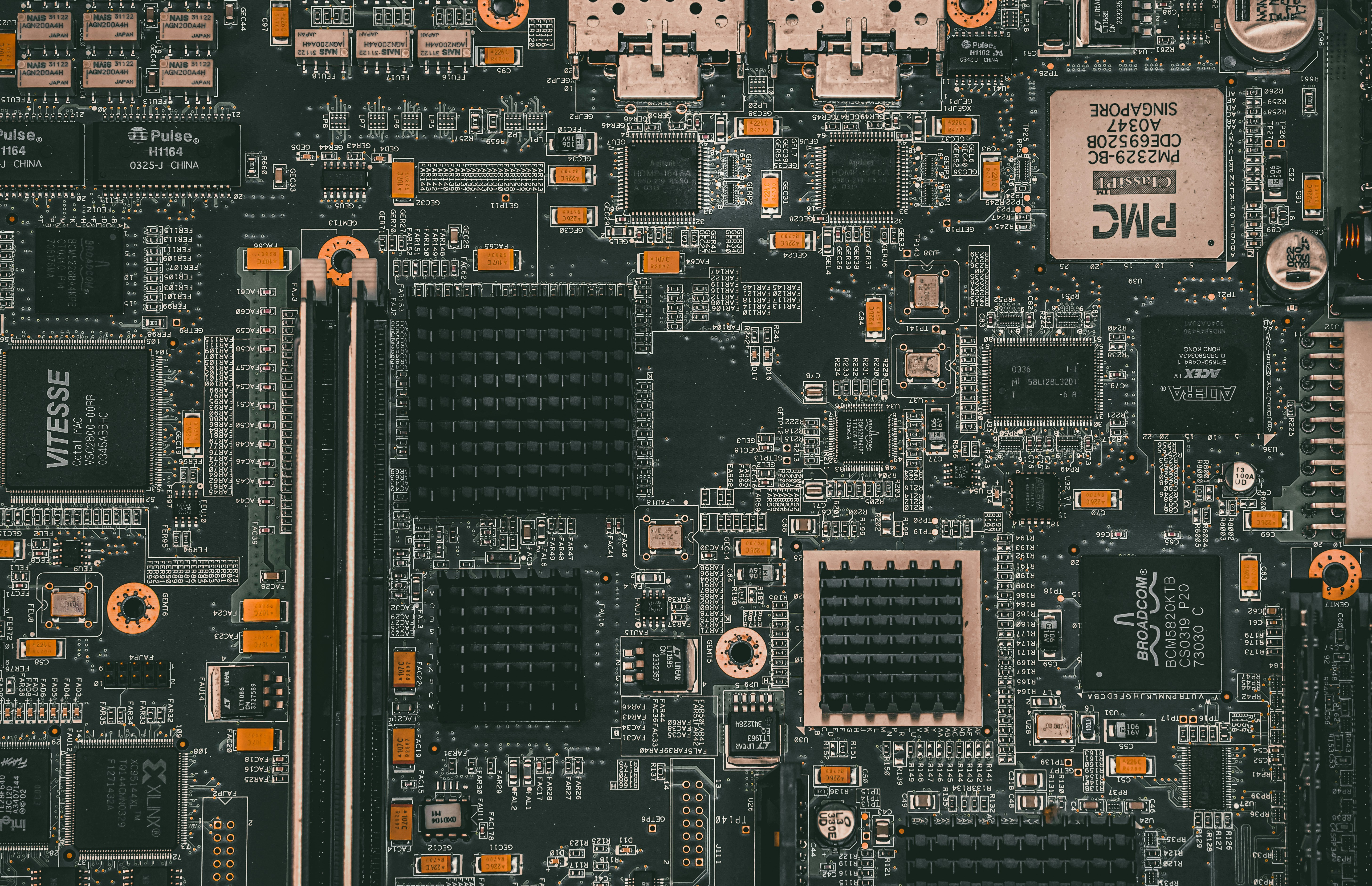
Storage chip stocks should first be classified by technology layer, not simply grouped under “semiconductors.” DRAM, NAND, HBM, and HDDs correspond to different business models, customer structures, and pricing cycles. DRAM is system memory, HBM is high-bandwidth memory, NAND is flash memory, SSDs are high-speed storage products built on NAND, and HDDs, although not chips, are an important part of AI data center capacity storage.
From a use-case perspective, DRAM supports runtime memory for servers, PCs, smartphones, and data centers. HBM sits close to GPUs and is used for AI training, high-performance computing, and large-model inference. NAND stores data in non-volatile form and serves as the foundation for SSDs, USB drives, memory cards, and enterprise flash drives. HDDs are used for large-scale, lower-cost, long-term data storage. Many investors searching for “storage chip stocks” also include HDD companies such as Western Digital and Seagate in the same watchlist because AI data centers need to store training data, logs, videos, and generated content.
| Type | Main Use | Representative Company Type | AI Demand Logic | Main Risk |
|---|---|---|---|---|
| DRAM | System memory, server memory | Micron, Samsung, SK hynix | Higher AI server memory demand | Pricing cycle, inventory |
| HBM | GPU-side high-bandwidth memory | Micron, Samsung, SK hynix | AI accelerator upgrades drive capacity and bandwidth demand | Yield, packaging, major customer concentration |
| NAND | Flash memory | SanDisk, Kioxia, Micron, Samsung | Enterprise SSD and high-speed storage demand rises | Supply release, price declines |
| SSD | High-speed storage products | NAND vendors, enterprise storage firms | Model loading, caching, low-latency inference | Product competition, margins |
| HDD | Large-capacity data storage | Western Digital, Seagate | AI data lakes and object storage expansion | Cloud procurement timing |
HDDs appear in discussions about storage chip stocks because investors often talk not only about “chips” in the strict sense, but also about the broader “AI storage sector.” When discussing HDDs in AI Storage, Western Digital emphasized the capacity and cost value of HDDs in AI data growth. Seagate’s 32TB Exos, SkyHawk AI, and IronWolf Pro also show that high-capacity hard drives continue to upgrade for data centers, video intelligence, and NAS use cases.
Individual investors most often confuse three things. First, memory is not the same as storage: memory focuses on runtime data, while storage focuses on long-term data retention. Second, a NAND company is not the same as an SSD brand: NAND is the memory component, while SSDs are end products. Third, an AI narrative does not mean revenue has already been realized. Whether a company truly benefits depends on changes in data center revenue, customer orders, and gross margins.
Summary: Storage chip stocks are not one homogeneous asset class. DRAM/HBM is closer to memory and AI accelerators, NAND/SSD is closer to high-speed storage and inference systems, while HDDs are closer to low-cost capacity and data lakes. When analyzing storage stocks, your first step should be to distinguish the technology layer and revenue source, then assess whether the company is truly benefiting from AI data center expansion. Otherwise, it is easy to mix consumer electronics cycle stocks, AI memory stocks, hard drive stocks, and enterprise storage software stocks together, which can distort your judgment.
Which Stocks Are Related to DRAM and HBM? How to Understand the AI Memory Theme
DRAM and HBM are the parts of the storage chip universe closest to the core semiconductor cycle. DRAM covers servers, PCs, smartphones, and data centers, while HBM is more closely tied to GPUs and AI accelerators. Key names in the AI memory theme include Micron, Samsung Electronics, and SK hynix, but these are not pure AI stocks. They are still affected by storage pricing, inventory, and capex cycles.
Among DRAM-related stocks, Micron Technology, MU, is one of the most direct storage chip names in the U.S. market, with exposure to DRAM, NAND, SSDs, and HBM. Samsung Electronics’ KRX 005930 and LSE SMSN represent its Korean ordinary shares and London GDRs. Samsung has a broader business mix that includes DRAM, NAND, HBM, consumer electronics, smartphones, and foundry services. SK hynix’s 000660 is an important Korean DRAM and HBM name and has received high attention during the AI memory cycle.
| Company | Main Market | Core Storage Business | AI Angle | Non-AI Risks |
|---|---|---|---|---|
| Micron Technology | Nasdaq: MU | DRAM, NAND, SSD, HBM | HBM, data center memory, enterprise SSDs | Storage cycle, margin volatility |
| Samsung Electronics | KRX: 005930 / LSE: SMSN | DRAM, NAND, HBM | HBM4, AI server memory | Consumer electronics, foundry, FX |
| SK hynix | KRX: 000660 | DRAM, HBM, NAND | HBM supply and AI customer demand | Customer concentration, expansion cycle |
| Advanced packaging and equipment firms | Multiple markets | Packaging, testing, materials, equipment | HBM packaging and capacity expansion | Order volatility, technology route |
HBM has become a core keyword because AI chip upgrades require higher bandwidth and larger capacity. GPUs perform computation, while HBM supplies data at high speed close to the GPU. Samsung announced that HBM4 has entered mass production, highlighting 11.7Gbps transfer speed and the potential to reach 13Gbps. Micron’s HBM4 materials mention bandwidth above 2.8TB/s, targeting AI training, lower inference latency, and scientific computing.
When analyzing DRAM/HBM stocks, do not only look at “strong AI demand.” You also need to track:
- HBM revenue or HBM revenue mix;
- DRAM ASP and bit shipments;
- data center revenue;
- gross margin;
- inventory days;
- capex plans;
- long-term supply agreements;
- customer concentration and customer qualification progress.
Micron has noted in investor materials that memory has become a strategic asset for customers in the AI era, and Micron Investor Relations frequently places AI demand, HBM, and data center business at the center of its growth narrative. The issue is that markets usually price in future growth early. If HBM capacity ramps up, customer orders are delayed, or margins miss expectations, share price volatility can also become more intense.
Summary: DRAM/HBM-related stocks are among the higher-beta areas of the storage chip universe. HBM has a stronger AI narrative because it sits close to GPUs and AI accelerators, while DRAM covers a wider range of data center and end-market demand. When evaluating these stocks, you need to look at technology upgrades, capacity, customer orders, revenue mix, and valuation. HBM may improve the profitability profile of storage vendors, but it cannot eliminate the cyclicality of the storage industry.
Which Stocks Are Related to NAND and SSDs? How to Evaluate Flash Memory and Enterprise Storage
NAND and SSD-related stocks mainly cover flash memory components, enterprise SSDs, controllers, and data center storage products. NAND is the underlying storage medium, while SSDs are products built from NAND, controllers, and firmware. AI inference, RAG, model loading, hot data caching, and data preprocessing all increase demand for high-speed storage, but the NAND pricing cycle still has a major impact on company profits.
Representative NAND names include SanDisk, Kioxia, Micron, and Samsung. SanDisk completed its separation from Western Digital in 2025 and now trades independently on Nasdaq under SNDK, making it more suitable to classify under Flash/NAND rather than grouping it with WDC. Kioxia Holdings’ 285A0 is listed on the Tokyo Stock Exchange Prime Market and is an important Japanese NAND and SSD exposure.
| Company | Market | NAND/SSD Exposure | AI Data Center Logic | Cyclical Risk |
|---|---|---|---|---|
| SanDisk | Nasdaq: SNDK | Flash, NAND, storage products | Enterprise flash and data center storage | NAND pricing cycle |
| Kioxia | TSE: 285A | NAND, SSDs | Enterprise SSDs, cloud data centers | Industry supply and pricing |
| Micron | Nasdaq: MU | NAND, SSDs, DRAM, HBM | More complete AI storage portfolio | Multiple business cycles |
| Samsung | KRX / LSE | NAND, DRAM, HBM | Data center SSDs and HBM | Complex business mix |
Enterprise SSDs are increasingly connected to AI inference. Training workloads need checkpoints, data preprocessing, and continuous reading. Inference workloads need low-latency access, model weight loading, KV cache, and hot data caching. RAG workloads also require vector databases and enterprise knowledge bases. Micron’s strategic agreement with Anthropic covers memory and storage AI architecture design, supply collaboration, and enterprise AI applications, showing that frontier AI companies are paying more direct attention to underlying memory and storage architecture.
However, NAND/SSD stocks are volatile because NAND is a typical cyclical commodity. In an upcycle, inventories are usually low, demand is strong, ASP rises, and margins improve. In a downcycle, capacity release can lead to falling prices and pressure on profits. AI demand can improve the enterprise SSD mix, but it does not remove the impact of consumer electronics, smartphones, PCs, and ordinary SSD cycles.
When looking at NAND/SSD stocks, you can focus on:
- whether NAND ASP is in an upcycle;
- whether enterprise SSD revenue mix is rising;
- whether data center customer orders are growing;
- whether inventory is falling;
- whether margins are improving;
- whether the company is expanding too aggressively;
- whether AI-related revenue is clearly disclosed.
Summary: NAND/SSD-related stocks have two opportunity lines. One is enterprise SSD demand driven by AI inference, RAG, and data center buildout. The other is profit leverage from an improving NAND industry pricing cycle. Their risks also come from the same two lines: if AI demand falls short or NAND returns to oversupply after expansion, share prices can pull back quickly. A company should not be treated as a core AI name just because it makes NAND. Revenue structure and cycle position matter more.
Which Stocks Are Related to HDDs and Data Center Storage? Why Are WDC and STX Included?
HDD companies are not storage chip companies in the strict sense, but they are often included in AI storage stock discussions because AI data centers need to store massive amounts of training data, logs, videos, images, generated content, and object storage. The logic for WDC and STX is not “high bandwidth,” but “large capacity, lower cost, and long-term storage.” They are more like the capacity foundation behind long-term AI data accumulation.
Western Digital and Seagate are the most commonly discussed HDD names. After the SanDisk separation, WDC’s investment narrative is more focused on HDDs, nearline drives, and data center capacity storage. Seagate has long focused on hard drives and high-capacity storage, and its 32TB product upgrade reinforces its capacity-side market positioning. When analyzing AI storage demand, Western Digital noted that AI data center buildout will continuously generate and accumulate data, making this demand cumulative in nature.
| Company | Main Market | Core Direction | AI Storage Logic | Main Risk |
|---|---|---|---|---|
| Western Digital | Nasdaq: WDC | HDDs, data center storage | AI data lakes, nearline drives, capacity storage | Cloud procurement volatility |
| Seagate Technology | Nasdaq: STX | HDDs, enterprise capacity drives | Exos, SkyHawk AI, IronWolf Pro | HDD pricing and shipment cycles |
| Enterprise storage system firms | Multiple markets | Object storage, flash arrays, software | AI data management and unified storage | Project timing, competition |
| Cloud storage platforms | Multiple markets | Storage services, object storage | Long-term AI data retention | Customer concentration, margins |
Why do AI data centers still need large-capacity hard drives? The reason is straightforward: not all data needs to sit on expensive SSDs. Model training requires raw datasets and intermediate outputs. Inference systems generate logs and caches. Video generation, autonomous driving, robotics, and multimodal models continuously create images, audio, and video data. Hot data fits SSDs, while cold and warm data are more suitable for HDDs or object storage.
The key metrics for HDD stocks are very different from those for HBM. You need to watch nearline HDD shipments, average capacity per drive, exabyte shipments, cloud/data center revenue, gross margin, long-term purchase agreements, and cost per TB. Compared with HBM, the HDD narrative may seem less exciting, but HDDs are important to the cost structure of AI data centers.
The HDD theme also carries risks:
- Cloud provider capex may fluctuate;
- HDD demand may be pulled forward temporarily;
- SSDs may replace HDDs in some hot-data scenarios;
- Data center orders may be concentrated among a few customers;
- Stock prices may rise ahead of actual AI storage revenue;
- Capacity, long-term contracts, and margins still require ongoing validation.
Summary: WDC and STX are discussed alongside storage chip stocks because AI storage is not limited to the chip layer. It also includes large-capacity data retention. HDDs do not solve the bandwidth bottleneck near GPUs, but they do solve long-term storage and cost control problems in AI data centers. When analyzing HDD stocks, do not apply the HBM framework. Focus instead on cloud customer orders, nearline HDD shipments, average capacity, margins, and cost per unit of capacity. They may benefit from AI data growth, but they remain exposed to hard drive cycles and capex timing.
How to Compare Storage Chip Stocks: Technology Position, Financial Data, and Cycle Stage
The most practical way to compare storage chip stocks is a three-step approach: first identify where the company sits in the storage supply chain, then check whether financial results are confirming AI demand, and finally evaluate valuation and cycle position. HBM, NAND, HDD, controllers, and storage system companies have different demand drivers. They should not be scored under one broad “AI concept.”
First, look at technology position. HBM/DRAM is the high-beta memory direction. NAND/SSD is the high-speed storage and flash cycle direction. HDD is the capacity foundation direction. Controller, packaging, equipment, and system companies are indirect beneficiaries. Marvell’s data-center portfolio covers AI acceleration, interconnect, storage, and memory-device-related directions, making it an indirect storage exposure within the data center infrastructure framework. Everpure’s enterprise AI and data storage narrative is more about data platforms and enterprise storage systems than storage chips themselves.
| Exposure Type | Representative Direction | Representative Names | Key Indicators | Main Risk |
|---|---|---|---|---|
| High-beta memory | HBM/DRAM | MU, Samsung, SK hynix | HBM revenue, DRAM ASP, margins | Valuation, expansion, customer concentration |
| Flash cycle | NAND/SSD | SNDK, Kioxia, MU, Samsung | NAND ASP, enterprise SSD revenue | Supply-demand reversal |
| Capacity foundation | HDD | WDC, STX | Nearline HDD, exabyte shipments | Cloud capex volatility |
| Indirect beneficiaries | Controllers, interconnect, systems | MRVL, AVGO, PSTG, NTAP | Data center revenue, orders | Impure exposure |
| Diversified exposure | ETFs | Semiconductor ETFs, AI ETFs | Holdings, expense ratio, weightings | Diluted exposure |
Second, check whether financial results are confirming the story. Storage chip stocks are vulnerable to a situation where the concept is hot but revenue does not catch up. You need to look at data center revenue, AI revenue, HBM revenue, DRAM ASP, NAND ASP, enterprise SSD revenue, nearline HDD revenue, gross margin, inventory days, capex, and backlog. Revenue growth alone is not enough. You also need to know whether it comes from AI data centers and whether margins are improving at the same time.
Third, look at valuation and cycle position. The storage industry is highly cyclical. Strong AI demand does not mean prices rise forever. If a company is at a capacity expansion peak, inventory is rising, or valuation already reflects years of growth, risk can increase significantly. By contrast, if financial results begin confirming demand, inventories fall, pricing improves, and margins recover, the industry logic and financial data are more aligned.
Beginners can use a simple checklist:
- Is the company in HBM, DRAM, NAND, HDD, or the systems layer?
- Does it clearly disclose AI-related revenue?
- Have gross margins improved over the past two quarters?
- Is inventory declining?
- Are industry prices still in an uptrend?
- Is valuation already far above historical ranges?
- Is customer concentration too high?
- Has the stock price risen much faster than profit delivery?
Summary: Comparing storage chip stocks is not about identifying the hottest name or the biggest recent winner. A more reliable method is to place each company back into the supply chain: first decide whether it solves bandwidth, capacity, low latency, or system management; then check whether financials confirm AI demand; finally judge whether the storage cycle and valuation are aligned. A correct industry trend does not mean every entry price is attractive. The storage sector especially requires balancing growth and cyclicality, or investors may misread risk at sentiment highs.
How Can Individual Investors Follow Storage Chip Stocks? Watchlists, ETFs, and Trading Costs
Individual investors can follow storage chip stocks by first building a watchlist and then gradually studying individual companies, rather than trying to decide which stock is “best” from the start. The watchlist can be divided into five groups: DRAM/HBM, NAND/SSD, HDD/AI storage, controllers/interconnect/systems, and ETFs. The clearer the classification, the less likely you are to mix assets with different risk profiles.
| Category | Representative Names | Trading Market | Watch Logic |
|---|---|---|---|
| DRAM/HBM | MU, Samsung, SK hynix | U.S., South Korea, London | AI memory, HBM, data center memory |
| NAND/SSD | SNDK, Kioxia, MU, Samsung | U.S., Japan, South Korea | Flash cycle, enterprise SSDs |
| HDD/AI storage | WDC, STX | U.S. | Nearline HDDs, data lakes, capacity storage |
| Controllers/interconnect/systems | MRVL, AVGO, PSTG, NTAP | U.S. | Indirect data center infrastructure exposure |
| ETFs | Semiconductor ETFs, AI infrastructure ETFs | Multiple markets | Diversified exposure, lower single-company risk |
For beginners, the research order can be simpler: first understand the technology categories, then look at company revenue structure, then read the latest earnings reports, then check industry pricing cycles, and finally evaluate valuation and trading costs. Do not treat one company as the entire storage sector. Do not treat short-term price gains as a long-term thesis. Do not equate strong AI demand with risk-free upside.
If you follow U.S.-listed names such as MU, WDC, STX, SNDK, and MRVL, you should also consider actual trading costs before placing orders. U.S. stock trading costs may include not only commissions, but also platform fees, external agency fees, transaction activity fees, fractional share fees, and FX costs. Biya charges 0 USD commission for U.S. stock trading. Platform fees, external agency fees, and other costs are subject to U.S. stock trading fees and the order page display. Fractional-share order costs for trades below one share should also be based on the actual displayed amount.
You can also use U.S. stock search to build a storage chip watchlist and organize names such as MU, SNDK, WDC, STX, MRVL, and AVGO by category, instead of only looking at one-day price moves. For users who follow U.S. stocks, Hong Kong stocks, ETFs, and digital assets at the same time, Biya can also be used for multi-asset trading and bill-recording scenarios.
Service availability depends on the user’s location, identity verification results, platform rules, and applicable laws and regulations. The information above introduces public market information, industry logic, and fee structures only, and does not constitute investment advice. Before any trade, you should check order types, fee details, FX costs, tax rules, and your own risk tolerance.
Summary: Individual investors who follow storage chip stocks should first build a categorized watchlist, then track earnings and cycles step by step. DRAM/HBM should be analyzed through AI memory demand and margins. NAND/SSD should be analyzed through flash pricing and enterprise demand. HDD should be analyzed through data center capacity and cloud customer orders. Controller and system companies should be analyzed through data center revenue exposure. Actual returns are affected not only by industry direction, but also by entry price, trading costs, account rules, and position sizing.
If you plan to track storage chip stocks over the long term, you can turn your research process into a routine: update company categories, earnings indicators, valuation ranges, and trading records every quarter. Using the Biya App to record watchlists, trading bills, FX costs, and multi-asset position changes can help you review industry-chain judgments alongside actual account results. The storage chip sector has a long-term AI data growth logic, but it also faces pricing cycles and valuation volatility. A more rational approach is not to chase every concept rally, but to decide whether to participate after understanding the business, costs, and risks.
FAQ
What Is the Difference Between Storage Chip Stocks and AI Storage Stocks?
Storage chip stocks mainly refer to semiconductor segments such as DRAM, NAND, and HBM, while AI storage stocks cover a broader range, including SSDs, HDDs, controllers, storage systems, and data center storage companies. The two overlap, but AI storage focuses more on training, inference, and data center demand.
Why Do HBM-Related Stocks Receive More Attention Than Regular DRAM Stocks?
HBM sits closer to GPUs and AI accelerators, offers higher bandwidth, and directly affects AI training and high-performance inference efficiency. Regular DRAM covers a wider range of scenarios, including servers, PCs, and smartphones. HBM has higher upside potential, but it also depends more on major customer orders, advanced packaging, and capacity execution.
Are NAND Stocks and SSD Stocks the Same Investment Opportunity?
NAND stocks and SSD stocks are related, but they are not exactly the same. NAND is the underlying flash memory component, while SSDs are products built from NAND, controllers, and firmware. NAND companies are more affected by pricing cycles, while SSD companies also depend on enterprise customers, product mix, and controller capability.
Why Are HDD Stocks Discussed Alongside Storage Chip Stocks?
HDDs are not chips, but AI data centers need large amounts of lower-cost capacity storage, so companies such as WDC and STX are often included in AI storage sector watchlists. HDDs are better suited for data lakes, object storage, and long-term archives, not high-bandwidth tasks near GPUs.
How Can Beginners Tell Whether Storage Chip Stocks Are Overheated?
Beginners can look at share price gains, valuation, DRAM/NAND prices, inventory, gross margins, customer orders, and capital expenditure. If stock prices have already priced in years of optimistic expectations while revenue and profit delivery remain weak, future volatility risk is usually higher.
What Costs Should Individual Investors Check Before Buying Storage Chip Stocks?
Before buying storage chip stocks, individual investors should check commissions, platform fees, external agency fees, transaction activity fees, fractional share fees, FX costs, and tax rules. Fee structures vary by platform, and actual costs should be based on the order page, account statements, and local regulatory requirements.
*This article is provided for general information purposes and does not constitute legal, tax or other professional advice from BiyaPay or its subsidiaries and its affiliates, and it is not intended as a substitute for obtaining advice from a financial advisor or any other professional.
We make no representations, warranties or warranties, express or implied, as to the accuracy, completeness or timeliness of the contents of this publication.
Related Blogs of

Why Does AI Compute Growth Drive Storage Demand? The Difference Between Training, Inference, and Data Retention


Is SMIC 0981.HK a Memory Chip Stock? The Relationship Between Foundry Manufacturing and the Memory Supply Chain


Why Is HDD Supply and Demand Tightening? AI Data Centers, Long-Term Agreements, and Western Digital/Seagate Pricing Power

AI Storage Supply Chain Map: Chips, HDDs, SSDs, Packaging Equipment, and Enterprise Storage Systems

Choose Country or Region to Read Local Blog
 Australia
 Austria
 Belgium
 Canada
 Cyprus
 Czech Republic
 Denmark
 Estonia
 Finland
 France
 Germany
 Greece
 Hong Kong
 India
India Indonesia
 Ireland
 Italy
Italy Japan
Japan Latvia
 Lithuania
 Luxembourg
 Malaysia
 Malta
Malta Morocco
 Nepal
Nepal Netherlands
 New Zealand
 Norway
 Pakistan
 Philippines
 Poland
 Portugal
 Romania
 Singapore
 Slovakia
 Slovenia
 South Africa
 South Korea
 Spain
Spain Sweden
 Thailand
 The United States
 Turkey
 United Arab Emirates
 United Kingdom
 Vietnam
Contact Us




BIYA GLOBAL LLC is registered with the Financial Crimes Enforcement Network (FinCEN), an agency under the U.S. Department of the Treasury, as a Money Services Business (MSB), with registration number 31000218637349, and regulated by the Financial Crimes Enforcement Network (FinCEN).
BIYA GLOBAL LIMITED is a registered Financial Service Provider (FSP) in New Zealand, with registration number FSP1007221, and is also a registered member of the Financial Services Complaints Limited (FSCL), an independent dispute resolution scheme in New Zealand.