Why Is SpaceX Valued So Highly? A Breakdown of Starlink, Launch Services, NASA Contracts, and Risks




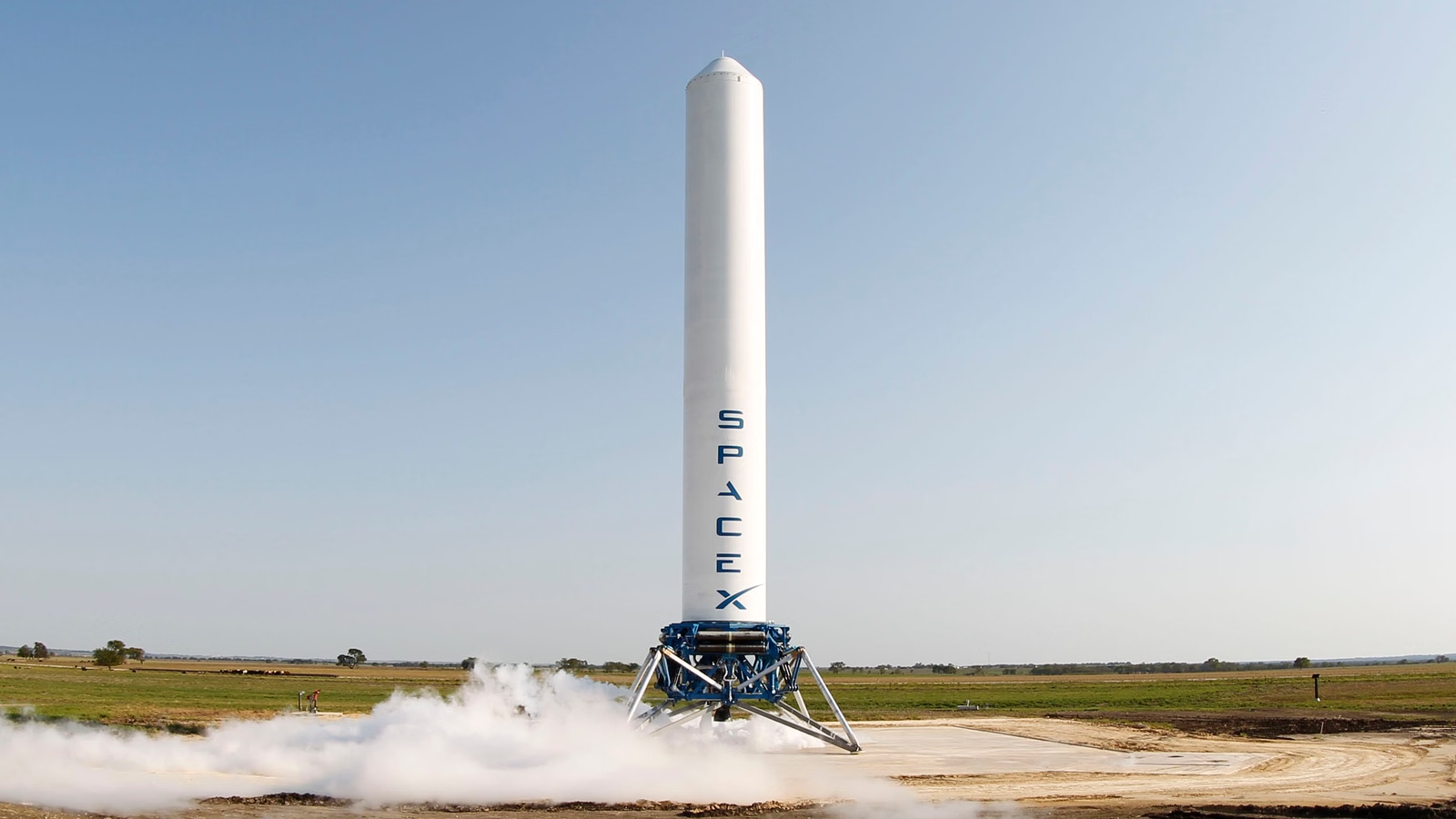
SpaceX’s valuation is high not simply because it launches rockets, but because the market sees it as a combination of low Earth orbit satellite internet, reusable rocket capacity, government space missions, and future space infrastructure. When you evaluate SpaceX, you should not only look at how often Falcon 9 launches. You also need to judge whether Starlink can keep contributing revenue, whether NASA contracts provide durable credibility, whether Starship can deliver on its long-term promise, and whether those expectations are already reflected in the stock price.
Key Takeaways
- SpaceX’s valuation comes from rockets, satellite internet, government contracts, and long-term technology optionality.
- Starlink is the most important current revenue pillar and shapes SpaceX’s platform-style valuation.
- Falcon 9 reuse and high launch cadence give SpaceX cost, speed, and delivery advantages.
- NASA contracts add more than revenue; they strengthen SpaceX’s technical credibility and mission access.
- Starship raises the long-term valuation ceiling, but delays, capital spending, and regulation remain major risks.
- Investors should compare growth, cash flow, valuation multiples, volatility, and compliance boundaries.
Why Is SpaceX Valued So Highly? Start With What the Market Is Really Buying
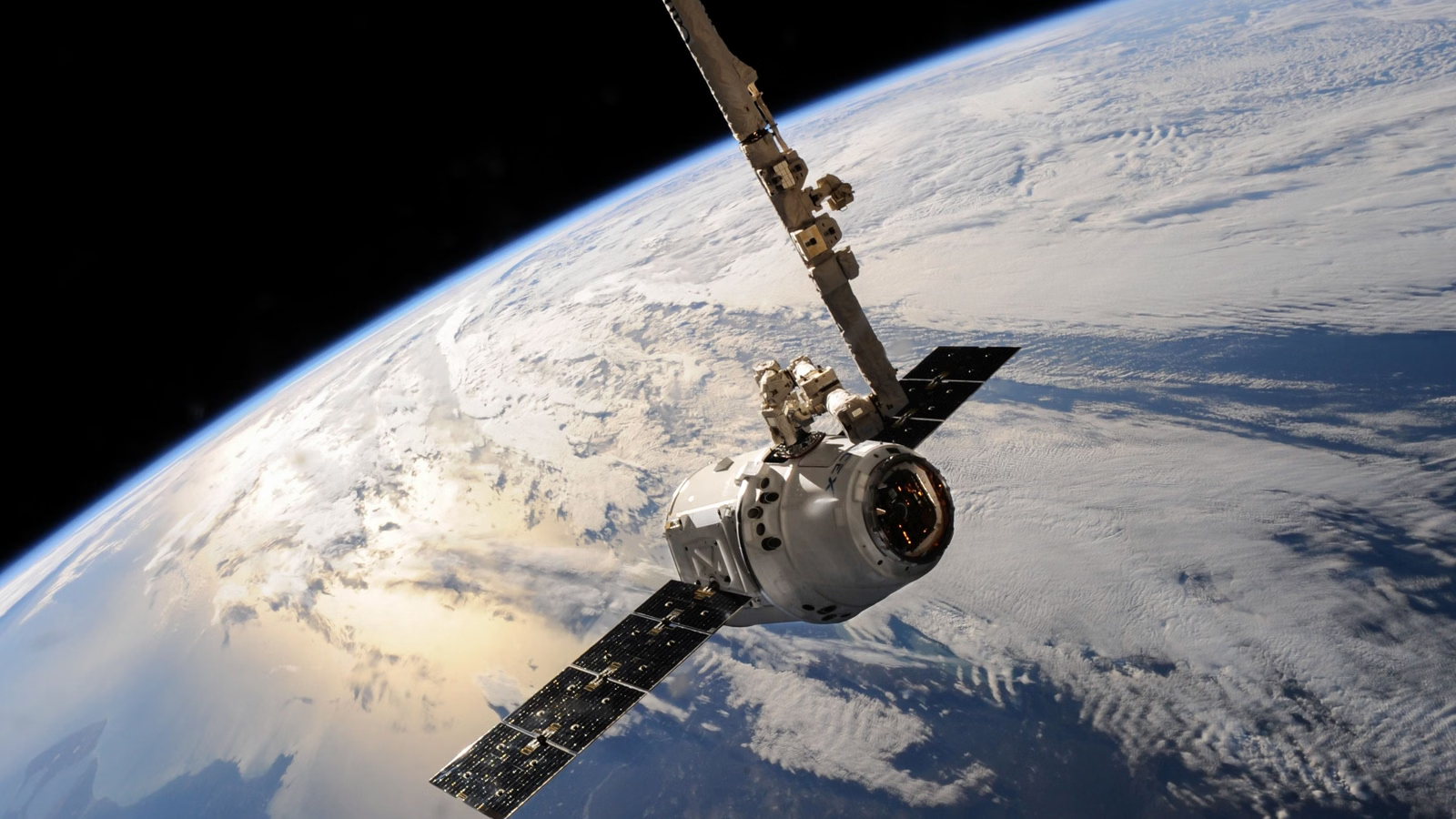
The core reason SpaceX is valued so highly is that the market is not buying a traditional rocket manufacturer. It is buying a platform-like asset that may control access to space, a low Earth orbit communications network, government space missions, and future deep-space transportation capacity. You can divide SpaceX into two parts: businesses that can already be verified, including Starlink, Falcon 9, and government missions; and long-term expectations that have not fully materialized, including Starship, lunar missions, Mars plans, and broader space infrastructure.
The clearest signal of market enthusiasm came after SpaceX’s public listing in June 2026, when Reuters reported that its valuation briefly topped $2 trillion. That pricing goes far beyond the traditional aerospace valuation framework. Investors are not simply asking how many launches SpaceX completes each year or how much it earns per mission. They are pricing in a potential gateway to the future space economy.
At the business level, SpaceX has four valuation pillars:
| Valuation Driver | Related Business | What You Should Watch |
|---|---|---|
| Current revenue | Starlink, commercial launches | User growth, launch cadence, contract delivery |
| Cost advantage | Falcon 9 reuse | Marginal cost, reuse rate, launch rhythm |
| Credibility | NASA, defense, and government customers | Long-term orders, technical certification, mission barriers |
| Long-term upside | Starship, deep-space transport, space infrastructure | Technical milestones, capital spending, delivery schedule |
Why are traditional profit metrics not enough? Because SpaceX is still in a high-growth phase, and earnings are affected by Starship development, satellite deployment, AI infrastructure, and other capital-intensive projects. Reuters reported that SpaceX 2025 revenue rose 33% to $18.67 billion, yet the company still posted a net loss due to heavy spending and business integration. This means the right question is not only “Is it profitable now?” but also “Can it convert high revenue into durable cash flow?”
More importantly, SpaceX has a vertically integrated business model. Many satellite internet companies must buy launch services from external providers, while SpaceX can deploy Starlink with its own Falcon 9 rockets. Many rocket companies only earn revenue from one-off launch contracts, while SpaceX can convert launch capability into recurring subscription revenue through Starlink. This structure—building the road, operating the vehicle, and selling the service—is the foundation of its high valuation.
If you are watching SPCX after its listing, you should separate valuation logic from trading costs. A hot IPO or volatile growth stock may reflect long-term expectations, but your actual return is also affected by commissions, platform fees, external agency fees, currency conversion costs, and execution prices. Eligible users can review the fee structure in Biya U.S. stock trading. Biya charges $0 commission for U.S. stock trading, while platform fees, external agency fees, and other charges are subject to the fee center and order page. Availability depends on the user’s location, identity verification status, platform rules, and applicable laws and regulations.
Summary: SpaceX’s high valuation is not a single rocket story. It is a combination of current business value and long-term optionality. Starlink and Falcon 9 are the verifiable support pillars, NASA and government contracts add mission credibility, and Starship determines the long-term ceiling. To judge whether SpaceX is expensive, you should not only look at market cap rankings or launch headlines. You need to compare revenue growth, cash flow, technical execution, and valuation multiples together. A high valuation can be explained, but that does not mean risk has disappeared.
Why Starlink Is the Core Pillar of SpaceX’s Valuation
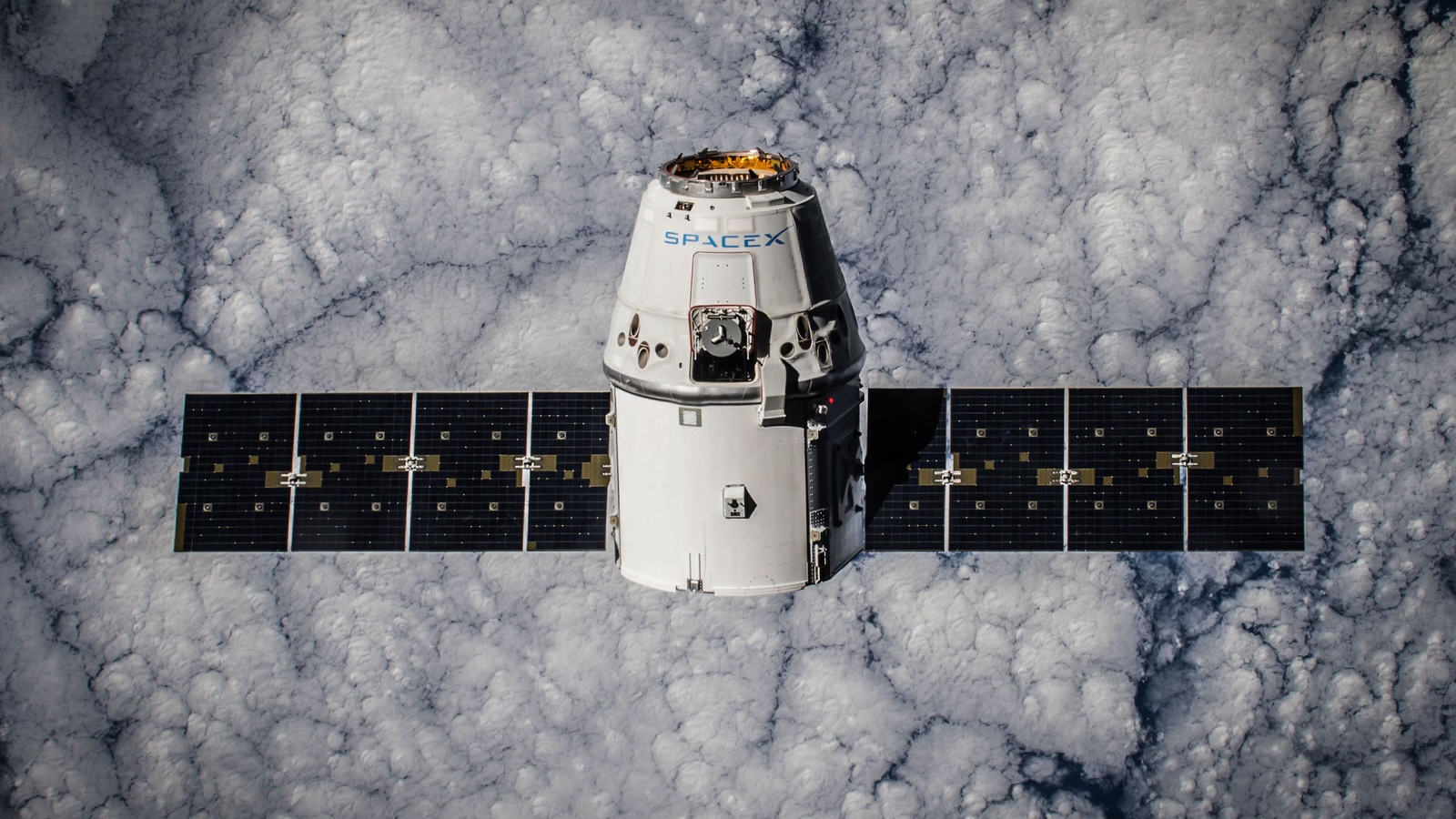
Starlink is the most important piece of SpaceX’s valuation because it turns one-time launch capability into recurring subscription revenue. Rocket launches are closer to project-based revenue: complete a mission, collect payment. Starlink is closer to a global communications network, where users pay monthly and enterprise, maritime, aviation, government, and direct-to-cell services can raise the revenue ceiling. If SpaceX only had launch services, its valuation would look more like an aerospace contractor. With Starlink, the market can view it more like a technology platform and communications infrastructure company.
SpaceX materials show that as of March 31, 2026, [Starlink had about 10.3 million users](https://content.spacex.com/cms-assets/FINAL_Documents and Updates/SpaceX IPO_Factsheet.pdf), covering 164 countries, territories, and markets, with more than 9,600 Starlink satellites in orbit. This scale shows that Starlink is no longer just an early experiment; it has entered global commercialization. For valuation, user count, coverage area, terminal cost, bandwidth quality, and enterprise customer mix all affect expectations for future revenue.
Starlink’s value does not only come from home broadband. Its real valuation upside comes from multiple connectivity scenarios expanding at the same time:
| Starlink Use Case | Main Users | Valuation Meaning |
|---|---|---|
| Home broadband | Rural, remote, and underserved users | Builds the base subscription pool |
| Aviation and maritime | Airlines, ships, cruise lines, logistics firms | Raises average revenue per user and enterprise revenue |
| Government and emergency response | Governments, militaries, disaster response organizations | Adds strategic value and stable demand |
| Direct-to-cell | Mobile operators and smartphone users | Expands the mobile connectivity boundary |
| Enterprise networks | Mining, energy, and cross-border operations | Adds high-value commercial use cases |
Another key factor is that SpaceX can launch its own satellites. A typical satellite operator needs external launch windows and third-party pricing. SpaceX can use Falcon 9 to replenish and expand Starlink while iterating satellite capacity. This means launch services and Starlink are not isolated businesses; they reinforce each other. Launch capability reduces Starlink’s deployment cost, while Starlink creates internal launch demand for SpaceX.
Regulation is also part of the valuation story. In 2026, the FCC approved SpaceX’s plan to deploy an additional 7,500 Gen2 Starlink satellites, bringing the authorized total to 15,000 satellites and allowing upgraded satellite capabilities, more spectrum use, and direct-to-cell services. The authorization requires SpaceX to deploy half of its Gen2 satellites by December 2028. This shows that Starlink’s expansion does not depend only on technology; it also depends on regulatory permission such as the FCC approval for 7,500 additional Gen2 satellites.
Starlink is not without limits. Amazon’s Project Kuiper has begun deploying low Earth orbit satellites and aims to compete in satellite internet. Project Kuiper’s low Earth orbit satellites may push the industry into more direct competition on price, coverage, and terminal experience. In addition, national telecom licenses, spectrum coordination, ground network competition, orbital debris, and astronomical observation concerns will remain long-term constraints.
To judge whether Starlink can support SpaceX’s valuation, watch these indicators:
- Whether user growth continues beyond the early adoption phase;
- Whether ARPU remains stable and whether enterprise, aviation, and maritime customers improve revenue quality;
- Whether satellite deployment speed keeps up with bandwidth demand;
- Whether terminal costs decline and installation and support scale efficiently;
- Whether regulatory approvals remain smooth, especially for spectrum, orbital slots, and direct-to-cell rules.
Summary: Starlink is the most realistic pillar behind SpaceX’s high valuation because it converts launch capability into recurring revenue and turns space infrastructure into a billable network. You should not judge Starlink only by satellite count or internet speed. You should look at user growth, payment structure, enterprise customers, regulatory approvals, and competitive pressure. If Starlink keeps expanding revenue and improving margins, SpaceX’s high valuation has a stronger business foundation. If growth slows or regulation tightens, the most important support for the valuation will need to be reassessed.
How Launch Services Support SpaceX’s Business Moat
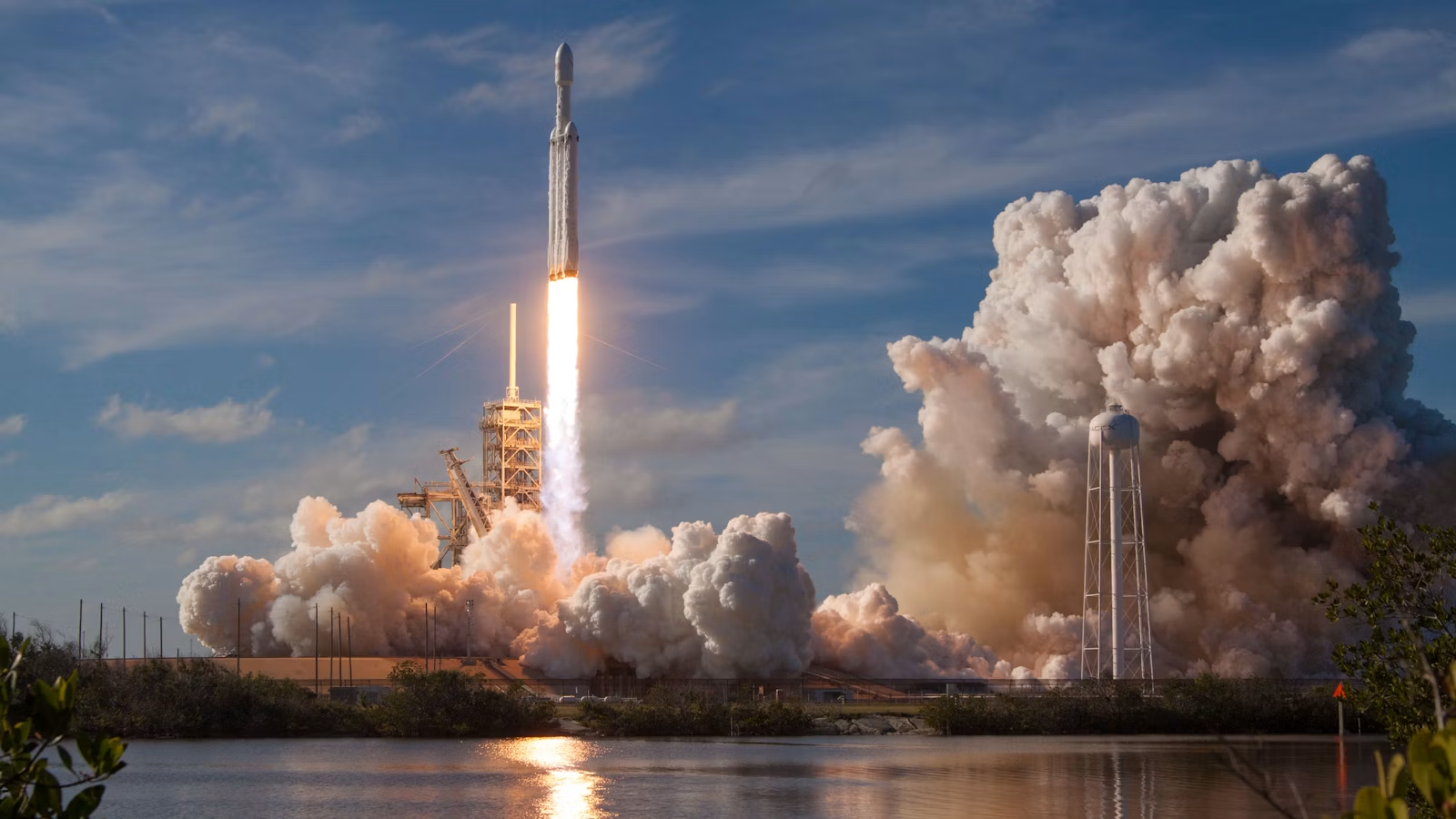
Launch services support SpaceX’s valuation not only because each launch generates revenue, but because Falcon 9’s reuse, high cadence, and reliable delivery create a business moat. You can think of Falcon 9 as SpaceX’s core production capacity: it serves NASA, commercial satellite operators, and government customers, while also deploying SpaceX’s own Starlink constellation. The more stable the launch cadence, the more SpaceX can lower its internal deployment cost. The more mature reuse becomes, the harder it is for competitors to match SpaceX on price and delivery speed.
SpaceX’s positioning for Falcon 9 is clear: reusability allows the company to refly the most expensive parts of the rocket, lowering the cost of access to space. This is the biggest difference between SpaceX and traditional expendable rockets. A conventional launch vehicle is closer to a one-time consumable, making cost reductions difficult. Falcon 9 reuse allows hardware, mission experience, ground operations, and supply chains to improve over time.
SpaceX IPO materials show that Falcon 9 had completed about 620 flights, Falcon Heavy about 11 flights, and Starship about 12 flights. Falcon 9’s payload capacity to low Earth orbit is 23 metric tons, Falcon Heavy’s is 64 metric tons, and Starship’s expected capacity is 100 metric tons. This data mix shows that the current business foundation of SpaceX’s valuation mainly comes from [about 620 Falcon 9 flights](https://content.spacex.com/cms-assets/FINAL_Documents and Updates/SpaceX IPO_Factsheet.pdf), not from Starship, which has not yet reached full commercial maturity.
| Launch System | Current Role | Valuation Meaning |
|---|---|---|
| Falcon 9 | Main launch vehicle, Starlink deployment, crew and cargo missions | Current revenue and cost moat |
| Falcon Heavy | Heavy-lift, deep-space, and government missions | Expands mission coverage |
| Starship | Large-scale payloads, lunar missions, future deep-space transport | Determines long-term capacity ceiling |
Launch services also have an often overlooked feature: they allow SpaceX to influence the cost benchmark for the entire satellite industry. SpaceX’s SmallSat Rideshare Program publicly lists pricing as low as $350,000 for up to 50kg to sun-synchronous orbit, with additional mass priced at $7,000 per kilogram. This pricing structure helps small satellite companies plan launch budgets while allowing SpaceX to maintain a high launch cadence and industry pricing power.
That said, launch services should not be over-romanticized. Rocket reuse lowers marginal costs, but it does not make every mission low-risk or low-cost. Launch delays, launch site constraints, insurance, weather windows, regulatory approvals, and customer mission changes can all affect revenue recognition and delivery schedules. For investors, launch frequency and success rate are only the first layer. The more important question is whether SpaceX can turn high launch capacity into sustainable profit.
Starship is the long-term variable in the launch business. SpaceX completed Starship’s twelfth flight test in May 2026, showing that the project is still advancing quickly. But Starship should not be confused with Falcon 9. Falcon 9 is an already proven moat; Starship is a future option. A large part of SpaceX’s high valuation comes from expectations for Starship. If technical milestones are delayed, that valuation upside can also become a source of volatility.
Summary: Launch services give SpaceX a vertically integrated capability that other satellite internet companies find hard to replicate. Falcon 9 is the most reliable commercial foundation today, serving external customers while lowering Starlink deployment costs. Falcon Heavy expands heavy-lift mission coverage, and Starship determines longer-term space transportation capacity. To understand SpaceX’s valuation, you need to separate the mature Falcon 9 moat from the still-developing Starship expectation. Otherwise, it is easy to mistake a long-term story for already realized profit.
Why NASA Contracts and Government Orders Raise SpaceX’s Credibility
NASA contracts matter to SpaceX not only because of contract value, but because they prove that SpaceX can enter high-barrier, highly scrutinized, long-cycle government space missions. Government customers do not only consider price. They evaluate technical reliability, safety standards, mission experience, coordination capability, and long-term delivery. After SpaceX won crewed spaceflight, space station resupply, and lunar system missions, the market began treating those contracts as technical credibility, strengthening confidence in long-term orders and strategic position.
The Artemis lunar program is the clearest example. In 2021, NASA selected SpaceX to continue developing the Starship human landing system under a fixed-price, milestone-based contract, with the Starship HLS contract valued at $2.89 billion. The significance is not only revenue. It shows that NASA recognized SpaceX’s technical path. For valuation, that recognition reduces market doubts about mission capability.
In 2022, NASA modified the contract through Option B, allowing SpaceX to continue developing a Starship lunar lander that meets the needs of later Artemis missions. The Option B contract modification was worth about $1.15 billion. This means SpaceX is not only participating in Artemis III as a one-time contractor; it is being included in a longer-term lunar transportation architecture. The more long-term missions SpaceX wins, the easier it is for the market to view the company as part of U.S. space strategy infrastructure.
NASA’s commercial crew program is equally important. NASA’s Commercial Crew Program aims to provide safe, reliable, and cost-effective crew transportation to and from the International Space Station through U.S. private companies. SpaceX’s Crew Dragon and Falcon 9 have become key components of that program. In 2022, NASA awarded SpaceX five additional crew missions to the space station, bringing SpaceX’s total to 14 missions and raising the CCtCap contract value to about $4.927 billion.
You can divide the valuation impact of NASA and government orders into three layers:
| Impact | Meaning | Effect on SpaceX Valuation |
|---|---|---|
| Technical certification | Crewed, cargo, and lunar missions have very high barriers | Improves market confidence |
| Long-term orders | Multi-year missions and contract modifications create visible revenue | Stabilizes business expectations |
| Strategic alignment | SpaceX becomes more deeply tied to U.S. space and defense goals | Raises scarcity value and bargaining power |
Government orders are not risk-free revenue. NASA’s Office of Inspector General reported in 2026 that SpaceX’s Artemis III Starship development was at least two years behind schedule and that cryogenic propellant transfer, launch cadence, and mission integration remained major challenges. NASA OIG’s review of HLS progress also noted that NASA had begun evaluating a 2028 lunar landing plan. This shows that government contracts can provide credibility, but they cannot eliminate technical and schedule risk.
Summary: NASA contracts give SpaceX a stronger credibility base because they show that SpaceX is not relying only on commercial storytelling. It has entered high-barrier missions such as crewed spaceflight, space station resupply, and the Artemis lunar landing system. But government contracts do not guarantee smooth execution. Fixed-price contracts, technical reviews, mission delays, budget changes, and cross-system integration can all affect delivery schedules. NASA contracts raise SpaceX’s credibility, but they do not remove technology or financial risk.
What Are the Main Risks Behind SpaceX’s High Valuation?
The biggest risk behind SpaceX’s high valuation is that the market has already priced in continued Starlink growth, Falcon 9 leadership, NASA mission progress, Starship success, and future space economy expansion. If any of these key assumptions fail, the valuation could come under pressure. When you evaluate SpaceX, you should not only look at successful rocket launches or Starlink user growth. You also need to watch losses, capital spending, governance structure, regulatory approvals, and competitive pressure.
The first category is financial risk. SpaceX revenue is growing quickly, but high growth does not automatically mean high profit. Reuters reported that the company’s 2025 revenue increased sharply, but high spending and business integration still led to losses. SpaceX also entered the bond market after its IPO to fund AI infrastructure and next-generation rocket investment. High capital spending can support long-term capacity, but it can also delay free cash flow. The higher the valuation, the more the market expects future margins to improve.
The second category is technical risk. Starship is a major source of SpaceX’s long-term valuation ceiling, and it is also where delay risk is most concentrated. The Artemis lunar version must solve complex problems including cryogenic propellant transfer, storage, docking, refueling, lunar landing, and return operations. NASA OIG noted that SpaceX needs to aggregate large amounts of propellant in low Earth orbit and maintain a high launch cadence. Any test failure, launch site limitation, or system integration issue could affect Artemis timelines and Starship commercialization.
The third category is regulatory and orbital resource risk. Starlink growth depends on national telecom licenses, spectrum authorizations, orbital deployment rules, and satellite deorbit management. As low Earth orbit satellite numbers increase, concerns around astronomy, orbital debris, radio interference, and international coordination become more serious. FCC approval for more Gen2 satellites is positive, but it also comes with deployment timelines and technical constraints. For SpaceX, regulation is not a one-time hurdle; it is a long-term constraint throughout global expansion.
The fourth category is competitive risk. Starlink is currently ahead, but that does not mean it will remain competition-free. Kuiper, OneWeb, regional operators, ground-based 5G/6G networks, subsea cables, and enterprise private networks will compete for users in different scenarios. Low Earth orbit satellite internet does not become automatically profitable simply because it covers the globe. Payment capacity, regulatory licensing, terminal cost, and network congestion vary widely by country. If Starlink cannot increase its share of high-value customers, market assumptions about margins could be challenged.
The fifth category is governance risk. Reuters reported that Elon Musk still held 82% of voting power after the SpaceX IPO. A dual-class voting structure can preserve founder-led strategy, but it also means ordinary shareholders have limited influence over major decisions. For institutional investors, key-person dependence, related business integration, and capital allocation priorities all matter in risk assessment.
| Risk Type | Specific Issue | Possible Impact |
|---|---|---|
| Financial risk | High investment, debt financing, losses | Pressure on profit and cash flow |
| Technical risk | Starship, HLS, propellant transfer | Delays in long-term growth execution |
| Regulatory risk | Spectrum, orbit, national licenses | Limits on Starlink expansion |
| Competitive risk | Kuiper, OneWeb, ground networks | Pressure on pricing and market share |
| Governance risk | Concentrated voting power, key-person dependence | Institutional investor concerns |
For ordinary investors, the most practical question is not “Is SpaceX a great company?” but “How much future success is already priced in?” You can use tools such as Biya U.S. stock search to monitor market information, but any price, trading volume, fee, or order rule should be based on the actual trading platform display. Hot IPOs can experience significant price volatility in the early trading period. Before trading, you should fully understand order types, fee structures, and risks.
Summary: SpaceX’s high valuation has real business support, but it also includes strong expectations about the future. Starlink and Falcon 9 are the current support pillars, NASA contracts provide credibility, and Starship represents long-term upside. However, losses, capital spending, technical delays, regulatory approvals, competition, and governance structure can all increase valuation volatility. Understanding SpaceX’s valuation logic does not mean accepting any price. The hotter the asset, the more important it is to separate “great company,” “good business,” and “reasonable entry price.”
How Ordinary Investors Can Judge Whether SpaceX’s Valuation Is Reasonable
Ordinary investors should not judge SpaceX’s valuation only by media attention, stock price moves, or the Elon Musk effect. You need a framework that can be checked over time. The key dimensions include whether Starlink keeps growing, whether launch services maintain frequency and cost advantages, whether NASA and government contracts progress on schedule, whether Starship reaches major technical milestones, and whether valuation multiples have already stretched far beyond future cash flow.
You can look at four levels:
| Assessment Level | Key Question | Useful Indicators |
|---|---|---|
| Growth quality | Is revenue growth sustainable? | Starlink users, ARPU, enterprise customer mix |
| Business moat | Is the cost advantage stable? | Falcon 9 reuse rate, launch count, customer mix |
| Technical execution | Is the long-term story becoming real? | Starship tests, HLS milestones, propellant transfer |
| Valuation pressure | Is the market too optimistic? | Price-to-sales ratio, cash flow, margin, debt changes |
If you care more about trading, you should also separate company valuation from your own transaction costs. U.S. stock trading costs often include more than commissions. They may include platform fees, external agency fees, trading activity fees, currency conversion costs, and fractional share rules. Biya charges $0 commission for U.S. stock trading, while platform fees, external agency fees, and other charges are subject to the fee center and order page. If you also track USD assets and currency conversion costs, you can use Biya real-time exchange rates to compare exchange differences across currencies.
You also should not judge whether SpaceX is “expensive” only by comparing it with traditional aerospace companies. Traditional aerospace companies usually rely more on government contracts and manufacturing profit, with more stable growth. SpaceX has Starlink, Falcon 9, Starship, and government missions at the same time, so the market may give it a higher growth premium. But a growth premium is not unlimited. If Starlink slows, Starship is delayed, or profitability disappoints, the valuation can be repriced.
A more practical approach is to understand SpaceX as three types of assets:
- Cash flow assets: Starlink, commercial launches, NASA missions;
- Moat assets: reusable rockets, launch sites, supply chains, mission experience;
- Option assets: Starship, lunar missions, Mars plans, space infrastructure.
When market sentiment is hot, the third category—option assets—can receive very high pricing. When the market becomes more cautious, investors often return to the first category: cash flow assets. You need to know which part of the expectation you are buying, rather than treating every part of the story as certain revenue.
Summary: Ordinary investors should not stop at “SpaceX has strong rockets, a large Starlink network, and many NASA contracts.” A more useful framework is to first assess whether Starlink can generate stable revenue, then judge whether Falcon 9 maintains cost and launch-frequency advantages, then track NASA and Starship milestones, and finally compare valuation multiples with cash flow pressure. SpaceX may be a rare space infrastructure company, but rarity does not make every price reasonable. Trading decisions should still reflect risk tolerance, investment horizon, and compliance requirements.
If you continue to follow SpaceX, SPCX, U.S. stocks, ETFs, Hong Kong stocks, and crypto assets, the key is not only finding a popular ticker. You also need to manage transaction costs, FX costs, order records, and risk exposure across markets. Eligible users can use the Biya App to record multi-asset trades and billing information. Biya supports U.S. stocks, Hong Kong stocks, and crypto trading, as well as USDT conversion into major fiat currencies such as USD and HKD. Availability depends on the user’s location, identity verification result, platform rules, and applicable laws and regulations. Public market information, trading rules, and fee structures are for understanding only and do not constitute investment advice. Before placing any trade, always verify the order page, fee details, and local regulatory requirements.
FAQ
What indicators matter most for SpaceX’s valuation?
The most important indicators for SpaceX’s valuation are Starlink users and revenue, Falcon 9 launch cadence, NASA and government contracts, Starship technical progress, margins, and cash flow. You should not judge SpaceX only by market cap or news headlines, because a high valuation usually includes both future growth expectations and execution risk.
Would a Starlink spin-off affect SpaceX’s valuation?
A Starlink spin-off could change how investors break down SpaceX’s valuation. The market would be able to separate the satellite internet business from launch services more clearly. However, whether Starlink is spun off depends on company strategy, regulatory requirements, revenue stability, and capital market conditions. It should not be assumed as certain.
How is SpaceX valued differently from traditional aerospace companies?
SpaceX differs from traditional aerospace companies because it combines launch capability, low Earth orbit satellite internet, and the future Starship transportation story. Traditional aerospace firms rely more on government orders and manufacturing profit, while SpaceX is viewed as a platform-like space infrastructure company, which may justify a higher growth premium.
How should ordinary investors view SpaceX valuation risk?
Ordinary investors should focus on whether revenue growth can become cash flow, whether Starship reaches key milestones, whether Starlink faces regulatory or competitive pressure, and whether the current price already reflects too much optimism. Before trading, they should also verify fees, order types, and local compliance requirements.
Do NASA contracts mean SpaceX has no risk?
NASA contracts do not mean SpaceX has no risk. NASA orders provide technical credibility and long-term mission opportunities, but they can still be affected by budget changes, technical reviews, mission delays, contract modifications, and launch failures. Government contracts improve credibility, but they do not guarantee profit or delivery timing.
Does SpaceX’s high valuation mean it is worth buying?
SpaceX’s high valuation does not automatically mean it is worth buying. A high valuation shows that the market has strong expectations for the company’s future, but whether it is suitable for trading depends on price, investment horizon, risk tolerance, position size, fee structure, and local regulatory requirements. Understanding valuation logic is not a buy recommendation.
*This article is provided for general information purposes and does not constitute legal, tax or other professional advice from BiyaPay or its subsidiaries and its affiliates, and it is not intended as a substitute for obtaining advice from a financial advisor or any other professional.
We make no representations, warranties or warranties, express or implied, as to the accuracy, completeness or timeliness of the contents of this publication.
Related Blogs of

Why Does AI Compute Growth Drive Storage Demand? The Difference Between Training, Inference, and Data Retention


AI Storage Supply Chain Map: Chips, HDDs, SSDs, Packaging Equipment, and Enterprise Storage Systems


What Are NOR Flash, SLC NAND, and EEPROM? Why They Help Explain Hong Kong-Listed Memory-Related Stocks

What Is the Difference Between HBM3E and HBM4? What Do They Mean for Micron and AI Servers?

Choose Country or Region to Read Local Blog
 Australia
 Austria
 Belgium
 Canada
 Cyprus
 Czech Republic
 Denmark
 Estonia
 Finland
 France
 Germany
 Greece
 Hong Kong
 India
India Indonesia
 Ireland
 Italy
Italy Japan
Japan Latvia
 Lithuania
 Luxembourg
 Malaysia
 Malta
Malta Morocco
 Nepal
Nepal Netherlands
 New Zealand
 Norway
 Pakistan
 Philippines
 Poland
 Portugal
 Romania
 Singapore
 Slovakia
 Slovenia
 South Africa
 South Korea
 Spain
Spain Sweden
 Thailand
 The United States
 Turkey
 United Arab Emirates
 United Kingdom
 Vietnam
Contact Us




BIYA GLOBAL LLC is registered with the Financial Crimes Enforcement Network (FinCEN), an agency under the U.S. Department of the Treasury, as a Money Services Business (MSB), with registration number 31000218637349, and regulated by the Financial Crimes Enforcement Network (FinCEN).
BIYA GLOBAL LIMITED is a registered Financial Service Provider (FSP) in New Zealand, with registration number FSP1007221, and is also a registered member of the Financial Services Complaints Limited (FSCL), an independent dispute resolution scheme in New Zealand.