
What Are the Main Ways to Fund a U.S. Stock Account? Bank Wire, Third-Party Accounts, and Multi-Currency Accounts Compared





Common ways to fund a U.S. stock account include bank wire, ACH/EFT, local bank transfer, multi-currency account transfer, and a limited number of third-party payment routes supported by specific brokers. The real decision is not only about fees. You also need to consider whether the account name matches, whether the broker can identify the funds, when the money becomes tradable, and whether future withdrawals will be smooth. A practical approach is to start with your location, whether you have a USD account, the broker’s supported funding methods, and the size of your transfer.
Key Takeaways
- Bank wires are widely accepted and suitable for cross-border or larger USD deposits.
- ACH/EFT is often low-cost but usually requires a U.S. bank account.
- Multi-currency accounts such as Wise depend on broker support.
- Third-party account funding may be rejected if names do not match.
- Check fees, arrival time, and withdrawal rules before funding.
- Beginners should test with a small amount before sending larger funds.
What Should You Check Before Funding a U.S. Stock Account?
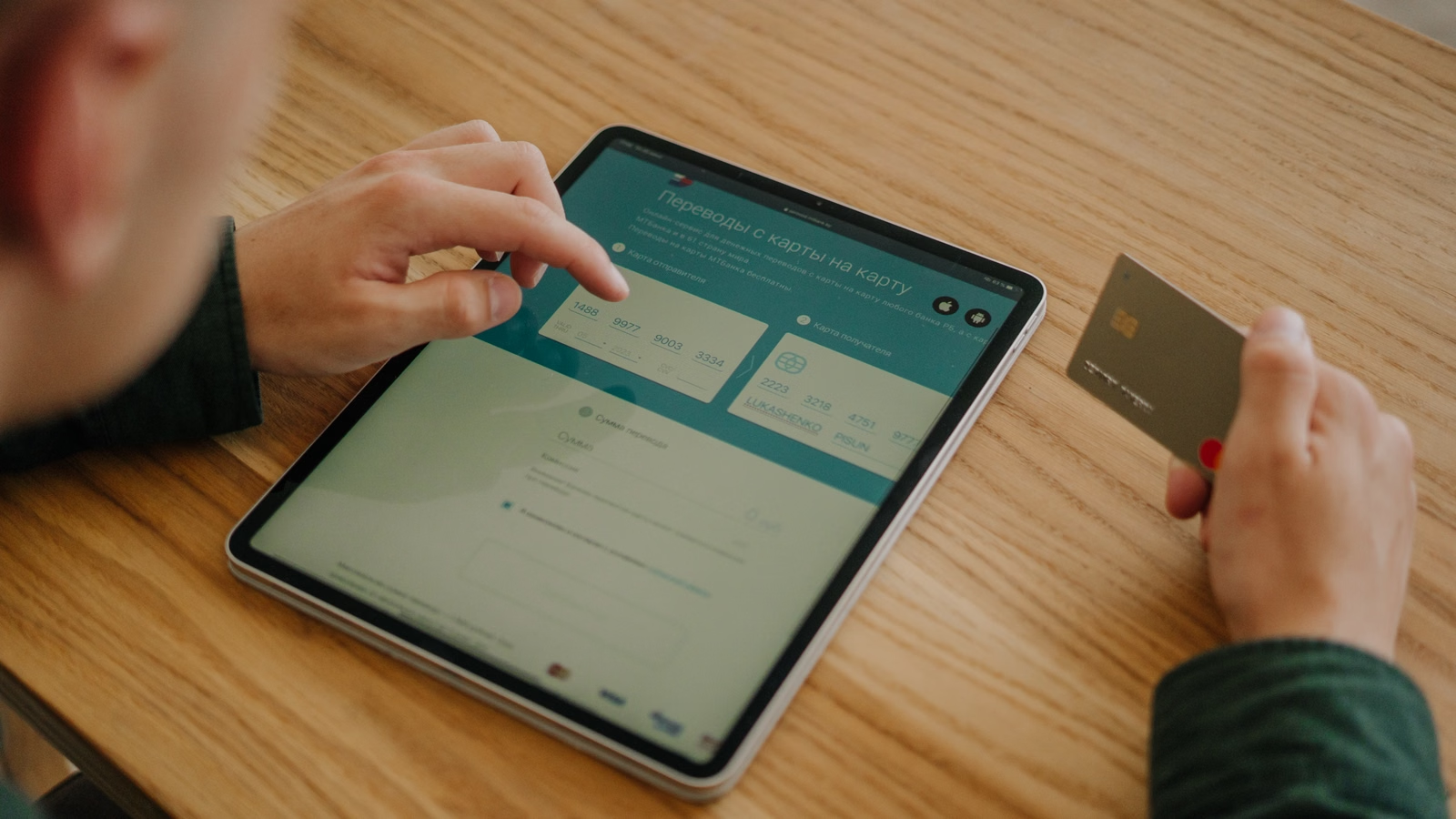
Before choosing a funding method, first confirm whether your broker accepts that route. A low-cost option is not always suitable, and fast arrival does not always mean the money can be withdrawn immediately. The most important factors are account-name matching, currency compatibility, payment reference, source of funds, broker matching process, tradable time, and withdrawal restrictions. If you only compare fees, you may overlook refund risk, manual review, and intermediary bank charges.
From a money-flow perspective, funding a U.S. brokerage account usually does not mean sending money directly into your individual trading account. The funds often first arrive in the broker’s or partner bank’s receiving account, then get matched to your securities account through the account number, name, reference, and funding notice. Interactive Brokers lists funding methods such as wire transfer, ACH, and Wise, while also highlighting issues such as third-party deposits and incorrect routing. Schwab International also focuses on wire transfer, account transfer, and check as core funding methods for international accounts, showing that traditional brokers place strong emphasis on traceable banking routes.
| Comparison Factor | Bank Wire | ACH/EFT | Multi-Currency Account | Third-Party Account |
|---|---|---|---|---|
| Suitable Users | International users, larger transfers | Users with U.S. bank accounts | Users managing multiple currencies | Only suitable when clearly supported by the broker |
| Cost Structure | Sending fee, intermediary fee, FX spread | Usually lower | FX fee, transfer fee | Varies widely by platform |
| Matching Process | Depends on reference and receiving path | More stable after account linking | Depends on broker integration | Delays are common if names do not match |
| Main Risk | Wrong routing or currency | Return risk, fund hold period | Unclear account attributes | Source-of-funds review |
The answer also varies by broker. Fidelity compares EFT and bank wire by limits and eligible accounts. IBKR displays available methods based on entity, region, and currency. Some Hong Kong or U.S.-stock brokers may also support local bank transfer. You should not assume that a method working on one platform will also work on another.
Summary: When choosing a U.S. stock account funding method, confirm broker support first, then compare fees and timing. Bank wire is more widely accepted, ACH/EFT is better for users with U.S. bank accounts, multi-currency accounts suit users who need FX and cross-currency management, while third-party accounts require extra caution. The goal is not to find the “cheapest” method, but to choose a route that the broker can identify accurately, that meets account-name and source-of-funds requirements, and that will not create problems when you later withdraw.
Bank Wire for U.S. Stock Account Funding: Widely Accepted but More Detail-Sensitive

Bank wire is suitable for investors who do not have a U.S. bank account, need to fund from overseas in USD, plan to transfer a relatively large amount, and have clear wire instructions from their broker. Its advantage is broad acceptance and a traceable fund path. Its downside is a longer fee chain and stricter information requirements. If the beneficiary name, SWIFT code, ABA routing number, or reference is wrong, the funds may be delayed, returned, or manually reviewed.
A wire transfer usually happens in one of two ways: you convert local currency into USD first and then send USD, or you already have a USD account and send USD directly. USD transfers within the U.S. may go through the Fedwire Funds Service, while cross-border wires may involve SWIFT messages, intermediary banks, and receiving banks. When filling in payment details, do not only look at the broker name. You also need to check the beneficiary name, beneficiary account number, bank address, SWIFT/BIC, ABA routing number, “for further credit” information, and reference field.
| Fee Item | Who May Charge It | Common Scenario | How to Check |
|---|---|---|---|
| Sending bank fee | Your bank | Initiating an international wire | Transfer confirmation page |
| Intermediary bank fee | Correspondent/intermediary bank | International USD clearing | Actual amount received |
| Receiving-related fee | Receiving bank or broker | Certain account routes | Broker fee schedule |
| FX spread | FX provider | Converting local currency to USD | FX execution rate |
| Refund fee | Bank or intermediary bank | Wrong route or name mismatch | Refund statement |
The most common wire mistakes fall into three categories. First, the brokerage account number is missing from the payment reference, so the broker receives the money but cannot match it to you. Second, the wrong currency route is used, such as using a non-USD route for a USD transfer. Third, the account name does not match, for example when the bank account uses an abbreviated pinyin name while the brokerage account uses a full English name. A SWIFT/BIC code identifies a bank or financial institution, but it does not replace the complete funding instructions generated inside your broker account.
Summary: Bank wire is one of the most common ways for international investors to fund a U.S. stock account, especially for larger USD transfers and users without a U.S. bank account. The key is not whether you know how to send a wire, but whether you follow the broker’s latest instructions exactly. Before sending, check the receiving bank, receiving account, currency, reference, account name, and fee-bearing method. After sending, keep the wire receipt so the broker can manually match the deposit or the bank can trace it if needed.
ACH/EFT and Local Bank Transfer: Lower Cost but Dependent on Local Bank Accounts

ACH/EFT is more suitable for users who already have a U.S. bank account, plan to invest regularly, fund frequently, and transfer smaller amounts over time. It is usually cheaper than international wire, but it is not available to all international investors. You also need to distinguish between “funds showing in the account,” “funds available for trading,” and “funds available for withdrawal,” because brokers may apply a holding period or risk review to ACH deposits.
The ACH Network connects U.S. bank and credit union accounts and is commonly used for payroll, bill payments, and account transfers between known parties. Same Day ACH allows certain transactions to be processed within the same banking day, but brokerage deposits are still affected by the broker’s internal posting, risk controls, and funds-availability rules. In other words, ACH speed depends not only on the banking network, but also on how your broker handles the funds.
| Decision Question | ACH/EFT Is More Suitable | Bank Wire Is More Suitable |
|---|---|---|
| Do you have a U.S. bank account? | Yes | No |
| Are you investing regularly? | Yes | Not necessarily |
| Is this a large one-time deposit? | Not always | More common |
| Do you need clear fund confirmation quickly? | Depends on broker rules | Usually more straightforward |
| Can you accept a fund hold period? | Yes | Depends on broker |
Local bank transfer also depends on your region. In places such as Singapore, Hong Kong, or Europe, some brokers may provide local receiving accounts or low-value payment routes. However, these routes are only available for specific broker entities, account regions, and currencies. The “local bank transfer” option shown inside your broker account is what matters. Do not rely on outdated tutorials found online.
Summary: ACH/EFT is attractive because it is low-cost, convenient for recurring deposits, and suitable for long-term investing. However, it usually requires a local bank account that meets the broker’s requirements. It is not for every international user, and it does not mean the funds are free of restrictions. Bank wire is more broadly accepted, while ACH/EFT is more useful for people already inside the U.S. banking system. Beginners should remember that account balance, trading availability, and withdrawal availability are three different states.
Third-Party Accounts and Multi-Currency Accounts: Wise, PayPal, and E-Wallets Are Not the Same
Third-party accounts and multi-currency accounts should not be treated as the same thing. Multi-currency accounts such as Wise and Revolut may help you hold, exchange, and transfer multiple currencies. PayPal, Venmo, Apple Pay, and similar tools are more payment- or wallet-oriented. Whether a U.S. broker accepts them depends on direct broker support, account-name matching, and whether the fund path can be identified—not simply on whether the tool can send money.
A Wise Account allows users to hold multiple currencies and receive local account details for certain currencies. Wise bank transfers also emphasize that the name on the paying bank account should match the Wise account name and that the correct reference should be entered. In a brokerage funding context, you still need to check the broker’s own rules. For example, IBKR’s Transfer from Wise Balance is an integrated broker-side route, which is different from manually sending money from Wise to a broker’s general receiving account.
| Tool Type | Main Use | Funding Checkpoint |
|---|---|---|
| Wise and other multi-currency accounts | Holding currencies, FX, cross-border payments | Broker support, name matching |
| PayPal/Venmo | Payments, collections, consumer spending | Whether the broker clearly supports it |
| Bank multi-currency account | FX and bank transfer within one bank | Wire path, currency, reference |
| Another person’s account | Third-party payment or family account | Usually unsuitable for brokerage funding |
Fidelity mobile payment options show that certain Fidelity accounts can be connected to PayPal, Venmo, and other apps. But this does not mean all U.S. stock brokers accept payment apps as funding methods. On the contrary, Wise rules for paying from someone else’s bank account show that, in most cases, the name on the paying account must match the Wise account name. These requirements are closely related to source-of-funds checks and anti-money-laundering controls.
The main risks of third-party account funding include:
- The payer’s name does not match the brokerage account holder’s name;
- The payment platform uses pooled accounts, making it hard for the broker to identify the individual source;
- The payment reference is lost during the transfer chain;
- Refunds may only be returned through the original route, with uncertain processing time;
- Future withdrawals may be required to go back to a same-name account;
- Larger transfers may require additional source-of-funds explanations.
Summary: Multi-currency accounts can improve cross-currency fund management, but they are not universal brokerage funding channels. If the broker directly supports Wise or a similar route, and your account name, currency, and transfer details match, the experience may be clearer. If you rely on a generic e-wallet or another person’s account, the risk of delay, refund, and compliance review increases. Third-party accounts are especially unsuitable for a first large deposit. U.S. stock account funding should prioritize same-name, traceable, broker-supported routes.
How Different Investors Should Choose a U.S. Stock Funding Method
When choosing a funding method, first place yourself in a specific scenario. Do you have a U.S. bank account? Do you need to convert local currency into USD? Are you making small recurring deposits or a large allocation? Does your broker support local transfer in your region? When these conditions differ, the best route also changes. Beginners should not copy another person’s funding method directly. The right choice depends on your own account setup.
| User Scenario | First Option to Consider | Alternative | Key Checkpoint |
|---|---|---|---|
| No U.S. bank account | Bank wire | Broker-supported multi-currency route | SWIFT, reference, same-name account |
| Has U.S. bank account | ACH/EFT | Bank wire | Account linking, limits, holding period |
| Long-term recurring investor | ACH/EFT | Local bank transfer | Low cost, repeatability |
| Large deposit user | Bank wire | Account transfer | Receipts, source of funds, refund path |
| IBKR user | Routes shown inside account portal | Wise integration or wire | Entity, currency, account name |
| Cross-border multi-currency user | Multi-currency account | Bank wire | FX fee, settlement currency |
If you also care about trading costs after funding, look beyond deposit fees. U.S. stock trading costs may include commission, platform fee, external agency fees, trading activity fees, settlement-related fees, minimum charges, and fractional-share rules. Taking Biya U.S. stock trading fees as an example, Biya charges USD 0 commission for U.S. stock trades, while platform fees, external agency fees, and other fees are subject to the fee schedule and the order page. For investors who buy in small batches, minimum charges and fractional-share rules often affect real costs more than headline commission.
If you are comparing stock prices and funding budgets, you can use Biya U.S. stock search to review stock prices first, then estimate how many shares your planned deposit can buy. Availability of related services depends on your location, identity verification result, platform rules, and applicable laws and regulations. Before trading, make sure you understand order types, fee structures, and risks.
Summary: There is no single best funding method for every investor. If you have a U.S. bank account, ACH/EFT may be better for long-term, low-cost, recurring deposits. If you do not have a U.S. bank account, bank wire is usually more widely accepted. If you need multi-currency management, consider Wise or local transfer routes only when they are clearly supported by your broker. The larger the transfer, the more you should prioritize compliance, receipts, refund paths, and withdrawal consistency over low fees alone.
Pre-Funding Checklist for U.S. Stock Accounts: Avoid Delays, Refunds, and Withdrawal Issues
Before funding a U.S. stock account, the most important step is checking every detail, not rushing to send money. If the account name, currency, receiving path, payment reference, or source of funds is unclear, the money may be delayed, returned, or require extra proof after arrival. This is especially important for first deposits, larger transfers, and multi-currency account transfers.
Use this checklist before sending funds:
- Your brokerage account has completed account opening and identity verification;
- The funding method comes from the broker’s current account portal;
- The sending account and brokerage account are under the same name;
- The currency matches the broker’s receiving route;
- SWIFT/BIC, ABA routing number, and receiving account number are correct;
- The reference includes the account number or reference required by the broker;
- You understand sending fees, intermediary bank fees, and possible refund fees;
- You have saved bank receipts, FX records, and transfer screenshots;
- You know when the funds become tradable and when they become withdrawable.
If funds are delayed, first identify where they are stuck: whether the bank has sent them, whether they are passing through an intermediary bank, whether the broker has received them but not matched them, or whether the broker is reviewing the source of funds. Do not send a duplicate transfer immediately or randomly change the reference and send again. A more reliable approach is to submit the proof of remittance to the broker and ask your bank for a tracking number.
You should also check withdrawal rules before depositing. Many brokers prefer funds to be withdrawn back to a same-name account, and some newly deposited funds may be subject to a holding period. Especially with ACH/EFT, checks, third-party wallets, and multi-currency accounts, being able to buy stocks after arrival does not necessarily mean you can immediately withdraw cash.
Summary: The most common U.S. stock funding issue is not that money cannot be sent, but that the broker cannot accurately identify the funds after they are sent. Before funding, use the broker’s latest instructions and check account-name matching, currency, receiving bank, reference, fees, and withdrawal rules. First-time users should start with a small test transfer to confirm the route, fee deduction, and availability timeline before sending more. For cross-border funds, tax, FX, and securities-account rules, follow the requirements of your bank, broker, and local regulators.
Funding a U.S. stock account is not only about moving money to a broker. It also involves FX costs, cross-currency statements, trading fees, and future withdrawal management. If you track U.S. stocks, Hong Kong stocks, crypto assets, and cross-market fund flows at the same time, you can use Biya App to manage multi-asset information, review statements, and track fund changes. Before converting currencies or comparing costs, you can also use Biya currency converter to estimate amounts across different currencies. Biya is a global multi-asset trading wallet that supports U.S. stocks, Hong Kong stocks, and cryptocurrency trading. This content only introduces public market information, trading rules, and fee structures, and does not constitute investment advice. Service availability depends on your location, identity verification result, platform rules, and applicable laws and regulations.
FAQ
How can I fund a U.S. stock account without a U.S. bank account?
If you do not have a U.S. bank account, you can usually check bank wire, broker-supported local transfer, or multi-currency account routes first. Before sending money, confirm the available method, receiving currency, reference requirement, and same-name account rule inside your broker account portal.
Can a Wise transfer to a U.S. stock account be rejected by a broker?
A Wise transfer is not automatically rejected, but it depends on whether the broker supports the Wise route and whether the account name, currency, and reference match. A broker-integrated Wise deposit is different from manually sending funds from Wise to a general broker receiving account.
What fees are usually involved in funding U.S. stocks by bank wire?
Common bank wire costs include the sending bank fee, intermediary bank fee, receiving-related fee, and FX spread. The exact amount varies by bank and broker, so the final cost should be checked against the bank receipt, brokerage statement, and actual amount received.
Why can’t I withdraw immediately after funding a U.S. stock account?
You may not be able to withdraw immediately because of fund holding periods, ACH return risk, account risk review, or source-of-funds checks. Fund arrival, trading availability, and withdrawal availability are separate statuses, and the timing depends on the broker and funding method.
What are the risks of using a third-party account to fund U.S. stocks?
The main risks are name mismatch and unclear source of funds. The broker may request additional proof, delay the deposit, return the money, or restrict future withdrawals. Using your own same-name account is usually the safer and more compliant approach.
How much should a beginner send for the first U.S. stock deposit?
A beginner should usually start with a small test transfer. The goal is to verify the route, reference, fees, and arrival time before sending more. For larger deposits, prepare bank receipts and source-of-funds documents in advance.
*This article is provided for general information purposes and does not constitute legal, tax or other professional advice from BiyaPay or its subsidiaries and its affiliates, and it is not intended as a substitute for obtaining advice from a financial advisor or any other professional.
We make no representations, warranties or warranties, express or implied, as to the accuracy, completeness or timeliness of the contents of this publication.
Related Blogs of
International Wire Transfer Time: What Affects Delivery?


Cheapest Way to Transfer Money Internationally: Small vs. Large Transfers





Choose Country or Region to Read Local Blog
 Australia
 Austria
 Belgium
 Canada
 Cyprus
 Czech Republic
 Denmark
 Estonia
 Finland
 France
 Germany
 Greece
 Hong Kong
 India
India Indonesia
 Ireland
 Italy
Italy Japan
Japan Latvia
 Lithuania
 Luxembourg
 Malaysia
 Malta
Malta Morocco
 Nepal
Nepal Netherlands
 New Zealand
 Norway
 Pakistan
 Philippines
 Poland
 Portugal
 Romania
 Singapore
 Slovakia
 Slovenia
 South Africa
 South Korea
 Spain
Spain Sweden
 Thailand
 United States
 Turkey
 United Arab Emirates
 United Kingdom
 Vietnam