What If You Can’t Buy SpaceX Stock? How to Evaluate Related U.S. Stocks, ETFs, and Commercial Space Companies





SpaceX is no longer just a private-company story that investors can only watch from the sidelines. According to SpaceX’s public disclosure, its Class A common stock now trades under the ticker SPCX on the Nasdaq Global Select Market and Nasdaq Texas, and the IPO raised approximately $85.7 billion after closing. If you still cannot buy SpaceX stock, the main issue is usually not that the stock does not exist, but that your broker access, account permissions, regional compliance rules, IPO allocation status, or tradable product type may be different. For ordinary investors, the more important question is whether you want exposure to SpaceX itself, or broader exposure to commercial space, satellite internet, low-Earth-orbit connectivity, and the space economy.
Key Takeaways
- SpaceX now trades as SPCX, but account permissions may affect actual access.
- IPO allocation and buying shares after listing follow different rules.
- ETFs, concept stocks, and private shares are not the same as holding SpaceX directly.
- Commercial space should be analyzed by launch, satellite communications, AI, and government contracts.
- Space ETFs can help diversify exposure, but holdings, fees, and weighting matter.
- Popular IPOs can be volatile, so check costs and compliance before trading.
Why Can’t You Buy SpaceX Stock?

If you cannot buy SpaceX stock, the most common reason is not that “SpaceX cannot be bought,” but that your broker, account type, region, or product permissions do not support the transaction. In SpaceX’s initial public offering pricing, the company confirmed that its ticker is SPCX, its IPO price was $135 per share, and trading was expected to begin on June 12, 2026. SpaceX later disclosed in its IPO closing announcement that it issued 638,888,888 shares of Class A common stock, including the full exercise of the underwriters’ option, raising approximately $85.7 billion. In other words, the question has shifted from “Does SpaceX have a stock ticker?” to “Can your account trade SPCX?”
First, you need to distinguish between IPO allocation and buying shares after listing. IPO allocation refers to the subscription process during the offering stage. It is usually determined by underwriters, participating brokers, account thresholds, funding requirements, and allocation mechanisms. Buying shares after listing means placing an order through a broker that supports the relevant market and ticker once the stock begins trading on an exchange. Failing to receive IPO shares does not mean you will never be able to buy SPCX, but your region, broker risk controls, account type, or tax status may still prevent you from placing an order.
A Reuters overview of retail investor access to the SpaceX IPO also noted that submitting an indication of interest does not guarantee allocation, and that account requirements, funding thresholds, allocation methods, and selling restrictions may vary by broker. For international investors, it also matters whether their country or region is included in the offering arrangement, whether they meet local suitability requirements, and whether they are allowed to participate in U.S. IPOs or U.S. stock trading. Many users see screenshots of others receiving IPO allocations and assume their own accounts should also be eligible, but that misunderstands how IPO allocation works.
You can troubleshoot the issue in this order:
| Situation | Possible Reason | What to Check First |
|---|---|---|
| IPO subscription failed | Limited allocation, ineligible account, no shares assigned | Broker IPO result, fund freeze record, allocation rules |
| SPCX cannot be found | Broker has not updated ticker, market access delay | Stock ticker, exchange, broker notice |
| Visible but not tradable | Regional or account permission limits | U.S. stock access, KYC status, risk profile |
| Order rejected | Order type, price limit, or risk-control rule | Limit order rules, premarket/after-hours access, trading alert |
| Only ETFs are available | Broker does not support the stock or region is restricted | Tradable product scope, alternative product holdings |
You should also remember that popular IPOs often experience sharp price moves, concentrated liquidity, and fast quote changes shortly after listing. After SpaceX began trading, Nasdaq’s SPCX quote page listed it as Space Exploration Technologies Corp. Class A Common Stock, but quote access, tradable sessions, and order restrictions may differ across brokers. If you use an international broker, a bank securities account, or a local online brokerage, the trading experience may vary significantly.
Summary: If you cannot buy SpaceX stock, do not rush into a random “concept stock.” First, confirm whether SpaceX is listed, whether the ticker is SPCX, and whether your broker supports trading on Nasdaq and Nasdaq Texas. Second, separate the issue of failing to receive IPO allocation from being unable to buy the stock after listing. These are different problems with different solutions. Third, check your account region, identity verification, trading permissions, funding status, and order type. Only after identifying the real constraint can you decide whether to wait for your broker to enable trading, use another compliant channel, or consider ETFs and related U.S. stocks as alternative tools for observation.
What Are the Alternatives If You Can’t Buy SpaceX Shares Directly?
If you cannot buy SpaceX shares directly, there are three broad alternatives: space ETFs, commercial space-related U.S. stocks, and private equity or secondary-market structures. These are not the same type of exposure. ETFs are baskets of stocks, related U.S. stocks are companies across the space industry chain, and private equity structures involve higher thresholds and lower liquidity. Before choosing, you need to decide whether you want exposure to SpaceX as a company, or exposure to the broader commercial space theme.
Space ETFs are the easiest alternative for many ordinary investors to understand. For example, the fund materials for the Procure Space ETF show that UFO tracks the VettaFi Space Index, has an expense ratio of 0.75%, and holds 68 securities. After SpaceX went public, UFO disclosed that SpaceX was added to UFO’s holdings, with a 6.17% weighting as of June 16, 2026. This means that buying UFO may give you indirect exposure to SPCX, but it is still not the same as owning SpaceX shares directly. The weighting may also change later due to index rules and rebalancing.
Another category is commercial space-related U.S. stocks. You can classify them into launch services, satellite communications, Earth observation, lunar missions, aerospace defense, and space infrastructure. For example, Rocket Lab describes itself as an end-to-end space company, covering launch services, spacecraft design and manufacturing, satellite components, and flight software. AST SpaceMobile emphasizes its goal of providing cellular broadband from space directly to ordinary smartphones. Planet Labs relies on around 200 Earth-imaging satellites to provide high-frequency Earth observation data. These companies all belong to the space economy, but their business models, customer bases, and risks are very different.
Private shares, Pre-IPO SPVs, and secondary-market interests are more complicated. When SpaceX was still private, some high-net-worth investors or institutions may have accessed SpaceX equity through secondary markets, private funds, or special-purpose vehicles. After listing, however, ordinary investors generally do not need to treat these structures as the first option because the public market now provides a more transparent way to trade the stock. Private structures can involve fees, lock-up periods, valuation uncertainty, limited disclosure, transfer restrictions, and qualified-investor requirements. Ordinary investors may be attracted by the idea of “getting access to SpaceX,” while overlooking the actual risks.
| Alternative Path | Type of Exposure | Suitable For | Main Risks |
|---|---|---|---|
| SPCX shares | Direct SpaceX ownership | Investors who want a single-company position | Valuation risk, volatility, concentrated single-stock exposure |
| Space ETFs | Indirect exposure to a basket of companies | Investors who want diversified space-economy exposure | Changing holdings, expense ratios, sector concentration |
| Related U.S. stocks | Company selection across the industry chain | Investors willing to study sectors and financials | May have weak correlation with SpaceX |
| Private equity structures | Special exposure to less liquid interests | High-net-worth or qualified investors | High thresholds, poor liquidity, limited transparency |
If your goal is simply to avoid missing the SpaceX theme, an ETF may be clearer than randomly buying concept stocks. If you can analyze company financials, orders, and cash flow, related U.S. stocks may offer more specific sector exposure. If you only want to own SpaceX itself, you should prioritize SPCX trading conditions, valuation, and volatility rather than using opaque structures as a substitute for public-market shares.
Summary: If you cannot buy SpaceX shares directly, that does not mean you should chase any stock with “space” in its description. ETFs, related U.S. stocks, and private equity structures have different sources of risk. ETFs offer diversification, but SpaceX weighting may be limited. Related U.S. stocks allow more targeted sector exposure, but they do not necessarily move with SpaceX. Private equity structures may look direct, but they can involve high thresholds, long lock-ups, and high fees. Ordinary investors should first clarify the goal: do you want SpaceX as a company, or the commercial space theme? Different goals require different tools.
SpaceX’s Investment Logic Is Not Just Rockets, but Starlink, AI, and Space Infrastructure

To analyze SpaceX, you cannot look only at rocket launches. SpaceX’s public narrative has expanded from a “rocket company” into a company built around space, connectivity, and AI infrastructure. The SpaceX company profile still emphasizes designing, manufacturing, and launching advanced rockets and spacecraft, but IPO materials and capital-market narratives now put Starlink, low-Earth-orbit satellites, AI computing, launch infrastructure, and future Starship capabilities into one growth framework. When evaluating SPCX, you need to break these businesses apart rather than focus only on a single successful or failed launch.
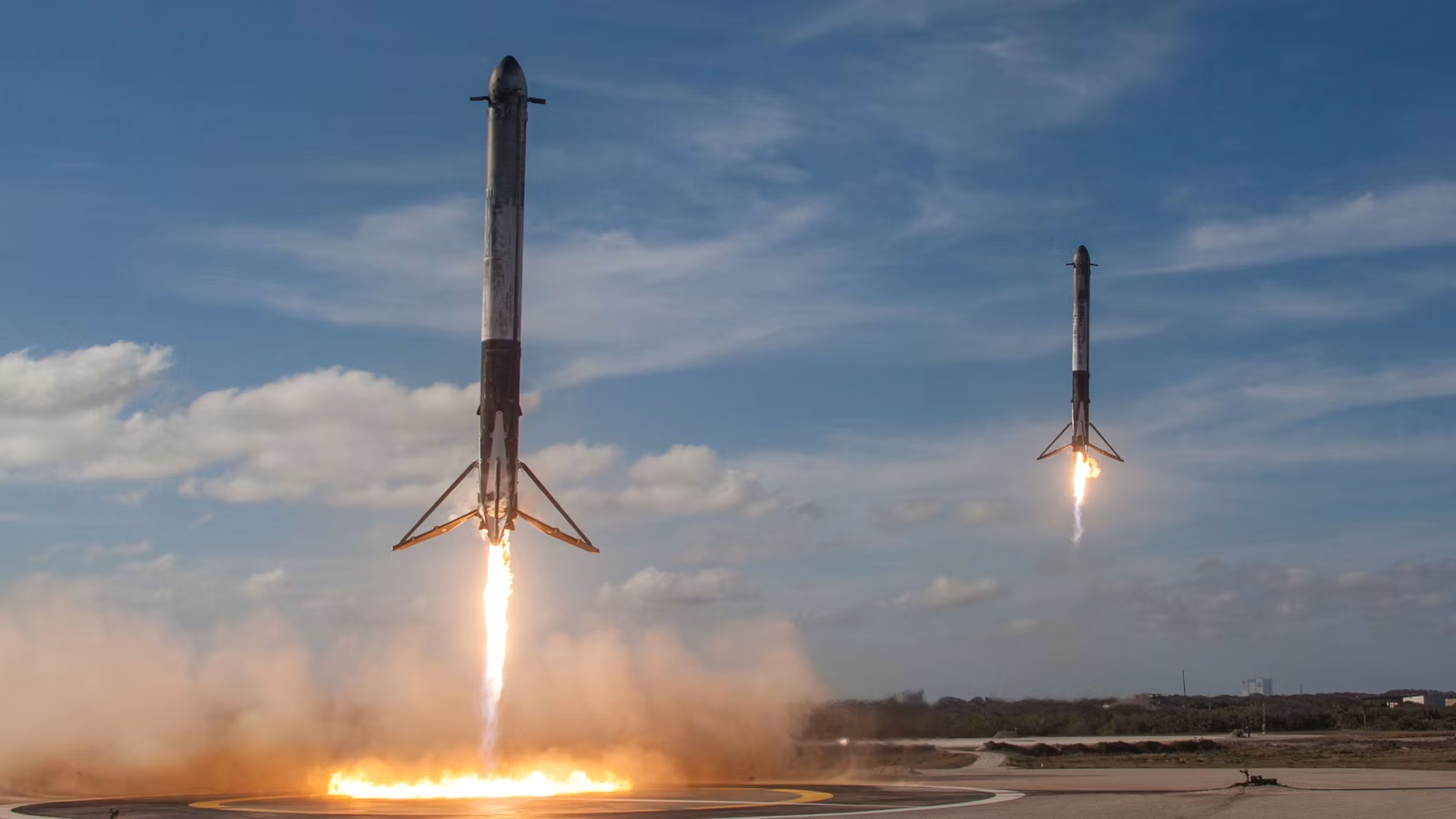
Launch services are SpaceX’s foundation. The significance of Falcon 9, Falcon Heavy, and the future Starship is not only that they carry payloads into space, but that they reduce orbital access costs, increase launch frequency, and support the expansion of SpaceX’s own satellite constellation. Reusable rockets give SpaceX advantages in cost, cadence, and scale, but the launch business still carries technical risk, accident risk, regulatory approval requirements, and heavy capital expenditure pressure.
Starlink is closer to an internet platform and subscription business. It is not a one-off project. It aims to generate recurring revenue through a low-Earth-orbit satellite constellation, terminal hardware, network coverage, and user subscriptions. Investors should watch not only satellite count, but also user growth, ARPU, terminal costs, network capacity, regional licenses, and competition. Starlink’s value lies in turning space infrastructure into ground-level communication services, which is one of the biggest differences between SpaceX and traditional aerospace contractors.
AI and space infrastructure represent higher expectations, but also higher uncertainty. SpaceX’s [IPO roadshow materials](https://content.spacex.com/cms-assets/assets/SpaceX IPO Roadshow.pdf) indicate that proceeds may be used for AI compute infrastructure, launch infrastructure, launch vehicles, and satellite constellations. The AI narrative means SpaceX is no longer valued only through an aerospace lens; the market may also compare it with large technology companies, cloud-computing infrastructure providers, and AI computing platforms. But this makes the analysis more complex. AI investment requires massive capital expenditure, the return cycle is uncertain, and synergies with the core space business still need to be proven over time.
| Business Module | Value Source | What to Watch |
|---|---|---|
| Launch services | Reusable rockets, launch frequency, cost advantage | Launch count, orders, accident rate, gross margin |
| Starlink | Satellite internet, subscription revenue, global coverage | Users, ARPU, terminal cost, licenses |
| Government and defense | NASA, defense, research, and security missions | Contract value, renewals, policy budgets |
| AI infrastructure | Computing, data, and space-infrastructure narrative | Capital expenditure, customer contracts, margins |
| Starship | Deep-space transport and large-scale orbital capacity | Test progress, commercialization timeline, reliability |
Commercial space has entered mainstream investment discussions partly because of the broader industry cycle. A World Economic Forum and McKinsey global space economy report estimated that the space economy could grow from $630 billion in 2023 to $1.8 trillion by 2035. Reuters also reported that global investment in space companies reached $7.95 billion in the first quarter of 2026, reflecting how SpaceX IPO expectations boosted financing enthusiasm across the sector. This backdrop helps explain why the market pays so much attention to SpaceX, but it does not mean every commercial space company will succeed.
Summary: The SpaceX investment case is not simply “more rocket launches mean a higher stock price.” A more complete view requires four questions: can launch capabilities continue to lower costs and improve efficiency? Can Starlink become a high-quality subscription business? Can government and defense contracts provide stable cash flow? Can AI infrastructure generate verifiable revenue? SpaceX’s advantage is that multiple business lines may reinforce one another, but the risk is that each module requires substantial capital, technical execution, and regulatory approval. When looking at SPCX, treat it as a multi-business platform rather than a single rocket stock.
How to Classify Related U.S. Stocks Instead of Chasing “SpaceX Concept Stocks”
SpaceX-related U.S. stocks should not be judged simply by whether they “move like SpaceX.” A better method is to classify them by industry chain: launch services and aerospace manufacturing depend on engineering execution; satellite communications depend on network commercialization; Earth observation depends on data value; lunar missions depend on government contracts; and aerospace defense depends on budget cycles. Once you classify them this way, you will see that some companies compete with SpaceX, some may cooperate with it, and some merely share the broader space-economy theme.
Launch services and aerospace manufacturing are the closest to SpaceX’s core business. Rocket Lab is a typical example. It covers launch, spacecraft, satellite components, and software. It operates the Electron small-launch vehicle and is developing larger launch capabilities. For companies in this category, you should focus on launch success rate, launch cadence, customer orders, cash burn, and progress on new rockets, rather than just concept-driven excitement. If a launch company fails, the market often reprices risk quickly. But if reliability improves and orders are delivered, the company may earn a higher valuation premium.
Satellite communications and direct-to-device connectivity are another popular area. AST SpaceMobile, Iridium, Viasat, and Globalstar do not all do the same thing as SpaceX. ASTS focuses on connecting satellite networks directly to ordinary phones. Iridium is more of a mature satellite communication network. Viasat and Globalstar involve broadband, spectrum, and specific connectivity services. To evaluate these companies, look at spectrum assets, satellite deployment, carrier partnerships, device compatibility, capital expenditure, and commercial service rollout, rather than launch news alone.
Earth observation, lunar missions, and space data services are more about space applications. Planet Labs focuses on high-frequency satellite imagery for agriculture, forestry, mapping, government, and commercial customers. Intuitive Machines is built around lunar missions, space infrastructure, and NASA contracts, and has disclosed quarterly revenue, backlog, and lunar reconnaissance contract information. For these companies, the key question is not whether they have rockets, but whether their data products, contract execution, mission success rates, and customer retention can support long-term value.
| Segment | Representative Companies | Relationship With SpaceX | Key Metrics |
|---|---|---|---|
| Launch services | RKLB, Firefly | Competitors or complements | Launch frequency, success rate, orders |
| Satellite communications | ASTS, IRDM, VSAT | Partly competitive, partly thematic | Satellite deployment, spectrum, carrier partnerships |
| Earth observation | PL, BKSY | Space data applications | Subscription revenue, renewal rate, government customers |
| Lunar missions | LUNR | Related to deep-space and government programs | NASA contracts, mission success rate |
| Aerospace defense | LHX, LMT, NOC | Linked to government budgets | Defense orders, cash flow, valuation |
You can also use a simple filter to avoid “pseudo-concept stocks”: does the company actually generate revenue from the space economy? If most of its revenue comes from traditional businesses and it only occasionally appears in news about satellites, AI, or space, it should not be treated as a pure commercial space stock. Conversely, some large defense companies may not have space as their largest business line, but they may offer stronger cash flow and more visible government orders, which can make their risk profile more stable than small-cap space growth stocks.
Summary: SpaceX-related U.S. stocks are not a single unified sector, but a group of companies with different business models. Launch companies depend on technology and orders. Satellite communication companies depend on networks and users. Earth observation companies depend on data subscriptions. Lunar mission companies depend on contract execution. Aerospace defense companies depend on budgets and cash flow. You should not assume that a company will mirror SPCX simply because it belongs to commercial space. A more effective approach is to classify by segment first, then examine revenue sources, customer structure, capital expenditure, and valuation. That helps prevent industry-chain research from turning into pure concept chasing.
How to Choose Space ETFs: Focus on Holdings, Fees, and SpaceX Weighting
Space ETFs are suitable for investors who want exposure to the commercial space theme but do not want to pick multiple individual stocks. Their advantage is diversification. Their limitation is that what you buy may not be “pure SpaceX.” ETFs with similar names can differ greatly. Some focus on satellite communications, some on defense, some on launch and space infrastructure, and some may also hold AI, robotics, semiconductor, or large industrial companies. What really matters is not the fund name, but its holdings, expense ratio, index rules, and SPCX weighting.
UFO is one of the earlier space-themed ETFs. It tracks the VettaFi Space Index and covers satellite communications, launch services, ground equipment, navigation, space imaging, and related defense companies. After SpaceX entered UFO’s portfolio, the ETF’s correlation with SPCX increased, but the 6.17% weighting still shows that investors are buying a basket of space economy stocks, not a single SpaceX position. If SPCX’s share price changes, the index rebalances, or the fund adjusts its portfolio, that weighting may continue to move.
The Global X Space Tech ETF places more emphasis on the commercial space economy, covering rocket launch systems, reusable rockets, space technology components, satellite communications, data services, space transportation, and exploration services. It is closer to a “space technology value chain” product, which may suit investors who want broader exposure across commercial space. ARK’s ARK Space & Defense Innovation ETF is an actively managed ETF. Its theme has expanded from earlier space exploration to space and defense innovation, meaning it may cover space exploration, defense innovation, robotics, automation, and related technology companies at the same time.
| ETF Type | Representative Product | Suitable For | Key Metrics |
|---|---|---|---|
| Space index ETF | UFO | Investors seeking basket exposure to the space economy | SPCX weighting, expense ratio, index rules |
| Space technology ETF | ORBX | Investors bullish on the commercial space value chain | Launch, satellite, and component exposure |
| Actively managed ETF | ARKX | Investors who accept manager-driven selection | Rebalancing frequency, concentration, theme drift |
| Aerospace and defense ETF | ITA, XAR, etc. | Investors seeking lower small-cap growth volatility | Defense weighting, cash-flow quality |
Fees should also be part of the decision. Popular thematic ETFs often have higher expense ratios than broad-market index ETFs. If you hold them for a long period, fees continuously affect net returns. Liquidity matters as well. ETFs with low trading volume and wide bid-ask spreads may create additional costs during large trades or volatile markets. For international investors, the exchange, tax treatment, dividend handling, currency conversion costs, and broker support all need to be checked.
If you are interested in trading opportunities after a popular IPO, price volatility is not the only thing to watch. You also need to understand actual trading costs. U.S. stock trading costs may include not only commissions, but also platform fees, external agency fees, trading activity fees, settlement-related costs, and currency conversion costs. Users who meet local availability, identity verification, and platform rules can use Biya U.S. stock trading to explore access to U.S. stocks, Hong Kong stocks, and other multi-asset trading functions. Biya charges $0 commission for U.S. stock trading, while platform fees, external agency fees, and other charges are subject to the fee center and order page. Availability depends on the user’s location, identity verification results, platform rules, and applicable laws and regulations.
Summary: The value of space ETFs is that they reduce the difficulty of stock selection, not that they precisely replicate SpaceX stock. When choosing an ETF, check at least four things: whether it holds SPCX, how much SpaceX weighting it has, whether the top holdings are overly concentrated, and whether the expense ratio and bid-ask spread are reasonable. UFO, ORBX, and ARKX represent different product logic, so they cannot be judged by name alone. For beginners, an ETF may be easier to manage than a concentrated position in small-cap space stocks. But if your goal is to make a direct bet on SpaceX, ETF exposure may not be strong enough, and you should review the latest holdings and fund documents before buying.
How Should Ordinary Investors Make SpaceX-Related Investment Decisions?
For ordinary investors, the most important step in SpaceX-related investing is to decide whether you are buying a “company” or a “theme.” Buying SPCX means taking single-company risk. Buying a space ETF means taking thematic basket risk. Buying related U.S. stocks means taking industry-chain and individual-company risk. These three cannot be compared as if they were the same exposure, and you should not use higher-risk stocks or leveraged products as emotional compensation simply because you missed the IPO allocation.
First, define your goal. If you want to buy SpaceX itself, you should study SPCX’s valuation, financials, business segments, share structure, lock-up arrangements, and future financing plans. If you are simply optimistic about the long-term commercial space trend, ETFs or a basket of related stocks may be more suitable. If you want to search for high-growth individual stocks, you must accept that small-cap space stocks can suffer large drawdowns, financing dilution, project delays, and order volatility.
Second, set your position size. Commercial space is a high-expectation, high-volatility, capital-intensive sector. It should not be approached with a savings-account mindset or short-term cash. Ask yourself: if SPCX or a related ETF falls 30% from your purchase price, can you still hold it? If a small space company drops 50% because of a launch failure or financing dilution, will it affect your living funds? If the answer is yes, the position size should be smaller, or you should consider a more diversified ETF.
Third, review costs and compliance. International investors often overlook currency conversion, deposits, commissions, platform fees, external agency fees, tax forms, dividend withholding, and trading hours when buying U.S. stocks. You can use Biya currency conversion to record conversion costs between U.S. dollars, Hong Kong dollars, or local currencies, then confirm actual fees on your broker’s order page. If you also follow U.S. stocks, Hong Kong stocks, and digital assets, Biya App can help organize multi-asset fund flows, trading bills, and exchange-rate records, but all transactions should be based on platform rules, order confirmations, and local regulatory requirements.
| Decision Question | If the Answer Is “Yes” | More Suitable Path |
|---|---|---|
| Do you only want SpaceX itself? | You can tolerate large single-stock volatility | Study SPCX shares |
| Do you want diversified space-economy exposure? | You do not want to pick individual stocks | Study space ETFs |
| Do you want high-growth companies? | You can analyze financials and orders | Study RKLB, ASTS, PL, LUNR by category |
| Is your account temporarily unable to buy? | Broker or regional restrictions apply | Wait for support, use a compliant channel, or study ETFs |
| Are trading costs unclear? | Costs affect net returns | Check fees, FX, and tax treatment first |
You can also build a small SpaceX-related watchlist instead of taking a large position all at once. For example, your core portfolio could remain in broad-market ETFs or mature technology stocks, while commercial space acts as a satellite allocation. Alternatively, you can place SPCX, UFO, RKLB, ASTS, PL, and LUNR into a watchlist and wait for earnings reports, holding disclosures, index inclusion, lock-up changes, and valuation pullbacks before deciding. This approach may not maximize upside, but it is more consistent with risk management.
If you need to screen U.S. stocks first, you can use the Biya U.S. stock list as an initial research entry point, then confirm details through company announcements, fund documents, and your broker’s order page. Popular IPOs can experience significant price volatility shortly after listing, so you should understand order types, fee structures, and risks before trading. Any platform fees, external agency fees, trading activity fees, or fractional-share charges should be based on the final display in the fee center and order page.
Summary: SpaceX-related investing is not simply a question of whether you can buy the stock. You need to confirm whether you are buying SPCX as a company, the space economy as a theme, or individual stocks across the commercial space industry chain. Then decide whether to use shares, ETFs, or a multi-stock basket. Finally, evaluate position size, volatility, currency conversion, fees, tax treatment, and compliance within the same framework. For ordinary investors, the most important thing is not catching every IPO opportunity, but participating with a position size you can tolerate after understanding the product structure and risk sources. This content only discusses public-market information, trading rules, and fee structures. It does not constitute investment advice.
When you follow SpaceX, SPCX, space ETFs, and related U.S. stocks, the real task is not only managing your entry price. You also need to manage U.S. dollar funds, accounts across different markets, exchange-rate changes, order fees, and portfolio concentration. If you hold U.S. stocks, Hong Kong stocks, ETFs, or digital assets at the same time, Biya can help record multi-asset trades, currency conversion, and bill changes, making it easier to see where funds come from, where fees are spent, and whether your holdings are becoming overly concentrated. Biya supports U.S. and Hong Kong stock trading, digital asset trading, and payment scenarios across multiple local currencies. Availability depends on the user’s location, identity verification results, platform rules, and applicable laws and regulations. Whether you choose SPCX shares, a space ETF, or commercial space-related companies, you should first verify trading permissions, product documents, order fees, and your own risk tolerance.
FAQ
Can Ordinary Investors Still Buy SpaceX Stock Now?
Yes, but only if your broker supports SPCX trading and your account location, identity verification, and U.S. stock permissions meet platform rules. Failing to receive IPO allocation does not mean you can never buy the stock after listing. Before placing an order, confirm the ticker, exchange, order type, and fees.
What Is the Difference Between SpaceX Stock and a Space ETF?
SpaceX stock carries single-company risk, while a space ETF carries basket exposure to commercial space companies. An ETF may hold SPCX, but it may also hold defense, satellite communications, AI, or industrial companies. Their volatility sources, fee structures, and concentration risks are different.
What Should Investors Do If They Cannot Get SpaceX IPO Allocation?
You can wait until SPCX trades through a supported broker, or study space ETFs and commercial space-related U.S. stocks. Do not chase prices blindly just because you missed IPO allocation. Popular IPOs can be highly volatile early on, so check account rules and risk tolerance first.
Which Segments Matter for SpaceX-Related U.S. Stocks?
Relevant segments include launch services, satellite communications, Earth observation, lunar missions, aerospace defense, and space infrastructure. Each segment has different revenue sources and risks, so a company should not be assumed to move with SpaceX simply because it is linked to commercial space.
Are Space ETFs Suitable for Beginner Investors?
Space ETFs may suit beginners who want diversified exposure to the space economy without researching every individual stock. However, ETFs still carry expense-ratio risk, holding changes, sector concentration, premium/discount risk, and liquidity risk. Review the latest holdings, fund documents, and broker fees before buying.
What Are the Main Risks of Investing in SpaceX?
The main risks include high valuation, early trading volatility, technical failures, capital expenditure, uncertainty around AI-related businesses, regulatory approvals, changes in government contracts, and weaker market sentiment. Any trade should be based on public filings, broker rules, order details, and local regulatory requirements.
*This article is provided for general information purposes and does not constitute legal, tax or other professional advice from BiyaPay or its subsidiaries and its affiliates, and it is not intended as a substitute for obtaining advice from a financial advisor or any other professional.
We make no representations, warranties or warranties, express or implied, as to the accuracy, completeness or timeliness of the contents of this publication.
Related Blogs of

How Should SSDs and HDDs Work Together in AI Data Centers? Performance, Capacity, Cost, and Hot vs. Cold Data Compared


What Are NOR Flash, SLC NAND, and EEPROM? Why They Help Explain Hong Kong-Listed Memory-Related Stocks


Why Is HDD Supply and Demand Tightening? AI Data Centers, Long-Term Agreements, and Western Digital/Seagate Pricing Power


Is SMIC 0981.HK a Memory Chip Stock? The Relationship Between Foundry Manufacturing and the Memory Supply Chain
Choose Country or Region to Read Local Blog
 Australia
 Austria
 Belgium
 Canada
 Cyprus
 Czech Republic
 Denmark
 Estonia
 Finland
 France
 Germany
 Greece
 Hong Kong
 India
India Indonesia
 Ireland
 Italy
Italy Japan
Japan Latvia
 Lithuania
 Luxembourg
 Malaysia
 Malta
Malta Morocco
 Nepal
Nepal Netherlands
 New Zealand
 Norway
 Pakistan
 Philippines
 Poland
 Portugal
 Romania
 Singapore
 Slovakia
 Slovenia
 South Africa
 South Korea
 Spain
Spain Sweden
 Thailand
 The United States
 Turkey
 United Arab Emirates
 United Kingdom
 Vietnam
Contact Us




BIYA GLOBAL LLC is registered with the Financial Crimes Enforcement Network (FinCEN), an agency under the U.S. Department of the Treasury, as a Money Services Business (MSB), with registration number 31000218637349, and regulated by the Financial Crimes Enforcement Network (FinCEN).
BIYA GLOBAL LIMITED is a registered Financial Service Provider (FSP) in New Zealand, with registration number FSP1007221, and is also a registered member of the Financial Services Complaints Limited (FSCL), an independent dispute resolution scheme in New Zealand.