
Is Zero Commission Really Enough When Frequently Trading Popular U.S. Stocks?





When frequently trading popular U.S. stocks, zero commission is usually not enough. Zero commission only means the commission item may be zero; it does not mean platform fees, minimum charges, external agency fees, SEC Fee, FINRA TAF, bid-ask spreads, slippage, FX rates, and deposit or withdrawal fees are all zero. The more often you trade, the easier it is for seemingly small per-order costs to accumulate. To judge frequent-trading cost, review buy-side fees, sell-side fees, execution price deviations, and fund flows monthly or quarterly instead of looking only at per-order commission.
Key Takeaways
- Zero commission only means commission is zero; it does not mean total trading cost is zero.
- Frequent trading repeatedly creates platform fees, spreads, slippage, and sell-side fees.
- Sell-side trades also require checking pass-through items such as SEC Fee and FINRA TAF.
- When popular stocks are volatile, execution price may deviate from the screen quote.
- Cross-currency trading should include FX rates, FX spreads, and deposit or withdrawal fees.
- Frequent-trading cost should be judged by monthly or quarterly cumulative cost, not per-order fees alone.
Why Does Zero Commission Not Equal Low Cost in Frequent Trading?
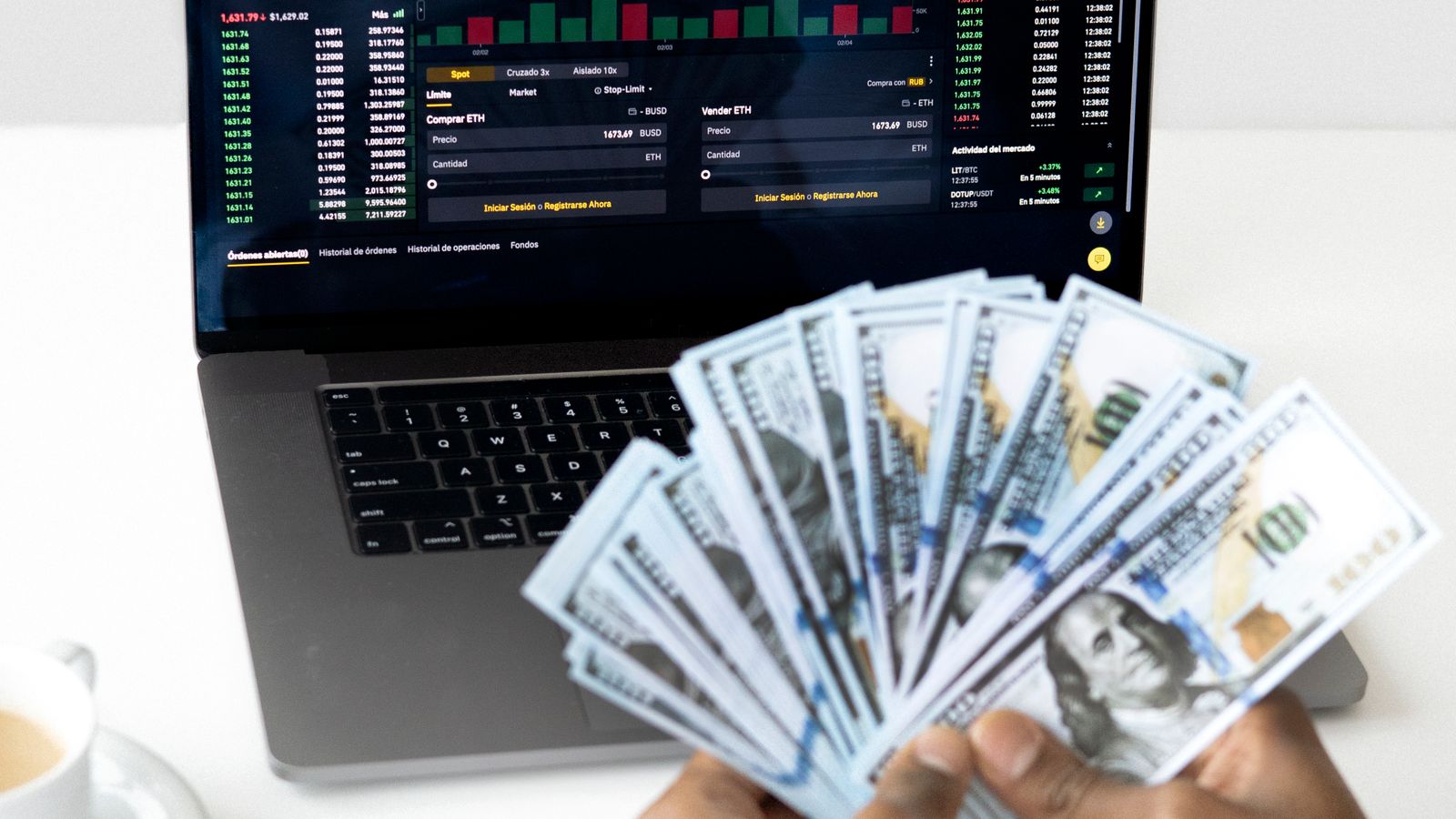
Zero commission does not equal low frequent-trading cost because commission is only one part of trading cost. FINRA notes in its discussion of fees and commissions that trading costs for investment products vary by product, account, and service model. For popular U.S. stocks, frequent trading can repeatedly involve platform fees, minimum charges, external agency fees, bid-ask spreads, slippage, and funding-path costs.
Which Fee Item Does Zero Commission Usually Cover?
When many platforms advertise “zero commission,” they usually refer to the trading commission item. It does not necessarily mean total trading cost is zero. A trading statement may still show fields such as platform fee, external agency fee, regulatory-related fee, trading activity fee, clearing-related fee, market data fee, or data service fee. Since platforms use different labels, users need to review the order confirmation page and post-trade statement details.
This distinction is especially important in frequent trading. Saving commission on a single order can indeed reduce part of the visible cost. But if each order still carries a platform fee, minimum charge, or pass-through fee, the more often you trade, the more obvious the cumulative cost becomes. To judge whether “zero commission is enough,” do not only read the advertising message. Look at the total fees across all orders over a period of time.
Why Should Platform Fees, Minimum Charges, and External Agency Fees Still Be Checked?
Platform fees may be charged by share count, order count, or transaction value. Minimum charges can make the actual fee ratio higher for small orders. External agency fees or pass-through fees may come from trading, clearing, regulatory, or self-regulatory organization rules. Even when each item is small per order, frequent trading causes them to appear repeatedly.
For example, if a platform has a USD 1 minimum charge per order, buying 5 times and selling 5 times in one day could theoretically create 10 fee-triggering points. Even if each amount is small, it becomes a cost that needs to be reviewed carefully over a month. The key to frequent-trading cost is not only “is each order expensive,” but “how much does the cumulative cost represent as a proportion of capital and potential return space.”
Why Does Frequent Trading Magnify Each Small Fee?
Frequent trading magnifies small fees because costs do not occur only once. They appear repeatedly through buying, selling, batching, cancelling and re-entering orders, and partial fills. In short-term trading, the price movement space may already be limited. If per-order spreads, slippage, and fees are stacked many times, the final result may change significantly.
| Item | Covered by Zero Commission? | Effect in Frequent Trading |
|---|---|---|
| Commission | May be covered | Reduces part of visible fees |
| Platform fee | Not necessarily covered | May occur repeatedly with each order |
| Minimum charge | Not necessarily covered | Takes up a higher proportion in small repeated trades |
| SEC Fee / FINRA TAF | Usually not part of commission | Appears repeatedly across multiple sell orders |
| Bid-ask spread and slippage | Not part of commission | May matter more than commission in high-turnover trading |
| FX and deposit or withdrawal costs | Not part of commission | Affect final received amount in cross-currency funding |
Summary: Zero commission is only one part of the fee structure. It cannot represent low total cost in frequent trading. For popular U.S. stocks, what really matters is not whether per-order commission is zero, but the cumulative amount of platform fees, minimum charges, sell-side fees, bid-ask spreads, slippage, and funding costs over a period of time. Especially in small-size or short-term trading, fee ratio and execution deviation may affect the final result more than the phrase “zero commission.”
Which Fees Are Repeatedly Magnified When Frequently Buying Popular U.S. Stocks?

When frequently buying popular U.S. stocks, the fees most easily magnified include platform fees, minimum charges, external agency fees, bid-ask spreads, and slippage. The more often you buy, the more likely order cost shifts from “not obvious per order” to “obvious at the monthly level.” If there is a scenario of batch-buying high-attention U.S. stocks such as Nvidia, Tesla, Apple, or Microsoft, these names are used only as popular-stock examples and do not constitute investment advice on any specific stock.
Why Do Small Repeated Buys Easily Trigger Minimum Charges?
Small repeated buys easily trigger minimum charges because each order may be calculated separately. Suppose a platform charges by share count but applies a USD 1 minimum per order. If you buy USD 100 of stock, USD 1 equals 1%. If the same USD 1,000 is split into 10 orders of USD 100 each, the minimum charge may be triggered multiple times.
This is common in a “buy a little first, then add more” habit. Batch buying may help investors spread entry prices, but it does not automatically reduce fees. If the platform charges a per-order minimum, the more finely you split the orders, the more often the fee is triggered. Before batching, new users should simulate the difference between one buy order and multiple buy orders using a fee table.
How Should You Compare Batch Buying and One-Time Buying?
The fee difference between batch buying and one-time buying mainly depends on the charging method. If a platform charges by transaction value percentage, batch buying and one-time buying may have similar total fee ratios. If the platform charges a minimum or fixed fee per order, batch buying may have a higher cumulative fee. If the platform charges by share count, total shares and fractional-share rules affect the result.
| Buy Method | Example Transaction Value | Fee Trigger Count | What to Check |
|---|---|---|---|
| One-time buy | USD 1,000 × 1 order | 1 time | Whether there is a maximum fee or fee cap |
| Split into 5 buys | USD 200 × 5 orders | 5 times | Whether minimum charges are triggered repeatedly |
| Split into 10 buys | USD 100 × 10 orders | 10 times | Whether fixed fees take up too high a proportion |
| Fractional batch buy | Less than 1 share or small share count | Depends on platform rules | How fractional-share fees and matching rules are calculated |
The point is not that batching is necessarily bad, but that you should know how fees accumulate before batching. For volatile popular stocks, batch buying also requires checking execution price differences. If each fill has a different price, final position cost should be calculated using weighted average cost, not simply the price of the last fill.
How Should Buy-Side Cost Be Included in Position Cost and P&L Review?
Buy-side cost directly affects position cost. A more complete position cost should include transaction value, commission, platform fees, external agency fees, minimum charges, FX rates, and deposit cost. If you calculate position cost only by the stock execution price, you will underestimate the real cost.
For example, if you buy a popular stock multiple times, each fill may have a different execution price and a different fee. What matters in the end is “total amount invested divided by total shares held,” not the execution price of any single order. In frequent buying, if each order carries fees, position cost will be higher than the execution average price alone suggests. When selling, the stock price needs to cover this real cost before net results can improve.
Summary: Frequent buying causes platform fees, minimum charges, external agency fees, and order execution costs to recur. Small batch orders should especially watch minimum charges and fixed fees because they raise the actual fee ratio. When judging buy-side cost, do not only look at the price of each fill. Combine each transaction value, fee, and funding cost to calculate real position cost. This helps identify what future sell price would be needed to cover cumulative cost.
What Sell-Side Fees Should You Watch When Frequently Selling Popular U.S. Stocks?

When frequently selling popular U.S. stocks, you should pay particular attention to SEC Fee, FINRA TAF, platform fees, external agency fees, and sell-side net proceeds. Selling is not only the process of turning stock into cash. It may also generate fee items that did not appear when buying. The key cost check for frequent selling is to review the net proceeds after each sale, not only the sell transaction value.
Why Do SEC Fee and FINRA TAF Often Appear on the Sell Side?
As of June 18, 2026, the SEC’s fiscal year 2026 Section 31 fee rate states that, from April 4, 2026, securities sales that fall within the scope of Section 31 rules generally involve related fees at a rate of USD 20.60 per million dollars. Different platforms may display this as SEC Fee, Regulatory Fee, or similar fields.
As of June 18, 2026, FINRA’s Trading Activity Fee explanation describes TAF as a transaction-based fee generally assessed on covered securities transactions of member firms. FINRA’s fee adjustment schedule lists the 2026 TAF for covered equity securities at USD 0.000195 per share, capped at USD 9.79 per trade. The specific field name and deduction method in an investor’s statement should be based on the platform statement and latest rules.
Why Are Sell-Side Net Proceeds More Important Than Transaction Value?
Sell transaction value is only “executed shares × execution price.” Sell-side net proceeds are the amount actually returned to the account after platform fees, pass-through fees, regulatory-related fees, and other possible charges. When selling frequently, looking only at transaction value can easily overstate the trading result.
For example, a sell transaction value may be USD 1,000, but after various fees are deducted, the net amount may be USD 996. The difference may look small for one trade, but if there are 20 sells in a month, each difference needs to be accumulated. For short-term trading, price movement may be limited, and sell-side fees can directly affect the breakeven point.
How Do Regulatory Fees and Platform Fees Accumulate Across Multiple Monthly Sell Orders?
When there are multiple monthly sell orders, record each sell order separately and then summarize:
| Monthly Sell Item | Per-Order Check | Monthly Summary |
|---|---|---|
| Sell transaction value | Transaction value of each sell | Total monthly sell value |
| Platform and external agency fees | Deduction details per order | Monthly platform-related fees |
| SEC Fee | Whether it appears per order | Monthly related sell-side fee total |
| FINRA TAF | Share-count-related fee per order | Monthly related trading activity fee total |
| Sell-side net proceeds | Net cash returned per sell | Real monthly amount returned to the account |
The point of this table is not to forecast returns, but to confirm the gap between “total sell transaction value” and “cash actually returned.” The more often selling occurs, the more important monthly review becomes, rather than judging cost only from individual impressions.
Summary: When frequently selling popular U.S. stocks, do not only watch share-price movement or transaction value. Sell-side trades may involve SEC Fee, FINRA TAF, platform fees, and other pass-through items. What truly affects the result is sell-side net proceeds. Per-order deductions may not be large, but they accumulate after multiple monthly sells. Ordinary investors should record each order, summarize monthly, and use statements and account cash changes to verify real sell-side cost.
How Do Bid-Ask Spreads, Slippage, and Order Types Affect Frequent Trading?
In frequent trading, bid-ask spreads, slippage, and order types may affect results more than commission. Investor.gov explains in its discussion of order types that different order types have different execution logic. Investor.gov’s explanation of order execution also notes that how an order is executed affects the trading price. Active trading in popular stocks does not mean there is no execution cost.
Cost Differences Between Market Orders and Limit Orders in Frequent Trading
A market order prioritizes fast execution but does not guarantee price. A limit order can set the maximum buy price or minimum sell price, but it does not guarantee execution. In frequent trading, market orders may bring higher execution certainty but can also repeatedly generate slippage. Limit orders provide a price boundary but may miss execution or be partially filled.
| Order Type | Advantage in Frequent Trading | Risk in Frequent Trading |
|---|---|---|
| Market order | Higher probability of execution, direct operation | Repeated slippage may become a visible cost |
| Limit order | Can control the price boundary | May not be filled or may be partially filled |
| Conditional order | Can execute based on trigger conditions | After triggering, still affected by market price and platform rules |
Frequent trading is not simply about choosing one order type. It requires recording whether each execution matched expectations. If each slippage amount is only a few cents, it may look small per order, but after many trades it can become a visible cost.
Why Do Popular-Stock Volatility, Earnings Days, and Pre-Market or After-Hours Sessions Increase Slippage?
During earnings days, major news, macroeconomic data releases, pre-market, or after-hours sessions, popular stocks may move faster, and bid-ask spreads may widen. Investor.gov’s explanation of day trading reminds investors that day trading is very risky and may lead to substantial losses in a short period of time. When frequent trading overlaps with volatile periods, execution cost and price risk become harder to control.
Pre-market and after-hours sessions may also involve lower liquidity, quote jumps, or limited order types. Even if the spread of a stock is narrow during regular trading hours, it may differ outside those hours. Users in frequent-trading scenarios should record different trading sessions separately instead of applying regular-session cost experience to every session.
Why Should Frequent Trading Record Average Execution Price and Individual Fills?
Frequent trading should record average execution price and individual fills because one order may be executed in multiple fills at different prices. Looking only at final transaction value may not show where slippage came from. Especially with market orders or partial fills, average execution price is more important than a single quote.
Before placing an order, you can check:
- Whether the current bid, ask, and spread are reasonable.
- Whether the order type matches your price-control needs.
- Whether it is an earnings day, pre-market or after-hours session, or major news period.
- Whether order size may create obvious slippage.
- Whether the platform displays estimated fees and estimated transaction value.
- Whether average execution price and individual fill records are available after execution.
Summary: High liquidity in popular U.S. stocks does not mean frequent trading has no execution cost. Market orders, limit orders, pre-market and after-hours sessions, earnings days, major news, and partial fills can all change the real execution price. In frequent trading, bid-ask spreads and slippage appear repeatedly and may become more important than commission after accumulation. Recording average execution price, individual fills, and trading session is an important step in judging real cost.
What Funding Costs Should Cross-Currency Frequent Traders of Popular U.S. Stocks Watch?
Cross-currency frequent trading of popular U.S. stocks also requires reviewing FX volatility, FX spreads, deposit fees, withdrawal fees, intermediary bank deductions, and final received amount. If your funds are not in U.S. dollars, trading results are affected not only by stock prices but also by exchange-rate changes between U.S. dollars and your local currency. The CFPB notes in its discussion of remittance transfer disclosures that service providers generally need to disclose fees and other information. Whether this applies depends on the funding path and service type.
How Does FX Volatility Affect Short-Term Trading Results?
FX volatility affects short-term trading results because the conversion cost when buying and the exchange rate when converting back after selling may differ. If the stock is priced in U.S. dollars but your final target is a local-currency amount, you cannot look only at U.S. dollar account P&L. A rising U.S. dollar stock price does not necessarily mean the local-currency result improves in the same way. Conversely, FX movement may amplify or weaken stock price movement.
Cross-currency frequent trading should especially record: the FX rate when converting into U.S. dollars, the U.S. dollar balance during trading, sell-side net proceeds, the FX rate when converting back to local currency, and the final received amount. If you only look at the platform’s U.S. dollar account result, you may miss the real cost on the local-currency side.
How Are FX Spreads, Deposit Fees, and Withdrawal Fees Magnified Repeatedly?
FX spreads, deposit fees, and withdrawal fees may be magnified in frequent trading. If funds move in and out multiple times, or frequently convert between local currency and U.S. dollars, each conversion or movement may create a spread or fee. Even if stock trading fees shown by the platform are low, funding-path costs can still affect the final result.
| Funding Cost Item | Single Impact | Effect in Frequent Trading |
|---|---|---|
| USD conversion rate | Determines tradable USD amount | Multiple conversions make recordkeeping harder |
| FX spread | Difference between buy and sell FX rates | Round-trip conversion may occur repeatedly |
| Deposit fee | Cost of moving funds onto the platform | Multiple deposits increase fixed fees |
| Withdrawal fee | Cost of moving funds off the platform | Multiple withdrawals affect final received amount |
| Intermediary bank fee | May be deducted along a cross-border path | Received amount may be lower than expected |
Why Should Trading Cost and Funding Cost Be Recorded Separately?
Trading cost and funding cost should be recorded separately. Trading cost comes from buy and sell orders, platform fees, and execution price. Funding cost comes from FX conversion, banks, payment channels, and funding paths. If they are mixed together, it becomes difficult to identify where the cost came from during review.
Keep at least three types of records: orders and execution records, trading statements, and fund flows plus bank received records. If trading statement fees are low but the final received amount is noticeably below expectations, the issue may be FX rates or funding paths. If funding-path cost is not high but trading results deviate from expectations, the issue may be spreads, slippage, or trading frequency.
Summary: For non-USD funds frequently trading popular U.S. stocks, exchange rates and funding paths may significantly affect final results. FX spreads, deposit fees, withdrawal fees, and intermediary bank deductions may not appear in the stock trading statement, but they affect final received amount. Users in frequent-trading scenarios should record trading costs and funding costs separately, then combine them to calculate total cost. Only by seeing both U.S. dollar trading results and local-currency received amounts can they judge whether zero commission is really enough.
How Can Ordinary Investors Judge Whether the Frequent-Trading Cost of a Zero-Commission Platform Is Controllable?
Ordinary investors can judge whether the frequent-trading cost of a zero-commission platform is controllable by using “monthly fee summary + execution cost review + fund-flow reconciliation + service-scope confirmation.” This is about whether the fee structure matches the use case, not a recommendation to trade frequently. Investor.gov’s reminder about day trading risks emphasizes that day trading involves high risk, so costs and rules should be understood first.
Step One: Track Real Buy-Side and Sell-Side Fees Monthly
Do not only look at individual orders. A more useful method is monthly tracking:
| Monthly Item | What to Track | Question to Answer |
|---|---|---|
| Number of buys | Monthly buy order count | Are orders overly split into many small trades? |
| Number of sells | Monthly sell order count | Are sell-side fees accumulating noticeably? |
| Platform fee | Total platform fees per order | Are there still fees beyond zero commission? |
| SEC Fee / FINRA TAF | Sell-side pass-through fees | Does cost rise as selling increases? |
| Total transaction value | Monthly buy and sell scale | What is the fee ratio relative to transaction value? |
Only by combining all orders in a month can you know whether “zero commission” truly reduces overall cost.
Step Two: Include Spreads, Slippage, and Failed-Order Cost in the Review
An unfilled order may not directly create a fee, but it can create opportunity cost or repeat-order cost. If a limit order is not filled and you later buy at a higher price or sell at a lower price, the result changes. In frequent trading, spreads, slippage, partial fills, and repeated orders should all be recorded.
During review, ask three questions: Did the actual execution price deviate from expectations? Did the average execution price match the plan? Did repeated orders create extra fees or worse prices? These questions are closer to real cost than simply asking whether commission is zero.
Step Three: Verify Total Cost with Statements, Execution Records, and Fund Flows
Total cost in frequent trading should be cross-checked with three types of materials:
- Execution records: confirm filled shares, prices, time, and average price.
- Statement details: confirm platform fees, pass-through fees, SEC Fee, FINRA TAF, and other items.
- Fund flows: confirm deposits, FX conversion, withdrawals, and final received amount.
If these three records do not reconcile, the full cost is not yet understood. Fee review is not about chasing the absolute lowest cost. It is about knowing where each cost comes from, whether it matches platform displays, and whether it is within an acceptable range.
You can also break monthly cost into a full loop to avoid looking only at trading statements while missing the funding path:
| Monthly Cost Loop | Items to Summarize | Key Question |
|---|---|---|
| Buy side | Buy count, buy amount, platform fee, external agency fee | Do small repeated buys magnify fixed fees? |
| Sell side | Sell count, sell-side net proceeds, SEC Fee, FINRA TAF | Are sell-side fees underestimated? |
| Execution side | Bid-ask spread, slippage, average execution price, individual fills | Did execution price deviate from expectations? |
| Funding side | FX conversion, deposit, withdrawal, final received amount | Do cross-currency funding costs affect the result? |
| Review side | Monthly fees as a percentage of transaction value | Is total cost beyond zero commission acceptable? |
Step Four: Use Reviewable Multi-Asset Fee Records to Support Cost Review
If relevant services are available in your region and you meet identity verification, platform rules, and applicable legal and regulatory requirements, you can use a multi-asset platform as one of the fee review tools. For example, Biya is a global multi-asset trading wallet that supports U.S. stocks, Hong Kong stocks, digital assets, digital asset ETFs, and other asset services. The specific tradable products and service scope are subject to the platform’s actual display. For users reviewing frequent-trading costs, order estimates, execution records, currency conversion, and account details can be reviewed within one workflow.
As of June 18, 2026, Biya charges USD 0 commission for U.S. stock trading, a platform fee of USD 0.005 per share, a minimum of USD 0.99 per order, and a maximum of 1% of trade value. External agency fees and trading activity fees are USD 0.00396 per share. Related rates, fractional-share rules, fund conversion, and other fees should be based on the Fee Center and the order page display.
In actual comparisons, you can use Biya Web Trading or the Biya App to compare order estimates, execution records, account details, and currency conversion records for popular U.S. stocks, helping assess whether fee boundaries are clear and reviewable. Fee information does not mean trading cost will necessarily be lower, nor does it mean related services are necessarily available; the actual tradable scope remains subject to the platform’s display.
Summary: To judge whether the frequent-trading cost of a zero-commission platform is controllable, look at cumulative fees, order execution, funding path, and service scope instead of only the advertising message. Ordinary investors can summarize buy-side and sell-side fees monthly, record spreads and slippage, verify pass-through fees with statements, and confirm final received funds through fund flows. Frequent trading itself carries high risk. Clear fees do not mean better trading results; they only make cost boundaries easier to understand and review.
FAQ
Is Zero Commission Enough for Frequent Trading of Popular U.S. Stocks?
Zero commission is not enough for frequent trading of popular U.S. stocks. You still need to check platform fees, minimum charges, sell-side fees, bid-ask spreads, slippage, and FX costs. Zero commission usually only means the commission item is zero. Final cost should be based on the order page, execution records, and statement details.
Can Frequent Trading of Nvidia and Tesla Be Costly?
Frequent trading of popular stocks such as Nvidia and Tesla may be costly because fees, spreads, and slippage occur repeatedly. Nvidia and Tesla are used only as examples of high-attention U.S. stocks and do not constitute investment advice on any specific stock.
Why Does a Zero-Commission Platform Still Deduct Other Fees?
A zero-commission platform may still deduct other fees because zero commission usually only means the commission item is zero. Platform fees, external agency fees, sell-side regulatory-related fees, currency conversion fees, and deposit or withdrawal fees may still arise under platform rules and statement details.
Why Should Frequent U.S. Stock Sellers Watch SEC Fee?
Frequent U.S. stock sellers should watch SEC Fee because securities sales that fall within the scope of Section 31 rules generally involve related fees. Specific rates, field names, and deduction methods should be based on the latest SEC rate, platform statement, and execution record.
Why Is the Fee Ratio Higher for Small Frequent U.S. Stock Trades?
The fee ratio for small frequent U.S. stock trades may be higher because minimum charges, fixed fees, and bid-ask spreads are more noticeable in small orders. A few dollars of cost per order can become a significantly higher actual fee rate when applied to a smaller transaction value.
How Should Cross-Currency Frequent U.S. Stock Trading Costs Be Calculated?
Cross-currency frequent U.S. stock trading costs should include FX rates, FX spreads, deposit fees, withdrawal fees, and final received amount. Looking only at U.S. dollar account P&L is not enough. Fund flows, FX records, and bank received amounts should be used to review total cost.
Closing: Zero Commission Is a Starting Point, Not the End of Frequent-Trading Cost
When frequently trading popular U.S. stocks, zero commission can reduce part of the visible fee burden, but it is not the complete answer. What really affects the result is whether platform fees repeat, whether sell-side fees accumulate, whether bid-ask spreads and slippage are controllable, and whether currency conversion and deposits or withdrawals add extra costs. Putting one month or one quarter of orders into the same cost table before judging whether the fee structure matches your trading plan and risk tolerance is clearer than looking only at per-order commission.
If relevant services are available in your region and you meet the platform’s applicable conditions, you can use Biya as one of the multi-asset fee review tools: use the Fee Center to review U.S. stock fee rules, and use Biya Web Trading or the Biya App to compare order estimates, execution records, account details, and currency conversion records. The purpose is not to promise a trading result, but to make fees, orders, and funding paths easier to review item by item.
The information above is only for introducing public market information, trading rules, and fee structures, and does not constitute investment advice. Whether related trading services are available depends on the user’s location, identity verification results, platform rules, and applicable laws and regulations. Investing in U.S. stocks and digital assets involves risks such as price volatility, liquidity, exchange rates, and regulatory restrictions. Specific rates and fee items should be based on the latest fee schedule, orders, and execution records of the platform you use. Past fee rates do not represent future rules.
*This article is provided for general information purposes and does not constitute legal, tax or other professional advice from BiyaPay or its subsidiaries and its affiliates, and it is not intended as a substitute for obtaining advice from a financial advisor or any other professional.
We make no representations, warranties or warranties, express or implied, as to the accuracy, completeness or timeliness of the contents of this publication.
Related Blogs of
Crypto Trading Bots: Types, Costs, and Security Risks


Online Bank-to-Bank Transfers: Account Linking, Steps, and Limits


Wire Transfer Requirements: Sender and Beneficiary Details Checklist



Choose Country or Region to Read Local Blog
 Australia
 Austria
 Belgium
 Canada
 Cyprus
 Czech Republic
 Denmark
 Estonia
 Finland
 France
 Germany
 Greece
 Hong Kong
 India
India Indonesia
 Ireland
 Italy
Italy Japan
Japan Latvia
 Lithuania
 Luxembourg
 Malaysia
 Malta
Malta Morocco
 Nepal
Nepal Netherlands
 New Zealand
 Norway
 Pakistan
 Philippines
 Poland
 Portugal
 Romania
 Singapore
 Slovakia
 Slovenia
 South Africa
 South Korea
 Spain
Spain Sweden
 Thailand
 United States
 Turkey
 United Arab Emirates
 United Kingdom
 Vietnam