
How to Exchange Hong Kong Dollars to Chinese Yuan: Banks, Apps, Exchange Rates, and Fees Compared





You can exchange Hong Kong dollars to Chinese yuan through Hong Kong banking apps, online banking, bank counters in Hong Kong or mainland China, cross-border remittance apps, e-wallets, and licensed money changers. The real question is not simply “where is the best exchange rate,” but whether you want to hold RMB in an account, send RMB to a mainland China bank card, pay in mainland China, or withdraw RMB cash. Each route has different exchange rates, fees, limits, processing times, and review requirements.
Key Takeaways
- First identify whether you need currency exchange, remittance, spending, or cash withdrawal.
- Banks suit larger amounts, while apps suit frequent small transfers.
- Compare final RMB received, not just the visible service fee.
- Transfers to mainland China require attention to limits and fund purpose.
- Use licensed money changers and avoid private exchange channels.
- For large exchanges, keep rate screenshots, receipts, and purpose documents.
Before Exchanging HKD to CNY, Identify Your Use Case First
Exchanging HKD to CNY is not a single action. You may only want to convert HKD into RMB inside a Hong Kong bank account, send RMB to a mainland China account, pay merchants in mainland China, or exchange RMB cash. The best route depends on your scenario: account conversion depends on bank exchange rates, cross-border remittance depends on channel limits, consumer payments depend on merchant support, and cash exchange depends on bank counters or licensed money changers.
You can first classify your need this way:
| Your Need | Common Method | What to Check |
|---|---|---|
| Convert HKD to RMB inside an account | Hong Kong banking app / online banking | Real-time rate, spread, RMB sub-account |
| Send RMB to a mainland China bank card | Bank remittance, Payment Connect, remittance app | Limits, processing time, recipient account rules |
| Spend in mainland China | AlipayHK, bank card, e-wallet | Merchant support, cross-border fees |
| Exchange RMB cash | Bank counter, licensed money changer | Cash rate, receipt, license, cash safety |
| Use funds for later investment or subscription payments | Multi-currency account, trading wallet | Currency support, fee transparency, account records |
The most common confusion is the “HKD to CNY exchange rate.” The HKD/CNY mid-market rate you see on a search engine is usually not your final transaction rate. Banks may show buying rates, selling rates, telegraphic transfer rates, and cash rates. Apps show order rates, while money changers execute at shop quotes. Bank of China Hong Kong’s HKD exchange rates are displayed by currency and quote type, but the final rate still depends on the price shown when you place the order.
You also need to distinguish where the RMB will be used. RMB in a Hong Kong bank account is often used in offshore scenarios, while RMB in a mainland China bank card is subject to mainland bank account rules, foreign exchange rules, and receiving bank requirements. Some banks and financial institutions may use terms such as CNY, CNH, and RMB. You do not need to memorize every term at the beginning, but before confirming a transaction, you should check the debit currency, the receiving currency, and where the final receiving account is located.
Small, frequent, and large exchanges also follow different priorities:
| Amount and Frequency | More Suitable Route | Key Notes |
|---|---|---|
| A few hundred to a few thousand HKD | Wallet, app, card payment | Check per-transaction limits and promotion validity |
| A few thousand to tens of thousands of HKD | Bank app, Payment Connect, remittance app | Check processing time and receiving method |
| Tens of thousands to hundreds of thousands of HKD | Bank FX conversion, wire transfer, same-name account transfer | Confirm documents and limits in advance |
| Frequent transfers to family | App or saved bank recipient | Avoid unclear purpose or inconsistent recipient information |
| One-off large fund arrangement | Bank first; split only when based on real needs | Do not split transactions to bypass review |
Summary: The first step in exchanging HKD to CNY is not comparing exchange rates immediately, but confirming the purpose of the funds. Account conversion, cross-border remittance, mainland spending, cash exchange, and later investment or payment needs all follow different rules. Small daily spending can usually prioritize wallets or apps, while larger amounts and funds requiring complete documentation are more suitable for bank channels. Once you answer three questions — where the money comes from, where the RMB will go, and whether it needs to cross into mainland China — you can eliminate most unsuitable options.
How to Exchange HKD to CNY Through Banks: Apps, Online Banking, and Counters

If you already have a Hong Kong bank account, a banking app or online banking is usually one of the most reliable ways to exchange HKD to CNY. It is suitable for account-based conversion, larger amounts, formal bank records, and later transfers to mainland China. The advantage is clear documentation and traceable fund flow. The downside is that FX spreads may not be as flexible as some apps, and cross-border transfers may still be affected by limits, receiving bank rules, and purpose review.
The usual process for account conversion is:
- Log in to your Hong Kong banking app or online banking.
- Go to “Foreign Exchange,” “Currency Exchange,” or a similar section.
- Choose HKD as the debit account and RMB as the receiving account.
- Check the real-time rate, estimated RMB amount, and possible fees.
- Confirm the transaction and keep the transaction record and rate screenshot.
HSBC Hong Kong’s foreign exchange services explain that customers can exchange currencies through online banking, the HSBC HK App, phone banking, and branches. It also notes that bid-ask spreads may be wider outside normal trading hours or on Hong Kong public holidays. Therefore, if you do not need RMB urgently, compare quotes during normal bank trading hours instead of relying on a single rate at an inconvenient time.
If you need to send RMB to a mainland China account, there is one more step: confirm whether you have a RMB account on the Hong Kong side, then add the mainland recipient. HSBC Hong Kong’s RMB remittance service mentions that RMB accounts in Hong Kong can remit to same-name RMB accounts in mainland China, and some routes may follow a daily CNY 80,000 arrangement. Whether you can use a specific route still depends on your identity, account status, and receiving bank.
For bank cross-border remittance, use this checklist:
| Item to Check | What You Need to Confirm |
|---|---|
| Debit account | HKD account or RMB account |
| Receiving account | Mainland bank card, same-name account, or third-party account |
| Recipient information | Whether name, bank, account number, and phone number match |
| Transfer purpose | Living expenses, salary, tuition, medical costs, family support |
| Cost structure | Exchange rate, service fee, intermediary bank fee, return fee |
| Processing time | Real-time, same day, 1–3 working days, or longer |
Bank counters are suitable for two types of users: beginners who are not familiar with app operations, and users handling larger or more complex amounts who need to ask about documentation first. A counter can often provide a clearer list of required materials, but it does not necessarily mean the lowest cost. It may also require queuing or an appointment. For small HKD to CNY exchanges, a banking app is usually more convenient.
Summary: Banks are suitable for HKD to CNY needs where the amount is larger, safety matters, records are important, and the fund path must be clear. You can first check the real-time rate in the app before confirming the exchange. If the RMB will later be sent to a mainland China account, you also need to check recipient information, purpose, limits, and processing time. Banks are not always the cheapest, but for large amounts, same-name accounts, salary transfers, family fund arrangements, and formal remittance purposes, they usually offer stronger compliance and traceability.
Using Apps and E-Wallets for HKD to CNY Exchange or Remittance
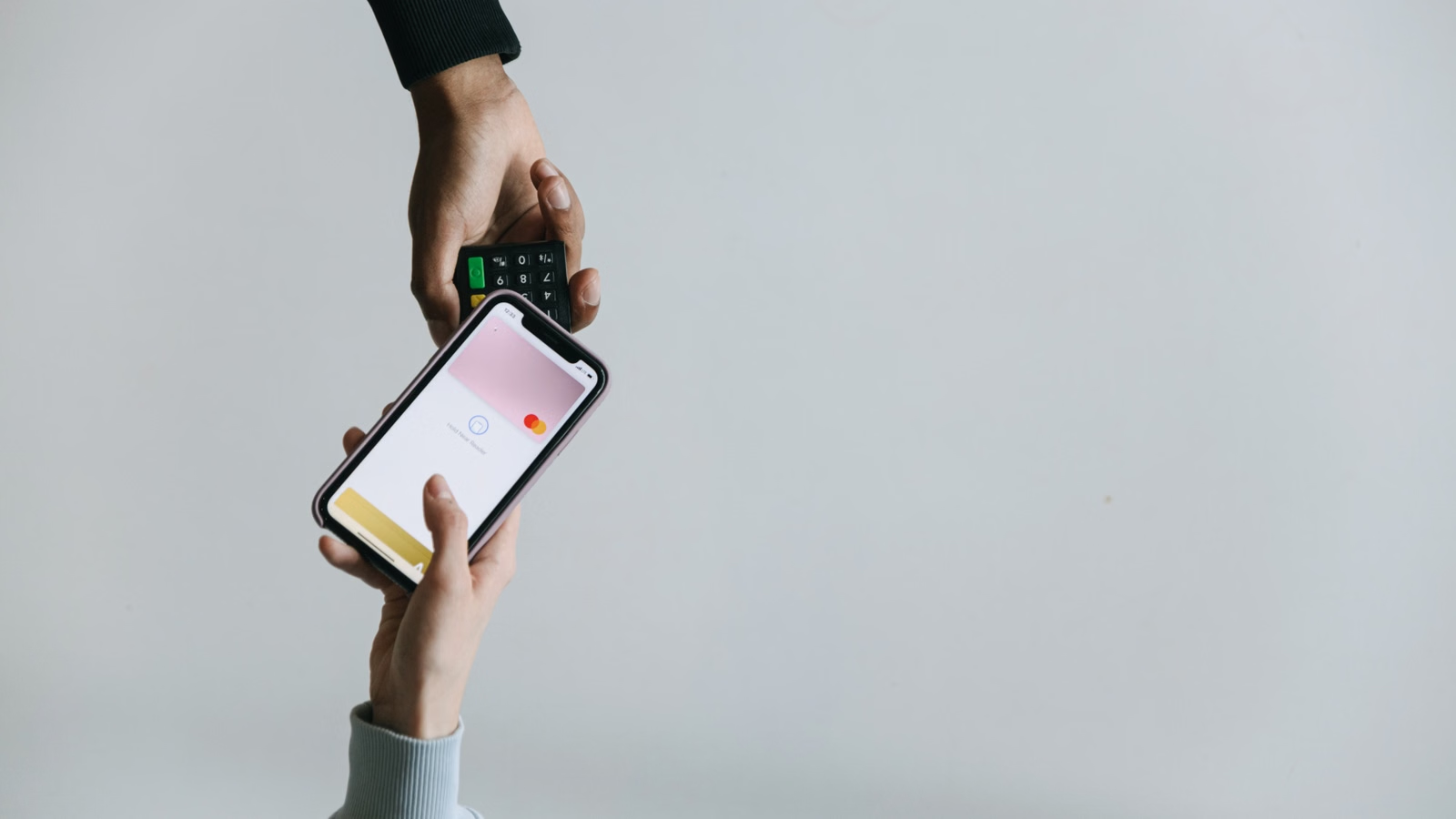
Apps and e-wallets are more suitable for small, frequent, daily-life HKD to CNY needs, such as sending living expenses to family in mainland China, short-term spending in mainland China, or paying RMB merchants with a HKD wallet. Their advantages are speed, convenience, and clear transaction prompts. Their limitations are more detailed identity verification levels, daily limits, annual limits, receiving methods, and fee rules. Convenience alone should not be your only decision factor.
Take AlipayHK as an example. After entering the remittance function, you typically choose mainland China as the destination, fill in recipient details, amount, and receiving method, then confirm the exchange rate and fee. AlipayHK’s remittance limits state that remittance to mainland China requires intermediate or advanced verification. Intermediate accounts can remit up to HKD 7,999 per day and HKD 100,000 per year, while advanced accounts can remit up to HKD 20,000 per day and HKD 500,000 per year. Remittance, offline payments, and online payments may share relevant limit calculations.
The same AlipayHK explanation also states that remittances to mainland China have charged HKD 25 per transaction since December 13, 2022. Whether fee waivers, promotions, or adjustments apply should be checked on the order page. AlipayHK is suitable for smaller daily-life remittances, but if you need to handle a larger amount at once, a bank or another cross-border remittance service may be easier for limit and record management.
Cross-border remittance platforms such as Wise follow a similar logic: you enter the amount to send and the receiving method, and the system displays the fee, exchange rate, estimated arrival time, and recipient restrictions. Wise’s CNY transfer guide shows that different receiving channels have different limits. For example, Alipay and Weixin channels may have per-transaction and recipient restrictions. Wise’s Alipay receiving option also notes that the recipient’s annual and monthly receiving limits may affect whether a transaction can be completed.
Apps, e-wallets, and banks can be compared this way:
| Method | Advantage | Suitable Users | Main Limits |
|---|---|---|---|
| Banking app | Complete records, suitable for larger amounts | Users with Hong Kong bank accounts | Spread, remittance review, processing time |
| AlipayHK | Convenient for small daily transfers | Hong Kong users sending money to mainland recipients | Verification level, limits, fees |
| Wise and similar platforms | Clear cost display and simple route | Users familiar with remittance apps | Receiving channels and annual limits |
| E-wallet spending | No need to exchange RMB cash first | Short-term mainland China visitors | Merchant support and payment limits |
If you are only traveling, shopping, or dining in mainland China, you may not need to exchange HKD into RMB cash in advance. AlipayHK’s cross-border payment information describes ways to pay in HKD in cross-border scenarios. Whether a specific mainland merchant can accept it still depends on merchant support, wallet balance, linked cards, identity verification, and on-screen prompts.
Summary: The core value of apps and e-wallets is convenience for small, fast, frequent transactions, but they are not the best answer for every HKD to CNY need. You should focus on verification level, per-transaction limit, annual limit, receiving method, fee, and refund rules if the transfer fails. If your purpose is living-expense remittance or short-term spending, apps are often easier to use. If your goal is a large fund arrangement, formal bank records, or a same-name account transfer to mainland China, banks are usually more stable.
How to Compare HKD to CNY Exchange Rates and Fees Accurately
The real cost of exchanging HKD to CNY should be measured by “how much RMB you finally receive under the same time, amount, and receiving method.” Service fees are only visible costs. FX spreads are the hidden cost many users overlook. A platform that claims zero service fee is not necessarily cheaper, while another platform with a fixed fee may still deliver more RMB if its transaction rate is better.
First, understand these terms:
| Term | How to Understand It |
|---|---|
| Mid-market rate | Market reference rate, not necessarily your transaction rate |
| Buying rate | The rate at which a bank or platform buys a currency |
| Selling rate | The rate at which a bank or platform sells a currency |
| Telegraphic transfer rate | Often used for account transfers or cross-border remittance |
| Cash rate | Often used for physical cash exchange and usually differs from TT rates |
| Actual transaction rate | The rate locked or executed when you confirm an order |
Many people search “HKD to CNY live exchange rate,” multiply it by the HKD amount, and later find that the received RMB is lower. This may be because the bank’s selling rate is different from the mid-market rate, the app charges a fixed fee, or the cross-border channel has additional costs. HSBC Hong Kong’s latest foreign exchange rates also remind users that public rates are often for reference and that the applicable real-time price may be available after logging in.
A more practical method is to test the same amount across platforms. For example, if you want to exchange HKD 10,000, do not compare “rate” and “fee” separately. Instead, enter HKD 10,000 in your bank app, AlipayHK, Wise, or another platform, then compare the final RMB amount, fee, and arrival time shown. You can also use a real-time exchange rate tool for an initial estimate, then confirm the final price on each platform’s order page.
You can record the comparison this way:
| Comparison Item | Banking App | Remittance App | E-Wallet | Money Changer |
|---|---|---|---|---|
| Input amount | HKD 10,000 | HKD 10,000 | HKD 10,000 | HKD 10,000 |
| Displayed rate | Transaction page | Order page | Payment page | Shop quote |
| Service fee | Possible | Possible | Possible | May be included in quote |
| RMB received | Key number | Key number | Key number | Cash received |
| Record | Bank receipt | Order receipt | Wallet record | Receipt |
| Failure cost | Return fee or time cost | Platform rules | Wallet rules | Dispute risk |
Splitting exchanges into batches can reduce the impact of rate movement at a single point in time, but it should not be used to bypass limits, split fund purpose, or avoid review. For legitimate large tuition payments, medical expenses, salary receipts, or family support, a better approach is to keep contracts, bills, salary slips, relationship documents, or purpose materials and process the funds through banks or compliant platforms according to the rules.
Summary: Cost comparison for HKD to CNY should not rely on “zero fee” or “high exchange rate” claims alone. The right order is to fix the amount, fix the receiving method, then compare final RMB received, processing time, documentation, and failure handling. For small amounts, convenience may matter more. For larger amounts, you should calculate FX spread, service fees, return costs, and review requirements together. As long as you compare final received amount, you are less likely to be misled by a single promotional point.
Limits, Processing Time, and Compliance When Sending HKD or RMB to Mainland China
When HKD to CNY involves sending money to a mainland China account, it is no longer only a currency exchange question. It becomes a cross-border payment question. You need to consider Hong Kong-side channel limits, mainland receiving rules, individual annual foreign exchange quota arrangements, fund purpose, and bank review. Small daily-life transfers may be completed quickly, while larger or more complex transfers may require additional documents.
The Hong Kong Monetary Authority’s Payment Connect states that personal remittances from Hong Kong to mainland China have a daily limit of HKD 10,000 and an annual limit of HKD 200,000. This limit is separate from the same-name RMB account remittance arrangement of CNY 80,000 per day. Payment Connect is more suitable for small, real-time, personal daily-life payments, not one-off large fund arrangements.
You can understand the limits of different channels this way:
| Channel | Common Use | Limit Focus |
|---|---|---|
| Payment Connect | Small personal cross-border remittance | Daily and annual limits, participating institutions |
| Same-name RMB account remittance | Hong Kong RMB account to mainland same-name RMB account | Daily CNY 80,000 arrangement and account eligibility |
| App remittance | Receiving through mainland wallet or bank card | Platform verification level and channel limits |
| Bank wire transfer | Larger amount or formal purpose | Purpose documents, receiving bank review, return rules |
| Mainland settlement into RMB | Foreign currency converted into RMB after entering mainland China | Individual annual quota and real-purpose documents |
Mainland China’s personal foreign exchange rules also matter. Under the State Administration of Foreign Exchange’s annual facilitation quota, individual foreign exchange settlement and domestic individual purchase of foreign exchange are usually managed under an annual quota of USD 50,000 equivalent per person. Within the quota, transactions may be handled with valid identity documents; beyond the quota, current-account items may be processed with authentic and compliant purpose documents. Bank of China’s personal foreign exchange purchase also mentions the annual purchase quota of USD 50,000 equivalent per person.
One common misunderstanding should be avoided: exceeding USD 50,000 equivalent does not necessarily mean a transaction is absolutely impossible. It usually means materials must be provided based on the nature, purpose, and bank requirements of the funds. Living expenses, tuition, medical costs, salary, and family support are different from securities investment, property purchases, and virtual asset trading. For capital-account or investment-related purposes, do not assume that they can be processed under a “living expenses” description.
Situations that may cause delays, returns, or additional document requests include:
- Recipient name, ID, phone number, or bank card information does not match.
- Transfer purpose is too vague or inconsistent with amount or frequency.
- Multiple large incoming transfers in a short period trigger bank review.
- Receiving bank does not support the specific cross-border channel.
- Public holidays, clearing hours, or system maintenance affect arrival time.
- Funds are routed through someone else’s account, making source explanation difficult.
Summary: When sending HKD or RMB to mainland China, low cost is not the only factor. Successful arrival and compliant explanation matter more. Payment Connect suits small daily-life transfers, same-name RMB accounts provide a clearer account path, apps suit frequent small amounts, and bank wire transfers are better for formal purposes. For large amounts, ask the bank about limits, purpose documents, and return rules in advance. Do not use descriptions that do not match the real purpose just for convenience.
HKD to CNY Risk Checklist: Money Changers, Cash, Private Exchange, and Large Transfers
If you need RMB cash, Hong Kong money changers can be an option, but only if you choose licensed operators, confirm the quote, ask for a receipt, and avoid private exchange. Cash exchange looks simple, but the main risks are unlicensed operators, changing verbal quotes, and lack of documentation after the transaction. Large cash amounts also create storage, safety, and source-of-funds issues.
Hong Kong Customs’ Money Service Operator licensing regime states that businesses providing money exchange or remittance services must obtain the relevant license. Before exchanging RMB cash at a money changer, you can check the merchant through the Hong Kong Customs licensed operator register. Ideally, the displayed license, receipt header, company name, and shop information should match.
Before exchanging at a money changer, check the following:
| Item to Check | Why It Matters |
|---|---|
| Licensed status | Reduces unlicensed operation and dispute risk |
| Written quote | Avoids last-minute changes to verbal rates |
| Receipt availability | Helps with later review and proof of transaction |
| Extra fees | Prevents charges beyond the quoted rate |
| Cash counting | Avoids short payment, counterfeit notes, and disputes |
| Matching shop identity | Prevents mismatch between receipt issuer and transaction party |
Private exchange requires extra caution. Social groups often advertise “HKD to RMB,” “better live rate,” or “no fee,” but you cannot easily verify the other party’s source of funds, account safety, or whether the transaction can be recovered. If the other party asks you to transfer first, use an unfamiliar intermediary account, split the amount into multiple transfers, or write an inaccurate payment note, it may lead to fund loss or account risk controls.
For larger HKD to CNY transactions, keep these records:
- Screenshot of the rate before placing the order.
- Order confirmation and transaction receipt.
- Bank statement or wallet transaction record.
- Recipient information and proof of arrival.
- Purpose documents for tuition, medical costs, salary, or family support.
- If funds will later be used for investment or payment, keep the full fund path.
If part of the funds will later be used for cross-border investment, subscription payments, or multi-currency management, you can organize FX records, remittance records, and later account spending under the same record system. For example, cross-border remittance tools can help with route comparison and preliminary planning, while later payment or trading scenarios still require attention to statements, fees, and local rules.
Summary: The main risks in HKD to CNY exchange are not technical difficulty, but unclear channels, insufficient records, and unclear fund purpose. For cash needs, bank counters or licensed money changers are safer options, but private exchange should be avoided even if the quoted rate looks better. Large transactions should be supported by records and purpose documents, especially in cross-border transfers, frequent transactions, family remittances, and later investment or payment scenarios. Safety, compliance, and traceability usually matter more than a slightly better one-time rate.
When handling HKD to CNY exchange, it helps to think in one fund-management framework: compare the live rate and final received amount first, confirm fees, limits, and purpose next, and then keep statements and receipts. For users who also need cross-border payments, multi-currency accounts, or later trading access, Biya is a global multi-asset trading wallet that can support selected cross-border fund scenarios, including USDT conversion into major fiat currencies such as USD or HKD. If your funds may later be used for US stocks, Hong Kong stocks, or digital asset trading, you can also use Biya and Biya Web Trading to check available functions, supported currencies, and fee rules. Fees, arrival time, trading eligibility, and product availability should always be based on the order page, fee disclosures, and applicable local regulatory requirements.
FAQ
Is a Bank or App Cheaper for HKD to CNY Exchange?
There is no fixed answer; the cheaper option depends on the final RMB received for the same HKD amount. Banks are better for larger amounts and formal records, while apps are better for frequent small daily transfers. Compare the transaction rate, fee, processing time, limit, and refund rules instead of focusing only on the service fee.
Does Sending HKD to a Mainland RMB Account Use the USD 50,000 Quota?
Whether a transfer affects the annual facilitation quota depends on the currency, route, account type, and whether settlement into RMB is involved. Mainland individual foreign exchange settlement and domestic individual FX purchase are usually managed under annual quota rules. Amounts beyond the quota may require authentic and compliant purpose documents and are subject to bank review.
Is Hong Kong Payment Connect Suitable for Small HKD to CNY Transfers?
Payment Connect is suitable for small personal cross-border transfers between Hong Kong and mainland China, especially daily-life RMB payments that require faster processing. It has daily and annual limits and is affected by participating institutions, receiving account conditions, and user eligibility. It is not designed for one-off large fund transfers.
Why Is the RMB Received Lower Than the HKD to CNY Search Rate?
The RMB received may be lower because the search result usually shows a reference or mid-market rate, not your actual transaction rate. The final amount may also reflect bid-ask spread, service fees, or channel costs. Always rely on the transaction rate, fee, and final received amount shown by the bank app, wallet, or remittance platform before confirming.
Is It Safe to Exchange RMB Cash at a Hong Kong Money Changer?
A licensed money changer is generally more regulated, but you still need to check the license, quote, and receipt. Avoid unlicensed private exchange, social-group exchange, unfamiliar intermediary accounts, and transactions without documentation. For larger cash amounts, also consider counterfeit note risk, storage safety, and source-of-funds records.
What Should You Prepare for a Large HKD to CNY Exchange?
For a large HKD to CNY exchange, prepare identity documents, source-of-funds evidence, purpose documents, bank statements, and transaction receipts. Banks or platforms may request additional explanations, especially when amounts are large, frequency is high, or the purpose is complex. All actions should follow platform rules, billing details, and applicable local regulatory requirements.
*This article is provided for general information purposes and does not constitute legal, tax or other professional advice from BiyaPay or its subsidiaries and its affiliates, and it is not intended as a substitute for obtaining advice from a financial advisor or any other professional.
We make no representations, warranties or warranties, express or implied, as to the accuracy, completeness or timeliness of the contents of this publication.
Related Blogs of

MACD Crypto Trading Strategy: Settings, Signals, and Risk Management

International Wire Transfer Time: What Affects Delivery?

Crypto-Related Stocks vs Digital Assets: What Investors Actually Own

Wire Transfer Requirements: Sender and Beneficiary Details Checklist
Choose Country or Region to Read Local Blog
 Australia
 Austria
 Belgium
 Canada
 Cyprus
 Czech Republic
 Denmark
 Estonia
 Finland
 France
 Germany
 Greece
 Hong Kong
 India
India Indonesia
 Ireland
 Italy
Italy Japan
Japan Latvia
 Lithuania
 Luxembourg
 Malaysia
 Malta
Malta Morocco
 Nepal
Nepal Netherlands
 New Zealand
 Norway
 Pakistan
 Philippines
 Poland
 Portugal
 Romania
 Singapore
 Slovakia
 Slovenia
 South Africa
 South Korea
 Spain
Spain Sweden
 Thailand
 United States
 Turkey
 United Arab Emirates
 United Kingdom
 Vietnam