SpaceX 2026 Key Event Timeline: How Index Inclusion, Share Unlocks, and Rebalancing Could Affect SPCX





The key variables after SpaceX’s public listing are not limited to who can buy SPCX or whether the stock rises on its first trading day. The bigger issue is how index inclusion, insider share unlocks, and index rebalancing may overlap in the second half of 2026. According to this timeline, June to July focuses on inclusion windows for CRSP, FTSE Russell, MSCI, and NASDAQ 100, while August to December focuses on post-earnings unlocks, phased float expansion, and rebalancing-related flows. All amounts should be treated as market estimates, not investment advice. Actual trading decisions should be based on index company announcements, company disclosures, brokerage order pages, and applicable local regulatory requirements.
Key Takeaways
- June to July is a concentrated window for SpaceX index inclusion.
- August to December focuses on earnings-linked unlocks and phased float expansion.
- Share unlocks may affect free float and index weight calculations.
- Estimated passive buying does not equal guaranteed executed buying.
- The Cursor deal may slightly affect unlock ratios and share-count assumptions.
- Investors should verify announcements, costs, liquidity, and risk exposure.
SpaceX Key Event Overview: June to December 2026

The core rhythm for SpaceX in the second half of 2026 can be summarized as “index inclusion first, multiple unlock windows next, and rebalancing-driven weight adjustments afterward.” This type of timeline is best used as an event calendar, not as a buy or sell signal. The focus is on three main themes: index inclusion, share unlocks, and rebalancing. Ordinary investors first need to identify which dates may involve fund reallocation, then judge whether each event mainly affects demand, supply, or both at the same time.
Public market information shows that the SpaceX listing itself is an exceptionally large event. Reuters reported that SpaceX priced its IPO at $135 per share, issuing 555.6 million shares, raising $75 billion, and reaching a valuation of about $1.77 trillion. Reuters later reported that IPO proceeds rose to $85.7 billion after the greenshoe option was exercised. This explains why index providers, passive funds, and investors are paying close attention to SPCX’s free float, index weight, and unlock schedule.
| Date | Key Event | Event Type | Estimated Flow or Ratio | Compliance Note |
|---|---|---|---|---|
| June 18, 2026 | SpaceX included in CRSP indexes | Index inclusion | Estimated passive buying of about $4–7 billion | Passive buying amount is a market estimate |
| June 26, 2026 | SpaceX included in FTSE Russell indexes | Index inclusion | Estimated passive buying of about $6–9 billion | Subject to FTSE Russell implementation notices |
| June 26–29, 2026 | SpaceX included in MSCI indexes | Index inclusion | Estimated passive buying of about $3–5 billion | Subject to MSCI inclusion and free-float methodology |
| July 6, 2026 | SpaceX included in NASDAQ 100 | Index inclusion | Estimated passive buying of about $8–12 billion | Subject to Nasdaq effective-date arrangements |
| Early to mid-August 2026 | SpaceX Q2 earnings call | Earnings event | First as a public company | Subject to company disclosure |
| Two trading days after Q2 earnings | Up to 30% of insider shares unlocked | Unlock event | About 12% of total share capital | Unlock does not equal immediate selling |
| August 21, 2026 | 7% of insider shares unlocked | Unlock event | About 2.8% of total share capital | Watch actual float and filings |
| September 10, 2026 | 7% of insider shares unlocked | Unlock event | About 2.8% of total share capital | Phased releases may create supply pressure |
| September 25, 2026 | 7% of insider shares unlocked | Unlock event | About 2.8% of total share capital | Watch volume and block trades |
| September 2026 | Index rebalancing | Weight adjustment | SpaceX weight rises; passive funds may need additional buying | Weight depends on free float and index rules |
| October 12, 2026 | 7% of insider shares unlocked | Unlock event | About 2.8% of total share capital | Not a price-direction signal |
| October 26, 2026 | 7% of insider shares unlocked | Unlock event | About 2.8% of total share capital | Watch market absorption capacity |
| Early to mid-November 2026 | SpaceX Q3 earnings call | Earnings event | — | Focus on revenue, losses, cash flow, and guidance |
| Two trading days after Q3 earnings | 28% of insider shares unlocked | Unlock event | About 11.2% of total share capital | Potentially a major supply window for the year |
| December 9, 2026 | 7% of insider shares unlocked | Unlock event | About 2.8% of total share capital | Watch year-end liquidity |
| December 2026 | Index rebalancing | Weight adjustment | Weight rises further; passive funds may need additional buying | Passive buying remains an estimate |
In chronological order, the first key phase after SpaceX’s listing runs from late June to early July 2026. On June 18, SpaceX is added to CRSP indexes, with estimated passive buying of about $4–7 billion. On June 26, FTSE Russell adds SpaceX, with estimated passive buying of about $6–9 billion. From June 26 to 29, MSCI adds SpaceX, with estimated passive buying of about $3–5 billion. On July 6, NASDAQ 100 adds SpaceX, with estimated passive buying of about $8–12 billion. The common feature of this phase is concentrated discussion around demand-side flows, but all figures remain market estimates and should not be interpreted as guaranteed executed trades.
After August 2026, market attention gradually shifts from index buying demand to insider share unlocks. In early to mid-August, SpaceX is expected to hold its Q2 earnings call, its first earnings communication as a public company. Two trading days after Q2 earnings, up to 30% of insider shares may unlock, equal to about 12% of total share capital. After that, additional 7% insider-share unlocks are scheduled for August 21, September 10, September 25, October 12, October 26, and December 9, with each batch equal to about 2.8% of total share capital. These phased unlocks may continue to affect market expectations for float expansion, but an unlock does not mean the relevant shareholders will necessarily sell.
September and December are the key rebalancing windows. September rebalancing follows the post-Q2 unlock, the August 21 unlock, and two September unlocks. SpaceX’s weight in relevant indexes may rise as free float increases, and passive funds may need to buy additional shares to match index weights. After the Q3 earnings call in early to mid-November, another 28% of insider shares may unlock two trading days later, equal to about 11.2% of total share capital. December rebalancing may further reflect free-float changes caused by these unlocks, but rebalancing-related buying remains an estimate and should not be read as guaranteed inflows or a definite price-direction signal.
There are also three important compliance points that can easily be overlooked. First, indexes periodically adjust constituent weights. If SpaceX’s public float increases because of share unlocks, its index weight may rise, and passive funds may need to buy additional SpaceX shares to match those weights. Second, only about 40% of shares are subject to phased unlocking; Elon Musk and certain major shareholders are subject to a 366-day lock-up, representing about 60% of total share capital. Third, the Cursor acquisition may slightly affect unlock ratios, while passive buying figures are market model estimates rather than guaranteed executed trades.
Summary: The June-to-December 2026 SpaceX event schedule is essentially a combination of demand-side flows and supply-side float expansion. From June 18 to July 6, the market focuses on CRSP, FTSE Russell, MSCI, and NASDAQ 100 inclusion and passive fund allocation. After August, attention shifts to post-earnings unlocks, fixed-date unlocks, and September and December rebalancing. The timeline can help investors identify potential volatility windows in advance, but it cannot replace trading decisions. All passive buying estimates, unlock ratios, and weight changes must be checked against index methodology, company disclosures, actual trading volume, fee structures, and applicable local regulatory requirements.
Why SpaceX Is Driving Index Inclusion Debate
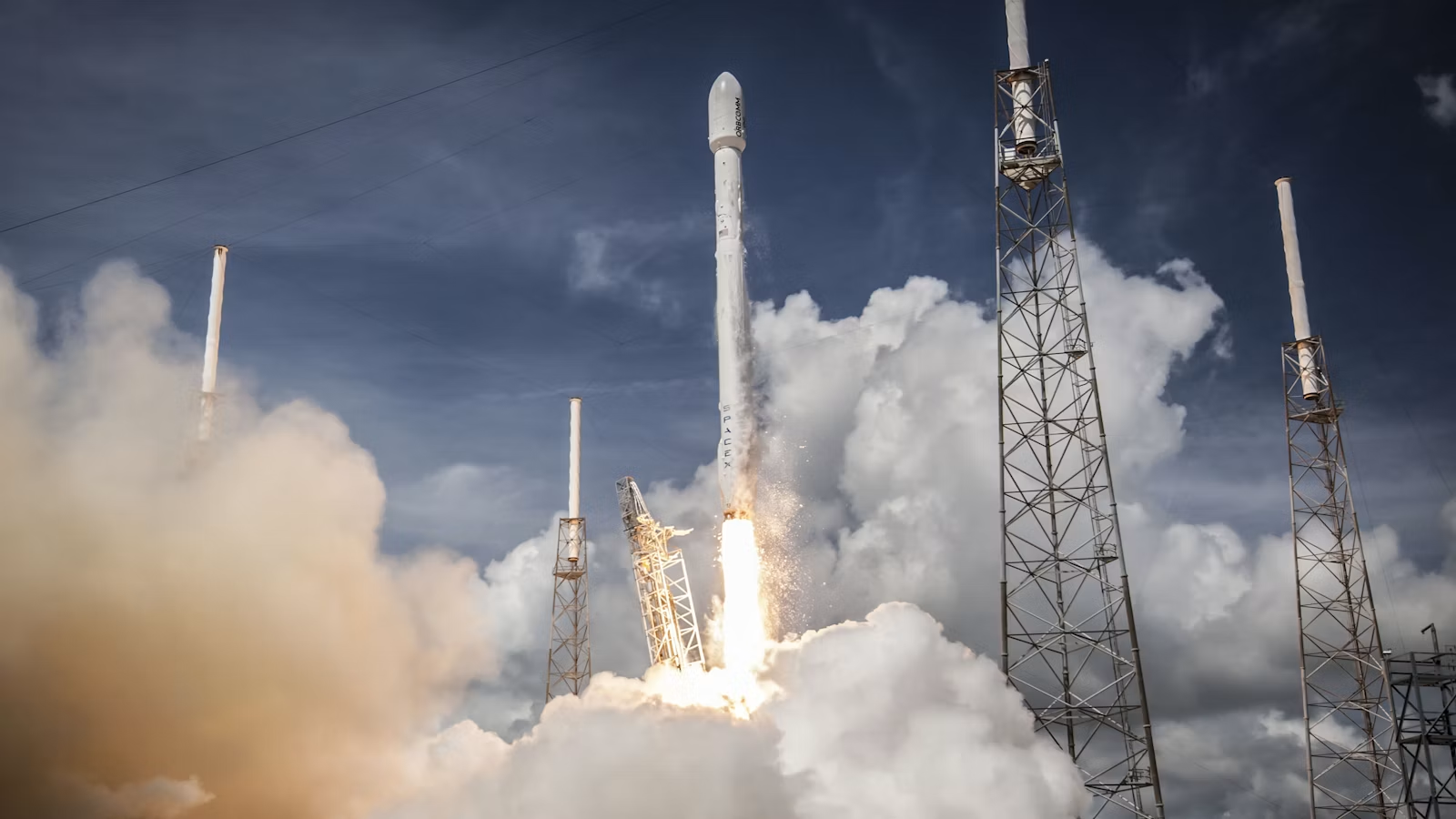
SpaceX is drawing intense index inclusion attention because of its enormous market capitalization, limited IPO float, and the large asset base tracking major indexes. Once SPCX is included in a major index, index funds and ETFs may need to allocate to the stock based on index weight. However, index providers differ in how they treat IPOs, free float, locked-up shares, trading history, and weight caps. Therefore, inclusion in one index should not be read as simultaneous buying by all indexes.
The main differences among CRSP, FTSE Russell, MSCI, and NASDAQ 100 lie in inclusion speed and free-float treatment. The CRSP Market Indexes Methodology Guide emphasizes a float-adjusted market capitalization framework, meaning publicly tradable shares influence index weight. FTSE Russell updated its approach to large IPOs in 2026, and the IPO Fast Entry mechanism allows eligible large new listings to enter Russell U.S. indexes faster. MSCI places strong emphasis on free-float identification, and the MSCI free float definition treats publicly available shares as a key basis for index weighting. NASDAQ 100 also updated its methodology in 2026, and the Nasdaq-100 methodology shows that low-float securities are subject to modified market-cap weighting constraints rather than being weighted simply by total market capitalization.
| Index System | Timing | Impact Logic | What Investors Should Watch |
|---|---|---|---|
| CRSP | June 18 | Float-adjusted market capitalization affects weight | Whether SpaceX enters related broad-market index chains |
| FTSE Russell | June 26 | Fast-entry mechanism affects passive fund rebalancing | Announcement date, implementation date, closing-volume activity |
| MSCI | June 26–29 | Global index funds focus on free-float ratio | Free float and potential international allocation demand |
| NASDAQ 100 | July 6 | Large technology-growth index inclusion expectations | Weight limits and products such as QQQ |
| S&P 500 | Not included | No simultaneous fast inclusion | Trading history, profitability, and committee review |
The absence of S&P 500 from the June-to-July inclusion sequence also deserves attention. S&P Dow Jones Indices has stricter requirements around IPO trading history and profitability. The S&P U.S. Indices Methodology states that IPOs generally must trade on an eligible exchange for at least 12 months before being considered for relevant indexes. In June 2026, S&P Dow Jones Indices announced consultation results and kept its existing framework, meaning the IPO Seasoning Period was not shortened from 12 months to 6 months. Therefore, even with its huge size, SpaceX does not necessarily qualify for immediate S&P 500 inclusion.
Index inclusion also involves fairness and passive-investor protection. Reuters reported that four major U.S. public investment-related entities asked Nasdaq and FTSE Russell to explain their rule changes because fast-tracking SpaceX could force passive funds to buy during an early post-listing period when valuation and liquidity are still unstable. This shows that index inclusion is not simply a bullish catalyst. It is a balance among rules, liquidity, fairness, and tracking-error management.
Summary: SpaceX is driving index inclusion debate because it combines enormous market capitalization, limited float, intense market attention, and potential index-fund allocation demand. CRSP, FTSE Russell, MSCI, and NASDAQ 100 may process large IPOs more quickly under their respective methodologies, while S&P 500 still retains longer trading-history and profitability requirements. Investors should read index inclusion as a potential rebalancing event, not as a guaranteed return event. Passive funds may need to buy, but buying size, timing, price, and execution will vary with index weight, float, fund size, and market trading conditions.
SpaceX Share Unlock Timeline: Where Could Supply Pressure Come From?

The core impact of SpaceX share unlocks is that the number of tradable shares may increase, but an unlock does not mean insiders will immediately sell. Two trading days after Q2 earnings, August 21, September 10, September 25, October 12, October 26, two trading days after Q3 earnings, and December 9 are all important unlock windows. Ordinary investors should not focus only on the dates themselves. The more important checks are who is unlocking, whether actual sale filings appear, how trading volume responds, whether the market can absorb supply, and whether expectations have already been priced in.
The most important supply-side point is the post-Q2 window: up to 30% of insider shares may unlock two trading days after Q2 earnings, equal to about 12% of total share capital. This could become the first major supply test after the listing because it follows SpaceX’s first earnings call as a public company. If earnings data, management guidance, and market expectations differ significantly, the unlock window’s impact could be amplified. If trading is active, institutional demand remains strong, and actual selling is limited, price behavior may differ from the simple assumption that “unlock equals sell-off.”
| Unlock Timing | Unlock Ratio | Approximate Share of Total Capital | Key Focus |
|---|---|---|---|
| Two trading days after Q2 earnings | Up to 30% | About 12% | First large insider unlock window |
| August 21 | 7% | About 2.8% | Fixed-date phased release |
| September 10 | 7% | About 2.8% | Overlaps with September rebalancing expectations |
| September 25 | 7% | About 2.8% | May affect post-rebalancing trading |
| October 12 | 7% | About 2.8% | Watch continuing supply pressure |
| October 26 | 7% | About 2.8% | Watch market absorption |
| Two trading days after Q3 earnings | 28% | About 11.2% | Second large unlock window of the year |
| December 9 | 7% | About 2.8% | Watch year-end liquidity and pre-rebalancing conditions |
The value of phased unlocks is that they divide supply pressure into multiple observation points instead of concentrating it on a single date. The 7% unlocks from August to October, each equal to about 2.8% of total share capital, are smaller than the post-earnings windows, but their repeated occurrence may continue to affect expectations for future float expansion. In particular, the September 10 and September 25 unlocks sit close to the September index rebalancing window, meaning demand-side passive flows and supply-side unlocks may overlap, potentially amplifying both volatility and volume.
The lock-up structure also needs to be stated clearly. About 40% of shares are subject to phased unlocking, while Elon Musk and certain major shareholders are subject to a 366-day lock-up, representing about 60% of total share capital. This means the short-term unlock pool does not represent the entire share base, and the market should not assume that all insider shares enter circulation on each unlock date. Separately, Reuters reported that SpaceX will conduct the Cursor acquisition using stock. This transaction may slightly affect unlock ratios; if share count, share-exchange arrangements, or lock-up terms change later, the original ratios should be updated based on subsequent disclosures.
Summary: The core purpose of the SpaceX unlock timeline is not to predict whether the stock will rise or fall on a specific day, but to assess how tradable supply may change. The post-Q2 unlock of up to 30% and the post-Q3 unlock of 28% are the two main supply windows, while multiple 7% phased unlocks from August to December create a continuing observation sequence. Unlocking does not equal immediate selling. Whether insiders sell, how they sell, and whether sales happen through block trades or planned selling programs must be verified through regulatory filings and market transactions. Since Elon Musk and certain major shareholders are locked up for 366 days, near-term float changes still cover only part of the share base and should not be extrapolated into extreme conclusions based on total share capital alone.
How Index Rebalancing Could Affect SpaceX Weight and Passive Fund Buying
Index rebalancing is essentially a recalculation of constituent weights. If SpaceX’s public float increases due to insider share unlocks, its free-float market capitalization may rise, and its weight in relevant indexes may increase as well. Passive funds tracking those indexes may need to buy additional SPCX shares to match the new weights. However, rebalancing is not a discretionary recommendation or a guaranteed buy order. It depends on index methodology, free-float recognition, implementation-date prices, and assets tracking the index.
The rebalancing logic can be broken into four steps. First, index providers periodically adjust constituent weights. Second, SpaceX’s public float increases after unlocks. Third, its free-float market capitalization or investable market capitalization rises. Fourth, passive funds may need to buy additional shares to track the index. The chain appears straightforward, but each step contains variables. Whether locked-up shares count as free float depends on index-provider methodology. Whether weight rises meaningfully depends on share price, total shares, float ratio, and weight caps. Whether passive funds trade all at once depends on tracking-error controls and execution strategy.
| Trigger | Possible Impact | Investor Watch Item | Compliance Boundary |
|---|---|---|---|
| Share unlocks | Free float increases | Float factor, free-float ratio | Subject to index-provider methodology |
| Stock price movement | Free-float market cap changes | Market cap, turnover, volatility | Does not imply guaranteed upside |
| Weight increase | Passive fund rebalancing | ETF holdings, index notices, volume | Buying amount is an estimate |
| Earnings window | Expectations change | Revenue, losses, cash flow, guidance | Earnings do not determine price direction |
| Cursor acquisition | Share structure may change | Deal terms, share-exchange ratio, disclosures | Ratios need later updates |
The September and December rebalancing windows have different observation points. September rebalancing is closer to the post-Q2 unlock, the August 21 unlock, and the two September phased unlocks, making it the first major test of free-float changes. December rebalancing may reflect more unlock batches, the larger post-Q3 unlock, and year-end liquidity conditions. If relevant estimates hold, both September and December rebalancing may involve higher weights and additional passive buying, but the actual amount still needs to be calculated from index weights and assets tracking those indexes.
Options activity may also amplify price behavior around rebalancing. Reuters reported heavy activity on the first day of SPCX options trading, with SpaceX options potentially creating hedging flows and short-term volatility. For ordinary investors, this means rebalancing dates may involve not only index flows, but also options hedging, short-term trading, and arbitrage strategies. Hot IPOs may experience significant price swings in their early trading period, so investors should fully understand order types, fee structures, and risks before trading.
Summary: The key rebalancing chain for SpaceX is “free float increases—index weight rises—passive funds rebalance.” September and December are important windows, but rebalancing should not be treated as a guaranteed buying opportunity. Passive flows usually follow rules; they do not mean index fund managers are actively bullish, and they do not guarantee that ordinary investors can trade at a favorable price. For retail investors, rebalancing windows are better treated as risk-management windows: watch index announcements, ETF holdings, trading volume, bid-ask spreads, options activity, and personal position sizing instead of trading solely based on the timeline.
How Ordinary Investors Can Use the SpaceX Timeline Before Trading
Ordinary investors can use the SpaceX timeline as a “risk calendar” and an “information checklist,” not as a trading instruction. Index inclusion may create demand, share unlocks may create supply, rebalancing may change weights, and earnings may change fundamental expectations. The practical approach is to verify announcements before events, monitor liquidity and order costs during events, and review holdings and risk exposure afterward.
Before trading, events can be divided into three groups. The first group is index inclusion: CRSP on June 18, FTSE Russell on June 26, MSCI on June 26–29, and NASDAQ 100 on July 6. The focus is on announcements and passive flow estimates. The second group is unlock events, including the post-Q2 and post-Q3 windows and multiple 7% phased unlocks. The focus is on actual selling and market absorption. The third group is rebalancing, mainly in September and December. The focus is on weight changes, ETF holdings, and closing-volume activity.
| Stage | Information to Verify | What Not to Assume |
|---|---|---|
| Before the event | Index announcements, company disclosures, earnings dates, lock-up agreements | Do not treat market estimates as guaranteed buying |
| On the event day | Volume, bid-ask spreads, slippage, execution quality | Do not focus only on price direction while ignoring trading costs |
| After the event | ETF holdings, insider filings, float changes | Do not judge long-term value from a single day’s movement |
| Unlock window | Form 4 filings, planned sales, block trades | Do not assume unlock automatically means selling |
| Rebalancing window | Weight changes, fund size, closing trades | Do not assume passive funds will always support the price |
If you are watching trading opportunities around a hot IPO such as SpaceX, price movement is only one part of the decision. Actual trading cost also matters. U.S. stock trading costs may include not only commissions, but also platform fees, external agency fees, trading activity fees, FX costs, bid-ask spreads, and slippage. For example, Biya U.S. stock trading fees state that U.S. stock commissions are $0, while the platform fee is $0.005 per share, with a minimum of $0.99 per order and a maximum of 1% of trade value; external agency fees and trading activity fees are $0.00396 per share. For fractional orders below one share, only a 1% platform fee applies, capped at $1. Platform fees, external agency fees, and other charges should be based on the fee center and the order page.
For beginners, the more practical process is not to predict price direction first, but to build a verification checklist. You can use a U.S. stock screener to check the ticker, trading status, and basic information, then use the order page to review costs. If your region, identity verification status, platform rules, and applicable laws and regulations allow access to the relevant services, Biya Web Trading also provides access to U.S. stocks, Hong Kong stocks, and digital assets. Service availability depends on user location, identity verification results, platform rules, and applicable laws and regulations.
Summary: The SpaceX timeline is most useful as a tool for identifying when investors need to be more cautious. Before index inclusion, verify announcements and weights. Before share unlocks, check actual float changes and insider filings. Before rebalancing, watch ETF holdings, volume, and closing trades. Before placing an order, calculate commissions, platform fees, external agency fees, bid-ask spreads, and slippage. Hot IPOs can be highly volatile in their early trading period, and execution quality may matter as much as direction. Public market information, trading rules, and fee structures are for reference only and do not constitute investment advice.
What Needs Continuous Verification: From Market Estimates to Formal Disclosures
This timeline can serve as a useful SpaceX event framework, but market estimates, model assumptions, and formal disclosures should not be mixed together. Investors need to continuously verify four types of information: whether index providers have formally announced inclusion, whether SpaceX has disclosed earnings or lock-up changes, whether insiders have actually sold shares, and whether the Cursor acquisition changes share count or unlock ratios. Only by updating these points one by one can the timeline remain practically useful.
The passive buying estimates discussed by the market are about $4–7 billion for CRSP, $6–9 billion for FTSE Russell, $3–5 billion for MSCI, and $8–12 billion for NASDAQ 100. The problem is not the existence of estimates; the problem is treating them as guaranteed inflows. Passive fund demand usually depends on index weight, assets tracking the index, free-float recognition, stock price, and actual execution strategy. If any of these variables change, model results will also change.
| Information Type | What to Verify | Better Wording |
|---|---|---|
| CRSP inclusion and $4–7 billion estimate | CRSP methodology, constituent announcements, ETF holdings | “Market estimate; actual result depends on announcements and holdings” |
| FTSE Russell inclusion and $6–9 billion estimate | FTSE Russell Fast Entry, implementation date | “May trigger rebalancing; does not equal guaranteed trading” |
| MSCI inclusion and $3–5 billion estimate | MSCI free-float methodology | “Depends on free float and inclusion ratio” |
| NASDAQ 100 inclusion and $8–12 billion estimate | Nasdaq-100 constituent announcement and weight limits | “Depends on effective date and weight cap” |
| Q2 / Q3 post-earnings unlocks | Earnings, prospectus, lock-up agreements, regulatory filings | “Unlock does not equal selling” |
| September and December rebalancing | Index announcements, ETF holdings, volume | “May lead to weight adjustment” |
| Cursor acquisition impact | Deal terms, share-exchange arrangements, later disclosures | “May slightly affect ratios and requires updates” |
For ordinary readers, the easiest concepts to confuse are “inclusion date,” “announcement date,” and “implementation date.” An index provider may announce a constituent change first and implement it after a specified close, while funds may trade earlier in smaller batches to reduce market impact. Another common point of confusion is the difference between “free float” and “total share capital.” Unlocks and rebalancing are linked because index weights are usually not based simply on total shares outstanding; they often consider the publicly tradable portion of the share base.
It is also important to recognize how strong market sentiment may be in SpaceX’s early public trading period. Reuters reported that SpaceX rose 19% on its market debut, pushing its market capitalization above $2 trillion. Such a strong debut may increase market attention, but it can also widen valuation disagreement. Price gains, index inclusion, unlock supply, and options hedging may all exist at the same time, and no single factor is enough to explain the full price movement.
Summary: The right way to use the SpaceX event timeline is to treat public information as a lead and formal disclosure as the foundation for judgment. Index inclusion requires checking announcements from CRSP, FTSE Russell, MSCI, and Nasdaq. Unlocks require checking lock-up agreements, earnings releases, regulatory filings, and actual insider selling. Rebalancing requires monitoring free float, weights, ETF holdings, and trading volume. Passive buying estimates, unlock ratios, and the Cursor acquisition impact should all be expressed with conditional wording. This helps readers understand SpaceX’s funding rhythm in the second half of 2026 while avoiding the mistake of treating market estimates as certain outcomes.
When a hot U.S. stock such as SpaceX faces a dense sequence of index inclusion, earnings, share unlocks, and rebalancing events, preparation before trading should not stop at reading headlines. It should also include ticker verification, order types, fee details, funding arrangements, and risk tolerance. If the relevant services are available in your region, Biya can be used to review multi-asset trading features and check U.S. stock trading costs through the order page. Biya is a global multi-asset trading wallet that supports U.S. stocks, Hong Kong stocks, and digital assets, as well as USDT conversion into major fiat currencies such as U.S. dollars or Hong Kong dollars. Biya charges $0 commission for U.S. stock trading; platform fees, external agency fees, and other charges are subject to the fee center and order page. Public market information, trading rules, and fee structures are for reference only and do not constitute investment advice. Service availability depends on user location, identity verification results, platform rules, and applicable laws and regulations.
FAQ
Does SpaceX Inclusion in NASDAQ 100 Mean the Stock Will Definitely Rise?
No. SpaceX inclusion in NASDAQ 100 may create passive fund allocation demand, but the stock price will also be affected by valuation, float, earnings, options trading, market sentiment, and overall liquidity. Index inclusion should be understood as a potential rebalancing event, not as a guaranteed upside signal.
Does a SpaceX Share Unlock Mean Insiders Will Immediately Sell?
No. A SpaceX share unlock only means selling restrictions are lifted. Whether insiders sell depends on personal plans, lock-up agreements, regulatory filings, market price, and liquidity conditions. Investors should watch Form 4 filings, planned sales, block trades, and volume changes.
Why Can SpaceX Passive Buying Amounts Only Be Treated as Estimates?
SpaceX passive buying depends on index weight, free float, stock price, assets tracking each index, and actual rebalancing execution. Figures such as $4–7 billion, $6–9 billion, $3–5 billion, and $8–12 billion are market estimates and should not be treated as guaranteed executed trades.
Why Might SpaceX Not Enter the S&P 500 Quickly?
The main reason is that S&P 500 has separate requirements for IPO trading history, profitability, and index committee review. Even if SpaceX has a very large market capitalization, immediate inclusion is not guaranteed. Whether it qualifies should be checked against S&P Dow Jones Indices methodology and announcements.
What Costs Matter When Trading SpaceX Around Unlock Dates?
Trading SpaceX around unlock dates requires attention to commissions, platform fees, external agency fees, bid-ask spreads, slippage, and pre-market or after-hours liquidity. Unlock windows may increase volume and volatility, so investors should rely on the brokerage or trading platform’s order page, fee details, and local regulatory requirements before placing orders.
Why Could the Cursor Acquisition Affect SpaceX Unlock Ratios?
If the Cursor transaction involves SpaceX stock payment, share exchange, or share-structure adjustments, unlock ratios calculated from total share capital may change slightly. This is a possible scenario, and actual ratios should be based on subsequent company disclosures, transaction terms, and regulatory filings.
*This article is provided for general information purposes and does not constitute legal, tax or other professional advice from BiyaPay or its subsidiaries and its affiliates, and it is not intended as a substitute for obtaining advice from a financial advisor or any other professional.
We make no representations, warranties or warranties, express or implied, as to the accuracy, completeness or timeliness of the contents of this publication.
Related Blogs of

What Are NOR Flash, SLC NAND, and EEPROM? Why They Help Explain Hong Kong-Listed Memory-Related Stocks


Why Does AI Compute Growth Drive Storage Demand? The Difference Between Training, Inference, and Data Retention


How Should SSDs and HDDs Work Together in AI Data Centers? Performance, Capacity, Cost, and Hot vs. Cold Data Compared


Why Is HDD Supply and Demand Tightening? AI Data Centers, Long-Term Agreements, and Western Digital/Seagate Pricing Power

Choose Country or Region to Read Local Blog
 Australia
 Austria
 Belgium
 Canada
 Cyprus
 Czech Republic
 Denmark
 Estonia
 Finland
 France
 Germany
 Greece
 Hong Kong
 India
India Indonesia
 Ireland
 Italy
Italy Japan
Japan Latvia
 Lithuania
 Luxembourg
 Malaysia
 Malta
Malta Morocco
 Nepal
Nepal Netherlands
 New Zealand
 Norway
 Pakistan
 Philippines
 Poland
 Portugal
 Romania
 Singapore
 Slovakia
 Slovenia
 South Africa
 South Korea
 Spain
Spain Sweden
 Thailand
 The United States
 Turkey
 United Arab Emirates
 United Kingdom
 Vietnam
Contact Us




BIYA GLOBAL LLC is registered with the Financial Crimes Enforcement Network (FinCEN), an agency under the U.S. Department of the Treasury, as a Money Services Business (MSB), with registration number 31000218637349, and regulated by the Financial Crimes Enforcement Network (FinCEN).
BIYA GLOBAL LIMITED is a registered Financial Service Provider (FSP) in New Zealand, with registration number FSP1007221, and is also a registered member of the Financial Services Complaints Limited (FSCL), an independent dispute resolution scheme in New Zealand.