Zelle International Payments: Why It Does Not Work and Better Alternatives




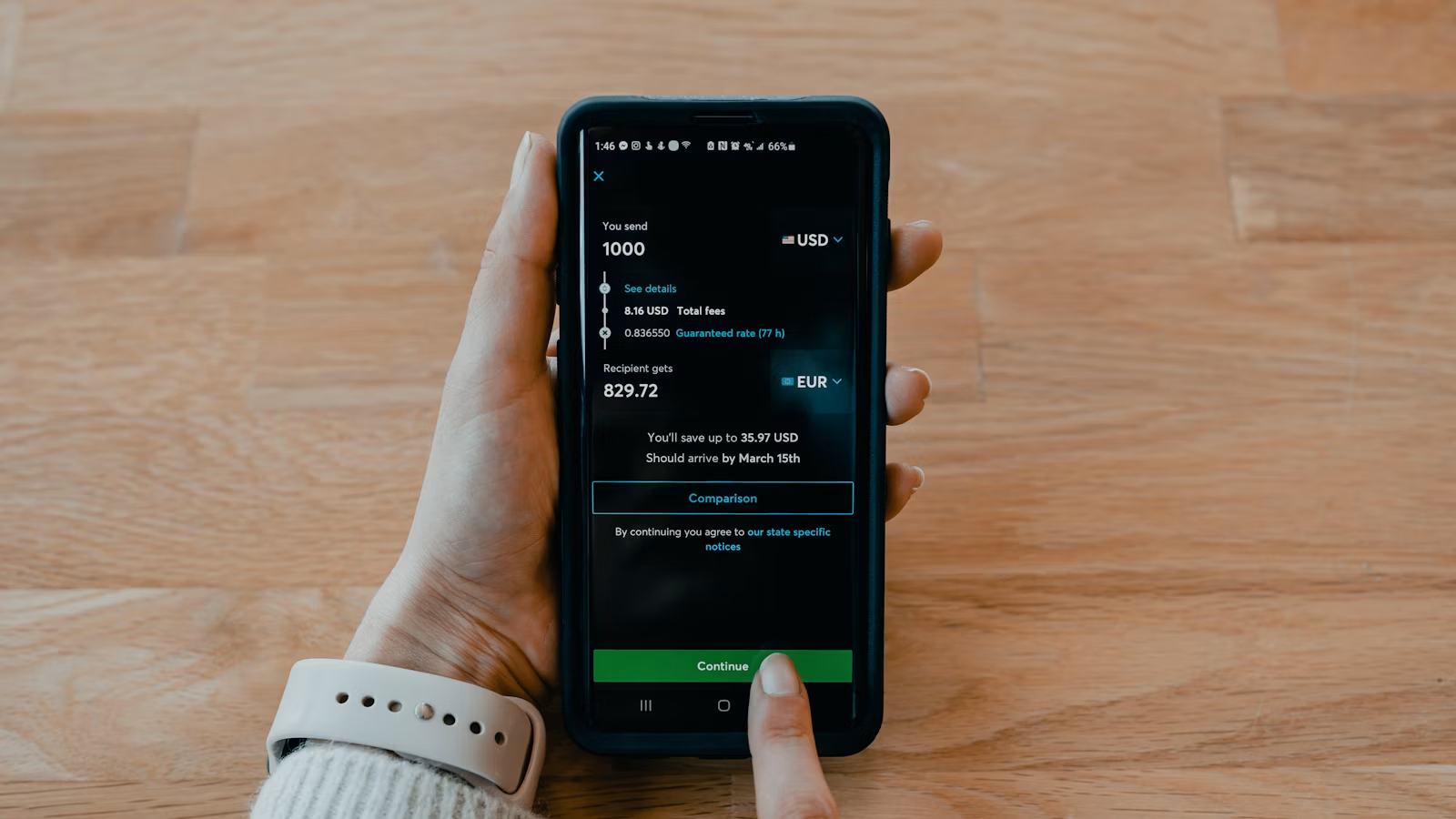
Zelle international payments do not work in the way many users expect. Zelle is built for domestic U.S. bank-to-bank transfers, not foreign bank deposits, cash pickup, multi-currency transfers or overseas remittance. You may still use Zelle while traveling abroad if both you and the recipient have eligible U.S. bank accounts and your bank access works, but that is different from sending money to another country. If your recipient is outside the United States, needs local currency, uses a foreign bank, or wants cash pickup, you should compare Wise, Remitly, Xoom, Western Union, PayPal, bank wires, local payment rails and multi-currency tools by total cost, exchange rate, speed and payout method.
Key Takeaways
- Zelle is a U.S. domestic P2P payment network, not an international money transfer service.
- Zelle generally requires both sender and recipient to have eligible U.S. bank accounts.
- Being physically outside the U.S. is different from sending money to a foreign bank.
- Zelle has no built-in foreign currency conversion, cash pickup or international payout rail.
- Better alternatives depend on recipient country, payout method, FX rate, speed and compliance checks.
- For broader cross-border money planning, you may need remittance, FX, card and asset tools together.
Why Zelle International Payments Do Not Work

Zelle international payments do not work because Zelle is designed for transfers between eligible U.S. bank accounts. If you want to send money from a U.S. bank account to a foreign bank account, Zelle is not the right tool. If your recipient lives abroad but still has an eligible U.S. checking or savings account enrolled with Zelle, the payment may work as a domestic U.S. transfer. The core rule is account location and eligibility, not the passport or physical location of the user. Zelle’s own international-use answer says the sender and recipient must have U.S. bank accounts, which is why Zelle cannot replace Wise, Remitly, Xoom, Western Union or a bank wire for most overseas transfers. (Zelle)
Zelle is a U.S. domestic payment network, not a remittance service
Users search for “Zelle international payments” for several different reasons. Some want to send money from the United States to family overseas. Some are traveling and want to know whether Zelle still opens on their phone. Others want to pay a freelancer, landlord, seller or business outside the U.S. These are not the same problem.
Zelle is useful when you are paying someone you know and trust inside the U.S. banking system. It moves money directly between bank accounts through participating banks and credit unions. It does not create a foreign payout account, convert dollars into pesos or euros, connect to a cash pickup agent, or settle into an overseas mobile wallet.
That is why Zelle international payments is usually a mismatch between user intent and product design. The search phrase sounds like a global transfer feature, but Zelle’s structure is closer to a domestic person-to-person payment rail.
Being abroad is different from sending money abroad
A common misunderstanding comes from the word “international.” If you are a U.S. resident traveling in Japan, Mexico, Canada or Europe, you may still be able to access your bank app and send money through Zelle to another enrolled U.S. user. That does not make the payment international. The bank accounts remain U.S.-based, and the money remains in the U.S. banking system.
The situation changes when the recipient needs money in a foreign bank account. Zelle does not send to IBAN, SWIFT/BIC, foreign routing codes, CLABE, IFSC, Canadian transit numbers, European SEPA accounts or overseas card accounts. It also does not support cash pickup at agent locations.
| User scenario | Does Zelle fit? | Why | Better direction |
|---|---|---|---|
| U.S. user pays another U.S. bank customer | Yes, if both are eligible | Domestic U.S. bank transfer | Zelle |
| U.S. traveler pays a U.S. friend | Possibly | Accounts remain U.S.-based | Zelle or bank transfer |
| U.S. sender pays a foreign bank account | No | No foreign payout rail | Wise, wire, Xoom |
| U.S. sender sends cash to family abroad | No | No cash pickup | Remitly, Western Union, Xoom |
| Non-U.S. resident wants to receive Zelle locally | Usually no | U.S. bank eligibility required | Local bank or remittance app |
Why banks restrict Zelle to U.S. accounts
The restriction is not just a marketing choice. International money transfers require more than moving dollars between two domestic accounts. A provider needs to handle currency conversion, local payout rules, beneficiary details, sanctions screening, anti-money-laundering checks, transaction monitoring, refund procedures and regional consumer protection requirements.
Domestic Zelle payments are simpler because the sender and recipient are usually already inside the U.S. banking system. Their bank or credit union has account records, identity data, fraud controls and transaction history. An international remittance provider must build or partner for local payout in each country.
This is also why many banks point users to wire transfers or remittance services when money must leave the United States. Zelle is fast because it is narrow. International payments are slower and more complex because they involve cross-border settlement, foreign currency and local receiving rules.
Summary: Zelle does not work for international payments because it is built around eligible U.S. bank accounts. You can think of Zelle as a domestic bank-to-bank payment method for people and businesses already inside the U.S. banking system. If both sides have eligible U.S. accounts, Zelle can be fast and convenient even if one person is traveling. If the recipient needs a foreign bank deposit, local currency, cash pickup, mobile wallet payout or international business settlement, Zelle is the wrong payment rail. The practical test is simple: ask where the recipient account is based and how the recipient needs to receive money. If the answer is not “an eligible U.S. bank account,” compare international transfer providers instead of trying to force Zelle into a job it does not support.
What Still Works With Zelle After the Standalone App Shutdown
Zelle still works, but mainly through participating banks and credit unions rather than as a standalone payment app. That matters because users who once expected to download Zelle separately may now need a bank or credit union that offers Zelle inside its own mobile app or online banking. This change did not expand Zelle into international payments. It made Zelle more dependent on financial institution access. If your bank supports Zelle and both parties have eligible U.S. bank accounts, domestic transfers can still work. If your bank does not support Zelle, or your recipient only has a foreign account, the standalone app change does not solve the problem.
Zelle lives inside bank and credit-union apps
Zelle describes itself as a way to send and receive money through a bank or credit union’s mobile app or online banking. Its help materials also say money can be available within minutes when the recipient is already enrolled, and that Zelle is available in over 2,400 bank and credit-union apps. (Zelle)
For most everyday users, this means your first step is not downloading a separate app. You check whether your bank app includes Zelle. If it does, you enroll with your email address or U.S. mobile number and send to another enrolled user. If it does not, you may need another domestic payment method.
This matters for international users because many searches still assume Zelle works like PayPal, Wise or Remitly. It does not. Zelle is not a global wallet with a separate balance and foreign payout choices. It is an embedded bank payment feature.
Why the app shutdown matters for international users
The standalone Zelle app shutdown mainly affects users who were not accessing Zelle through a participating bank or credit union. Industry coverage of the shutdown described Zelle as moving fully into financial institution channels, with prior standalone app users needing bank-based enrollment to keep sending or receiving. That shift reinforces Zelle’s domestic-bank identity rather than making it more international. (CSI)
If you are outside the United States and do not have an eligible U.S. bank account, the shutdown makes Zelle less accessible, not more. If you are a U.S. user with a participating bank, little may change. You open your bank app, choose Zelle, and send to another enrolled U.S. recipient.
The key distinction is access path versus payment capability. Bank-app access can support domestic Zelle transfers. It does not create foreign currency conversion or international delivery.
What Zelle can still do well
Zelle remains strong for a narrow set of domestic use cases. It can be useful for splitting rent, reimbursing friends, sending money to family, paying a trusted babysitter, settling a shared meal or making small-business payments where both sides are eligible and comfortable with the method.
Zelle works best when:
- You and the recipient both use eligible U.S. bank or credit-union accounts.
- The recipient is someone you know and trust.
- You do not need foreign currency conversion.
- You do not need cash pickup, card payout or mobile wallet delivery abroad.
- You confirm the recipient’s email address or U.S. mobile number before sending.
- You understand that completed payments can be difficult or impossible to reverse.
| Zelle strength | Why it helps domestically | Why it does not solve international transfers |
|---|---|---|
| Bank-app access | No separate wallet may be needed | Requires participating U.S. financial institutions |
| Fast transfer timing | Enrolled recipients may receive funds quickly | Does not create foreign payout options |
| Usually no consumer fee | Good for domestic P2P use | FX and international payout still absent |
| Email or U.S. mobile number | Simple for U.S. recipients | Not a foreign bank identifier |
| Trusted-recipient focus | Good for friends and family | Risky for unknown overseas sellers |
Summary: Zelle still works as a domestic U.S. payment method through participating banks and credit unions. The standalone app shutdown did not remove Zelle from the banking system; it made bank-app access more central. For U.S. users paying other enrolled U.S. users, Zelle can remain convenient, fast and commonly fee-free for consumers, although you should confirm your bank’s own rules. For international payments, the same limits remain. Zelle does not send to foreign bank accounts, does not convert currency, does not support cash pickup and does not operate like a global remittance platform. If your payment involves another country’s banking system, you need a different tool even if you can still open Zelle in your U.S. bank app.
The Main Limits of Using Zelle for Cross-Border Needs

Zelle’s limits become serious when your payment need crosses borders. It does not support foreign bank deposits, foreign card payouts, cash pickup, multi-currency balances or built-in exchange-rate comparison. It also has limited room for correction after you send money to an enrolled recipient. For domestic transfers between trusted people, those limits may be acceptable. For overseas payments, they are major problems. You need to know the recipient’s country, currency, payout method, identity requirements, transfer limits, fees and dispute path before money moves. Zelle is not designed to provide those international transfer controls.
No foreign bank account payout
International transfers usually require local bank details. In Europe, that may mean an IBAN. In Mexico, it may mean a CLABE. In India, it may mean an IFSC and account number. In Canada, it may involve institution, transit and account details. Zelle does not use those identifiers for foreign payouts.
This creates a hard stop. If your recipient says, “Send it to my bank in the Philippines,” “Deposit to my Canadian account,” or “Send cash pickup to my family in Mexico,” Zelle cannot do that. You need a provider connected to that payout route.
Zelle also does not support common remittance delivery choices such as:
- Bank deposit to a foreign account.
- Cash pickup at an agent location.
- Mobile wallet or mobile money payout.
- Home delivery of cash.
- Foreign debit card deposit.
- SWIFT or local clearing settlement.
- Multi-currency holding or conversion.
No built-in currency conversion
Zelle moves money in a domestic U.S. context. It is not built to show a live FX quote, lock an exchange rate, display the final foreign-currency amount, compare payout options or explain correspondent-bank deductions.
This matters because international transfer cost is often hidden in the exchange rate. A provider may show a low transfer fee but use a weaker FX rate. A bank wire may look formal but include sending-bank fees, intermediary-bank fees, receiving-bank fees and exchange-rate markup. A cash pickup service may be fast but cost more than a bank deposit.
If your real question is “How many pesos, euros, pounds, rupees or Philippine pesos will the recipient receive?” Zelle cannot answer it. You need a tool that shows the recipient amount before confirmation.
Limited protection if you send to the wrong person
Zelle is designed for people you know and trust. Zelle’s help materials say a completed payment to an enrolled recipient cannot be reversed, and cancellation is generally only possible when the recipient has not yet enrolled. That is a major reason you should avoid using Zelle for unknown sellers, marketplace deals or overseas intermediaries claiming they can forward money for you. (Zelle)
There has also been public regulatory scrutiny around fraud claims involving Zelle. The Consumer Financial Protection Bureau filed a Zelle-related lawsuit in late 2024, while later coverage noted further legal activity and competing claims about fraud rates. The practical takeaway is not that every Zelle payment is unsafe; it is that fast payments to the wrong person can be hard to unwind. (Axios)
| Cross-border need | Zelle limitation | Why it matters |
|---|---|---|
| Foreign bank deposit | Not supported | Recipient cannot receive in a local account |
| Local currency payout | No FX conversion | You cannot compare final foreign amount |
| Cash pickup | Not supported | Unbanked recipients need another option |
| Mobile wallet payout | Not supported | Common in many remittance markets |
| Refund or correction | Limited after completion | Mistakes and scams are harder to recover |
| Business documentation | Limited fit | International invoices may need formal rails |
Summary: Zelle’s cross-border limits are structural. It is not missing one small feature; it is built for a different job. International payments need country-specific payout methods, currency conversion, fee disclosure, compliance checks and recipient verification. Zelle does not provide those layers. Its speed and simplicity can be helpful for domestic payments but risky when you try to use it for an overseas purpose. If the recipient is unknown, outside the U.S., requesting cash pickup, asking for foreign bank deposit or using an intermediary, treat that as a signal to stop and choose a proper international transfer provider. The safer method is the one that clearly shows the recipient, payout method, currency, fee, exchange rate and dispute process before you confirm.
Better Alternatives to Zelle International Payments
Zelle alternatives should be chosen by payment purpose, not brand familiarity. Wise may fit bank-to-bank transfers when exchange-rate transparency matters. Remitly, Xoom and Western Union may fit family remittance when the recipient needs cash pickup, bank deposit or mobile wallet delivery. Bank wires may fit larger formal transfers, even if they are slower and less transparent on total cost. PayPal may fit online payments where both parties already use it. Local rails may fit domestic transfers inside a target country. The best alternative is the one that gets the right currency to the right recipient through a usable payout method, with total cost visible before you send.
Wise for bank-to-bank international transfers
Wise is often relevant when the recipient has a bank account and you want clearer FX and fee visibility. Wise fees are presented around upfront pricing, and Wise states that it uses the mid-market rate with a separate fee rather than hiding extra cost in the exchange rate. (Wise)
Wise may be a strong fit when:
- The recipient has a bank account.
- You want to compare the final received amount.
- You care about exchange-rate transparency.
- You are paying rent, tuition, invoices or family support.
- You do not need cash pickup.
Wise may be weaker when the recipient is unbanked, needs instant cash, or lives in a country where the desired payout route is not available.
Remitly, Xoom and Western Union for family remittance
Family remittance is often not just a bank transfer. The recipient may need cash, a mobile wallet, a debit card deposit or a specific pickup location. That is where remittance providers can be more useful than Zelle.
Remitly delivery options commonly include combinations such as cash pickup, bank deposit and mobile wallet, depending on the country. Xoom provides a fees and exchange rate calculator, and its materials state that service availability and fees vary by country, selected features and other factors. (Remitly)
Western Union is useful when physical payout networks matter. On its Mexico transfer materials, Western Union cash pickup is presented alongside bank account delivery and agent locations, while the page also states that fees and rates can change and that Western Union makes money from FX. (Western Union Money Transfer)
Bank wires, PayPal and local payment rails
Bank wires remain relevant for larger, formal or business transfers. They can support international bank account details and provide documentation, but they may involve multiple fees and slower settlement. A bank wire may be appropriate when you need an auditable payment record, but you should ask about intermediary fees and receiving-bank charges.
PayPal can be useful for online payments, freelance invoices and merchants that accept it, but it is not always the lowest-cost choice for personal international transfers. You should check transfer fees, currency conversion rates and buyer or seller protections based on the transaction type.
Local payment rails can also be better than global apps in certain cases. Inside Canada, Interac e-Transfer is more relevant than Zelle for domestic Canadian payments. In Europe, SEPA can be effective for euro transfers. In Brazil, Pix dominates many local transfers. In India, UPI is deeply embedded in domestic payments. These tools are not always international, but they may be the right local endpoint.
| User need | Better alternative | Why it fits |
|---|---|---|
| Low-cost bank transfer | Wise | Clearer fee and FX comparison |
| Cash pickup abroad | Western Union, Remitly, Xoom | Agent or local partner networks |
| Fast family remittance | Remitly or Xoom | Corridor-specific delivery choices |
| Larger formal transfer | Bank wire | Bank settlement and documentation |
| Online merchant payment | PayPal or card | Broad checkout acceptance |
| Local domestic payment abroad | Local rails | Better fit for that country’s system |
| Multi-currency planning | Multi-currency account or wallet | Currency visibility and account flexibility |
Summary: There is no single best replacement for Zelle international payments because overseas transfers are not one product category. A banked recipient may be best served by Wise or a bank wire. An unbanked recipient may need Western Union, Xoom, Remitly or another cash pickup network. A freelancer may prefer PayPal, Wise or a business bank transfer. A traveler may need cards, ATM access and a backup wallet rather than a remittance app. The right comparison is not “Which app is most famous?” but “Which method can legally deliver the correct currency to this recipient, through a payout method they can use, at a cost and speed I understand before sending?”
How to Choose the Right International Money Transfer Method
The right international transfer method depends on the recipient, not just the sender. Start with the country, currency, payout method, amount, urgency and documentation needs. Then compare the final received amount after fees and exchange rate. Do not choose a provider only because the transfer fee looks low. A weak exchange rate, receiving-bank fee, cash pickup surcharge, card funding fee or intermediary-bank deduction can change the real cost. Also check verification requirements, limits, refund rules and customer support before sending. A good cross-border payment method should make the recipient amount, timing and payout path clear before money leaves your account.
Compare the final amount received, not only the advertised fee
Many international payment mistakes happen because users compare the wrong number. A “$0 fee” transfer may still include an exchange-rate markup. A bank wire may have a visible outgoing fee but hidden intermediary charges. A card-funded transfer may arrive quickly but cost more than a bank-funded transfer. Cash pickup may solve the recipient’s access problem but increase the total cost.
Before sending, compare:
- Transfer fee.
- Exchange rate.
- Recipient gets amount.
- Payment method fee.
- Receiving bank or pickup fee.
- Delivery speed.
- Refund or cancellation rules.
- Compliance review risk.
- Support availability.
For example, Xoom USD to MXN transfers show the exchange rate and final Mexican peso amount before confirmation, which is the kind of comparison you need when Zelle cannot provide a foreign-currency quote. (Xoom)
Match the payout method to recipient access
The best provider on paper may fail if the recipient cannot use the payout method. A bank deposit requires accurate bank details. Cash pickup requires a nearby agent, a valid ID and matching recipient information. Mobile wallet delivery requires the recipient to have the right wallet. A business payment may require invoice references, tax records and bank documentation.
Use this matching logic:
| Recipient situation | Better payout method | What to verify |
|---|---|---|
| Has a bank account | Bank deposit or wire | Name, account number, local bank code |
| Has no bank account | Cash pickup | ID, pickup location, operating hours |
| Uses mobile money | Mobile wallet | Wallet provider, phone number, limits |
| Needs urgent cash | Cash pickup or fast remittance | Speed, fees, pickup requirements |
| Receives business payment | Bank transfer or wire | Invoice, reference, compliance documents |
| Lives in a country with strong local rails | Local payment network | Sender eligibility and local rules |
Check speed, limits, compliance and support
International transfers may be delayed by identity verification, payment funding, bank holidays, transfer limits, sanctions screening, local banking hours, incorrect recipient details or partner processing times. Xoom’s fee page notes that transactions may be delayed or canceled for compliance purposes and that service availability and fees vary by country and selected features. (Xoom)
A slower transfer is not always worse if it is cheaper and better documented. A faster transfer is not always better if the recipient cannot access the payout. The right choice depends on what failure would cost you. If you are sending emergency family support, speed and cash pickup may matter most. If you are paying tuition or a contractor, documentation and bank settlement may matter more.
If you manage several currencies, use real-time exchange rates to frame the FX side before comparing providers. This does not replace a provider’s final quote, but it gives you a reference point for whether the displayed rate looks reasonable.
Summary: Choosing an international transfer method is a structured decision, not a quick app preference. Begin with the recipient’s country and payout method. Then compare the final received amount, not only the advertised transfer fee. Review exchange rate, funding method, transfer speed, limits, compliance checks, refund rules and support quality. Zelle does not provide these international-transfer controls because it is not built for cross-border payout. A better alternative should show you where the money goes, what currency arrives, what the recipient receives, how long it should take and what happens if something goes wrong. The more important the payment, the more you should favor clear documentation, verified recipient details and an official transfer channel.
Where Biya Fits in Broader Cross-Border Payment and Asset Planning
A Zelle international payments question often points to a broader problem: you may need more than a domestic P2P app. Cross-border users often manage remittance, currency conversion, online payments, digital assets, card spending, market access and payment records at the same time. Zelle only addresses one narrow domestic U.S. transfer use case. If your needs include sending money across borders, checking exchange rates, converting digital assets into major fiat currencies, or accessing U.S. stocks, Hong Kong stocks and digital assets through a separate trading environment, you should build a payment stack rather than looking for one app to do everything. Biya can be relevant in that wider planning context, but it should not be described as a direct Zelle replacement.
When a payment question becomes a broader money question
You may start by asking whether Zelle can send money abroad. After checking the rules, you may realize the real question is broader:
- How do you send money to a foreign recipient?
- How do you compare exchange rates before moving funds?
- How do you hold or convert different currencies?
- How do you keep records of payments and transfers?
- How do you manage digital assets and fiat conversion?
- How do you access financial markets separately from payment use?
Those are different jobs. A remittance provider may solve family transfers. A bank wire may solve a formal business payment. A card may solve travel spending. A trading platform may solve market access. A multi-asset wallet may help organize several financial workflows, but each function still has its own rules and fees.
How Multi-Currency and Global Financial Workflows Connect
Biya is a global multi-asset trading wallet that can be considered by users who need broader cross-border financial workflows, including payment records, multi-currency visibility and USDT conversion into USD or HKD. Where the need is direct money movement, cross-border money transfer is more relevant than trying to use a domestic U.S. P2P rail for an unsupported corridor.
For market activity, Biya web trading should be understood as a browser-based trading platform covering U.S. stocks, Hong Kong stocks and digital assets. It is a separate scenario from remittance, card spending or Cash App-style wallet payments. Biya lists U.S. stock trading commission at $0; platform fees, external institution fees and other trading-related charges should be checked in the fee center and order screen. Product availability, identity verification, risk disclosures, tax treatment and local rules should be reviewed before use.
Biya may be relevant when you need:
- Cross-border payment and currency planning.
- USDT-to-fiat conversion routes.
- Online payment records and multi-currency visibility.
- Access to U.S. stocks, Hong Kong stocks and digital assets through a separate trading platform.
- A broader financial workflow than domestic P2P payments.
Summary: Biya should not be framed as a Zelle clone. Zelle is a domestic U.S. bank-to-bank payment network, while Biya belongs in a broader cross-border finance context that may include currency planning, digital asset conversion, payment records and market access. The right connection is user need: if your problem is simply paying a U.S. friend with a U.S. bank account, Zelle may be suitable. If your problem includes international transfers, currency conversion, digital assets or financial market access, you may need a broader set of tools. Keep each use case separate. Remittance, card payments, fiat conversion, digital assets and trading are different activities with different costs, risks and eligibility requirements.
When your payment needs go beyond domestic U.S. bank transfers, avoid looking for a single “international Zelle.” Build a stack around the actual job. Use Zelle only where both sides are eligible U.S. bank users and the recipient is trusted. Use remittance providers or bank wires when the recipient needs money in another country. Compare FX before sending, check the final received amount, and keep receipts for important transfers. For broader cross-border workflows, Biya can fit users who need multi-currency planning, USDT-to-fiat conversion, global payment records and separate access to U.S. stocks, Hong Kong stocks and digital assets. Before using any service, review supported regions, identity requirements, fees, exchange rates, limits, tax obligations, refund handling and applicable local rules. A good payment setup reduces uncertainty before money moves; it should not depend on workarounds that fail when the transfer matters most.
FAQ
Can Zelle be used to send money to someone outside the United States?
No, Zelle is not designed to send money to a foreign bank account or overseas cash pickup location. Zelle generally requires both sender and recipient to have eligible U.S. bank accounts. If the recipient needs local currency or a foreign payout, compare Wise, Remitly, Xoom, Western Union or a bank wire.
Can a U.S. traveler use Zelle while physically abroad?
A U.S. traveler may be able to use Zelle while abroad if both parties have eligible U.S. bank accounts and the traveler’s bank access works. That is still a domestic U.S. account transfer, not an international money transfer. App access, bank security checks and device verification may still affect usability.
What is the best Zelle alternative for sending money to a foreign bank account?
The best Zelle alternative depends on the destination, currency, amount and payout method. Wise may fit bank deposits with visible FX pricing, while a bank wire may fit larger formal transfers. Remitly, Xoom and Western Union may fit family remittance where cash pickup or local delivery partners matter.
Does Zelle charge fees for international payments?
Zelle does not support true international payments, so there is no standard Zelle international transfer fee to compare. For alternatives, check the transfer fee, exchange rate, payment method fee, intermediary bank cost and final recipient amount. The cheapest-looking option is not always the lowest-cost route after FX.
Is Zelle safe for paying an overseas seller or unknown recipient?
Zelle is not a good choice for paying an overseas seller or unknown recipient. Zelle payments are intended for people you know and trust, and completed payments to enrolled recipients generally cannot be reversed. For international purchases or services, use payment methods with clearer documentation and dispute handling.
Why did the standalone Zelle app shutdown matter for international users?
The standalone Zelle app shutdown mattered because access became more dependent on participating U.S. banks and credit unions. It did not add international payment support. If your bank offers Zelle, you may still use it domestically. If you need foreign bank deposit, cash pickup or currency conversion, use another provider.
*This article is provided for general information purposes and does not constitute legal, tax or other professional advice from BiyaPay or its subsidiaries and its affiliates, and it is not intended as a substitute for obtaining advice from a financial advisor or any other professional.
We make no representations, warranties or warranties, express or implied, as to the accuracy, completeness or timeliness of the contents of this publication.
Related Blogs of

Why Does AI Compute Growth Drive Storage Demand? The Difference Between Training, Inference, and Data Retention


What Is the Difference Between DRAM Contract Price and Spot Price? Which Indicator Should Investors Watch?


Is SMIC 0981.HK a Memory Chip Stock? The Relationship Between Foundry Manufacturing and the Memory Supply Chain


What Is the Difference Between HBM3E and HBM4? What Do They Mean for Micron and AI Servers?
Choose Country or Region to Read Local Blog
 Australia
 Austria
 Belgium
 Canada
 Cyprus
 Czech Republic
 Denmark
 Estonia
 Finland
 France
 Germany
 Greece
 Hong Kong
 India
India Indonesia
 Ireland
 Italy
Italy Japan
Japan Latvia
 Lithuania
 Luxembourg
 Malaysia
 Malta
Malta Morocco
 Nepal
Nepal Netherlands
 New Zealand
 Norway
 Pakistan
 Philippines
 Poland
 Portugal
 Romania
 Singapore
 Slovakia
 Slovenia
 South Africa
 South Korea
 Spain
Spain Sweden
 Thailand
 The United States
 Turkey
 United Arab Emirates
 United Kingdom
 Vietnam
Contact Us




BIYA GLOBAL LLC is registered with the Financial Crimes Enforcement Network (FinCEN), an agency under the U.S. Department of the Treasury, as a Money Services Business (MSB), with registration number 31000218637349, and regulated by the Financial Crimes Enforcement Network (FinCEN).
BIYA GLOBAL LIMITED is a registered Financial Service Provider (FSP) in New Zealand, with registration number FSP1007221, and is also a registered member of the Financial Services Complaints Limited (FSCL), an independent dispute resolution scheme in New Zealand.