How Should You Read SpaceX’s Financial Reports After Its IPO? Backlog, Capital Expenditure, and Free Cash Flow Are Key




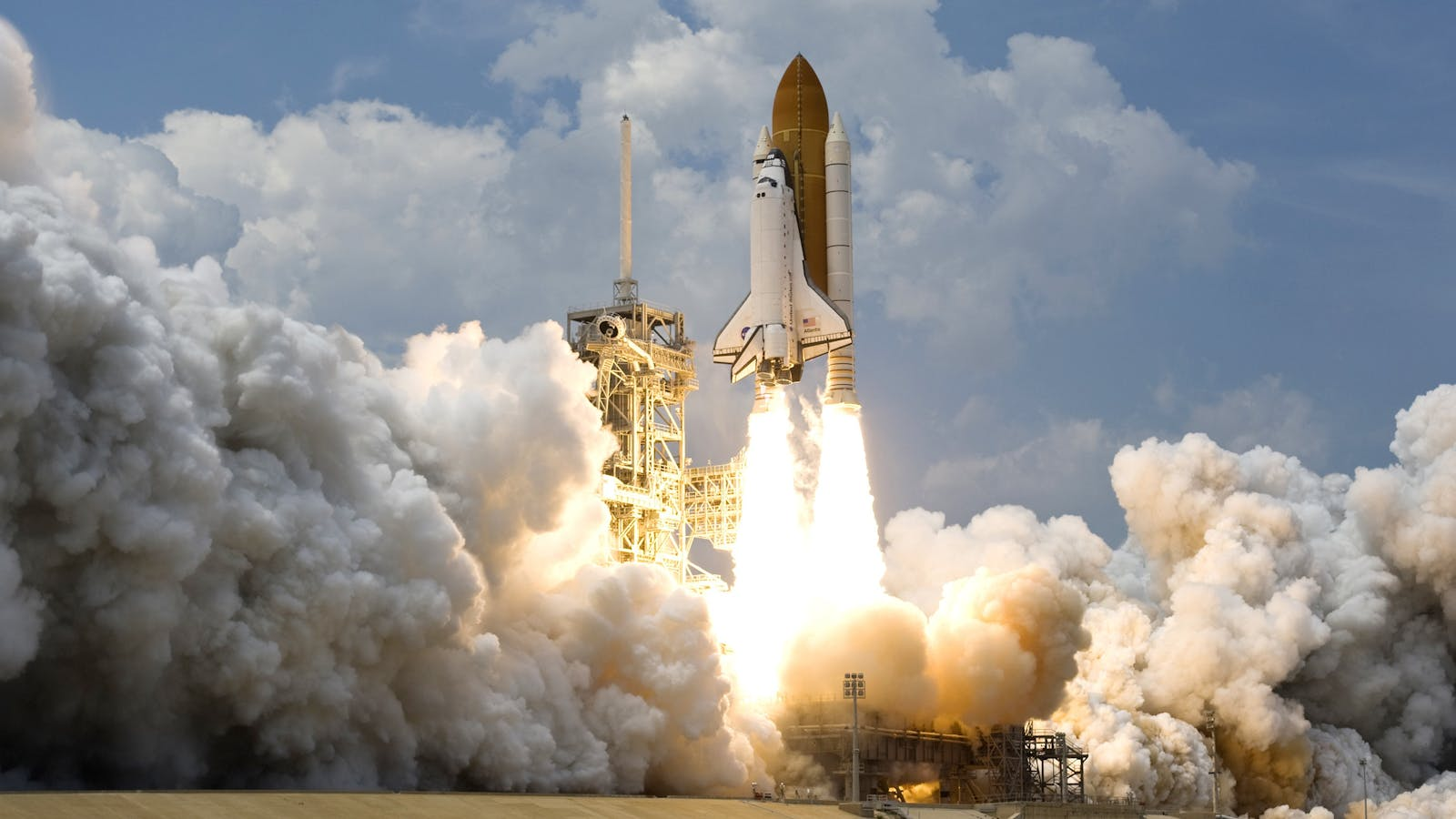
After SpaceX’s IPO, the key to reading its financial reports is not just revenue growth or changes in net profit, but whether growth can turn into sustainable cash flow. Backlog can reflect future revenue visibility, but it does not equal guaranteed revenue. Capital expenditure determines how much cash the company needs to consume for expansion. Free cash flow shows how much cash remains after heavy investment. For a company like SpaceX, which spans launch services, Starlink, AI infrastructure, and long-term space projects, you need to break down the financials instead of judging its valuation only through the label of “commercial space leader.”
Key Takeaways
- After SpaceX’s IPO, financial analysis should shift from growth stories to operational validation.
- Backlog should be assessed by delivery timeline, cancellation terms, and customer concentration.
- Capital expenditure affects free cash flow and future financing pressure.
- Starlink, launch services, and AI should be analyzed separately for earnings quality.
- Free cash flow better reflects funding pressure for high-investment companies than net profit.
- After a hot IPO lists, trading costs, liquidity, and risk disclosures also matter.
What Should Investors Look at First in SpaceX’s First Earnings Report After Its IPO?
In SpaceX’s first earnings report after its IPO, the first thing to examine is not whether revenue continues to grow, but where that growth comes from, whether losses have widened, whether operating cash flow has improved, and whether capital expenditure is consuming cash. Before an IPO, a high-valuation company can attract attention with a long-term story. After listing, it must use financial statements to validate business quality. You need to look at the income statement, balance sheet, cash flow statement, and management discussion together, rather than focusing only on EPS or quarterly revenue.

The SEC’s investor education material on financial statements notes that financial statements usually include the balance sheet, income statement, cash flow statement, and statement of shareholders’ equity. Among them, the cash flow statement shows the inflows and outflows of cash between the company and the outside world. For a company like SpaceX, where capital expenditure is very high, the cash flow statement can be just as important as the income statement.
The income statement can answer “how much the company earned or lost,” but it cannot fully answer “how much cash the company still has.” Reports on SpaceX’s IPO filing show that the company’s business has expanded from rockets and satellites into AI infrastructure, data centers, and a broader space economy narrative. Reuters reported that SpaceX’s IPO filing pointed to a target valuation of about US$1.75 trillion while also disclosing losses, Musk’s control rights, and AI-related plans. This means that after listing, SpaceX’s financial reports need to be analyzed as a multi-business platform, not just as a traditional aerospace manufacturer through its SpaceX IPO filing.
A practical reading order starts with the three main statements:
| Financial Statement Section | Key Metrics | Meaning for SpaceX |
|---|---|---|
| Income statement | Revenue, gross profit, operating loss, net loss | Determines whether the business is scaling profitably |
| Balance sheet | Cash, debt, long-term assets, deferred revenue | Assesses the cash cushion and contract liabilities |
| Cash flow statement | Operating cash flow, capital expenditure, financing cash flow | Determines whether the company is truly generating cash |
| Segment disclosure | Starlink, launch services, AI infrastructure | Shows where growth is coming from |
| Management discussion | Risks, orders, investment plans, guidance | Assesses future cash consumption and expectation changes |
The first earnings report also needs to validate the IPO narrative. Before the IPO, the market focuses on long-term stories such as the space economy, satellite internet, AI data centers, and Mars plans. After the IPO, financial reports must answer more specific questions: Are Starlink users still growing? Are launch services maintaining high frequency? Is AI infrastructure revenue real and stable? Has capital expenditure exceeded management expectations? If growth data cannot support the high valuation set during the IPO period, share price volatility may be amplified.
Summary: In SpaceX’s first earnings report after its IPO, investors should first look at revenue quality, changes in losses, cash flow structure, and segment performance, rather than only revenue growth. For a high-capex, high-valuation company, financial validation matters more than market narratives. You need to use the income statement to assess business scale, the balance sheet to assess the cash cushion, the cash flow statement to assess real cash generation, and segment disclosures for Starlink, launch services, and AI infrastructure to judge whether SpaceX’s growth is sustainable.
How Should You Read Backlog? Do Not Treat Backlog as Future Revenue
Backlog can reflect SpaceX’s future revenue visibility, but it should not be treated as guaranteed revenue. You need to examine whether orders can be canceled, how long the delivery cycle is, whether customers are concentrated, whether revenue is recognized in stages, and whether the backlog corresponds to real delivery capacity. For SpaceX, launch contracts, government missions, Starlink subscriptions, and AI compute contracts all have different revenue recognition rhythms, so not all backlog should be treated as future revenue of the same quality.
MarketWatch’s coverage of SpaceX’s IPO filing noted that the company’s backlog was about US$27.6 billion. This type of number can easily be interpreted by the market as future revenue protection. But backlog is only the business base that has been contracted but not yet fully delivered or recognized. Before it truly enters the income statement and cash flow statement, it must still go through delivery, acceptance, revenue recognition, and collection.
The core value of backlog is revenue visibility. For example, commercial launch contracts usually require customer satellites to be ready, launch windows to be confirmed, and missions to succeed before revenue is gradually recognized. Government and defense contracts may be more stable, but approval, budgeting, and delivery cycles can be longer. Starlink subscriptions are closer to recurring revenue, but they depend on user numbers, ARPU, churn, and network capacity. AI infrastructure contracts may appear large, but contract duration, termination clauses, and customer concentration directly affect revenue certainty.
Financial reports may also include RPO and deferred revenue. FASB’s revenue recognition standard emphasizes that companies should disclose enough information for financial statement users to understand the nature, amount, timing, and uncertainty of revenue from customer contracts. [Remaining performance obligations](https://storage.fasb.org/ASU 2014-09_Section A.pdf) are more of an accounting measure used to observe performance obligations that have not yet been fulfilled. Deferred revenue means the company has already received cash but has not yet met the conditions for revenue recognition.
| Metric | What It Represents | What It Can Explain | What It Cannot Explain |
|---|---|---|---|
| Backlog | Orders signed but not yet fully delivered | Future revenue visibility | It does not mean all revenue will definitely be recognized |
| RPO | Performance obligations not yet fulfilled | Revenue visibility under accounting rules | It may not cover all business orders |
| Deferred revenue | Cash received but revenue not yet recognized | Cash has arrived but revenue has not been recognized | It does not equal new orders |
| Subscription revenue | Ongoing service revenue | User retention and stability | It does not directly show capex pressure |
| Government contracts | Long-term mission revenue | Customer credit quality and project stability | It does not necessarily mean high margins |
Backlog also needs to be assessed by customer concentration. If a small number of major customers contribute a large share of backlog, revenue visibility may appear high, but changes in a single customer’s budget, contract termination, or project delay could affect later financial reports. Especially when SpaceX is involved in government, commercial space, satellite internet, and AI customers at the same time, order quality needs to be analyzed by contract type, not just by total amount.
Summary: Backlog is an important indicator for assessing SpaceX’s post-IPO revenue visibility, but it should not be treated as guaranteed revenue. A more effective way to read it is to connect backlog, RPO, deferred revenue, subscription revenue, and contract terms, then assess whether orders can be delivered on time, converted into cash, and supported without overreliance on a few large customers. The larger the order amount, the more you need to question the revenue recognition timeline, cancellation terms, delivery capacity, and margins, rather than treating backlog as income already secured.
How Should You Read Capital Expenditure? Why Is SpaceX’s Growth So Cash-Intensive?
After SpaceX’s IPO, capital expenditure will be a core financial reporting metric because it determines growth quality and free cash flow pressure. Rockets, satellites, ground stations, launch facilities, AI data centers, GPU clusters, and energy systems all require continuous investment. Revenue growth can show that business scale is expanding, but if capital expenditure remains higher than operating cash flow for a long period, the company may still need external financing, debt issuance, or equity dilution to support expansion.
Capital expenditure is not an ordinary operating expense, but it does consume real cash. Investopedia defines capital expenditures as funds used by a company to acquire, upgrade, or maintain long-term assets. For SpaceX, these long-term assets may include reusable rockets, Starlink satellites, user terminals, ground networks, launch facilities, AI data centers, and compute equipment.
Capital expenditure does not flow into the income statement all at once like wages or rent. It first enters the balance sheet and then gradually affects the income statement through depreciation and amortization. But the cash has already gone out first. That is why, when reading SpaceX’s financial reports, you cannot look only at net loss or EBITDA. You also need to examine investment cash flow and capital expenditure in the cash flow statement. High-capex companies often show fast revenue growth, slower accounting profit improvement, and continued pressure on free cash flow.
Morningstar’s analysis of SpaceX’s IPO filing noted that the company’s 2025 capital expenditure was about US$20.73 billion, while total capital expenditure in the first quarter of 2026 was about US$10.1 billion, a large portion of which was related to AI investment. This structure shows that SpaceX’s financial analysis is no longer only about rockets and satellites. AI infrastructure must also be separated out as a major cash consumption item.
| Metric | How to Calculate or Observe It | Analytical Meaning |
|---|---|---|
| CapEx / Revenue | Capital expenditure ÷ revenue | Shows whether growth is overly dependent on investment |
| CapEx / OCF | Capital expenditure ÷ operating cash flow | Shows whether operating cash can cover investment |
| Depreciation and amortization | Compare with changes in long-term assets | Shows how past investment enters the income statement |
| Segment capital expenditure | Break down by Starlink, launch, and AI | Shows capital allocation and strategic focus |
| Payback period | Time needed for future cash flow to cover investment | Assesses capital efficiency and funding pressure |
High capital expenditure is not necessarily a bad sign. If investment lowers launch costs, improves Starlink coverage, increases user retention, or generates high-utilization AI compute revenue, it may support long-term value. But if capital expenditure mainly flows into businesses whose commercial models are not yet proven, or if investment grows far faster than revenue and cash flow, it may drag on free cash flow and increase future financing pressure.
Summary: Capital expenditure is a core variable for understanding SpaceX’s financial reports. For an infrastructure-style company like SpaceX, growth requires large upfront investment. That means investors should not only look at revenue growth, but also whether capex can lead to sustainable revenue, margin improvement, and future cash flow. The larger capital expenditure becomes, the more financial analysis must focus on funding sources, debt pressure, investment payback periods, and which business lines are consuming cash versus generating cash.
How Should You Read Free Cash Flow? Why Is It More Useful Than Net Profit for Observing SpaceX?
After SpaceX’s IPO, free cash flow will better reflect funding pressure than net profit. Net profit can be affected by depreciation, amortization, stock-based compensation, non-cash items, and accounting treatment. Free cash flow answers a more direct question: after using cash generated from core operations and deducting the capital expenditure required to maintain and expand assets, how much cash is left? For a high-growth, high-capex company, this metric is closer to the real funding position than single-quarter net profit.
A common formula for free cash flow is operating cash flow minus capital expenditure. The SEC’s explanation of non-GAAP financial measures reminds investors that non-GAAP metrics must be used carefully and should not mislead investors. Therefore, when reading SpaceX’s financial reports, if the company discloses adjusted EBITDA, free cash flow, or adjusted free cash flow, you should return to the cash flow statement and verify operating cash flow, capital expenditure, and adjustment items.
Negative free cash flow does not necessarily mean a company has failed. High-growth companies often increase investment voluntarily during expansion, putting short-term pressure on FCF. The key is whether the reason for negative free cash flow is clear: is it satellite and terminal investment driven by Starlink user growth, stage-specific investment from Starship R&D and testing, or a rapid increase in capital expenditure caused by AI data center construction? Different reasons carry very different risks.
| Item | Meaning | Key Question for SpaceX |
|---|---|---|
| Operating cash flow | Cash generated by core operations | Are Starlink and launch services generating stable cash? |
| Capital expenditure | Investment in long-term assets | Are investments in AI, satellites, and launch systems too heavy? |
| Free cash flow | Operating cash flow - capital expenditure | Is there cash left after growth investment? |
| Financing cash flow | Debt issuance, equity issuance, debt repayment, buybacks | Does expansion rely on external funding? |
| Cash balance | Available cash cushion | How long can it support the investment cycle? |
The Motley Fool’s analysis of SpaceX’s financial data noted that the company generated about US$1 billion in operating cash flow in the first quarter of 2026, but free cash flow was negative US$9.1 billion, because capital expenditure during the same period reached about US$10.1 billion. This example shows that positive operating cash flow does not mean financial pressure has disappeared. As long as capital expenditure is even larger, free cash flow can remain significantly negative.
You should also observe “who is burning cash and who is generating cash.” If Starlink’s user scale, ARPU, and margins continue to improve, it may become a cash flow pillar. Launch services may create a strategic moat and help Starlink deploy quickly. AI infrastructure may bring a larger revenue opportunity, but it may also consume large amounts of capital expenditure. Consolidated free cash flow is only the result; segment-level cash contribution is the key to judging quality.
Summary: Free cash flow is a key metric for assessing SpaceX’s financial report quality after its IPO. Net profit can be affected by depreciation, amortization, stock-based compensation, and accounting treatment, while free cash flow more directly reflects whether the company can cover capital expenditure with operating cash. For a high-growth, high-investment platform like SpaceX, the most important question is not whether there is growth, but whether growth can gradually turn into sustainable cash and whether the company needs to rely on external financing for a long time.
How Should You Read Business Segments? Starlink, Launch Services, and AI Should Not Be Mixed Together
After SpaceX’s IPO, its financial reports must be read by business segment because Starlink, launch services, Starship, and AI infrastructure have completely different revenue models, margins, capital expenditure requirements, and risks. Consolidated revenue growth may conceal segment differences: one business may contribute stable cash flow, while another may continue consuming funds. Only by breaking the business down can you judge whether SpaceX’s high valuation is supported by mature businesses or mainly by long-term narratives.
Starlink is closer to a subscription-style infrastructure business. You need to look at users, ARPU, churn, network capacity, terminal subsidies, and gross margin. If Starlink can continue improving coverage, reduce terminal costs, and maintain stable renewals across consumer, enterprise, mobile connectivity, and government services, it may become a valuation foundation for SpaceX. Business Times’ coverage of SpaceX’s IPO filing noted that the company’s 2025 revenue was about US$18.67 billion, but it turned to a net loss during the same period. This shows that revenue growth does not automatically mean improved earnings quality.
Launch services should be assessed by launch frequency, rocket reuse rate, mission success rate, and customer mix. The significance of Falcon 9, Falcon Heavy, and future Starship is not only external launch revenue, but also the cost advantage they provide for Starlink deployment. If launch services can maintain high reliability and a high reuse rate, they can improve margins and strengthen the company’s control across the commercial space value chain.
AI infrastructure requires more caution. Reuters reported that Musk clarified SpaceX’s Colossus AI compute leasing arrangement with Anthropic was not a long-term fixed commitment. Instead, it currently involved only a six-month commitment and included a mutual 90-day termination right. This type of information shows that even if an AI contract looks large, investors still need to examine its term, cancellation clauses, customer concentration, and compute utilization. It should not be treated simply as long-term stable revenue.
| Business Segment | Core Revenue Source | Key Metrics | Main Risks |
|---|---|---|---|
| Starlink | Satellite internet subscriptions, enterprise services | Users, ARPU, gross margin, churn | Competition, capacity, terminal costs |
| Launch services | Commercial launches, government missions | Launch frequency, reuse rate, success rate | Accidents, scheduling, regulation |
| Starship | Future transport and deployment capability | Test progress, unit cost reduction | Technical uncertainty |
| AI infrastructure | Data centers and compute leasing | Contract term, utilization, capex return | Customer concentration, hardware depreciation |
| Government/defense | Long-term mission contracts | Order stability, delivery timeline | Policy, budgets, review processes |
For ordinary investors, the goal of segment analysis is not to predict the exact profit of every business line, but to judge growth quality. If revenue growth mainly comes from high-margin, sustainable, low-churn businesses, valuation support will be more stable. If growth mainly comes from high-investment, short-contract, low-certainty businesses, the market may apply a higher discount rate. SpaceX’s strength lies in the synergy between its businesses, but its risk also lies in the very different cash cycles across those businesses.
Summary: SpaceX’s financial reports should not be analyzed only on a consolidated basis, because the quality of different businesses can vary greatly. Starlink may contribute stable revenue and cash flow, launch services provide a technological moat and deployment capability, and AI infrastructure may bring both high growth and high capital expenditure pressure. Only by breaking the business down can investors judge whether SpaceX’s growth is supported by cash-generating operations or driven by high-investment narratives.
How Can Ordinary Investors Build a SpaceX Earnings Monitoring Checklist?
Ordinary investors should build a fixed checklist for reading SpaceX’s post-IPO financial reports instead of following market sentiment each time. The checklist should cover revenue growth, backlog, capital expenditure, operating cash flow, free cash flow, debt, segment margins, share dilution, governance structure, and trading costs. This helps turn SpaceX from a “hot IPO” into a listed company that can be tracked sustainably.
The first group of questions focuses on operating quality: Is revenue growth coming from Starlink, launch services, or AI? Is backlog still growing? Is order-to-revenue conversion normal? Are Starlink users and ARPU improving? Is launch frequency stable? These indicators answer whether the business is still expanding and whether growth is coming from high-quality segments.
The second group of questions focuses on funding pressure: Is capital expenditure still expanding? Is operating cash flow improving? Is free cash flow narrowing or turning positive? Are debt and interest costs rising? Satellite Today’s coverage of SpaceX’s IPO filing noted that the company had about US$29.1 billion in long-term debt as of the end of March 2026. Therefore, debt structure, interest costs, and refinancing capacity should also be included in earnings monitoring.
The third group of questions focuses on valuation and trading. A high-valuation company needs stronger growth delivery. You can use metrics such as EV/Sales, EV/EBITDA, and P/FCF to judge market expectations. If free cash flow remains negative for a long time, valuation will depend more heavily on future growth. If Starlink’s cash flow improves and AI capital expenditure begins to generate returns, valuation support may become stronger.
| Monitoring Item | Key Question | Analytical Direction |
|---|---|---|
| Revenue | Is growth coming from Starlink, launch, or AI? | Assess growth quality |
| Backlog | Is it growing and converting into revenue? | Assess future revenue visibility |
| CapEx | Is it continuing to expand? | Assess cash consumption |
| OCF | Is operating cash improving? | Assess core cash generation |
| FCF | Can it turn positive or narrow? | Assess funding pressure |
| Debt | Are debt and interest costs rising? | Assess financing risk |
| Segment profit | Which business is profitable and which is burning cash? | Assess valuation support |
| Share count changes | Is further financing causing dilution? | Assess shareholder returns |
| Trading costs | What is the actual order cost? | Assess trading experience |
| Risk disclosure | Has management flagged major uncertainty? | Assess expectation changes |
If you are following trading opportunities after a hot IPO like SpaceX lists, you also need to pay attention to actual trading costs in addition to share price volatility. U.S. stock trading costs often include more than commissions; they may also include platform fees, external institutional fees, trading activity fees, settlement fees, and other charges. Taking Biya U.S. stock trading fees as an example, Biya charges US$0 commission for U.S. stock trading, while platform fees, external institutional fees, and other charges are subject to the fee center and order page. Hot IPOs may experience significant volatility in the early trading stage, so you should fully understand order types, fee structures, and risks before trading.
If SpaceX completes its public listing, investors who meet the applicable service conditions can use U.S. stock quotes to follow public market prices and basic information, and can check order rules in trading environments that support the relevant market. Biya is a global multi-asset trading wallet that supports U.S. stocks, Hong Kong stocks, and cryptocurrency trading, as well as the exchange of USDT into major fiat currencies such as USD or HKD. Whether specific services are available depends on the user’s location, identity verification results, platform rules, and applicable laws and regulations.
Tracking SpaceX’s post-IPO financial reports ultimately comes back to three questions: Do the financials validate growth? Can orders turn into revenue and cash? Does capital expenditure suppress free cash flow? If your region meets the applicable service conditions, you can use Biya to learn about market data, accounts, trading, and fee structures. The information above only introduces public market information, trading rules, and fee structures, and does not constitute investment advice. Any trading decision should be made based on your own risk tolerance, the platform’s order confirmation page, and local regulatory requirements.
Summary: Monitoring SpaceX’s post-IPO financial reports should not rely on a single metric. It should use a fixed framework. Revenue growth answers whether the business is expanding. Backlog answers whether future revenue is visible. Capital expenditure answers how much growth costs. Free cash flow answers whether cash remains after growth. Together with segment profit, debt, dilution, valuation multiples, and trading costs, these indicators form a more complete judgment.
FAQ
What Metrics Matter Most in SpaceX’s First Earnings Report After Its IPO?
The key metrics are revenue quality, backlog, capital expenditure, operating cash flow, free cash flow, and segment profit. Net profit matters, but it is not enough for a high-capex company like SpaceX. Cash flow and business segments are needed to judge whether growth is sustainable.
Can SpaceX’s Backlog in Its Financial Reports Be Treated as Future Revenue?
No, backlog cannot be treated directly as future revenue. It represents future revenue visibility, but it is still affected by delivery progress, customer cancellation clauses, regulatory approvals, launch schedules, and revenue recognition rules. A more reliable approach is to observe backlog, RPO, and deferred revenue together.
Is High Capital Expenditure Always a Bad Sign for SpaceX?
Not necessarily. If capital expenditure leads to lower launch costs, wider Starlink coverage, or stable cash flow, it may support long-term growth. But if it is mainly invested in unproven loss-making businesses, it may increase financing pressure and free cash flow volatility.
Why Is Free Cash Flow More Important Than Net Profit for SpaceX?
Free cash flow is more important because it better reflects how much cash remains after expansion. Net profit is affected by depreciation, amortization, and accounting treatment, while free cash flow directly deducts capital expenditure, making it more suitable for observing a heavy-asset, high-growth company like SpaceX.
Why Should Starlink Be Analyzed Separately in SpaceX’s Financial Reports?
Starlink should be analyzed separately because it may be SpaceX’s business line closest to a subscription and cash-flow model. Investors should look at users, ARPU, gross margin, network capacity, and terminal costs, rather than mixing it together with launch services and AI infrastructure.
*This article is provided for general information purposes and does not constitute legal, tax or other professional advice from BiyaPay or its subsidiaries and its affiliates, and it is not intended as a substitute for obtaining advice from a financial advisor or any other professional.
We make no representations, warranties or warranties, express or implied, as to the accuracy, completeness or timeliness of the contents of this publication.
Related Blogs of

Are SpaceX’s Private Market Valuations Before Its IPO Reliable? The Difference Between Secondary Transfers, Funding Rounds, and Public Listing Pricing


When Will SpaceX Go Public? A Breakdown of the IPO Timeline, Exchange Listing, and Trading Process


What Does the SpaceX IPO Mean for Ordinary Investors? Understand the Listing Process and Risk Boundaries First


Is Zero-Commission US Stock Trading Really Fee-Free? Know These Fee Categories First
Choose Country or Region to Read Local Blog
 Australia
 Austria
 Belgium
 Canada
 Cyprus
 Czech Republic
 Denmark
 Estonia
 Finland
 France
 Germany
 Greece
 Hong Kong
 India
India Indonesia
 Ireland
 Italy
Italy Japan
Japan Latvia
 Lithuania
 Luxembourg
 Malaysia
 Malta
Malta Morocco
 Nepal
Nepal Netherlands
 New Zealand
 Norway
 Pakistan
 Philippines
 Poland
 Portugal
 Romania
 Singapore
 Slovakia
 Slovenia
 South Africa
 South Korea
 Spain
Spain Sweden
 Thailand
 The United States
 Turkey
 United Arab Emirates
 United Kingdom
 Vietnam
Contact Us




BIYA GLOBAL LLC is registered with the Financial Crimes Enforcement Network (FinCEN), an agency under the U.S. Department of the Treasury, as a Money Services Business (MSB), with registration number 31000218637349, and regulated by the Financial Crimes Enforcement Network (FinCEN).
BIYA GLOBAL LIMITED is a registered Financial Service Provider (FSP) in New Zealand, with registration number FSP1007221, and is also a registered member of the Financial Services Complaints Limited (FSCL), an independent dispute resolution scheme in New Zealand.