When Will SpaceX Go Public? A Breakdown of the IPO Timeline, Exchange Listing, and Trading Process




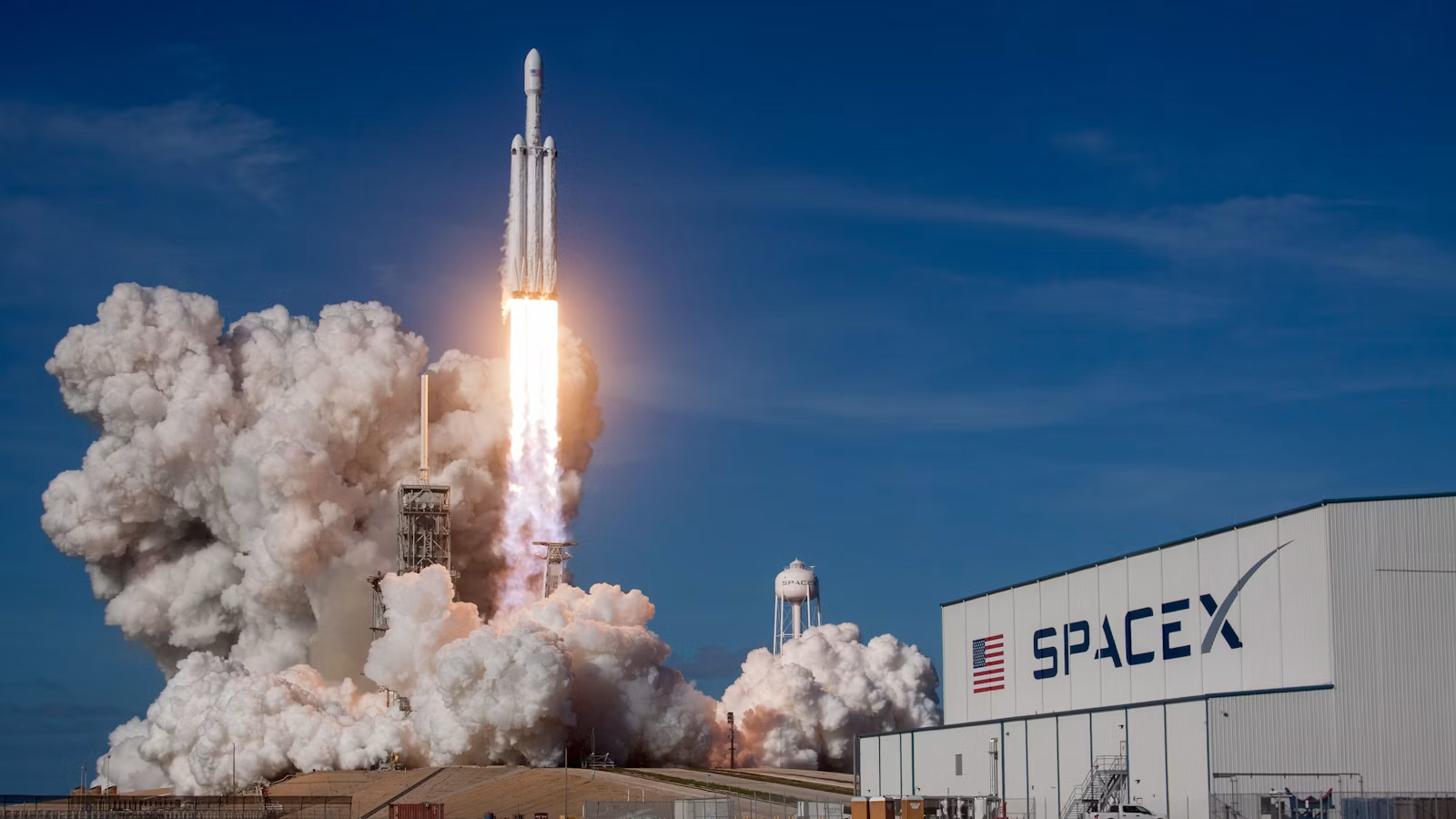
SpaceX has entered the public IPO process, but “filing a prospectus” does not mean the company is already listed and trading. You need to distinguish among several key stages: the public S-1 filing, SEC registration effectiveness, roadshow, pricing, listing, and first-day opening trade. SpaceX’s proposed ticker is SPCX, and the market is watching whether it will list on Nasdaq, when pricing will be finalized, whether ordinary investors can participate, and how to assess post-listing volatility, order rules, and trading costs. The following discussion covers public market information, trading rules, and fee structures only, and does not constitute investment advice.
Key Takeaways
- SpaceX has filed a public S-1, but trading still depends on later IPO steps.
- Roadshow, pricing, listing, and opening trade are separate milestones.
- SPCX is the proposed ticker, not proof that the stock is already tradable.
- The IPO price is not the opening price; first-day prices are market-driven.
- Ordinary investors should consider eligibility, volatility, orders, and fees.
- Trading decisions should rely on SEC filings, exchange updates, broker rules, and account statements.
SpaceX IPO Update: Has SpaceX Actually Gone Public Yet?
SpaceX should not be understood simply as a company that has “already completed its listing.” A more accurate view is that the company has entered the public IPO process, and the market can now see registration documents and proposed listing arrangements. However, whether the stock can already be bought and sold in the secondary market depends on whether the registration statement has become effective, whether the underwriters have completed pricing, and whether the exchange has officially released the stock for trading.
According to the SEC EDGAR filing for Space Exploration Technologies Corp. S-1, SpaceX has disclosed IPO-related registration materials. An S-1 is a critical document for a U.S. company planning a public offering. It typically includes business descriptions, financial data, risk factors, ownership structure, underwriting arrangements, proposed exchange, and proposed ticker symbol. For ordinary investors, the importance of the S-1 is that it gives the market its first systematic view of the information the company is preparing to disclose for listing. However, the S-1 itself is not proof that the stock has already started trading.
This is where many users searching for “when will SpaceX go public” may become confused. You may see terms such as SpaceX IPO, SPCX, Nasdaq, roadshow, pricing, and listing in the news, but these terms refer to different stages. For a high-profile IPO especially, market rumors, media coverage, broker previews, and official trading pages may appear at the same time. Without separating the process into stages, it is easy to mistake “planned listing” for “already available to buy.”
| Information Item | Current Meaning | Impact on Ordinary Investors |
|---|---|---|
| S-1 filing | The company has entered the public registration process | Investors can review business, financial, and risk disclosures |
| SPCX ticker | Proposed stock symbol | Helps identify the future trading symbol |
| Nasdaq / Nasdaq Texas | Proposed exchange listing arrangement | May affect listing, matching, and market attention |
| Roadshow | Presentation to institutions and potential investors | May influence final pricing and demand expectations |
| Pricing | Final IPO price is determined | Does not mean all investors can buy at that price |
| Opening trade | Secondary market trading begins | Ordinary investors usually participate at this stage |
From a search-intent perspective, international users are not only asking whether SpaceX has gone public. They are also asking more specific long-tail questions: SpaceX IPO date, SpaceX stock ticker SPCX, When will SpaceX go public, SpaceX Nasdaq listing, SpaceX IPO price, SpaceX prospectus, and when ordinary investors can buy SpaceX stock. These questions correspond to different decision points: some focus on the regulatory process, some on the ticker symbol, some on the exchange, some on purchase access, and others on valuation and first-day volatility.
It is also important to note that the S-1 may still be updated. During the IPO process, a company may file amended prospectuses to add or revise the price range, number of shares offered, underwriting discounts, risk factors, or financial data. When assessing SpaceX’s IPO progress, the priority order should be SEC filings, exchange information, underwriter announcements, broker pages, and then media reports or market discussion. Media coverage can help explain timing expectations, but the official status still depends on regulatory filings and trading arrangements.
Summary: SpaceX has entered the public disclosure stage of its IPO process. The S-1 filing and SPCX ticker are important signals, but they do not mean the stock has completed its listing and started trading. To determine whether SpaceX is truly “public,” you need to distinguish at least three levels: whether the prospectus has been filed, whether pricing has been completed, and whether the stock has actually opened for trading on the exchange. For ordinary investors, meaningful participation usually begins only after the exchange releases the stock for trading, the broker shows it as orderable, and orders can actually enter the market for execution.
How to Read the SpaceX IPO Timeline: S-1, Roadshow, Pricing, Listing, and Opening Trade
To understand when SpaceX will go public, you cannot focus on just one date. An IPO consists of a series of milestones: first the S-1 filing becomes public, then the filing goes through SEC review and registration effectiveness, followed by the roadshow, pricing, listing, and first-day opening trade. For ordinary investors, the most important question is “when can I place an order that can actually be executed,” not merely “when is the pricing date” or “when does the roadshow begin.”
The basic logic of a U.S. IPO is that the company first files a registration statement with the SEC. After the S-1 becomes visible to the market, regulatory review, filing amendments, investor presentations, and underwriting pricing proceed in sequence. The SEC’s explanation of going public emphasizes that companies generally need to file a registration statement before publicly offering securities, and sales arrangements typically depend on the registration statement becoming effective. In other words, seeing a prospectus does not mean the stock can immediately be purchased; whether the registration statement has become effective remains a core prerequisite.
According to Reuters’ report on the SpaceX IPO timeline, market expectations have included a June roadshow, mid-June pricing, and a potential listing soon afterward. The key words here are “target,” “expected,” and “possible.” These dates should not be treated as absolute. The timing of a high-profile IPO can still be affected by SEC review, market conditions, underwriting demand, and the company’s final pricing strategy.
| IPO Milestone | What It Means | What Ordinary Investors Should Watch |
|---|---|---|
| S-1 becomes public | The company discloses listing materials | Business, financials, risks, ticker |
| S-1 amendment | The company adds or updates disclosure | Whether price range and offering size are updated |
| Roadshow | The company presents to potential investors | Demand and valuation expectations |
| Pricing | IPO offer price is determined | IPO price is not the opening price |
| Listing | Stock enters exchange listing arrangements | Whether brokers show it as tradable |
| Opening trade | Secondary market trading begins | Order types, volatility, execution costs |
Many investors mistake the “pricing date” for the “buying date.” The pricing date mainly refers to the moment when the issuer and underwriters determine the IPO offer price. Investors who receive allocations may obtain shares at that price. But ordinary investors without IPO allocation access usually need to wait until the stock opens in the secondary market and then place orders through a broker. At that point, the execution price is determined by market supply and demand and may differ materially from the IPO price.
Another important distinction is between “listing” and “official opening.” Listing means the stock has entered the exchange’s listing arrangements, but on the first day of trading, the stock does not necessarily trade instantly at a fixed price the moment the opening bell rings. The exchange usually needs to go through quotation, order collection, and opening cross procedures before forming the first trade or official opening price. For a popular IPO, if there is a large imbalance between buy and sell orders, the opening may be delayed, and the execution price may differ significantly from the offer price reported in the media.
For an IPO as closely watched as SpaceX, the timeline should be read with extra caution. You can focus on three signals: first, whether the S-1 includes a price range and number of shares; second, whether the underwriters announce final pricing; third, whether Nasdaq and broker platforms show the stock as actually tradable. If the third signal is not clear, IPO progress should not be interpreted as the stock already being available for trading.
Summary: The SpaceX IPO timeline should be read as a process, not a single date. The public S-1 filing means the company has entered the public offering process. The roadshow means underwriting and sales efforts have entered a key phase. Pricing means the offer price has been determined. Listing and opening trade determine whether ordinary investors can buy and sell in the secondary market. For most investors, the most practical information is the opening trade time, whether orders can be executed, the actual execution price, and the fee details—not merely the expected pricing date reported by the media.
Which Exchange Will SpaceX List On? What Does the SPCX Ticker Mean?
SPCX is SpaceX’s proposed ticker symbol, but it does not mean the stock is already tradable. The purpose of a ticker is to help the market identify a future trading security. Whether the stock can actually be bought or sold still depends on whether the registration statement becomes effective, whether the exchange completes the listing process, whether brokers open order entry, and whether valid market trades have begun.
In the SEC filing, SpaceX proposes to list its Class A common stock under the symbol SPCX, with listing arrangements involving Nasdaq and Nasdaq Texas. For ordinary investors, this is valuable information because if the stock officially opens for trading, SPCX is likely to become the core symbol used in market data apps, broker search boxes, and news headlines to identify SpaceX shares.
However, the ticker itself can also create misunderstandings. Some market data platforms may generate placeholder pages in advance, some brokers may show pre-IPO information pages, and social media may start discussing SPCX price expectations before trading begins. None of these alone proves that the stock can already be bought. To confirm tradability, you should at minimum see broker order support, exchange release for trading, real-time bid and ask quotes, and executed trades.
| Keyword | Actual Meaning | Common Misunderstanding |
|---|---|---|
| SpaceX | Company name | Not the same as a tradable stock name |
| SPCX | Proposed ticker | Not proof that trading has opened |
| Nasdaq | Proposed exchange | Not proof that every account can subscribe to the IPO |
| Nasdaq Texas | Part of the exchange arrangement | Not a sign that trading is limited to one region |
| SpaceX stock | Market search term | May mix private shares, IPO information, and secondary trading |
SpaceX’s potential choice of Nasdaq has attracted attention because Nasdaq has long been associated with large technology and growth companies, strong liquidity, institutional coverage, index expectations, and high media visibility. Reuters has also noted that the relationship between SpaceX and Nasdaq, as well as possible Nasdaq-100 inclusion, has been part of the market discussion. However, index inclusion should not be assumed in advance. Indexes such as the Nasdaq-100, Russell indexes, and FTSE indexes all have their own rules, involving float-adjusted market capitalization, trading history, liquidity, free float, and committee decisions. A large company size alone does not mean “immediate index inclusion.”
Nasdaq Texas also needs to be understood carefully. It is not a “trading location” that ordinary investors need to select manually when placing an order, nor does it mean the stock is only available to accounts in a specific region. For ordinary investors, the practical route remains searching for SPCX through a broker or trading platform that supports U.S. stocks, and then placing orders according to the relevant order rules after the stock officially begins trading.
If you later use a U.S. stock search tool to track SpaceX or other U.S. stocks, you should still separate “being searchable” from “being tradable.” Especially during the early stage of an IPO, market data, trading volume, price movement, and order book depth may change rapidly. A search tool can help you track information, but before placing an order, you still need to confirm the real-time trading status on the order page.
Summary: SPCX is one of the most important identifiers in the SpaceX IPO, but it is only a proposed ticker symbol, not a synonym for “available to buy.” Nasdaq listing arrangements may increase market attention and influence institutional flows or index discussions. However, ordinary investors should still rely on SEC filings, exchange status, broker tradability, and actual market executions. Seeing a ticker, a news article, or a placeholder quote page cannot replace confirmation that the stock is truly trading.
How Will SpaceX Open on Its First Trading Day? Why Is the IPO Price Not the Opening Price?
Even if SpaceX completes IPO pricing, ordinary investors should not assume they can buy the stock at the offer price. The IPO price is determined during the allocation process, the opening price is formed by exchange order matching on the first trading day, and first-day trade prices continue to move with supply and demand. These three prices may be close to each other, but they may also differ significantly.
The IPO price is mainly determined by the issuer and underwriters based on company valuation, market demand, institutional orders, and offering size. Investors who receive allocations may obtain shares at the offer price, but allocation access is usually limited and not available to all ordinary accounts. After the stock opens on its first trading day, more investors buy and sell in the secondary market, where prices are driven by market supply and demand.
Nasdaq has a dedicated mechanism for opening IPOs. According to Nasdaq IPO Cross, the IPO Cross is designed to form a single price through an open and transparent process based on supply and demand, after which regular trading begins. Nasdaq’s IPO Cross FAQ also explains that the IPO Cross forms the Nasdaq Official Opening Price, and if there is significant volatility during the quotation phase, the opening process may be extended.
| Price Type | How It Is Formed | Common Misunderstanding |
|---|---|---|
| IPO offer price | Set by issuer and underwriters | Assuming everyone can buy at this price |
| Official opening price | Formed by exchange opening cross | Assuming it must equal the IPO price |
| First-day trade price | Formed by continuous secondary trading | Ignoring volatility and slippage |
| Closing price | Market price at the end of the first trading day | Judging long-term value from one day’s performance |
Hot IPOs often face several first-day issues: concentrated buy demand, limited sell supply, fast-moving quotes, delayed opening, amplified intraday volatility, and trading sentiment driven by social media. SpaceX has extremely high market attention, and its business involves multiple narratives such as commercial space launches, Starlink, satellite internet, launch services, and AI infrastructure. Valuation disagreements may therefore be more pronounced. For ordinary investors, the biggest risk is not “failing to recognize that the company is popular,” but mistaking popularity for certain returns.
Order type also matters. If you use a market order during the early stage of trading, the order may be filled at a price far above your expectations when quotes move quickly. A limit order can help control your maximum purchase price or minimum sale price, but it may also fail to execute if the market does not reach your limit. For a popular IPO, controlling the execution price is often more important than pursuing immediate execution.
Another point that is easily overlooked is that first-day “gains” do not mean all investors made money. Investors who received shares at the IPO price, those who bought at the opening, and those who bought near an intraday high all have different cost bases. Even if media reports say the stock “rose from the IPO price,” that does not mean every secondary-market buyer has a profit cushion.
Summary: What truly affects the first-day trading experience of the SpaceX IPO is not just the offer price, but also the opening cross mechanism, secondary-market supply and demand, order type, and execution price. The IPO price mainly belongs to the allocation context, while ordinary investors more often face the opening price and intraday trade prices. Popular IPOs may experience significant early volatility, so investors should understand order types, fee structures, and risk before trading, rather than equating company popularity with certain returns.
Can Ordinary Investors Participate in the SpaceX IPO? Key Restrictions and Risks
Ordinary investors generally have two possible paths to participate in SpaceX: applying for IPO allocation through a broker that supports IPO distribution, or waiting until the stock officially lists and buying it in the secondary market. These two routes differ significantly in price, eligibility, execution probability, and risk. They should not be lumped together simply as “buying SpaceX stock.”
IPO allocation is usually not available to every account. U.S. IPO distribution depends on broker rules, underwriting allocation, account eligibility, regulatory restrictions, and platform availability. FINRA Rule 5130 restricts IPO allocations to certain “restricted persons,” with the core purpose of preventing improper participation in new issue distributions. FINRA Rule 5131 also addresses new issue allocation, conflicts of interest, lock-up disclosures, and related trading practices. Ordinary investors do not need to memorize every rule, but they should understand that IPO subscription is not something investors can always access simply because they want to.
| Participation Method | Potential Advantage | Main Restriction | Key Focus |
|---|---|---|---|
| IPO subscription | Potential access near the offer price | Eligibility, allocation, and quota uncertainty | Whether the broker supports it and whether the account qualifies |
| Buying after listing | Can place orders in the secondary market | Price may fluctuate sharply | Order type, execution price, risk control |
| Waiting before buying | Avoids first-day emotional volatility | May miss short-term moves | Valuation, financial reports, liquidity |
| Not participating | Avoids high-volatility risk | No exposure to potential upside | Personal risk tolerance |
International investors also need to consider service availability in their region, identity verification, account type, tax status, funding route, and local laws and regulations. Whether a service is available depends on the user’s location, identity verification results, platform rules, and applicable laws and regulations. Investors should not ignore account compliance just to participate in a hot IPO, and they should be cautious of claims such as “bypassing restrictions,” “guaranteed allocation,” or “low-price internal shares.”
SpaceX may also carry valuation risk. Another Reuters report comparing SpaceX IPO trading performance noted that some recent hot IPOs did not consistently outperform the market after listing. This is an important point for ordinary investors: a good company, a popular company, a scarce asset, and a good entry price are not the same thing. First-day IPO prices often already reflect substantial expectations, while future performance still depends on revenue growth, profitability, capital expenditures, regulatory risks, launch business progress, and overall market risk appetite.
Before making a practical decision, you should at least complete a simple checklist:
- Are you trying to participate in the IPO allocation, or buy after listing?
- Does your broker clearly support SpaceX IPO allocation?
- Does your account meet that broker’s IPO subscription requirements?
- Are you prepared for the possibility of receiving no allocation?
- Do you understand the difference between offer price, opening price, and execution price?
- Can you tolerate sharp first-day volatility and liquidity changes?
- Have you confirmed order types, fee structures, and account statement rules in advance?
For ordinary investors, a more prudent approach is not to trade ahead of every headline, but to build a decision framework first. Once S-1 amendments, price range, final pricing, exchange status, and broker rules become clearer, investors can then decide whether participation is appropriate. For high-valuation technology IPOs in particular, short-term sentiment and long-term fundamentals may diverge significantly.
Summary: Whether ordinary investors can participate in the SpaceX IPO depends not only on interest and available capital, but also on broker access, account eligibility, regulatory rules, and allocation capacity. If you do not have IPO allocation access, buying in the secondary market after listing is the more common route, but the price will then be determined by market supply and demand, and the risk profile will differ. You should first confirm the participation method, then evaluate valuation, volatility, orders, fees, and your own risk tolerance. Being optimistic about SpaceX should not be treated as a reason to buy at any price.
After SpaceX Begins Trading, How Should Investors Evaluate Trading Costs and Order Rules?
If SpaceX officially opens for trading, ordinary investors should not look only at price movements. In the early stage of a hot IPO, the actual trading experience also depends on order type, execution price, platform fees, external institution fees, settlement fees, sale-related fees, and FX costs. Understanding the fee structure before buying is just as important as assessing valuation.
U.S. stock trading costs are often not limited to a single “commission” item. Some platforms may advertise zero commission, but still charge platform fees, external institution fees, trading activity fees, settlement fees, and in some cases additional sale-related regulatory or transaction costs. Different order sizes, whole-share or fractional-share trades, buy or sell direction, and platform rules may all affect the fee calculation. Final costs should be based on the platform’s fee schedule, order confirmation page, and executed trade statement.
Take Biya as an example. Biya U.S. stock trading fees show that U.S. stock trading commission is USD 0; Biya charges a U.S. stock platform fee of USD 0.005 per share, with a minimum of USD 0.99 per order and a maximum of 1% of trade value; external institution fees and trading activity fees total USD 0.00396 per share. For fractional orders with executed quantity below one share, only a platform fee of 1% of the total trade amount is charged, capped at USD 1.
| Cost Item | Why It Matters | How to Evaluate It |
|---|---|---|
| Trading commission | Affects basic trading cost | Check whether the platform charges commission |
| Platform fee | May be charged by share count or order | Check minimum and maximum fee rules |
| External institution fee | May vary with executed share quantity | Check whether it appears in the account statement |
| Settlement fee | Related to trade clearing and settlement | Check the platform’s fee schedule |
| Fractional-share fee | More noticeable for small trades | Review fractional-order rules separately |
| FX cost | Cross-currency trading affects actual cost | Check deposit, conversion, and withdrawal routes |
This is directly relevant to the SpaceX IPO. If you plan to buy small amounts in batches after listing, fractional-share rules may affect your cost experience. If you plan to trade whole shares, minimum platform fees and per-share charges may matter more. If you trade frequently in response to price swings, both fees and slippage may compound. Hot IPOs already have substantial price volatility; if fees and order settings are ignored, the actual execution result may deviate significantly from expectations.
Before placing an order, you can use the following trading checklist:
- Confirm whether SPCX has officially opened and is tradable.
- Understand the difference between limit orders, market orders, and failed execution.
- Avoid blindly using market orders during fast-moving quotes.
- Review estimated order fees and post-trade account statements.
- Distinguish between whole-share and fractional-share fee rules.
- Allow for price volatility, slippage, and FX movement.
- Do not use one day of price movement as the sole basis for long-term judgment.
If services are available in your region and you meet the relevant conditions, you can use Biya to follow U.S. stock trading access and review actual costs through the fee schedule, order page, and account statement. Biya is a global multi-asset trading wallet that supports U.S. stocks, Hong Kong stocks, and digital asset trading, as well as exchanging USDT for major fiat currencies such as USD or HKD. However, specific service availability still depends on the user’s location, identity verification results, platform rules, and applicable laws and regulations.
Summary: Trading decisions after the SpaceX listing should not revolve only around whether the stock will rise. Investors also need to assess whether they can tolerate first-day volatility, understand order types, and review the full cost structure. Zero commission does not mean zero cost. Platform fees, external institution fees, settlement fees, fractional-share fees, and FX costs may all affect the actual result. In the early stage of a hot IPO, a checklist-based approach is more suitable: confirm tradability first, confirm the order method next, and then review execution price and account statement details.
What Framework Should Ordinary Investors Use After Following the SpaceX IPO?
Following the SpaceX IPO should not stop at asking “when will it list” or “how much will it rise on day one.” A more useful framework is to track four types of information at the same time: whether the listing process is advancing, whether the valuation is reasonable, whether the trading mechanism is clear, and whether your own account and fee structure are suitable. This helps avoid decisions driven by a single headline or market sentiment.
SpaceX’s long-term narrative is undeniably strong: commercial launches, Starlink, satellite internet, deep-space exploration, AI infrastructure, and government contracts are all likely to be discussed by the market. But IPO investing is not only about whether the company is great. It is also about purchase price, liquidity, information disclosure, capital expenditures, regulatory risk, and the market cycle. Especially when a company has just listed, the market price often embeds substantial future expectations, which later need to be validated by financial reports and operating data.
| Observation Dimension | Key Question | Information to Track |
|---|---|---|
| Process progress | Has pricing and opening trading been completed? | SEC filings, Nasdaq status, broker pages |
| Company fundamentals | What do revenue, losses, and cash flow look like? | Prospectus and future financial reports |
| Valuation level | Is the market overpricing future growth? | Offer price, market cap, peer comparison |
| Trading mechanism | How will the stock open and trade? | Nasdaq Cross, order book, order types |
| Personal suitability | Does it fit your risk and capital plan? | Account eligibility, fees, position sizing |
Investors should also watch index inclusion expectations, but should not treat them as guaranteed positives. Reuters’ report on FTSE Russell fast-entry rules noted that large IPOs may receive faster inclusion consideration under index rule changes. Even so, index inclusion still depends on specific rules, free-float market capitalization, trading history, and index provider decisions. Short-term fund-flow expectations may increase attention, but they may also already be reflected in the price.
When following SpaceX, Starlink, AI infrastructure, or other popular U.S. IPOs, it is more important to build a repeatable process: review public filings, check exchange status, compare IPO price and opening price, understand order types, verify fee statements, and control position size and risk. Users who meet the relevant service conditions can use the Biya app or web platform to follow U.S. stock trading and multi-asset management, but any transaction should be based on platform rules, applicable laws and regulations, and personal risk tolerance.
Summary: The value of following the SpaceX IPO is not limited to one listing date. It also offers a complete example for observing a high-profile technology IPO. You can use the same framework to assess process, valuation, trading mechanism, account eligibility, and cost structure. The more suitable approach for ordinary investors is to make decisions after the information becomes clearer, not to ignore price because of market hype, not to overlook risk because of company fame, and not to ignore the full account statement because of zero-commission messaging.
FAQ
How long after SpaceX files its S-1 can the stock officially trade?
There is no fixed trading date after SpaceX files its S-1. Official trading still depends on the SEC registration statement becoming effective, underwriters completing pricing, the exchange releasing the stock for opening cross, and brokers supporting order entry. The timing should be based on SEC, Nasdaq, and broker updates.
Can investors buy SpaceX stock under the SPCX ticker now?
SPCX is SpaceX’s proposed ticker, but whether investors can buy it depends on whether the stock has officially listed and started trading. Placeholder quote pages, news reports, or broker information pages do not by themselves prove tradability. Investors should rely on real quotes, order status, and executed trades.
What is the difference between the SpaceX IPO price and opening price?
The SpaceX IPO price is set by the issuer and underwriters during the pricing process, while the opening price is formed by market order matching on the first trading day. If ordinary investors do not receive IPO allocations, they usually face secondary-market execution prices, which may be higher or lower than the IPO price.
How should ordinary investors decide whether SpaceX IPO participation is suitable?
Ordinary investors should first check account eligibility, whether their broker supports IPO allocation, whether the valuation is acceptable, whether first-day volatility is tolerable, and then review order types and trading costs. SpaceX’s popularity does not imply certain returns; decisions should reflect capital horizon and risk tolerance.
What fees should investors watch when trading SpaceX after listing?
When trading SpaceX after listing, investors should watch commissions, platform fees, external institution fees, settlement fees, sale-related fees, fractional-share rules, and FX costs. Fee structures vary by platform, so final costs should be checked against the fee schedule, order confirmation page, and trade statement.
Will SpaceX quickly enter the Nasdaq-100 after its IPO?
SpaceX should not be assumed to enter the Nasdaq-100 quickly after its IPO. Index inclusion depends on index rules, float-adjusted market capitalization, trading history, liquidity, company structure, and index committee decisions. Investors should rely on Nasdaq, index provider updates, and official announcements.
*This article is provided for general information purposes and does not constitute legal, tax or other professional advice from BiyaPay or its subsidiaries and its affiliates, and it is not intended as a substitute for obtaining advice from a financial advisor or any other professional.
We make no representations, warranties or warranties, express or implied, as to the accuracy, completeness or timeliness of the contents of this publication.
Related Blogs of

How Should You Read SpaceX’s Financial Reports After Its IPO? Backlog, Capital Expenditure, and Free Cash Flow Are Key


What Does the SpaceX IPO Mean for Ordinary Investors? Understand the Listing Process and Risk Boundaries First


Are the SpaceX IPO and Starlink IPO the Same Thing? The Difference Between a Parent Company Listing and a Business Spin-Off


Is Zero-Commission US Stock Trading Really Fee-Free? Know These Fee Categories First
Choose Country or Region to Read Local Blog
 Australia
 Austria
 Belgium
 Canada
 Cyprus
 Czech Republic
 Denmark
 Estonia
 Finland
 France
 Germany
 Greece
 Hong Kong
 India
India Indonesia
 Ireland
 Italy
Italy Japan
Japan Latvia
 Lithuania
 Luxembourg
 Malaysia
 Malta
Malta Morocco
 Nepal
Nepal Netherlands
 New Zealand
 Norway
 Pakistan
 Philippines
 Poland
 Portugal
 Romania
 Singapore
 Slovakia
 Slovenia
 South Africa
 South Korea
 Spain
Spain Sweden
 Thailand
 The United States
 Turkey
 United Arab Emirates
 United Kingdom
 Vietnam
Contact Us




BIYA GLOBAL LLC is registered with the Financial Crimes Enforcement Network (FinCEN), an agency under the U.S. Department of the Treasury, as a Money Services Business (MSB), with registration number 31000218637349, and regulated by the Financial Crimes Enforcement Network (FinCEN).
BIYA GLOBAL LIMITED is a registered Financial Service Provider (FSP) in New Zealand, with registration number FSP1007221, and is also a registered member of the Financial Services Complaints Limited (FSCL), an independent dispute resolution scheme in New Zealand.