Are SpaceX’s Private Market Valuations Before Its IPO Reliable? The Difference Between Secondary Transfers, Funding Rounds, and Public Listing Pricing




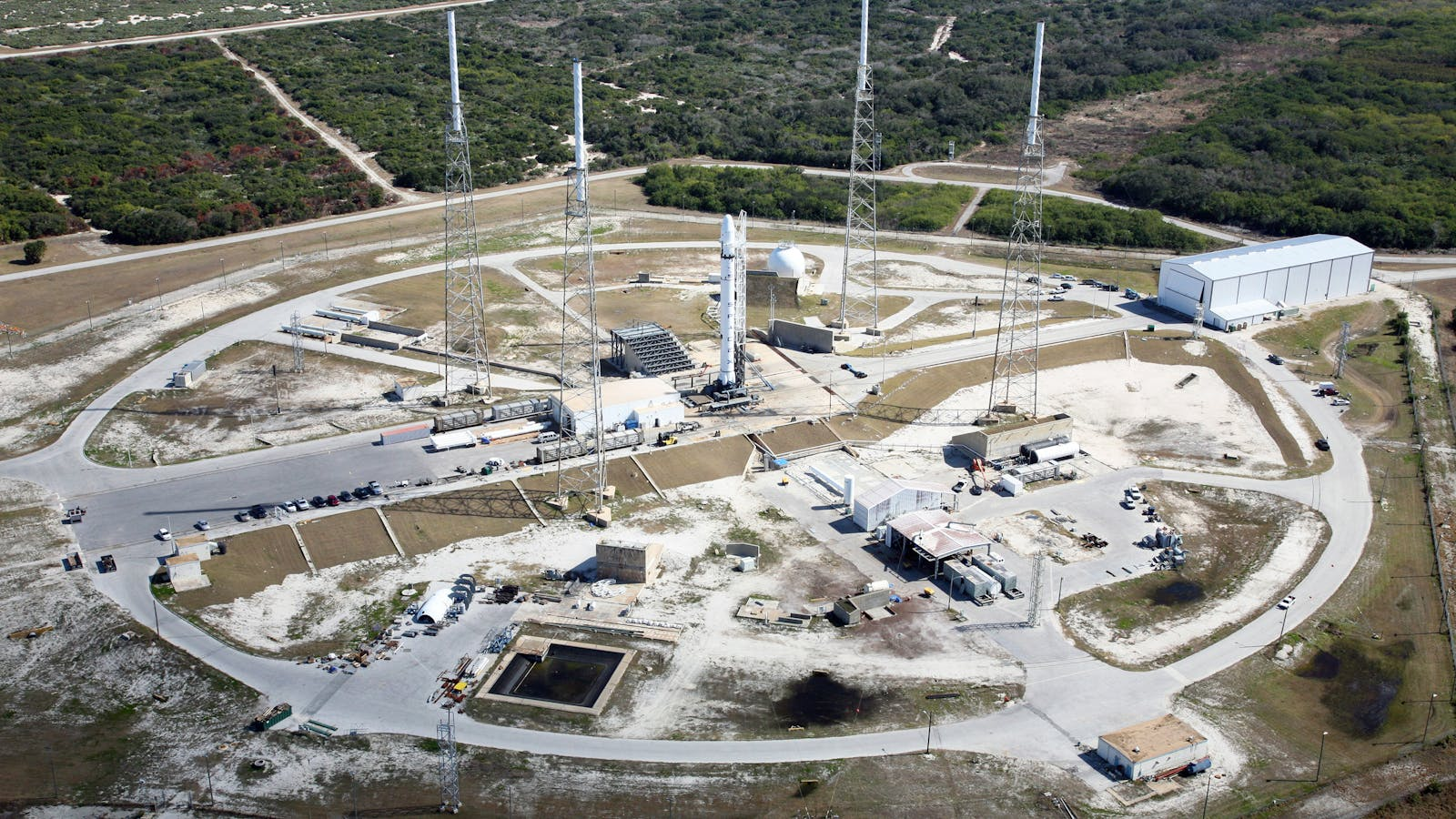
SpaceX’s private market valuation before its IPO can be used as a reference, but it should not be treated as the same thing as a reasonable price after listing. Private valuations usually come from funding rounds, employee share secondary transfers, company-organized tender offers, or private market quotes. These transactions differ from the public market in terms of disclosure, participation requirements, liquidity, share rights, and pricing mechanisms. The real question is not simply whether a valuation number is high enough, but where that number comes from, how large the transaction is, whether it reflects an actual completed deal, and whether the IPO valuation can still be supported by public market demand, financial data, and corporate governance.
Key Takeaways
- Private market valuation is a price signal, not a post-listing tradable price.
- Secondary transfers, funding rounds, and tender offers reflect different valuation meanings.
- IPO pricing is tested again through the prospectus, roadshow, and market demand.
- SpaceX’s high valuation should be assessed against revenue, losses, cash flow, and governance.
- After a hot IPO lists, trading costs, order rules, and liquidity risk also matter.
Why Do Investors Pay Attention to SpaceX’s Private Market Valuation?
SpaceX’s private market valuation attracts attention because it provides one of the few observable price signals before a formal IPO. Since SpaceX has long remained private, ordinary investors cannot view continuous quotes the way they can with listed U.S. stocks. They can only infer market expectations through financing, buybacks, employee share sales, secondary market estimates, and reports from reputable media outlets. The key issue is that these signals can reflect market enthusiasm, but they cannot directly represent the price the public market is willing to pay.

The valuation discussion around SpaceX is no longer just about “how much the company is worth.” It now includes three layers: its leadership in commercial space, the commercialization of Starlink satellite internet, and the future narrative around space infrastructure and AI. As IPO expectations rise, the market naturally treats private market transaction prices as pre-listing anchors.
Based on public information, SpaceX has entered a stage closer to public market scrutiny. SpaceX’s S-1 registration filing can be found in the SEC system, while Reuters has reported that SpaceX selected Nasdaq as its listing venue and plans to use SPCX as its ticker. This means valuation discussions are gradually moving beyond private market internal quotes toward the prospectus, roadshow, underwriting allocation, and public trading price.
However, private valuation still has clear limitations. For example, a particular valuation may come from a small number of shares, may only involve institutional buyers, or may be affected by company approval, transfer restrictions, and share class differences. It can tell you that certain institutions or specific buyers are willing to accept a certain price under certain conditions, but it cannot tell you that all investors will accept that price after the company goes public.
| Valuation Source | Main Meaning | Reference Value | Main Limitation |
|---|---|---|---|
| Media-reported valuation | Reflects market attention and expectations | Useful for observing trends | Details may be incomplete |
| Funding round valuation | Company raises capital through new shares | Reflects fundraising ability | May include preferred rights |
| Secondary market quote | Trading interest between existing shareholders and buyers | Reflects partial supply and demand | Weak liquidity and wide spreads |
| Tender offer | Company-organized share liquidity window | Transaction terms are clearer | Participants and size are limited |
| IPO target valuation | Pre-listing public pricing reference | Closer to public market logic | Still affected by roadshow and market conditions |
You can think of SpaceX’s private market valuation as a thermometer. It shows the temperature of capital market expectations toward commercial space, satellite internet, and future growth narratives. But a thermometer is not a pricing machine. It cannot replace the IPO offering price, opening price, or continuous trading price after listing. The higher the valuation, the more likely the market has already priced in long-term expectations, making later financial data and public trading activity even more important for validation.
Summary: SpaceX’s private market valuation is worth watching, but it should not be interpreted in isolation. It is more like a pre-IPO expectation anchor, helping you understand institutional capital interest, employee liquidity, and shifts in market narratives. But it does not directly indicate a reasonable post-listing entry price. A more useful assessment must consider the valuation source, transaction size, share rights, disclosure level, and whether the public market is willing to support the valuation.
What Is the Difference Between Secondary Transfers, Funding Rounds, and Tender Offers?
Secondary transfers, funding rounds, and tender offers can all produce valuation figures for SpaceX, but they solve entirely different problems. A funding round means the company issues new shares to investors, and the money goes into the company. A secondary transfer means an existing shareholder sells shares to another buyer, and the money usually goes to the selling shareholder. A tender offer is often a company-organized limited liquidity arrangement, using a fixed price and eligibility rules to help employees or early shareholders sell part of their holdings.

A funding round valuation is closer to the company’s fundraising price. If SpaceX raises capital through primary financing, the funds paid by investors go into the company and may support Starship, Starlink, AI data centers, satellite deployment, or other long-term projects. Funding round valuations usually carry a strong signal because both the company and investors negotiate around future growth, capital needs, and share terms. But this does not mean the valuation equals the value of common shares, because funding round shares may come with liquidation preferences, anti-dilution protection, or other special rights.
A secondary transfer valuation is closer to the exit price for existing shareholders. Nasdaq Private Market’s explanation of private securities shows that SpaceX shares do not trade on a public exchange, and buying or selling private shares usually needs to be done through the company or a secondary trading platform. Participants are often accredited investors or institutions. In other words, secondary market pricing reflects the matching result between specific buyers and sellers in a low-liquidity environment. It is not a public quote that all investors can access.
A tender offer sits somewhere between the two. Reuters reported that SpaceX approved a secondary share sale arrangement under which new and existing investors, as well as the company itself, could buy up to $2.56 billion of shares from eligible shareholders at US$421 per share, implying a valuation of around US$800 billion. This price is more useful than ordinary market rumors because it includes a clear share price, size, and transaction structure. But it is still not the IPO offering price, nor is it a public market price.
| Comparison Dimension | Funding Round | Secondary Transfer | Tender Offer |
|---|---|---|---|
| Fund flow | Goes into the company | Goes to the selling shareholder | Usually goes to selling shareholders |
| Transaction parties | Company and new investors | Existing shareholders and buyers | Eligible participants under company organization |
| Main purpose | Financing expansion | Shareholder exit or liquidity | Liquidity for employees and early shareholders |
| Pricing method | Negotiated between company and investors | Matched between buyers and sellers | Set or organized by the company |
| Difficulty for ordinary investors | High | High | High |
| Reference value for IPO pricing | Medium to high | Medium | Medium to high, depending on terms |
Once you understand these three transaction types, you will see why any statement such as “SpaceX has reached a certain valuation” needs a follow-up question: where did that valuation come from? If it is from a funding round, it emphasizes the capital the company raised. If it is from a secondary transfer, it reflects how private shares were priced in a small number of transactions. If it is from a tender offer, it indicates that the company recognized a limited liquidity window. All three can generate valuations, but they are not interchangeable.
Summary: Secondary transfers, funding rounds, and tender offers all produce valuations, but they differ in fund flow, transaction parties, and pricing mechanisms. To judge whether SpaceX’s pre-IPO valuation is reliable, you should not only look at how many billions of dollars the valuation implies. You also need to know whether the transaction was actually completed, who the buyers were, whether the share rights were the same, whether the transaction size was meaningful, and whether the company participated in or approved the deal.
How Should You Understand SpaceX’s Private Valuation Rising From Hundreds of Billions to Its IPO Target Valuation?
The rapid rise in SpaceX’s private valuation suggests that the market has repriced its long-term growth narrative, but a jump in valuation does not mean the fundamentals have already caught up at the same pace. Each valuation number should be understood in its specific timeframe, transaction type, and disclosure context. The fact that private market buyers are willing to pay a higher price for scarce shares does not necessarily mean the public market will accept the same valuation multiple after the IPO.
There are several clear reasons behind SpaceX’s valuation increase. First, Starlink has moved from concept to scaled commercial operations. Satellite internet, direct-to-cell service, enterprise connectivity, and government services have expanded its revenue potential. Second, reusable rockets and high launch frequency give SpaceX a strong cost advantage across the commercial space value chain. Third, Starship, lunar missions, the Mars narrative, space AI, and orbital data centers allow the market to price in future opportunities earlier.
But the more distant the narrative, the more important it becomes to distinguish between verifiable business and long-term imagination. Reuters reported that SpaceX’s IPO filing pointed to a target valuation of around US$1.75 trillion, while also disclosing losses and Musk’s control rights, both of which investors must face. In other words, the pre-listing valuation includes not only the already scaled Starlink and launch services businesses, but also expectations around AI, deep-space exploration, and future space infrastructure that have not yet fully matured.
| Timeframe | Price or Valuation Signal | Source Type | How to Understand It |
|---|---|---|---|
| Early private financing stages | Tens of billions to hundreds of billions of dollars | Funding rounds and buybacks | Reflects company growth and scarcity |
| Around late 2025 | About US$800 billion | Secondary share sale arrangement | Reflects a pre-IPO liquidity window |
| After IPO expectations increased | Trillion-dollar-level discussion | Media and market expectations | Reflects public market imagination |
| After S-1 disclosure | Target valuation tested by the market | Prospectus and roadshow | Closer to offering pricing logic |
| After listing | Real-time market capitalization | Public market trading | Continuous price discovery begins |
When a valuation moves from the private market to the public market, a common shift occurs: the weight of the story declines, and the weight of the data increases. In the private market, buyers may be more willing to bet on long-term certainty and scarce assets. In the public market, investors will also compare revenue multiples, loss ratios, gross margins, capital expenditure, cash flow, and peer company valuations. The higher SpaceX’s valuation, the more important its revenue growth and profit improvement become.
Another detail also matters: Musk has denied claims that SpaceX was raising capital at an US$800 billion valuation, saying that SpaceX had been cash-flow positive for years and regularly conducted stock buybacks to provide liquidity for employees and investors. This shows that the same valuation number may be interpreted by the market as “fundraising,” while in practice it may be closer to a share buyback or secondary liquidity arrangement. When analyzing SpaceX valuation, the transaction structure matters more than the headline number.
Summary: The rapid rise in SpaceX’s private valuation shows that capital markets are willing to pay higher expected prices for commercial space, Starlink, reusable rockets, and future space infrastructure. But the jump in valuation is not a margin of safety by itself. The closer SpaceX gets to its IPO, the more investors should move from “story-driven” thinking to “data validation,” focusing on revenue quality, loss structure, cash flow, capital expenditure, governance arrangements, and public market liquidity.
Why Can’t Private Market Prices Be Treated as the Same as SpaceX IPO Pricing?
Private market prices cannot be treated as the same as SpaceX IPO pricing because the trading environments are completely different. Private market transactions usually have low trading frequency, fewer participants, restricted share transfers, and limited disclosure. An IPO requires registration documents, a prospectus, underwriters, roadshow price discovery, and public market allocation. Private prices can provide an anchor, but the IPO offering price and post-listing trading price are tested again by the public market.
Investor.gov defines an IPO as the first time a company sells shares to the public. The key point is not just that a company is going public. It also involves public disclosure, investor education, underwriting allocation, and price discovery after listing on an exchange. A small number of private market transactions do not face the same level of public pricing pressure.
Forge’s explanation of SpaceX private shares also shows this difference. Forge describes SpaceX as a private company, and its Forge Price is a derived price calculated for a private company to help users understand current valuation. It is not a continuous transaction price on a public exchange. Such an estimate has reference value, but it should not be treated as a price at which ordinary investors can definitely buy or sell.
There are at least six major differences between private prices and IPO pricing:
- Disclosure differs: Private markets rely on limited information, while IPOs require prospectuses and risk factor disclosures.
- Participants differ: Private transactions often involve institutions, accredited investors, or company-approved participants.
- Liquidity differs: Private shares do not trade continuously, while public market shares trade through continuous matching after listing.
- Share rights differ: Preferred shares, common shares, voting rights, and liquidation rights may vary.
- Lock-up arrangements differ: After listing, insiders may be restricted by lock-up periods.
- Market sentiment differs: A hot IPO’s first-day price may be driven by scarce allocation and retail enthusiasm.
Lock-up periods are another often-overlooked factor. Investor.gov’s explanation of lockup agreements notes that lock-up agreements restrict insiders and major shareholders from selling shares for a period after the IPO. For a highly watched company like SpaceX, with many early shareholders and potentially large employee holdings, selling pressure around lock-up expirations can also become an important variable affecting whether the valuation remains stable.
Another common misconception is to treat the IPO offering price as the same thing as a reasonable post-listing price. In reality, the offering price is formed by the company, underwriters, and institutional investor demand during the issuance process. The opening price is formed by buy and sell orders at the start of trading. The post-listing trading price is the price created through continuous public market transactions. A hot IPO may surge on the first day, or it may open high and then decline. Neither outcome can be explained by private valuation alone.
Summary: Private market prices can help you understand SpaceX’s pre-IPO valuation anchor, but they cannot be treated as the same as IPO pricing. Prices formed through funding rounds, secondary transfers, and tender offers are affected by participation requirements, share rights, transaction size, and liquidity constraints. After public listing, the market will reprice SpaceX based on the prospectus, offering price, opening supply and demand, trading volume, lock-up periods, and later financial reports.
How Can Ordinary Investors Judge Whether SpaceX’s Pre-IPO Valuation Is Reliable?
To judge whether SpaceX’s pre-IPO valuation is reliable, the key is not whether the number looks impressive, but whether it has a clear source, an actual transaction behind it, meaningful scale, explainable financial support, and an acceptable governance structure. For ordinary investors, the most practical approach is to build a verification framework: check the source first, then the transaction structure, then the fundamentals, and finally whether public market liquidity can support the valuation after listing.
First, look at the information source. The priority should be SEC filings, the official prospectus, company announcements, reputable media, and secondary market platform estimates. Social media screenshots or forum rumors should rank last. A highly watched company like SpaceX can easily generate exaggerated headlines. If a valuation number does not specify transaction type, price, size, and participants, it should only be treated as low-weight information.
Second, look at whether the transaction was real. Actual completed transactions matter more than quotes, and large transactions are more useful than tiny transactions. Company-organized tender offers are usually easier to analyze than scattered platform quotes. When Reuters reported SpaceX’s secondary share sale, it provided the price, size, and transaction parties. This type of information is more useful than a simple rumor that the company has reached a certain valuation.
Third, check whether the valuation matches the financials. At a minimum, you should look at revenue growth, gross margin, net losses, operating cash flow, capital expenditure, debt pressure, business segment contribution, and planned use of proceeds. SpaceX has a powerful long-term space economy narrative, but the public market will not only look at the story. It will also examine whether the revenue multiple is too high, whether losses are controllable, and whether cash burn can be covered by growth.
Fourth, look at corporate governance. Reuters reported that SpaceX’s filing showed Musk would still retain strong control, while the company’s governance structure also drew attention from some institutional investors. Danish pension fund Akademikerpension excluded SpaceX from its portfolio before the IPO due to governance structure and valuation concerns. For ordinary investors, super-voting rights, board independence, and major shareholder control all affect long-term shareholder rights.
| Evaluation Dimension | Stronger Signal | Risk Signal |
|---|---|---|
| Information source | SEC filings, prospectus, reputable media | Social screenshots, unsourced quotes |
| Transaction type | Clear funding round or tender offer | No transaction structure disclosed |
| Transaction size | Meaningful amount and clear buyers | Small share volume, unclear quote |
| Financial foundation | Revenue growth and improving cash flow | Wider losses with unclear path |
| Share rights | Clear class and voting rights | Vague rights differences |
| Governance structure | Shareholder rights are understandable | Excessively concentrated control |
| Public liquidity | Sufficient float | Very low tradable share ratio |
If you are watching trading opportunities after a hot IPO lists, valuation is not the only thing that matters. Actual trading costs also matter. U.S. stock trading costs usually include more than commissions; they may also include platform fees, external institutional fees, trading activity fees, settlement fees, and other charges. Taking Biya U.S. stock trading fees as an example, Biya charges US$0 commission for U.S. stock trading, while platform fees, external institutional fees, and other charges are subject to the fee center and the order page. For fractional orders of less than one share, the fee rules should also follow the actual order page. Hot IPOs may experience large price swings in the early trading stage, so you should fully understand order types, fee structures, and risks before trading.
Summary: Ordinary investors should separate “whether a SpaceX valuation has been reported” from “whether that valuation should be accepted.” A reliable valuation should have a clear source, real transaction evidence, meaningful scale, clear share rights, verifiable financial data, and an understandable governance structure. If a valuation only comes from vague rumors or relies entirely on distant future narratives, it should carry less weight in decision-making.
What Variables Should Investors Watch After SpaceX IPO Pricing Is Finalized?
After SpaceX IPO pricing is finalized, the role of private market valuation will decline, while public market data will become more important. You should look not only at the offering price, but also at the opening price, first-day trading volume, free float ratio, lock-up arrangements, index inclusion expectations, later earnings validation, and trading costs. An IPO is not the end of the valuation discussion; it is the point where real price discovery begins.
The offering price, opening price, and post-listing trading price may differ significantly. The offering price is determined by the company, underwriters, and institutional demand. The opening price is formed by the matching of buy and sell orders on the first trading day. The post-listing price is continuously affected by trading volume, investor sentiment, financial reports, and broader market conditions. In hot IPOs, scarcity during allocation and amplified volatility after opening are common. If ordinary investors only refer to private valuation, they may overlook short-term supply and demand shocks.
Index inclusion expectations may also affect post-listing fund flows. Reuters reported that FTSE Russell believed SpaceX could qualify for fast-track inclusion in some indexes and estimated its investable market capitalization at about US$70 billion. At the same time, the assessment was based on current filings and limited public information, meaning it could still change as documents are updated. For investors, this type of information suggests that passive funds may become one source of post-listing demand, but it does not guarantee that the stock price will rise.
After listing, several variables deserve close attention:
- Whether the IPO offering price is significantly higher than the last private valuation anchor;
- Whether the opening price deviates sharply from the offering price, indicating excessive demand;
- Whether first-day trading volume is sufficient for price discovery;
- Whether the free float is low, potentially amplifying volatility;
- Whether lock-up expirations could create potential selling pressure;
- Whether the first earnings report validates the growth story in the prospectus;
- Whether order types, execution rules, and fee details are clear;
- Whether services are available based on location, identity verification, and platform rules.
If SpaceX completes its public listing, investors who meet the applicable service conditions can use U.S. stock quotes to monitor public market prices and basic information, and can check order rules in trading environments that support the relevant market. Biya is a global multi-asset trading wallet that supports U.S. stocks, Hong Kong stocks, and cryptocurrency trading, as well as the exchange of USDT into major fiat currencies such as USD or HKD. However, whether specific services are available depends on the user’s location, identity verification results, platform rules, and applicable laws and regulations.
For a highly watched IPO like SpaceX, the more important question before trading is not simply whether you can buy it, but at what price, with what volatility, what fees, and what governance structure you are accepting. If your region meets the applicable service conditions, you can learn more about account access, market data, trading, and fee structures through Biya. The information is only intended to help understand public market rules and fee structures, and does not constitute investment advice. Any trading decision should be made based on personal risk tolerance, the platform’s order confirmation page, and local regulatory requirements.
Summary: After SpaceX IPO pricing is finalized, private valuation becomes a historical reference, while public market price discovery becomes the real factor shaping the investment experience. You need to watch the offering price, opening price, trading volume, float, lock-up periods, index flows, earnings delivery, and trading costs together. The core risk of a hot IPO is not the absence of a story, but whether the story has already been fully priced into a high valuation and whether later data can continue to support market expectations.
FAQ
Can SpaceX’s Private Market Valuation Represent a Reasonable IPO Price?
No, it cannot directly represent a reasonable IPO price. SpaceX’s private market valuation can serve as a pre-listing price anchor, but the IPO price must still be tested through prospectus disclosure, roadshow demand, underwriting allocation, and public market pricing. Differences in transaction size, share class, liquidity, and participation thresholds can all lead to a gap between private valuation and listing price.
Can Ordinary Investors Buy SpaceX Shares on the Secondary Market?
In most cases, direct participation is difficult. SpaceX private shares are non-public securities, and secondary transactions are usually limited to accredited investors, institutions, or existing shareholders. They may also require company approval. Ordinary investors should rely on official listing arrangements, platform rules, identity verification results, and local regulatory requirements.
Why Is SpaceX’s Tender Offer Valuation Important?
A tender offer valuation is important because it usually includes a clear price, transaction size, and participation requirements, making it more useful than ordinary market rumors. However, it is still a limited-liquidity transaction. It does not mean all investors can buy or sell at the same price, nor does it equal the final IPO offering price.
Does a Higher SpaceX Pre-IPO Valuation Mean Higher Risk?
A higher valuation usually means market expectations are more fully priced in, leaving less room for error. To assess risk, investors need to look at revenue growth, losses, capital expenditure, cash flow, governance structure, and post-listing liquidity, rather than relying only on the company’s brand recognition or short-term market attention.
Does a First-Day Jump After the SpaceX IPO Mean the IPO Was Cheaply Priced?
Not necessarily. A first-day jump may be driven by scarce allocation, a small float, or market sentiment, and does not necessarily mean the long-term valuation is cheap. A more reliable assessment should also consider later trading volume, earnings delivery, lock-up arrangements, index fund flows, and the broader market environment.
*This article is provided for general information purposes and does not constitute legal, tax or other professional advice from BiyaPay or its subsidiaries and its affiliates, and it is not intended as a substitute for obtaining advice from a financial advisor or any other professional.
We make no representations, warranties or warranties, express or implied, as to the accuracy, completeness or timeliness of the contents of this publication.
Related Blogs of

Where Can You Find SpaceX IPO Documents? A Guide to SEC Disclosures, the S-1 Prospectus, and Listing Announcements


Is Zero-Commission US Stock Trading Really Fee-Free? Know These Fee Categories First


Are the SpaceX IPO and Starlink IPO the Same Thing? The Difference Between a Parent Company Listing and a Business Spin-Off


What Does the SpaceX IPO Mean for Ordinary Investors? Understand the Listing Process and Risk Boundaries First
Choose Country or Region to Read Local Blog
 Australia
 Austria
 Belgium
 Canada
 Cyprus
 Czech Republic
 Denmark
 Estonia
 Finland
 France
 Germany
 Greece
 Hong Kong
 India
India Indonesia
 Ireland
 Italy
Italy Japan
Japan Latvia
 Lithuania
 Luxembourg
 Malaysia
 Malta
Malta Morocco
 Nepal
Nepal Netherlands
 New Zealand
 Norway
 Pakistan
 Philippines
 Poland
 Portugal
 Romania
 Singapore
 Slovakia
 Slovenia
 South Africa
 South Korea
 Spain
Spain Sweden
 Thailand
 The United States
 Turkey
 United Arab Emirates
 United Kingdom
 Vietnam
Contact Us




BIYA GLOBAL LLC is registered with the Financial Crimes Enforcement Network (FinCEN), an agency under the U.S. Department of the Treasury, as a Money Services Business (MSB), with registration number 31000218637349, and regulated by the Financial Crimes Enforcement Network (FinCEN).
BIYA GLOBAL LIMITED is a registered Financial Service Provider (FSP) in New Zealand, with registration number FSP1007221, and is also a registered member of the Financial Services Complaints Limited (FSCL), an independent dispute resolution scheme in New Zealand.