Why Did SpaceX Choose to List on Nasdaq? A Breakdown of U.S. Stock Exchanges and the Listing Logic of Tech Companies




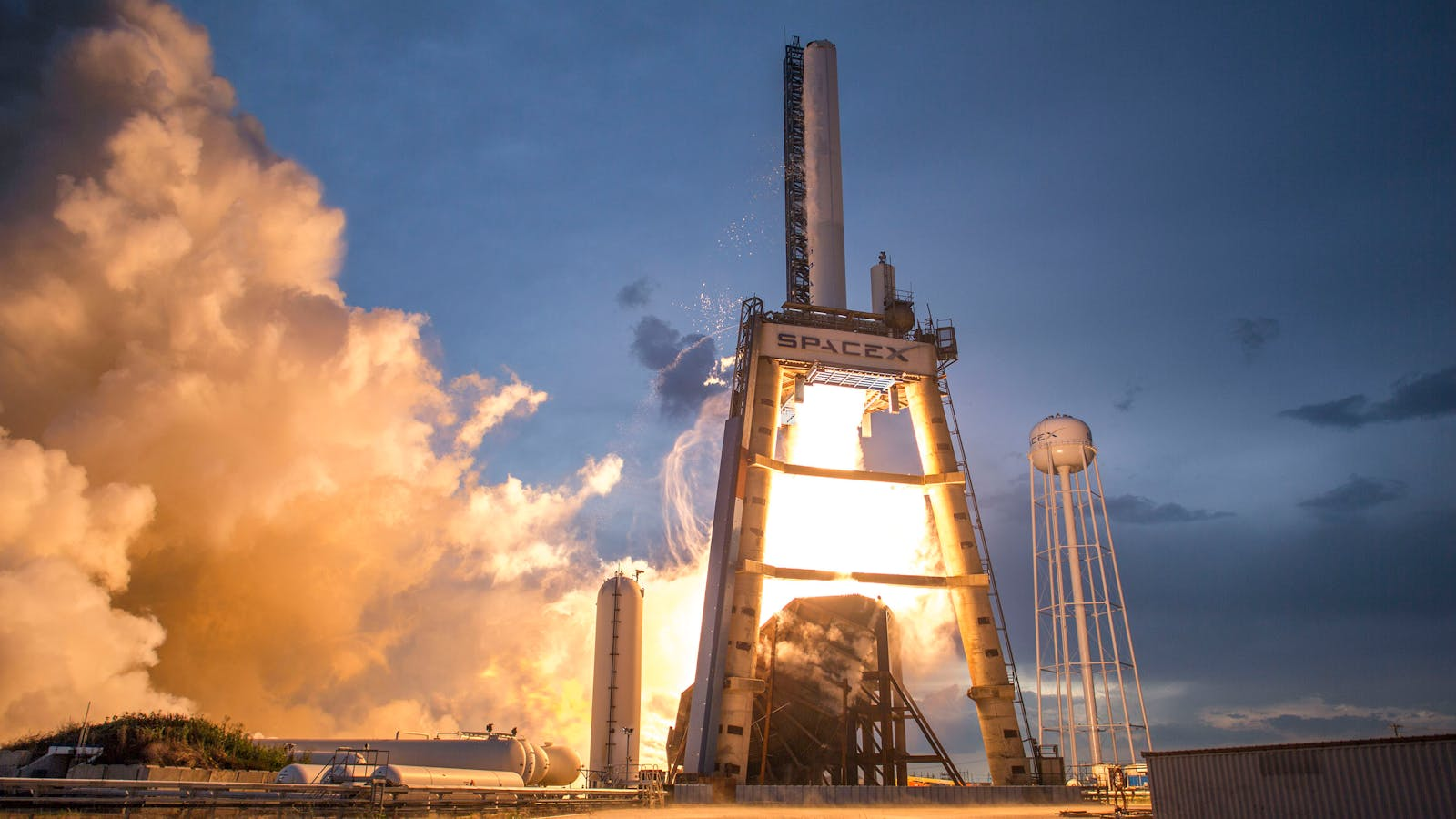
SpaceX’s choice of Nasdaq is not simply because Nasdaq is often seen as a home for technology companies. Exchange selection can also affect listing narratives, first-day trading execution, institutional coverage, index expectations, and long-term market perception. When you follow the SpaceX IPO, you should not only look at “which exchange it lists on.” You also need to understand whether pricing has been completed, when trading officially begins, whether the IPO price and opening price are the same, and how trading fees and order rules may affect your real cost.
Key Takeaways
- SpaceX has applied to list on Nasdaq, but trading still depends on later announcements.
- Nasdaq’s technology image helps support SpaceX’s growth narrative.
- Exchange selection involves liquidity, opening mechanisms, indexes, and listing services.
- A Nasdaq listing does not mean automatic inclusion in the Nasdaq-100 Index.
- Ordinary investors should focus more on price volatility, order types, and trading costs.
Has SpaceX Confirmed Its Nasdaq Listing?

SpaceX has publicly entered the IPO filing stage, and S-1 filing records have appeared in the U.S. Securities and Exchange Commission’s SEC EDGAR system. The filing shows that the company has applied to list its Class A common stock on Nasdaq and Nasdaq Texas under the proposed ticker symbol SPCX. However, “applying to list” does not mean the stock is already tradable. The offering price, number of shares offered, final listing date, and first-day opening price still depend on later amended filings, underwriting arrangements, and exchange information.
You can divide the SpaceX IPO into four stages: first, registration documents are made public; second, the company applies to list on an exchange; third, roadshow and pricing take place; finally, the stock opens for trading in the secondary market. Many readers see “applying to list on Nasdaq” and assume the stock can already be bought and sold in the public market. But before official trading begins, ordinary investors usually cannot simply enter the ticker symbol and place an order the way they would with Tesla or Nvidia.
| Stage | Meaning | What Ordinary Investors Should Watch |
|---|---|---|
| S-1 filing | The company discloses IPO registration documents | Business, financials, risk factors |
| Listing application | The company chooses a listing exchange | Nasdaq, ticker symbol, listing category |
| Roadshow and pricing | The company and underwriters confirm offering arrangements | IPO price range, offering size |
| Official trading | The stock begins trading in the secondary market | Opening price, trading volume, volatility |
There is another point that is easy to confuse: early versions of an S-1 often leave the offering price, number of shares, and final listing date blank. Even if media reports provide an estimated timetable, it may still change because of market conditions, regulatory procedures, or underwriting arrangements. Nasdaq’s market activity information also notes that expected IPO dates are typically estimated based on company filings and are not official commitments; estimated price ranges are not the same as final IPO prices.
From an information-checking perspective, you should prioritize Form S-1, S-1/A amendments, Nasdaq IPO information, and company announcements, rather than relying only on social media screenshots. The value of an S-1 lies in its disclosure of the company’s business structure, risk factors, governance arrangements, use of proceeds, underwriting information, and key financial data. For a high-profile IPO like SpaceX, there will be a lot of information noise. The more popular the deal is, the more important it is to confirm which details are public and which are only estimates.
Summary: The discussion of SpaceX choosing Nasdaq can be based on the public S-1 and Nasdaq listing application information, but it should not be written as if “SpaceX stock is already available to buy.” For ordinary readers, the most important point is to distinguish between applying to list, setting the IPO price, officially listing, and trading in the secondary market. As long as the offering price, listing date, and opening trade have not been finalized, any timetable or valuation claim should remain clearly framed as “expected,” “proposed,” or “subject to later announcements.”
What Is the Difference Between Nasdaq and NYSE?

Nasdaq and NYSE are both major U.S. stock exchanges, but they differ significantly in market image, trading mechanisms, listed company composition, and investor perception. Nasdaq is more commonly associated with technology, internet, semiconductor, AI, and growth companies. NYSE is more easily associated with blue chips, traditional industries, and large mature corporations. However, this is only a market impression, not a strict rule. Technology companies can list on NYSE, and traditional companies can list on Nasdaq.
Nasdaq is known for electronic trading, its market maker system, and a stronger technology-company ecosystem. NYSE has a longer history and has traditionally emphasized an auction market and designated market maker structure. For ordinary readers, the two should not be understood as a simple “good versus bad” comparison. They are better understood as differences in listing narrative and market ecosystem. A company like SpaceX naturally carries labels such as commercial space, satellite internet, AI infrastructure, and global connectivity, so it is easier to discuss within Nasdaq’s technology-growth context.
| Dimension | Nasdaq | NYSE |
|---|---|---|
| Market image | Technology, growth, innovation | Blue chips, maturity, large traditional companies |
| Common company types | Software, internet, semiconductors, AI, platform companies | Finance, energy, consumer, industrial giants |
| Investor perception | More growth-oriented and technology-driven | More stability-oriented and brand-driven |
| Exchange value | Technology ecosystem, index attention, electronic trading | Historical brand, institutional trust, blue-chip image |
Nasdaq also has different market tiers. According to the Nasdaq Initial Listing Guide, the Nasdaq Stock Market includes the Global Select Market, Global Market, and Capital Market. Companies must meet relevant financial, liquidity, and corporate governance requirements. Even when a company meets the stated standards, Nasdaq may still deny listing or impose additional conditions to protect investors and the public interest.
It is especially important to note that the listing exchange is not a certificate of company quality. Nasdaq includes great technology companies, but it also includes companies that have failed operationally, seen sharp stock declines, or even been delisted. NYSE includes stable blue chips, but also companies with strong cyclicality or financial pressure. An exchange provides public trading, ongoing disclosure, listing standards, and market organization. It does not guarantee investment returns.
When you see SpaceX choosing Nasdaq, you can understand it as a capital-market positioning decision: the company wants to be understood by investors as a technology infrastructure company, not merely a rocket manufacturer or government contractor. This positioning helps place Starlink, commercial space launches, satellite communications, AI computing power, and global network connectivity within the same narrative framework.
- Do not understand Nasdaq as an “exchange exclusively for technology companies.”
- Do not understand NYSE as an “exchange exclusively for traditional companies.”
- Do not treat listing venue as proof that a valuation is reasonable.
- Do not treat exchange review as a guarantee of investment returns.
Summary: The difference between Nasdaq and NYSE is not just about what their trading floors look like. It is about market positioning, trading mechanisms, company groups, and investor expectations. SpaceX’s choice of Nasdaq is more likely a way to match the capital-market narrative of a technology-growth company. For ordinary investors, an exchange can help you understand how a company wants to be priced by the market, but it cannot judge valuation for you or reduce the volatility risk of an IPO.
Why Is SpaceX a Good Fit for Nasdaq?

SpaceX fits Nasdaq because it is no longer just a “rocket launch company.” If you only understand SpaceX as an aerospace manufacturer, you may naturally compare it with Boeing, Lockheed Martin, or traditional defense contractors. But if you look at Starlink, reusable rockets, satellite internet, global communications networks, and AI infrastructure together, it is closer to a hard-tech platform company. Nasdaq’s investor ecosystem is more familiar with this type of growth narrative.
SpaceX’s core appeal comes from several layers: reusable rocket technology helps reduce launch costs; Starlink turns space capabilities into an internet service; commercial space launches create infrastructure attributes; and government and defense contracts provide part of the demand base. As the S-1 becomes public, the market begins to understand its revenue structure, cost structure, capital expenditure, and long-term vision in more detail. Reuters’ coverage of SpaceX’s IPO filing also noted that market attention includes its listing timetable, business scale, losses, and Elon Musk’s control structure.
| SpaceX Business Feature | Corresponding Nasdaq Narrative |
|---|---|
| Reusable rockets | Hard-tech manufacturing and cost efficiency |
| Starlink satellite internet | Platform subscription service and global connectivity |
| Launch services | Commercial space infrastructure |
| Government and defense contracts | High-barrier customers and long-term demand |
| AI and data infrastructure potential | Next-generation technology infrastructure |
| High R&D spending | Long-cycle growth company |
From a capital-market communications perspective, Nasdaq’s advantage is that investors are already used to building valuation frameworks for high-growth technology companies. They do not only look at current profits, but also revenue growth, user scale, platform network effects, long-term market size, and technical barriers. This framework does not mean SpaceX must be overvalued or undervalued. It simply means Nasdaq can more easily support the positioning of a “future infrastructure company.”
SpaceX is also special because it compresses multiple high-barrier industries into one company. Aerospace manufacturing requires engineering capability. Satellite communications require network deployment. Global services require regulation and ground infrastructure. AI and computing-power narratives may bring new capital expenditure and commercialization challenges. Therefore, what Nasdaq can provide is not just a trading venue, but also a company label that global technology investors can more easily understand.
However, the stronger the narrative, the greater the valuation disagreement tends to be. Commercial space and satellite internet do have long-term potential, but rocket launches, satellite deployment, R&D investment, and global operations all require significant capital expenditure. When you understand why SpaceX fits Nasdaq, you should also recognize that high growth, high valuation, and high uncertainty often exist at the same time.
Summary: The logic behind SpaceX choosing Nasdaq comes from the match between its business model and market narrative. It is not a traditional aerospace company that only sells rocket launch services. It is a growth company that combines rockets, satellites, internet connectivity, and technology infrastructure into one story. Nasdaq’s technology ecosystem helps amplify this positioning, but it does not eliminate risk. Investors still need to return to revenue, profit, cash flow, capital expenditure, and valuation.
What Commercial Factors Are Behind Exchange Selection?
SpaceX’s choice of Nasdaq is not only about brand preference. It also involves first-day trading execution, market-maker liquidity, opening mechanisms, index opportunities, listing fees, corporate governance, and investor relations services. The exchange choice for a large IPO is usually evaluated by the company, underwriters, and the exchange together. It is unlikely to be decided simply because “technology companies should list on Nasdaq.” For a globally watched IPO like SpaceX, whether the first-day opening can handle a large number of orders in a stable, transparent, and efficient way matters greatly.
Nasdaq’s IPO execution process includes IPO Offering Price, Display-Only Period, Pre-Launch, IPO Opens, and Continuous Trading. In other words, an IPO does not simply open freely the moment the market opens. The offering price is first determined based on orders and demand, and the first public trade is then organized through a display period and pre-launch stage. Nasdaq also explains that during the display period, orders are accepted for at least 10 minutes, orders can be canceled, and the stabilization agent and execution team decide when trading should begin.
| Exchange Factor | Meaning for a Large IPO |
|---|---|
| First-day opening mechanism | Determines how the first public trade is formed |
| Market-maker depth | Affects order absorption and quote stability |
| Order transparency | Helps underwriters and the market assess supply and demand |
| Technology-company ecosystem | Improves investor understanding |
| Index opportunities | May bring long-term passive-fund attention |
| Listing services | Supports disclosure, IR, and ongoing listing management |
Many people focus on Nasdaq for another reason: the Nasdaq-100. According to Nasdaq’s market activity information, the Nasdaq-100 includes the 100 largest non-financial companies listed on Nasdaq, while the Nasdaq Composite covers a broader set of common stocks listed on Nasdaq. Listing on Nasdaq is only one possible prerequisite for entering the Nasdaq-100. It does not mean automatic index inclusion.
Index expectations are important for large IPOs because inclusion in a major index may attract continuing attention from ETFs, index funds, and institutional investors. Reuters’ coverage of FTSE Russell’s fast-entry rules also shows that very large IPOs may enter some global index systems more quickly. But this still depends on final listing size, free-float market capitalization, rule thresholds, and formal index-provider decisions.
Exchange fees and ongoing services also matter. Listed companies not only pay fees at the IPO stage; they also face annual listing fees, ongoing disclosure costs, compliance requirements, and investor relations management. For a company as large and high-profile as SpaceX, the listing venue can affect the efficiency of communication with institutional investors, analysts, index providers, and the media.
A key misunderstanding should be avoided: exchange selection is not the full answer to company value. Nasdaq can help SpaceX enter the technology-growth stock narrative more naturally and can provide mature IPO execution mechanisms and market infrastructure. But the final stock price will still be determined by fundamentals, market conditions, offering valuation, free-float ratio, and investor risk appetite.
Summary: Exchange selection is a comprehensive business decision involving liquidity, opening mechanisms, index ecosystems, listing fees, corporate governance, and brand positioning. SpaceX may choose Nasdaq because Nasdaq can better support its technology infrastructure narrative and serve the execution needs of a very large IPO. But the exchange itself cannot determine SpaceX’s post-listing performance. Investors should still focus on valuation, liquidity, fundamentals, and trading rules.
What Does SpaceX’s Nasdaq Listing Mean for Ordinary Investors?
For ordinary investors, the biggest meaning of SpaceX choosing Nasdaq is not that the stock can be bought without thinking. Instead, it means you need to understand IPO trading in a more structured way. The IPO price, opening price, first-day trading price, and long-term trading price may be four different concepts. High-profile technology IPOs often come with intense attention, high trading volume, and high volatility in the early stage. What truly affects trading results is often not the exchange name, but the price, order type, and cost at which you enter the market.
PitchBook’s explanation of the IPO process notes that an IPO usually goes through preparation, registration filing, due diligence, marketing, and pricing. The point ordinary investors often overlook is that the IPO price is not the same as the opening price. The IPO price is determined by the company and underwriters based on institutional demand and market conditions. The opening price is formed by buy and sell orders during Nasdaq’s opening process. First-day trading prices are further affected by sentiment, liquidity, and short-term capital flows.
| Price Type | How It Is Formed | What Investors Should Note |
|---|---|---|
| IPO price | Set by the company and underwriters | Ordinary investors may not be able to buy at this price |
| Opening price | First public trade in the market | May be significantly above or below the IPO price |
| First-day trading price | Formed during continuous trading | May see sharp volatility |
| Closing price | End-of-day closing price | Does not represent long-term fair value |
The risk of a popular IPO often lies not in “whether you can buy it,” but in “what price you buy it at.” If market sentiment is very strong when SpaceX lists, the opening price may already reflect a large amount of optimism. If the listing valuation is too high, and later business growth, profit improvement, or capital expenditure falls short of market expectations, the stock price may also experience a large correction. This content only introduces public-market information, trading rules, and fee structures. It does not constitute investment advice.
If you are interested in trading opportunities after a popular IPO goes public, you also need to consider real trading costs in addition to stock-price volatility. U.S. stock trading costs usually do not only include commissions. They may also include platform fees, external institution fees, trading activity fees, clearing fees, and fractional-share order fees. Taking Biya U.S. stock trading fees as an example, Biya charges US$0 commission for U.S. stock trading, a platform fee of US$0.005 per share with a minimum of US$0.99 per order and a maximum of 1% of trade value, and external institution fees plus trading activity fees of US$0.00396 per share. For fractional orders with executed share quantity under 1 share, only a platform fee of 1% of the total transaction amount is charged, capped at US$1. Platform fees, external institution fees, and other costs should still be based on the fee center and order page shown at the time of trading.
| Cost Item | Why It Matters |
|---|---|
| Trading commission | Affects the base cost of each order |
| Platform fee | Small orders may feel the cost ratio more clearly |
| External institution fees | May appear in account statements |
| Fractional-share fees | Rules may differ for orders under 1 share |
| Order type | Market orders and limit orders create different execution experiences |
| Trading session | Pre-market and after-hours liquidity may be weaker |
If the relevant services are available in your region and you meet the applicable conditions, you can use Biya to learn about U.S. stock trading, Hong Kong stock trading, crypto trading, and multi-asset wallet features. You can also check U.S. stock information before trading, then decide whether to follow SpaceX or other Nasdaq technology stocks based on your own risk tolerance. Service availability depends on your location, identity verification result, platform rules, and applicable laws and regulations.
Summary: After SpaceX chooses Nasdaq, ordinary investors should pay closer attention to IPO pricing, the first-day opening mechanism, order types, trading fees, and volatility risk. The IPO price is not the same as the opening price. Being able to trade does not mean a stock is suitable to buy. A US$0 commission does not mean there is no trading cost at all. Popular IPOs may see significant price volatility in the early stage. Before trading, you should fully understand order types, fee structures, and risks, and rely on platform rules, account statements, and local regulatory requirements.
How Can You Use SpaceX to Understand U.S. Tech IPOs?
The value of understanding why SpaceX chose Nasdaq is not limited to SpaceX itself. It can also help you judge why future technology companies such as OpenAI, Stripe, Databricks, or Anthropic may choose a certain exchange if they go public. The correct order should be: first check official filings, then review exchange rules, then understand the company narrative, and only then discuss trading opportunities. If you start with market hype and social media sentiment, it becomes easy to mistake listing news for an investment conclusion.
You can use a simple framework to evaluate technology IPOs:
| Question to Ask | What You Should Check |
|---|---|
| Why is the company going public? | Financing needs, employee equity liquidity, market window |
| Why choose Nasdaq? | Technology brand, index ecosystem, liquidity, listing services |
| Is the valuation reasonable? | Revenue, profit, cash flow, growth rate, capital expenditure |
| Is there an index expectation? | Nasdaq-100, Russell, FTSE, and other rules |
| How can ordinary investors participate? | Account access, order types, trading sessions |
| Are costs clear? | Commissions, platform fees, external institution fees, fractional-share rules |
For a company like SpaceX, the S-1 is the most important primary source. You should focus on business descriptions, risk factors, management discussion, financial statements, ownership structure, voting rights, underwriting information, and use of proceeds. Media analysis can help you understand the key issues, but it cannot replace official filings. This is especially true for valuation, listing timetable, index inclusion, and first-day performance. You must distinguish between “written in company filings,” “reported by the media based on market information,” and “investor speculation.”
Exchange selection is the second layer of understanding. Nasdaq’s technology ecosystem can amplify SpaceX’s growth narrative, but you still need to ask: Can the company’s revenue growth cover high R&D and capital expenditure? Is Starlink’s user growth sustainable? Does the launch business have stable margins? Will AI and global connectivity networks bring new revenue, or will they first bring higher spending? These questions are more important than simply saying “Nasdaq sounds more technological.”
If you already meet the conditions for U.S. stock trading and the relevant services are available in your region, Biya Web Trading can be one entry point for learning about U.S. stock trading, fee structures, and order experience. Biya is a global multi-asset trading wallet that supports converting USDT into major fiat currencies such as U.S. dollars or Hong Kong dollars, and also supports U.S. stocks, Hong Kong stocks, and crypto trading. For readers following Nasdaq technology stocks and popular IPOs, understanding trading fees, order confirmation pages, and account statements is more practical than focusing only on a stock ticker.
It is important to note that no platform should be understood as a tool for bypassing regulation. Whether U.S. stock, Hong Kong stock, or crypto services are available depends on user location, identity verification results, platform rules, and applicable laws and regulations. Short-term volatility in popular IPOs can be significant, especially during the first-day opening, pre-market and after-hours sessions, and periods of concentrated market attention. Limit orders, market orders, fractional-share orders, and trading-session differences can all affect actual execution.
Summary: The SpaceX case offers a complete framework for understanding technology IPOs: first confirm official filings, then understand exchange selection, then analyze the company narrative and fundamentals, and finally evaluate personal trading conditions, fee structures, and risk tolerance. Nasdaq can help SpaceX enter an investor context more familiar with technology-growth stocks, but investment judgment still needs to return to valuation, cash flow, liquidity, trading costs, and compliance boundaries. For ordinary investors, understanding the rules is always more important than chasing hype.
FAQ
Does SpaceX Choosing Nasdaq Mean It Will Definitely Join the Nasdaq-100?
No. SpaceX choosing Nasdaq is only one possible precondition for inclusion in the Nasdaq-100. Whether it is included still depends on market capitalization, liquidity, industry classification, listing history, and index rules. Index providers evaluate companies according to their own rules, so the listing venue should not be treated as an index inclusion promise.
Can Ordinary Investors Trade SPCX Before SpaceX Officially Lists?
Usually not in the public secondary market. Ordinary investors generally need to wait until SpaceX officially lists and begins trading before placing orders through a platform or broker that supports U.S. stock trading. Pre-IPO private transactions or secondary-market deals often involve qualification, allocation, and compliance restrictions.
What Is the Core Difference Between Nasdaq and NYSE for Tech Listings?
The core differences are market image, trading mechanisms, listing services, fee structures, and index ecosystems. Nasdaq is more commonly associated with technology-growth narratives, while NYSE has a stronger traditional blue-chip image. But neither exchange guarantees the future performance of a listed company.
Why Can the SpaceX IPO Price and Opening Price Be Different?
The IPO price is determined by the company and underwriters during the pricing process, while the opening price is formed by public-market buy and sell orders. A popular IPO may open higher because of concentrated demand, but it may also trade below expectations because of valuation concerns, market conditions, or liquidity changes.
How Should Ordinary Investors Estimate SpaceX IPO Trading Costs?
Investors should look at stock price, order type, commission, platform fee, external institution fees, and fractional-share order rules together. Different platforms use different fee structures, so final costs should be based on the order confirmation page, fee center, and account statement, not just a single “commission” figure.
What SpaceX IPO Information Can Be Found in an SEC S-1 Filing?
An S-1 usually includes the company’s business, financial data, risk factors, ownership structure, underwriting arrangements, and use of proceeds. However, early versions may leave the offering price, number of shares, and final listing date blank, so investors need to continue tracking S-1/A amendments.
*This article is provided for general information purposes and does not constitute legal, tax or other professional advice from BiyaPay or its subsidiaries and its affiliates, and it is not intended as a substitute for obtaining advice from a financial advisor or any other professional.
We make no representations, warranties or warranties, express or implied, as to the accuracy, completeness or timeliness of the contents of this publication.
Related Blogs of

Are SpaceX’s Private Market Valuations Before Its IPO Reliable? The Difference Between Secondary Transfers, Funding Rounds, and Public Listing Pricing


How Should You Read SpaceX’s Financial Reports After Its IPO? Backlog, Capital Expenditure, and Free Cash Flow Are Key


How Big Could the SpaceX IPO Be? Why It May Become a Super IPO


Where Can You Find SpaceX IPO Documents? A Guide to SEC Disclosures, the S-1 Prospectus, and Listing Announcements

Choose Country or Region to Read Local Blog
 Australia
 Austria
 Belgium
 Canada
 Cyprus
 Czech Republic
 Denmark
 Estonia
 Finland
 France
 Germany
 Greece
 Hong Kong
 India
India Indonesia
 Ireland
 Italy
Italy Japan
Japan Latvia
 Lithuania
 Luxembourg
 Malaysia
 Malta
Malta Morocco
 Nepal
Nepal Netherlands
 New Zealand
 Norway
 Pakistan
 Philippines
 Poland
 Portugal
 Romania
 Singapore
 Slovakia
 Slovenia
 South Africa
 South Korea
 Spain
Spain Sweden
 Thailand
 The United States
 Turkey
 United Arab Emirates
 United Kingdom
 Vietnam
Contact Us




BIYA GLOBAL LLC is registered with the Financial Crimes Enforcement Network (FinCEN), an agency under the U.S. Department of the Treasury, as a Money Services Business (MSB), with registration number 31000218637349, and regulated by the Financial Crimes Enforcement Network (FinCEN).
BIYA GLOBAL LIMITED is a registered Financial Service Provider (FSP) in New Zealand, with registration number FSP1007221, and is also a registered member of the Financial Services Complaints Limited (FSCL), an independent dispute resolution scheme in New Zealand.