- More
- Download
How Big Could the SpaceX IPO Be? Why It May Become a Super IPO




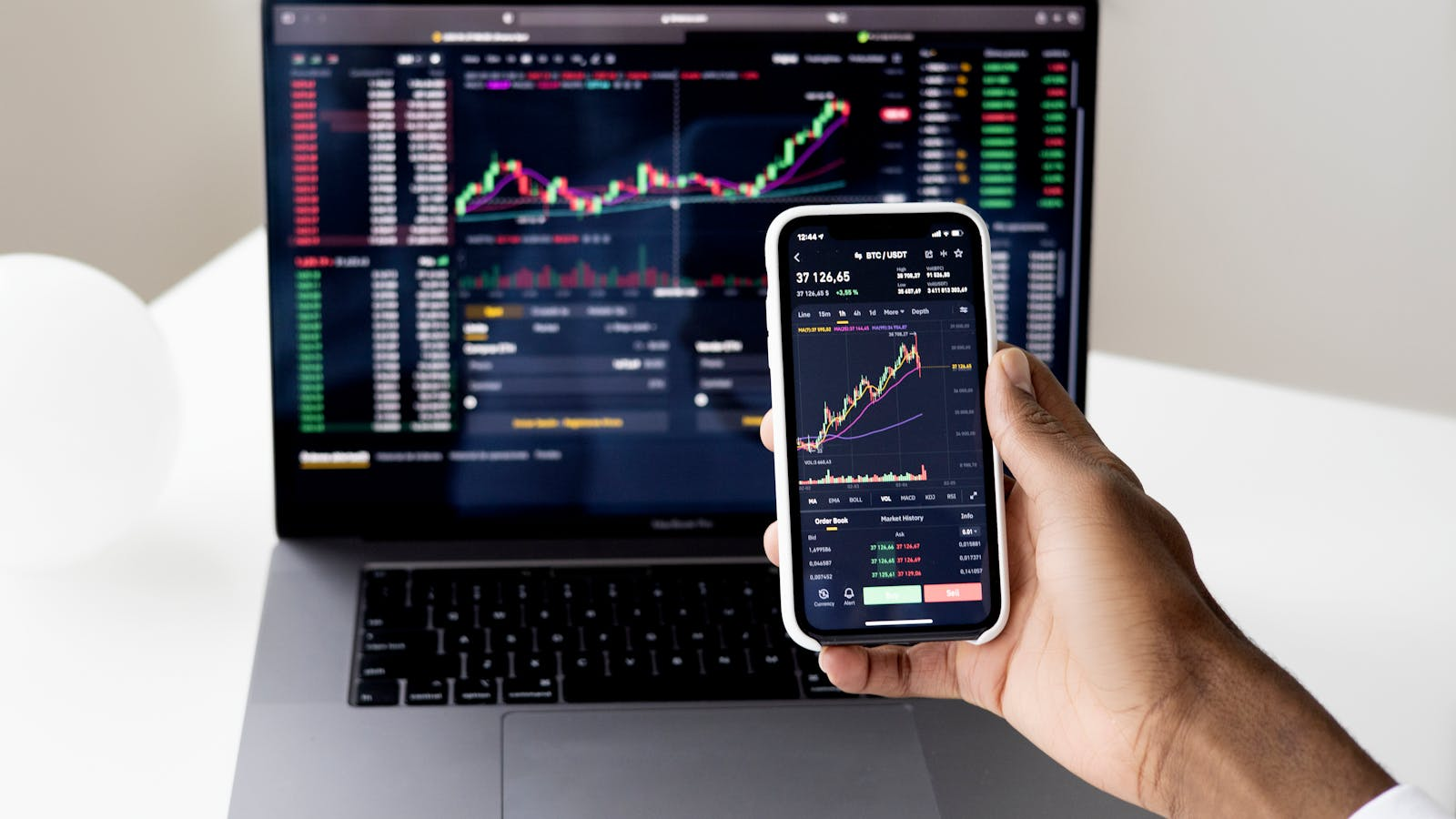
The SpaceX IPO is being viewed as a potential “super IPO” not only because of the company’s name recognition, but because its potential fundraising size, listing valuation, business narrative, and capital market impact may all reach historic levels. Market reports suggest that SpaceX could seek to raise as much as USD 75 billion, with a possible valuation of around USD 1.75 trillion. To understand the deal, you need to separate fundraising size, valuation, offering percentage, post-listing float, and final pricing. The final figures should still be based on later S-1 amendments, pricing announcements, and exchange information.
Key Takeaways
- The SpaceX IPO could rank among the largest IPOs in history.
- A super IPO is not judged only by fundraising size, but also valuation and float.
- The USD 75 billion fundraising figure still needs final issuance confirmation.
- Starlink, Starship, and AI narratives jointly support market expectations.
- A high valuation also means higher execution pressure and volatility risk.
- Ordinary investors should watch execution price, order rules, and fee structure.
How Big Could the SpaceX IPO Fundraising Size Be?

The potential fundraising size of the SpaceX IPO could reach a historic level. According to Reuters’ report on the SpaceX IPO timeline, SpaceX may seek to raise around USD 75 billion and pursue a listing valuation of roughly USD 1.75 trillion. If that scale is ultimately realized, it would be significantly larger than the current record for the world’s biggest IPO.
However, you should not treat “planned fundraising,” “target fundraising,” and “final proceeds” as the same thing. The actual IPO fundraising amount can only be calculated after the offer price, number of shares issued, overallotment arrangements, and final pricing are confirmed. What the market currently sees is a combination of reported figures and registration information; the final outcome still depends on later prospectus amendments and pricing confirmation.
| Key Figure | Meaning | How Ordinary Investors Should Understand It |
|---|---|---|
| Planned fundraising amount | The company’s or market’s expected fundraising size | Not the final issuance result |
| Listing valuation | The estimated value of the company’s total equity | Not the same as cash raised by the company |
| Number of shares issued | Shares sold to the public in the IPO | Affects actual proceeds and float |
| Offer price | IPO price set by the issuer and underwriters | A key variable in final fundraising size |
| Overallotment option | Additional shares underwriters may sell | May increase final proceeds |
Fundraising size and valuation are two different concepts. IPO fundraising can be understood as the amount of capital the company raises by issuing shares. A simplified formula is “shares issued × offer price.” Listing valuation is the market value assigned to the company’s total equity based on the offer price or trading price. A company can have a very high valuation without raising an unusually large amount if the public offering percentage is low. Conversely, if a highly valued company sells a larger share of equity to the public, the fundraising size can become enormous.
What makes SpaceX unusual is that both a high valuation and a large fundraising amount may appear at the same time. Reuters’ report on SpaceX’s public listing filing described the IPO as a potentially historic transaction and discussed SpaceX’s commercial space business, Starlink, AI-related vision, and Musk’s control structure. As a result, the market is not only looking at the listing of a space company, but also a capital story spanning rocket launches, satellite internet, defense services, and AI infrastructure.
The final fundraising size will still depend on several documents and milestones: whether the amended S-1 discloses a price range, whether the final prospectus confirms the number of shares, whether underwriters exercise the overallotment option, and whether pre-listing pricing matches the valuation figures reported by the market. As long as these variables remain unsettled, USD 75 billion should be understood as a target figure attracting market attention, not completed proceeds.
Summary: The fundraising size of the SpaceX IPO is attracting attention because it may combine an extremely high valuation with an unusually large capital raise. If final proceeds approach USD 75 billion, SpaceX would clearly surpass traditional records for the world’s largest IPO. But before final pricing, any specific number should be treated as a reported or target figure rather than a final result. To assess how big the SpaceX IPO really is, you need to look beyond the headline fundraising amount and consider offer price, shares issued, public float, overallotment options, and the final prospectus.
Why Could the SpaceX IPO Become a “Super IPO”?

SpaceX could become a super IPO not only because of the amount it may raise. Whether an IPO deserves that label usually depends on fundraising size, listing valuation, industry position, market attention, and post-listing influence. If SpaceX lists at a valuation close to USD 1.75 trillion and raises tens of billions of dollars, it could reshape not only IPO rankings but also the valuation benchmark for technology and commercial space companies.
The largest IPOs in history have usually come from energy, internet, finance, and telecommunications. Investopedia’s overview of the world’s largest IPOs lists Saudi Aramco, Alibaba, SoftBank, Visa, and Meta among the biggest global IPOs. Reuters also reported that Saudi Aramco increased its IPO fundraising to USD 29.4 billion after an overallotment of shares. If SpaceX ultimately raises close to USD 75 billion, its scale would be far above those historical cases.
| Company | Listing Year | Fundraising Feature | Industry | Comparison With SpaceX |
|---|---|---|---|---|
| Saudi Aramco | 2019 | One of the largest IPO records | Energy | Mega market cap and national-scale asset |
| Alibaba | 2014 | Global internet giant IPO | E-commerce / Technology | Platform growth narrative |
| Visa | 2008 | Large financial payments IPO | Payment network | Global network effects |
| Meta | 2012 | High-profile technology IPO | Social network | User scale and growth valuation |
| SpaceX | Expected IPO | Potentially larger fundraising scale | Commercial space / Satellite internet / AI | Multi-business narrative |
The “super IPO” nature of SpaceX also comes from its business mix. It is not a company that simply sells rocket launch services. Market pricing for SpaceX often considers reusable rockets, Starlink satellite internet, Starship, defense contracts, space infrastructure, and longer-term ideas such as AI data centers and Mars ambitions. Reuters’ analysis of SpaceX’s valuation logic noted that investors are effectively assessing whether Musk’s broad vision from rockets to AI can translate into commercial returns.
This is also the key difference between SpaceX and many traditional mega IPOs. Saudi Aramco’s logic leans more toward resources and cash flow. Visa’s story centers on payments infrastructure and profitability. Alibaba’s story was built around platform economics and consumer internet. SpaceX’s valuation depends more heavily on the future potential of infrastructure. In other words, the SpaceX super IPO combines existing revenue bases with large long-term businesses that still need validation.
That combination increases market attention, but it also increases debate. Supporters may argue that SpaceX is connecting low-cost launch, satellite communications, and the future space economy. More cautious observers may argue that the valuation already prices in too much future growth. The larger the IPO becomes, the higher the market’s expectations for future delivery.
Summary: SpaceX could become a super IPO not simply because it is a famous space company, but because it may push the boundaries of fundraising size, listing valuation, and technology IPO narratives at the same time. Compared with historical mega IPOs such as Saudi Aramco, Alibaba, Visa, and Meta, SpaceX stands out because it combines commercial space, satellite internet, defense services, and AI infrastructure into one capital story. But the larger the scale, the more demanding the market will be on revenue growth, margin improvement, and technology execution.
Why Does SpaceX Need Such a Large Amount of Capital?

SpaceX may need such large-scale financing mainly because it is advancing several capital-intensive businesses at the same time, rather than expanding a single product line. Starlink requires continuous satellite deployment and ground network expansion. Starship requires long-term research, development, and testing. AI and space data center ambitions may require even higher capital expenditures. A large capital raise can strengthen financial flexibility, but it also makes investors pay closer attention to losses, cash flow, and return on invested capital.
Starlink is the growth story that investors can most easily understand. Satellite internet has the advantage of wide coverage, especially in regions where traditional communications infrastructure is limited. But its cost structure is heavy: it requires continuous satellite launches, constellation maintenance, terminal upgrades, ground station expansion, and entry into more countries and regions. Starlink makes SpaceX look less like a pure launch services company and more like an infrastructure company with a global connectivity network.
Starship is another major pillar of SpaceX’s long-term valuation. Its commercial meaning is not just “a larger rocket,” but greater payload capacity, higher reusability, and lower marginal launch costs. If Starship can significantly increase launch frequency and reduce unit costs, it could benefit Starlink deployment, lunar missions, deep-space exploration, and future commercial space activities. But if development is delayed, tests fail more often, or costs overrun, market confidence in SpaceX’s long-term valuation could also weaken.
| Capital Need | Related Business | Growth Logic | Main Risks |
|---|---|---|---|
| Satellite deployment | Starlink | Expand global coverage and user base | Launch cost, regulatory access, competition |
| Rocket development | Starship | Lower launch cost and increase capacity | Technical validation, accidents, delays |
| Defense and government contracts | Satellite communications, launch services | Improve revenue stability | Policy changes, contract cycles |
| AI infrastructure | Data centers, compute services | Open a new growth curve | High capital expenditure, uncertain profitability |
| Deep-space exploration | Lunar and Mars-related missions | Strengthen long-term narrative | Long commercialization timeline, high risk |
AI and space data centers push SpaceX’s financing needs to another level. Reuters’ report on SpaceX’s IPO filing noted that the company disclosed potential markets including space data centers and other future businesses that are not yet fully mature, while also referencing an extremely large potential market opportunity. Such narratives increase valuation imagination, but they also require investors to accept a longer validation period and greater uncertainty.
Defense contracts are also part of the financing story. SpaceX is no longer just a participant in the commercial launch market; it also plays an important role in U.S. government and defense-related projects. Reuters reported that SpaceX secured a USD 4.16 billion U.S. Space Force contract for a threat-detection satellite system. Such contracts can help the market better understand revenue stability, but they do not mean all business lines have already reached stable profitability.
The large fundraising size is ultimately about supporting a much wider business scope. For SpaceX, capital is not only for one product line. It may simultaneously support satellite constellation expansion, rocket development, AI compute infrastructure, defense projects, and future space infrastructure. How much valuation the capital market is willing to assign depends on whether investors believe these investments can eventually translate into cash flow and profit.
Summary: SpaceX may need large-scale financing because its story is not about one business expansion, but several capital-intensive businesses moving forward together. Starlink needs to expand its global network, Starship must validate reusability and low-cost launch, defense businesses require continued delivery, and AI plus space data centers push capital needs even higher. Large financing can support long-term investment, but it also makes the market focus more closely on cash flow, capital expenditures, technical progress, and commercialization speed.
What Could the SpaceX Super IPO Mean for the Market?
The SpaceX super IPO could influence more than SpaceX itself. If the company completes an ultra-large listing, it could reopen the global IPO window for large technology companies, reshape valuation benchmarks for commercial space businesses, and trigger discussions around index flows, ETF allocation, and institutional positioning. But none of these effects are automatic; they still depend on offer pricing, post-listing performance, and broader market risk appetite.
First, it could influence global IPO sentiment. In recent years, many large unicorns and technology companies have delayed listings because of public market valuation pressure, interest rate conditions, and profitability concerns. If SpaceX successfully completes a historic capital raise, the market may interpret it as a signal that high-quality large companies can still raise substantial public-market capital. Reuters’ report on SpaceX’s landmark IPO filing also noted that the filing brought both hard financial data and space exploration ambitions to Wall Street.
Second, it could change the valuation anchor for commercial space. Once listed, SpaceX may make it easier for investors to compare Rocket Lab, satellite communications companies, aerospace and defense suppliers, ground equipment providers, and AI infrastructure companies within a broader framework. Even though these companies differ greatly from SpaceX, the market may still use SpaceX’s revenue, margins, orders, capital expenditures, and valuation multiples as reference points.
| Affected Area | Possible Impact | Uncertainty |
|---|---|---|
| Global IPO market | May boost confidence for large technology listings | Market conditions and post-listing performance |
| Commercial space companies | May create a new valuation benchmark | Business differences and profitability |
| Satellite internet industry | May increase capital market attention | Regulation, competition, terminal cost |
| AI infrastructure | May strengthen the “space + compute” narrative | Commercialization cycle and capital expenditure |
| Indexes and ETFs | May trigger inclusion and allocation discussions | Index rules, float, trading history |
Third, it may trigger discussions around indexes and passive fund flows. If SpaceX lists with an extremely high market capitalization, the market will naturally ask whether it could enter major indexes, especially technology and growth-style indexes. Reuters’ report on FTSE Russell fast-entry rules shows that large IPOs may receive faster inclusion consideration under certain index rule changes. However, index inclusion depends on specific rules, free-float market capitalization, trading history, liquidity, and decisions by index providers. It should not be treated as certain in advance.
Fourth, it may affect how ordinary investors understand “high-valuation technology IPOs.” SpaceX has a strong sense of scale, but that does not mean the stock must follow one simple upward path after listing. Super IPOs often come with high attention, high volatility, and strong disagreement. The market may focus on the company’s vision, but it will also closely review financial statements, cash flow, loss drivers, and capital efficiency.
Summary: The impact of the SpaceX super IPO may extend beyond the company itself. It could influence the global IPO window, reshape valuation references for commercial space and satellite internet companies, and generate discussions about index funds, ETF allocation, and institutional positioning. But these effects are not guaranteed. They ultimately depend on offer pricing, post-listing trading performance, liquidity, financial disclosure, and market risk appetite. For ordinary investors, market impact can provide background, but it cannot replace a specific trading decision.
What Risks and Controversies Sit Behind the Large Fundraising Size?
The larger the SpaceX IPO becomes, the more important the risk discussion becomes. A super IPO is not the same as a low-risk IPO. A high valuation may compress future return potential, huge capital expenditures may weigh on cash flow, and long-term narratives such as AI and space data centers still need years of validation. You should not look only at fundraising size; you also need to assess whether growth can be delivered.
The first risk is overvaluation. A high valuation is not automatically wrong, but it raises the bar for future growth. If SpaceX lists at a valuation close to USD 1.75 trillion or even higher, investors are effectively paying upfront for many years of expected expansion. Reuters’ analysis of SpaceX’s near-USD 2 trillion valuation logic noted that the company’s valuation is built not only on its existing rocket and Starlink businesses, but also on AI, space data centers, and longer-term ambitions.
The second risk is losses and capital expenditure. Large-scale financing can strengthen the company’s funding position, but it cannot automatically remove loss pressure. The same Reuters analysis noted that SpaceX recorded a USD 4.28 billion loss in the first quarter of 2026, while AI-related businesses also brought significant losses and capital expenditure pressure. For ordinary investors, the key is not just the word “loss,” but where the loss comes from, whether it supports future growth, when cash flow may improve, and which business segments are already generating stable revenue.
| Risk Type | Specific Form | Impact on Ordinary Investors | Metrics to Watch |
|---|---|---|---|
| High valuation risk | Future growth already priced in | Post-listing return potential may be compressed | Price-to-sales ratio, market cap, revenue growth |
| Capital expenditure risk | Heavy investment in Starlink, Starship, and AI | Free cash flow may remain under pressure | Capital expenditure, cash balance |
| Technical execution risk | Starship development and launch timing uncertain | Long-term growth narrative may be revalued | Test progress, launch frequency |
| Governance risk | Highly concentrated control | Minority shareholder influence may be limited | Voting structure, board arrangements |
| Market volatility risk | Hot IPOs can move sharply | Entry price may differ from expectation | Opening price, trading volume, turnover |
The third risk is governance. Reuters reported that Musk would retain 85.1% of combined voting power. Concentrated control may improve long-term strategic consistency, but it can also reduce ordinary shareholders’ influence over corporate governance. For ordinary investors, this is not a simple good-or-bad issue. The key is to understand that you may be buying economic exposure rather than meaningful influence over company strategy.
The fourth risk is that the narrative may reach too far into the future. SpaceX’s story covers rockets, satellite internet, AI, space infrastructure, and even Mars ambitions. These themes do increase market imagination, but they also lengthen the validation period. The further away a business is from mature commercialization, the more it may be affected by technology, regulation, capital costs, and execution speed. The more excitement a super IPO creates, the more closely post-listing financial disclosures will be scrutinized.
Summary: The larger the SpaceX IPO becomes, the more the market needs to look at both opportunity and risk. A super IPO is not a low-risk IPO. A high fundraising amount and high valuation amplify investor expectations for future growth. Ordinary investors should pay close attention to whether valuation is excessive, whether losses and capital expenditures are sustainable, whether Starlink and Starship progress meets expectations, whether AI and space data center ambitions can be delivered, and whether the post-listing governance structure provides enough transparency.
How Should Ordinary Investors Think About SpaceX IPO Size and Trading Costs?
No matter how large the SpaceX IPO becomes, its size alone cannot determine whether it is suitable for you. Ordinary investors need to separate four things: the company’s fundraising size, its listing valuation, your actual purchase price, and your trading costs. The market may call it a “super IPO,” but your account result will depend on execution price, order type, fee structure, and risk tolerance.
For ordinary investors, following the SpaceX IPO can involve at least three different levels. The first is following news and listing progress, which does not involve trading. The second is attempting to participate in IPO subscription, which depends on whether your broker offers IPO allocation, whether your account qualifies, and whether local rules allow participation. The third is waiting until the stock officially lists and then buying in the secondary market, where prices are determined by market supply and demand and may be materially higher or lower than the IPO price.
Hot IPOs may experience significant early volatility, so investors should understand order types, fee structures, and risk before trading. U.S. stock trading costs are usually not limited to commission. They may also include platform fees, external institution fees, trading activity fees, settlement fees, fractional-share fees, and FX costs. If you only look at “zero commission” but ignore the order page and account statement, your cost assessment may be incomplete.
| Cost Item | Why It Matters for Hot IPO Trading | How Ordinary Investors Can Check It |
|---|---|---|
| Commission | Affects basic trading cost | Check whether the platform clearly charges it |
| Platform fee | More sensitive for small or repeated trades | Check minimum and maximum fee rules |
| External institution fee | May be based on share count or trade amount | Check executed trade statements |
| Settlement-related fees | Affect final trading cost | Check fee schedules and order confirmation |
| Fractional-share fees | Common for small purchases of expensive stocks | Review fractional-order rules separately |
| FX cost | Cross-currency trading affects net result | Review conversion, deposit, and withdrawal routes |
Take Biya U.S. stock trading fees as an example. Biya charges USD 0 commission for U.S. stock trading, while platform fees, external institution fees, and other charges are subject to the fee schedule and order page. According to the fee information, Biya’s U.S. stock platform fee is USD 0.005 per share, with a minimum of USD 0.99 per order and a maximum of 1% of trade value; external institution fees and trading activity fees total USD 0.00396 per share. The fee schedule also states that fractional orders with executed quantity below one share are charged only a platform fee equal to 1% of the total transaction amount, capped at USD 1.
If you later follow SpaceX, Starlink, commercial space, AI infrastructure, or other popular U.S. IPOs, it is more useful to build a process of “checking filings, valuation, orders, and fees.” Users who meet the relevant service conditions can use Biya to follow U.S. and Hong Kong stock trading, and can also use a U.S. stock search tool to track U.S. market information. Biya is a global multi-asset trading wallet that supports U.S. stocks, Hong Kong stocks, and digital asset trading, as well as exchanging USDT for major fiat currencies such as USD or HKD. Service availability depends on the user’s location, identity verification results, platform rules, and applicable laws and regulations.
Users in eligible regions can also manage multi-asset trading needs through the Biya app. It is important to emphasize that no platform can guarantee IPO allocation, nor can it guarantee execution at an ideal price. The actual trading result of a hot IPO depends on listing status, order type, liquidity, market volatility, fee structure, and personal risk management. Public market information can help you understand the opportunity, but it should not replace independent judgment.
Summary: No matter how large the SpaceX IPO becomes, its size cannot replace personal investment judgment. Ordinary investors need to distinguish between “company fundraising size,” “listing valuation,” “personal purchase price,” and “actual trading cost.” If SpaceX officially trades in the future, you should pay more attention to order type, execution price, fee structure, and account statement details, rather than being drawn in only by the scale of the super IPO. Any transaction should be based on platform rules, applicable laws and regulations, and personal risk tolerance.
FAQ
Why Could the SpaceX IPO Fundraising Size Break Historical Records?
The SpaceX IPO could break historical records because its potential fundraising size, listing valuation, and business narrative are all at historic levels. If final proceeds approach USD 75 billion, the deal would be significantly larger than historical mega IPOs such as Saudi Aramco. Whether it sets a new record still depends on offer price, shares issued, and overallotment arrangements.
Is the USD 75 Billion SpaceX IPO Fundraising Amount Confirmed?
The USD 75 billion SpaceX IPO fundraising figure should not be treated as final. It comes from market reports and target fundraising expectations. The final proceeds will depend on S-1 amendments, offer price, number of shares issued, underwriting arrangements, and the formal pricing result. Investors should rely on later public filings and exchange information.
What Is the Difference Between SpaceX IPO Valuation and Fundraising Size?
SpaceX IPO valuation refers to the market value assigned to the company’s total equity, while fundraising size refers to the cash raised by issuing shares. Valuation depends on total shares and per-share price, while fundraising size depends on shares issued and offer price. A high valuation does not always mean high proceeds, but SpaceX may have both.
What Does the SpaceX Super IPO Mean for Ordinary Investors?
The SpaceX super IPO means higher market attention, stronger liquidity expectations, and potentially larger price swings. Ordinary investors should not focus only on fundraising size. They also need to consider account eligibility, purchase price, order type, fee structure, and risk tolerance. A super IPO is not the same as a low-risk trading opportunity.
What Risks Come With a High SpaceX IPO Valuation?
A high SpaceX IPO valuation increases the pressure for business performance to catch up with expectations. If Starlink, Starship, AI data centers, or other future businesses progress more slowly than the market expects, the post-listing valuation may be repriced. Investors should watch revenue growth, loss drivers, capital expenditures, and cash flow improvement.
What Fees Should Investors Watch When Trading SpaceX Stock After Listing?
When trading SpaceX stock after listing, investors should watch commissions, platform fees, external institution fees, settlement fees, fractional-share fees, sale-related charges, and FX costs. Fee structures vary by platform, so the final amount should be checked against the fee schedule, order confirmation page, and executed trade statement.
*This article is provided for general information purposes and does not constitute legal, tax or other professional advice from BiyaPay or its subsidiaries and its affiliates, and it is not intended as a substitute for obtaining advice from a financial advisor or any other professional.
We make no representations, warranties or warranties, express or implied, as to the accuracy, completeness or timeliness of the contents of this publication.
Related Blogs of

JPM, BAC, GS, MS, and Citi: Which Bank Stock Is More Worth Buying? A Comparison of Valuation, Dividends, and Business Structure


What Does ASML’s Guidance Upgrade Mean for TSMC, Nvidia, and U.S. Semiconductor Equipment Stocks?


Where Will IBM Stock Go After Q2 Earnings? Three Scenarios Based on Revenue, Red Hat, and Free Cash Flow


Which Software Stocks Could IBM’s Selloff Drag Down? Comparing ServiceNow, Salesforce, Adobe, and Oracle

Choose Country or Region to Read Local Blog
 Australia
 Austria
 Belgium
 Canada
 Cyprus
 Czech Republic
 Denmark
 Estonia
 Finland
 France
 Germany
 Greece
 Hong Kong
 India
India Indonesia
 Ireland
 Italy
Italy Japan
Japan Latvia
 Lithuania
 Luxembourg
 Malaysia
 Malta
Malta Morocco
 Nepal
Nepal Netherlands
 New Zealand
 Norway
 Pakistan
 Philippines
 Poland
 Portugal
 Romania
 Singapore
 Slovakia
 Slovenia
 South Africa
 South Korea
 Spain
Spain Sweden
 Thailand
 United States
 Turkey
 United Arab Emirates
 United Kingdom
 Vietnam
Contact Us




BIYA GLOBAL LLC is registered with the Financial Crimes Enforcement Network (FinCEN), an agency under the U.S. Department of the Treasury, as a Money Services Business (MSB), with registration number 31000218637349, and regulated by the Financial Crimes Enforcement Network (FinCEN).
BIYA GLOBAL LIMITED is a registered Financial Service Provider (FSP) in New Zealand, with registration number FSP1007221, and is also a registered member of the Financial Services Complaints Limited (FSCL), an independent dispute resolution scheme in New Zealand.