Is the SpaceX IPO Worth Watching? What Risks Should Investors Watch in High-Valuation Tech Stocks?




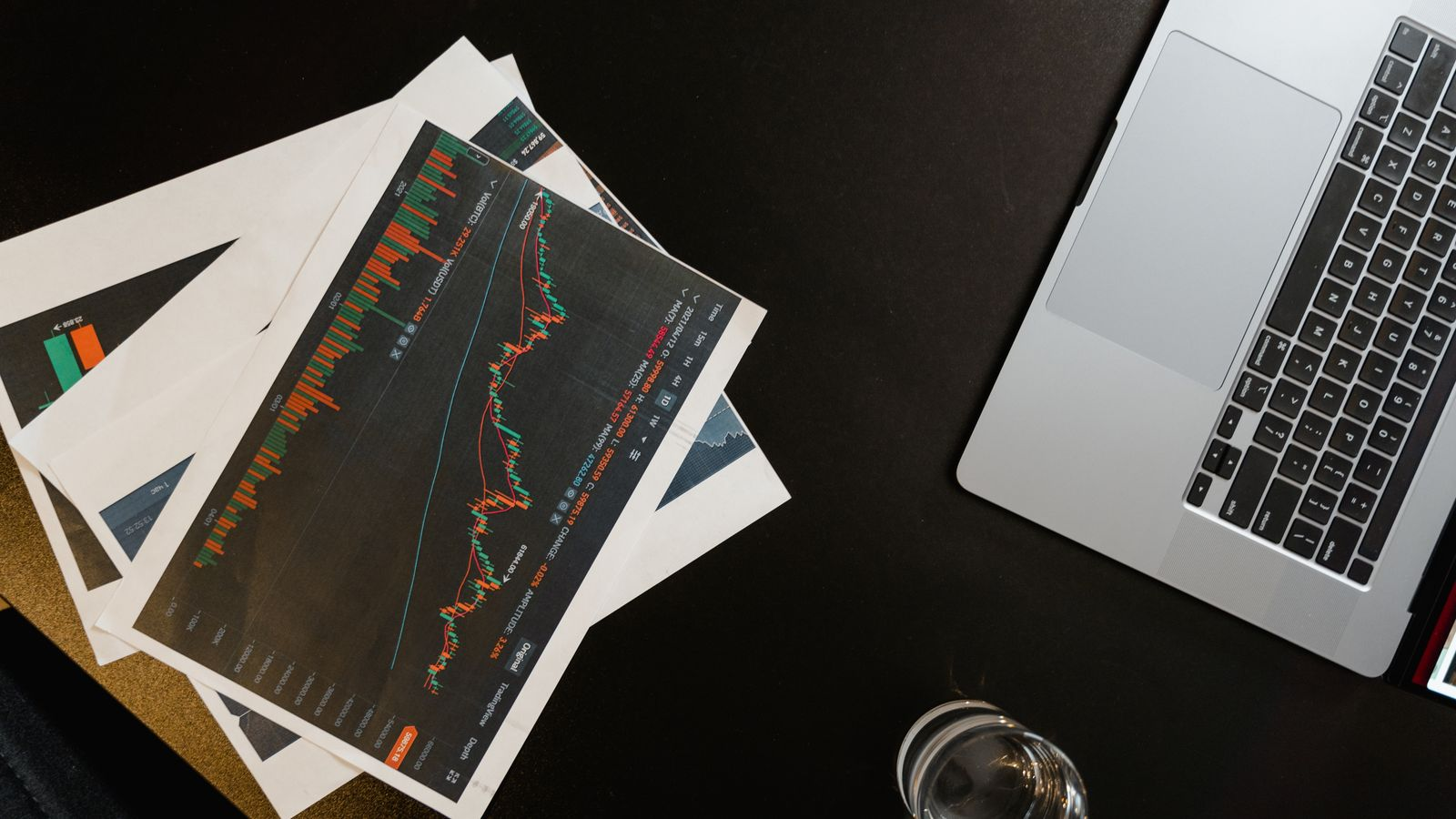
The SpaceX IPO is worth watching, but it should not be evaluated only through labels like “celebrity company,” “largest IPO,” or the “Musk halo effect.” What really matters is whether the company’s high valuation can ultimately be supported by revenue, profitability, cash flow, technological execution, and governance structure. As of late May 2026, SpaceX has already publicly disclosed IPO-related filings. Market attention is currently focused on its reported $1.75 trillion target valuation, Starlink’s profitability, AI-related losses, Musk’s voting control, and the volatility and trading costs ordinary investors may face after listing.
Key Takeaways
- The SpaceX IPO is generating huge market attention, but high valuations amplify fundamental weaknesses.
- Starlink supports profitability, while AI and Starship are more long-term variables.
- The IPO price, opening price, and post-listing market price are not the same thing.
- Musk’s concentrated voting control limits ordinary shareholders’ governance influence.
- Before trading a hot IPO, investors should evaluate rules, fees, and personal risk tolerance together.
Why the SpaceX IPO Is Worth Watching: Separate Hype, Facts, and Rumors First
The SpaceX IPO is attracting attention for three major reasons. First, it is one of the world’s most recognizable commercial aerospace companies. Second, it combines multiple narratives — Starlink, reusable rockets, AI, data centers, and the vision of Mars — into a single capital-market story. Third, its target valuation is so large that it goes far beyond the scope of an ordinary technology IPO.
For ordinary investors, however, the most common mistake is confusing “attention value” with “investment value.” The SEC definition of an IPO is simply the process of a company selling equity securities to the public for the first time and establishing a public trading market. That process alone does not mean the valuation is reasonable or that the stock price will rise after listing.
At the moment, the core publicly available information surrounding the SpaceX IPO can be summarized as follows:
| Focus Area | Currently Verifiable Information | What Investors Should Watch |
|---|---|---|
| IPO Timeline | SpaceX has disclosed IPO filings, with markets expecting a June listing window | Final timing still depends on exchange filings and official disclosures |
| Target Valuation | Reuters reported an estimated valuation of around $1.75 trillion | Higher valuations reduce margin of safety |
| Trading Symbol | Market reports point to SPCX | Final ticker should be confirmed through Nasdaq |
| Business Support | Starlink is a key profit driver | One business should not represent the entire company |
| Key Risks | AI losses, Musk voting control, technology execution timelines | Investors should review risk disclosures in the prospectus |
According to Reuters reporting on the SpaceX IPO timeline, SpaceX aims to raise approximately $75 billion at a valuation of roughly $1.75 trillion and plans to list on Nasdaq. Morgan Stanley, Bank of America, Citigroup, JPMorgan, and Goldman Sachs are reportedly participating as underwriters. These details provide useful public signals about the IPO process, but the final listing date, offering price, fundraising scale, and allocation rules should still be confirmed through the official SpaceX S-1 filing, exchange notices, and underwriting documents.
Most people searching for the SpaceX IPO are not simply asking “When will it list?” More realistic investor questions include: Has SpaceX officially filed a prospectus? Is SPCX confirmed? Can retail investors participate? Will the stock rise after listing? Is Starlink profitable? Will Musk’s control structure affect shareholder rights? Are high-valuation tech stocks worth holding long term?
All of these questions ultimately point to a single judgment: are you looking at a commercial aerospace leader, or are you chasing a high-valuation asset that has already priced in years of future expectations?
The SpaceX IPO is worth watching because it could influence global technology IPO sentiment, commercial aerospace valuations, AI infrastructure narratives, and retail trading activity. But watching does not equal buying. Media coverage does not equal final outcomes. Valuation does not equal returns. Investors should first separate facts, market expectations, and social-media enthusiasm before evaluating the company through filings, financial data, trading rules, and personal risk tolerance. The hotter an IPO becomes, the more important it is to focus on IPO pricing, lock-up periods, valuation multiples, business losses, and governance structure — not just listing dates and ticker symbols.
How to Evaluate High Valuations: Don’t Look Only at the SpaceX Brand — Analyze Revenue, Losses, and Price-to-Sales Ratios

The hardest part of evaluating high-valuation tech stocks is that markets often price not current profits, but many years of future growth expectations. SpaceX is especially complex because it is neither a standard software company nor simply a rocket manufacturer. Instead, it combines launch services, satellite internet, AI infrastructure, data centers, and deep-space exploration into a single valuation framework.
According to Reuters reporting on the SpaceX IPO filing, SpaceX generated roughly $4.69 billion in quarterly revenue while posting an operating loss of approximately $1.94 billion. The Starlink-driven connectivity segment contributed around $1.19 billion in operating profit, while AI-related operations reportedly lost around $2.47 billion in the same quarter. This suggests that SpaceX is not a company where all business segments are consistently profitable. Instead, it is a complex combination of profitable operations and extremely capital-intensive growth projects.
The following framework can help investors evaluate whether a high valuation deserves further research:
| Indicator | What Investors Should Evaluate | SpaceX IPO Risk Implication |
|---|---|---|
| Revenue Growth | Is growth driven by real demand or one-time contracts? | Starlink and launch services must continue growing |
| Operating Profit | Which businesses generate profits and which consume cash? | Starlink profitability does not fully offset AI losses |
| Capital Expenditures | Can investments generate long-term returns? | AI, Starship, and data centers may continue burning cash |
| Price-to-Sales Ratio | Is market value excessively high relative to revenue? | A near-100x price-to-sales ratio implies extremely high expectations |
| Cash Flow | Does growth depend on continuous financing? | Heavy investment cycles test financing conditions |
| Comparable Companies | Are there stable peer comparisons available? | Aerospace and AI hybrids are difficult to value |
High valuation alone does not automatically mean a bubble exists. The real issue is whether the valuation already prices in success over the next decade or longer. Reuters noted in its analysis of major IPOs that roughly three-quarters of the 50 largest IPOs over the past five years underperformed buying the S&P 500 during the same period. The report also stated that even assuming investors purchased at the IPO price, the average gain of those IPOs was around 27%, below the S&P 500’s average return of approximately 53%.
For SpaceX specifically, the valuation debate is heavily centered on the price-to-sales ratio. Reuters reported that at a $1.75 trillion valuation, SpaceX’s price-to-sales ratio approaches 100x, compared with Nvidia’s ratio of roughly 24x at the time. Reuters also reported that SpaceX lost nearly $5 billion last year. This does not automatically mean SpaceX is overvalued, but it highlights an important reality: when markets assign extremely high valuations to a company, the company must continuously prove that revenue growth, profitability improvements, and technology execution can justify those expectations.
High valuations also change the investor experience. The IPO price is not the opening price, and the opening price is not the same as the closing price on the first trading day. Strong first-day performance also does not guarantee long-term returns. Retail investors who cannot access IPO allocations and instead chase shares in the secondary market face significantly higher volatility risk. Hot IPOs frequently experience liquidity surges, emotional trading, rapid valuation re-pricing, and short-term profit-taking immediately after listing.
When evaluating the SpaceX IPO, investors should not first ask “Is this a great company?” Instead, they should ask “Has the current price already discounted many years of future success?” The risk in high-valuation technology stocks is not that the story lacks appeal. The risk is that the story must continue delivering results. Revenue, profits, cash flow, price-to-sales ratios, and capital expenditures are far more reliable indicators than social-media hype. Investors who focus only on SpaceX’s uniqueness while ignoring losses, AI spending, and valuation multiples may incorrectly assume that “a company with long-term potential is worth buying at any price.”
How to Evaluate SpaceX Fundamentals: Starlink, Launch Services, and AI Play Different Roles
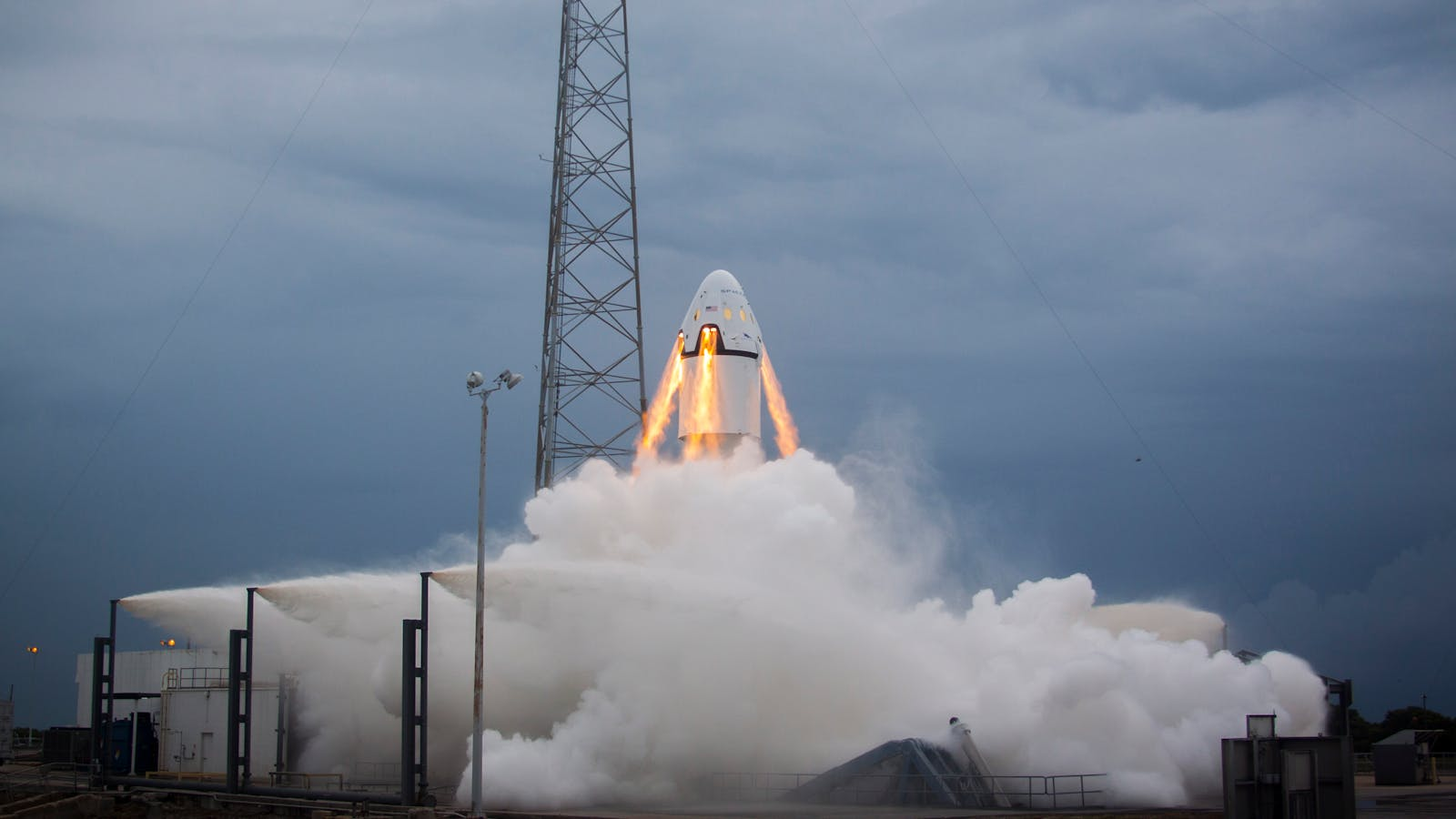
SpaceX’s fundamentals cannot be summarized simply as “a commercial aerospace company.” It is closer to a diversified business portfolio: Starlink generates satellite internet revenue, launch services establish infrastructure leadership, Starship supports deep-space and transportation-capacity narratives, while AI and data centers push the valuation story into broader technology infrastructure markets. Each business operates at different levels of maturity, profitability, and execution risk.
Starlink Is the Most Tangible Pillar — But Not the Entire Story
Starlink is currently the easiest SpaceX business for markets to understand. It transforms low-Earth-orbit satellite networks into internet connectivity services, with applications spanning remote regions, mobile communications, aviation, maritime services, governments, and enterprise connectivity. Reuters reported that among SpaceX’s three business segments, only the Starlink-driven connectivity division generated operating profit, with roughly $1.19 billion in quarterly operating income.
However, Starlink profitability does not automatically make SpaceX low-risk. Investors still need to evaluate subscriber growth, terminal costs, satellite depreciation, spectrum regulation, competitors, launch maintenance costs, and the long-term need to continuously upgrade satellite constellations. The satellite internet market may be large, but that does not guarantee stable margins forever.
Launch Services Are a Competitive Moat — But Technology and Regulation Both Matter
SpaceX’s reusable rocket technology is a major reason for its leadership position in commercial aerospace. Reusability reduces launch costs and increases launch frequency, making Starlink deployment more efficient. The challenge is that launch services are not low-risk businesses. They depend heavily on engineering reliability, launch approvals, customer contracts, insurance, safety reviews, and supply-chain stability.
For example, FAA environmental documentation for Starship/Super Heavy at the Boca Chica launch site includes considerations such as launch trajectories, return-to-launch-site missions, airspace closures, license modifications, and annual launch frequency limits. This means Starship’s commercial timeline depends not only on SpaceX itself, but also on regulatory approvals, safety assessments, and environmental reviews.
AI and Starship Are Long-Term Variables — Not Near-Term Profit Engines
AI-related businesses create larger valuation narratives for SpaceX, but they also introduce greater uncertainty. Reuters reported that xAI-related spending accounted for much of SpaceX’s quarterly capital expenditures and contributed heavily to losses. The company’s long-term vision also includes data centers, orbital computing, and Mars-related infrastructure that remain early-stage concepts.
SpaceX’s business structure can roughly be separated into four categories:
| Business Segment | Maturity Level | Main Value Proposition | Main Risks |
|---|---|---|---|
| Starlink | Relatively mature | Revenue and profit generation | Competition, regulation, satellite maintenance |
| Launch Services | More mature | Technology moat and industry position | Safety, contracts, licensing |
| Starship | Still experimental | Transportation scale and future markets | Technical execution and testing risk |
| AI / Data Centers | Early expansion stage | Valuation upside narrative | Losses, capital expenditures, demand validation |
For ordinary investors, the most important point is not to treat all four business lines as identical. Starlink profitability may justify part of the valuation, but AI and Starship resemble long-term options on future growth. Long-term options have value, but they are also much harder to price accurately. If markets discount every future vision into the stock price with high certainty, then any execution shortfall after listing could trigger rapid valuation declines.
SpaceX’s appeal comes from combining multiple growth narratives, but its risks come from the same combination. Starlink provides relatively clear commercial revenue. Launch services provide technological barriers. Starship supports future transportation narratives. AI and data centers support more aggressive growth expectations. The problem is that these businesses exist at different stages of maturity and should not all be valued under the same framework. Investors evaluating the SpaceX IPO should separately analyze profitability, investment intensity, regulatory constraints, and execution timelines for each segment.
The Six Major Risks in High-Valuation Tech IPOs: SpaceX Is Simply a Typical Example
High-valuation technology IPOs are often marketed as “once-in-a-generation opportunities.” Because of its brand, founder, aerospace leadership, and AI narrative, SpaceX is especially likely to trigger this type of market psychology. Yet what ultimately determines investment outcomes is usually not whether the company is famous, but whether the IPO pricing is reasonable, disclosures are transparent, businesses can execute successfully, governance protects ordinary shareholders, and post-listing sentiment becomes excessively speculative.
| Risk Type | How It Appears in the SpaceX IPO | Questions Investors Should Ask |
|---|---|---|
| Valuation Risk | Extremely high target valuation and near-100x price-to-sales ratio | Can growth realistically justify the valuation over time? |
| Financial Risk | Starlink is profitable, but the company remains loss-making overall | Which businesses continue consuming cash? |
| Technology Risk | Starship and orbital infrastructure remain unproven | When can the technology become commercially viable? |
| Governance Risk | Musk retains overwhelming voting control | How much influence do ordinary shareholders actually have? |
| Regulatory Risk | Launch, spectrum, and environmental reviews remain ongoing | Could permits and regulations slow the business? |
| Trading Risk | Hot IPOs often experience extreme first-day volatility | Can investors tolerate post-IPO pullbacks? |
Governance risk deserves special attention. Reuters reported that Musk is expected to retain roughly 85.1% of combined voting power after the IPO, meaning SpaceX will remain a founder-controlled company even after becoming public. Supporters see this as strategic continuity. More cautious investors see it as limited shareholder influence over boards, capital allocation, and related-party transactions.
Related-party relationships inside the “Musk ecosystem” also matter. SpaceX, Tesla, xAI, and X may share resources, branding, technology, contracts, and personnel. Reuters also reported that investor groups requested the SEC review potential conflicts of interest, disclosure quality, audit independence, and revenue recognition within the IPO filing. These issues do not necessarily imply wrongdoing, but they highlight how more complex businesses require more transparent disclosure.
Financial risk comes from the tension between profitable and loss-making businesses. Starlink provides real financial support, but AI, Starship, and future infrastructure investments may continue consuming cash. High-valuation companies can remain loss-making, but only if those losses eventually create scalable future returns. If losses continue expanding while revenue quality, margins, and cash flow fail to improve, markets may aggressively reprice the valuation downward.
Technology risk should not be ignored either. Commercial aerospace is not a standard internet business. Engineering failures, launch accidents, testing delays, supply-chain constraints, and regulatory reviews can all affect commercialization timelines. If Starship succeeds, it could dramatically expand launch capacity and future mission opportunities. If delays continue, markets may begin reducing the value assigned to long-term narratives.
The risks surrounding the SpaceX IPO are not simply about “whether the company succeeds.” The real questions are: At what price are investors buying? What governance structure are they accepting? How long might execution take? Nearly every classic high-valuation tech IPO issue appears inside the SpaceX story: financial losses, long-term narratives, founder control, regulatory dependence, trading volatility, and stretched valuations. The hotter the IPO becomes, the more important it is to prepare alternative scenarios: What if growth slows? What if AI losses continue expanding? What if Starship is delayed? What if post-IPO valuations decline?
How Ordinary Investors Should Analyze the SpaceX IPO: Verify Information First, Then Evaluate Trading Rules and Real Costs
The SpaceX IPO is likely to generate enormous amounts of secondary information, social-media speculation, and “pre-IPO opportunity” marketing. The first step for ordinary investors is not finding a trading platform, but determining whether the information source is reliable. A useful priority order looks like this:
| Information Type | Preferred Sources | Sources to Treat Carefully |
|---|---|---|
| IPO Filings | SEC documents, exchange announcements | Social-media screenshots |
| Listing Date | Company releases, underwriting materials, Nasdaq information | Unverified calendars |
| Financial Data | S-1 filings, audited financials, major financial media | Influencer-generated spreadsheets |
| Trading Eligibility | Platform rules, regional service terms | “Anyone can buy” marketing claims |
| Risk Disclosures | Prospectus risk factors | Content discussing only upside potential |
If you are evaluating “post-listing trading opportunities,” you should clearly separate the IPO price, opening price, and secondary-market execution price. The IPO price is generally available only to institutions and allocated investors. Ordinary investors often cannot access it directly. The opening price is determined by supply and demand and may be significantly higher than the IPO price. The execution price shown inside a trading platform already reflects market sentiment, liquidity premiums, and short-term speculative activity.
If you are evaluating “long-term holding value,” your framework becomes different. Investors should analyze revenue structure, profitability trends, capital expenditures, free cash flow, governance rights, industry competition, regulatory constraints, and the company’s ability to continue delivering stable financial disclosures over time. Short-term trading focuses on volatility. Long-term investing focuses on fundamentals. The two approaches should not be confused.
Another commonly overlooked issue is trading cost. Hot IPOs can experience extreme volatility after listing. Investors using frequent trades, fractional-share orders, or multiple platforms may face costs beyond stock-price movements, including platform fees, regulatory fees, settlement fees, and currency-conversion expenses. According to BiyaPay US stock pricing, US stock commissions are $0, while platform fees are $0.005 per share, with a minimum of $0.99 per trade and a maximum of 1% of trade value. External institution fees and trading activity fees are $0.00396 per share. Fractional-share orders involving less than one full share charge a 1% platform fee, capped at $1.
The point here is not to encourage chasing hot IPOs. The point is to evaluate stock-price expectations and trading costs together:
| Pre-Trade Checklist | Why It Matters |
|---|---|
| Can you legally trade the stock? | Depends on region, identity verification, platform rules, and local regulations |
| What order type are you using? | Market orders may create large slippage during volatility |
| Are you using fractional shares? | Fractional-share rules and fees may differ |
| What is the total cost? | Zero commissions do not mean zero overall fees |
| Are there currency-conversion costs? | Cross-currency trades require evaluating FX conversion paths |
| Can you tolerate volatility? | Hot IPOs can swing dramatically during the first trading sessions |
If services are available in your region and you meet platform eligibility requirements, you can use the US stock information tool to track public-market stock information and review trading fees and order-confirmation details before placing trades. Service availability depends on user location, identity verification, platform rules, and applicable regulations. Popular IPOs may experience extreme price volatility immediately after listing, so investors should fully understand order types, fee structures, and risk exposure before trading.
Ordinary investors analyzing the SpaceX IPO should first verify information, then define investment goals, and finally calculate total costs. Reliable sources include SEC filings, Nasdaq announcements, company disclosures, and major financial media. Trading analysis should clearly separate IPO pricing, opening prices, and secondary-market execution prices. Cost analysis should include not only “zero commission” marketing, but also platform fees, external institution fees, fractional-share rules, currency-conversion costs, and order slippage. Only by combining all of these factors can investors avoid allowing IPO hype to overshadow the details that truly affect long-term portfolio outcomes.
How the SpaceX IPO Could Affect Technology Stocks and Market Sentiment: It’s Bigger Than One Company
The SpaceX IPO is attracting global attention because it may become a broader signal for the technology IPO market. Over the past several years, many high-valuation technology companies delayed going public and instead remained in private markets longer. If SpaceX successfully completes a massive public listing, it could reopen valuation windows for AI companies, commercial aerospace businesses, deep-technology firms, and late-stage unicorns.
The potential effects can be separated into several categories:
| Market Impact Area | Potential Outcome | Key Uncertainty |
|---|---|---|
| Technology IPO Sentiment | Could strengthen expectations for OpenAI, Anthropic, and other AI IPOs | Depends heavily on SpaceX post-listing performance |
| AI Valuation Narrative | Space-based data centers and AI infrastructure may be revalued | Business models remain unproven |
| Commercial Aerospace Sector | Satellite, launch, and communications companies may attract more attention | Sector enthusiasm does not guarantee stronger fundamentals |
| Index Inclusion Expectations | Large market capitalization may trigger index discussions | Must satisfy index rules and committee decisions |
| Retail Trading Activity | Platforms, communities, and media attention may surge | Could intensify first-day volatility |
Reuters noted in its analysis of recent IPO performance that markets are also watching whether companies like OpenAI and Anthropic may follow SpaceX into public markets. This highlights that the SpaceX IPO is not merely a single-company event — it may also influence confidence in the broader market for giant private technology companies.
However, investors should not confuse sector sentiment with individual stock returns. A successful mega-IPO may indicate that institutions are willing to pay for high-growth narratives, but if post-listing performance disappoints, it could also reduce valuations across other high-growth technology companies. Technology IPO markets often behave in “window periods”: when market risk appetite is strong, investors tolerate higher valuations; when interest rates, regulations, profitability expectations, or macroeconomic conditions shift, high-valuation assets can rapidly come under pressure.
Index inclusion is another topic frequently overinterpreted by investors. If SpaceX reaches sufficient market capitalization, markets will naturally discuss possible inclusion in indexes such as the Nasdaq-100 or S&P 500. But index inclusion depends on far more than size alone. Requirements include listing location, liquidity, free float, trading history, profitability standards, and committee decisions. More importantly, even if inclusion becomes likely, that expectation may already be reflected in the stock price before it actually happens.
For ordinary investors, the SpaceX IPO should be viewed more as an observation window than a guaranteed profit opportunity. It offers insight into how markets value futuristic technology narratives, and how AI, commercial aerospace, satellite internet, and public markets intersect. The real lesson is not identifying “the next SpaceX,” but understanding how high-valuation technology stocks are priced, promoted, and eventually tested by public-market realities.
The impact of the SpaceX IPO extends beyond SpaceX itself. It could influence technology IPO windows, AI asset valuations, commercial aerospace attention, index-fund expectations, and retail risk appetite. But none of these outcomes guarantee investment returns. Market sentiment can inflate valuations, but it can also reverse rapidly if earnings, regulation, or technological progress disappoint expectations. Investors may follow the broader significance of the SpaceX IPO, but they should avoid using industry hype alone as a reason to buy the stock.
FAQ
Has the SpaceX IPO already been confirmed?
As of late May 2026, SpaceX has disclosed IPO-related filings, and market reporting points to a June listing window. However, the final listing date, IPO price, and trading arrangements should still be confirmed through SEC filings, exchange announcements, and official company disclosures.
What is the SpaceX stock ticker symbol?
Most market reports indicate that SpaceX plans to use SPCX as its ticker symbol. However, the final ticker, listing exchange, and trading arrangements should be confirmed through Nasdaq and the final prospectus rather than social-media speculation.
Is the SpaceX IPO worth buying?
That depends on valuation, pricing, risk tolerance, and investment objectives. SpaceX is an important technology asset, but high valuations, loss-making businesses, Musk’s control structure, and post-listing volatility must all be evaluated carefully. This article does not constitute investment advice.
Does Starlink profitability make SpaceX safe?
Starlink is an important profitability pillar, but SpaceX also includes launch services, AI businesses, Starship development, and future data-center initiatives. Profitability in one business segment cannot fully offset company-wide risks related to losses, capital expenditures, and technology execution.
Can retail investors buy at the IPO price?
Retail participation depends on regional regulations, platform eligibility, account requirements, and underwriter allocation rules. Many ordinary investors are more likely to buy shares after the stock begins public trading, at which point prices may already differ significantly from the IPO price.
What fees should investors check before trading?
Before trading, investors should review commissions, platform fees, external institution fees, fractional-share rules, order types, FX conversion costs, and slippage risks. “Zero commission” does not mean total trading costs are zero. Final costs should always be confirmed through platform pricing disclosures and order-confirmation pages.
The value of the SpaceX IPO goes beyond whether it becomes another major market event. It also helps investors better understand how high-valuation technology stocks should be analyzed. Investors can follow Starlink profitability, launch-service technology advantages, and AI growth narratives — while simultaneously evaluating losses, capital expenditures, regulatory approvals, Musk’s control structure, and post-listing volatility. For ordinary investors, the key is not chasing the “largest IPO,” but verifying information sources, understanding price formation, evaluating risk structures, and reviewing trading costs and order rules before participating.
If you plan to follow SpaceX or other popular US IPOs in the future, you can first use the BiyaPay US stock information tool to review public-market information, then check BiyaPay US stock pricing to understand commissions, platform fees, fractional-share orders, and external institution fees. Eligible users can also review account, order, and pricing details through the BiyaPay App or BiyaPay Web Trading. Public-market trading involves risk, and service availability depends on user location, identity verification, platform rules, and applicable regulations.
*This article is provided for general information purposes and does not constitute legal, tax or other professional advice from BiyaPay or its subsidiaries and its affiliates, and it is not intended as a substitute for obtaining advice from a financial advisor or any other professional.
We make no representations, warranties or warranties, express or implied, as to the accuracy, completeness or timeliness of the contents of this publication.
Related Blogs of

What Challenges Could SpaceX Face After Going Public? An Analysis of Regulation, Competition, Costs, and Commercialization Risks


Is SpaceX’s Valuation Too High? How to Understand Price-to-Sales Ratio, Losses, and Growth Expectations


Why Should You Pay Attention to Losses Before the SpaceX IPO? How to Read the Financial Data of Growth Companies


What are the differences in valuation logic between SpaceX, Tesla, and Nvidia? Comparison of Tech Growth Stocks
Choose Country or Region to Read Local Blog
 Australia
 Austria
 Belgium
 Canada
 Cyprus
 Czech Republic
 Denmark
 Estonia
 Finland
 France
 Germany
 Greece
 Hong Kong
 India
India Indonesia
 Ireland
 Italy
Italy Japan
Japan Latvia
 Lithuania
 Luxembourg
 Malaysia
 Malta
Malta Morocco
 Nepal
Nepal Netherlands
 New Zealand
 Norway
 Pakistan
 Philippines
 Poland
 Portugal
 Romania
 Singapore
 Slovakia
 Slovenia
 South Africa
 South Korea
 Spain
Spain Sweden
 Thailand
 The United States
 Turkey
 United Arab Emirates
 United Kingdom
 Vietnam
Contact Us




BIYA GLOBAL LLC is registered with the Financial Crimes Enforcement Network (FinCEN), an agency under the U.S. Department of the Treasury, as a Money Services Business (MSB), with registration number 31000218637349, and regulated by the Financial Crimes Enforcement Network (FinCEN).
BIYA GLOBAL LIMITED is a registered Financial Service Provider (FSP) in New Zealand, with registration number FSP1007221, and is also a registered member of the Financial Services Complaints Limited (FSCL), an independent dispute resolution scheme in New Zealand.