What Challenges Could SpaceX Face After Going Public? An Analysis of Regulation, Competition, Costs, and Commercialization Risks




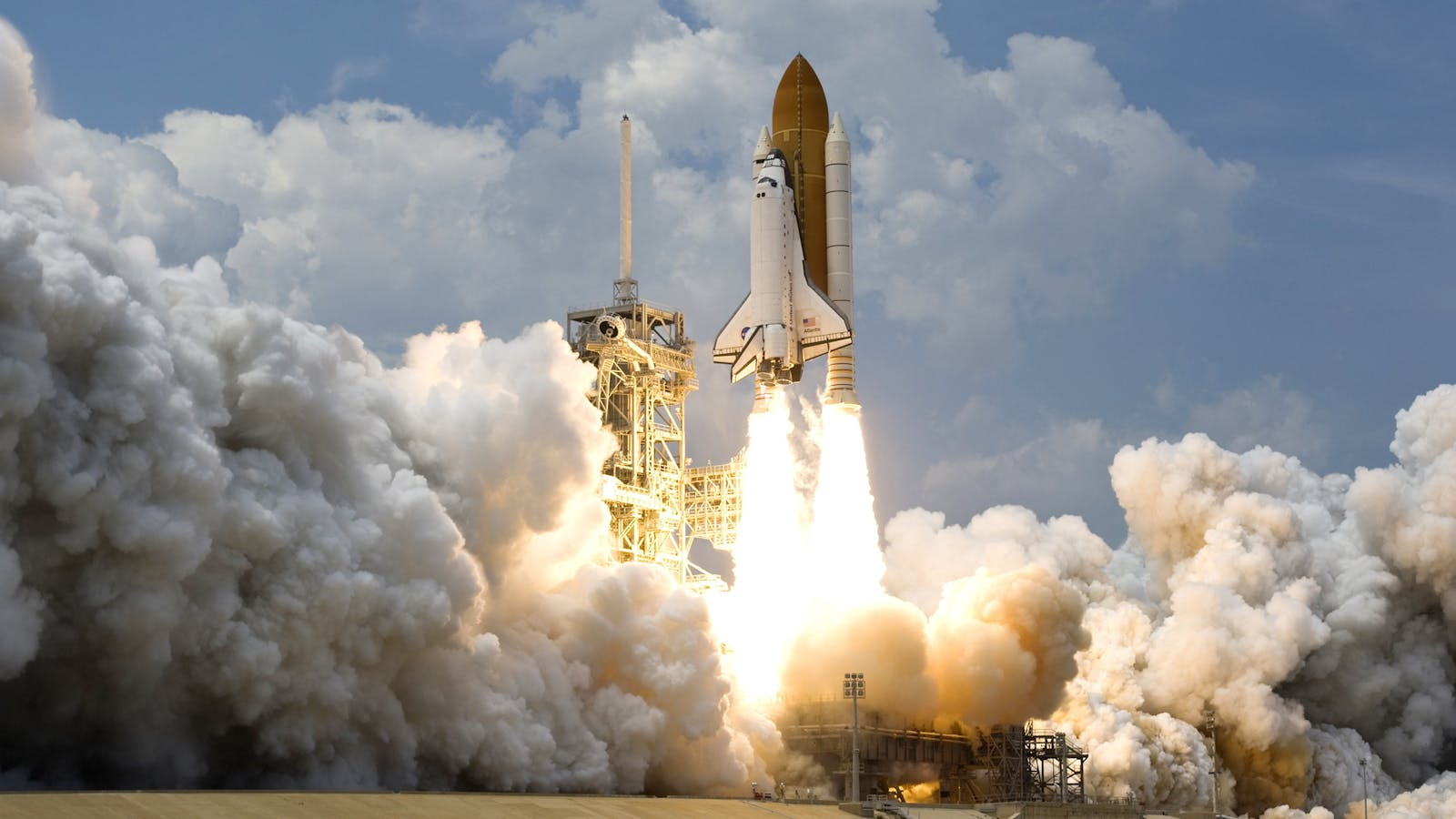
The challenge SpaceX may face after going public is not whether the market will pay attention, but whether it can continuously prove the quality of its growth under a high valuation. You need to focus not only on Starlink user numbers, Starship launch progress, or Musk’s vision, but also on regulatory approvals, low-Earth-orbit satellite competition, capital expenditure, AI losses, commercialization delivery, and post-listing stock price volatility. SpaceX has strong technological barriers, but it also spans aerospace, communications, AI, infrastructure, and capital markets. Any slowdown in a key area could affect revenue, cash flow, and valuation logic.
Key Takeaways
- SpaceX’s post-IPO challenges come from execution difficulty, not just stock price volatility.
- The higher the launch frequency, the more important FAA, FCC, and environmental reviews become.
- Starlink has a clear lead, but Amazon Kuiper will bring competitive pressure.
- Starship, AI, and satellite networks will continue to push up capital expenditure.
- Ordinary investors should also look at trading costs, lock-up periods, and governance structure.
Start With the Conclusion: What 5 Types of Challenges Should SpaceX Focus on After Going Public?

After going public, SpaceX should be assessed through five major types of challenges: regulation, competition, costs, commercialization, and capital markets. SpaceX has strong advantages, but after listing, the market will keep asking: can these advantages be converted into stable revenue, profit, and cash flow? If regulatory approvals slow down, Starlink growth weakens, Starship is delayed, AI losses expand, or governance disputes rise, its high valuation will come under pressure.
Regulatory Challenges: Expansion Speed Cannot Ignore the Pace of Approvals
SpaceX is not just a technology internet company. Its core businesses are highly dependent on launch licenses, airspace coordination, spectrum authorization, environmental assessments, and satellite deployment approvals. FAA licensing reviews for Starship evaluate public safety, national security, insurance requirements, and potential environmental impacts, which means launch frequency cannot be increased immediately just because SpaceX wants to raise it.
For SpaceX after going public, the regulatory timetable will directly affect Starship testing, Starlink satellite deployment, next-generation satellite launches, and space infrastructure construction. The stronger the technical capability and the larger the launch scale, the more important it becomes to stay synchronized with the regulatory system.
Competition, Costs, and Commercialization Must All Work at the Same Time
SpaceX has a large commercial story, but after listing, investors will pay more attention to the “order of delivery.” Reuters’ analysis said SpaceX’s growth logic depends on a chain of successes: Starlink generates cash flow, Starship lowers launch costs, and the expanded space market then supports AI and space infrastructure.
The difficulty with this logic is that none of these links is a low-cost or low-risk project. Starlink faces competition, Starship faces technology and regulation, AI faces capital expenditure, and space data centers and the Mars vision still require longer-term commercial validation.
Governance and Secondary-Market Risks Will Be Magnified in Public
After a company goes public, risks come not only from the business, but also from shareholder structure, information disclosure, lock-up periods, and secondary-market prices. Reuters reported that SpaceX IPO documents disclosed losses, Musk’s control, and AI-related investment, and that the public market will use quarterly financial data more frequently to test these long-term narratives.
| Challenge Type | What to Watch | Possible Impact |
|---|---|---|
| Regulatory Risk | FAA launch licenses, FCC spectrum, environmental assessments | Launch cadence and satellite deployment |
| Competition Risk | Starlink versus Amazon Kuiper, carriers, and broadband providers | User growth and pricing |
| Cost Risk | Starship, AI, and satellite network capital expenditure | Cash flow and financing pressure |
| Commercialization Risk | Revenue delivery from Starlink, launch, AI, and space infrastructure | Valuation credibility |
| Governance and Market Risk | Voting rights, lock-up periods, post-listing volatility | Ordinary shareholder rights and stock price performance |
Summary: SpaceX’s post-IPO risks cannot be summarized simply as “bullish” or “bearish.” It is both an aerospace and satellite internet company with real commercialization capability, and a high-investment company carrying AI, space infrastructure, and Mars narratives. You should break the risks into five dimensions: regulation, competition, costs, commercialization, and capital markets. If any of these dimensions clearly falls behind market expectations, the high valuation may be repriced. Conversely, if SpaceX can continue delivering through these challenges, its post-listing growth logic will become more convincing.
Regulatory Challenges: How Could the FAA, FCC, Environmental Reviews, and Airspace Coordination Affect SpaceX?

Regulatory challenges will directly affect SpaceX’s launch frequency, Starlink satellite deployment speed, and Starship testing pace. The more SpaceX wants to increase launch scale, the more it depends on the FAA, FCC, environmental reviews, and international spectrum coordination. For investors, regulation is not an abstract risk, but a real variable that can affect the timetable for revenue delivery.
FAA Launch Licenses: High-Frequency Launches Must First Pass Safety and Airspace Requirements
Starship testing and future commercialization must proceed within the launch licensing framework. FAA launch license reviews do not look only at rocket technology. They also examine public safety, overflight of populated areas, payload contents, national security, insurance requirements, and environmental impact.
This means that if Starship wants to increase launch frequency, SpaceX needs to prove that system reliability, launch site safety, trajectory control, incident response, and airspace coordination can all support a faster cadence. For a commercial space company, engineering progress and regulatory progress must move forward together. Otherwise, even if the technology is ready, commercial revenue may still be constrained by the licensing timetable.
FCC Spectrum and Satellite Licenses: Starlink Expansion Is Not Unlimited
Starlink is one of SpaceX’s most important commercialization assets after listing, but satellite internet is not simply a matter of “the more satellites, the better.” FCC authorization, spectrum conditions, interference restrictions, orbital management, and international coordination can all affect Starlink’s capacity and coverage. FCC information on Gen2 Starlink authorization mentioned that the authorization could allow SpaceX to deploy a total of 15,000 Starlink satellites globally and upgrade Gen2 satellite capabilities.
At the same time, specific FCC authorizations also come with operating conditions. For example, the FCC set requirements for certain Gen2 Starlink frequency-band uses, including the number of beams, GSO arc protection, EPFD limits, and harmful interference handling. This shows that Starlink expansion is both a commercial issue and a matter of spectrum and orbital resource coordination.
Environment, Accidents, and Investigations: Technical Failures Can Also Become Regulatory Delays
Starship testing is a high-risk engineering iteration process. Failures, explosions, trajectory deviations, breakups, or mission interruptions can all trigger investigations and corrective actions. In its review of Starship’s test history, Reuters noted that Starship’s test flights have experienced multiple explosions or catastrophic failures, while also gradually achieving milestones such as controlled splashdowns, booster recovery, and mock satellite deployments.
| Regulatory Item | Regulator / Scope | Potential Impact on SpaceX |
|---|---|---|
| Launch Licenses | FAA | Starship and Falcon launch cadence |
| Airspace Coordination | FAA / air traffic system | Commercial flight rerouting and launch windows |
| Spectrum Use | FCC / international coordination | Starlink communications capacity and regional coverage |
| Satellite Deployment | FCC / orbital regulation | Gen2 Starlink deployment speed |
| Environmental Review | FAA / NEPA | Launch site expansion and mitigation measures |
| Accident Investigations | FAA and others | Corrective actions and return-to-flight timing after test failures |
Summary: SpaceX’s regulatory risk is not simply “whether it will be regulated.” The key is how regulation affects the pace of growth. Starship licenses, Starlink spectrum, orbital coordination for satellite deployment, launch site environmental assessments, and return-to-flight procedures after accidents can all affect SpaceX’s commercialization speed. Investors who look only at technological leadership may easily overlook the impact of approval timelines on the financial model. After listing, the market will track every license delay, test failure, environmental dispute, and spectrum condition more sensitively, because these variables directly affect revenue, capital expenditure, and the timing of valuation delivery.
Competition Challenges: After Starlink’s Lead, Who Could Catch Up?
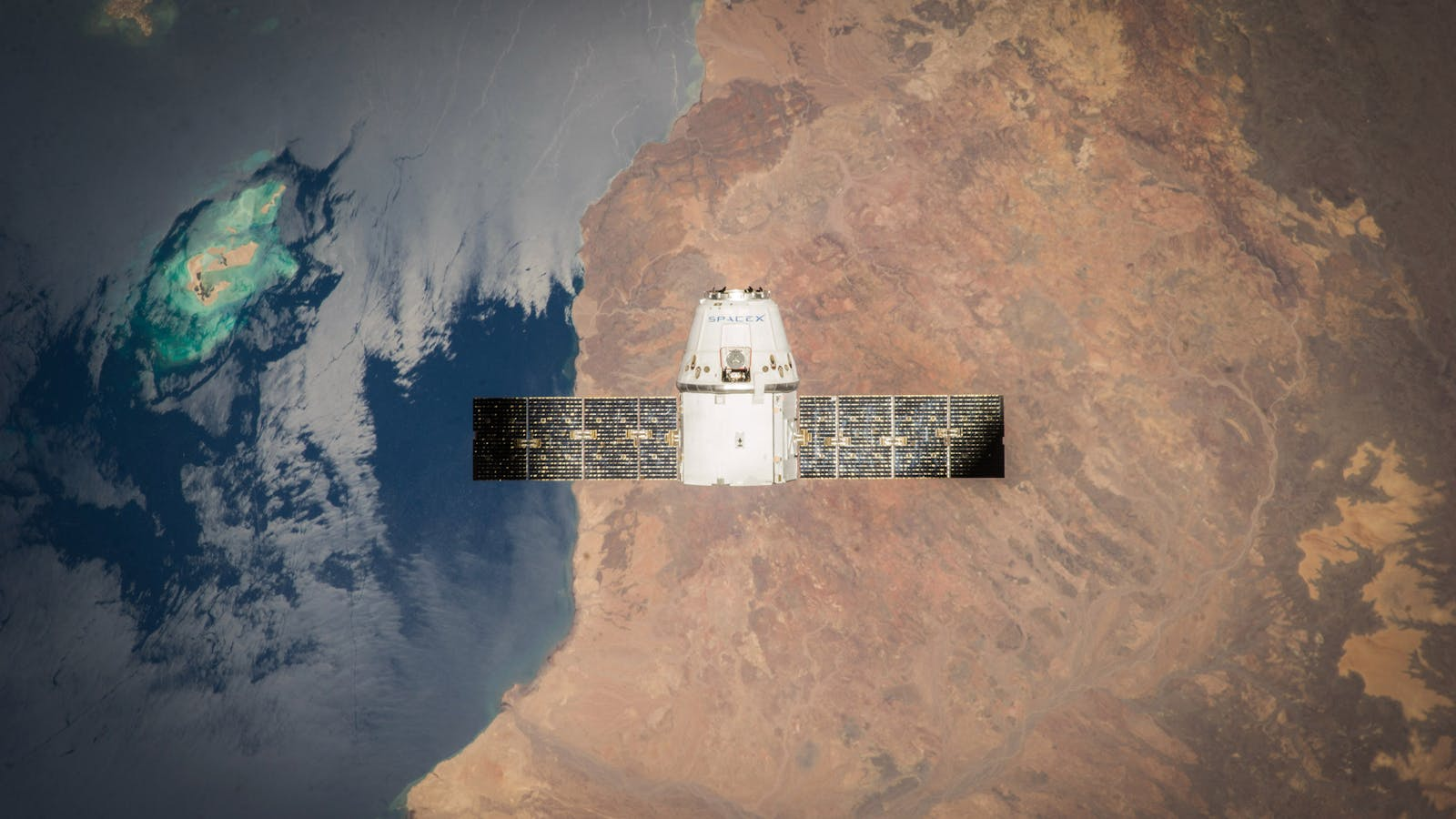
Starlink currently has a clear first-mover advantage, but competition will not disappear after SpaceX goes public. Amazon Kuiper, traditional satellite operators, terrestrial broadband providers, mobile carriers, and regional broadband service providers may all compete for users, enterprise customers, aviation Wi-Fi, maritime communications, and government contracts in different scenarios. A lead does not mean there will be no pricing pressure.
Amazon Kuiper: The Most Direct Low-Earth-Orbit Satellite Competitor
Amazon Kuiper is one of Starlink’s most direct competitors in low-Earth-orbit satellite internet. Reuters reported that Amazon launched its first 27 Kuiper internet satellites, plans to build a 3,236-satellite low-Earth-orbit constellation, and is investing about $10 billion to serve consumers, businesses, and government customers.
Starlink’s lead comes from launch capability, deployment speed, user scale, and vertical integration. Kuiper’s advantages may come from Amazon’s cloud ecosystem, enterprise customer relationships, consumer hardware experience, and financial strength. Competition may not weaken Starlink immediately, but it can affect future pricing, customer choice, and enterprise contract negotiations.
Enterprise, Aviation, Maritime, and Government Customers: Competition Is Not Just About Satellite Count
High-value scenarios for low-Earth-orbit satellite internet are not limited to home broadband. Aviation Wi-Fi, maritime communications, military and government projects, enterprise remote connectivity, emergency communications, and mobile network gap coverage may all become markets where Starlink and competitors compete.
In these scenarios, customers look not only at coverage, but also at service stability, latency, bandwidth, price, regulatory availability, contract support, data security, and local partnerships. Starlink’s large satellite count is an advantage, but it is not the only decision factor. Enterprise and government customers often consider supplier diversification to avoid excessive dependence on a single network.
Competition May Pressure ARPU and Margins
Starlink user growth is important, but investors also need to look at ARPU, terminal subsidies, network maintenance costs, and marketing expenses. If competitors enter more regions in the future, Starlink may need to maintain growth through price cuts, higher terminal subsidies, or greater bandwidth investment. Revenue may still grow, but margins may not necessarily improve at the same pace.
| Competitor | Competitive Scenario | Impact on Starlink |
|---|---|---|
| Amazon Kuiper | Low-Earth-orbit satellite broadband, aviation Wi-Fi | Pricing and enterprise customer competition |
| Traditional Satellite Operators | Aviation, maritime, government communications | High-value contract competition |
| Terrestrial Broadband | Urban and suburban internet | Limits mass-market expansion |
| Mobile Carriers | Direct-to-cell and mobile coverage | Spectrum, partnerships, and pricing competition |
| Regional Broadband Providers | Emerging markets and remote areas | Local licensing and channel competition |
Summary: Starlink’s lead is a real advantage, but it is not a permanent moat. SpaceX’s dual role as both a satellite operator and a launch company gives it advantages in deployment cost and speed. But Amazon Kuiper, traditional satellite companies, terrestrial broadband, and mobile carriers will catch up in different segments. After listing, the market will not look only at Starlink user numbers. It will also look at whether user growth depends on price cuts, whether enterprise customers are stable, whether ARPU is under pressure, and whether network costs are controllable. The core competition risk is not whether Starlink will be replaced, but whether its lead can continue translating into margins.
Cost Challenges: How Much Capital Expenditure Pressure Will Starship, AI, and Satellite Networks Create?
SpaceX’s cost challenges come from heavy-asset expansion. Starship testing, Starlink satellite deployment, AI computing power, space infrastructure, and launch site expansion all require continuous investment. After listing, if capital expenditure remains high while cash flow improves more slowly than expected, the valuation will come under pressure. The grander the growth story, the more it needs cash flow to prove that the investment is worthwhile.
Starship Costs: It Can Lower Future Launch Costs, but It Also Raises Current Spending
Starship’s long-term logic is to reduce launch costs through larger payload capacity and reusability, supporting next-generation satellites, deep-space missions, and space infrastructure. But during the testing phase, Starship also brings significant costs in R&D, manufacturing, launch sites, accident remediation, and engineering iteration.
Reuters pointed out that SpaceX’s risk is not “whether it has a real business,” but whether a $1.75 trillion valuation fully reflects the execution challenges of being a rocket company, internet provider, AI company, and founder-driven company at the same time.
AI Costs: The Larger the Growth Story, the More Clearly Cash Burn Must Be Understood
AI is one of the most flexible parts of SpaceX’s valuation imagination, but it is also one of the heaviest cost sources. Reuters reported that SpaceX lost $4.28 billion in the first quarter of 2026; the AI business lost $2.47 billion, while capital expenditure reached $7.72 billion, exceeding the combined capital expenditure of the other two businesses.
This shows that AI is not a light-asset add-on business, but a core investment item that may continue consuming cash. Space AI, orbital data centers, model training, and computing infrastructure could open a new growth curve if they generate customer revenue. If the commercialization path remains unclear, AI investment will become a valuation pressure point.
Satellite Network Costs: Starlink Is Not a One-Time Build
Starlink requires continuous satellite launches and upgrades, ground station construction, terminal maintenance, bandwidth expansion, and compliance with regulatory requirements across different countries and regions. Low-Earth-orbit satellites have limited lifespans, and network capacity also needs to keep expanding as the user base grows. Even if Starlink revenue grows, satellite replacement and capacity expansion will continue consuming substantial capital.
| Cost Item | Why Investment Is Needed | What Investors Should Watch |
|---|---|---|
| Starship | Lower long-term launch costs and increase payload capacity | Test progress, failure rate, unit launch cost |
| Starlink Satellites | Expand coverage and bandwidth | Satellite lifespan, launch frequency, user ARPU |
| AI Data Centers | Support space AI and computing businesses | Narrowing losses, customer revenue, return on capital |
| Launch Site Expansion | Support high-frequency launches | Licensing progress, environmental reviews, fixed costs |
| Terminal Equipment | Expand user adoption | Terminal costs, subsidies, after-sales costs |
Summary: SpaceX’s cost risk is not just “higher expenses.” It can affect cash flow and valuation credibility. Starship’s success can lower future launch costs, but before maturity it will continue consuming capital. The AI business may open new markets, but it may also expand losses. The larger the Starlink network becomes, the higher the maintenance, replacement, and capacity expansion costs will be.
After listing, the market will pay more attention to whether capital expenditure produces visible returns. If investment keeps increasing while revenue and profit do not improve at the same pace, the high valuation will become harder to justify.
Commercialization Challenges: What Still Stands Between Technological Leadership and Stable Revenue?
After going public, SpaceX must prove that technological leadership can continue turning into stable revenue and profit. Starlink is the clearest commercialized business, and launch services also have strong advantages. But Direct-to-cell, AI, space data centers, Starship commercial payload capacity, and lunar and Mars-related projects still need more contracts, revenue, and financial delivery.
Starlink: User Growth Must Turn Into Profit Growth
Starlink user growth is an important signal, but user numbers alone are not enough. The more important metrics are ARPU, terminal costs, regional licensing, network capacity, enterprise customer mix, and margins. If user growth is driven by price cuts, terminal subsidies, or high network costs, revenue growth may not lead to profit improvement.
Reuters reported that Starlink generated $3.26 billion in revenue in the first quarter of 2026, up nearly one-third year over year, but international expansion and other costs pressured margins. (Reuters) This means Starlink’s commercialization is already quite clear, but it still needs to keep proving the quality of profit as it scales.
Launch Business: Its Lead Must Be Sustained
SpaceX has a clear first-mover advantage in commercial launch. Reusable rockets have changed launch economics and also provide an internal cost advantage for Starlink deployment. But after listing, the market will keep asking: can launch success rates be maintained, can reuse counts continue increasing, can unit launch costs keep falling, is the order backlog stable, and are insurance and regulatory costs controllable?
The launch business will also face competition. Blue Origin, Rocket Lab, national space programs, and other new entrants may compete in different payload classes, orbits, and customer scenarios. SpaceX may not lose its lead, but that lead needs to be continuously proven through cost, reliability, and launch cadence.
Long-Term Businesses: Space Data Centers and the Mars Vision Need Commercial Validation
SpaceX’s long-term narratives include space data centers, AI infrastructure, Starship deep-space transportation, lunar projects, and Mars projects. These visions can increase valuation imagination, but they also raise delivery pressure. Reuters noted that SpaceX’s valuation comes not only from its existing rockets and Starlink, but also from Musk’s promises around Mars, space data centers, and the corporatization of AI.
| Commercialization Direction | Level of Validation | What Still Needs to Be Proved |
|---|---|---|
| Starlink Broadband | Relatively high | User margins, ARPU, regional licensing |
| Launch Services | Relatively high | Success rate, reuse costs, order stability |
| Direct-to-cell | Medium | Carrier partnerships, spectrum, terminal experience |
| AI / Data Centers | Low to medium | Customer revenue, narrowing losses, compliance risk |
| Starship Commercial Payload Capacity | Low to medium | Cost reduction, reliability, commercial demand |
| Mars and Deep-Space Projects | Long-term | Timetable, funding sources, commercial returns |
Summary: SpaceX cannot rely only on technological leadership to support its post-listing valuation. It also needs to prove its commercialization path. Starlink is the most important real revenue anchor, but it needs to keep improving margins. The launch business has technological barriers, but it must maintain success rates and cost advantages. AI, space data centers, and the Mars vision require more time for validation. For ordinary investors, what really needs tracking is how technical milestones turn into contracts, revenue, profit, and cash flow. If technological breakthroughs do not correspond to commercial delivery, the market will gradually reduce the valuation weight assigned to long-term narratives.
Governance and Capital Market Challenges: What Issues Will Shareholders Watch After Listing?
After listing, SpaceX will face higher public market requirements: periodic disclosure, earnings expectations, shareholder rights, governance structure, lock-up periods, index inclusion, and secondary-market valuation volatility will all be magnified. Ordinary investors should look not only at the company’s business, but also at their actual purchase price, fee structure, and shareholder rights.
Musk’s Control: The Trade-Off Between Long-Term Strategy and Shareholder Rights
Musk’s influence is part of SpaceX’s valuation narrative, but it may also become a source of governance risk. Reuters reported that SpaceX IPO-related arrangements may strengthen Musk’s control and weaken some common shareholder protections.
Strong control has two sides: it can allow the company to stick to long-term strategy without being held hostage by short-term stock prices; it may also leave public shareholders with limited influence over related-party transactions, capital allocation, and board oversight. After listing, this type of governance structure will be incorporated by the market into either a valuation discount or a premium.
High IPO Valuation and Lock-Up Periods: Post-Listing Volatility May Be Greater
If SpaceX lists at a high valuation, secondary-market investors need to pay special attention to the offering price, opening price, public float, lock-up periods, and future saleable shares. Reuters analyzed high-valuation IPOs in recent years and found that among the 50 highest-valuation IPOs over the past five years, most underperformed an S&P 500 index fund.
Investor.gov’s explanation of IPO lock-up agreements reminds investors to review the company’s IPO prospectus to confirm whether lock-up arrangements exist and when they expire, because before and after lock-up expiration, the market may expect more shares to enter circulation.
Trading Costs: Real Returns Are Not Determined Only by the Stock Price
If you are watching trading opportunities after SpaceX goes public, you should look not only at stock price volatility, but also at platform fees, external agency fees, trading activity fees, settlement fees, and fractional share rules. Based on the compiled fee information, BiyaPay U.S. stock trading fees show that U.S. stock trading commission is $0, while platform fees, external agency fees, and other fees are subject to the fee center and order page display; for fractional share orders with fewer than one share executed, only 1% of the total transaction amount is charged as the platform fee, capped at $1.
You can also use U.S. stock information search to observe relevant market information, but before trading, you still need to include order types, price volatility, fee structure, and your own risk tolerance in your calculations. Whether related services are available depends on the user’s location, identity verification result, platform rules, and applicable laws and regulations.
| Post-Listing Issue | What Investors Should Watch | Possible Impact |
|---|---|---|
| Shareholder Voting Rights | Class A / Class B, board control | Ordinary shareholder voice |
| Lock-Up Period | Future saleable shares | Post-listing supply and selling pressure |
| Valuation Volatility | Price-to-sales ratio, earnings expectations, market benchmarks | Secondary-market prices |
| Index Inclusion | Potential inclusion in Nasdaq 100, S&P 500, etc. | Passive flows and short-term sentiment |
| Trading Costs | Platform fees, external fees, fractional share fees | Actual returns |
| Service Applicability | Location, identity verification, platform rules | Whether and how the stock can be traded |
Summary: SpaceX’s post-listing challenges come not only from its business, but also from governance structure and trading conditions. You need to judge whether Musk’s control is a long-term strategic advantage or a discount to ordinary shareholder rights. You also need to understand the volatility that may come from a high IPO valuation, lock-up periods, and secondary-market trading prices. Even if you are optimistic about SpaceX’s long-term business, the trading result may still be unsatisfactory if you chase after a large opening jump, fail to check fees, or do not understand public float and lock-up periods. Popular IPOs may experience significant price volatility in the early listing stage, so investors should fully understand order types, fee structures, and risks before trading.
FAQ
What Is the Biggest Risk for SpaceX After Going Public?
The biggest risk is not a single event, but multiple challenges appearing at the same time under a high valuation: regulatory approvals slowing down, Starlink growth weakening, Starship delays, AI losses expanding, capital expenditure becoming too high, or market risk appetite declining.
Will Regulation Affect Starlink?
Yes. Starlink expansion involves satellite count, spectrum use, regional licenses, orbital safety, and international coordination. Even if the technology is mature, regulatory requirements in different countries and regions may affect coverage, service timing, and commercialization speed.
Who Are Starlink’s Competitors?
The main competitors include Amazon Kuiper, traditional satellite operators, terrestrial broadband, mobile carriers, and regional broadband service providers. Competition is not only about satellite count, but also price, network quality, enterprise customers, local licenses, and service stability.
Will Starship Delays Affect the Valuation?
Yes. Starship is an important foundation for lowering launch costs, deploying next-generation satellite networks, and supporting long-term space businesses. If testing is delayed or costs overrun, SpaceX’s long-term financial model and valuation logic may both come under pressure.
How Should Ordinary Investors Track the Risks?
Investors can track FAA and FCC licenses, Starlink users and profit, Starship testing progress, AI losses, capital expenditure, cash flow, governance structure, and post-listing prices. Do not look only at news heat or one-day stock price movements.
The core of SpaceX’s post-IPO challenges is not judging whether the company is “strong,” but judging whether strong businesses can continue delivering under regulatory, competitive, cost, and commercialization pressures. You can break SpaceX into five observation targets: Starlink, launch, AI, Starship, and capital markets, and then track licensing progress, revenue quality, capital expenditure, governance structure, and real trading costs separately.
If your region meets the relevant service applicability conditions, you can use BiyaPay to follow multi-asset trading services such as U.S. stocks, Hong Kong stocks, and cryptocurrencies, and include order types, platform fees, external agency fees, and fractional share rules in your calculations before trading. On mobile, you can also use the BiyaPay App to manage your account and view market information. Whether related services are available depends on the user’s location, identity verification result, platform rules, and applicable laws and regulations. The above content only introduces public market information, risk analysis methods, and fee structures, and does not constitute investment advice.
*This article is provided for general information purposes and does not constitute legal, tax or other professional advice from BiyaPay or its subsidiaries and its affiliates, and it is not intended as a substitute for obtaining advice from a financial advisor or any other professional.
We make no representations, warranties or warranties, express or implied, as to the accuracy, completeness or timeliness of the contents of this publication.
Related Blogs of

Is SpaceX’s Valuation Too High? How to Understand Price-to-Sales Ratio, Losses, and Growth Expectations


Why Should You Pay Attention to Losses Before the SpaceX IPO? How to Read the Financial Data of Growth Companies


Why High-Profile IPOs Do Not Necessarily Outperform the Market: Understanding New Stock Investment Risks Through SpaceX


Is the SpaceX IPO Worth Watching? What Risks Should Investors Watch in High-Valuation Tech Stocks?
Choose Country or Region to Read Local Blog
 Australia
 Austria
 Belgium
 Canada
 Cyprus
 Czech Republic
 Denmark
 Estonia
 Finland
 France
 Germany
 Greece
 Hong Kong
 India
India Indonesia
 Ireland
 Italy
Italy Japan
Japan Latvia
 Lithuania
 Luxembourg
 Malaysia
 Malta
Malta Morocco
 Nepal
Nepal Netherlands
 New Zealand
 Norway
 Pakistan
 Philippines
 Poland
 Portugal
 Romania
 Singapore
 Slovakia
 Slovenia
 South Africa
 South Korea
 Spain
Spain Sweden
 Thailand
 The United States
 Turkey
 United Arab Emirates
 United Kingdom
 Vietnam
Contact Us




BIYA GLOBAL LLC is registered with the Financial Crimes Enforcement Network (FinCEN), an agency under the U.S. Department of the Treasury, as a Money Services Business (MSB), with registration number 31000218637349, and regulated by the Financial Crimes Enforcement Network (FinCEN).
BIYA GLOBAL LIMITED is a registered Financial Service Provider (FSP) in New Zealand, with registration number FSP1007221, and is also a registered member of the Financial Services Complaints Limited (FSCL), an independent dispute resolution scheme in New Zealand.