Why High-Profile IPOs Do Not Necessarily Outperform the Market: Understanding New Stock Investment Risks Through SpaceX




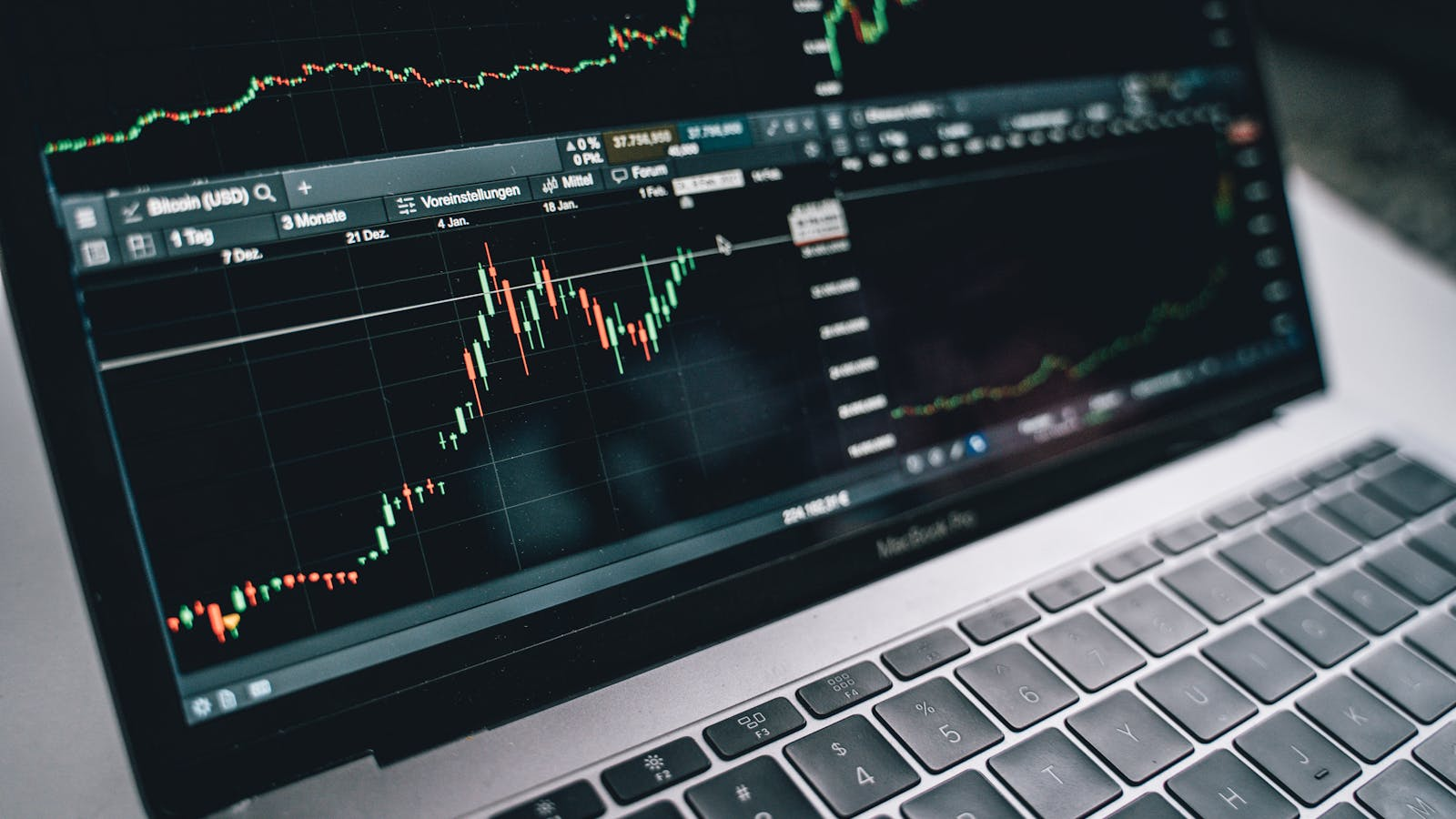
High-profile IPOs are the easiest to create a feeling of “missing out means losing money,” but there is no necessary link between a popular company, a star founder, a first-day price jump, and long-term outperformance. SpaceX has strong commercial barriers and market attention, and its IPO may become a focus of global capital markets. But what you are actually buying is a stock at a specific price, not an abstract good story. When assessing new stocks such as SpaceX, the key is not to predict first-day gains or losses, but to examine valuation, earnings delivery, prospectus risks, market benchmarks, and real trading costs. The relevant content is only for public information analysis and does not constitute investment advice.
Key Takeaways
- First-day sentiment around a high-profile IPO does not equal long-term excess returns.
- Ordinary investors often buy after listing, so their price advantage may be weaker.
- SpaceX has strong business potential, but a high valuation will magnify delivery pressure.
- The prospectus should be reviewed with a focus on financials, risks, governance, and lock-up arrangements.
- Before trading, investors should also check order types, fee structures, and volatility risks.
Why Do High-Profile IPOs Easily Create the Illusion That They Must Rise?
Popular IPOs easily create the illusion that they “must rise” because investors often mix up company visibility, media attention, issuance scarcity, and first-day gains. SpaceX has multiple narratives, including spaceflight, Starlink, AI, and Elon Musk’s personal influence, so it naturally attracts strong attention. But attention cannot automatically translate into long-term returns.
Popularity Comes From Scarcity, Not Necessarily a Reasonable Price
The reason companies like SpaceX attract market attention is not that they are “ordinary,” but that they are “scarce.” Commercial spaceflight, reusable rockets, satellite internet, potential AI infrastructure, and founder influence are all highly topical. The problem is that scarcity is often priced into the offering valuation and post-listing purchase price in advance.
You need to distinguish among three things: whether the company is excellent, whether the price is reasonable, and whether you can buy at a reasonable price. When many investors see keywords such as SpaceX IPO, SPCX ticker, Nasdaq listing, and Starlink revenue, they are first attracted by the story rather than first asking, “How much future growth has already been reflected in this price?”
First-Day Gains and Long-Term Returns Are Not the Same Thing
IPO “gains” can be measured in several ways: offering price to opening price, offering price to first-day closing price, opening price to first-day high, and performance over the months after listing. If ordinary investors do not receive shares at the offering price and instead buy after trading begins in the secondary market, their actual return curve may be completely different.
The U.S. SEC reminds investors in its IPO Investor Bulletin that investors should read the prospectus because it discloses key information such as the company’s business, financial condition, management, and offering terms. At the same time, the SEC staff’s review of registration documents does not mean it endorses the investment value of the IPO.
Media Narratives Amplify Winner Samples
Popular IPO content often has one bias: successful cases are repeatedly circulated, while failed cases are gradually forgotten. AI chips, cloud computing, new energy vehicles, and social platforms have all seen extremely hot early listing phases followed by divergent performance. Investors tend to remember companies that surged after listing, while ignoring companies that suffered long-term drawdowns, valuation compression, or weaker-than-expected performance after going public.
| Popular Signal | Common Misunderstanding | Better Question to Ask |
|---|---|---|
| Star founder | A strong founder means a strong stock price | Does the governance structure protect ordinary shareholders? |
| High media attention | Everyone is watching, so it is worth buying | Has the attention already been reflected in the price? |
| Scarce issuance | Not being able to buy means it is an opportunity | Has scarcity caused a secondary-market premium? |
| First-day surge | The company has been validated by the market | Is the purchase price already too high? |
| High valuation | The company is great enough | How much future growth must be delivered? |
Summary: The biggest risk of a popular IPO is not that the company lacks a story, but that the story is too strong and causes the price to reflect too many optimistic expectations in advance. SpaceX’s commercial potential is indeed strong, but you cannot look only at narratives such as “the first space stock,” “Musk concept,” or “Starlink growth.” A more prudent approach is to treat the IPO as a pricing question: What is the offering price, what is the opening price, what price might you actually buy at, and how much future growth is already included in the valuation? If these questions have no answers, chasing popularity can easily become chasing emotion.
From Historical Performance, Why Do Popular IPOs Often Underperform the Market?
Popular IPOs often underperform the market because their listing prices usually already include a large amount of optimistic expectations. Reuters’ analysis of the 50 highest-valued IPOs over the past five years showed that in about three-quarters of cases, buying an S&P 500 index fund produced better results. These IPOs rose by an average of 27%, while the S&P 500 rose by an average of 53% over the same period.
Reuters’ analysis of 50 high-valuation IPOs also noted that the statistics assumed investors could buy at the IPO offering price, which is not always feasible for ordinary investors. If investors buy during the high-heat trading period on the first listing day, results are often worse.
IPO Pricing Often Pulls Forward the Future
An IPO is not the first time a company is priced. Many high-profile companies have already been revalued by multiple rounds of investors during private financing, acquisitions, and secondary equity transfers. By the time they list publicly, ordinary investors may no longer be facing an “early-stage price,” but a price that has already discounted years of growth assumptions.
If SpaceX lists at an extremely high valuation, investors who buy in will need several things to happen at the same time in order to achieve excess returns: rapid revenue growth, margin improvement, controllable capital expenditure, continued delivery from businesses such as AI and Starlink, and sustained high market risk appetite. If any of these variables falls short of expectations, the stock price may be repriced through valuation compression.
Different Buying Points Can Lead to Very Different Outcomes
IPO return differences largely depend on where you are positioned. Institutions or important clients may receive shares at the offering price, while ordinary investors may only be able to buy after the market opens. The opening stage may also involve price gaps, short-term rallies, concentrated liquidity, and sharp price volatility.
Investor.gov notes in its explanation of popular IPOs that when IPO demand greatly exceeds share supply, underwriters typically allocate shares to their most valuable clients, and individual investors’ ability to obtain shares in popular IPOs may be limited.
| Participation Method | Price Advantage | Information Advantage | Main Risk |
|---|---|---|---|
| Allocation at offering price | Stronger | Stronger | Limited allocation, possible holding requirements |
| Buying after the market opens | Moderate or weaker | Average | Gap-up opening and chasing risk |
| Chasing gains intraday on the first day | Weaker | Weaker | High volatility and obvious slippage |
| Observing for several months after listing | More stable price | More complete information | May miss short-term gains |
| Buying an index fund | No single-company bet | Diversified | Cannot capture explosive single-stock upside |
A Few Big Winners Do Not Represent the Overall Win Rate
There will indeed be big winners among popular IPOs. Reuters mentioned that AI-related companies such as Astera Labs and Arm performed strongly after listing. But in the same sample group, there were also cases such as Rivian, Didi, and Figma, whose performance after listing was poor or highly volatile. Treating a few successful samples as a general IPO rule is one of the most common judgment errors.
New stock investment should be compared with market benchmarks, not with an imagined scenario of “if I had bought at the lowest point.” Benchmarks such as the S&P 500, Nasdaq 100, and sector ETFs can help you judge whether taking on the valuation, governance, financial, and execution risks of a single company truly brings sufficiently high expected returns.
Summary: It is not rare for high-profile IPOs to underperform the market. The reason is not necessarily that the company is poor, but that the purchase price is too high, expectations are too full, and ordinary investors lack the offering-price advantage. The stronger SpaceX’s story is, the more likely the market is to price growth expectations into the stock before listing. You need to turn “buying SpaceX” into a more specific question: at this valuation, what revenue, profit, and cash flow levels must the company reach over the next few years to outperform the S&P 500 or Nasdaq 100? If the answer is unclear, popularity cannot be a reason to buy.
Looking at SpaceX, Why Can a Strong Company Still Be a Poor Stock at a Certain Price?

A strong company does not necessarily equal a good stock price, because stock returns depend on purchase price, valuation level, profit delivery, and changes in market expectations. SpaceX has high business barriers, but if its listing valuation already includes extremely high growth assumptions, the future stock price will depend even more on continuous delivery.
SpaceX’s Appeal Comes From Business Barriers and Growth Narratives
SpaceX’s appeal is clear: reusable rockets have changed the launch cost structure, Starlink has turned satellite internet into a scalable commercial business, and the company may later expand into larger markets such as space infrastructure, AI computing, and deep-space exploration. For capital markets, these narratives are enough to support a high level of attention.
Reuters reported in its SpaceX IPO timetable that SpaceX plans to list on Nasdaq, intends to use the ticker SPCX, and may raise about $75 billion at a valuation of approximately $1.75 trillion.
The Higher the Valuation, the Stricter the Future Delivery Requirements
A high valuation is not necessarily wrong, but it changes the difficulty of investing. The higher the valuation, the stricter the market’s requirements for future revenue growth, margins, capital efficiency, and cash flow. If SpaceX lists at a valuation close to the trillion-dollar level, investors are not buying an “early-stage growth stock,” but a super asset that has already received full attention from global capital.
Reuters also noted that at a valuation of about $1.75 trillion, SpaceX’s price-to-sales ratio could be close to 100 times, far higher than many mature large technology companies. The same report also mentioned that SpaceX lost nearly $5 billion last year.
Losses, Capital Expenditure, and New Businesses Affect Risk Pricing
SpaceX’s risks are not only about whether rockets launch successfully. According to Reuters’ review of SpaceX’s prospectus, the company reported first-quarter revenue of about $4.69 billion and an operating loss of about $1.94 billion. Its connectivity business, where Starlink is located, was profitable, but AI-related businesses brought significant losses and capital expenditure pressure.
| Evaluation Dimension | SpaceX Highlight | Question Investors Should Ask |
|---|---|---|
| Launch business | Reusable rockets create barriers | Can the cost advantage continue to expand? |
| Starlink | Satellite internet has scaled | Can user growth and margins be sustained? |
| AI business | Provides new growth imagination | Is capital expenditure too heavy? |
| Valuation level | May reach historic IPO scale | Has it pulled forward years of growth? |
| Governance structure | Strong founder control | Is ordinary shareholder voice limited? |
| Market environment | High enthusiasm for AI and technology stocks | Will changing risk appetite compress valuation? |
Summary: SpaceX can be a very strong company and still be a difficult investment at a certain price. A strong business provides the possibility of long-term growth, while a high valuation raises the delivery threshold. What you really need to judge is not “whether SpaceX is great,” but “whether buying at the IPO or post-listing price can generate returns sufficient to compensate for valuation risk, governance risk, capital expenditure risk, and market volatility risk.” If the price has already included years of future success in advance, the stock may not continue to outperform the market even if the company keeps growing.
What Structural Disadvantages Do Ordinary Investors Often Face When Participating in Popular IPOs?
The difficulty for ordinary investors participating in popular IPOs is not only judging whether the company is good or bad. It also includes whether they can get shares at the offering price, whether the post-listing purchase price is reasonable, whether the order is executed as expected, and whether trading costs affect actual returns. The more popular a new stock is, the more important it is to calculate these structural disadvantages in advance.
Popular IPO Allocation Is Not Entirely Decided by Retail Investors
The IPO issuance stage is jointly arranged by the issuing company, underwriters, and distribution channels. Even if some platforms open participation to retail investors, that does not mean every investor can receive enough shares, nor does it mean shares will be executed at an ideal price.
Investor.gov clearly reminds investors in its IPO allocation eligibility guidance that no brokerage firm can guarantee investors will be able to purchase IPO shares. Popular IPO shares are limited, and individual investors’ ability to buy may be restricted.
Buying After Listing Means Facing Higher Volatility and Price Gaps
If investors do not receive shares at the offering price, many will buy after secondary-market trading begins. Risks are usually higher at this stage: the opening price may be far above the offering price, market orders may create slippage, limit orders may not be filled, and prices may fluctuate sharply within a short period.
The SEC and Investor.gov remind investors in their IPO investor education update that buying immediately after a new stock starts trading involves risk. After underwriter price support ends, the stock price may drop significantly. After the lock-up period expires, a large number of restricted shares may also become available for sale, creating pressure on the stock price.
Trading Costs Also Affect Actual Returns
If you are watching trading opportunities after a popular IPO lists, you need to pay attention not only to price volatility, but also to real trading costs. U.S. stock trading costs usually include more than commissions. They may also include platform fees, external agency fees, trading activity fees, and settlement fees. According to the compiled fee information, BiyaPay U.S. stock trading fees show that U.S. stock trading commission is $0, while platform fees, external agency fees, and other fees are subject to the fee center and order page display. Fractional share orders with fewer than one share executed should also be checked separately for their fee rules.
| Pre-Trade Checklist | Why It Matters | How to Handle It |
|---|---|---|
| Offering price and opening price | Determines whether there is already a large premium | Do not only look at first-day gains |
| Order type | Market orders may create slippage | Understand limit orders first in high-volatility periods |
| Platform fee | Affects the cost of small orders | Check fee estimates before placing orders |
| External agency fees | May vary with number of shares traded | Do not look only at commissions |
| Fractional share rules | Small-order participation costs differ | Check fractional share fees separately |
| Selling costs | More obvious impact on short-term trading | Estimate selling costs before buying |
BiyaPay is a global multi-asset trading wallet that supports U.S. stocks, Hong Kong stocks, and cryptocurrency trading, and also supports converting USDT into major fiat currencies such as USD or HKD. If your region, identity verification result, platform rules, and applicable laws and regulations all meet the requirements, you can include order fees, fractional share rules, and funding paths in your assessment before trading, instead of only focusing on whether you can buy the stock.
Summary: For ordinary investors participating in popular IPOs, the real disadvantages often appear in the details: not receiving the offering price, an elevated price after the market opens, uncertain order execution, sharp short-term volatility, and unclear fee structures. A highly watched IPO such as SpaceX requires a more complete pre-trade check. You do not need to rush into an order because of market heat. Instead, you should first judge your price position, order type, level of volatility exposure, and real cost. Popular IPOs may experience significant price volatility in the early post-listing stage, so investors should fully understand order types, fee structures, and risks before trading.
When Reading the SpaceX Prospectus, Which Risk Signals Deserve the Most Attention?
When reading the SpaceX prospectus, you should not only look at the growth vision and market size. You should pay closer attention to risk factors, financial data, shareholding structure, related-party transactions, capital expenditure, lock-up periods, and use of proceeds. The value of a prospectus is not to prove that you are bullish, but to help you identify variables that may invalidate the valuation.
Look at Financials First, Not Vision First
SpaceX has a grand story, but the reading order of the prospectus should start with financials: revenue structure, gross margin, operating profit, net profit, cash flow, capital expenditure, and segment performance. In particular, investors should distinguish between more mature businesses such as Starlink and longer-term projects such as AI, space data centers, and deep-space exploration.
The U.S. SEC’s Form S-1 is a common registration statement format for public offerings. It usually includes the business, risk factors, management discussion, financial statements, share capital structure, and other content. When reading a prospectus, these disclosures should be cross-checked with independent sources.
Control Structure Affects Minority Shareholder Voice
Founder-led companies often use dual-class share structures. This type of structure helps founders maintain long-term strategic control, but it may also make it difficult for ordinary shareholders to influence the board, compensation, major transactions, and governance arrangements.
A public letter from the New York State Comptroller and other pension institutions expressed concerns about SpaceX’s potential governance structure. It mentioned that Class B shares may be concentrated in the hands of Musk and a small number of insiders, with Class B shares carrying 10 votes per share, while public Class A shares carry 1 vote per share.
The More Ambitious the Technology Roadmap, the Higher the Uncertainty
SpaceX’s long-term vision includes Mars, Starship, satellite internet, space data centers, and AI computing. These themes increase market imagination, but they also increase the difficulty of judgment. Ambitious technology roadmaps usually mean higher capital expenditure, longer delivery cycles, more complex regulatory environments, and greater execution uncertainty.
| Prospectus Risk Checklist | Questions to Examine |
|---|---|
| Revenue structure | What are the revenue contributions from Starlink, launch services, AI, and other segments? |
| Earnings quality | Which businesses are profitable and which are losing money? |
| Cash flow | Does growth depend on continuous financing? |
| Capital expenditure | Are AI, Starship, and satellite network investments too heavy? |
| Shareholding structure | Are ordinary shareholders’ voting rights limited? |
| Related-party transactions | Are there significant transactions with Musk’s other companies? |
| Lock-up period | When can future saleable shares be released? |
| Use of proceeds | Will the funds be used for expansion, debt repayment, or shareholder exits? |
Summary: The most important parts of the SpaceX prospectus are not the most exciting future market sizes, but the constraints that are most easily ignored. Can revenue cover capital expenditure? Can Starlink’s profitability offset investments in AI and deep-space projects? How much voice do ordinary shareholders have under a dual-class structure? Could there be potential selling pressure after the lock-up period? These questions are closer to the investment decision than “whether SpaceX is great.” The hotter an IPO is, the more investors should use the risk factors in the prospectus to counter emotional judgment.
If You Are Following the SpaceX IPO, How Can You Build a More Prudent Assessment Framework?
A more prudent way to follow the SpaceX IPO is not to predict first-day gains or losses, but to build a reusable assessment framework: first confirm public filings, then assess valuation and profitability, then compare with market indexes, and finally include order rules, fee structures, and your own risk tolerance.
Use Market Benchmarks to Test Whether Single-Stock Risk Is Worth Taking
When judging whether SpaceX is worth following, you should not compare it only with ordinary companies, but also with market benchmarks. The S&P 500, Nasdaq 100, technology growth stocks, communications infrastructure companies, and aerospace and defense companies can all serve as reference points from different angles.
Nasdaq explained in its Nasdaq-100 methodology update that methodology changes to the Nasdaq-100 Index would take effect on May 1, 2026, in response to the changing structure of large newly listed companies and public markets. For investors, expectations of index inclusion may bring passive fund attention, but may also amplify short-term trading sentiment.
Use Scenario Analysis Instead of a Single-Point Forecast
Rather than predicting “how much SpaceX will rise on the first day,” it is better to break the judgment into three scenarios:
| Scenario | Possible Situation | Implication for the Stock Price |
|---|---|---|
| Optimistic scenario | Starlink remains profitable, AI business losses narrow, and Starship progresses smoothly | High valuation may continue to be absorbed |
| Neutral scenario | Revenue grows, but capital expenditure remains high and profit improvement is slow | The stock may fluctuate while digesting valuation |
| Cautious scenario | AI investment drags on cash flow, valuation falls, and market risk appetite declines | A larger drawdown may occur |
This method cannot guarantee correct judgment, but it can prevent investors from putting all expectations in one direction. The biggest problem with popular IPOs is often that investors only look at the optimistic scenario and do not consider whether they can withstand volatility under neutral or cautious scenarios.
Put Trading Rules and Fees Into Return Calculations
If you plan to follow post-listing price performance, you can first use U.S. stock information search to observe relevant market information, and then estimate different order costs based on the trading platform’s fee display. BiyaPay’s U.S. stock trading commission is $0, while platform fees, external agency fees, and other fees are subject to the fee center and order page display. The fee structures for fractional share orders, whole-share orders, and sell orders should not be mixed together.
| Pre-Investment Step | Specific Question |
|---|---|
| Information sources | Have the prospectus, SEC filings, Reuters, and other sources been checked? |
| Valuation judgment | Do the price-to-sales ratio, revenue growth, and profit path match? |
| Risk identification | Are governance, capital expenditure, and lock-up periods clearly understood? |
| Benchmark comparison | Is it more attractive than the S&P 500 or Nasdaq 100? |
| Trading calculation | Have order types, fees, and fractional share rules been estimated in advance? |
Summary: Rationally following the SpaceX IPO does not mean completely avoiding opportunities. It means not treating popularity as a guarantee of returns. You can track the prospectus, roadshow, offering price, opening price, lock-up period, index inclusion, and post-listing earnings reports, but each step should return to the same question: is taking these risks at this price more attractive than holding a market benchmark? If the answer is only “everyone is watching,” that is not yet an investment framework. A truly effective framework should cover public information, valuation, profitability, governance, trading costs, and risk tolerance at the same time.
FAQ
Will the SpaceX IPO Definitely Rise?
Not necessarily. A popular IPO may rise on the first day, but it may also fall after listing. Long-term returns are determined not by popularity, but by purchase price, valuation, earnings delivery, and the market environment. SpaceX has very high attention, but high attention itself cannot eliminate volatility and valuation risk.
Can Ordinary People Buy at the Offering Price?
Not necessarily. Shares in popular IPOs are usually limited, and underwriters and the issuing company decide the allocation structure. A more common situation for ordinary investors is buying in the secondary market after listing, when the price may already be higher than the offering price and may face greater volatility.
Why Can a Strong Company Also Break Below Its IPO Price?
A strong company breaking below its IPO price usually does not mean the business is necessarily bad. It may be because the listing price was too high, market expectations were too full, profit delivery was slow, or overall market risk appetite declined. Stock returns depend on price and changes in expectations, not only on company reputation.
What Should You Look at First When Assessing an IPO?
You should first review the prospectus, financial data, risk factors, shareholding structure, use of proceeds, and lock-up arrangements, and then look at market popularity. Social media and short videos can provide clues, but they cannot replace public filings and independent information checks.
Are Fractional Shares Suitable for Participating in Popular IPOs?
Fractional shares can lower the funding threshold for a single trade, but they do not mean lower risk. Popular IPOs may be highly volatile in the early post-listing stage, and even small purchases may lose money. Before trading, you should still check the price, order type, platform fee, external agency fees, and fractional share order rules.
If you are following the SpaceX IPO or other popular U.S. stocks, the focus should not be whether to chase the hot topic, but whether you can establish a clear pre-trade checklist: whether public information has been checked, whether valuation is reasonable, whether order types are understood, whether the fee structure is clear, and whether your location and identity verification meet the applicable service conditions.
BiyaPay can be used to view multi-asset trading services and is suitable for understanding the fees and trading rules of different assets such as U.S. stocks, Hong Kong stocks, and cryptocurrencies before trading. On mobile, you can also use the BiyaPay App to manage your account and view market information. Whether related services are available depends on the user’s location, identity verification result, platform rules, and applicable laws and regulations.
*This article is provided for general information purposes and does not constitute legal, tax or other professional advice from BiyaPay or its subsidiaries and its affiliates, and it is not intended as a substitute for obtaining advice from a financial advisor or any other professional.
We make no representations, warranties or warranties, express or implied, as to the accuracy, completeness or timeliness of the contents of this publication.
Related Blogs of

Is the SpaceX IPO Worth Watching? What Risks Should Investors Watch in High-Valuation Tech Stocks?


What Are the SpaceX IPO Risks? Losses, Governance Structure, and Project Delays All Matter


How Strong Is Musk’s Control Over SpaceX? How to Assess Corporate Governance Risks After the IPO



Choose Country or Region to Read Local Blog
 Australia
 Austria
 Belgium
 Canada
 Cyprus
 Czech Republic
 Denmark
 Estonia
 Finland
 France
 Germany
 Greece
 Hong Kong
 India
India Indonesia
 Ireland
 Italy
Italy Japan
Japan Latvia
 Lithuania
 Luxembourg
 Malaysia
 Malta
Malta Morocco
 Nepal
Nepal Netherlands
 New Zealand
 Norway
 Pakistan
 Philippines
 Poland
 Portugal
 Romania
 Singapore
 Slovakia
 Slovenia
 South Africa
 South Korea
 Spain
Spain Sweden
 Thailand
 The United States
 Turkey
 United Arab Emirates
 United Kingdom
 Vietnam
Contact Us




BIYA GLOBAL LLC is registered with the Financial Crimes Enforcement Network (FinCEN), an agency under the U.S. Department of the Treasury, as a Money Services Business (MSB), with registration number 31000218637349, and regulated by the Financial Crimes Enforcement Network (FinCEN).
BIYA GLOBAL LIMITED is a registered Financial Service Provider (FSP) in New Zealand, with registration number FSP1007221, and is also a registered member of the Financial Services Complaints Limited (FSCL), an independent dispute resolution scheme in New Zealand.