What Are the SpaceX IPO Risks? Losses, Governance Structure, and Project Delays All Matter




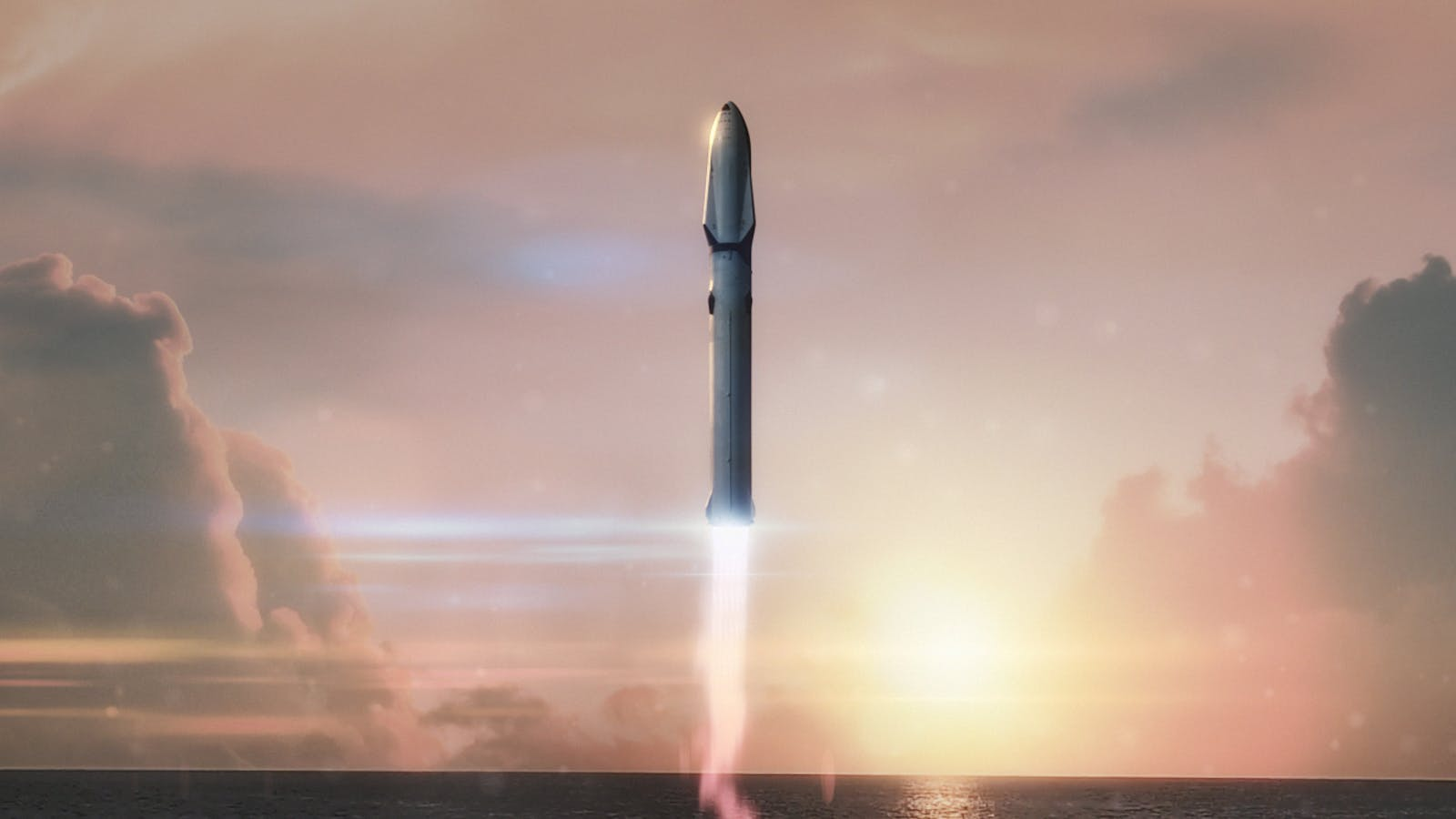
The main risks of a SpaceX IPO include not just high valuation, but also widening losses, AI spending pressures, concentrated Musk control, Starship delays, regulatory approvals, and first-day trading volatility. When you focus on the SpaceX IPO, you should not only ask “can I buy” or “will it go up after listing”. Instead, first understand how these risks affect company valuation, shareholder rights, project delivery, and secondary market prices. A high-attention IPO often requires a risk framework, not emotional judgment.
Key Takeaways
- SpaceX IPO risks include financial losses, governance structure, and project delivery.
- Starlink provides profitability support, but AI and Starship still create funding pressures.
- Musk’s high voting power benefits strategic continuity but reduces ordinary shareholder influence.
- Starship delays or cost overruns would affect growth paths and valuation assumptions.
- For a hot IPO debut, also pay attention to offering price, volatility, and trading costs.
Why SpaceX IPO Risks Are Worth Understanding First: Don’t Get Carried Away by the Hype

SpaceX IPO risks are worth understanding first because this is not an ordinary company listing. It is a high-valuation, high-attention, high-narrative-density technology IPO. It simultaneously ties together commercial spaceflight, Starlink, AI, Starship, space data centers, and Elon Musk’s personal influence. The higher the hype, the easier it is to overlook risk decomposition and misinterpret “important company” as “safe after listing”.
The SEC’s basic definition of an IPO is that a company, through a registered offering, sells equity securities to the public for the first time and establishes a public trading market. An IPO only means the company enters the public market; it does not mean the valuation is cheap, nor does it guarantee the price will rise after listing. For a hot company like SpaceX, risk analysis should be done especially “before trading”, not as a catch-up after significant price moves.
According to Reuters’ coverage of SpaceX IPO filings, SpaceX’s potential offering corresponds to a valuation of approximately $1.75 trillion. The business narrative has expanded from rocket launches and Starlink to AI, space data centers, and a long-term Mars vision. A high valuation itself is not a mistake, but it raises the market’s demands for growth, profits, technical progress, and governance transparency.
| Risk Type | Main Manifestation | Significance for Ordinary Investors |
|---|---|---|
| Financial Risk | Widening losses, high capex | Affects valuation support and cash flow expectations |
| Governance Risk | Concentrated Musk voting power | Limited ordinary shareholder influence |
| Project Risk | Starship delays or cost overruns | Affects satellite, AI, and growth plans |
| Valuation Risk | High valuation, high P/S ratio | Low margin for error |
| Trading Risk | High price volatility in early IPO | Uncertain entry price and actual costs |
Understanding SpaceX IPO risks requires more than asking “will the stock price drop”. A more complete framework has five layers: whether the company can sustainably make money, whether the governance structure protects ordinary shareholders, whether key projects like Starship can advance as planned, whether current valuation already reflects overly high expectations, and whether ordinary investors will bear high volatility and high trading costs after listing.
Summary: The core risks of a SpaceX IPO are not a single risk but multiple risks overlapping. Losses affect valuation support, project delays affect growth expectations, governance structure affects ordinary shareholder rights, and high valuation amplifies market volatility. You need to see the transmission chain among these risks before judging whether you care about the company’s long-term value or the secondary market trading opportunity after listing. The former focuses on business and governance; the latter also requires attention to offering price, opening price, liquidity, fees, and your own risk tolerance.
Losses and Capex Risk: Starlink’s Profitability Does Not Equal Overall Financial Safety

SpaceX’s financial risk cannot be simply understood as “the company is losing money, so it’s bad”, nor can it be dismissed because Starlink is profitable. A more accurate way to judge is: where does the profit come from, which businesses are incurring losses, and whether capex can translate into future revenue and cash flow. A growth-stage technology company can have periodic losses, but losses must have a clear path to returns.
Starlink is SpaceX’s clearest current profit pillar. It provides satellite internet services to remote areas, enterprises, aviation, shipping, governments, and mobile communications. According to Reuters’ disclosure of SpaceX first-quarter data, Starlink’s connectivity business generated approximately $1.19 billion in operating profit, but SpaceX overall still recorded an operating loss of about $1.94 billion, with the AI division losing about $2.47 billion.
This shows that segment profitability and overall profitability are not the same concept. Starlink can provide a realistic anchor for valuation, but SpaceX is also simultaneously bearing high-investment businesses like AI, Starship, launch infrastructure, and space data centers. Looking only at Starlink’s profit underestimates overall cash consumption; looking only at overall losses may overlook that SpaceX already has a commercialized core revenue source.
AI spending is another important variable. Reuters reports that xAI-related businesses accounted for 76% of SpaceX’s $10.1 billion in capital expenditures in the first quarter. AI can raise the growth narrative, expanding SpaceX from a “commercial space company” to a “space infrastructure + AI company”, but in the short term it will also significantly amplify losses and cash needs. If AI spending does not soon form a clear revenue path, a high valuation will rely more on future promises.
| Financial Metric | Optimistic Interpretation | Risk to Watch |
|---|---|---|
| Starlink profit | Real revenue and profit support | Cannot cover all business investments |
| AI losses | Could open a new growth curve | Short-term drag on profit and cash flow |
| Capital expenditure | Positioning for future business | Long payback period, high uncertainty |
| Cumulative losses | Result of long-term engineering investment | Valuation requires more future delivery |
| Q1 loss widening | Characteristic of high-investment phase | If continues widening, pressures valuation |
Reuters’ analysis of SpaceX’s rockets-to-AI vision also noted that the company’s net loss in the first quarter reached $4.28 billion, with cumulative losses of $41.31 billion. Starlink’s first-quarter revenue was approximately $3.26 billion, up nearly one-third year-over-year. This combination is typical: a rapidly growing profit pillar on one hand, and massive future investments on the other.
From a valuation perspective, losses are not scary; what is scary is losses that cannot be explained. You need to continue monitoring three questions: First, can Starlink’s revenue and profit continue to grow? Second, can the investments in AI and Starship form a clear commercialization path? Third, will capex rely on financing for a long time, rather than gradually being supported by operating cash flow?
Summary: SpaceX’s financial risk cannot be summarized by the word “losses”. Starlink provides real profit support, but AI, Starship, and future infrastructure investments may continue to consume cash. A high valuation can accommodate periodic losses, but it cannot lack evidence of profit improvement and cash flow over the long term. For ordinary investors, when assessing financial risk, look at revenue, segment profit, net loss, capex, and cumulative losses together. Only when the profit pillar can cover long-term investments will SpaceX’s high valuation be more easily accepted by the market.
Governance Structure Risk: How Does Concentrated Musk Control Affect Ordinary Shareholders?

The core of SpaceX’s governance structure risk is not evaluating whether Musk is good or bad, but how much rights ordinary shareholders have after listing. Strong founder control can improve strategic continuity, but it may also reduce public investors’ influence over the board, capital allocation, related-party transactions, and major matters. For IPO investors, this is a rights structure issue that needs to be understood in advance.
According to Reuters’ reporting on SpaceX’s listing structure, SpaceX will adopt a dual-class share structure. Class B shares have 10 votes per share, while Class A shares held by public investors have 1 vote per share. Musk will retain approximately 85.1% of the combined voting power. This design means the company will remain highly dependent on Musk and insider shareholders after listing.
Dual-class structures are not rare themselves; many technology companies have adopted similar arrangements. Supporters argue that this allows founders to ignore short-term market pressures and continue pursuing long-term projects. For SpaceX, Starship, AI, the Mars vision, and space infrastructure all require long time horizons. Strong control may help the company stick to its long-term roadmap. The issue is that ordinary shareholder influence diminishes accordingly.
| Governance Issue | Impact on Investors | Key Consideration |
|---|---|---|
| Concentrated voting power | Weak ordinary shareholder voice | Trade-off between strategic efficiency and shareholder protection |
| Dual-class shares | Separation of control and economic rights | Class A / Class B differences |
| Related-party transactions | Conflict of interest scrutiny more important | Check adequacy of disclosure |
| Founder dependence | Musk’s personal risks affect company | Brand, strategy, and decision concentration |
| Weakened shareholder protection | Limited activism and governance influence | Should be included as a risk factor |
Governance risk also manifests in related-party transactions and the “Musk ecosystem”. There may be technology, brand, contract, capital, or personnel crossovers among SpaceX, Tesla, xAI, X, and other companies. Such ecosystem synergies can create efficiency, but they can also bring disclosure, pricing, and conflict of interest issues. Reuters reported that an investor group asked the SEC to scrutinize SpaceX IPO disclosures, focusing on financial reliability, potential conflicts of interest, and governance issues.
Governance structure also affects valuation discounts or premiums. If the market believes in Musk’s long-term strategic ability, it may accept more concentrated control. If the market worries about related-party transactions, transparency, or insufficient protection of ordinary shareholders, it may demand a higher risk discount. For ordinary investors, the key is not to judge whether founder control is necessarily good or bad, but to understand that you are buying economic rights, not necessarily full governance influence.
Summary: SpaceX’s governance risk is essentially a rights structure risk. Musk’s high voting power helps maintain long-term strategy, but ordinary shareholders will have relatively limited influence over the board, capital allocation, M&A, related-party transactions, and major decisions. Strong founder control is suitable for executing long-cycle projects, but it also requires higher disclosure quality and stronger market trust. When evaluating the SpaceX IPO, do not only look at the company’s story and revenue growth; also see how much voice ordinary shareholders actually have in the governance structure after listing.
Starship and Project Delay Risk: The More Important Long-term Growth, the Greater the Execution Risk
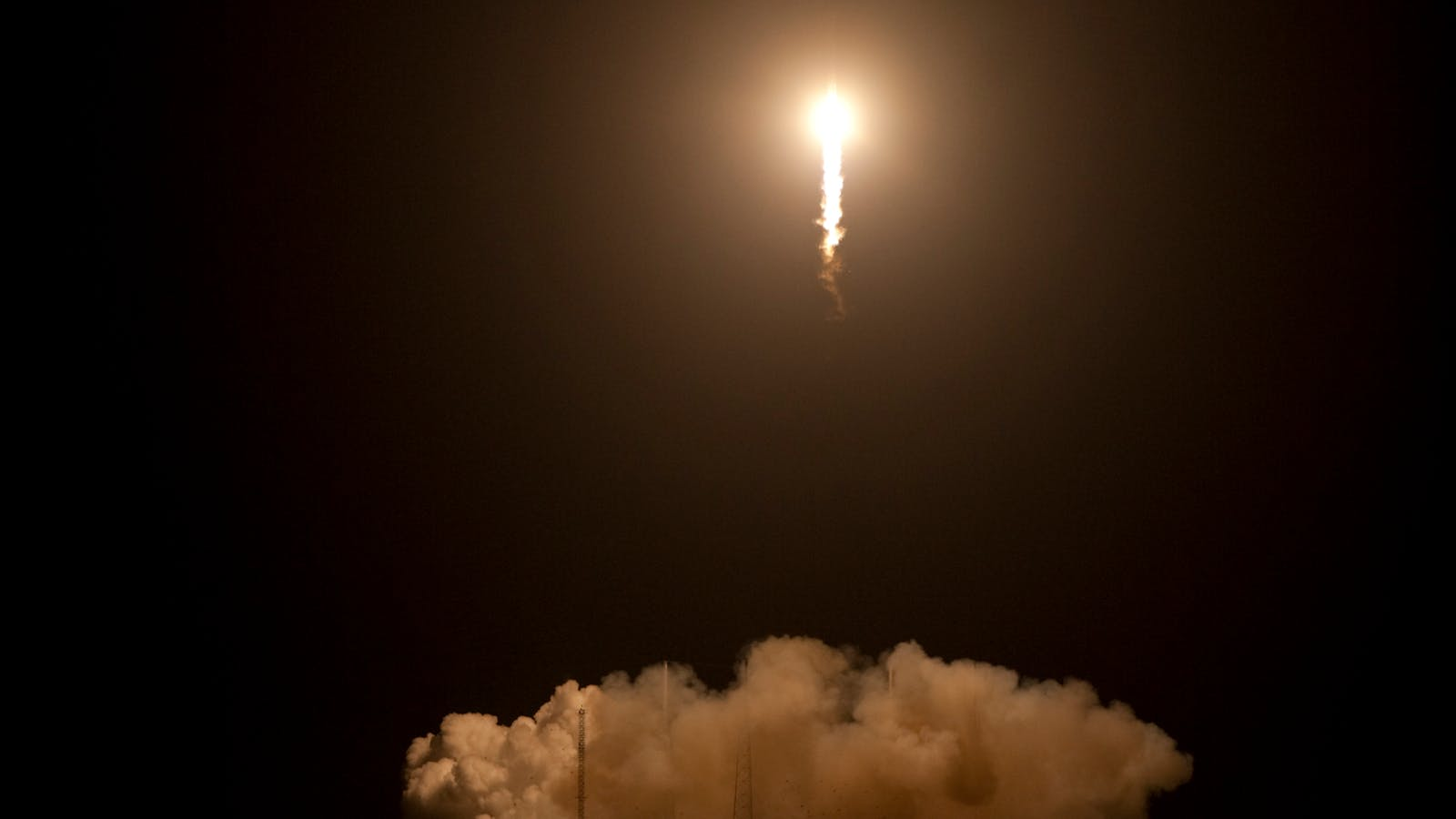
Starship is one of the most critical project variables in SpaceX IPO risk, because it is not just a rocket project. It relates to next-generation satellite deployment, lower launch costs, Starlink expansion, AI infrastructure, and the longer-term space economy narrative. Starship’s success would strengthen the valuation logic; delays or cost overruns would weaken growth expectations.
Reuters noted in its SpaceX rockets-to-AI IPO analysis that SpaceX’s growth strategy is highly dependent on Starship. If development is delayed or cost targets are not achieved, it could affect next-generation satellite deployment, AI infrastructure expansion, and the overall growth path. This is the core of project delay risk: it affects not just one engineering milestone, but multiple business assumptions.
The transmission of project delay risk to valuation typically happens in several steps: Starship progress stalls, expectations for lower launch costs are postponed; lower launch costs are delayed, affecting next-generation satellites and Starlink expansion pace; satellite deployment slows, reducing revenue growth and network capability expectations; longer-term narratives like AI and space data centers lack infrastructure support; ultimately the market re-examines valuation multiples.
| Project Risk | Possible Impact | Transmission to IPO Valuation |
|---|---|---|
| Starship test flight delays | Slower capacity upgrade | Reduces credibility of long-term growth |
| Cost targets not met | Launch cost reduction below expectations | Compresses profit margin assumptions |
| Permit changes | Launch frequency affected | Impacts deployment pace |
| Technical system complexity | Chain effects from single-point issues | Increases execution risk discount |
| Next-gen satellite deployment delays | Slower Starlink expansion | Affects revenue growth expectations |
Regulation is also a normal risk for space projects. The FAA’s documentation on the Starship/Super Heavy Boca Chica project shows that relevant assessments involve vehicle operator license modifications, additional flight trajectories, return-to-launch-site missions, and temporary airspace closures. The regulatory process is not simply an obstacle; it is part of managing safety, environmental, and public risks for space activities.
The same FAA project documentation also mentions assessments for increased launch frequency, including more annual launches and landings of Starship/Super Heavy at Boca Chica. For SpaceX, higher launch frequency means stronger commercial deployment capability. But increased frequency also must meet safety, environmental, airspace, and licensing requirements. If the regulatory pace is not synchronized with business plans, growth expectations embedded in the valuation may be delayed.
Summary: SpaceX’s long-term growth heavily depends on Starship and related infrastructure advancing as planned. Starship is not just a standalone technology news item; it is the core node connecting satellite deployment, launch costs, AI infrastructure, and the space economy narrative. The more important the project, the greater the impact of delays, cost overruns, and permit changes on valuation. When you look at SpaceX IPO risks, treat Starship as “growth delivery risk”, not just a rocket test flight event.
Valuation and IPO Trading Risk: Hot Listing Does Not Equal Low-Risk Buy
SpaceX can be an important company, but an important company is not the same as a low-risk stock. The investment outcome after an IPO depends on the price you pay, how high market expectations are at the time of purchase, how volatile the early trading is, and whether you factor in actual trading costs. Hot IPOs make it easiest to overlook this.
High valuation amplifies all risks. Reuters analysis of hot IPO performance noted that SpaceX targets a valuation of about $1.75 trillion, with a price-to-sales ratio near 100x; among the 50 high-valuation IPOs in the past five years, about three-quarters underperformed buying an S&P 500 index fund over the same period. This statistic does not predict how SpaceX will perform, but it shows there is no necessary relationship between a hot IPO and long-term market outperformance.
Offering price, opening price, and secondary market transaction price should also be distinguished. The offering price is set during the IPO pricing phase; ordinary investors may not receive allocations. The opening price is determined by market supply/demand on the first day and could be significantly higher than the offering price. The secondary market transaction price is further affected by short-term funds, liquidity, social media sentiment, and market risk appetite. If you buy after listing, you bear not “offering price opportunity” but public market trading risk.
| Trading Risk | Specific Manifestation | Key Check |
|---|---|---|
| Offering price risk | Pricing may already reflect high expectations | Check valuation vs. fundamentals |
| Opening price risk | First-day supply/demand pushes price up | Avoid focusing only on first-day hype |
| Liquidity risk | Wider bid-ask spreads and volatility | Check order types and execution quality |
| Cost risk | Fees, slippage, currency costs | Check total transaction cost |
| Sentiment risk | Social media drives chasing behavior | Set risk tolerance boundaries first |
If you are looking at trading opportunities after a hot US stock IPO like SpaceX, besides price volatility, you also need to pay attention to actual trading costs. US stock trading costs typically include not only commissions but also platform fees, external机构 fees, trading activity fees, settlement fees, currency costs, and fractional share order rules. BiyaPay US Stock Trading Fees shows that US stock trading commission is $0, platform fee is $0.005 per share, minimum $0.99 per order, maximum 1% of transaction value; external机构 fee and trading activity fee are $0.00396 per share. For fractional share orders (less than 1 share), BiyaPay charges a platform fee of 1% of total transaction value, capped at $1. Actual fees should be verified in the fee center and order display.
The content above is intended to introduce public market information, trading rules, and fee structures, and does not constitute investment advice. Availability of related services depends on user location, identity verification results, platform rules, and applicable laws and regulations. Hot IPOs may have significant price volatility in early trading; before trading, fully understand order types, fee structures, and risks.
Summary: SpaceX IPO trading risk and company risk should be viewed separately. SpaceX can be an important company, but if the listing price is too high, first-day volatility is extreme, entry timing is poor, or trading costs are ignored, ordinary investors may still bear poor outcomes. The risk of a high-valuation IPO is not only “will the company succeed”, but also “has the market already priced in success ahead of time”. Before trading, check offering price, opening price, order types, volatility tolerance, and total transaction costs.
How Should Ordinary Investors Read SpaceX IPO Risks? Build a Checklist
The most effective way to read SpaceX IPO risks is not to look for a simple conclusion, but to build a checklist. You need to separately verify information sources, financial data, governance structure, project progress, valuation levels, and trading costs. Only after reviewing all these dimensions will you be less likely to be misled by “largest IPO”, “Musk halo”, or social media hype.
Step one is to look at public filings and core data. Prioritize SpaceX’s S-1 filing, risk factors, financial statements, segment revenue, segment profit, capex, and ownership structure. Social media screenshots, unsourced “listing calendars”, and “pre-IPO opportunity” promotions are not suitable as core judgment basis.
Step two is to evaluate by risk type one by one. For financial risk, see whether losses are widening and whether capex is controllable. For governance risk, see voting rights and shareholder rights. For project risk, see Starship, AI, and regulatory progress. For valuation risk, see P/S ratio and market expectations. For trading risk, see offering price, opening price, liquidity, order types, and fees.
| Check Dimension | What to Look At | What Not to Do |
|---|---|---|
| Information source | SEC, exchange, company filings, mainstream financial media | Only social media rumors |
| Financial risk | Revenue, losses, capex | Only Starlink profit |
| Governance risk | Voting rights, board, related-party transactions | Ignore shareholder rights |
| Project risk | Starship, AI, regulatory progress | Treat vision as certain revenue |
| Trading risk | Offering price, opening price, fees | Treat hype as margin of safety |
Step three is to distinguish whether you are focusing on the “company” or the “trade”. If you focus on long-term company value, emphasize revenue growth, profit path, cash flow, capex returns, and governance structure. If you focus on post-listing trading opportunities, also emphasize offering price, opening price, volatility, liquidity, order types, and actual costs. Long-term conviction cannot replace a trading plan, and short-term trading cannot rely solely on the company story.
Summary: SpaceX IPO risks are best read with a checklist, not a single conclusion. Public filings answer “is the information true”, financial data answers “is growth sustainable”, governance structure answers “are shareholder rights clear”, project progress answers “can future expectations be delivered”, and trading rules answer “are entry costs and volatility bearable”. This framework applies not only to SpaceX but also to other high-valuation technology IPOs. The hotter the company, the more you need calm, verifiable metrics to replace emotional judgment.
FAQ
What is the biggest risk of the SpaceX IPO?
The biggest risk is not a single factor but the combination of high valuation, widening losses, Musk’s control, Starship delays, and AI spending uncertainty. If any of these falls short of market expectations, it could affect post-IPO valuation and price performance.
Are SpaceX’s losses severe?
It depends on the source of losses. Starlink provides profit support, but AI, Starship, and capex drag on overall performance. Whether losses are severe depends on whether the investments can translate into future revenue, profit, and cash flow.
What is the impact of Musk’s control?
Musk’s high voting power helps maintain long-term strategic continuity, but ordinary shareholders have relatively weak influence over the board, capital allocation, M&A, related-party transactions, and major decisions. This is a governance structure risk that needs to be understood after listing.
Why are Starship delays important?
Starship is critical to next-generation satellite deployment, lower launch costs, Starlink expansion, and AI infrastructure. If Starship is delayed or cost targets are not achieved, SpaceX’s long-term growth expectations will be affected.
What are the first-day IPO risks?
First-day risks include high volatility, opening price above offering price, concentrated liquidity, widened bid-ask spreads, and short-term speculation. Ordinary investors should also pay attention to order types, slippage, and actual trading costs.
What should ordinary investors look at?
Focus on the S-1 risk factors, revenue, losses, capex, Starlink profit, Musk’s voting power, Starship progress, offering price, opening price, and trading fees. Do not look only at listing hype.
SpaceX IPO risk analysis is not meant to negate the company, but to help you more clearly understand the judgment logic for high-valuation technology IPOs.
You need to look simultaneously at loss structure, Starlink profitability, AI spending, Starship progress, Musk’s control, regulatory approvals, and early listing volatility. A company with long-term imagination does not mean any price is reasonable. High IPO hype does not mean ordinary investors can ignore trading rules and costs.
If you later follow SpaceX or other hot US stock IPOs, you can first use US stock search tools to track public market information, then combine fees, order types, and risk tolerance for pre-trade checks. BiyaPay is a global multi-asset trading wallet supporting US stock and Hong Kong stock trading as well as cryptocurrency trading, and also supports converting USDT to USD or HKD and other mainstream fiat currencies. Users who meet applicable service conditions can check their accounts, orders, and fee displays through the BiyaPay App or BiyaPay Web Trading. Availability of related services depends on user location, identity verification results, platform rules, and applicable laws and regulations.
*This article is provided for general information purposes and does not constitute legal, tax or other professional advice from BiyaPay or its subsidiaries and its affiliates, and it is not intended as a substitute for obtaining advice from a financial advisor or any other professional.
We make no representations, warranties or warranties, express or implied, as to the accuracy, completeness or timeliness of the contents of this publication.
Related Blogs of

Why Should You Pay Attention to Losses Before the SpaceX IPO? How to Read the Financial Data of Growth Companies


What Challenges Could SpaceX Face After Going Public? An Analysis of Regulation, Competition, Costs, and Commercialization Risks


Why High-Profile IPOs Do Not Necessarily Outperform the Market: Understanding New Stock Investment Risks Through SpaceX


Is SpaceX’s Valuation Too High? How to Understand Price-to-Sales Ratio, Losses, and Growth Expectations

Choose Country or Region to Read Local Blog
 Australia
 Austria
 Belgium
 Canada
 Cyprus
 Czech Republic
 Denmark
 Estonia
 Finland
 France
 Germany
 Greece
 Hong Kong
 India
India Indonesia
 Ireland
 Italy
Italy Japan
Japan Latvia
 Lithuania
 Luxembourg
 Malaysia
 Malta
Malta Morocco
 Nepal
Nepal Netherlands
 New Zealand
 Norway
 Pakistan
 Philippines
 Poland
 Portugal
 Romania
 Singapore
 Slovakia
 Slovenia
 South Africa
 South Korea
 Spain
Spain Sweden
 Thailand
 The United States
 Turkey
 United Arab Emirates
 United Kingdom
 Vietnam
Contact Us




BIYA GLOBAL LLC is registered with the Financial Crimes Enforcement Network (FinCEN), an agency under the U.S. Department of the Treasury, as a Money Services Business (MSB), with registration number 31000218637349, and regulated by the Financial Crimes Enforcement Network (FinCEN).
BIYA GLOBAL LIMITED is a registered Financial Service Provider (FSP) in New Zealand, with registration number FSP1007221, and is also a registered member of the Financial Services Complaints Limited (FSCL), an independent dispute resolution scheme in New Zealand.