Is SpaceX’s Valuation Too High? How to Understand Price-to-Sales Ratio, Losses, and Growth Expectations





Whether SpaceX’s valuation is too high cannot be judged only by the figure of $1.75 trillion. The real question is whether a price-to-sales ratio close to 100 times can be supported by Starlink profitability, rocket launch barriers, AI investment, and Starship growth expectations. A high valuation does not necessarily mean a bubble, but it significantly reduces the margin for error. If revenue growth, loss reduction, returns on capital expenditure, or technology delivery fall short of expectations, the pressure for a valuation correction will be amplified. For ordinary investors, SpaceX is better used as a typical case for understanding high-valuation technology stocks, rather than simply concluding that it is “expensive” or “not expensive.”
Key Takeaways
- The core controversy around SpaceX’s valuation lies in its price-to-sales ratio, not the company’s visibility.
- Starlink is a real profitability anchor, but it cannot explain the entire valuation on its own.
- AI, Starship, and space data centers belong to long-term growth expectations.
- High losses and heavy capital expenditure will affect how quickly the valuation can be absorbed.
- Investment judgment should also distinguish among company value, offering price, and trading costs.
Why SpaceX’s Valuation Is Controversial: What Is the Market Actually Searching For?

The debate around SpaceX’s valuation is not about whether SpaceX is an important company. A more precise question is whether the public market is willing to pay an extremely high price today for many years of SpaceX’s future growth. When you search for SpaceX valuation, SpaceX IPO valuation, SpaceX price-to-sales ratio, Starlink profitability, or SpaceX revenue loss, you are essentially asking the same question: has the current valuation already pulled forward future expectations?
According to Reuters’ report on SpaceX’s IPO filing, SpaceX’s planned stock offering could correspond to a valuation of about $1.75 trillion, while Musk will retain about 85.1% of combined voting power. When the public market values this type of company, it does not look only at the rocket launch business. It also includes Starlink, AI, xAI, Starship, space data centers, and even the Mars vision in its future imagination.
But valuation, offering price, opening price, and post-listing transaction price are not the same thing. The SEC’s definition of an IPO emphasizes that an IPO is a company’s first registered offering of equity securities to the public and the creation of a public trading market. It means the company enters the public market, but it does not automatically mean the offering price is cheap, nor does it mean the post-listing price will definitely rise.
| User Concern | Metric That Should Actually Be Analyzed | Meaning for SpaceX |
|---|---|---|
| Is the valuation too high? | Price-to-sales ratio, revenue growth, loss scale | Determines whether the price has pulled forward expectations |
| Is Starlink profitable? | Segment revenue, margins, user growth | Determines whether the profit support is stable |
| Does AI increase the valuation? | Capital expenditure, losses, commercialization path | Determines whether the long-term narrative can be realized |
| Can the stock rise after the IPO? | Offering price, liquidity, market sentiment | Evaluates trading risk rather than company quality |
| Does Musk’s control matter? | Voting power, shareholding structure, governance arrangements | Evaluates ordinary shareholders’ voice |
The valuation controversy also comes from SpaceX’s highly unusual business mix. Traditional aerospace companies are usually valued based on defense contracts, launch orders, and manufacturing capabilities. Internet companies are often evaluated based on user scale, revenue growth, and margins. AI companies are priced by the market based on computing power, model capabilities, and future application space. SpaceX mixes these logics together: it is a commercial space company, a satellite internet company, and has also been given an AI infrastructure narrative. This combination can support a higher valuation, but it also makes the valuation harder to verify.
Summary: The essence of the SpaceX valuation debate is not whether the company has technological barriers, but whether the market has already priced in the future growth of Starlink, reusable rockets, AI, Starship, and space infrastructure. When judging SpaceX’s valuation, you first need to distinguish whether you are analyzing long-term company value or judging secondary-market trading opportunities after the IPO. The former depends on business, profit, and cash flow, while the latter also depends on the offering price, opening price, liquidity, and market sentiment. These two sets of questions should not be mixed together. Otherwise, it is easy to misread “the company is strong” as “any price is reasonable.”
How to Understand Price-to-Sales Ratio: Why a Nearly 100x Valuation Amplifies Risk

The price-to-sales ratio, or P/S ratio, is usually calculated as company market capitalization divided by annual revenue. It is often used for companies that have not yet achieved stable profitability but are growing revenue quickly, because these companies may not yet have stable net profits, making the price-to-earnings ratio less useful. But the P/S ratio alone cannot determine whether a company is cheap or expensive. It only shows how much the market is willing to pay for each dollar of revenue.
The reasonable premise for a high P/S ratio is that revenue growth is fast enough, future margins are high enough, and capital expenditure can ultimately be converted into cash flow. If these conditions are not met, a high P/S ratio becomes valuation pressure. Reuters mentioned in its analysis of popular IPOs that, based on a $1.75 trillion valuation, SpaceX’s P/S ratio would be close to 100 times, while Nvidia’s was around 24 times at the time. The same analysis also noted that SpaceX lost nearly $5 billion last year.
This type of comparison is not meant to prove that SpaceX is definitely more expensive than Nvidia, nor does it mean the two companies can be compared directly side by side. Nvidia has clear chip sales, data center revenue, and mature public financial data. SpaceX includes aerospace, satellite internet, AI, and deep-space vision, and lacks a fully comparable company. The issue is that the fewer comparable companies there are, the more valuation depends on market confidence. The more it depends on market confidence, the more easily the price is affected by changes in risk appetite.
| Metric | Common Meaning | What to Watch When Applying It to SpaceX |
|---|---|---|
| Price-to-sales ratio | Market value relative to revenue | Reflects how strongly the market is pricing future growth |
| Revenue growth | Speed of business expansion | Whether Starlink and the launch business can keep growing |
| Net loss | Whether the company is profitable | Large losses slow valuation absorption |
| Capital expenditure | How much is being invested for future growth | AI and Starship investment may keep costs high |
| Comparable companies | Whom to compare with | SpaceX lacks a perfect comparable company |
| Margin expectations | Whether the company can earn profits in the future | The more uncertain long-term margins are, the more sensitive the valuation becomes |
The historical performance of high-valuation IPOs is also worth considering. Reuters’ analysis of 50 high-valuation IPOs over the past five years showed that about three-quarters underperformed buying an S&P 500 index fund over the same period; average returns from buying at the IPO price were also lower than the S&P 500 over the same period. This statistic cannot directly predict SpaceX’s performance, but it does remind you that there is no necessary link between a popular IPO and long-term outperformance.
The P/S ratio also has one easily overlooked feature: it does not sufficiently distinguish revenue quality. Two companies can both have $10 billion in revenue, but if one generates that revenue from high-margin subscription services and the other from capital-intensive, low-margin businesses that require continuous investment, their valuation capacity is completely different. SpaceX’s revenue quality needs to be broken down: Starlink may bring more stable subscription revenue, the launch business is affected by contracts and mission cycles, while AI and future data centers are still in the investment and validation stage.
Summary: A nearly 100x P/S ratio cannot directly prove that SpaceX is a bubble, but it shows that the market is giving SpaceX very little room for error. If Starlink continues to grow, AI investment gradually turns into revenue, and Starship progresses smoothly, the high valuation may be absorbed by future growth. If revenue growth slows, losses expand, and returns on capital expenditure remain unclear, valuation reset pressure will be very obvious. The value of the P/S ratio is not that it gives a final answer, but that it reminds you how much future success is already included in the price.
How to Read Revenue and Losses: Can Starlink Profitability Support the Overall Valuation?
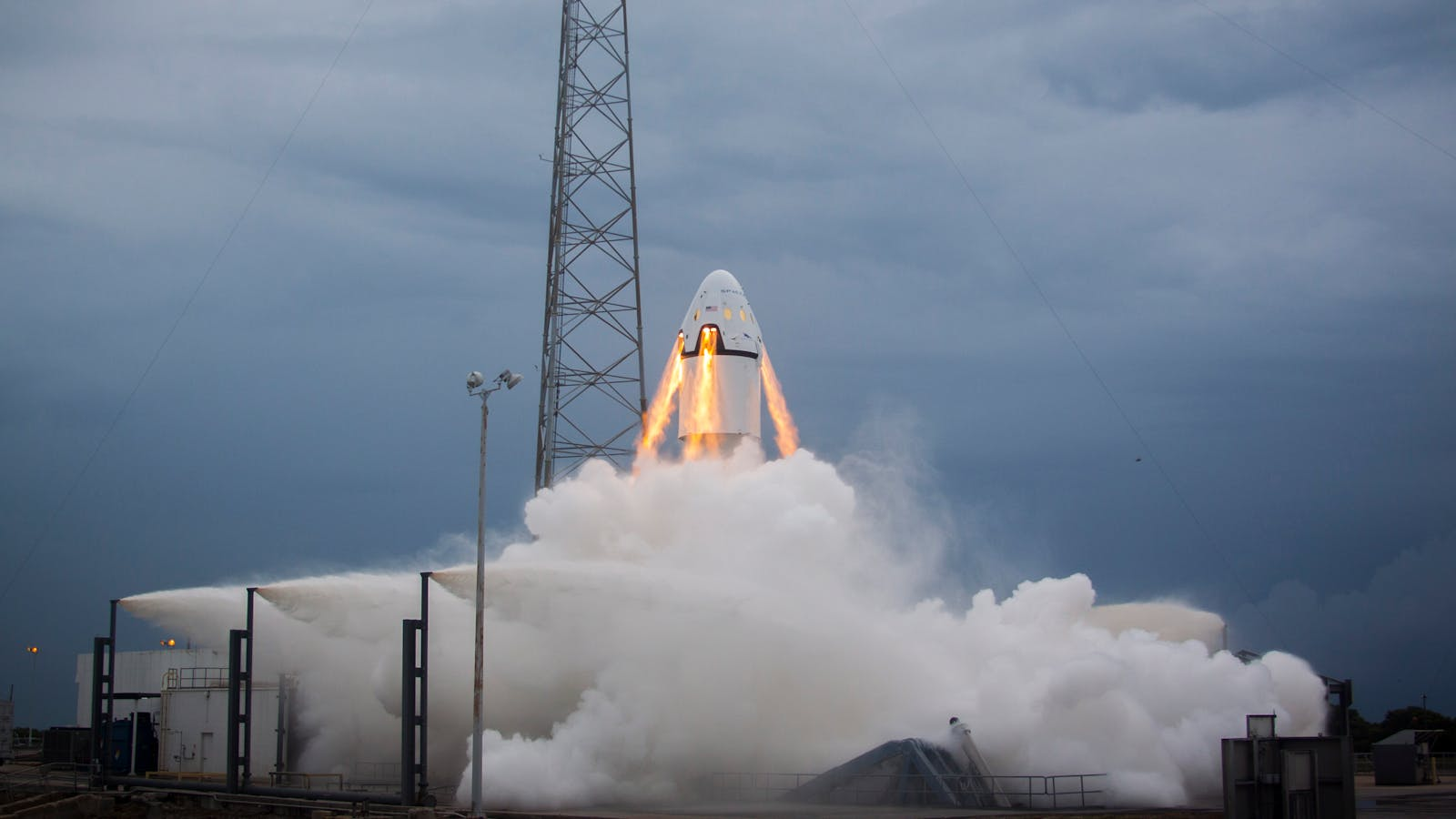
When analyzing SpaceX’s valuation, you cannot look only at the word “losses,” nor can you look only at the highlight of “Starlink profitability.” What matters more is breaking down where revenue comes from, where losses occur, and whether investment can turn into future cash flow. A high-growth company can lose money during its expansion phase, but those losses must have a clear commercial return path.
Starlink is the most realistic anchor in SpaceX’s valuation. Its logic is relatively clear: it provides internet connectivity through a low-Earth-orbit satellite network, covering remote areas, aviation, shipping, enterprises, government, and mobile communications scenarios. Reuters mentioned in its report on SpaceX valuation math that Starlink is already profitable and accounts for about 50% to 80% of SpaceX’s revenue; SpaceX’s high launch frequency also helps it maintain a lead in low-Earth-orbit satellite deployment.
However, whether Starlink can support the overall valuation also depends on user growth, average revenue per user, satellite maintenance costs, terminal costs, spectrum regulation, and competition. Investor’s Business Daily reported that as of March 31, 2026, Starlink users had reached about 10.3 million, up 105% year over year, but average revenue per user fell from $99 in 2023 to $66 in early 2026. Fast user growth is positive, but a declining ARPU means revenue quality and pricing structure also need to be observed together.
The loss structure is equally important. Morningstar’s summary of SpaceX IPO financials showed that SpaceX generated about $18.7 billion in revenue in 2025 and a net loss of about $4.9 billion; in the first quarter of 2026, revenue was about $4.7 billion, while net loss was about $4.3 billion. Losses do not automatically negate a growth company, but if the losses are mainly from highly uncertain businesses, the market will demand higher risk compensation.
| Business / Metric | Positive Impact on Valuation | Potential Risk |
|---|---|---|
| Starlink | Provides revenue and profit support | ARPU decline, competition, satellite maintenance costs |
| Launch business | Builds technological barriers and industry position | Launch accidents, licensing, customer concentration |
| AI / xAI | Provides a new growth narrative | Large losses and high capital expenditure |
| Starship | Opens up long-term launch capacity and deep-space markets | Uncertain technology delivery timeline |
| Overall net loss | Can be explained as growth investment | If it expands for a long time, valuation may be compressed |
| Cash flow | Measures whether investment can self-cycle | High-investment cycles may depend on continuous financing |
There is a key judgment here: Starlink profitability can explain part of SpaceX’s valuation, but it is difficult for it to explain all of it. SpaceX’s target valuation is not only buying Starlink. It is also buying the reusable rocket system, Starship capacity upgrades, AI infrastructure, space data centers, and Musk’s personal influence. Each additional layer of narrative may increase the valuation ceiling, but it also increases the difficulty of verification.
Summary: SpaceX’s valuation cannot be explained only by Starlink profitability, nor should it be simply dismissed because of overall losses. What really matters is whether profitable businesses can continue expanding, whether loss-making businesses can become future revenue sources, and whether capital expenditure produces verifiable returns. Starlink is the valuation anchor, while AI and Starship are sources of valuation upside and also sources of risk. If Starlink growth can cover investment in other businesses, the high valuation will be easier for the market to accept. If the profit anchor is not stable enough, the long-term narrative will face greater pressure.
How to Break Down Growth Expectations: How Much Are AI, Starship, and Space Data Centers Worth?
A large part of SpaceX’s high valuation comes from growth expectations. Growth expectations are not fantasy. Outstanding technology companies are often priced by the market before profits are fully released. But growth expectations must be broken down: what market they correspond to, what technology they require, when they can be commercialized, how much capital expenditure they require, and how much cash flow they can ultimately generate.
SpaceX’s growth story mainly has five lines:
| Growth Narrative | Logic Supporting the Valuation | Questions That Need to Be Verified |
|---|---|---|
| Starship | Significantly lowers launch costs | Test flights, licensing, commercialization timeline |
| Starlink direct-to-cell | Expands the connectivity market | User growth, ARPU, partnership model |
| AI / xAI | Opens computing power and data service markets | When losses will narrow |
| Space data centers | Provides huge long-term imagination | Whether technology, costs, and demand are viable |
| Mars vision | Strengthens the brand and long-term narrative | Should not be treated as a short-term profit base |
Starship is a valuation lever and also a technology risk. If it succeeds, it may change the cost structure of satellite deployment, deep-space missions, commercial launch, and long-term space infrastructure. But Starship’s commercialization depends not only on engineering progress, but also on regulation, launch frequency, environmental assessment, and safety requirements. FAA documents on Starship/Super Heavy show that the Boca Chica project involves launch license modifications, mission profiles, return-to-launch-site missions, and airspace closures.
The AI narrative will further lift the valuation, but it will also increase losses. Reuters reported that SpaceX’s IPO narrative combines rockets, Starlink, AI, and future infrastructure into one growth story, but Starship delays or cost overruns could threaten AI, satellite expansion, and overall growth. Morningstar also noted in its analysis of xAI-related financials that losses in the AI segment accelerated, while computing power and data center spending increased significantly.
Space data centers belong to an even longer-term imagination. They may offer a huge narrative space, but you cannot treat them as a source of short-term profit. As long as the business model, cost structure, customer demand, and regulatory environment have not been clearly validated, they are more like an “option” in the valuation rather than stable discounted cash flow.
Growth expectations can be checked through three questions:
- Has this business already generated revenue, or is it still at the vision stage?
- How much capital expenditure does it require, and how long will it take to turn into profit or cash flow?
- If progress falls short of expectations, does the current valuation still have enough margin of safety?
Summary: SpaceX’s high valuation does not come only from current revenue. It comes from future growth expectations. Starship, AI, Starlink direct-to-cell, and space data centers may all open larger market opportunities, but they are at different stages of maturity. The grander the growth expectation, the clearer the path to realization needs to be. If technology, regulation, costs, or demand validation falls short, a high P/S ratio will shift from a “growth premium” to “valuation pressure.” To judge whether SpaceX is too expensive, you cannot look only at how big the vision is. You also need to look at how far that vision is from cash flow.
How to View Risks in High-Valuation IPOs: Do Not Equate Company Value With Investment Returns
A high-valuation company does not equal a high-return stock, and a popular IPO does not equal a low-risk opportunity. SpaceX can be a very important company while still appearing too expensive at a certain price. For ordinary investors, the easiest thing to confuse is not whether the company is good or bad, but the difference among “a good company,” “a good price,” and “a good trading outcome.”
The offering price, opening price, and secondary-market transaction price should be separated in particular. The offering price is usually formed during IPO pricing and may not be available to all ordinary investors. The opening price is determined by first-day market supply and demand and may be significantly higher than the offering price. The secondary-market transaction price is affected by sentiment, liquidity, short-term capital, and overall market risk appetite. If you buy after listing, the actual risk you take may no longer be IPO offering-price risk, but public-market chasing risk.
| Judgment Level | Question to Ask | Common Misunderstanding |
|---|---|---|
| Company value | Is SpaceX competitive in the long run? | Treating brand heat as a valuation basis |
| IPO pricing | Is the offering price reasonable? | Assuming the offering price must be cheap |
| Secondary-market price | Has the post-listing price been pushed up by sentiment? | Chasing first-day gains while ignoring volatility |
| Trading costs | Commissions, platform fees, fractional share rules | Looking only at commissions and not total costs |
| Risk tolerance | Position size and holding period | Buying a long-term story with a short-term mindset |
If you are following trading opportunities after a popular IPO lists, you need to look at actual trading costs in addition to stock price volatility. U.S. stock trading costs usually include not only commissions, but may also include platform fees, external agency fees, trading activity fees, settlement fees, exchange rate costs, and fractional share order rules. BiyaPay U.S. stock trading fees show that U.S. stock trading commission is $0, the platform fee is $0.005 per share, with a minimum of $0.99 per order and a maximum of 1% of the trade value; external agency fees and trading activity fees are $0.00396 per share. For fractional share orders with fewer than one share executed, BiyaPay only charges 1% of the total transaction amount as the platform fee, capped at $1. Actual fees should still be based on the fee center and order page display.
This type of fee information belongs in the pre-trade checklist, not as a replacement for investment judgment. Popular IPOs may experience significant price volatility in the early stage after listing. Before trading, investors should fully understand order types, fee structures, and risks. Whether related services are available depends on the user’s location, identity verification result, platform rules, and applicable laws and regulations. The following content only introduces public market information, trading rules, and fee structures, and does not constitute investment advice.
Summary: Judging SpaceX’s valuation cannot stop at the company level. It also needs to fall back to the price and trading level. Even the best company can produce a poor investment experience if the purchase price is too high. For ordinary investors, the offering price, opening price, secondary-market transaction price, and actual trading costs all need to be calculated separately. SpaceX’s long-term story can be very attractive, but trading results depend on what price you buy at, how long you hold, how much volatility you can bear, and whether you truly understand fees and order rules.
How to Form Your Own Judgment: Is SpaceX Overvalued, or Is It Being Priced Ahead of Time?
There is no simple answer to whether SpaceX is overvalued. A more accurate way to put it is that the market is pricing SpaceX’s long-term growth in advance at a very high price. Whether that price is reasonable depends on whether multiple conditions can be met at the same time over the next few years.
Conditions that could justify a high valuation include:
- Starlink users and revenue continue to grow, and ARPU decline does not significantly drag down profits.
- Starlink margins remain stable and can provide cash support for investment in other businesses.
- Starship test flights, licensing, and commercialization path gradually become clearer.
- AI losses remain controllable and clear revenue sources emerge.
- Capital expenditure gradually turns into future cash flow.
- Financial disclosure becomes more transparent after listing, allowing the market to continuously track business quality.
Signals that call for caution include:
- Starlink growth slows, or user growth depends on continuous price cuts.
- AI losses continue to expand, but the commercialization path remains unclear.
- Starship is delayed, costs overrun, or regulatory constraints increase.
- The P/S ratio remains extremely high for a long time, but revenue growth fails to keep up.
- Musk’s control is too strong, and ordinary shareholders have limited governance rights.
- The first-day listing price significantly disconnects from fundamentals and is pushed up by sentiment.
| Question | Optimistic Interpretation | Cautious Interpretation |
|---|---|---|
| High valuation | The market is pricing a future platform company | Future expectations have been excessively pulled forward |
| Large losses | Heavy investment for long-term growth | Financial pressure and cash burn are too high |
| Starlink profitability | A clear commercial anchor exists | A single business is not enough to support the full valuation |
| High AI investment | Opens a new growth curve | Losses may drag down overall performance |
| Starship delays | Normal volatility in a long-cycle technology project | The long-term story is becoming harder to realize |
| Concentrated control | Stronger strategic continuity | Ordinary shareholders have limited influence |
Governance structure should also be included in the judgment. Musk’s high voting power can ensure strategic continuity, but it also means ordinary shareholders have limited influence over major matters. Reuters reported that SOC Investment Group asked the SEC to review SpaceX’s IPO disclosures, focusing on financial reliability, potential conflicts of interest, and governance issues. Governance risk does not mean the company definitely has problems, but it can affect the discount or premium the public market assigns.
A more prudent way to judge SpaceX is to divide it into three layers. The first layer is the relatively clearer Starlink and launch businesses. The second layer is the expanding but higher-risk AI and Starship businesses. The third layer consists of longer-term narratives such as space data centers and the Mars vision. If the first layer is strong enough, the second layer gradually delivers, and the third layer adds extra imagination, then the high valuation has room to be absorbed. If the first layer slows, the second layer keeps burning cash, and the third layer remains unverified for a long time, the market may reprice the company.
Summary: Whether SpaceX is overvalued or priced ahead of time depends on the speed of future delivery. In an optimistic scenario, Starlink expands, Starship succeeds, and AI forms a revenue path, so the current high valuation may be absorbed by long-term growth. In a cautious scenario, losses expand, technology is delayed, and returns on capital expenditure remain unclear, so valuation pressure will emerge quickly. You do not have to choose only “bullish” or “bearish.” More importantly, you should build a tracking table and continuously monitor revenue growth, loss changes, capital expenditure, Starlink profit, AI progress, Starship licensing, and post-listing price performance.
FAQ
What Is SpaceX’s Valuation?
Public reports point to a target valuation of about $1.75 trillion, but the final valuation, offering size, and trading arrangements should still be based on IPO filings, exchange announcements, and final pricing. Valuation represents market expectations. It does not mean the post-listing price will definitely rise.
What Does a High Price-to-Sales Ratio Mean?
A high P/S ratio means the market is willing to pay a high premium for future revenue growth. It is not direct evidence of a bubble, but it means the company must continuously prove growth, margins, and cash flow. Otherwise, valuation correction pressure will become greater.
Why Is SpaceX Still Losing Money?
SpaceX has revenue support from businesses such as Starlink, but AI, Starship, infrastructure, and capital expenditure still create loss pressure. When assessing losses, the key is not whether the company is losing money, but whether the losses can be converted into verifiable future revenue.
Can Starlink Support the Valuation?
Starlink is an important valuation anchor for SpaceX, but the overall valuation also includes expectations for AI, Starship, space data centers, and long-term space infrastructure. Looking only at Starlink profitability cannot fully explain the entire valuation.
Can High-Valuation IPOs Be Bought?
High-valuation IPOs require assessment of the offering price, post-listing price, price-to-sales ratio, revenue growth, loss structure, trading costs, and your own risk tolerance. Public market trading involves risk. This analysis does not constitute investment advice.
What Indicators Should Ordinary Investors Watch?
You can focus on the price-to-sales ratio, revenue growth, net loss, capital expenditure, Starlink profit, AI losses, Starship progress, governance structure, offering price, and trading fees. A single indicator is not enough to judge whether the valuation is reasonable.
The value of the SpaceX valuation debate is not only about judging whether it is expensive or not. It also helps you understand how to analyze high-valuation technology stocks. You need to put current revenue, loss structure, capital expenditure, Starlink profitability, AI investment, Starship progress, and market sentiment into the same table. A company may have strong long-term imagination, but that does not mean any price is reasonable. A highly anticipated IPO also does not mean lower trading risk after listing.
If you continue to follow SpaceX or other popular U.S. stock IPOs, you can first use the U.S. stock search tool to track public market information, and then combine fees, order types, and risk tolerance for a pre-trade check. BiyaPay is a global multi-asset trading wallet that supports U.S. and Hong Kong stock trading as well as cryptocurrency trading, and also supports converting USDT into major fiat currencies such as USD or HKD. Users who meet the applicable service conditions can check account, order, and fee displays through the BiyaPay App or BiyaPay web trading. Whether related services are available depends on the user’s location, identity verification result, platform rules, and applicable laws and regulations.
*This article is provided for general information purposes and does not constitute legal, tax or other professional advice from BiyaPay or its subsidiaries and its affiliates, and it is not intended as a substitute for obtaining advice from a financial advisor or any other professional.
We make no representations, warranties or warranties, express or implied, as to the accuracy, completeness or timeliness of the contents of this publication.
Related Blogs of

Why Should You Pay Attention to Losses Before the SpaceX IPO? How to Read the Financial Data of Growth Companies


What Challenges Could SpaceX Face After Going Public? An Analysis of Regulation, Competition, Costs, and Commercialization Risks


Is the SpaceX IPO an Opportunity or a Bubble? Ordinary Investors Should First Look at These 6 Indicators



Choose Country or Region to Read Local Blog
 Australia
 Austria
 Belgium
 Canada
 Cyprus
 Czech Republic
 Denmark
 Estonia
 Finland
 France
 Germany
 Greece
 Hong Kong
 India
India Indonesia
 Ireland
 Italy
Italy Japan
Japan Latvia
 Lithuania
 Luxembourg
 Malaysia
 Malta
Malta Morocco
 Nepal
Nepal Netherlands
 New Zealand
 Norway
 Pakistan
 Philippines
 Poland
 Portugal
 Romania
 Singapore
 Slovakia
 Slovenia
 South Africa
 South Korea
 Spain
Spain Sweden
 Thailand
 The United States
 Turkey
 United Arab Emirates
 United Kingdom
 Vietnam
Contact Us




BIYA GLOBAL LLC is registered with the Financial Crimes Enforcement Network (FinCEN), an agency under the U.S. Department of the Treasury, as a Money Services Business (MSB), with registration number 31000218637349, and regulated by the Financial Crimes Enforcement Network (FinCEN).
BIYA GLOBAL LIMITED is a registered Financial Service Provider (FSP) in New Zealand, with registration number FSP1007221, and is also a registered member of the Financial Services Complaints Limited (FSCL), an independent dispute resolution scheme in New Zealand.