- More
- Download
Using AI to Analyze Fed Decisions and Automatically Execute USD to Offshore RMB Conversion Strategies




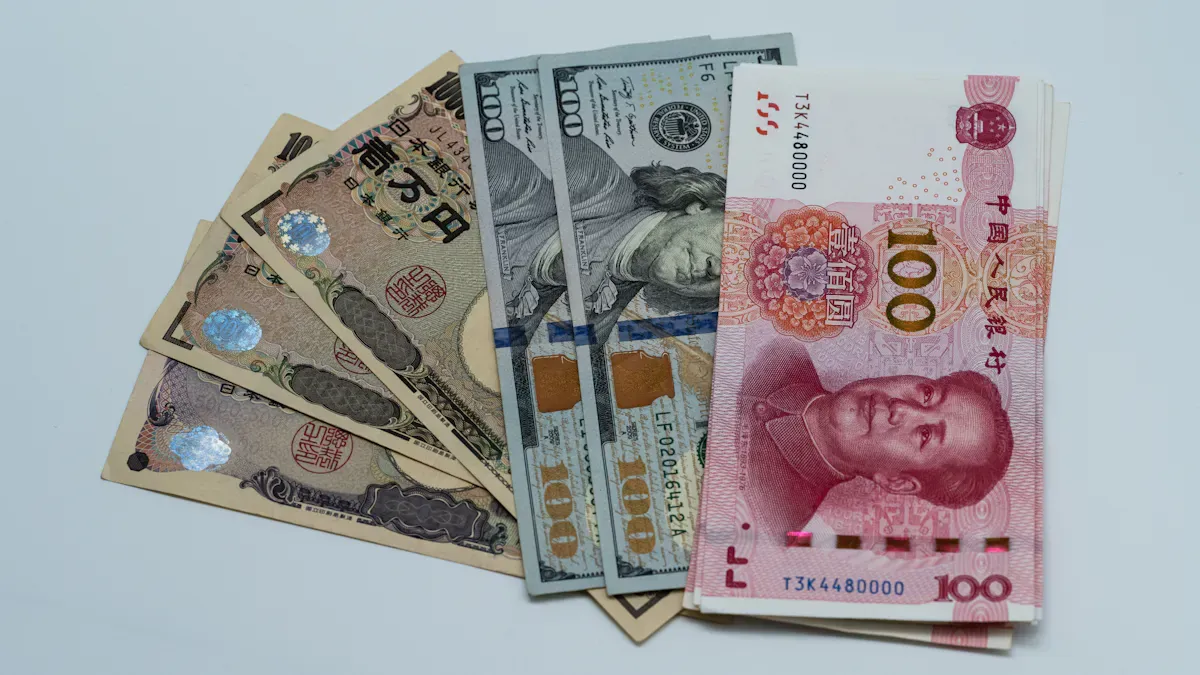
Image Source: pexels
You can use AI to analyze Federal Reserve decisions and accurately capture market signals brought by policy changes. Automated trading systems help you respond quickly to fluctuations in USD to offshore RMB, improving execution efficiency. Risk control mechanisms allow you to effectively prevent losses from extreme market conditions while pursuing returns. An efficient and actionable process brings you a more forward-looking strategy execution experience.
Core Key Points
- Leveraging AI to analyze Fed decisions enables quick capture of market signals and enhances the forward-looking nature of trading strategies.
- Through natural language processing technology, identify sentiment tendencies in policy texts to help predict changes in the USD to offshore RMB exchange rate.
- Automated trading systems can seamlessly connect trading signals to trading platforms, improving execution efficiency and reducing interference from human emotions.
- Set multi-dimensional risk control parameters to ensure capital security and reduce losses from extreme market conditions.
- Regularly backtest strategy performance, optimize signal generation and risk control, and ensure the stability and adaptability of the automated trading system.
Using AI to Analyze Fed Decisions
Image Source: pexels
Data Acquisition and Preprocessing
You need to first obtain the official texts of Fed decisions, press conference minutes, and related economic data. It is recommended to select authoritative sources such as the Federal Reserve website, Reuters, and Bloomberg to ensure the timeliness and accuracy of information. You can automatically crawl these text data via APIs, reducing manual intervention and improving data processing efficiency.
In the preprocessing stage, you should clean the raw text, including removing irrelevant tags, standardizing formats, and segmenting into sentences and paragraphs. For English texts, it is recommended to use tokenization tools and stop-word filtering to enhance the analysis effectiveness of subsequent NLP models. You can also combine historical decision texts to build a structured dataset, laying the foundation for feature extraction using methods such as Markov chains and TF-IDF.
NLP Parsing and Sentiment Analysis
When using AI to analyze Fed decisions, natural language processing (NLP) technology is the core component. You can utilize mainstream pre-trained models such as BERT and GPT for deep semantic understanding of policy texts. Through sentiment analysis, you can identify hawkish or dovish tendencies in the Fed's wording. For example, the model can automatically detect keywords such as "maintain high interest rates for longer" and "data-dependent," judging the strength of the policy stance.
You can also use AI to analyze press releases and chair speeches, capturing tone changes and differences in market expectations. The quantitative output of sentiment scores provides a data foundation for subsequent strategy signal generation. You can compare the analysis results with historical market reactions to verify the model's effectiveness.
Policy Stance and Exchange Rate Prediction
You can establish a prediction model for the USD to offshore RMB exchange rate based on sentiment scores and policy tendencies output by the NLP model, combined with macroeconomic data. Using AI to analyze Fed statements on rate hikes, cuts, or maintaining rates unchanged can help you capture USD strength or weakness signals in advance.
Typically, Fed rate hikes strengthen the USD and push the USD to RMB exchange rate upward; rate cuts may lead to USD weakness and RMB appreciation. You can use regression analysis, time series models (such as LSTM and ARIMA), etc., to correlate policy text features with exchange rate fluctuations.
You can also verify the accuracy of using AI to analyze decision texts for exchange rate prediction through automated backtesting. Ultimately, this process provides a scientific basis for your automated trading strategy, achieving a closed loop from policy interpretation to trade execution.
Strategy Generation and Automated Trading
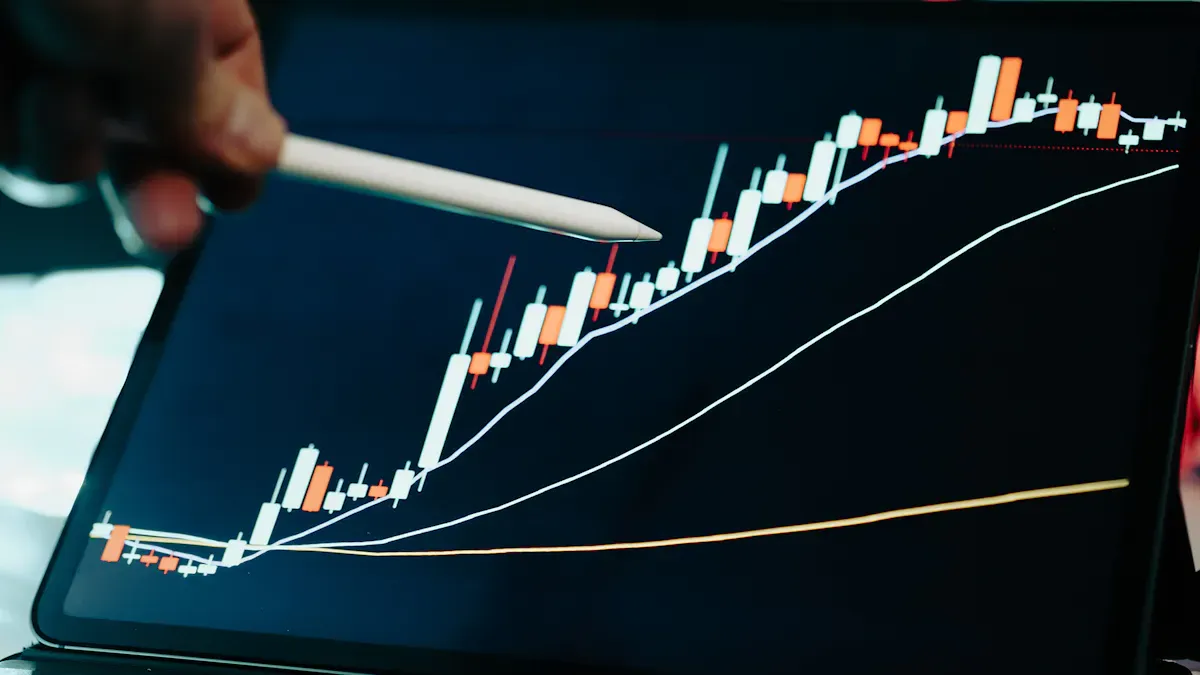
Image Source: pexels
Strategy Logic and Signal Generation
You can automatically generate USD to offshore RMB trading strategies based on the results of using AI to analyze Fed decisions. The AI model combines sentiment scores from policy texts, policy tendencies, and macroeconomic data to convert them into specific trading signals. For example, when AI detects dovish signals from the Fed and market expectations of rate cuts, the system automatically identifies an increased probability of USD weakness, thereby generating suggestions to buy RMB.
You can structure the signal generation logic for easy recognition and execution by automated systems. Common signals include moving average breakouts, key price level touches, momentum indicator changes, etc. The table below shows some typical trading signals and their corresponding influencing factors:
| Trading Signal | Influencing Factors | Notes |
|---|---|---|
| USD/CNH breaks 50-day moving average | Fed rate cut expectations and dovish stance | Supports RMB |
| Price approaches 7.1000 | Possible trade agreements | May trigger new selling waves |
| Momentum indicators | RSI and MACD | Shows increased downward pressure |
You can dynamically adjust strategy parameters based on the above signals combined with real-time AI analysis results. This improves the forward-looking nature and adaptability of the strategy while reducing errors from subjective human judgment.
Automated Order Placement and API Integration
You can use automated trading bots to seamlessly connect strategy signals to trading platforms. Mainstream trading platforms typically provide RESTful APIs or WebSocket interfaces that support programmatic order placement. You need to convert AI-generated trading signals into standardized instructions and automatically send them to the API interface to achieve order placement, stop-loss, take-profit, and other operations.
The automated trading process includes signal reception, order generation, risk control verification, and execution feedback. You can set multiple verification mechanisms to ensure each order complies with preset risk parameters. For example, the system can automatically check account balance, maximum position size, slippage tolerance, etc., to prevent abnormal trades due to extreme market conditions.
You can also use API interfaces to obtain real-time market quotes and order status in real time, facilitating dynamic strategy adjustments and exception handling. Automated trading not only improves execution efficiency but also reduces the interference of emotional fluctuations on trading decisions.
Backtesting and Risk Control
You need to conduct strict backtesting on each strategy generated using AI analysis. Backtesting helps you evaluate the strategy's performance on historical data, identify potential risks and return ranges. You can select different market environments and Fed decision cycles to test the strategy's stability and robustness.
Risk control is a core component of automated trading. You can set multi-dimensional risk parameters, including maximum drawdown, single-trade loss limits, position ratios, etc. The system automatically adjusts positions or suspends trading when risk control thresholds are hit, preventing significant losses due to model failure or extreme market volatility.
You can also regularly review strategy performance, combine the latest AI analysis results, and optimize signal generation and risk control parameters. This ensures the automated trading system operates stably under different market environments, achieving maximum returns under controlled risk.
Tool and Platform Selection
Recommended AI Analysis Tools
In building investment portfolios and interpreting Fed decisions, you must select AI tools with powerful natural language processing capabilities. GoMoon provides AI-driven insights and historical event analysis for professional traders, helping you understand the impact of Fed decisions on USD to offshore RMB trends. You can refer to the table below to understand the features and target users of mainstream AI analysis tools:
| Tool Name | Features | Target Users |
|---|---|---|
| GoMoon | Provides AI-driven insights and historical event analysis to help traders understand the impact of Fed decisions on currency trends. | Traders seeking intelligent, comprehensive, and customizable economic calendars. |
Generative AI models can quickly process and interpret large amounts of text information, making them suitable for analyzing complex economic and financial market topics. You will find that such models perform excellently in identifying discussion topics in FOMC meeting minutes. Although most central banks have not yet directly adopted generative AI in public communications, you can use these tools to deepen your understanding of policy texts.
Data Sources and Information Platforms
You need to rely on authoritative and real-time information platforms to ensure the accuracy and timeliness of Fed policy interpretation. It is recommended to focus on the following information channels:
| Information Type | Link |
|---|---|
| FOMC Calendar | View more information on dates |
| News and Events | Press releases |
| Monetary Policy | About the FOMC |
| Meeting Calendar and Information | Meeting calendar |
| Monetary Policy Report | Monetary Policy Report |
| Beige Book | Beige Book |
You can obtain authoritative information such as the FOMC meeting calendar, press releases, monetary policy reports, etc., through these platforms, and combine them with AI tools for in-depth analysis to enhance the forward-looking and scientific nature of strategies.
At this stage, it is usually safer to separate information analysis from fund movement. AI can be used to interpret Fed statements, summarize tone shifts, and estimate volatility ranges, but when the process moves into conversion cost, transfer path, and fund timing, a manual review layer is still helpful. For example, you can first use BiyaPay’s exchange rate comparison tool to review pricing differences across possible conversion paths, then check its remittance service to understand the applicable transfer scope and timing before acting.
From a product-positioning perspective, BiyaPay is better understood as a multi-asset wallet covering cross-border payments, investing, trading, and fund management scenarios. If the article also touches on platform reliability or compliance boundaries, it is natural to verify the service description and qualification disclosures on the official website. The point is not to let one system handle every judgment and action, but to place conversion and fund movement into a clearer, more verifiable process after the strategy is formed.
Trading Platforms and APIs
When automatically executing USD to offshore RMB strategies, you need to select trading platforms that support API integration and efficient order execution. BiyaPay provides Chinese-speaking users with global payments and receipts, international remittances, real-time fiat and digital currency conversions (such as USDT to USD or HKD), support for deposits and withdrawals in US stocks and Hong Kong stocks, as well as digital currency trading services. You can build automated, rule-based trading systems through BiyaPay's proprietary API to achieve efficient order placement and risk control management.
Mainstream platforms typically offer various order types and algorithmic tools, supporting full-process automation from limit orders to complex algorithmic trading. You can refer to the table below to understand the core features of automated trading platforms:
| Feature | Description |
|---|---|
| API Solutions | Provide proprietary APIs and FIX CTCI solutions, allowing institutions to create automated rule-based trading systems. |
| Order Types and Algorithmic Tools | Offer over 100 order types, from limit orders to complex algorithmic trading, to help execute various trading strategies. |
You can also consider selecting banks or brokers holding Hong Kong financial licenses, using platform APIs to achieve automatic conversion between USD and offshore RMB as well as fund management, further enhancing the security and compliance of strategy execution.
Practical Case Studies
AI Analysis of Fed Decision Texts
You can take a certain Fed interest rate meeting in 2023 as an example, first automatically obtaining the full text of the meeting statement and press conference via API. Use AI analysis tools to perform sentence segmentation, tokenization, and semantic understanding on the text; the model will automatically identify keywords such as "inflation pressure" and "strong labor market" and quantify the policy stance. You can obtain hawkish or dovish scores through sentiment analysis models, combined with historical data, to judge the potential impact of this decision on USD trends. The table below shows predictions from multiple investment banks on USD to offshore RMB trends after using AI to analyze Fed decisions:
| Investment Bank | Prediction Content |
|---|---|
| Deutsche Bank | Expects continued USD depreciation due to potential further Fed rate cuts, while other major economies may maintain rates unchanged or gradually hike. |
| Goldman Sachs | Believes the USD's relative yield advantage will weaken due to monetary policy divergences. |
| JPMorgan Chase | Points out that current USD valuation does not match economic fundamentals and may face depreciation pressure. |
| Citigroup | Notes that U.S. technological dividends may support manufacturing and capital expenditure expansion, attracting more investment inflows. |
| Standard Chartered | Believes technology-driven prosperity will be a key force for sustained expansion in capital account balances. |
You can use this to judge mainstream market views and adjust parameters in your own strategy model accordingly.
Strategy Generation and Automated Execution Process
You can combine AI analysis results with macroeconomic data to automatically generate USD to offshore RMB trading signals. The system automatically sets buy or sell instructions based on sentiment scores, policy tendencies, and market expectations. You can convert trading signals into standardized orders through BiyaPay's API to achieve automatic conversion between USD and offshore RMB. For scenarios requiring cross-border fund flows, you can also select banks holding Hong Kong financial licenses to complete fund transfers and settlements via their API interfaces. The entire process includes signal generation, risk control verification, order execution, and result feedback, ensuring efficient and compliant trading.
During automated execution, you may encounter the following challenges:
- Over-reliance on technology, making it difficult to adjust in time when strategies fail.
- Technical issues and failures may affect trading accuracy and system reliability.
- Limited availability of reliable data, impacting the effectiveness of model analysis.
- Privacy and security issues, requiring assurance of account and personal information security.
You need to regularly monitor system operation status and optimize models and risk control parameters in a timely manner.
Backtesting and Risk Assessment
You can use historical Fed decision texts and market data to backtest strategies generated via AI analysis. By comparing strategy performance under different market environments, you can identify the model's strengths and limitations. You should focus on key indicators such as maximum drawdown, return volatility, and capital utilization rate to ensure the strategy remains risk-controllable under extreme conditions. You can also combine trading data from platforms like BiyaPay to evaluate the actual costs and efficiency of automated execution. Regular reviews and parameter optimization help improve the overall strategy's robustness and adaptability, achieving long-term sustainable return goals.
Risks and Considerations
Market Volatility and Model Risks
When formulating and executing automated USD to offshore RMB trading strategies, you must pay high attention to market volatility and model risks. After Fed decisions are announced, influenced by multiple factors such as the new U.S. administration taking office, major European elections, and geopolitical conflicts, forex market volatility has significantly increased. USD strength, geopolitical tensions, U.S. trade policies, interest rate expectations, and dynamics in China-U.S. relations all directly affect USD/CNH trading. The table below summarizes the main sources of volatility:
| Influencing Factor | Description |
|---|---|
| USD Strength | USD trends after Fed decisions directly impact USD/CNH trading. |
| Geopolitical Tensions | Geopolitical risks increase market uncertainty and volatility. |
| Trade Policies | Adjustments in U.S. trade policies toward China affect market sentiment. |
| Interest Rate Expectations | Investors' expectations of U.S. economic and rate changes influence exchange rate fluctuations. |
| China-U.S. Relations Dynamics | Events such as tariffs and trade wars trigger sharp market reactions. |
You also need to be wary of model risks. When market uncertainty rises, the offshore market plays a stronger role in price discovery, bid-ask spreads widen, information asymmetry intensifies, trading costs rise, arbitrage opportunities are limited, and price integration delays. These factors may cause AI model predictions to fail, leading to significant strategy performance fluctuations.
Technical and Compliance Risks
Automated trading heavily relies on technical systems. You need to ensure the stability and reliability of infrastructure such as API interfaces, servers, and data sources. System failures, delays, or data anomalies may lead to order execution deviations or even significant losses. In addition, compliance risks cannot be ignored. You should strictly comply with relevant laws and regulations, especially in cross-border fund flows and forex conversions, choosing licensed institutions and compliant platforms for trading. For Chinese-speaking users, it is recommended to prioritize service providers with international compliance qualifications to safeguard capital security and trading compliance.
Fund Management Recommendations
In actual operations, you should formulate scientific fund management strategies. Reasonably allocate funds, avoid over-concentrated positions, set stop-loss and take-profit, and control single-trade risks. It is recommended to regularly assess account risk exposure and dynamically adjust positions based on market environments and model performance. Although automated trading can improve efficiency, capital security under extreme conditions cannot be overlooked. You should maintain risk awareness, continuously optimize risk control parameters, and ensure long-term stable operation.
You can efficiently analyze Fed decisions through AI to quickly capture policy changes, and automated trading systems make USD to offshore RMB strategy execution more precise. The entire process balances efficiency and controllable risk, significantly improving strategy response speed and capital security. In the future, AI will continue to expand its application scenarios in financial trading. You should actively practice AI-driven automated trading based on your own needs, continuously optimize strategies, and achieve better risk-return ratios.
FAQ
How to use AI to analyze Fed decisions to improve USD to offshore RMB trading strategies?
You can use NLP models to parse Fed policy texts, combine them with historical data, and generate trading signals. AI analysis helps you capture market changes in advance and improve strategy foresight.
How does an automated trading system ensure capital security and risk control?
You can set multi-dimensional risk control parameters, including maximum drawdown, stop-loss limits, and position ratios. The system automatically verifies orders to ensure capital security and reduce risks from extreme market conditions.
Which data sources are suitable for Fed decision analysis?
You should select authoritative sources such as the Federal Reserve website, Reuters, and Bloomberg. API automatic crawling of texts and economic data ensures timeliness and accuracy of information, improving analysis effectiveness.
How to select suitable APIs and platforms for automated trading?
You can prioritize platforms that support RESTful APIs and efficient order execution. BiyaPay provides Chinese-speaking users with global payments and receipts, international remittances, real-time fiat and digital currency conversions, and other services.
What core indicators should be focused on during strategy backtesting?
You need to focus on maximum drawdown, return volatility, and capital utilization rate. Backtesting results help you optimize strategy parameters and improve the robustness and adaptability of the automated trading system.
*This article is provided for general information purposes and does not constitute legal, tax or other professional advice from BiyaPay or its subsidiaries and its affiliates, and it is not intended as a substitute for obtaining advice from a financial advisor or any other professional.
We make no representations, warranties or warranties, express or implied, as to the accuracy, completeness or timeliness of the contents of this publication.
Related Blogs of

Comparing the Beneficiaries of the AI Equipment Cycle: ASML, Applied Materials, Lam Research, and KLA


How Should ASML’s New Orders Be Read? Revenue Differences Between EUV, DUV, and High-NA EUV


Understanding Net Interest Margin and Provision Changes Through JPM, BAC, and Citi


IBM Plunges While ASML Rises: Is Capital Rotating from Software to AI Hardware?
Choose Country or Region to Read Local Blog
 Australia
 Austria
 Belgium
 Canada
 Cyprus
 Czech Republic
 Denmark
 Estonia
 Finland
 France
 Germany
 Greece
 Hong Kong
 India
India Indonesia
 Ireland
 Italy
Italy Japan
Japan Latvia
 Lithuania
 Luxembourg
 Malaysia
 Malta
Malta Morocco
 Nepal
Nepal Netherlands
 New Zealand
 Norway
 Pakistan
 Philippines
 Poland
 Portugal
 Romania
 Singapore
 Slovakia
 Slovenia
 South Africa
 South Korea
 Spain
Spain Sweden
 Thailand
 United States
 Turkey
 United Arab Emirates
 United Kingdom
 Vietnam
Contact Us



