- More
- Download
Is Crypto Trading Riskier Than Stock Trading? How to Safely Transfer Crypto Profits to a US Stock Account to Invest in AI Assets




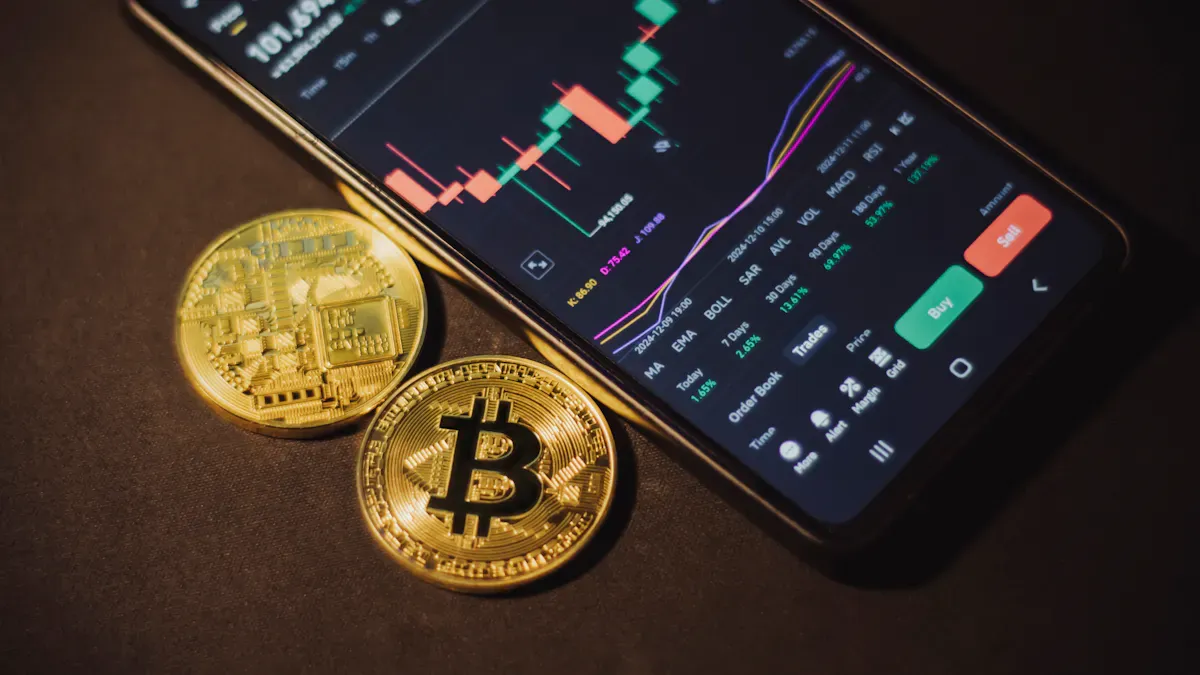
Image Source: pexels
You may often hear that “crypto trading is riskier than stock trading.” The cryptocurrency market is extremely volatile, and the market crashes in 2018 and 2021 caused many investors to experience significant asset depreciation risks. In contrast, the US stock market is subject to strict regulation, investor rights are better protected, and stocks represent company ownership with intrinsic value, delivering relatively stable long-term returns. Data shows that retail funds are shifting from cryptocurrency to US stocks, and the widespread adoption of generative AI tools also makes it easier for you to analyze the US stock market. Through the following content, you can learn how to safely transfer funds and seize investment opportunities in AI assets.
- The volatility of the cryptocurrency market is significantly higher than that of traditional asset classes, and investors generally worry about its impact on asset safety.
| Research Finding | Description |
|---|---|
| Volatility Spillover Effect | There is a bidirectional volatility spillover effect between Ethereum and Litecoin, and between Ethereum and Bitcoin. |
| Stock Market Influence | Fluctuations in the US stock market do not affect the volatility of major cryptocurrencies. |
| Economic Uncertainty | Events such as the pandemic may cause Bitcoin and Litecoin prices to return to equilibrium, while Ethereum may deviate from equilibrium. |
Key Points
- The cryptocurrency market has high volatility, and investors need to be cautious. In comparison, the US stock market has lower volatility and more stable long-term returns.
- The US stock market is subject to strict regulation, and investor rights are better protected. Choosing US stocks can reduce asset safety risks.
- Transfer crypto profits to a US stock account through compliant processes to ensure fund safety and legality.
- Use AI technology to analyze the US stock market, improve investment decision efficiency, and capture AI asset investment opportunities.
- Diversified portfolio allocation can effectively spread risk; reasonably allocate proportions between digital currency and AI assets to support stable returns.
Why Crypto Trading Is Riskier Than Stock Trading
Market Volatility and Risk
When investing in cryptocurrency, you will find that market price fluctuations are extremely severe. The annualized volatility of cryptocurrencies is 30-40% higher than that of leading US stocks. This high volatility means you may experience substantial asset increases or decreases in a short period, with both risks and opportunities coexisting. The correlation between Bitcoin and the S&P 500 index is also constantly changing, reflecting gradual institutional participation in the crypto market, but overall risk remains high.
During market crises such as the COVID-19 pandemic, cryptocurrency volatility changed significantly. Many investors regard cryptocurrency as an alternative asset to hedge downside risks in traditional financial assets, but you need to face frequent price fluctuations and unpredictable market reactions.
You can refer to the table below to understand the price fluctuation characteristics of different markets:
| Market Type | Price Reaction Type | Price Fluctuation Magnitude |
|---|---|---|
| Developed Markets | Price reversal | Larger |
| Emerging Markets | React only to positive shocks | Smaller |
In contrast, the US stock market experiences relatively moderate fluctuations and more stable long-term performance. When investing in US stocks, asset value is influenced by company fundamentals and macroeconomic factors, with lower volatility and easier achievement of steady returns. This is one of the core reasons many investors believe crypto trading is riskier than stock trading.
Regulation and Asset Safety
When trading on cryptocurrency platforms, you often face regulatory gaps and asset safety risks. Most crypto asset trading occurs on unregistered entities lacking regulatory protection. Investors may interact with unregistered platforms, leaving asset safety unprotected. The risk of cryptocurrency theft is significant, and the likelihood of recovering stolen assets is extremely low. Trading mechanisms often involve decentralized finance services or peer-to-peer transactions, carrying higher risks.
You can clearly understand the differences in asset protection mechanisms between cryptocurrency platforms and US brokerage accounts through the table below:
| Aspect | Cryptocurrency Platforms | US Brokerage Accounts |
|---|---|---|
| Regulatory Oversight | Most trading occurs on unregistered entities, lacking regulatory protection | Regulated by the SEC, providing investor protection |
| Investor Protection | Lacks comprehensive protection | Provides SIPA protection to ensure client asset safety |
| Asset Nature | Diverse, may not be considered securities | Stocks, bonds, and other securities receive strict legal protection |
| Trading Mechanism | Decentralized or peer-to-peer, higher risk | Registered broker-dealer trading, lower risk |
| Fraud and Theft Risk | Significant theft risk, difficult asset recovery | Higher security and protection |
US brokerage accounts are regulated by the SEC, investors enjoy SIPA protection, and client asset safety is higher. When investing in US stocks, asset nature is clear, trading mechanisms are standardized, and risks are controllable. These regulatory and safety advantages are driving more and more investors to choose the US stock market, further reflecting the real basis for the view that crypto trading is riskier than stock trading.
Retail Investor Experience
As a retail investor, you focus on trading costs, investment thresholds, and market accessibility. The cryptocurrency market includes various costs such as trading fees, blockchain wallet fees, and built-in transaction fees. Although some platforms offer low-threshold trading, you must bear hidden fees and asset safety risks. In the US stock market, platforms like Robinhood provide commission-free trading; although hidden fees exist, the overall trading environment is more transparent and investor rights are better protected.
With the popularization of AI technology, you can use generative AI tools to analyze the US stock market and lower the investment threshold. Market liquidity is gradually shifting toward US stocks, and the retail investor experience continues to improve. You can more conveniently access information, formulate investment strategies, and achieve steady asset growth.
You will find that the view that crypto trading is riskier than stock trading is reflected not only in market volatility and regulatory safety, but also in the continuous improvement of the retail investor experience. The US stock market provides you with a more standardized trading environment and richer investment tools, helping you achieve long-term stable returns.
Process of Transferring Crypto Profits to US Stocks

Image Source: pexels
Ways to Cash Out Digital Currency
After earning profits from cryptocurrency investment, you first need to convert digital assets into fiat currency. Current mainstream methods include selling through cryptocurrency exchanges, peer-to-peer trading, and using professional global payment platforms such as BiyaPay for real-time exchange. BiyaPay provides Chinese-speaking users with real-time exchange services between USDT and USD/HKD, supporting direct conversion of cryptocurrency to USD with fast fund arrival. You can choose to exchange USDT for USD, then transfer funds to a Hong Kong licensed bank account through the international remittance function. Compared with traditional exchanges, BiyaPay has clear advantages in fund arrival speed, exchange rate transparency, and security.
When choosing a cash-out channel, prioritize fund safety, compliance, and arrival efficiency. BiyaPay supports global payments and international remittances, helping you efficiently complete cryptocurrency cash-out and reduce fund transfer risks.
If you plan to move those funds into AI-related U.S. equities afterward, it is often more practical to map the transfer path first on the BiyaPay official site, then use its fiat exchange rate comparison tool and stock information lookup to cross-check conversion costs and target asset prices. As a multi-asset trading wallet, BiyaPay covers cross-border payments, fund management, and HK/U.S. stock funding scenarios, and it also discloses relevant licensing and registration information in jurisdictions such as the U.S. and New Zealand. Checking these details before the transfer helps separate “cashing out” from “funding the brokerage account,” which is usually a cleaner way to manage risk.
A comparison of common cash-out methods is as follows:
| Method | Advantages | Risks and Precautions |
|---|---|---|
| Exchange Sale | High liquidity, convenient operation | Need to pay attention to platform security and regulation |
| Peer-to-Peer Trading | Can avoid some fees | Higher risk, need to guard against scams |
| BiyaPay Exchange | Real-time rates, fast arrival | Need to ensure identity verification and compliance |
Compliant Fund Transfer
When transferring cashed-out funds to a US stock account, you must comply with relevant laws and regulations. Compliant transfer not only safeguards fund safety but also avoids future tax and legal risks. As a global payment and international remittance platform, BiyaPay supports Chinese users in remitting USD funds from Hong Kong licensed bank accounts to US brokerage accounts. You need to prepare identity verification materials and proof of fund sources, and ensure all transaction records are complete. Hong Kong licensed banks will conduct compliance reviews when funds are transferred in, ensuring the legitimacy of fund sources. You should understand the deposit requirements of US brokerages in advance to avoid delays due to incomplete documents.
Compliant operation is the core of safe fund transfer. You should proactively cooperate with the review processes of banks and brokerages to ensure every step meets regulatory requirements.
The compliant fund transfer process is briefly as follows:
- Complete USDT to USD exchange on BiyaPay.
- Remit USD to a Hong Kong licensed bank account.
- Prepare identity verification and proof of fund sources.
- Transfer USD to a US brokerage account via international remittance.
- Retain all transaction records for subsequent tax declaration.
Depositing Funds into US Stock Account
After completing compliant fund transfer, you can officially deposit funds into your US stock account. Major US brokerages such as Charles Schwab and Interactive Brokers support international remittance deposits; once funds arrive, you can start stock investing. When depositing, pay attention to remittance paths, handling fees, and arrival time. BiyaPay supports US stock account deposit services, helping you directly remit USD funds to US brokerage accounts and simplifying the operation process. You should verify the brokerage’s deposit policy and ensure account information is accurate. Some brokerages require clear fund sources; it is recommended to prepare relevant proof materials in advance.
Before depositing, confirm the remittance amount, account information, and fee standards to avoid fund losses due to operational errors.
Notes for depositing into US stock accounts:
- Remittance path: It is recommended to complete international remittance through Hong Kong licensed banks.
- Handling fees: Different brokerages and banks have different fee standards; understand them in advance.
- Arrival time: Usually 1-3 business days, subject to brokerage notification.
- Proof of fund sources: Ensure fund sources are legitimate to facilitate brokerage review.
Tax Declaration Notes
After completing fund transfer and US stock investment, you must pay attention to tax declaration issues. The US tax system has strict requirements for inbound overseas funds, and Chinese-speaking users need to declare fund sources and investment income according to regulations. You should retain all fund transfer and investment records for tax declaration. BiyaPay provides complete transaction records to help you organize fund flows. US brokerages usually provide annual investment reports, which you can use to declare capital gains tax. If fund sources involve cryptocurrency cash-out, it is recommended to consult a professional tax advisor to ensure compliant declaration.
Tax declaration is an important part of safe fund transfer. You should proactively understand US tax policies, reasonably plan fund flows, and avoid legal risks due to non-standard declaration.
Tax declaration process recommendations:
- Retain all fund transfer and investment records.
- Declare capital gains according to US tax requirements.
- Consult a professional tax advisor to ensure compliant declaration.
- Monitor changes in tax policies and adjust declaration strategies in a timely manner.
Through modern brokerages and financial platforms such as BiyaPay, you can achieve safe, compliant, and efficient fund transfer. The view that crypto trading is riskier than stock trading is reflected not only in asset safety but also in the standardization of fund transfer and tax declaration. With professional platforms and compliant processes, you can smoothly transfer crypto profits to US stock accounts and seize AI asset investment opportunities.
Investing in US Stock AI Assets

Image Source: pexels
AI Sector Outlook
You can see that the AI sector has become a core growth driver in the US stock market. In 2025, AI-related stocks drove significant gains in the S&P 500 and Nasdaq indexes, with the seven major AI companies (such as NVIDIA, Alphabet, Microsoft, Broadcom, JPMorgan Chase, Palantir Technologies, Meta Platforms) collectively contributing the majority of market capitalization and total returns. The table below shows the performance of the AI sector compared to other tech sectors in recent years:
| Year | Sector | Performance Description |
|---|---|---|
| 2025 | AI Stocks | Significantly outperformed other tech sectors, becoming the main driver of S&P 500 and Nasdaq growth. |
| 2026 | Tech Sector | Underperformed small-cap stocks and other industries; market style rotation occurred. |
You can see that the AI investment cycle is expected to bring about $10 trillion in corporate spending. The US market’s policy and innovation environment provides a favorable development soil for AI companies, and AI has become a key engine of global market growth in 2026.
Investment Advantages
When investing in AI assets in US stocks, you can gain multiple advantages. AI asset investment uses algorithmic trading to improve transaction speed and efficiency; AI technology can analyze large amounts of data to help you make better decisions. For example, AI-driven ETFs (such as AIEQ) have outperformed the S&P 500 index over the past two years. Institutions such as Blackstone have adopted self-learning AI algorithms for stock selection, further improving investment returns. The table below compares the returns of AI-related stocks with the S&P 500:
| Investment Type | Return Rate |
|---|---|
| AI-related Stocks | Almost twice that of the S&P 500 |
| S&P 500 | Benchmark return rate |
You can use global payment and international remittance platforms such as BiyaPay to efficiently transfer funds into US stock accounts and seize AI asset investment opportunities. The strong momentum and continued market attention to AI assets make them an important choice for achieving asset appreciation.
Risks and Risk Mitigation
When investing in AI assets, you also need to pay attention to potential risks. AI-related company stock prices have risen sharply in the short term, and the market shows signs of a bubble. Economists point out that the AI sector faces high valuation risks; a bubble burst could trigger market chain reactions, affecting overall economic and financial stability. Historically, the internet bubble and real estate bubble both led to economic recessions. You may pay a premium due to overly optimistic profit expectations for AI companies, and fluctuations in investment confidence can also exacerbate market risks.
You can adopt various risk mitigation strategies:
- Design incentive compensation structures linked to long-term risk-adjusted metrics.
- Choose 1- to 3-year performance evaluation periods to encourage long-term investment behavior.
- Use reasonable investment benchmarks that reflect actual investment style.
- Pay attention to clawback provisions to prevent losses from improper behavior.
You should combine your own risk tolerance to reasonably allocate AI asset proportions and avoid excessive concentration in a single sector. The view that crypto trading is riskier than stock trading also applies to AI asset investment; standardized investing and scientific risk avoidance are necessary to achieve long-term stable returns.
Diversified Allocation and Stable Returns
Allocation Principles
When building an investment portfolio, prioritize diversification principles. By reasonably allocating multiple asset classes such as digital currency, AI assets, and bonds, you can effectively spread risk. Mainstream asset allocation models suggest controlling the proportion of alternative assets (such as digital currency and AI-related ETFs) between 8%-18%. You can refer to the table below for recommended allocation proportions of alternative assets in different portfolio types:
| Portfolio Type | Exposure to Alternative Assets |
|---|---|
| Advisor Model Portfolios | 18% |
| Moderate Portfolios | 8% |
| Target Allocation Hybrid Portfolios | 18% |
You can combine products such as iShares A.I. Innovation and Tech Active ETF (BAI) and iShares U.S. Equity Factor Rotation Active ETF (DYNF) to improve portfolio flexibility and stability. BiyaPay provides Chinese-speaking users with global payment and international remittance services to help you efficiently complete fund flows in asset allocation.
Proportion of Digital Currency and AI Assets
When allocating digital currency and AI assets, focus on risk-adjusted returns. Cryptocurrency has high return potential but extremely high volatility. It is recommended to control the digital currency proportion at 2%-4% in moderate or aggressive portfolios. AI assets show higher risk-adjusted returns, especially during periods of financial uncertainty. You can refer to the table below to compare risk-adjusted returns across different asset classes:
| Asset Class | Risk-Adjusted Return | Notes |
|---|---|---|
| Digital Currency | Medium | High volatility, limited hedging role |
| AI Assets | High | Clear diversification advantages, suitable for long-term allocation |
| Gold | High | Prominent hedging characteristics during banking crises |
You can use BiyaPay’s USDT-to-USD exchange and international remittance functions to flexibly adjust the allocation proportions between digital currency and AI assets, improving capital utilization efficiency.
Risk Control
In diversified asset allocation, you must emphasize risk management. Effective risk control techniques include investment guidelines, risk factor management, diversification requirements, risk measurement and analysis, and advanced AI applications. The table below summarizes commonly used risk control techniques:
| Risk Control Technique | Specific Content |
|---|---|
| Investment Guidelines | Clearly define investment scope for each asset class |
| Risk Factor Management | Control exposure to factors such as size, value, momentum |
| Diversification Requirements | Prevent excessive concentration in single assets |
| Risk Measurement & Analysis | Quantitatively assess potential losses and liquidity |
| Advanced AI Applications | Enable real-time monitoring and forward-looking analysis, improve decision consistency |
You can combine BiyaPay’s fund flow services with risk management tools from US stock brokerages to build a scientific investment portfolio. Through diversified allocation and strict risk control, you have the opportunity to achieve stable returns and enhance overall asset safety.
You now understand the core logic behind why crypto trading is riskier than stock trading. Although cryptocurrency has high return potential, its extreme volatility and significant downside risk are notable. You should prioritize safe fund transfer and compliant investing, and reasonably control the proportion of cryptocurrency allocation. Diversified asset allocation and regular rebalancing help spread risk. You need to continuously monitor market changes and flexibly adjust investment strategies to achieve long-term stable returns.
FAQ
How to safely transfer cryptocurrency profits to a US stock account?
You can first exchange cryptocurrency for USD through a global payment platform, then remit to a Hong Kong licensed bank account. After completing identity verification, use international remittance to transfer funds to a US brokerage account. Retain all transaction records throughout the process to ensure compliant fund sources.
What issues should be noted when depositing funds into a US stock account?
You need to verify the brokerage’s deposit policy and ensure account information is accurate. It is recommended to conduct international remittance through Hong Kong licensed banks. Pay attention to fee standards and arrival time, and prepare proof of fund sources in advance to avoid delays due to incomplete documents.
What are the advantages of investing in US stock AI assets?
You can use AI technology to improve investment decision efficiency. AI-related stocks perform excellently, with returns higher than the S&P 500 index. The US market has a favorable innovation environment, and AI companies are developing rapidly, bringing more investment opportunities.
How to reasonably allocate digital currency and AI assets?
You can control the digital currency proportion at 2%-4% and appropriately increase the AI asset proportion. Diversified allocation helps spread risk. Combine your own risk tolerance and regularly adjust asset proportions to improve overall return stability.
What matters need attention in tax declaration?
You should retain all fund transfer and investment records. The US tax system requires declaration of capital gains and fund sources. It is recommended to consult a professional tax advisor to ensure compliant declaration. Monitor changes in tax policies and adjust declaration strategies in a timely manner.
*This article is provided for general information purposes and does not constitute legal, tax or other professional advice from BiyaPay or its subsidiaries and its affiliates, and it is not intended as a substitute for obtaining advice from a financial advisor or any other professional.
We make no representations, warranties or warranties, express or implied, as to the accuracy, completeness or timeliness of the contents of this publication.
Related Blogs of

How Should ASML’s New Orders Be Read? Revenue Differences Between EUV, DUV, and High-NA EUV


IBM Plunges While ASML Rises: Is Capital Rotating from Software to AI Hardware?


What Are IGV’s Holdings? Microsoft, Salesforce, Oracle, ServiceNow Weights and AI Risks

What Is Kevin Warsh’s Policy Framework? How It Affects the U.S. Dollar, Treasuries, and Tech Stocks

Choose Country or Region to Read Local Blog
 Australia
 Austria
 Belgium
 Canada
 Cyprus
 Czech Republic
 Denmark
 Estonia
 Finland
 France
 Germany
 Greece
 Hong Kong
 India
India Indonesia
 Ireland
 Italy
Italy Japan
Japan Latvia
 Lithuania
 Luxembourg
 Malaysia
 Malta
Malta Morocco
 Nepal
Nepal Netherlands
 New Zealand
 Norway
 Pakistan
 Philippines
 Poland
 Portugal
 Romania
 Singapore
 Slovakia
 Slovenia
 South Africa
 South Korea
 Spain
Spain Sweden
 Thailand
 United States
 Turkey
 United Arab Emirates
 United Kingdom
 Vietnam
Contact Us



