2026 Tech Stock Earnings Season Preview: Can AI Agents Bring Earnings Beats to Big Tech Giants?





Image Source: unsplash
You are following the 2026 tech stock earnings season preview, with the market widely expecting AI agents to become the key driver behind earnings surprises. In 2026, revenue growth is projected to reach 7.2%, marking the third consecutive year of double-digit profit growth—well above the ten-year average. AI agent technology continues to drive capital expenditure and free cash flow volatility across major tech companies. For example, Meta’s capital expenditure is expected to reach as high as US$135 billion, resulting in a sharp decline in free cash flow, while Amazon Web Services achieved its fastest growth in 13 quarters. You need to closely monitor the actual impact of AI agents on revenue, profit, and capital expenditure to capture industry opportunities and potential risks.
Core Key Points
- AI agent technology will drive tech company earnings beats; investors should focus on its direct impact on revenue and profit.
- In 2026, tech companies’ capital expenditure on AI infrastructure is expected to reach US$700 billion—watch its effect on free cash flow.
- Widespread adoption of AI agents improves enterprise operational efficiency; investors should evaluate its role in reshaping business models and revenue structures.
- Technical bottlenecks and geopolitical risks may affect AI agent deployment—investors need to closely track these factors’ influence on earnings reports.
- AI agents will accelerate industry penetration; companies must adjust earnings expectations for tech stocks in a timely manner to seize market opportunities.
The Logic Behind AI Agents Driving Earnings Beats

Image Source: unsplash
AI Agent Deployment and Market Enthusiasm
When following the 2026 tech stock earnings season preview, you must understand the actual deployment methods of AI agent technology and the resulting market enthusiasm. AI agents drive performance across major tech companies through multiple mechanisms:
- Direct input and hidden signals capture user context, improving product intelligence levels.
- Transforming user behavior data into conceptual keywords for more accurate understanding and prediction of user needs.
- Leveraging structured knowledge graphs to quickly retrieve relevant information and optimize service response speed.
- Generating highly personalized responses based on user profiles and domain expertise, increasing user stickiness.
- Deploying research agents to gather account intelligence, helping companies gain insights into customer behavior and market trends.
- Using trading agents to display risk indicators during real-time calls, enhancing risk control capabilities.
- Utilizing lead agents for personalized outreach based on predefined trigger conditions, driving sales conversions.
You will find that the widespread application of AI agents not only improves enterprise operational efficiency but also directly drives revenue and profit growth. In 2026, market enthusiasm for AI agents remains high. Data shows that 58% of surveyed respondents plan to increase investment in AI-driven companies in 2026, while 70% of AI stock holders intend to add positions, compared to only 46% among non-AI investors. AI investors exhibit greater tolerance for short-term volatility, reflecting their confidence in the long-term value of AI. This trend is directly reflected in the tech earnings season preview, where the market assigns higher valuation premiums to AI-related business performance.
Metrics for Measuring Earnings Beats
When analyzing the 2026 tech earnings season preview, you need to focus on the specific metrics that indicate AI agents are driving earnings beats. In 2026, AI compute demand, capital expenditure, and supply chain bottlenecks become core variables affecting performance. The table below summarizes the latest industry trends:
| Theme | Data / Trend |
|---|---|
| Capital Expenditure | Major tech companies expected to spend US$700 billion on AI-related capex by 2026. |
| Power Consumption | Data center power consumption projected to grow 175% from 2023 to 2030. |
| Supply Chain Constraints | New data center construction takes 2–3 years; new power generation facilities typically require 5–10 years; power supply remains tight. |
| AI Compute Demand | Sharp rise in AI infrastructure demand; data center vacancy rate at only 1.6%. |
| Capex Growth Rate | Tech company capital expenditure expected to grow 15× from 2015 to 2026. |
You can see that demand for AI infrastructure continues to surge, driving tech companies to increase capital investment. Data centers and cloud computing have become the main directions for capex. At the same time, power supply and data center construction cycles are key bottlenecks constraining performance realization. Tech companies frequently mention these challenges in earnings reports, and investors use them as important references for measuring earnings beats.
When interpreting the tech earnings season preview, you should focus on the following aspects:
- Year-over-year growth in AI-related revenue and profit—whether it significantly exceeds market expectations.
- Whether capex growth creates long-term competitive advantages or temporarily drags down free cash flow.
- The actual impact of supply chain and power bottlenecks on AI business expansion and whether it affects performance delivery in the coming quarters.
- How companies use AI agents to innovate business models and enhance revenue structure diversification and risk resistance.
The core of the tech earnings season preview lies in the fact that AI agents are not only technological innovation but also a key variable driving earnings surprises. You need to combine the latest data and market dynamics to dynamically adjust earnings expectations and valuation judgments for tech stocks.
Tech Earnings Season Preview: AI Business Performance

Image Source: pexels
NVIDIA Data Center & AI Chip Growth
When following the tech earnings season preview, NVIDIA’s data center and AI chip business performance is undoubtedly the market focus. In 2026, NVIDIA’s data center quarterly revenue reached US62.3 billion](http://nvidianews.nvidia.com/news/nvidia-announces-financial-results-for-fourth-quarter-and-fiscal-2026), up 22% quarter-over-quarter and 75% year-over-year. Full-year revenue hit US, up 22% quarter-over-quarter and 75% year-over-year. Full-year revenue hit US$215.9 billion, growing 65% year-over-year. These figures fully reflect the explosive growth in AI compute demand, especially in the US market, where cloud providers, internet giants, and AI startups continue to increase demand for high-performance GPUs. You can see NVIDIA’s performance clearly in the table below:
| Metric | Value | Growth Details |
|---|---|---|
| Data Center Quarterly Revenue | US$62.3 billion | +22% QoQ, +75% YoY |
| Full-Year Revenue | US$215.9 billion | +65% YoY |
NVIDIA’s AI chips have become the core of global AI infrastructure. You will find that with the widespread deployment of AI agents and large models, demand for high-efficiency chips in data centers continues to rise. Analysts generally believe NVIDIA will maintain high growth momentum in 2026–2027, with capital expenditure and R&D investment further solidifying its industry leadership.
Microsoft & Meta’s AI Compute Demand
When interpreting the 2026 tech earnings season preview, Microsoft and Meta’s AI compute investments also deserve close attention. In Microsoft’s fiscal Q2 2026, revenue reached US81.3 billion](https://finance.sina.com.cn/roll/2026-01-31/doc-inhkcryr9765123.shtml), up 17% year-over-year; net income was US, up 17% year-over-year; net income was US$38.5 billion, up 60%; capital expenditure hit US$37.5 billion, up 66%. Meta reported revenue of US$59.893 billion, up 24%; net income of US$22.8 billion, up 9%; capital expenditure guidance of US$115–135 billion, a record high. You can compare the two companies’ financial performance in the table below:
| Company | Fiscal Q2 2026 Revenue | YoY Growth | Net Income | YoY Growth | Capital Expenditure | YoY Growth |
|---|---|---|---|---|---|---|
| Microsoft | US$81.3 billion | 17% | US$38.5 billion | 60% | US$37.5 billion | 66% |
| Meta | US$59.893 billion | 24% | US$22.8 billion | 9% | US$115–135 billion | N/A |
You will notice that Microsoft continues to enhance enterprise customers’ AI application capabilities through Azure cloud services and Copilot. Meta focuses on AI-driven content distribution and advertising optimization, with sharply increased capex reflecting long-term investment in AI infrastructure. Analysts expect Microsoft and Meta to continue ramping up AI compute investment in 2027, driving sustained revenue and profit growth.
Google Cloud & Search AI Momentum
When analyzing the tech earnings season preview, Google Cloud and Search’s AI-driven performance cannot be overlooked. In 2026, Google Cloud revenue grew 34% year-over-year, driven primarily by enterprise AI demand and AI product adoption. Cloud backlog grew 46%, signaling strong future revenue potential. Futurum Research data shows more than half of enterprise executives report generative AI delivered 6–10% revenue growth. You can review Google Cloud’s key metrics in the table below:
| Source | Key Data |
|---|---|
| Futurum Research 2026 | Google Cloud revenue +34% YoY, mainly driven by enterprise AI demand and product adoption. |
| Q3 Earnings Call | Cloud revenue growth is a key driver of AI revenue; Cloud backlog +46%. |
| Google Cloud Study | Over half of executives report generative AI drove 6–10% revenue growth. |
You will see that Google continuously improves enterprise digital transformation efficiency through AI-powered search and cloud services. Analysts believe Google’s ongoing investment in AI infrastructure and generative AI will provide solid support for 2027 performance growth.
Emerging Performers: AppLovin, Western Digital, etc.
When following the tech earnings season preview, you cannot ignore emerging tech companies’ AI business performance. AppLovin faced market volatility in 2026; despite strong earnings, its stock is down 42% year-to-date. Its Axon AI engine has achieved significant success in ad targeting and has expanded into emerging verticals such as e-commerce, fintech, and automotive advertising. AppLovin management noted in the Q4 2024 earnings call that AI models took a meaningful share of holiday shopping ad spend for the first time.
Western Digital benefits from AI-driven storage demand, with its stock up 32% over the past 30 days. The company expects 2026 revenue to exceed US$12 billion—nearly double fiscal 2024 levels—with gross margins expected to remain in the mid-to-high 40% range. Management stated at the New York strategic update that its nearline enterprise storage business is poised for mid-20% annual growth, signaling faster revenue expansion and margin improvement.
- AppLovin’s Axon AI engine drives advertising business diversification and improves advertiser efficiency.
- Western Digital benefits from AI data storage demand, achieving substantial revenue and profit growth.
You can also pay attention to innovative tech companies such as BiyaPay expanding in global payments & collections, international remittances, real-time fiat-to-crypto conversion, USDT-to-USD/HKD exchange, US stock and Hong Kong stock funding & withdrawal support, and digital currency trading services. Through AI-driven risk control and intelligent routing technology, BiyaPay improves cross-border payment efficiency and fund security, delivering superior fintech service experiences for Chinese-speaking users and global enterprises.
When interpreting the tech earnings season preview, you should combine the earnings highlights and analyst views from the above companies to dynamically assess the actual pull from AI businesses on revenue, profit, and capex. In 2026–2027, AI agents and related infrastructure investment will remain the core variables driving tech stock earnings beats.
If, during earnings season, you want to track not only capex and margins but also how related names are moving in the market, you can also use BiyaPay’s stock information lookup as a supplementary reference tool. For investors who need to coordinate funds across markets, this type of multi-asset trading wallet can also sit alongside research as a practical layer for U.S. stocks, Hong Kong stocks, and multi-currency fund management. BiyaPay covers cross-border payments, investing, trading, and fund management, and holds relevant licenses and registrations in jurisdictions including the U.S. and New Zealand, so it fits better as part of a compliance-and-efficiency framework rather than as a substitute for investment judgment.
Impact of AI Agents on Financial Metrics
Revenue & Profit Growth Drivers
When analyzing the 2026 tech earnings season preview, you must focus on the direct pull from AI agents on revenue and profit. AI agents become core drivers of revenue growth and margin improvement by enhancing operational efficiency, optimizing customer experience, and accelerating innovation. The table below summarizes the main growth drivers and their impact brought by AI agents in 2026:
| Driver | Percentage |
|---|---|
| Revenue Growth | 3% – 15% |
| Sales ROI | 10% – 20% |
| Marketing Cost Reduction | Up to 37% |
| Operational Efficiency & Productivity | 72% |
| Accuracy Improvement & Error Reduction | 69% |
| Decision-Making Capability Improvement | 65% |
| Innovation & Business Transformation Acceleration | 58% |
| Customer Service & Overall Experience Upgrade | 52% |
| Cost Reduction | 52% |
| Employee Satisfaction Improvement | 49% |
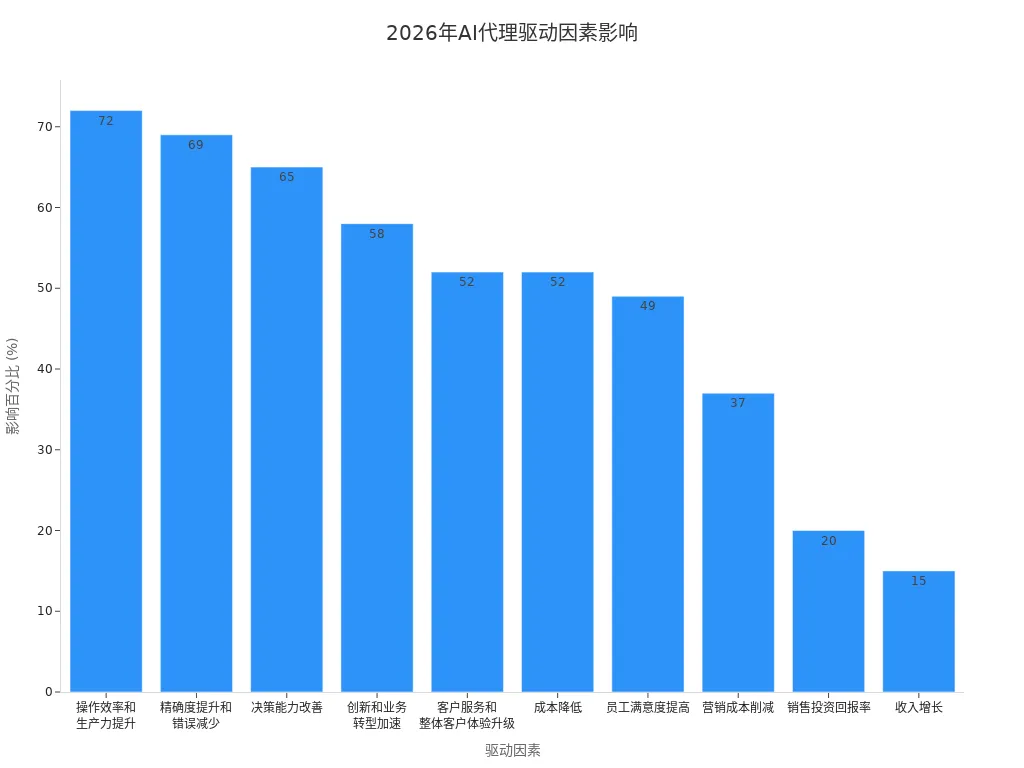
You can see that AI agents not only improve sales ROI but also significantly reduce marketing costs. In cross-border payments and digital currency conversion, BiyaPay leverages AI-driven risk control and intelligent routing to help enterprises enhance operational efficiency and customer experience, further driving revenue growth.
Capital Expenditure & Power Bottlenecks
When interpreting the tech earnings season preview, you need to pay attention to the profound impact of AI infrastructure-related capital expenditure and power bottlenecks on company finances. In 2026, tech companies’ capital expenditure on AI infrastructure approaches US$700 billion. Increased capex has caused sharp declines in free cash flow for many companies—for example, Meta’s free cash flow dropped nearly 90%. Data center power demand has risen from 5% to 12%, while new power generation facilities typically take 5–10 years to build. In the US market, tech companies are actively investing in nuclear and natural gas solutions to address power shortages.
- Capital expenditure reduces free cash flow and affects financial outlook.
- Power supply constraints prevent data centers from fully utilizing physical space, increasing investment risk.
- Tech companies are seeking new energy solutions to meet surging power demand.
You need to closely monitor the impact of capex and power bottlenecks on future earnings delivery and rationally assess companies’ long-term competitiveness.
New Business Models & Revenue Structure Adjustments
AI agents drive continuous reshaping of business models and revenue structures among tech companies. In 2026, 45% of enterprises are rethinking operating models, 42% are redesigning processes, 66% report productivity gains, and 57% achieve cost savings. 73% of companies believe AI agents will deliver competitive advantages, and 75% are confident in their AI agent strategy.
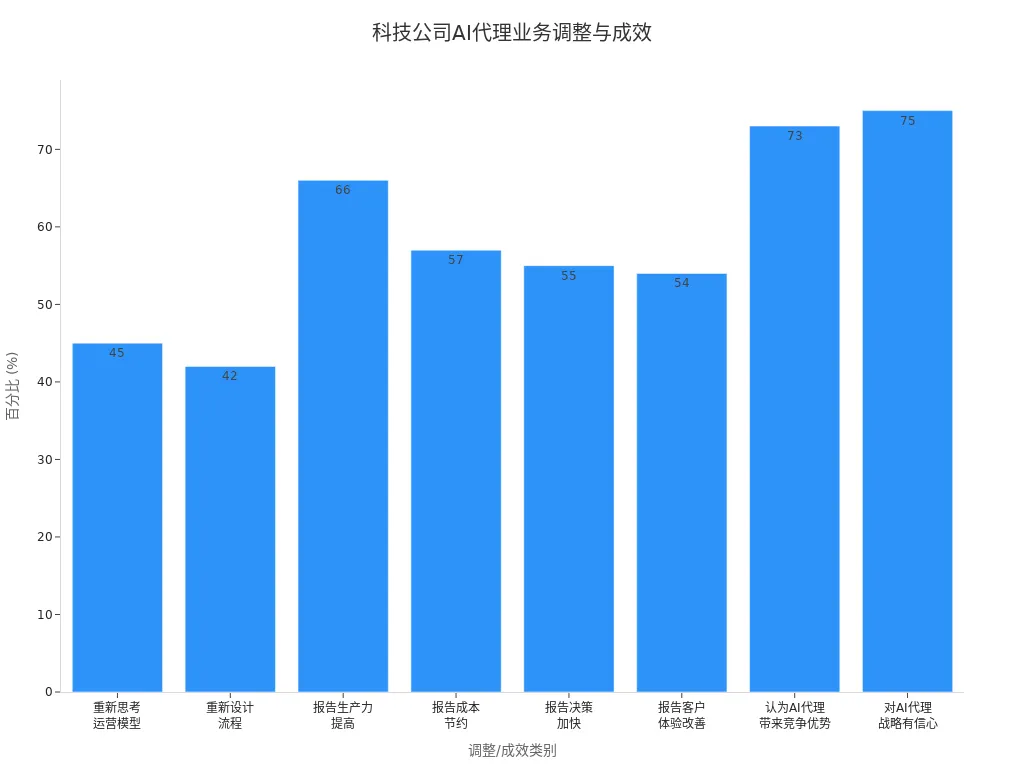
You can see that BiyaPay optimizes cross-border payment processes through AI agents, delivering more efficient fund flows and risk control services for Chinese-speaking users and global enterprises. In the US market, some tech companies like Cursor achieved US$200 million in revenue without hiring enterprise sales reps, while n8n relies on open-source communities for bottom-up growth. You should pay attention to the new business models and revenue structure adjustments brought by AI agents and evaluate their role in enhancing long-term enterprise value.
Tech Earnings Season Preview: Risks & Market Expectations
Technical Bottlenecks & Supply Chain Risks
When analyzing the 2026 tech earnings season preview, you must pay attention to technical bottlenecks and supply chain risks during AI agent deployment. AI model parameter scale continues to expand, making inference performance a core concern for enterprise deployment. Power and data center resources are increasingly strained, and physical infrastructure capacity has become a key constraint on AI progress. You will find that tool paywalls and security lags are also affecting further AI development.
Major technical and supply chain risks include:
- New cyber vulnerabilities emerge frequently; attackers may attempt unauthorized access to AI agents or manipulate external resources to influence operations.
- AI agents face unintended privilege escalation risks during data access and operations, especially prominent in highly regulated industries.
- Agent capabilities are limited by underlying AI models, with constrained reliability and speed of adaptation to new environments.
- Interoperability issues hinder collaboration among AI agents, impacting overall productivity.
- Organizations must avoid dependency on single vendors or regions to reduce uncertainty from tariffs and geopolitics.
- Changes in the global trade system intensify challenges for companies restructuring supply chains.
You need to closely monitor the impact of these technical and supply chain risks on companies’ AI strategies and earnings performance.
Geopolitical & Regulatory Impacts
When evaluating AI agent-driven earnings growth, you must consider the profound influence of geopolitical and regulatory environments. After 2025, artificial intelligence has become a core variable reshaping global order. US–China competition in AI technology continues to intensify, driving massive investment in AI infrastructure and directly affecting financial valuations of companies such as Nvidia.
Key geopolitical and regulatory risks include:
- Export controls remain a policy focus, impacting the leading position of US companies versus Chinese competitors.
- Governments recently eased restrictions on high-performance AI chip exports to China, expected to give Chinese AI compute a 2–3 year boost.
- Policymakers must balance security, innovation, and labor disruption; AI has become a major topic in US domestic political debate.
- The labor market faces automation shocks; MIT estimates 12% of US jobs can be effectively replaced by AI, with the proportion expected to rise further.
You should monitor the impact of policy changes on AI infrastructure investment, corporate strategic adjustments, and financial performance.
Core Risks Investors Are Watching
In the tech earnings season preview, you need to grasp the core risks that investors are most concerned about. The market’s reaction to accelerating AI capabilities may be excessive; some companies’ AI adoption has fallen short of expectations, leading to divergent industry returns.
Investors primarily focus on the following risks:
- The AI field may develop a winner-takes-all pattern, putting greater pressure on secondary players.
- Big tech companies increasing debt to finance AI capex may compress margins and valuation levels.
- Inflation and credit market pressures increase financial uncertainty.
- Gap between market expectations and actual results. Gartner predicts that by the end of 2026, 40% of enterprise applications will integrate AI agents, with the application software market growing at a 13% CAGR, yet currently only a few companies are realizing significant value while most see moderate returns without fundamental transformation.
| Evidence Type | Content |
|---|---|
| Market Expectation | AI agents expected to drive significant new growth for existing companies. |
| Actual Results | Many companies achieve measurable ROI, but outcomes are often moderate and fail to deliver fundamental transformation. |
You need to rationally assess earnings elasticity driven by AI agents, focus on company fundamentals and external environment changes, and avoid blindly chasing high valuations.
Future Trends of AI Agents & Impact on Tech Stocks
Technology Evolution & Industry Penetration
You need to monitor key advancements in AI agent technology over the next three years. 2026 will be the turning point for AI agents moving from pilot projects to large-scale production deployment. Enterprises will integrate AI agents into existing workflows, driving autonomous orchestration of intelligent automation. The table below summarizes major technology evolution trends:
| Technology Progress | Description |
|---|---|
| From Pilots to Production | 2026 becomes the key year for production deployment |
| AI Agent Integration | Deep embedding into core enterprise processes |
| Autonomous AI Agent Orchestration | Significant improvement in intelligent automation capabilities |
You will see AI agents accelerating penetration across multiple industries including IT, healthcare, legal services, cybersecurity, software development, and customer service. US market data shows enterprise generative AI penetration will rise from 25% in 2025 to 50% in 2027. Penetration rates in cybersecurity, desktop support, software development, and customer service reach 38%, 36%, 34%, and 30% respectively. Market forecasts indicate agentic AI will dominate IT budget expansion over the next five years, with AI agents expected to account for over 26% of global IT spending by 2029, reaching a total scale of US$1.3 trillion. You should closely track the deployment speed and investment scale of AI agents across industries and adjust earnings expectations for tech stocks in a timely manner.
Long-Term Earnings Elasticity & Valuation Reshaping
When evaluating the long-term impact of AI agents on tech stocks, you need to focus on earnings elasticity and the reshaping of valuation systems. AI investment and innovation capabilities directly affect enterprise earnings performance. Competitive environment determines innovation returns, while profit-sharing mechanisms influence the distribution of benefits between companies and employees. AI can significantly boost productivity and profit in high-demand-elasticity areas such as digital services, enabling scalable growth. You can refer to the following industry phenomena:
- AI agents accelerate digitalization and create productivity enhancement opportunities.
- Investors need to identify companies capable of converting elastic demand.
- As a general-purpose technology, AI’s impact takes time to materialize; short-term competitiveness is limited across all tasks.
- AI can augment high-skill professional labor and enhance core enterprise competitiveness.
Historical data shows that companies using AI demand forecasting improve inventory turnover, driving EBITDA growth and lifting valuation multiples from 7× to 9×. Some companies heavily reliant on AI tools for large-scale service replication see valuation multiples decline due to intensified competition. You should combine enterprise innovation capability, industry demand elasticity, and data asset barriers to dynamically assess how AI agents reshape long-term valuations of tech stocks. Fintech companies such as BiyaPay have already demonstrated earnings elasticity and valuation upside potential in global markets by optimizing cross-border payments and risk control processes through AI agents.
You can see that AI agents have become the core variable driving 2026 tech stock earnings beats. According to Bloomberg, hyperscalers will invest US$650 billion in AI infrastructure, fueling enterprise application and digital workforce transformation. You should pay attention to the following structural opportunities and risks:
| Opportunity | Risk |
|---|---|
| Improved Operational Efficiency | Cybersecurity Vulnerabilities |
| New Revenue Streams | Security & Compliance Challenges |
You need to continuously track AI agent technology progress and earnings data, combining market expectations, company fundamentals, and external environment to rationally evaluate the investment value of tech stocks.
FAQ
What is the essential difference between AI agents and traditional AI tools?
You will find that AI agents possess autonomous decision-making and multi-task processing capabilities. Traditional AI tools typically solve only single problems. AI agents can proactively learn and adapt to complex scenarios, improving enterprise operational efficiency.
Will surging capital expenditure affect tech companies’ profitability?
You need to monitor the pressure of capex on free cash flow. In the short term, capex may compress profits. Over the long term, AI infrastructure investment helps solidify competitive moats and enhance profitability.
What are the main technical challenges in AI agent deployment?
You should note that AI agents face challenges in inference performance, data security, model reliability, and system interoperability. Companies must continuously optimize underlying architecture to ensure stable operation of AI agents in real business scenarios.
How should investors evaluate the long-term value of AI agent-related companies?
You can assess based on innovation capability, data asset barriers, and industry demand elasticity. Focus on the continuous optimization of revenue structure, cost efficiency, and business models brought by AI agents to judge long-term growth potential.
What are the industry penetration trends for AI agents in the US market?
You will see AI agents accelerating penetration in IT, finance, healthcare, advertising, and other industries. US enterprises are integrating AI agents into core processes, driving intelligent automation and digital transformation.
*This article is provided for general information purposes and does not constitute legal, tax or other professional advice from BiyaPay or its subsidiaries and its affiliates, and it is not intended as a substitute for obtaining advice from a financial advisor or any other professional.
We make no representations, warranties or warranties, express or implied, as to the accuracy, completeness or timeliness of the contents of this publication.
Related Blogs of

How Do AI Servers Drive Storage Demand? The Roles of HBM, Server DRAM, Enterprise SSDs, and HDDs


Is SMIC 0981.HK a Memory Chip Stock? The Relationship Between Foundry Manufacturing and the Memory Supply Chain


Why Is HDD Supply and Demand Tightening? AI Data Centers, Long-Term Agreements, and Western Digital/Seagate Pricing Power

What Are NOR Flash, SLC NAND, and EEPROM? Why They Help Explain Hong Kong-Listed Memory-Related Stocks

Choose Country or Region to Read Local Blog
 Australia
 Austria
 Belgium
 Canada
 Cyprus
 Czech Republic
 Denmark
 Estonia
 Finland
 France
 Germany
 Greece
 Hong Kong
 India
India Indonesia
 Ireland
 Italy
Italy Japan
Japan Latvia
 Lithuania
 Luxembourg
 Malaysia
 Malta
Malta Morocco
 Nepal
Nepal Netherlands
 New Zealand
 Norway
 Pakistan
 Philippines
 Poland
 Portugal
 Romania
 Singapore
 Slovakia
 Slovenia
 South Africa
 South Korea
 Spain
Spain Sweden
 Thailand
 The United States
 Turkey
 United Arab Emirates
 United Kingdom
 Vietnam
Contact Us




BIYA GLOBAL LLC is registered with the Financial Crimes Enforcement Network (FinCEN), an agency under the U.S. Department of the Treasury, as a Money Services Business (MSB), with registration number 31000218637349, and regulated by the Financial Crimes Enforcement Network (FinCEN).
BIYA GLOBAL LIMITED is a registered Financial Service Provider (FSP) in New Zealand, with registration number FSP1007221, and is also a registered member of the Financial Services Complaints Limited (FSCL), an independent dispute resolution scheme in New Zealand.