Paying Overseas Mortgage with Digital Assets: Automating Crypto Gains to US Property Monthly Payments





Image Source: pexels
You can pay your mortgage using digital assets, leveraging cryptocurrency yields to automate monthly US property payments. The automated process improves efficiency, ensures compliance and security, and brings innovative mortgage options. Recent US mortgage policy changes have promoted recognition of digital assets as collateral, with specific impacts as follows:
| Evidence Point | Description |
|---|---|
| FHFA considering digital assets as collateral | FHFA’s move signals recognition of cryptocurrencies in mortgage assessments. |
| Challenges of traditional practices | Traditionally, mortgages required converting digital assets to fiat and holding them in a bank account for months. |
| Industry response | Industry participants welcome the change, noting that many digital asset holders face barriers when applying for mortgages. |
You need to pay attention to the detailed process steps and compliance considerations below.
Core Key Points
- Select suitable digital assets as collateral, ensuring liquidity and stability to improve loan approval success rate.
- Use compliant platforms for depositing digital assets and applying for loans, ensuring fund safety and smooth processing.
- Set up automation tools to enable automatic monthly mortgage transfers, reducing human operation risks.
- Monitor US mortgage policy changes and choose institutions that support digital asset collateral to expand financing options.
- Manage cryptocurrency yields rationally to ensure stable monthly mortgage payments and avoid financial impact from market volatility.
Overview of Digital Asset Mortgage Payment Solutions

Image Source: pexels
Process Overview
You can achieve automated management of US property monthly payments using digital assets to pay your mortgage. The overall process mainly includes the following steps:
- You need to choose suitable digital assets as collateral, such as mainstream cryptocurrencies or stablecoins.
- You deposit the digital assets into a compliant platform that supports mortgage loans; the platform assesses the lendable amount based on asset value.
- After obtaining the loan, the platform automatically converts a portion of the loan amount into USD for paying your US mortgage monthly installments.
- You can set up automation tools to regularly withdraw equivalent USD from digital asset yields each month and automatically transfer it to the mortgage account.
- You need to ensure smooth connection between your bank account and mortgage account to guarantee successful automatic monthly deductions.
Changes in US mortgage policy provide the regulatory foundation for paying mortgages with digital assets. Some US financial institutions have begun accepting digital assets as collateral, reducing reliance on paper asset proof in traditional mortgages. You can complete asset verification and loan applications more efficiently, improving the overall experience.
Tip: When selecting a platform, prioritize compliance and security. It is recommended to choose regulated Hong Kong licensed banks or major international platforms to ensure fund safety and smooth processing.
Key Node Analysis
In the automated process of paying a mortgage with digital assets, each key node may encounter different challenges. You need to focus on the following important stages:
| Stage | Challenge Description |
|---|---|
| Asset verification process | Traditional methods are inefficient; borrowers need to request paper statements from multiple banks — complex and time-consuming. |
| Document submission | Borrowers may submit incorrect files, requiring time to resubmit correct ones, increasing processing time. |
| Digital asset verification | Digital verification is faster and simpler, significantly reducing the time and effort required for mortgage processing. |
During the asset verification stage, traditional processes usually require paper statements from multiple banks — cumbersome and time-consuming. After using digital assets as collateral, platforms can quickly complete verification via on-chain data, greatly improving efficiency. In the document submission stage, incorrect files cause delays, so you should prepare all required materials in advance. In the digital asset verification stage, automation tools and blockchain technology simplify the process, reducing manual intervention and wait times.
Adjustments to US mortgage policy are promoting the adoption of digital asset mortgage payments. You can leverage the liquidity and transparency of digital assets to simplify loan applications and improve capital efficiency. You can also achieve seamless connection from yields to monthly payments through automation, reducing human operation risks.
US Mortgage Policy and Digital Asset Collateral
Policy Change Interpretation
You can see significant changes occurring in US mortgage policy. As the regulator of the US housing finance system, FHFA has begun considering including digital assets such as Bitcoin in the collateral scope. FHFA oversees Fannie Mae and Freddie Mac — two institutions with pivotal roles in the US mortgage market. If you hold cryptocurrencies, you may have the opportunity to directly use these assets as collateral for mortgage applications or refinancing. This policy adjustment is expected to change traditional views of mortgage underwriters toward cryptocurrencies and make paying mortgages with digital assets a reality.
Currently, some US financial institutions have started accepting cryptocurrencies as collateral. You can refer to the table below to understand relevant institutions and the types of digital assets they support:
| Financial Institution | Accepted Cryptocurrencies |
|---|---|
| JPMorgan | Bitcoin, Ethereum |
When selecting a lender, you can prioritize banks or platforms that already support digital asset collateral. Gradual policy relaxation provides you with more diverse asset allocation and financing options.
- FHFA is considering Bitcoin and other digital assets as collateral.
- The agency oversees the US housing finance system, including Fannie Mae and Freddie Mac.
- This development may change mortgage underwriters’ views on cryptocurrencies.
Digital Asset Mortgage Loan Case Examples
You can achieve paying mortgages with digital assets through innovative products. Platforms like Moon Mortgage have launched mortgage services specifically for cryptocurrency holders. You only need to deposit mainstream digital assets such as Bitcoin or Ethereum into the platform; the platform assesses your loan amount based on asset value. After obtaining the loan, the platform automatically converts a portion into USD for paying US property monthly installments.
In actual operations, you can experience the efficiency and convenience of digital asset mortgage loans. Platforms usually provide automation tools to help you achieve automatic transfers from yields to monthly payments. You do not need frequent manual operations, reducing risks from market volatility. As policies become clearer and more institutions join, paying mortgages with digital assets will become a choice for more investors.
Cryptocurrency Yield Management
Yield Acquisition Methods
You can obtain cryptocurrency yields through various methods to provide funding support for US property monthly mortgage payments. Common yield acquisition methods include:
- Depositing cryptocurrency: You deposit cryptocurrency into lending platforms; the platform manages your assets and allocates loan amounts.
- Loan issuance: You can apply for loans by collateralizing other cryptocurrencies; platforms set loan-to-value (LTV) ratios based on asset value.
- Interest accumulation: You pay interest; lenders receive returns, usually paid in the same deposited cryptocurrency.
- Repayment and withdrawal: After completing repayment, the platform releases collateral; you can withdraw yields or choose to reinvest.
These methods allow you to obtain liquid funds for digital asset mortgage payments without directly selling crypto assets. You can flexibly arrange asset allocation and improve capital efficiency.
Yield Distribution and Management
You need to manage cryptocurrency yields rationally to ensure stable monthly mortgage payments. You can adopt the following strategies:
- Utilize crypto-backed loans to continuously obtain financing and avoid forced asset sales due to market volatility.
- Ensure asset liquidity to meet mortgage deduction needs at any time.
- During the mortgage period, your crypto assets are safely custodied and ownership remains yours.
- Monitor collateral value and promptly address risks from price fluctuations to prevent value drops affecting mortgage payments.
- Optimize wealth utilization through crypto asset appreciation to help repay debt.
You can combine automation tools to set yield distribution rules and achieve automatic transfers from yields to mortgage accounts. This eliminates the need for frequent manual operations, ensuring timely mortgage payments and improving overall management efficiency.
Stablecoins and Conversion Platforms
Stablecoin Selection
In the process of paying mortgages with digital assets, you need to choose appropriate stablecoins as intermediaries. Stablecoins are usually pegged to fiat currencies like USD with low price volatility, making them suitable for asset management. You can consider mainstream stablecoins such as USDT and USDC — these have strong global liquidity and high conversion efficiency. If you hold Bitcoin or Ethereum, you can first convert to stablecoins before proceeding. Stablecoins help you avoid risks from sharp cryptocurrency price swings and ensure stable mortgage payment funds. When choosing stablecoins, focus on the compliance and transparency of the issuing institution and prioritize regulated products.
Tip: You can prioritize stablecoin issuers regulated in Hong Kong to enhance fund security and compliance protection.
Fiat Conversion Platforms
You need to use compliant fiat conversion platforms to exchange stablecoins into USD for paying US property monthly mortgage installments. You can choose major international platforms such as Coinbase and Kraken — these support fast conversion between stablecoins and USD. You can also consider digital asset conversion services provided by Hong Kong licensed banks for safer fund flows. When operating, pay attention to platform fees, arrival speed, and compliance requirements. You can set automated conversion rules to periodically convert stablecoins to USD each month and automatically transfer to the mortgage account. You also need to complete KYC identity verification to ensure legitimate fund sources. Operating through compliant platforms effectively reduces fund flow risks and ensures smooth digital asset mortgage payment processes.
In practice, you can further streamline the automation flow by connecting the “conversion + transfer” steps into a single pipeline. For example, you may use the BiyaPay website to convert stablecoins into USD in real time, leverage its exchange rate tool to estimate long-term repayment costs, and then send funds directly to a US bank account via its cross-border remittance service. This approach helps form a smoother end-to-end flow from crypto yields to mortgage payments, reducing manual intervention and time delays while staying within a compliant framework.
| Platform Type | Advantages | Notes |
|---|---|---|
| Major international platforms | Fast conversion, strong liquidity | Higher fees, requires KYC completion |
| Hong Kong licensed banks | Strong compliance, high fund security | Possible amount limits, more complex process |
Automated Transfer Setup
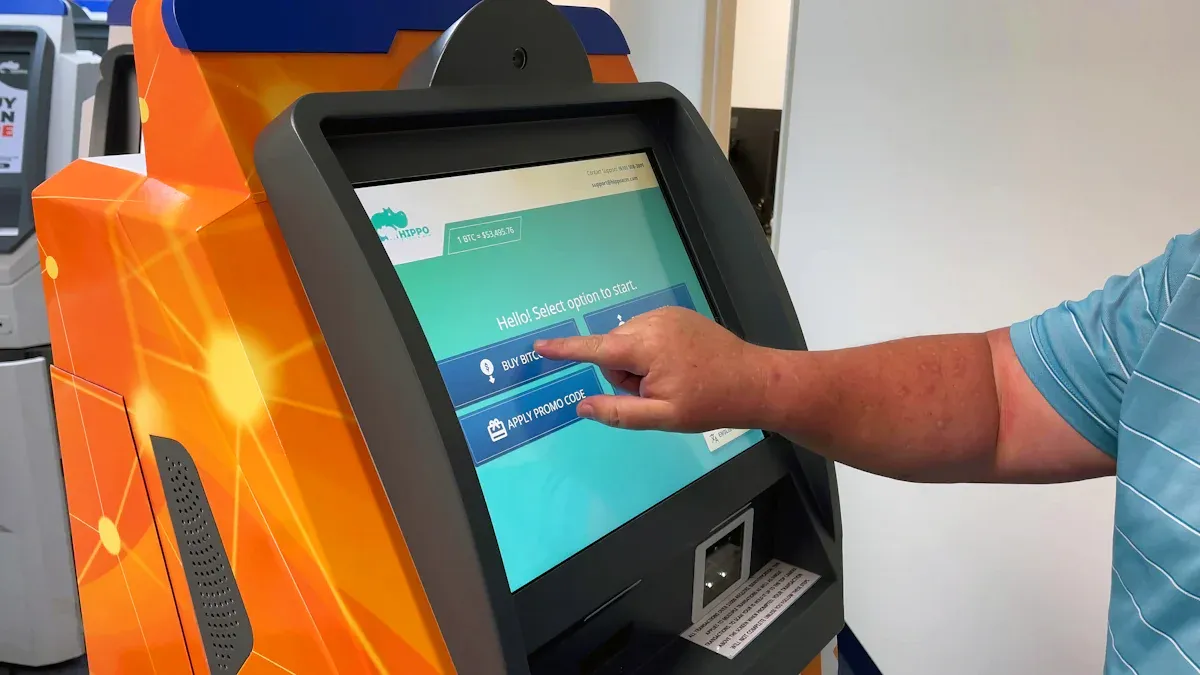
Image Source: unsplash
API and Automation Tools
You can use APIs and automation tools to implement automatic transfers for paying mortgages with digital assets. Many platforms support compatibility with major wallets (such as MetaMask, Coinbase, Phantom), allowing flexible management of payment methods and assets. Automation tools help you set recurring transfers, automatic conversions, and notification reminders, improving fund flow efficiency. You can integrate via API to automatically convert crypto yields to USD and transfer to the mortgage account as scheduled. Platforms usually provide multi-currency support, allowing settlement in different cryptocurrencies or stablecoins of your choice. You can also manage wallets, payment methods, and subscriptions in the client portal and view real-time transaction reports and fund status.
| Feature | Description |
|---|---|
| Automated subscription management | Automatically handles upgrades, downgrades, renewals, or cancellations. |
| Multi-currency support | Supports multiple cryptocurrencies and stablecoins, allowing settlement in chosen fiat. |
| Compatibility with major wallets | Compatible with MetaMask, Coinbase, Phantom, and other major wallets. |
| Flexible payment settlement | Provides real-time notifications and detailed transaction reports. |
| Template automation | Saves subscription terms (amount, interval, asset) and initiates payments as scheduled. |
| Smart contract integration | Ensures interaction between SaaS systems and blockchain. |
| Notifications | Sends email/SMS/push notifications for upcoming deductions or overdue payments. |
| Security | Encrypts data and verifies transaction validity. |
Tip: When selecting automation tools, prioritize security and compliance to ensure the fund flow process meets relevant US and China/mainland China regulations.
Auto-Sell and Dollar-Cost Averaging
You can optimize fund management from crypto yields to mortgage payments using auto-sell and dollar-cost averaging (DCA) features. Auto-sell tools allow you to set fixed times each month to automatically convert cryptocurrency or stablecoins to USD, avoiding mortgage payment impacts from market volatility. DCA helps diversify risk by gradually selling assets on schedule, ensuring stable fund sources. You can combine APIs and automation tools to set multi-currency auto-conversions, monitor asset values in real time, and adjust sell strategies promptly. Platforms usually support pre-built plugins or Webhook setups for easy connection with crypto processors to achieve automatic transfers. You can also use analytical reports to understand monthly cash flows and payment status, promptly identify anomalies and take action.
The automated transfer setup for paying mortgages with digital assets helps you improve fund management efficiency, reduce human operation risks, and achieve seamless connection from yields to monthly payments.
Bank Account and Mortgage Account Integration
Bank Account Connection Methods
When paying mortgages with digital assets, you need to smoothly connect your bank account with cryptocurrency conversion platforms. Common US practices include the following:
- Partnering with crypto-friendly banks. Some exchanges establish relationships with smaller banks willing to support digital asset businesses, improving fund flow efficiency.
- Using payment processors. Many platforms complete fiat-crypto conversions indirectly through third-party payment processors, simplifying operations.
- Diversifying banking relationships. You can open accounts at multiple banks and in different jurisdictions to reduce risks from single-bank service disruptions.
When choosing banks, prioritize Hong Kong licensed banks or US local crypto-friendly banks. This improves compliance and fund security. You also need to complete KYC identity verification to ensure account information is authentic and valid.
Automatic Deduction Setup
You can set up automatic deductions through bank accounts to achieve automatic mortgage monthly payments. US banks have certain requirements for automatic deductions from cryptocurrency sources. You need to pay attention to the following aspects:
| Evidence Point | Description |
|---|---|
| Fannie Mae and Freddie Mac proposals | These proposals require board and FHFA approval and consider inherent cryptocurrency volatility. |
| Restrictions on cryptocurrency use | Previously, if using cryptocurrency for down payments or reserves, it had to be converted to USD and held in a qualified asset account for a period. |
| FHFA instructions | FHFA directed major secondary investors to develop proposals on treating cryptocurrency as an asset in mortgage applications. |
When setting up automatic deductions, ensure all cryptocurrency yields have been converted to USD and deposited into qualified bank accounts. Some banks require funds to be held in the account for a period before they can be used for mortgage auto-deductions. You can set up monthly recurring automatic transfers to the mortgage account via online banking, mobile banking, or branch services. This ensures timely mortgage payments and reduces overdue risks from operational errors.
In the entire process of paying mortgages with digital assets, smooth integration between bank accounts and mortgage accounts is the key to automation. You should regularly check account balances and deduction status to ensure a secure and reliable funding chain.
Risk Monitoring and Management
Fund Flow Monitoring
In the automated process of paying mortgages with digital assets, you need to monitor fund flows in real time. This allows timely detection of anomalies and ensures smooth monthly mortgage payments. You can choose various professional tools to manage and track crypto asset flows. The table below shows several mainstream tools and their functions:
| Tool | Function Description |
|---|---|
| Plaid | Provides real-time cash flow data, simplifies loan underwriting and consumer budgeting, suitable for monitoring cash flows used for mortgages. |
| CoinTracker | Offers comprehensive crypto asset management, real-time market price tracking, simplifies tax calculations, suitable for beginners and experienced investors. |
| Kubera | Provides secure crypto asset management solutions with real-time market insights, helping users make informed decisions based on current trends. |
Through these tools, you can track asset changes and fund flows at any time, adjust asset allocation promptly, and reduce risks from market volatility. You can also combine account management services from Hong Kong licensed banks to further enhance fund security and compliance.
Risk Alerts
In the automated mortgage payment process, you need to establish a comprehensive risk alert mechanism. This allows you to receive notifications immediately when anomalies occur and take action. You can integrate the following features:
- Proactive compliance monitoring to detect penalty risks in advance and issue warnings.
- No-code alert integration for quick connection to third-party services, automatically blocking disputes and chargebacks.
- Intelligent anomaly detection with custom rules to identify issues in the payment process in real time.
- Multi-channel notifications to ensure you receive key event alerts via email, SMS, etc.
- Customizable triggers that automatically alert for large transactions, failed payments, or abnormal access.
Through these measures, you can achieve 24/7 monitoring of automated fund flows, ensuring the safety and stability of the digital asset mortgage payment process. You can also flexibly adjust alert rules based on actual needs to improve overall risk management capabilities.
Recommended Tools and Platforms
Wallets and Conversion Platforms
In the process of paying mortgages with digital assets, you need to choose secure and reliable wallets and conversion platforms. Mainstream wallets such as MetaMask, Coinbase Wallet, and Phantom support multi-chain asset management, making it easy to view and transfer cryptocurrencies anytime. You can achieve real-time conversion between USDT and USD/HKD through BiyaPay to meet cross-border payment and fund allocation needs. BiyaPay provides convenient global payment and cryptocurrency trading services for Chinese-speaking users, supporting multi-currency conversion and improving fund flow efficiency. When selecting platforms, prioritize compliance and fund security; it is recommended to use regulated major international platforms or services from Hong Kong licensed banks.
Tip: For large conversions, pay attention to the platform’s KYC requirements and fund flow compliance to ensure every transaction is traceable.
Automation Tools
You can use automation tools to improve efficiency in paying mortgages with digital assets. Automatic payment processing features support multiple payment methods, automatically record and allocate monthly mortgage payments, reducing human errors. Escrow management tools automatically calculate monthly escrow amounts to ensure timely payment of taxes and insurance, helping you avoid compliance risks. You can also use online borrower and investor portals for 24/7 self-service account information access, reducing reliance on manual services. Mainstream platforms like Zapier and IFTTT support API integration to help you achieve automatic transfers and recurring conversions, improving overall management efficiency.
- Automatic payment processing: Supports multiple payment methods and automatically records and allocates payments.
- Escrow management: Automatically calculates monthly escrow items to ensure timely tax and insurance payments.
- Online borrower and investor portals: 24-hour self-service access to information.
Mortgage Loan Platforms
When choosing digital asset mortgage loan platforms, focus on compliance and security. In the US market, the eOriginal eAsset® Management Platform provides secure eVault and compliance management for digital asset mortgages, serving over 750 institutions. The platform ensures digital loans are transferable and tradable, providing trusted digital vaults for large asset-backed securities buyers and insurers. You can understand its main features through the table below:
| Platform Name | Features | Number of Clients |
|---|---|---|
| eOriginal eAsset® Management Platform | Provides secure eVault and compliance features, supports management of digital asset mortgages | 750+ |
When selecting platforms, prioritize whether they support issuance, transfer, and assignment of unique authoritative copies to ensure loan asset security and liquidity. You can also check whether the platform is trusted by major financial institutions and insurers, which helps improve overall compliance levels.
Recommendation: In actual operations, combining wallets, conversion platforms, automation tools, and compliant mortgage loan platforms allows you to efficiently and securely complete the full process of paying mortgages with digital assets.
Compliance and Security
Taxation and Reporting
When using cryptocurrency yields to pay US mortgages, you must understand relevant tax reporting requirements. US tax law treats cryptocurrencies as property. When selling or disposing of digital assets, you need to report capital gains or losses. If you exchange digital assets for goods or services in a business context, the related income is treated as ordinary income or loss. You should keep all transaction records to ensure accurate reporting data. Proper tax planning helps reduce compliance risks.
- Sale or disposal of cryptocurrency requires reporting of capital gains or losses
- Exchange of digital assets for business purposes requires reporting as ordinary income or loss
Tip: You can consult professional tax advisors to ensure all tax reporting is compliant during the digital asset mortgage payment process.
KYC/AML Requirements
When selecting platforms and banks, you must complete KYC (Know Your Customer) and AML (Anti-Money Laundering) processes. Platforms will require submission of identity proof, address proof, and other materials. You need to ensure all fund sources are legitimate to avoid account freezes due to unidentified identity or abnormal funds. Hong Kong licensed banks and US local compliant platforms usually have strict KYC/AML review processes. You should prepare relevant materials in advance to improve review efficiency.
Fund Security Measures
When managing digital assets, adopt multiple security measures. You can set access controls to ensure only authorized users can operate assets. Install antivirus and anti-malware software to prevent malicious programs from threatening asset security. Regularly back up data to prevent asset loss due to hardware failure or attacks. Use data loss prevention solutions to protect sensitive information from unauthorized access. You should also pay attention to platform website security to ensure safe online transactions and account interactions. Through these measures, you can effectively reduce security risks in the digital asset mortgage payment process.
- Access control to restrict asset operation permissions
- Antivirus and anti-malware to prevent security threats
- Data backup to ensure asset recovery capability
- Data loss prevention to protect sensitive information
- Website security to ensure transaction safety
When adopting digital asset mortgage payments, you can experience the efficiency and convenience brought by automation. You need to focus on compliance and security and rationally assess your own risk tolerance. The table below summarizes the main risks:
| Risk Factor | Description |
|---|---|
| Cryptocurrency volatility | Cryptocurrency value fluctuations may cause significant changes in collateral during the loan period, potentially triggering margin calls. |
| Regulatory uncertainty | The regulatory framework for cryptocurrency-related financial products is still developing; legal status in different regions may affect agreement stability. |
| Security risks | Security vulnerabilities may endanger the safety of digital assets used as collateral; borrowers need to understand relevant terms and conditions. |
| Risk-reward ratio | Borrowers should consider the overall risk-to-reward ratio to evaluate whether obtaining a mortgage is wise. |
You can assess your own risk tolerance in the following ways:
- Understand financial goals
- Consider time horizon
- Identify behavioral biases
- Evaluate risk capacity
The longer the time horizon, the more you can withstand risks from market fluctuations. You should also rationally choose a suitable plan based on income stability, net worth, and future financial obligations. You need to continuously monitor policy and platform changes to ensure fund safety and compliance.
FAQ
Do I need to convert digital assets to USD in advance for mortgage payments?
You need to convert digital assets to USD in advance. US mortgage institutions usually only accept USD for monthly payments. You can complete the conversion through compliant conversion platforms to ensure funds flow smoothly into the mortgage account.
How do Hong Kong licensed banks support paying mortgages with digital assets?
You can choose digital asset conversion services provided by Hong Kong licensed banks. The bank will help you convert stablecoins or other cryptocurrencies to USD and assist in transferring funds to your US mortgage account, improving compliance and fund security.
How to ensure fund safety in the automated deduction process?
You can adopt multiple security measures: set access permissions, use encrypted wallets, and regularly back up data. Choose regulated platforms and banks to ensure every transaction is traceable, reducing asset loss risks.
What restrictions does US mortgage policy impose on digital asset collateral?
You need to monitor policy changes. Some institutions require digital assets to be converted to USD first, with funds held in a bank account for a period. You also need to complete KYC and AML reviews to ensure legitimate fund sources.
How can cryptocurrency yields be automatically transferred to the mortgage account?
You can set up recurring transfers through APIs and automation tools. The platform will automatically convert cryptocurrency yields to USD and transfer them to the mortgage account as scheduled. You do not need manual operations, improving fund management efficiency.
*This article is provided for general information purposes and does not constitute legal, tax or other professional advice from BiyaPay or its subsidiaries and its affiliates, and it is not intended as a substitute for obtaining advice from a financial advisor or any other professional.
We make no representations, warranties or warranties, express or implied, as to the accuracy, completeness or timeliness of the contents of this publication.
Related Blogs of

How to Read Pure Storage and NetApp Earnings? ARR, Cloud Revenue, Gross Margin, and Cash Flow Metrics


How Does NAND Price Increase Affect SanDisk? Enterprise SSDs, Consumer Storage, and Margin Leverage


HBM/DRAM, NAND, and HDD in AI Storage: A Comparison of Elasticity, Cycles, and Risks


How Should You View Seagate’s HAMR Technology? Nearline HDD Capacity Upgrades and the Supply-Demand Cycle
Choose Country or Region to Read Local Blog
 Australia
 Austria
 Belgium
 Canada
 Cyprus
 Czech Republic
 Denmark
 Estonia
 Finland
 France
 Germany
 Greece
 Hong Kong
 India
India Indonesia
 Ireland
 Italy
Italy Japan
Japan Latvia
 Lithuania
 Luxembourg
 Malaysia
 Malta
Malta Morocco
 Nepal
Nepal Netherlands
 New Zealand
 Norway
 Pakistan
 Philippines
 Poland
 Portugal
 Romania
 Singapore
 Slovakia
 Slovenia
 South Africa
 South Korea
 Spain
Spain Sweden
 Thailand
 The United States
 Turkey
 United Arab Emirates
 United Kingdom
 Vietnam
Contact Us




BIYA GLOBAL LLC is registered with the Financial Crimes Enforcement Network (FinCEN), an agency under the U.S. Department of the Treasury, as a Money Services Business (MSB), with registration number 31000218637349, and regulated by the Financial Crimes Enforcement Network (FinCEN).
BIYA GLOBAL LIMITED is a registered Financial Service Provider (FSP) in New Zealand, with registration number FSP1007221, and is also a registered member of the Financial Services Complaints Limited (FSCL), an independent dispute resolution scheme in New Zealand.