OpenClaw Commercialization and Monetization: How to Integrate Fiat Payment Interfaces for Your AI Robot





Image Source: pexels
To smoothly commercialize and monetize your AI robot, you must integrate secure and reliable fiat payment interfaces. In actual operation, you need to focus on three core areas: authorization, authenticity, and liability. The table below summarizes the key steps:
| Key Step | Description |
|---|---|
| Authorization | Verify that the user has indeed authorized the AI agent to perform specific purchases, preventing unauthorized AI spending. |
| Authenticity | Merchants must confirm that orders reflect the user’s real intent, avoiding misunderstandings or AI hallucinations. |
| Liability | Clearly define responsibility for transaction issues, including user, developer, merchant, or bank. |
You can gradually implement AI robot collection capabilities based on your business scenario, improving overall monetization efficiency.
Key Takeaways
- Integrating fiat payment interfaces is the key to AI robot commercialization and monetization — ensure clear authorization, authenticity, and liability.
- Choosing appropriate monetization models, such as subscription pricing or usage-based billing, can improve revenue stability and user flexibility.
- When integrating fiat payment interfaces, focus on security and user trust — ensure transparent transactions and data encryption.
- Reasonably planning deployment environment and costs can significantly improve AI robot commercialization efficiency and ROI.
- Through multi-channel promotion and precise market positioning, expand the influence of AI robot services and increase user conversion rates.
Commercialization Logic and OpenClaw Advantages

Image Source: pexels
Wrapper Monetization Models
You can achieve AI robot commercialization and monetization through various Wrapper models. Mainstream models include subscription pricing, usage-based billing, and hybrid models. Subscription pricing suits scenarios needing stable revenue and long-term customer relationships; usage-based billing offers higher user flexibility and suits businesses with frequent but uneven API calls. Hybrid models combine both advantages to meet broader customer needs.
The table below compares common monetization models:
| Monetization Model | Description | Advantages and Disadvantages |
|---|---|---|
| Subscription Pricing | Customers pay regular fees for features and updates. Common in SaaS companies. | Stable revenue, clear budgeting; less flexible for occasional users. |
| Usage-Based Billing | Customers pay based on actual usage. Common in AI APIs. | Low entry barrier, cost-efficient; costs may rise during peak periods. |
| Hybrid Model | Combines subscription and usage-based to improve flexibility and revenue stability. | Suits diverse customers, balances flexibility and stability. |
You can also utilize x402 and AP2 protocols, addressing AI-payment intersections from decentralized and centralized trust perspectives respectively. These protocols provide key foundations for agent commerce, supporting AI agents for autonomous payments, subscription management, and purchasing computing resources. As agent commerce develops, regulators may introduce “AI Commerce Compliance” certification to further boost market confidence.
Role of Fiat Payment Interfaces
Fiat payment interfaces provide compliant and secure infrastructure for AI-driven commercial activities. You can use these interfaces to enable automated payments, order settlement, and account management for AI agents. Traditional fiat payment systems and emerging stablecoin systems will coexist long-term to meet diverse monetization needs in different scenarios.
Fiat payment interfaces also support human-centered commercial worlds, helping you cover broader user groups. Machine governance services complement traditional financial system shortcomings, improving payment efficiency between machines and accounts.
When integrating fiat payment interfaces, focus on cross-compatibility, immutability, global availability, and security. For example, the system should support 24/7 service, resist localized attacks, and ensure complete historical records.
If your use case also includes overseas SaaS subscriptions, service settlements, or team purchases, it may help to keep a manual, human-confirmed payment path alongside the gateway itself. For example, you can review the BiyaPay website, its virtual card application, and the free exchange-rate comparison tool to verify settlement currency, live pricing, and total cost before finalizing frontend and clearing logic.
From a positioning perspective, BiyaPay fits better as a supplementary tool in cross-border fund flows. It functions as a multi-asset wallet covering payments, remittance, trading, and fund management. Where trust language is needed, its compliance background, including U.S. MSB and New Zealand FSP registration, can be mentioned naturally, but it should not replace your own authorization, risk-control, or liability design.
AI Model API and E-commerce Recommendation Integration
You can deeply integrate AI model APIs (such as ChatGPT, Claude) with e-commerce recommendation systems to build a complete commercialization and monetization closed loop. AI models provide users with personalized shopping suggestions, increasing conversion rates. Through precise marketing and ad optimization, AI further enhances e-commerce platform monetization capabilities.
You can also use AI to simplify shopping processes, automatically generate payment links, and achieve seamless flow from recommendation to payment. This integration not only improves user experience but also brings new revenue sources to the platform. OpenClaw supports multiple AI model APIs and can combine with e-commerce recommendations to help you fully implement traffic monetization.
In real cases, OpenClaw helps enterprises improve marketing efficiency through performance audits and creative analysis, achieving “last-mile” commercialization and monetization.
Deployment Environment Selection and Preparation
When promoting AI robot commercialization and monetization, deployment environment choice directly affects system stability, compliance, and return on investment. Walmart saves $75 million annually through AI-driven logistics systems; BMW reduces vehicle defects by 60% using AI vision technology. These cases show AI deployment has become a core enterprise strategy, not just an IT project. When preparing deployment environments, focus on infrastructure, data integration, operability, AI governance, and budget allocation.
Alibaba Cloud Deployment Process
You can efficiently deploy OpenClaw on Alibaba Cloud and integrate fiat payment interfaces through the following steps:
- Install Node.js 22 or higher, verify environment with
node -v. - Choose installation method based on OS: macOS and Linux use
curl -fsSL https://openclaw.ai/install.sh | bash; Windows uses PowerShell installation. - After installation, start interactive guide, select “Yes” to confirm security permissions, and choose “Quick Start”.
- Enter Model Studio console, create API key and save it.
- Prepare LLM API key and Telegram Bot Token.
- Run
npm run onboardto configure agent. - Use PM2 to manage processes, ensuring stable OpenClaw operation in production.
Local Deployment Process
Local deployment suits scenarios with higher data privacy and low-latency requirements. Follow this process:
- Purchase and configure lightweight application server.
- Initialize server and install OpenClaw.
- Open core ports and configure API-Key.
- Local deployment facilitates Wrapper development and payment interface testing, improving operational autonomy and security.
Cloud deployment suits businesses needing elastic scaling and high availability; local deployment emphasizes data control and low latency. Choose flexibly based on business needs.
Private Deployment Cost Considerations
Private deployment involves multiple costs — reasonable budgeting helps improve commercialization ROI. The table below summarizes main cost factors:
| Cost Factor | Price Range |
|---|---|
| Server Hosting Fees | Monthly $5 - $50+ |
| AI Model Usage Fees | Monthly $1 - $150 |
| Server Specifications | 1-2 vCPU, 2-4GB RAM for light use; 2-4 vCPU, 8GB RAM for small teams; 4+ vCPU, 16GB RAM for heavy automation |
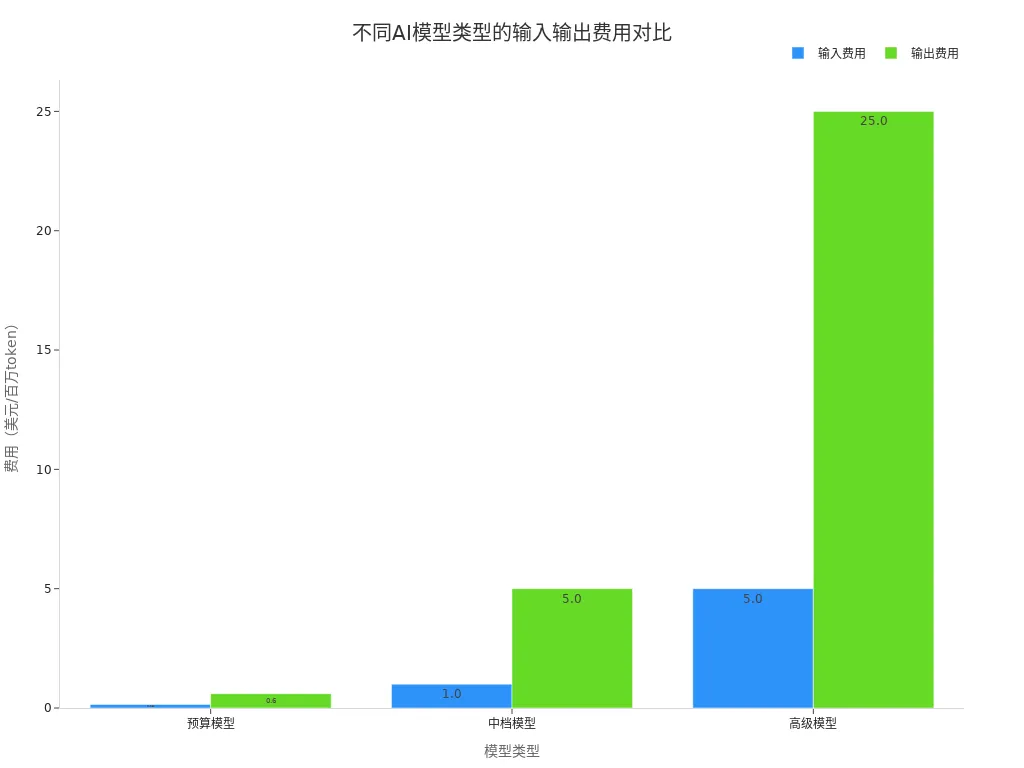
You also need to monitor ongoing costs such as API calls, server maintenance, and model retraining. Cost management directly affects overall profitability. Reasonably evaluate automation candidate scenarios to achieve fast ROI.
Wrapper Development and Integration
Image Source: unsplash
High-Monetization Wrapper Design
When designing Wrappers, focus on user engagement, feedback mechanisms, and data analysis capabilities. High-monetization Wrappers are not just technical integrations — they are key drivers of commercialization efficiency. You can improve Wrapper conversion rates and market competitiveness through these aspects:
- User Engagement: Wrappers should convert interface interactions and user data into sustained competitive advantages. Optimize interaction flows to increase user activity and retention.
- User Feedback Mechanism: Build a complete feedback system including precise scoring, edit logs, and active learning loops. This continuously collects user behavior data and optimizes product experience.
- Data Analysis: Use user interaction data to identify common repeated subtasks and optimize with small specialized models. This reduces operating costs and improves overall commercialization capabilities.
The table below summarizes key technical features of high-conversion-rate Wrappers:
| Feature | Description |
|---|---|
| User Engagement | Enhance user stickiness and market competitiveness through interface and data interaction. |
| Feedback Mechanism | Precise scoring, logs, and active learning for continuous user experience optimization. |
| Data Analysis | Identify repeated tasks, optimize model structure, reduce costs. |
You can flexibly adjust Wrapper architecture based on your business scenario to maximize commercialization returns.
Fiat Payment Interface Integration Process
When integrating fiat payment interfaces for AI robot Wrappers, balance trust, transparency, and security. Standard process is as follows:
- Clarify user authorization: Ensure every transaction receives explicit user authorization to prevent AI agents from operating beyond permissions.
- Choose compliant payment tools: Select services like BiyaPay for global payment and exchange, meeting diverse needs of Chinese-speaking users. For US markets, integrate mainstream payment APIs to enhance global availability.
- Integrate API: Embed payment processor API into Wrapper, ensuring encrypted data transmission and improved security.
- Transparent transaction process: Display detailed information for every transaction in the interface to enhance user trust.
- Handle exceptions and feedback: Design clear error messages for failed payments, rejected transactions, etc., and provide alternative payment methods.
- Risk prevention: Introduce multi-factor authentication and fraud detection tools to reduce fraud and refund risks.
- Asynchronous processing and performance optimization: Choose efficient payment gateways supporting asynchronous processing to reduce transaction latency.
If your project is not ready to build a full payment stack from day one, it can be practical to separate collection, FX conversion, and cross-border settlement into different layers. Your product can still handle authorization and order confirmation on the front end, while regulated services support the actual movement of funds. For cross-border scenarios, teams can first review supported coverage on the BiyaPay website, then use its exchange-rate comparison tool to estimate settlement costs across currencies; where international disbursement is involved, its remittance service can be treated as an operational supplement. In this context, BiyaPay is better understood as infrastructure for cross-border payments, FX conversion, and fund transfer rather than a replacement for the robot’s own business logic or decision layer. When discussing trust and risk control, its compliance footprint, including U.S. MSB and New Zealand FSP registration, can also be referenced naturally.
During integration, focus on AI agent identity management. In the future, financial infrastructure may introduce dedicated “digital agent” IDs to further improve compliance and traceability.
Common integration challenges and solutions:
- Payment failure and rejected transactions: Display detailed error messages in interface and suggest alternative payment methods to improve user experience.
- Prevent fraud and refunds: Use multi-factor authentication and fraud detection to protect revenue.
- Security and compliance risks: Use encryption and tokenization to protect sensitive data.
- Slow transaction processing: Choose high-performance gateways and adopt asynchronous processing to reduce user wait time.
Below is a typical Wrapper and payment interface integration pseudocode example:
// Pseudocode: AI robot initiates fiat payment
const paymentRequest = {
userId: ‘user_123’,
amount: 100,
currency: ‘USD’,
description: ‘AI service subscription’,
callbackUrl: ‘https://yourdomain.com/payment/callback’
};const response = await paymentAPI.createPayment(paymentRequest);if (response.status === ‘success’) {
// Payment successful, trigger subsequent business logic
} else {
// Payment failed, prompt user and suggest alternatives
}
You can extend interface parameters and exception handling logic based on actual business needs to ensure smooth commercialization flow.
MoltsPay and Crypto Wallet Applications
When promoting AI robot commercialization and monetization, you can combine solutions like MoltsPay to achieve autonomous pricing, order acceptance, and collection. MoltsPay project has the following capabilities:
- AI agents can directly understand user intent (e.g., “pay 100 USDC at lowest fee”), automatically complete path calculation, smart contract calls, and transaction signing.
- You can let AI agents autonomously manage wallets, bundle transactions, and optimize gas fees, realizing autonomous machine payment services.
- As AI agents gradually become economic participants, payments will be automatically triggered and settled by AI in milliseconds — applicable to model invocation fees, contract robot state synchronization, or real-time charging for autonomous vehicles.
In actual applications, you can combine crypto wallets with fiat payment interfaces to improve settlement efficiency. Crypto wallets suit autonomous settlement and real-time payments but have limitations in identity verification and high-frequency micropayments. You need to flexibly choose settlement methods based on business needs and compliance requirements.
The table below compares advantages and limitations of crypto wallets vs. fiat payment solutions:
| Advantages | Limitations |
|---|---|
| Suitable for autonomous settlement | Requires identity verification |
| Real-time settlement capability | Slower settlement time |
| No intermediaries | Not suitable for high-frequency micropayments |
You should design the optimal commercialization and monetization path by combining AI agent actual capabilities and compliance requirements. For AI agents unable to open bank accounts, crypto wallets provide flexible payment and collection solutions. You can also use services like BiyaPay to achieve real-time conversion between USDT and USD/HKD, meeting global business needs.
Monetization Techniques and Promotion
Collection Interface Selection and Integration
When promoting AI robot commercialization and monetization, collection interface selection and integration are crucial. You should prioritize services supporting global payment and exchange based on business needs and user payment preferences, such as BiyaPay, to meet diverse demands of Chinese-speaking users. You can integrate mainstream payment gateways following these steps:
- Clarify business needs and user payment preferences.
- Select appropriate payment gateway provider.
- Ensure legal compliance and bank account setup — prioritize licensed Hong Kong banks.
- Implement secure payment gateway integration with encrypted transmission.
- Test payment integration to ensure smooth transaction flow.
- Deploy and monitor transactions in real time to protect fund security.
Through standardized integration processes, you can improve payment experience and reduce transaction risks.
Pricing Strategy and User Experience
You need to formulate scientific pricing strategies to maximize user adoption and revenue. The RaaS subscription model has become mainstream — companies like Brightpick charge $1,900–$2,200 per robot monthly subscription fees plus upfront implementation fees. This model lowers user adoption barriers and brings predictable recurring revenue. You can also adopt dynamic pricing, value-based differentiation, etc., combined with AI analysis of customer behavior to optimize price tiers. Research shows value-based pricing models can increase enterprise average revenue by 10–15%. The table below summarizes common pricing strategies:
| Pricing Strategy | Description |
|---|---|
| Dynamic Pricing | Use machine learning to adjust prices in real time, optimizing sales and revenue. |
| Value-Based Differentiation | Set prices based on customer needs and product performance results, ensuring customers feel value. |
| Subscription Model | Provide continuous service and support, reduce initial purchase barriers, increase predictable revenue streams. |
You should focus on user experience, improve AI system quality, and enhance consumer trust. Consumer trust is the core driver of purchase conversion — transparent data handling and ethical AI design are critical to maintaining confidence. Experience drives emotional connection and satisfaction between users and platforms, directly affecting commercial success.
Promotion and Market Expansion
You can expand AI robot service influence through multi-channel promotion and precise market positioning. Combine online and offline resources, use social media, industry exhibitions, and partner channels to increase brand exposure. You can also formulate differentiated promotion strategies for different customer groups, combined with AI analysis of user behavior to optimize ad placement and content recommendations. Through continuous promotion optimization, you can increase market penetration and user conversion rates.
Logistics System and Automation Integration
When integrating logistics systems, fully utilize AI-driven automation technology to improve commercial efficiency. You can integrate AI-based object detection and collaborative robots to achieve automated disassembly and sorting, ensuring efficiency and precision. Deep learning model-driven computer vision accurately identifies key components; dynamic human-robot collaboration allows operators to supervise and fine-tune robot actions in real time, ensuring adaptability and safety for complex tasks. AI-driven dynamic task planning assigns tasks based on real-time data, optimizing workflow efficiency. Through automated logistics systems, you can reduce operating costs and improve overall commercialization capabilities.
You have understood the full process of AI robot commercialization and monetization. You need to select suitable deployment environments and collection interfaces based on your business scenario. You should emphasize compliance and user experience, continuously optimize products. Only by implementing solutions can you improve commercialization efficiency and achieve sustainable growth.
FAQ
How to choose a suitable fiat collection interface for AI robots?
You need to evaluate user payment habits, compliance requirements, and global availability. BiyaPay supports global payment and exchange for Chinese-speaking users, suitable for multi-scenario integration.
How to ensure fund security after OpenClaw deployment?
You can adopt encrypted transmission, tokenization technology, and multi-factor authentication. Choosing licensed Hong Kong bank accounts helps improve fund security and compliance.
What to do if payment fails during Wrapper development?
You should display detailed error messages in the interface and suggest users use alternative payment methods. Test payment flows and optimize exception handling to improve user experience.
Can AI robots autonomously price and collect payments?
You can achieve autonomous pricing and collection through crypto wallet solutions like MoltsPay. AI agents can automatically manage wallets, optimize transaction paths, and improve settlement efficiency.
How to control operating costs during commercialization and monetization?
You need to reasonably plan server hosting, API calls, and model training costs. Evaluate automation scenarios and choose suitable resource allocation to improve ROI.
*This article is provided for general information purposes and does not constitute legal, tax or other professional advice from BiyaPay or its subsidiaries and its affiliates, and it is not intended as a substitute for obtaining advice from a financial advisor or any other professional.
We make no representations, warranties or warranties, express or implied, as to the accuracy, completeness or timeliness of the contents of this publication.
Related Blogs of

Multi-Currency Account Comparison: Wise, Revolut, HSBC and DBS for Global Users


Wise Safety for Large Transfers: Limits, Risks and Safer Alternatives



Choose Country or Region to Read Local Blog
 Australia
 Austria
 Belgium
 Canada
 Cyprus
 Czech Republic
 Denmark
 Estonia
 Finland
 France
 Germany
 Greece
 Hong Kong
 India
India Indonesia
 Ireland
 Italy
Italy Japan
Japan Latvia
 Lithuania
 Luxembourg
 Malaysia
 Malta
Malta Morocco
 Nepal
Nepal Netherlands
 New Zealand
 Norway
 Pakistan
 Philippines
 Poland
 Portugal
 Romania
 Singapore
 Slovakia
 Slovenia
 South Africa
 South Korea
 Spain
Spain Sweden
 Thailand
 The United States
 Turkey
 United Arab Emirates
 United Kingdom
 Vietnam
Contact Us




BIYA GLOBAL LLC is registered with the Financial Crimes Enforcement Network (FinCEN), an agency under the U.S. Department of the Treasury, as a Money Services Business (MSB), with registration number 31000218637349, and regulated by the Financial Crimes Enforcement Network (FinCEN).
BIYA GLOBAL LIMITED is a registered Financial Service Provider (FSP) in New Zealand, with registration number FSP1007221, and is also a registered member of the Financial Services Complaints Limited (FSCL), an independent dispute resolution scheme in New Zealand.