The Green Revolution in Stadiums: Investing in U.S. Stocks Providing Clean Energy for the 2026 World Cup




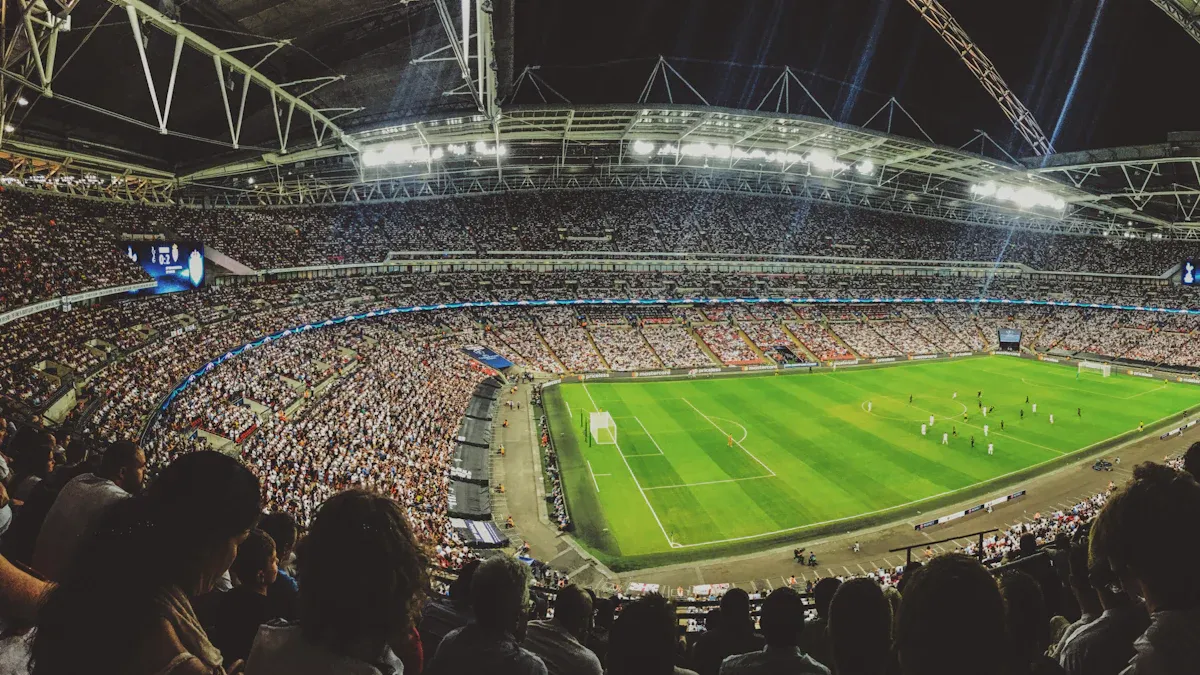
Image Source: unsplash
You can observe that the global sports industry is undergoing a green revolution. Stadiums are adopting renewable energy and intelligent energy efficiency management to promote sustainable development. The 2026 World Cup plans to achieve 100% renewable energy supply across all venues, setting an industry benchmark. The table below showcases green transformation achievements of some international sports organizations and events:
| Organization/Event | Achievement/Data |
|---|---|
| NFL Denver Broncos | Annual reduction of 1.34 million kWh in energy consumption |
| FC Bayern Munich | 60% annual reduction in electricity usage, avoiding 362 tons of CO₂ emissions |
| F1 | Plans to achieve net-zero carbon footprint by 2030 |
| UEFA | Launched 2030 Football Sustainability Strategy |
You can focus on U.S. stock companies specializing in clean energy and energy efficiency improvements—these companies provide innovative technologies and solutions for the green transformation of stadiums. When making investment decisions, you need to consider a company’s market position, technical strength, and real-world implementation cases to capture long-term growth opportunities brought by sustainable development.
Key Highlights
- Stadiums are adopting renewable energy with the goal of achieving 100% clean energy supply to drive sustainable development.
- Investors should pay attention to U.S. stock companies focused on clean energy and energy efficiency improvements to capture long-term growth opportunities.
- The green transformation of stadiums includes energy-saving technologies, waste management, and water resource protection, improving operational efficiency.
- Partnerships between companies and stadiums use long-term power purchase agreements to reduce operational risks and enhance brand image.
- The 2026 World Cup will drive more venues to adopt green technologies, creating new market demand and investment opportunities.
Investment Opportunities Driven by the Green Revolution
Green Transformation Trends in Stadiums
You can see that the green revolution in stadiums is accelerating worldwide. More and more venues are adopting energy-saving technologies, such as LED lighting and high-performance insulation materials, which effectively reduce energy consumption. Levi’s Stadium uses recycled water for irrigation and cooling, saving millions of gallons of water annually. Johannesburg’s soccer stadium achieved zero-waste status during the 2010 World Cup by implementing robust recycling and composting programs. FNB Stadium used locally sourced sustainable materials, reducing transportation emissions and carbon footprint. Beijing’s Bird’s Nest integrated green spaces around the stadium to promote environmental sustainability and community interaction. You can discover that data-driven governance and green space design have become important components of the green revolution in stadiums.
You need to pay attention to the diversified trends in stadium green transformation—this includes not only energy system upgrades but also waste management, water resource protection, and transportation optimization. The green revolution is turning stadiums into models of sustainable development, bringing new market opportunities for investors.
| Investment Opportunity | Description |
|---|---|
| Renewable Energy | Stadiums increasingly use solar and wind power to reduce dependence on fossil fuels. |
| Waste Management | Adoption of compostable and biodegradable materials, comprehensive recycling programs, striving for zero-waste goals. |
| Water Resource Protection | Installation of water-saving equipment, use of drought-resistant plants, and water recycling programs to reduce water usage. |
| Transportation | Encouraging public transit and bike-sharing programs, installing EV charging stations to support sustainable mobility. |
| Fan Engagement | Green rewards programs and educational activities to increase fan participation and promote sustainable behavior. |
Renewable Energy and Energy Efficiency Improvements
You can discover that stadiums consume large amounts of energy and are well-suited for integrating renewable energy technologies such as solar and wind power to reduce operating costs and carbon footprint. Since the Nationals Park in Washington, D.C. became the first LEED-certified stadium in the United States in 2008, more than 60 stadiums worldwide have achieved LEED certification. Mercedes-Benz Stadium, the world’s first true zero-waste stadium, earned LEED Platinum certification and scored nearly perfect in multiple sustainability categories including water efficiency and innovation. You can focus on the energy efficiency improvement measures of these venues, including intelligent energy management systems and high-efficiency equipment applications—these technologies not only enhance operational efficiency but also strengthen the venues’ green competitiveness.
- Stadiums adopt solar and wind power, reducing dependence on fossil fuels.
- Intelligent energy efficiency management systems help venues monitor energy consumption in real time and optimize operations.
- LEED-certified venues excel in energy conservation, waste management, and water resource protection.
You can seize investment opportunities brought by the green revolution and focus on U.S. stock companies in renewable energy, energy efficiency improvement, and sustainable management. These companies provide technical support and innovative solutions for stadium green transformation, driving continuous industry growth.
U.S. Stock Clean Energy Companies’ Deployment
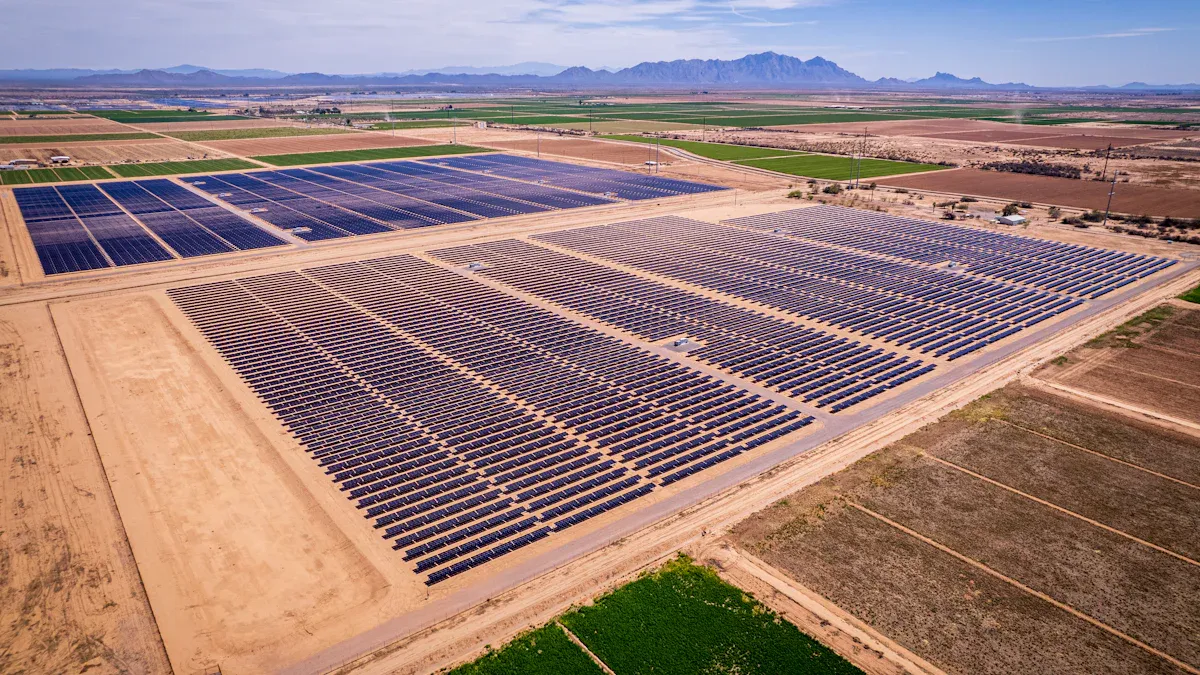
Image Source: pexels
NextEra Energy Solutions
You can focus on NextEra Energy’s leading position in the green revolution of stadiums. As one of the world’s largest renewable energy companies, NextEra Energy specializes in solar and wind power generation solutions. You will find that NextEra Energy provides customized clean energy procurement and power management services to multiple large stadiums in the United States. Through cooperation with venue operators, NextEra Energy not only helps venues achieve 100% renewable energy supply goals but also locks in stable energy costs for venues through long-term power purchase agreements (PPAs). This model reduces venue operational risks and enhances their brand image in the field of sustainable development. You can see that NextEra Energy’s technical solutions emphasize efficient power generation and intelligent scheduling, ensuring reliable and green energy supply during events.
Tesla Energy Storage and Microgrids
You can see that Tesla plays a key role in the green revolution of stadiums. Tesla’s Powerpack 2 energy storage system features high energy density and can store large amounts of energy in limited space. Each Powerpack delivers up to 50 kW of power output, suitable for peak shaving, load shifting, and other scenarios. You can utilize Tesla’s integrated software system to monitor and optimize energy usage in real time, gaining valuable operational insights. By adopting Tesla’s energy storage solutions, stadiums can more efficiently utilize clean energy, reduce carbon footprint, and promote environmentally friendly operations. You can also leverage Tesla’s microgrid technology to achieve the following goals:
- Store and dispatch renewable energy, smoothing its intermittency and improving energy utilization.
- Build localized microgrids to ensure event power security even when disconnected from the main grid.
- Discharge during peak periods to reduce dependence on distribution and transmission infrastructure.
You can reference the case of Squaw Valley Ski Resort’s collaboration with Tesla. The resort deployed an 8 MW-scale battery energy storage system to achieve 100% renewable energy goals and provide backup power for the venue. This project significantly reduced carbon footprint and enhanced the venue’s environmental responsibility. You will find that Tesla’s innovative solutions not only optimize energy structure but also bring substantial financial and environmental benefits to stadiums.
Enphase Smart Photovoltaics
You can focus on Enphase’s innovations in smart photovoltaics. Enphase provides high-safety, high-performance distributed photovoltaic solutions for stadiums. You will find that Enphase systems offer excellent shade tolerance, capable of handling challenges from complex structures and changing environments. Enphase products come with longer warranties, increasing user confidence. Through its advanced online monitoring platform, you can track system performance in real time, facilitating troubleshooting and maintenance while reducing operating costs. Enphase’s smart photovoltaic solutions maximize energy output, ensuring stable power supply for stadiums during peak event periods. For large venues receiving millions of visitors annually, Enphase’s electrical safety standards provide solid assurance for venue operations.
Bloom Fuel Cells
You can see that Bloom Energy provides unique solutions for the green revolution in stadiums through its fuel cell technology. Bloom’s solid oxide fuel cells efficiently convert natural gas or biogas into electricity with almost no harmful emissions. You can use Bloom fuel cells for distributed power generation, increasing venue energy self-sufficiency and reducing dependence on external grids. Bloom’s modular design facilitates scalability, suitable for stadiums of different sizes. You will find that some large U.S. stadiums have adopted Bloom fuel cells as primary or backup power sources, significantly improving energy security and green attributes. Bloom’s technical solutions bring higher energy efficiency and lower carbon emissions to venue operators, helping achieve sustainable development goals.
Other Innovative Company Cases
You can focus on other innovative companies in the U.S. stock market and their applications in the green revolution of stadiums. For example, Biyapay provides convenient cross-border payment and energy efficiency management services for Chinese-speaking users, helping stadiums efficiently settle renewable energy procurement costs and improve capital turnover efficiency. You can also see that some Hong Kong licensed banks offer green financial products to stadiums, supporting upgrades to green infrastructure. You can reference the following innovative cases to understand the diverse applications of clean energy technologies in stadiums:
| Stadium | Innovative Clean Energy Deployment |
|---|---|
| Mercedes-Benz Stadium | Uses LED lighting and video boards, installed over 4,000 solar panels generating 1,600 MWh annually. |
| Lincoln Financial Field | Installed 11,000 solar panels, sufficient to power ten Philadelphia Eagles home games. |
| Climate Pledge Arena | Implemented “rain-to-ice” system, using rooftop rainwater to provide clean ice for the rink. |
| SoFi Stadium | Provides 26 million gallons of recycled water annually for landscaping and maintenance, protecting Los Angeles County drinking water. |
| Emirates Stadium | Meets 100% of operational energy needs with renewable resources, installed energy storage system capable of independent power for 90 minutes during matches. |
You can see that these innovative companies and cases collectively drive the in-depth development of the green revolution in stadiums. When investing, you should focus on companies’ technological innovation capabilities, real-world implementation cases, and market expansion potential to capture long-term growth opportunities brought by the green revolution.
2026 World Cup Venues and Company Benefits

Image Source: pexels
Analysis of Implemented Projects
You can discover that 2026 World Cup venues have already made significant progress in the green revolution. More and more new and renovated venues prioritize photovoltaic systems and energy-saving equipment, demonstrating high emphasis on sustainable development. You can reference the table below to understand some implemented clean energy projects:
| Venue/Project | Main Measures and Results |
|---|---|
| 2026 World Cup Venues | Comprehensive adoption of renewable energy, prioritizing deployment of photovoltaic systems and energy-saving equipment |
| Johan Cruyff Arena, Amsterdam | Equipped with over 4,200 solar panels, becoming a model for sustainable development in European stadiums |
| Some 2014 Brazil World Cup Venues | 6 out of 12 venues adopted solar technology, promoting energy structure transformation in major event venues |
You can see that the affordability and cleanliness of solar technology make it the preferred choice for stadiums worldwide seeking independent energy supply. Stadium 974 was built using 974 recycled shipping containers, fully demountable, avoiding the financial burden of “white elephant” projects. Modern stadiums widely use low-carbon concrete and cross-laminated timber, effectively reducing carbon footprint. Sustainable buildings have 21% higher market value than traditional buildings, bringing higher asset returns to venue operators.
You can also focus on several benchmark projects in the U.S. market. For example, Mercedes-Benz Stadium achieved LEED Platinum certification with a perfect 10/10 water efficiency score, becoming the world’s first true zero-waste stadium. Allegiant Stadium achieved complete renewable energy supply, becoming the first in Super Bowl history. Kia Center used 15% recycled materials, with 83% of construction waste recycled, greatly reducing environmental burden.
Cooperation and Expansion Prospects
You can see that stadium green transformation has driven deep cooperation between companies and venue operators. U.S. stock companies such as NextEra Energy, Tesla, and Enphase help venues achieve renewable energy goals through technology export and customized services. You can discover that more and more venues choose to sign long-term power purchase agreements (PPAs) with clean energy companies to lock in energy costs and reduce operational risks.
You can also focus on innovative applications of green finance. Hong Kong licensed banks provide green loans and sustainable financing solutions to stadiums, supporting upgrades to green infrastructure. Some venues collaborate with energy efficiency management companies to deploy intelligent energy management systems for real-time monitoring and optimization of energy consumption. You can see that green supply chain management and localized procurement have also become new cooperation trends, further improving venues’ environmental performance.
In the future, with the high sustainability standards required by the 2026 World Cup, more venues will accelerate the introduction of distributed photovoltaics, energy storage, microgrids, and other cutting-edge technologies. You can foresee that cooperation between companies and venues will expand from single projects to full lifecycle management, covering design, construction, operation, and maintenance. This trend brings continuous market demand and innovation space for clean energy companies.
Market Position and Growth Potential
You can discover that clean energy companies are gradually establishing industry leadership in the green revolution of stadiums. NextEra Energy, with its large-scale renewable energy projects and stable service capabilities, has become the preferred energy partner for U.S. stadiums. Tesla improves venue energy security and operational flexibility through energy storage and microgrid technologies. Enphase and Bloom Energy continue to innovate in smart photovoltaics and fuel cells, meeting the diverse needs of different venues.
You can reference the table below to understand the market performance of some companies in stadium sustainable development:
| Company/Technology | Main Application Scenarios | Market Position and Growth Potential |
|---|---|---|
| NextEra Energy | Large stadium renewable energy supply | Industry leader, benefiting from PPA expansion and rising event green standards |
| Tesla | Energy storage systems, microgrids | Technological leadership, continued growth in venue energy security and flexibility demand |
| Enphase | Distributed smart photovoltaics | Adapts to complex venue structures, steady increase in market penetration |
| Bloom Energy | Fuel cell distributed generation | Meets high-reliability venue needs, supports carbon neutrality goals |
You can see that as global sports events place increasing emphasis on sustainable development, the market space for clean energy companies continues to expand. The green revolution in stadiums not only drives corporate technological innovation but also enhances brand influence and asset value. When making investment decisions, you should focus on companies’ technical barriers, implementation cases, and market expansion capabilities to capture long-term industry growth dividends.
If you want to turn this green-transition theme into actual stock research, a practical way is to separate the sector thesis from company verification. For names such as NextEra Energy, Tesla, Enphase, and Bloom Energy, you can first use BiyaPay’s stock information lookup to review basic profiles, tickers, and market data, then cross-check them against stadium project execution, long-term power purchase agreements, and the strength of their technical solutions. If you also need to think about funding cost afterward, the exchange rate comparison tool can be used as a reference. BiyaPay is positioned as a multi-asset trading wallet, and its service details and compliance disclosures can be reviewed further on the official website.
Investment Logic and Risk Outlook
Policy and Market Drivers
You can discover that clean energy investment in U.S. stadiums is driven by multiple policy and market factors. Sports teams leverage their large fan bases and high-visibility platforms to actively promote sustainable practices. Many venues are updating systems to reduce carbon emissions—for example, Golden 1 Credit Union Center became the world’s first fully solar-powered LEED Platinum-certified venue. Growing public demand for sustainability and organizational commitments to reduce carbon footprints have become important drivers of clean energy investment. Extreme weather and natural disasters are prompting venue owners to incorporate sustainability into resilience planning, which is not only brand building but also a necessary measure to address operational risks. As “trophy buildings,” stadiums face greater visibility and scrutiny, and the involvement of public funds and future-proof building requirements also encourage venues to adopt sustainable measures.
- Stadiums are at the forefront of sustainability initiatives in sports, with ongoing reductions in carbon emissions.
- Market demand for environmentally friendly operations drives venues to enhance brand reputation to meet consumer expectations.
Risk Factor Analysis
You need to pay attention to the main risks faced by clean energy companies in the stadium sector. NFL stadiums may cumulatively face $11 billion in climate-related losses by 2050, which would impact venue availability and affect local economies. Major risks include surface flooding, tropical cyclones, storm surges, wildfires, and droughts. The financial burden of climate risks may be passed on to taxpayers, especially since many stadium projects receive taxpayer funding. Market volatility can also affect clean energy investment returns. For example, Amsterdam Arena adopted 4,200 solar panels and wind turbines, Mercedes-Benz Stadium became the first professional sports venue to earn Platinum LEED certification, Golden 1 Center was rated the world’s most environmentally friendly and technologically advanced sports facility, and Qatar World Cup organizers committed to zero-carbon emissions across all venues.
Sustainable Development Opportunities
You can seize sustainable development opportunities brought by the green revolution in stadiums. Stadiums can integrate renewable energy technologies such as solar and wind power to reduce operating costs and carbon footprint. Government incentives such as tax credits help venue owners offset installation costs, while LEED certification design requirements drive venues to adopt green building standards. By implementing zero-waste initiatives and improving energy efficiency, stadiums not only reduce carbon footprint but also lower operating expenses. You can reference the table below to understand the main sustainable development opportunities:
| Opportunity Type | Description |
|---|---|
| Renewable Energy System Installation | Stadiums integrate solar, wind, and other technologies to reduce operating costs and carbon footprint. |
| Government Incentives | Utilize tax credits to offset renewable energy system installation costs. |
| LEED Certification Design Requirements | Government-funded venues required to adopt LEED-certified design standards. |
You can see that sustainable stadium design focuses not only on reducing energy consumption but also on waste management and water resource protection. These initiatives are not just responsibilities but opportunities for innovation and long-term cost savings. Investing in LED lighting and intelligent energy efficiency management systems enables stadiums to significantly reduce carbon footprint and operating costs, setting an example for communities and other industries.
You can see that the green revolution brings long-term value to U.S. stock clean energy companies. Stadium sustainability goals have attracted substantial investment, with an estimated $40 billion flowing to ESG-standard companies over the next five years. Forest Green Rovers’ Eco Park project demonstrates the innovative potential of sports architecture. The 2026 World Cup is driving green transformation—recommend focusing on company growth potential and risk management to capture future investment opportunities.
FAQ
What are the main aspects of the green revolution in stadiums?
You can focus on energy system upgrades, waste management, water resource protection, transportation optimization, and fan engagement. These measures collectively drive stadiums toward sustainable development goals.
How do U.S. stock clean energy companies participate in stadium green transformation?
You can see that companies help stadiums reduce carbon footprint and improve operational efficiency by providing technologies such as solar, wind, energy storage, and intelligent energy efficiency management.
What risks exist when investing in companies related to the green revolution in stadiums?
You need to pay attention to climate risks, policy changes, market volatility, and technological iteration. Venue projects may face operational challenges due to extreme weather or changes in funding support.
What are the cooperation models between stadiums and companies?
You can understand long-term power purchase agreements, green finance, intelligent energy efficiency management systems, and localized procurement. Company-venue cooperation drives green infrastructure upgrades and operational optimization.
How do policies drive green transformation in stadiums?
You can focus on government incentives, LEED certification requirements, and carbon emission standards. Policies encourage venues to adopt renewable energy and green building design, enhancing sustainability.
*This article is provided for general information purposes and does not constitute legal, tax or other professional advice from BiyaPay or its subsidiaries and its affiliates, and it is not intended as a substitute for obtaining advice from a financial advisor or any other professional.
We make no representations, warranties or warranties, express or implied, as to the accuracy, completeness or timeliness of the contents of this publication.
Related Blogs of

What Is the Relationship Between ASMPT 0522.HK and HBM? The Role of Advanced Packaging Equipment in the AI Memory Supply Chain


Why Does AI Compute Growth Drive Storage Demand? The Difference Between Training, Inference, and Data Retention


AI Storage Supply Chain Map: Chips, HDDs, SSDs, Packaging Equipment, and Enterprise Storage Systems


Is SMIC 0981.HK a Memory Chip Stock? The Relationship Between Foundry Manufacturing and the Memory Supply Chain

Choose Country or Region to Read Local Blog
 Australia
 Austria
 Belgium
 Canada
 Cyprus
 Czech Republic
 Denmark
 Estonia
 Finland
 France
 Germany
 Greece
 Hong Kong
 India
India Indonesia
 Ireland
 Italy
Italy Japan
Japan Latvia
 Lithuania
 Luxembourg
 Malaysia
 Malta
Malta Morocco
 Nepal
Nepal Netherlands
 New Zealand
 Norway
 Pakistan
 Philippines
 Poland
 Portugal
 Romania
 Singapore
 Slovakia
 Slovenia
 South Africa
 South Korea
 Spain
Spain Sweden
 Thailand
 The United States
 Turkey
 United Arab Emirates
 United Kingdom
 Vietnam
Contact Us




BIYA GLOBAL LLC is registered with the Financial Crimes Enforcement Network (FinCEN), an agency under the U.S. Department of the Treasury, as a Money Services Business (MSB), with registration number 31000218637349, and regulated by the Financial Crimes Enforcement Network (FinCEN).
BIYA GLOBAL LIMITED is a registered Financial Service Provider (FSP) in New Zealand, with registration number FSP1007221, and is also a registered member of the Financial Services Complaints Limited (FSCL), an independent dispute resolution scheme in New Zealand.