Watching US Futures Live? Here's What to Expect




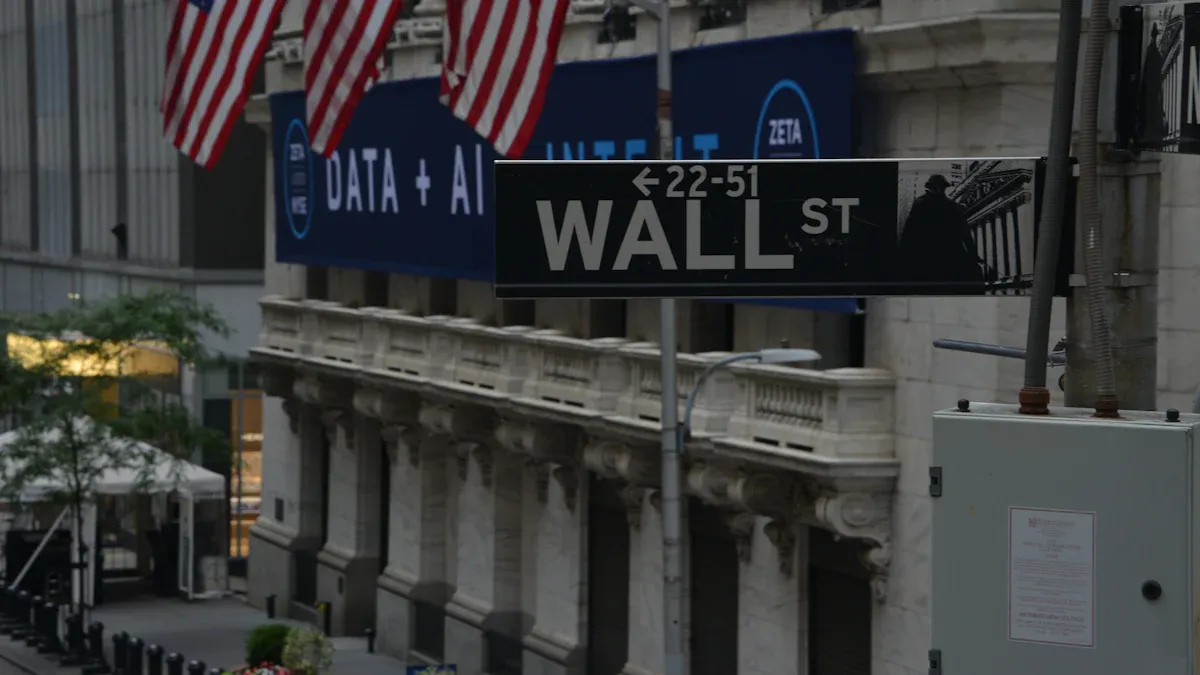
Image Source: unsplash
The weekly market wrap showed market gains across U.S. markets as stocks rallied. The S&P 500 and Dow Jones Industrial Average pushed higher, continuing positive trends for equities. Investors now pivot their investment focus. Upcoming economic data on inflation will shape market sentiment. A growing disconnect in global monetary policy also presents a new variable for investment. Observers of us futures live should monitor these key market expectations for the S&P 500 index:
- Economic Data: Key economic reports will test the economy and influence the S&P 500 and the broader market.
- Corporate Earnings: Bellwether reports from major stocks will impact the S&P 500, S&P, and Dow index.
- Technical Levels: The technical posture of the S&P 500 index is critical for stocks and the direction of the markets, affecting every investment.
In an environment shaped by macro data, earnings expectations, and shifting policy signals, many investors monitor U.S. futures alongside spot equities and related assets to better contextualize short-term market moves. As volatility increases around inflation releases and key reports, having access to consolidated market information becomes increasingly practical.
Some investors choose to use multi-asset platforms such as BiyaPay as a supplementary tool when tracking U.S. markets. For example, its built-in U.S. stock data and price lookup features allow users to review major index constituents and individual stock performance in one place (see stock information lookup). At the same time, users comparing capital exposure across currencies may reference BiyaPay’s official FX rate converter and comparison tool to evaluate exchange rate impact and cross-currency costs.
From an execution and account-management perspective, some market participants prefer platforms that reduce friction between different asset classes. BiyaPay operates as a multi-asset wallet covering digital asset spot and derivatives trading, as well as U.S. and Hong Kong equities, with unified access via its trading interface (for example, the trading entry). Its cross-border remittance functionality is also commonly referenced for international fund transfers and portfolio allocation needs (see international transfers).
Key Takeaways
- Inflation reports like CPI and PPI are very important. They show how much prices are changing. These reports can make the Federal Reserve change interest rates.
- Jobless claims show how many people are looking for unemployment benefits. This helps us understand how strong the job market is. A high number can mean the economy is getting weaker.
- Big company earnings reports, especially from tech giants, can move the stock market a lot. Good earnings can make the market go up. Bad earnings can make it go down.
- Technical levels, like support and resistance, help traders see where prices might go. If a stock price breaks below support, it can mean prices will fall more.
Economic Calendar: Key Market Movers

Image Source: pexels
Investors closely monitor the economic calendar. Key reports this week will test the U.S. economy and heavily influence market direction. The data provides critical insight into inflation, labor market health, and overall economic growth, shaping investment decisions for stocks and equities. Watching us futures live requires an understanding of these potential catalysts.
Inflation Watch: CPI and PPI Reports
The Consumer Price Index (CPI) and Producer Price Index (PPI) reports are the main events. These economic indicators measure inflation and directly impact Federal Reserve policy. A higher-than-expected CPI reading could force the Fed to delay interest rate cuts. This action would increase the risk for equities. Persistent inflation complicates the investment picture and can temper market optimism. The market faces a delicate balance.
Rob Haworth, a senior investment strategy director, notes that “Markets could be sensitive to sustained, accelerating inflation.” This sentiment underscores the risk a hot inflation report poses to the current market rally and future economic growth. A surprise in this data will move the ES, NQ, and YM index futures significantly.
Labor Market Signals: Jobless Claims
The weekly jobless claims report offers a timely snapshot of the labor market. The Department of Labor releases this economic data every Thursday at 8:30 AM ET. It tracks the number of individuals filing for unemployment benefits for the first time. A rising number of claims may signal a weakening economy, which could pressure the Fed to cut rates but also hurt corporate earnings and stocks. A lower number suggests continued labor market strength and robust economic growth. Investors use this to gauge the health of the U.S. economy.
| Metric | Previous | Consensus |
|---|---|---|
| Initial Jobless Claims | 214K | 220K |
A figure above the 220K consensus could introduce negative sentiment into the market, while a number below 214K would likely boost investor confidence.
Gauging the U.S. Economy: PMI & Sentiment
The University of Michigan Consumer Sentiment Index provides a look at consumer confidence. This economic report is crucial because consumer spending is a primary driver of economic growth. The latest final reading for December was 52.9, slightly below the consensus forecast of 53.4. Weak consumer confidence can signal future pullbacks in spending, creating a headwind for economic growth and the stock market. A poor sentiment reading can lower expectations for growth, impacting investment in the broader index and individual stocks. Strong confidence, on the other hand, supports a positive outlook for the market and overall growth.
Earnings Spotlight: Corporate Reports to Watch
Beyond macroeconomic data, corporate earnings provide a fundamental check on the health of the market. This week, several key reports will offer investors a bottom-up view of the economy, influencing investment decisions and the direction of the major index futures. Watching us futures live during earnings season requires attention to both individual company performance and broader sector trends. The performance of these stocks will be a major test for the market.
Big Tech Earnings Impact on Nasdaq (NQ)
The Nasdaq 100 index is heavily concentrated in a few technology giants. The performance of these mega-cap stocks has a disproportionate impact on the entire index. Therefore, their earnings reports are critical events for the market. A strong report from one of these companies can lift the entire market, while a miss can drag it down. Investors closely watch these reports for signals about future growth and technology sector health. The significant weighting of these stocks means their results directly steer the NQ futures market.
The table below illustrates the substantial influence a few key stocks have on the Nasdaq 100 index. An earnings surprise from any of these names can create significant volatility in the market.
| Company | Symbol | Weight |
|---|---|---|
| Nvidia | NVDA | 13.53% |
| Apple Inc. | AAPL | 11.98% |
| Microsoft | MSFT | 10.76% |
| Amazon | AMZN | 7.38% |
| Alphabet Inc. (Class A) | GOOGL | 5.83% |
Broader Market Movers for S&P 500 (ES) & Dow (YM)
While tech holds the spotlight, the overall health of the S&P 500 and the Dow Jones Industrial Average depends on a wider range of sectors. The blended earnings per share (EPS) growth rate for the S&P 500 stands at 10.7%, signaling robust corporate health. The 'Magnificent 7’ stocks are expected to drive a significant portion of this growth. However, investors also look for strength in other areas. For example, the S&P 500 Health Care sector’s consensus for EPS growth recently improved, showing resilience. These broader trends are vital for a sustainable market rally. A healthy earnings season across multiple sectors supports a bullish outlook for the S&P 500 and Dow, confirming that economic growth is widespread. This diverse strength is a key part of any long-term investment strategy for equities. The S&P 500 index reflects the total market picture.
Technical Outlook for U.S. Markets

Image Source: pexels
A comprehensive market analysis requires a look at the technical picture. Chart patterns and key price levels provide a roadmap for potential price action in the U.S. markets. Traders use this data to manage risk and identify emerging trends for their investment strategies. The technical posture of the major index futures offers clues for the week’s trading.
S&P 500 Futures (ES): Support & Resistance
The S&P 500 index continues its upward trajectory, but traders are watching key levels closely. The primary support for S&P 500 futures is a critical line in the sand. A sustained break below this level would signify a bearish breakout. Such a move indicates that supply is overwhelming demand, which can drive the price of the S&P 500 lower. The previous support may then become a new resistance, suggesting a new downtrend for equities and a higher risk for stocks. This makes the current support level a pivotal point for the market this week. Any investment in the S&P 500 must consider this risk.
Nasdaq 100 Futures (NQ): Momentum & Levels
Momentum in the tech-heavy Nasdaq 100 index is a key focus. The Relative Strength Index (RSI), a popular momentum indicator, shows readings that are not in overbought or oversold territory, suggesting a balanced market.
Meanwhile, analysis of the Moving Average Convergence Divergence (MACD) suggests a bullish crossover could be forming, where the MACD line crosses above its signal line. This would be a positive sign for stocks. Traders should watch these critical levels for the week ahead:
| Level | Value |
|---|---|
| 1st Resistance Point | 25,756.58 |
| Last Price | 25,599.50 |
| 1st Support Level | 25,631.08 |
Dow Jones Futures (YM): Chart Patterns
The Dow Jones futures chart presents an interesting scenario for investment. Analysts are monitoring a potential double-top formation. This classic bearish reversal pattern could signal that the recent rally in equities is losing steam and a deeper correction may be coming for the S&P 500. However, this bearish risk is countered by the fact that the index is trading cleanly above its 200-day moving average. This long-term indicator confirms the broader bullish trends are still intact for the market. Watching us futures live will require balancing the risk of this short-term pattern against the strength of the long-term trend for stocks and the S&P 500.
The market enters the week with stocks at record highs, but investors should prepare for volatility. Favorable economic data supports the current market rally, yet concerns about inflation and consumer confidence introduce risk to every investment. The primary scenario involves a cautious market, with price action heavily dependent on the upcoming inflation reports. Watching us futures live will require a balanced view of these conflicting signals. A successful investment strategy will depend on navigating these key market events.
Key Takeaways for Your Investment Radar
- Most Important Data: The CPI report holds the most sway over market direction.
- Critical Earnings: Nvidia’s (NVDA) report will be a major test for tech sector momentum and the broader market.
- Primary Technical Level: For the S&P 500 (ES), the 6771.75 support level is the critical line; a break below this point would signal a significant bearish shift in the market, impacting every investment.
FAQ
What are US futures?
US futures are contracts that obligate a party to buy or sell an asset at a predetermined future date and price. They allow investors to speculate on the future direction of indices like the S&P 500, Nasdaq 100, and Dow Jones before the stock market opens.
Why do futures trade outside of normal market hours?
Futures markets operate nearly 24 hours a day, five days a week. This extended access allows traders to react instantly to global news and economic data releases that occur outside of the standard 9:30 AM to 4:00 PM ET stock market session.
Which economic report is most important for futures?
The Consumer Price Index (CPI) report is often the most impactful. It directly measures inflation, which heavily influences Federal Reserve interest rate policy. A surprise in the CPI data can cause significant and immediate volatility in ES, NQ, and YM futures prices.
How do earnings reports affect futures prices?
Major companies release earnings after the market closes. Strong or weak results, especially from influential tech stocks, can cause large price swings in index futures. Traders watch these reports to gauge corporate health and adjust positions before the next trading day begins.
*This article is provided for general information purposes and does not constitute legal, tax or other professional advice from BiyaPay or its subsidiaries and its affiliates, and it is not intended as a substitute for obtaining advice from a financial advisor or any other professional.
We make no representations, warranties or warranties, express or implied, as to the accuracy, completeness or timeliness of the contents of this publication.
Related Blogs of

What Is the Difference Between HBM3E and HBM4? What Do They Mean for Micron and AI Servers?


What Is the Relationship Between ASMPT 0522.HK and HBM? The Role of Advanced Packaging Equipment in the AI Memory Supply Chain


How Do AI Servers Drive Storage Demand? The Roles of HBM, Server DRAM, Enterprise SSDs, and HDDs


Is SMIC 0981.HK a Memory Chip Stock? The Relationship Between Foundry Manufacturing and the Memory Supply Chain

Choose Country or Region to Read Local Blog
 Australia
 Austria
 Belgium
 Canada
 Cyprus
 Czech Republic
 Denmark
 Estonia
 Finland
 France
 Germany
 Greece
 Hong Kong
 India
India Indonesia
 Ireland
 Italy
Italy Japan
Japan Latvia
 Lithuania
 Luxembourg
 Malaysia
 Malta
Malta Morocco
 Nepal
Nepal Netherlands
 New Zealand
 Norway
 Pakistan
 Philippines
 Poland
 Portugal
 Romania
 Singapore
 Slovakia
 Slovenia
 South Africa
 South Korea
 Spain
Spain Sweden
 Thailand
 The United States
 Turkey
 United Arab Emirates
 United Kingdom
 Vietnam
Contact Us




BIYA GLOBAL LLC is registered with the Financial Crimes Enforcement Network (FinCEN), an agency under the U.S. Department of the Treasury, as a Money Services Business (MSB), with registration number 31000218637349, and regulated by the Financial Crimes Enforcement Network (FinCEN).
BIYA GLOBAL LIMITED is a registered Financial Service Provider (FSP) in New Zealand, with registration number FSP1007221, and is also a registered member of the Financial Services Complaints Limited (FSCL), an independent dispute resolution scheme in New Zealand.