
What Is an All-Flash Array? How Pure Storage Differs From Traditional Storage Vendors





An all-flash array is an enterprise shared storage system that uses SSDs, NVMe SSDs, or dedicated flash modules as its primary storage media. It is commonly used for databases, virtualization, AI data pipelines, Kubernetes, mission-critical applications, and high-performance file or block storage. Pure Storage differs not only because it is an all-flash vendor, but also because of DirectFlash, Purity software, Evergreen upgrades, and subscription-based services. Traditional vendors such as Dell, NetApp, HPE, and IBM compete through broader enterprise IT portfolios, hybrid cloud ecosystems, channel services, and long-standing customer relationships. When evaluating all-flash arrays, you should not look only at performance or price per TB, but also at TCO, data services, operational efficiency, and vendor lock-in risk.
Key Takeaways
- All-flash arrays are built around SSD / NVMe media for low-latency, mission-critical workloads.
- Pure Storage stands out through DirectFlash, Purity, Evergreen, and subscription-based services.
- Traditional vendors have advantages in full product portfolios, customer bases, and hybrid cloud ecosystems.
- Enterprise storage selection should consider TCO, operations, and data services, not just performance.
- AI, databases, virtualization, and Kubernetes are driving demand for high-performance enterprise storage.
- Investors should track subscription revenue, margins, customer adoption, and NAND cost trends.
What Is an All-Flash Array, and Why Is Enterprise Storage Moving From Disk to Flash?

An all-flash array is an enterprise external storage system whose defining feature is that it uses flash media to store persistent data, rather than relying on hard disk drives as the primary storage layer. IBM defines an all-flash array as an external data storage system that uses only flash hardware media such as SSDs. For enterprises, the value is not simply that “the drive is faster.” It is about low latency, high IOPS, stable response times, data reduction, snapshots, replication, and centralized management.
Traditional disk arrays rely on the mechanical movement of HDDs, including seek time and platter rotation. They are suitable for capacity-oriented data, but can become a bottleneck for databases, virtual desktops, core transaction systems, ERP, online analytics, and AI data flows. All-flash arrays use SSD / NVMe media at the hardware layer, then combine controllers, cache, data services, and high-availability architecture to provide shared storage for multiple business systems.
| Dimension | All-Flash Array | Traditional Disk / Hybrid Array |
|---|---|---|
| Primary media | SSD, NVMe, dedicated flash modules | HDD or HDD + SSD cache |
| Core advantage | Low latency, high IOPS, stable performance | Lower raw capacity cost |
| Typical workloads | Databases, virtualization, AI, mission-critical applications | Backup, archive, capacity-oriented data |
| Operational focus | Data reduction, snapshots, replication, automation | Capacity planning, storage tiering, performance tuning |
| Cost evaluation | Effective capacity and TCO | Raw capacity and price per TB |
Enterprises usually adopt all-flash arrays not for benchmark scores, but because critical workloads need stable response times. Database I/O waits can slow down transaction systems. “Noisy neighbor” problems in virtualized environments can affect multiple virtual machines. If AI data pipelines have unstable reads and writes, upstream compute resources can also be underused. Pure / Everpure positions FlashArray//X for structured data, critical databases, and cloud-native applications.
Common benefits of all-flash arrays include:
- Lower and more stable I/O latency for mission-critical databases;
- Higher VM density and less performance contention in virtualization platforms;
- Shorter read/write waiting time for AI / analytics data pipelines;
- Better business continuity through snapshots, replication, encryption, and failover;
- Improved long-term TCO through data reduction, lower power use, and reduced rack space.
That said, all-flash is not the only answer for every type of data. Long-term cold data, very low-frequency archives, large-scale backups, and object storage workloads that mainly care about raw capacity cost may still be better suited to HDDs, infrequent-access cloud storage, or archival tiers. All-flash is most suitable for primary storage workloads that are performance-sensitive, recovery-sensitive, operations-sensitive, or highly dependent on business continuity.
Summary: The value of an all-flash array is not simply that SSDs are faster than HDDs. It combines flash media, enterprise-grade controllers, data reduction, snapshots, replication, encryption, failover, and automated management into a platform capable of supporting critical workloads. To decide whether you need an all-flash array, you should evaluate workload latency requirements, virtualization density, recovery objectives, operational complexity, data growth, and total cost of ownership. For enterprises, all-flash arrays do not replace all storage. They move performance-sensitive, data-service-intensive, and high-downtime-cost workloads into a more stable primary storage tier.
Pure Storage’s Model: More Than Selling All-Flash Hardware

Pure Storage differs not just because of all-flash hardware, but because it builds its product model around flash-native architecture, DirectFlash, Purity software, Pure1 management, and Evergreen lifecycle services. It aims to shift enterprise storage from “hardware replacement every few years” to “a continuously upgraded data platform.” Pure Storage changed its name to Everpure in 2026, but market discussions of FlashArray, FlashBlade, Evergreen, and PSTG still often use the Pure Storage name.
One important difference between Pure and many traditional array vendors is that Pure designed its architecture around flash from an earlier stage. Everpure explains DirectFlash as a way for arrays to manage raw flash more directly through its own DirectFlash Modules, instead of relying entirely on commodity SSDs. The goal is to give the system more unified control over latency, endurance, data reduction, and media management.
Purity software provides enterprise-grade data services. It manages not only the read/write path, but also compression, deduplication, snapshots, replication, encryption, ActiveCluster, protection policies, and automated management. When Pure Storage introduced FlashArray//X, it emphasized an end-to-end architecture built on all-NVMe hardware, Purity DirectFlash software, and NVMe DirectFlash Modules.
| Pure Storage Capability | Problem It Solves | Enterprise Impact |
|---|---|---|
| DirectFlash | More direct flash media management | More stable latency and better media efficiency |
| Purity | Enterprise data services and high availability | Centralized snapshots, replication, compression, and encryption |
| Pure1 | Cloud-based monitoring and predictive support | Better visibility into capacity, health, and risks |
| Evergreen | Lifecycle upgrades | Reduced large-scale replacement and migration risk |
| Evergreen//One | Consumption-based storage service | Buying performance and capacity outcomes as a service |
Evergreen is one of Pure’s most recognizable business model labels. Pure Storage’s early description of Evergreen Storage focused on reducing the traditional three-to-five-year rip-and-replace storage refresh cycle. The later Evergreen//One model further turns storage consumption into a service model, emphasizing outcome-based metrics such as performance, availability, and efficiency.
After Pure Storage became Everpure, its strategic narrative expanded further into enterprise data platforms and AI data management. The official Pure Storage Is Now Everpure material states that the brand transition does not affect product implementation, contracts, or services already in use, and the company also says its stock ticker remains unchanged. This means that when analyzing Pure Storage, you need to understand two layers: its existing all-flash array and subscription service capabilities, and Everpure’s ambition to extend storage into a broader data management entry point.
Summary: Pure Storage’s core difference is that it turns all-flash into a “hardware + software + subscription + lifecycle service” platform, rather than simply selling high-speed arrays. DirectFlash and Purity address media control, stable performance, and enterprise data services. Pure1 addresses observability and predictive support. Evergreen addresses the traditional problem of large periodic storage refreshes. Evergreen//One further turns storage into a service. To understand Pure Storage, you should not view it merely as an SSD array supplier, but as a company trying to make enterprise storage continuously upgradeable, subscribable, and operable as a data platform.
Why Traditional Storage Vendors Still Matter: Dell, NetApp, HPE, and IBM
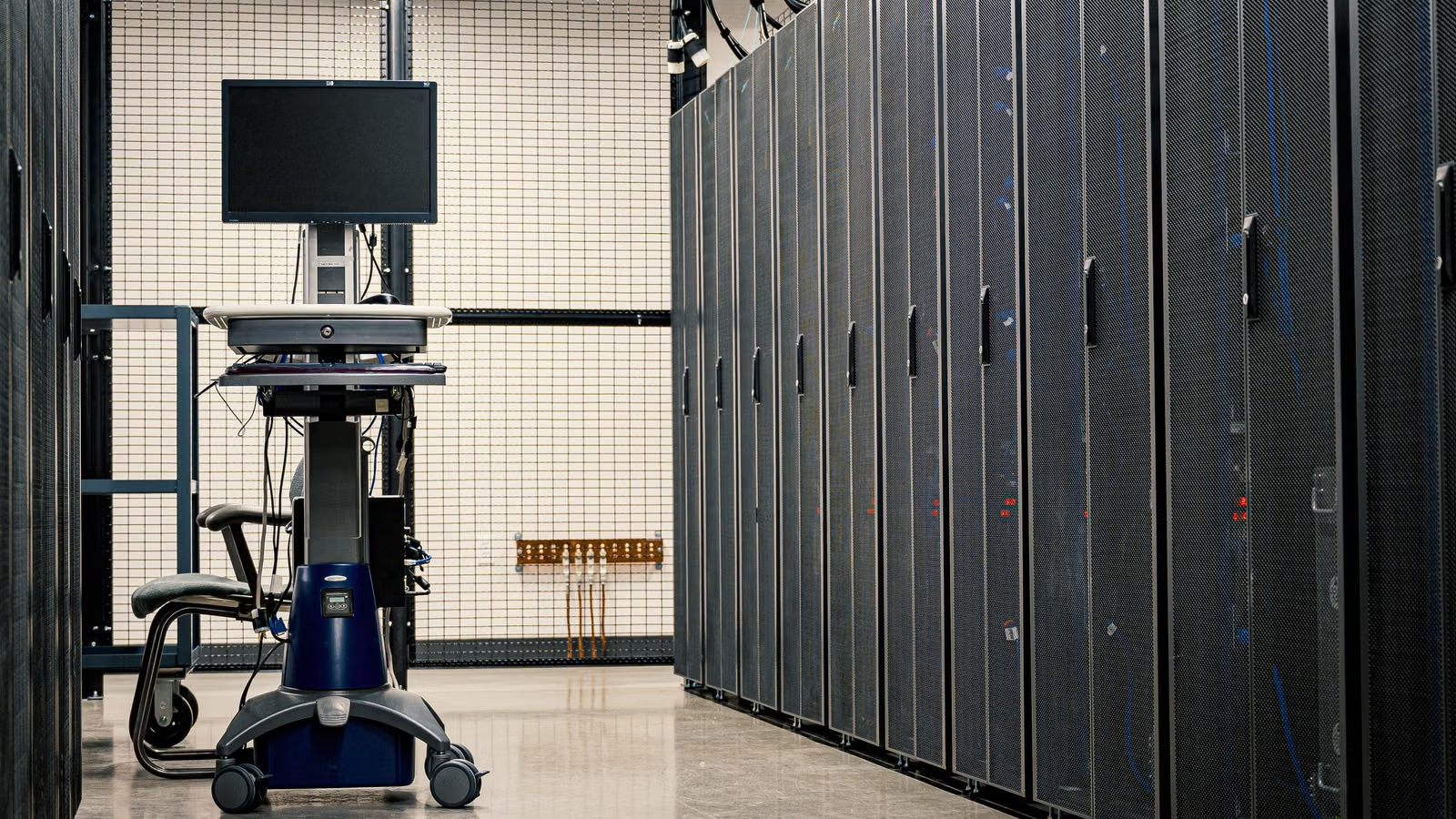
Traditional storage vendors have not been simply replaced by Pure Storage. Dell, NetApp, HPE, and IBM still have advantages in enterprise customer bases, complete IT portfolios, hybrid cloud ecosystems, channel services, long-term procurement relationships, and multi-type storage portfolios. They also already have mature all-flash products, so the competition is no longer “flash versus disk.” It is competition among all-flash platforms, data management software, hybrid cloud capabilities, and enterprise delivery capacity.
Dell’s strength is complete enterprise infrastructure. Dell PowerStore is positioned as a scalable all-flash array, combining NVMe hardware, data reduction, automation, and Dell’s enterprise sales system. For customers already using Dell servers, VMware, PowerProtect, or large-scale data center procurement programs, PowerStore’s appeal is not only the array itself, but also consistency across the broader IT stack and procurement coordination.
NetApp’s strength is ONTAP and unified data management. NetApp AFF A-Series is more performance-oriented, serving mission-critical applications and high-throughput workloads, while NetApp AFF C-Series is more capacity-optimized for all-flash storage. NetApp’s advantage is not just hardware, but ONTAP’s long-standing role in file, block, hybrid cloud replication, data protection, and enterprise NAS scenarios.
HPE’s roadmap emphasizes a cloud-like experience and infrastructure services. HPE Alletra highlights cloud-like simplicity, AI-driven insights, all-flash performance, and guaranteed data availability. It is suited to enterprises that want to make on-premises infrastructure feel more like cloud consumption through the GreenLake model. IBM, meanwhile, relies on its mainframe, financial services, large enterprise, and hybrid cloud foundation. IBM FlashSystem emphasizes all-flash / hybrid flash, data resilience, Storage Insights, and enterprise-grade integration.
| Vendor | Representative Roadmap | Main Advantage | Suitable Customers |
|---|---|---|---|
| Dell | PowerMax / PowerStore | Full enterprise IT stack, servers, and data protection | Large enterprises and Dell ecosystem customers |
| NetApp | AFF / ASA / ONTAP | Unified data management, NAS, hybrid cloud | File service and hybrid cloud customers |
| HPE | Alletra / GreenLake | Cloud-like experience, services, and infrastructure bundles | HPE ecosystem and GreenLake customers |
| IBM | FlashSystem | High-end enterprise, mainframe, and hybrid cloud integration | Financial institutions, mainframe users, and traditional enterprise customers |
The biggest advantage of traditional vendors is that they place storage inside a larger IT procurement and operations system. Large enterprises rarely compare only one array’s performance. They also consider servers, networking, backup, disaster recovery, monitoring, security, financing, service response, global support, and the experience of existing operations teams. Pure Storage has a clear advantage in simplicity and all-flash experience, but traditional vendors remain strong in complex project delivery, cross-product portfolios, channel coverage, and long-standing customer relationships.
Summary: Traditional storage vendors matter because of their complete ecosystems, not just the performance of individual arrays. Dell, NetApp, HPE, and IBM have all entered mature all-flash competition, but their entry points differ. Dell emphasizes full-stack enterprise infrastructure. NetApp emphasizes ONTAP and unified data management. HPE emphasizes GreenLake and cloud-like operations. IBM emphasizes high-end enterprise, mainframe, and data resilience. When comparing Pure Storage with traditional vendors, you should not only ask which hardware is faster. You should ask which vendor better fits your existing architecture, procurement model, operating capability, and long-term data strategy.
Pure Storage vs. Traditional Vendors: Core Differences in Technology, Business Model, and Customer Experience
The core difference between Pure Storage and traditional storage vendors is not “who has all-flash and who does not.” It lies in product philosophy, business model, and customer experience. Pure emphasizes flash-native design, simplified operations, non-disruptive upgrades, and subscriptions. Traditional vendors emphasize broader product portfolios, existing ecosystems, multiple storage types, and large enterprise integration capabilities. Both approaches can meet enterprise storage needs, but they fit different customer environments.
| Dimension | Pure Storage / Everpure | Traditional Storage Vendors |
|---|---|---|
| Architectural starting point | Flash-native | Evolved from disk and hybrid arrays into flash |
| Media management | DirectFlash / dedicated modules | Standard SSDs, NVMe, controller optimization |
| Software experience | Purity, Pure1, simplified management | Multiple platforms and software stacks |
| Product portfolio | FlashArray, FlashBlade, Portworx | Block, file, object, backup, server ecosystem |
| Upgrade model | Evergreen, STaaS | Traditional procurement and subscriptions in parallel |
At the technology layer, Pure’s advantage is a clear roadmap. Its product narrative is built around all-flash, low latency, simplified management, data reduction, and non-disruptive upgrades. It is suitable for enterprises that want to reduce storage tuning, lower refresh complexity, and unify the primary storage experience. Traditional vendors’ advantage is broader coverage: a single vendor may provide high-end arrays, midrange arrays, object storage, backup, servers, networking, security, and cloud services.
At the business model layer, Pure places more emphasis on subscription revenue and lifecycle services. In its Q1 FY2027 financial results, Everpure reported quarterly revenue of $1.1 billion, up 35% year over year; subscription services revenue of $476 million, up 17%; and subscription ARR of $2.0 billion, up 19%. These metrics show that the market is not only watching how many arrays the company sells, but also the quality of subscription services, RPO, and recurring revenue.
Traditional vendors have more composite business models. Dell and HPE can sell storage as part of a server, networking, private cloud, and enterprise services package. NetApp can extend ONTAP into hybrid cloud data management. IBM can integrate FlashSystem with mainframes, core financial systems, Red Hat, and hybrid cloud offerings. For customers, these combinations may not be the simplest, but they may fit large enterprise procurement and governance models better.
At the customer experience layer, the differences often appear in practical questions:
- Does controller upgrade or capacity expansion require large-scale migration?
- Does the storage team need frequent performance tuning?
- Are capacity, health status, and failure risks easy to predict?
- Are snapshots, replication, disaster recovery, and ransomware recovery unified?
- Is support mature for containers, virtualization, databases, and AI data pipelines?
- If the company later migrates to another platform, is the exit cost manageable?
Pure Storage also has risks. Stronger integration and subscription experience may lead to pricing concerns, service dependency, and ecosystem lock-in. Its all-flash roadmap is also affected by NAND costs, supply chains, competitive discounts, and enterprise IT budgets. Traditional vendors face their own issues, including complex product lines, high platform switching costs, legacy architecture burdens, and multi-software-stack management complexity.
Summary: The difference between Pure Storage and traditional vendors can be understood at three layers. At the technology layer, look at flash-native architecture, data services, and management experience. At the business layer, look at subscription revenue, lifecycle services, and integrated solutions. At the customer layer, look at upgrade models, operational complexity, ecosystem integration, and migration costs. Pure’s strengths are simplicity, continuous upgrades, and a clear all-flash roadmap. Traditional vendors’ strengths are complete ecosystems, deep customer bases, and strong delivery capabilities. In real enterprise selection, the question should not be “which vendor is fastest,” but “which vendor best fits the current architecture, budget model, team capability, and future data strategy.”
Costs and Risks of All-Flash Arrays: Why Price per TB Is Not Enough
An all-flash array should not be evaluated only by purchase price per TB. You need to compare TCO, effective capacity, data reduction, power consumption, rack space, operational labor, upgrade cycles, downtime risk, service contracts, NAND price volatility, and vendor lock-in. In many scenarios, the initial price of all-flash may be higher, but if it reduces latency, compresses data footprint, lowers power use, and reduces operational work, the total cost may be more reasonable.
| Cost Item | Traditional View | More Complete View |
|---|---|---|
| Purchase price | Raw capacity unit price | Effective capacity and data reduction |
| Operating cost | Hardware maintenance | Automation, failure rate, and tuning cost |
| Power and space | Often ignored | Critical to long-term data center TCO |
| Upgrade cycle | Replacement every 3–5 years | Whether non-disruptive upgrades are supported |
| Software services | Extra fees | Whether snapshots, replication, security, and cloud management are included |
| Lock-in risk | Not obvious at first | Migration cost and ecosystem dependency |
Workloads suitable for all-flash often share common characteristics: I/O waiting cost is high, recovery time objectives are strict, operational tuning cost is high, data services are heavily used, or data center space and power pressure are significant. Low-latency databases, virtualization, VDI, mission-critical applications, AI data pipelines, Kubernetes persistent storage, and high-speed backup recovery may all benefit from an all-flash array.
Workloads that may not need all-flash are also clear: very low-frequency archives, long-term cold data, large-scale backups that mainly care about raw capacity cost, and low-performance object storage. All-flash is not a complete replacement for HDDs. It is a replacement for the performance-sensitive, operations-sensitive, and business-continuity-sensitive portion of enterprise primary storage.
From an investment perspective, you should also separate industry trends from trading costs. All-flash, AI data infrastructure, enterprise SSDs, STaaS, and data platformization may create long-term demand, but storage stocks are still affected by NAND costs, enterprise IT budgets, cloud migration pace, competitive discounts, margins, and earnings guidance. When using Biya to follow U.S.-listed companies such as Pure Storage / Everpure, Dell, NetApp, HPE, and IBM, you should understand trading fee structures in addition to industry logic. Biya charges 0 USD in commission for U.S. stock trading, while platform fees, external institutional fees, and other costs are subject to the U.S. stock trading fee details and the order page. Public market information, trading rules, and fee structures are for reference only and do not constitute investment advice.
Summary: Cost analysis for all-flash arrays should not stop at “SSD is more expensive than HDD.” Enterprises should look at effective capacity, data reduction, performance gains, power and space, upgrade downtime, staff efficiency, and vendor support. Investors should also look beyond all-flash adoption rates and track NAND costs, gross margins, subscription renewals, customer budgets, and competitive dynamics. All-flash is an important trend in enterprise primary storage, but not all data needs to live on flash. A reasonable enterprise storage architecture typically uses all-flash for hot data and critical workloads, while HDDs, object storage, or archival tiers serve cold and capacity-oriented data.
Industry and Investment Perspective: Can Pure Storage’s Differentiation Become Long-Term Competitiveness?
Pure Storage’s long-term competitiveness depends on whether it can turn all-flash technology advantages into sustainable subscription revenue, enterprise data platform capabilities, and a data management entry point in the AI era. Traditional vendors will not exit the market. Therefore, the real indicators are customer adoption, renewal rates, STaaS expansion, gross margins, NAND costs, and hybrid cloud ecosystems—not a single product launch or one generation of array performance.
Important industry indicators include:
- All-flash array market share and primary storage platform competition;
- Adoption of FlashArray, FlashBlade, Portworx, and Enterprise Data Cloud;
- Subscription ARR, RPO, service revenue mix, and customer renewals;
- Gross margins, NAND costs, supply chains, and pricing strategy;
- Demand from AI, databases, Kubernetes, virtualization, and cyber recovery;
- Competitive moves from Dell, NetApp, HPE, IBM, and other traditional vendors.
From the demand side, AI data infrastructure will increase high-performance storage demand, but it will not move all data into all-flash. Training caches, vector retrieval, databases, real-time analytics, and mission-critical applications are more flash-oriented. Historical data, backups, low-frequency objects, and long-term archives will still move toward HDDs or cold storage. Pure’s opportunity is to make the high-value data layer simpler, more reliable, and more service-based. Traditional vendors’ opportunity is to embed all-flash into broader enterprise infrastructure and hybrid cloud ecosystems.
From the competitive side, the market has shifted from hardware specification competition to platform capability competition. In Gartner’s Primary Storage Platforms user review category, Pure / Everpure, NetApp, Dell, HPE, IBM, and others are all compared as enterprise primary storage platform providers. In other words, customers are not only comparing array latency. They are also comparing data services, cyber recovery, automation, cloud management, support quality, and long-term roadmaps.
For investors, whether Pure Storage’s differentiation can be realized depends on whether subscription growth continues, whether customers expand usage, whether margins remain resilient when NAND costs rise, and whether AI demand translates into real orders. You can use U.S. stock information search to track relevant company data and market performance, but “AI storage” should not be treated as a standalone buy reason. Whether related services are available depends on the user’s location, identity verification result, platform rules, and applicable laws and regulations. Before trading, users should also understand order types, fee structures, and price volatility risks.
Summary: Whether Pure Storage’s differentiation becomes long-term competitiveness depends on whether it can keep expanding subscription revenue and data platform capabilities while resisting ecosystem competition from traditional vendors and volatility in NAND costs. The enterprise storage market will not be won by performance alone. It will also be shaped by customer relationships, migration cost, service models, security capabilities, hybrid cloud strategy, and financial execution. For investors, the technology narrative must be judged together with financial metrics, customer adoption, cost changes, and competitive dynamics. All-flash arrays are an important direction, but the winners will not simply be the companies with “the most flash.” They will be the platform vendors that can manage enterprise critical data over the long term.
Understanding all-flash arrays, Pure Storage / Everpure, and traditional storage vendors helps you see AI data infrastructure more clearly: compute determines how fast models run, while storage determines whether data can be read and written reliably, protected continuously, and reused over time. If you follow Pure Storage / Everpure, Dell, NetApp, HPE, IBM, AI data centers, enterprise SSDs, all-flash arrays, and storage as a service, you can use Biya to follow U.S. stocks, Hong Kong stocks, digital assets, and other multi-asset markets. If your location, identity verification status, and platform rules allow, you can also register an account. Storage stocks are affected by NAND costs, enterprise IT budgets, cloud migration, AI demand, competitive discounts, and earnings guidance. Before trading, decisions should be based on public information, fee structures, and your own risk tolerance.
FAQ
What Is the Difference Between an All-Flash Array and a Regular SSD Server?
An all-flash array is not simply a server filled with SSDs. It is an enterprise shared storage system. It typically provides redundant controllers, snapshots, replication, compression, deduplication, encryption, failover, capacity management, and centralized operations, making it suitable for supporting multiple mission-critical systems.
Which Enterprise Storage Scenarios Are Best Suited to Pure Storage?
Pure Storage is better suited to low-latency databases, virtualization, VDI, Kubernetes, AI data pipelines, and primary storage environments that need simplified operations. Whether it is the right fit also depends on budget, existing architecture, team experience, data service requirements, and vendor ecosystem.
Will Traditional Storage Vendors Be Replaced by All-Flash Vendors?
Traditional storage vendors will not be simply replaced, because Dell, NetApp, HPE, and IBM also have mature all-flash products and complete enterprise ecosystems. Future competition is more likely to center on data platforms, hybrid cloud management, subscription services, cyber recovery, and customer migration capability.
Are All-Flash Arrays Always Cheaper Than HDD Arrays?
All-flash arrays are not necessarily cheaper in purchase price, but in some scenarios they may reduce TCO through data reduction, lower latency, less rack space, lower power consumption, and reduced operational work. Low-frequency archives and pure capacity-oriented backups may still be better suited to HDDs or object storage.
How Can Enterprises Avoid Lock-In With a Single Storage Vendor?
Enterprises should assess data migration cost, open protocol support, APIs, backup strategy, cross-cloud replication, contract terms, and exit plans before procurement. Choosing Pure Storage or a traditional vendor can both create ecosystem dependency. The key is to design data portability and multi-layer backup in advance.
How Should Investors Track the All-Flash Array Industry?
Investors should track all-flash array market share, enterprise IT budgets, AI data infrastructure demand, subscription ARR, gross margins, NAND costs, and competitive moves by traditional vendors. Judgments should be based on company earnings, investor materials, and public market data, rather than a single product release.
*This article is provided for general information purposes and does not constitute legal, tax or other professional advice from BiyaPay or its subsidiaries and its affiliates, and it is not intended as a substitute for obtaining advice from a financial advisor or any other professional.
We make no representations, warranties or warranties, express or implied, as to the accuracy, completeness or timeliness of the contents of this publication.
Related Blogs of

Online Bank-to-Bank Transfers: Account Linking, Steps, and Limits


Cheapest Way to Transfer Money Internationally: Small vs. Large Transfers


Crypto Exchange Fees Comparison: Trading Fees, Spreads, and Withdrawals


Wire Transfer Requirements: Sender and Beneficiary Details Checklist

Choose Country or Region to Read Local Blog
 Australia
 Austria
 Belgium
 Canada
 Cyprus
 Czech Republic
 Denmark
 Estonia
 Finland
 France
 Germany
 Greece
 Hong Kong
 India
India Indonesia
 Ireland
 Italy
Italy Japan
Japan Latvia
 Lithuania
 Luxembourg
 Malaysia
 Malta
Malta Morocco
 Nepal
Nepal Netherlands
 New Zealand
 Norway
 Pakistan
 Philippines
 Poland
 Portugal
 Romania
 Singapore
 Slovakia
 Slovenia
 South Africa
 South Korea
 Spain
Spain Sweden
 Thailand
 United States
 Turkey
 United Arab Emirates
 United Kingdom
 Vietnam