Western Digital WDC vs Pure Storage PSTG: Which Is Better Suited for AI Data Centers, HDD Capacity Storage or All-Flash Arrays?





Western Digital WDC and Pure Storage PSTG both belong to the AI data center storage value chain, but they solve different problems. WDC is more closely tied to HDD capacity storage, nearline hard drives, and hyperscale cloud customers’ large-scale data retention needs. Pure Storage is more closely tied to all-flash arrays, high-performance data access, enterprise data platforms, and subscription services. If you are comparing the two companies, the key is not whether HDD or Flash is “more advanced,” but which layer of the AI data lifecycle has stronger, more durable demand and can better convert that demand into profits and cash flow.
Key Takeaways
- WDC is more affected by nearline HDD demand, cloud customer orders, and massive capacity needs.
- PSTG is more driven by all-flash arrays, subscription services, and enterprise AI data platforms.
- HDD is better for low-cost long-term storage, while Flash is better for high-performance real-time access.
- AI data centers usually require tiered storage, not a single technology replacement.
- WDC’s financial elasticity is more cyclical, while PSTG depends more on growth quality and subscriptionization.
- Investors should compare them by data tier, valuation assumptions, and risk tolerance.
WDC and PSTG Solve Different Problems in AI Data Centers
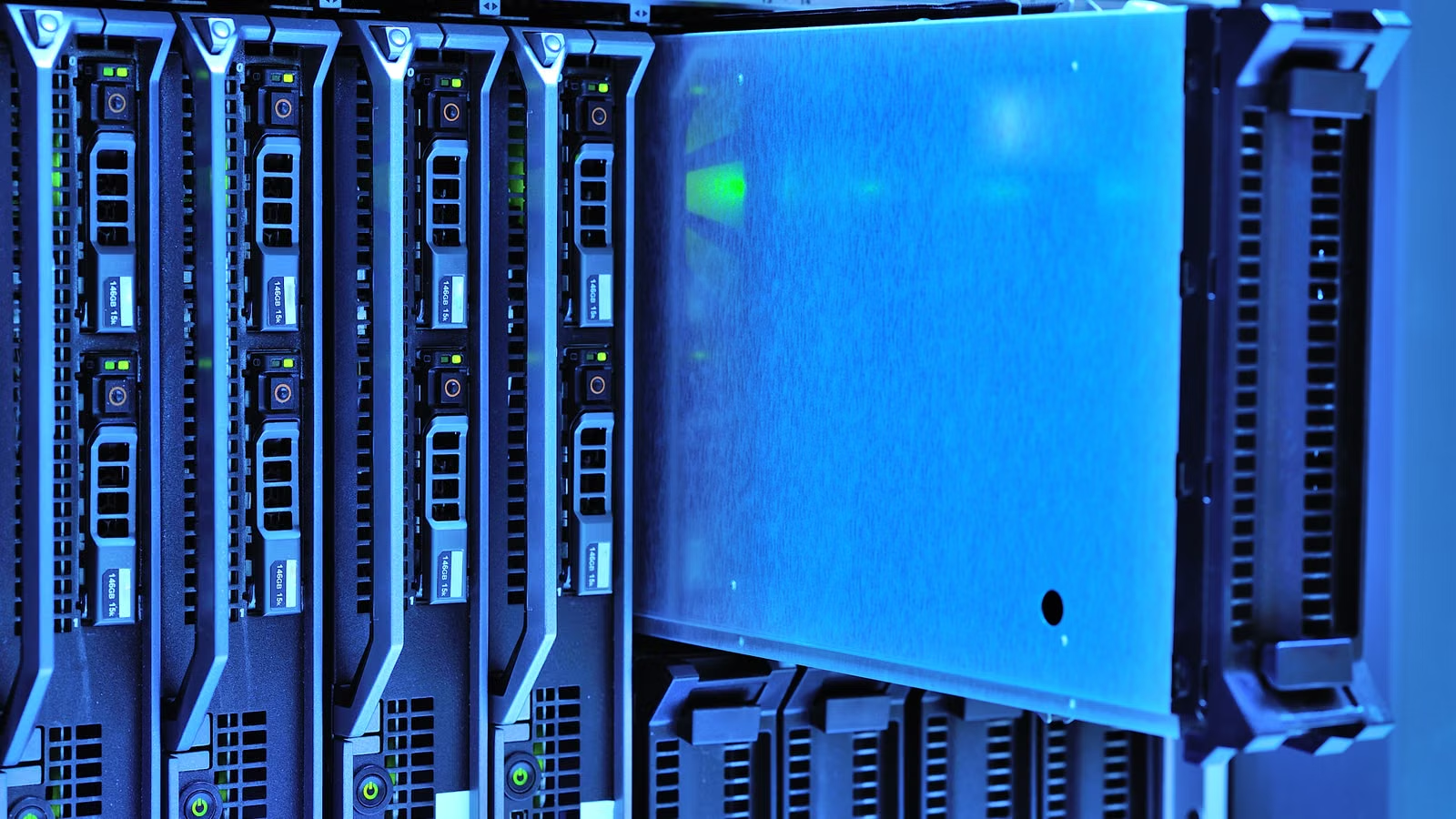
WDC and PSTG can both benefit from AI data center buildouts, but they are not solutions at the same layer. WDC addresses the question of how massive amounts of data can be stored over the long term at relatively low cost. PSTG addresses the question of how high-value data can be accessed, managed, and protected at high speed. If you only ask which company is more suitable for AI data centers, the answer will be too broad. A more accurate question is whether the AI data is in the collection, training, inference, backup, or archive stage.
After completing the separation of its Flash business, WDC’s focus returned more clearly to HDDs and high-capacity storage. Western Digital announced the completion of its Flash business separation in 2025, making the boundary between WDC and Sandisk clearer: WDC is now more focused on hard drives and capacity storage, while Sandisk is more focused on NAND Flash. For investors, this means WDC should be analyzed mainly through nearline HDD demand, cloud customer demand, capacity shipments, price per capacity unit, and free cash flow.
AI data centers are not only about GPUs, HBM, and SSDs. Training source data, inference logs, model versions, backup data, monitoring data, object storage, the bottom layer of data lakes, and long-term archives all require a large capacity layer. WDC’s value lies in the fact that as AI increases both data generation and data retention periods, HDDs remain a relatively low-cost and highly scalable storage medium.
Pure Storage/PSTG sits in a different position. Pure Storage has historically specialized in all-flash arrays, including FlashArray, FlashBlade, the Evergreen architecture, the Pure1 management platform, Portworx cloud-native data management, and Storage-as-a-Service. Pure Storage announced its rebrand to Everpure in 2026 and initially disclosed that its ticker PSTG would remain unchanged, before later announcing that its ticker would change from PSTG to P. To match user search habits, Pure Storage/PSTG can still be used to refer to the company, but investors should note that its strategic narrative has expanded from “storage hardware” to an “AI-era data management platform.”
| Comparison Dimension | WDC | Pure Storage / PSTG |
|---|---|---|
| Core products | HDDs, nearline hard drives, high-capacity storage | FlashArray, FlashBlade, all-flash arrays, data platform |
| AI data center role | Low-cost storage for massive data | High-speed access and unified management for hot data |
| Suitable data types | Cold data, warm data, backups, archives, logs | Hot data, training datasets, mission-critical workloads, low-latency data |
| Customer types | Cloud providers, hyperscale data centers, enterprise capacity customers | Enterprise IT, AI teams, financial institutions, healthcare, hybrid cloud customers |
| Investment keywords | HDD supply and demand, capacity, pricing, cloud customer orders | All-flash, ARR, RPO, subscription, enterprise data cloud |
Summary: WDC and PSTG should not be understood simply as “which one is better for AI data centers.” WDC is more like the capacity foundation of AI data centers, storing growing amounts of raw data, logs, backups, and low-frequency-access data. PSTG is more like a high-performance data channel and enterprise data management layer, supporting training, analytics, mission-critical workloads, and cross-environment data orchestration. AI data centers need capacity, performance, reliability, and management capabilities at the same time. HDDs and all-flash arrays are complementary, not simple substitutes. When comparing the two companies, first identify the data layer they correspond to, then analyze financial metrics and valuation logic.
HDD Capacity Storage vs All-Flash Arrays: Performance, Cost, and Use Cases Are Completely Different

The difference between HDDs and all-flash arrays is not simply “old technology versus new technology.” It is a trade-off among cost, performance, capacity, and data-service capabilities. HDDs have advantages in cost per capacity unit and long-term storage economics. All-flash arrays have advantages in low latency, high throughput, automated management, and data protection. AI data centers usually use both: HDDs for the capacity tier and Flash for the performance tier.
HDDs remain important in AI data centers because AI generates too much data for all of it to be stored long term on high-cost, high-performance media. Training corpora, images, videos, sensor data, web data, logs, inference records, backup copies, and archived data often do not require continuous millisecond-level access. For this type of data, capacity density, cost per TB, reliability, long-term supply, and cloud customer purchasing cycles are more important.
All-flash arrays have advantages at the other end. Pure Storage’s FlashBlade is better suited for file and object workloads, AI data pipelines, analytics tasks, and high-concurrency access. Pure Storage’s description of FlashBlade//S emphasizes AI at scale, a distributed metadata architecture, NFS, SMB, and S3 protocol access, as well as unified management through Pure1. These capabilities are not designed to store all data at the lowest possible cost. They are designed to move high-value data more quickly into training, inference, analytics, and recovery workflows.
| AI Data Tier | Better Suited for WDC / HDD | Better Suited for PSTG / All-Flash Arrays |
|---|---|---|
| Long-term storage of raw training data | Highly suitable | More expensive |
| Frequent training data reads | Not always ideal | More suitable |
| Model checkpoints | Suitable for long-term retention | Suitable for high-speed recovery |
| Inference logs | Suitable for archiving and batch storage | Suitable for real-time analytics |
| Backup and disaster recovery | Suitable for a low-cost capacity tier | Suitable for rapid recovery of critical data |
| Enterprise mission-critical databases | Usually not the first choice | More suitable |
PSTG’s all-flash arrays also have clear platform attributes. The company does not simply package SSDs into arrays. It uses data protection, automation, capacity management, non-disruptive upgrades, hybrid cloud integration, and subscription services to reduce the complexity of managing enterprise data environments. For enterprise AI projects, data is often distributed across on-premises systems, the cloud, object storage, databases, and Kubernetes environments. Pure Storage’s value lies in combining performance with management.
WDC’s HDD value lies in scale. The more AI develops, the more data is generated, the more warm and cold data accumulates, and the stronger the long-term retention demand becomes. As long as cloud providers and hyperscale data centers continue expanding capacity, nearline HDDs still have a place. They are not necessarily suitable for the hottest or most real-time data layer, but they are very suitable as a large-capacity, low-frequency-access, scalable data foundation.
Summary: The core difference between HDDs and all-flash arrays is not which one replaces the other, but which data layer each one fits. HDDs are better suited for low-cost, massive-scale, long-term storage and low-frequency access. All-flash arrays are better suited for high performance, low latency, high concurrency, and mission-critical workloads. WDC corresponds to the capacity layer of AI data centers, while PSTG corresponds to the performance layer and data management layer. Investors who only look at “Flash is faster than HDD” may ignore the cost advantage of HDDs; those who only look at “HDD is cheaper” may underestimate the value of all-flash arrays in training data pipelines, enterprise databases, and critical workloads.
Business Model Comparison: WDC Is More Like a Capacity Cycle Stock, PSTG Is More Like a Platform Storage Services Provider
WDC’s business model is more like a capacity cycle stock, where the core variables are HDD supply and demand, cloud customer orders, average selling price, capacity shipments, and gross margin. PSTG is more like a platform-based storage services provider, where the core variables are all-flash array growth, subscription services, ARR, RPO, customer renewals, and enterprise data platform capability. Both companies sell “storage,” but their revenue quality, financial elasticity, and valuation logic are completely different.
WDC’s revenue changes are more affected by hardware cycles. According to Western Digital’s latest fiscal 2026 third-quarter results, revenue was $3.337 billion, up 45% year over year. GAAP gross margin was 50.2%, free cash flow was $978 million, and fourth-quarter revenue was expected to grow 36% to 44% year over year. This shows that AI data generation, cloud customer procurement, and high-capacity HDD demand have already been directly reflected in revenue, gross margin, and cash flow.
PSTG’s revenue structure is more platform- and service-oriented. In fiscal 2026 fourth-quarter and full-year results, Everpure reported full-year revenue of more than $3.6 billion, up 16% year over year, and fourth-quarter revenue of more than $1.0 billion, up 20%. Fourth-quarter RPO grew more than 40% year over year. By fiscal 2027 first quarter, the company reported revenue of $1.1 billion, up 35% year over year, subscription services revenue of $476 million, up 17%, and subscription ARR of $2.0 billion, up 19%.
| Dimension | WDC | PSTG / Everpure |
|---|---|---|
| Revenue nature | Mainly high-capacity hardware sales | Products + subscription services + data platform |
| Cycle sensitivity | Relatively high, strongly affected by HDD supply and demand | Moderate, affected by enterprise budgets and growth expectations |
| Gross margin drivers | HDD pricing, capacity, customer mix | All-flash products, software, subscriptions, and services |
| Key customers | Cloud providers, hyperscale data centers | Enterprise customers, AI teams, hybrid cloud users |
| Visibility metrics | Long-term orders, pricing, utilization | ARR, RPO, subscription revenue, renewals |
| Valuation logic | Cyclical earnings and free cash flow | Growth, platformization, gross margin, and subscriptionization |
Pure Storage’s rebrand to Everpure also shows that the company wants to move from being an “all-flash hardware company” toward becoming an “enterprise data management platform.” Its Enterprise Data Cloud narrative emphasizes helping enterprises unify data environments so that data becomes more accessible and controllable for AI initiatives. This does not conflict with WDC’s logic that “AI data needs durable HDD-based storage.” It simply represents a different position in the value chain.
If you use U.S. stock information lookup to track storage companies, WDC, PSTG, SNDK, MU, NTAP, and STX should not be directly compared on the same simple price-performance list. A better approach is to group them into HDD capacity storage, NAND/Flash, enterprise all-flash arrays, hybrid cloud data management, and storage service models, then examine the relevant financial metrics for each group.
Summary: WDC is more like a capacity cycle stock. Its strengths are tight HDD supply, cloud customer demand, cost-per-capacity economics, and free cash flow elasticity. PSTG is more like a platform storage services provider. Its strengths are all-flash arrays, subscription revenue, ARR, RPO, data management, and enterprise AI platforms. WDC’s elasticity may be more direct, but it is also more cycle-sensitive. PSTG’s revenue quality is more service-oriented, but it depends more on enterprise IT spending and growth expectations. The two companies should not be compared simply by revenue growth or gross margin. Their business models, customer structures, and indicator systems need to be analyzed separately.
Which Is Better Suited for AI Data Centers? Look at the Data Lifecycle, Not Just Speed or Capacity
To judge whether WDC or PSTG is more suitable for AI data centers, you need to look at where the data sits in its lifecycle. Data collection, storage, backup, archiving, and low-frequency access are more aligned with WDC. Data cleaning, training reads, real-time analytics, mission-critical workloads, and high-speed recovery are more aligned with PSTG. Mature AI data centers usually adopt a tiered storage architecture, allowing HDDs, SSDs, all-flash arrays, and object storage to play different roles.
The AI data lifecycle can be roughly divided into six stages: raw data collection, data cleaning and feature processing, model training, model checkpoint storage, inference log retention, and backup, archiving, and disaster recovery. The first two stages require throughput and orchestration. The training stage requires high-speed access. After inference, large volumes of logs and behavioral data continue to be generated. Finally, the data must be retained for the long term, kept for compliance, and protected for disaster recovery. Each stage has a different sensitivity to cost and performance.
WDC is more representative in the collection, storage, and archiving stages. AI data centers continuously generate data, but not every file needs to be read by GPUs at all times. Much of the data will move from hot data to warm data and eventually to cold data. The value of HDDs lies in supporting this kind of long-term retention at a lower cost per capacity unit. In its third-quarter results, WDC’s CEO noted that AI workloads such as training, inference, agentic AI, and physical AI create data that needs to be stored persistently and economically on HDDs. This is the core of WDC’s AI narrative.
PSTG is more representative in data preparation, training access, and enterprise mission-critical workloads. Pure Storage’s AI-ready infrastructure narrative with NVIDIA emphasizes combining high-performance storage with GPU infrastructure to simplify enterprise AI deployment. The FlashBlade and NVIDIA DGX SuperPOD architecture also emphasizes scale-out storage, AI and HPC applications, multi-user systems, and resource orchestration.
| AI Data Stage | Key Requirement | More Relevant Company |
|---|---|---|
| Raw data collection | Large capacity, low cost, scalability | WDC |
| Data cleaning and feature processing | Throughput, concurrency, stable access | PSTG |
| Model training | High-speed reads, low latency | PSTG |
| Model checkpoint storage | Capacity + fast recovery | WDC + PSTG |
| Inference log retention | Long-term storage, low-cost expansion | WDC |
| Enterprise critical data protection | Fast recovery, security, and management | PSTG |
Therefore, WDC and PSTG are more complementary than substitutive. A large AI data center can use HDDs to store massive datasets, all-flash arrays to handle hot data and high-performance tasks, and data management, object storage, orchestration software, and cloud platforms to connect different layers. For investors, the real question is whether the market currently needs low-cost capacity more, or high-performance data platforms more, and whether valuations have already fully reflected the HDD pricing cycle or all-flash and subscription growth.
Summary: AI data centers are not single-layer storage architectures. They are multi-tier systems ranging from hot data to cold data, from training to inference, and from real-time access to long-term archiving. WDC is more suitable for the low-cost capacity layer, especially massive data retention, backup, archiving, and long-term cloud customer demand. PSTG is more suitable for the performance and management layers, especially training data pipelines, enterprise mission-critical workloads, AI data preparation, and fast recovery. When comparing the two companies, do not only ask whether storage is fast or cheap. Break down the AI data lifecycle first.
Financial Elasticity and Valuation Logic: WDC Depends on the HDD Pricing Cycle, PSTG Depends on Growth Quality and Subscriptionization
WDC’s financial elasticity comes from tight HDD supply and demand, pricing improvement, high-capacity product mix, and cloud customer procurement. PSTG’s valuation logic comes from all-flash array growth, subscription services, ARR, RPO, platform capabilities, and enterprise AI data management. WDC is better tracked through a “price, supply-demand, cash flow” framework. PSTG is better tracked through a “growth, subscription, gross margin, platformization” framework.
WDC’s latest results already show clear cycle characteristics. In fiscal 2026 third quarter, WDC reported revenue of $3.337 billion, up 45% year over year; GAAP diluted EPS of $8.20; non-GAAP diluted EPS of $2.72; operating cash flow of $1.12 billion; and free cash flow of $978 million. For WDC, investors should focus on whether HDD supply remains tight, whether cloud customers continue placing long-term orders, whether high-capacity products support gross margin, and whether the company can use free cash flow to improve the balance sheet and shareholder returns.
For PSTG, the focus is growth quality. Its revenue is not just one-off hardware sales. It consists of product revenue, subscription services revenue, remaining performance obligations, ARR, and customer renewals. In fiscal 2027 first quarter, Everpure reported product revenue of $577 million, up 55% year over year; subscription services revenue of $476 million, up 17%; RPO of $3.8 billion, up 41%; and non-GAAP gross margin of 70.1%. This means that when analyzing PSTG, investors should not only look at quarterly revenue, but also whether subscription revenue and future contracted revenue can support long-term growth.
| Indicator Category | WDC Key Metrics | PSTG / Everpure Key Metrics |
|---|---|---|
| Revenue | Cloud customer demand, HDD shipments, capacity growth | Product revenue, subscription services revenue |
| Margins | HDD pricing, utilization, product mix | All-flash product margin, subscription margin |
| Cash flow | Free cash flow, debt reduction, buybacks/dividends | Free cash flow, RPO, ARR |
| Guidance | HDD supply and demand, cloud customer orders, long-term agreements | Fiscal-year revenue guidance, ARR, subscription renewals |
| Valuation risk | Cycle peak overly annualized | Growth narrative and gross margin overvalued |
If you track U.S. storage stocks such as WDC and PSTG, actual trading costs also matter in addition to company fundamentals. Storage cycle stocks can be volatile around earnings seasons and industry pricing changes, and frequent portfolio adjustments make fee structures more important. Biya charges $0 commission for U.S. stock trades, while platform fees, external agency fees, and other charges are subject to the U.S. stock trading fees and the order page. Service availability depends on the user’s location, identity verification results, platform rules, and applicable laws and regulations.
Summary: WDC’s financial elasticity is more cyclical, so it should be assessed through HDD supply and demand, cloud customer orders, gross margin, free cash flow, and capital returns. PSTG’s valuation logic is more growth- and service-oriented, so it should be tracked through product revenue, subscription services revenue, ARR, RPO, non-GAAP gross margin, and enterprise data platform progress. WDC may have stronger earnings elasticity when the HDD cycle is favorable, but investors should watch for cycle peaks. PSTG’s growth depends more on platformization and enterprise customer budgets. If the market’s expectations for AI data platforms become too high, valuation volatility can also appear.
How Ordinary Investors Can Choose Between WDC and PSTG: Risk Preference, Data Layer, and Portfolio Role
Ordinary investors should choose between WDC and PSTG by first assessing their risk preference and the type of AI storage exposure they want. If you are bullish on tight HDD supply, long-term cloud capacity demand, and AI-driven data growth, WDC is more worth tracking closely. If you are bullish on all-flash array penetration, enterprise AI data management, and subscription service growth, PSTG is more logical. The two companies can be complementary, but their portfolio roles should not be the same.
Investors with a more cyclical and aggressive style may focus more on WDC. WDC’s strengths are strong cloud customer demand, better HDD supply discipline, AI workloads that continuously create data, and visible free cash flow elasticity. It is suitable as “AI capacity storage cycle exposure.” The risks are also clear: if HDD prices fall, customer purchases slow, supply recovers, competition intensifies, or the market over-annualizes strong-cycle earnings, the stock price may become very sensitive to changes in expectations.
Investors who prefer growth and platformization may focus more on PSTG. PSTG’s strengths include all-flash arrays, FlashBlade, FlashArray, Evergreen, Portworx, Pure1, Enterprise Data Cloud, and subscription services. It is suitable as “AI data platform and high-performance storage exposure.” The risks include slower enterprise IT budgets, pressure from hardware competitors and cloud-native storage services, and the need for the platform narrative to continue translating into revenue, ARR, and cash flow.
| Investor Preference | Better to Watch | Reason |
|---|---|---|
| Bullish on tight HDD supply and demand | WDC | High-capacity HDDs benefit directly |
| Bullish on all-flash array upgrades | PSTG | Related to high-performance storage and enterprise data platforms |
| Prefers cyclical upside | WDC | Pricing and capacity can create profit elasticity |
| Prefers growth and service models | PSTG | ARR, subscriptions, and platformization matter more |
| Wants full AI storage value-chain exposure | Both can be watched | One is the capacity layer, the other is the performance layer |
| New to storage stocks | Segment first, then compare | Avoid mixing HDDs and all-flash arrays into one category |
A more disciplined approach is to place WDC and PSTG in different groups. WDC is closer to Seagate and can be placed in the HDD capacity storage group. PSTG is closer to NetApp, Dell enterprise storage, and HPE storage, and can be placed in the enterprise storage platform group. This way, you will not use PSTG’s ARR to judge WDC, nor use WDC’s HDD pricing elasticity to measure PSTG.
If you use Biya to follow U.S. stocks, Hong Kong stocks, and other multi-asset markets, you can break the storage value chain into HDD, NAND/Flash, enterprise storage systems, and hybrid cloud data management, then track market quotes, earnings, and valuation changes separately. Before trading, you should also confirm order types, fee structures, FX costs, and applicable rules in your location, so that company fundamentals and actual trading costs are not mixed together.
Summary: Choosing between WDC and PSTG is not a simple question of whether hard drives are outdated or Flash is more advanced. It depends on what type of AI storage exposure you want. WDC represents low-cost large-capacity storage, HDD cycle elasticity, and cloud customer orders. PSTG represents high-performance all-flash arrays, enterprise data platforms, and subscription-based growth. Ordinary investors should first segment by data layer, then combine financial indicators, valuation position, and risk tolerance to decide which company deserves more attention. Both companies can appear on an AI storage watchlist, but one is more about the capacity foundation, while the other is more about performance and data management.
If you are comparing U.S. storage-related companies such as WDC, PSTG, SNDK, NTAP, MU, and STX, do not look only at the “AI storage” label. A more reasonable method is to first classify companies into HDD capacity storage, NAND/Flash, enterprise all-flash arrays, hybrid cloud data management, and storage services, then observe revenue, gross margin, free cash flow, order visibility, and valuation expectations separately. If the relevant service availability conditions are met, you can use Biya to look up U.S. stock quotes, organize a storage value-chain watchlist, and check fees and order costs before trading. To start using it, you can review the account registration process according to your location and identity verification requirements. The information above only introduces public market information, trading rules, and fee structures, and does not constitute investment advice.
FAQ
Which is better suited for AI data centers, WDC or PSTG?
WDC and PSTG are suited to different layers of AI data centers. WDC is better for low-cost massive capacity storage, such as raw data, logs, backups, and archives. PSTG is better for high-performance access, training data pipelines, AI data preparation, and enterprise mission-critical workloads. Mature AI data centers usually use both HDDs and all-flash arrays.
Why do AI data centers still need HDDs?
AI data centers still need HDDs because large amounts of data do not require continuous high-speed access. Raw training data, inference logs, backup copies, archived data, and low-frequency-access objects care more about cost per capacity unit, reliability, and long-term scalability. HDDs still have economic advantages in these scenarios, although they are not suitable for every low-latency workload.
Is Pure Storage PSTG more advanced than WDC?
Pure Storage/PSTG is stronger in performance, low latency, all-flash arrays, and data management capabilities, but that does not mean it is better than WDC in every scenario. WDC’s advantage is low-cost large-capacity storage and hyperscale cloud demand. The two companies should be compared by data layer, not simply summarized as “advanced” or “outdated.”
What changed after WDC separated Sandisk?
After WDC separated Sandisk, its business became more focused on HDDs and capacity storage. When analyzing WDC, investors should pay more attention to nearline HDDs, cloud customer orders, HDD supply and demand, average selling price, gross margin, and free cash flow, rather than continuing to treat the NAND Flash cycle as WDC’s core variable.
How should investors understand Pure Storage’s rebrand to Everpure and its ticker?
After Pure Storage rebranded to Everpure, investors still commonly search for the company using Pure Storage/PSTG, but the company later announced that its ticker would change from PSTG to P. When reading financial reports or market quotes, investors should verify the current ticker and company name to avoid confusion caused by the coexistence of the historical ticker and the new brand.
How can ordinary investors track WDC and PSTG together?
Ordinary investors can place WDC in the HDD capacity cycle group and PSTG in the all-flash array and enterprise data platform group. For WDC, focus on HDD supply and demand, cloud customer orders, gross margin, and cash flow. For PSTG, focus on ARR, RPO, subscription revenue, all-flash array growth, and enterprise AI data platform progress.
*This article is provided for general information purposes and does not constitute legal, tax or other professional advice from BiyaPay or its subsidiaries and its affiliates, and it is not intended as a substitute for obtaining advice from a financial advisor or any other professional.
We make no representations, warranties or warranties, express or implied, as to the accuracy, completeness or timeliness of the contents of this publication.
Related Blogs of

ASMPT vs Micron: What Is the Difference Between the HBM Equipment Chain and a Memory Chip Manufacturer?


Seagate STX vs Pure Storage PSTG: Which Benefits More from Cloud Demand, Nearline HDDs or Enterprise Flash Storage?


SanDisk SNDK vs NetApp NTAP: NAND Manufacturer vs Enterprise Storage Services Provider


Micron MU vs Pure Storage PSTG: Which Is More Stable, a Memory Cycle Stock or an Enterprise Storage Subscription Model?
Choose Country or Region to Read Local Blog
 Australia
 Austria
 Belgium
 Canada
 Cyprus
 Czech Republic
 Denmark
 Estonia
 Finland
 France
 Germany
 Greece
 Hong Kong
 India
India Indonesia
 Ireland
 Italy
Italy Japan
Japan Latvia
 Lithuania
 Luxembourg
 Malaysia
 Malta
Malta Morocco
 Nepal
Nepal Netherlands
 New Zealand
 Norway
 Pakistan
 Philippines
 Poland
 Portugal
 Romania
 Singapore
 Slovakia
 Slovenia
 South Africa
 South Korea
 Spain
Spain Sweden
 Thailand
 The United States
 Turkey
 United Arab Emirates
 United Kingdom
 Vietnam
Contact Us




BIYA GLOBAL LLC is registered with the Financial Crimes Enforcement Network (FinCEN), an agency under the U.S. Department of the Treasury, as a Money Services Business (MSB), with registration number 31000218637349, and regulated by the Financial Crimes Enforcement Network (FinCEN).
BIYA GLOBAL LIMITED is a registered Financial Service Provider (FSP) in New Zealand, with registration number FSP1007221, and is also a registered member of the Financial Services Complaints Limited (FSCL), an independent dispute resolution scheme in New Zealand.