Seagate STX vs Pure Storage PSTG: Which Benefits More from Cloud Demand, Nearline HDDs or Enterprise Flash Storage?




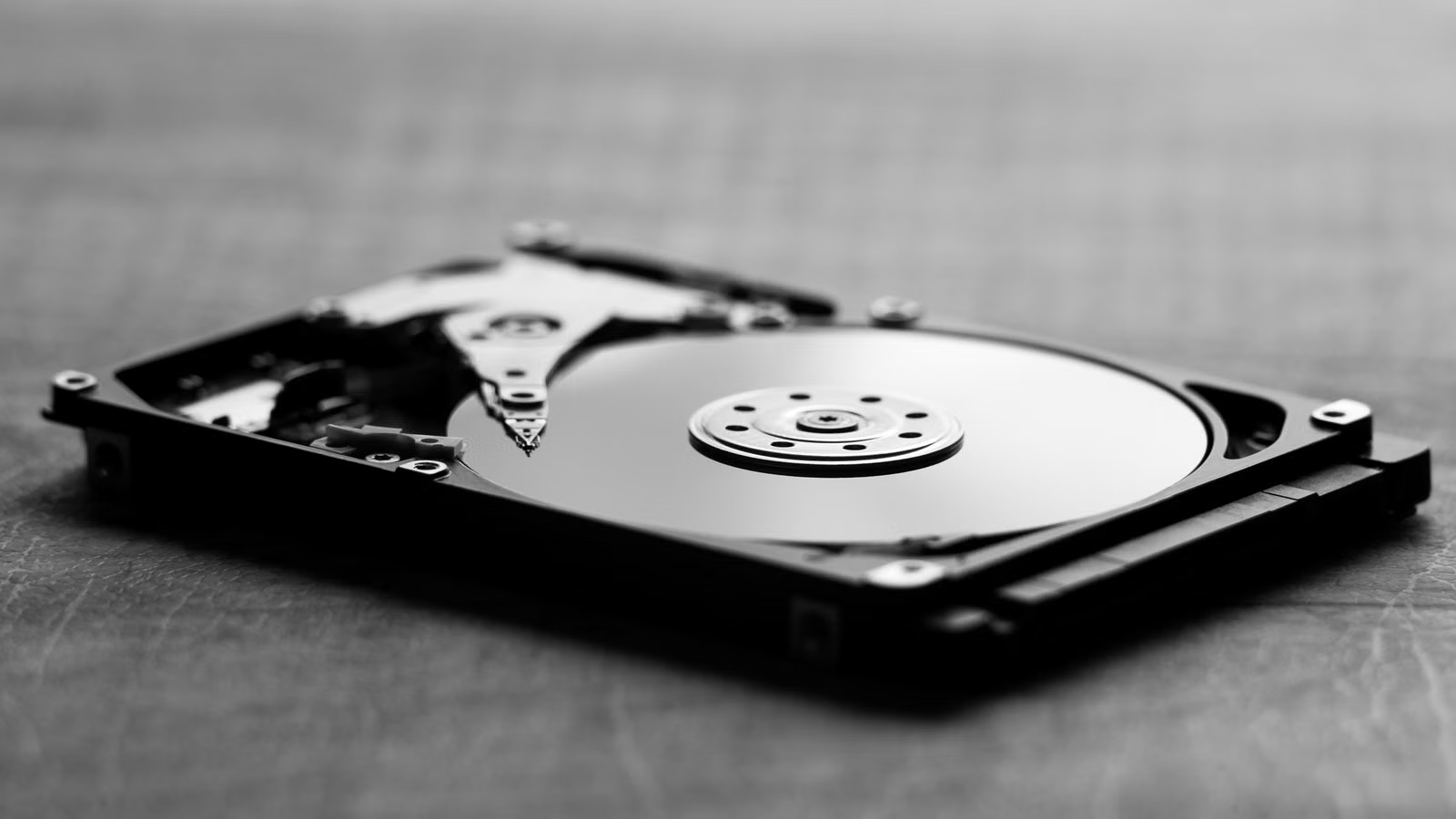
If you want to judge whether STX or PSTG benefits more from cloud demand, the key is not to compare “hard drives versus flash” in a generic way. The real question is which layer of storage cloud providers are buying. Seagate STX benefits more directly from nearline HDDs, massive data retention, low-cost capacity expansion, and HAMR-based capacity upgrades. Pure Storage PSTG benefits more from enterprise all-flash platforms, high-performance data access, subscription revenue, and software-driven data management. Both companies are related to AI data centers, but STX is more tied to capacity-cycle upside, while PSTG is more tied to platform-style growth.
Key Takeaways
- STX benefits more directly from cloud nearline HDD capacity expansion.
- PSTG is more exposed to enterprise flash platforms and subscription revenue.
- HDD and Flash are more complementary than substitutive in AI data centers.
- STX should be tracked through pricing, gross margin, HAMR, and cloud orders.
- PSTG should be tracked through ARR, RPO, product revenue, and subscription services.
- Investment analysis should separate demand, margins, valuation, and risk.
The Core Difference Between STX and PSTG: One Sells Large-Capacity Infrastructure, the Other Sells High-Performance Data Platforms

If you classify both STX and PSTG simply as “AI storage stocks,” it is easy to misjudge them. STX’s core value is providing cloud providers with low-cost, high-capacity, scalable storage media. PSTG’s core value is providing enterprises and some large customers with high-performance, easy-to-manage, subscription-based data storage platforms. The former is closer to a hardware capacity cycle; the latter is closer to an enterprise infrastructure platform upgrade.
Seagate has long positioned itself as a mass-capacity data storage company, with its business focus extending far beyond consumer portable drives. Its key areas include cloud data centers, enterprise storage, nearline HDDs, and high-capacity drives. Its nearline HDDs mainly serve hyperscalers, cloud service providers, large internet platforms, and enterprise data centers. In the third quarter of fiscal 2026, Seagate reported revenue of $3.11 billion, GAAP gross margin of 46.5%, and non-GAAP gross margin of 47.0%, showing a clear improvement in nearline HDD supply-demand conditions and product mix.
Pure Storage has a different positioning. It is neither a NAND manufacturer nor a traditional SSD supplier. Instead, it is an all-flash array, file and object storage, subscription storage service, and enterprise data cloud platform company. Its FlashArray and FlashBlade target databases, virtualization, AI data pipelines, unstructured data, and enterprise core applications. Pure Storage reported full-year fiscal 2026 revenue of more than $3.6 billion, Q4 revenue above $1 billion, and RPO growth of more than 40% year over year, indicating that investors are not only watching hardware sales but also future revenue visibility.
| Comparison Dimension | Seagate STX | Pure Storage PSTG |
|---|---|---|
| Core products | Nearline HDDs, Exos, HAMR drives | FlashArray, FlashBlade, Evergreen |
| Main customers | Cloud providers, enterprise data centers, OEMs | Enterprise customers, cloud environments, large institutions |
| Growth logic | Data growth, capacity expansion, cost per TB | High-performance data access, simplified operations, subscription services |
| Financial upside | ASP, gross margin, capacity utilization | ARR, RPO, subscription revenue, product growth |
| Main risks | Cycle reversal, customer concentration, supply recovery | Valuation pressure, NAND costs, intensifying competition |
For investors, this distinction is crucial. STX’s growth is more likely to be released in concentrated bursts when cloud provider procurement recovers, HDD supply tightens, and HAMR production ramps up. PSTG’s growth depends more on customers migrating traditional storage architectures to all-flash platforms and continuously purchasing subscription services, capacity expansion, and data management capabilities. One is more like “hardware upside from cloud capacity expansion,” while the other is more like “compounding growth from enterprise data platform upgrades.”
Summary: STX and PSTG are not the same type of company. STX represents nearline HDDs, massive capacity, low-cost data retention, and cloud capacity expansion. PSTG represents enterprise flash platforms, high-performance data access, subscription-based storage, and software-driven data management. When judging which company benefits more from cloud demand, you first need to distinguish whether cloud providers need to “store more data at lower cost” or “access data faster, more reliably, and with more automation.” The former is more closely tied to STX, while the latter is more closely tied to PSTG. Both companies can benefit from AI data centers, but they benefit at different layers, show different financial patterns, and face different sources of risk.
Where Cloud Demand Comes From: How AI Training, Inference, Data Lakes, and Long-Term Retention Drive Storage
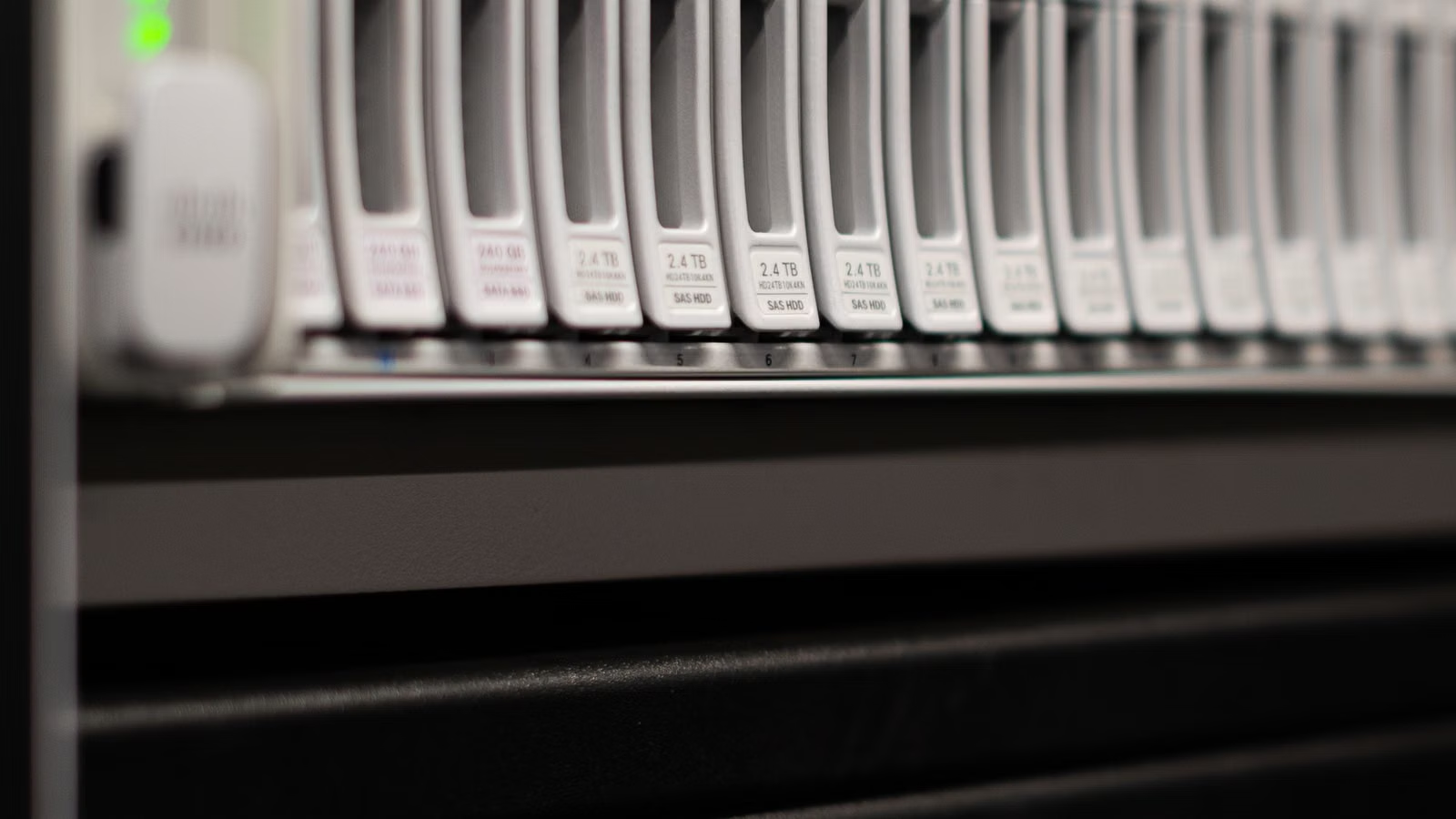
Cloud storage demand is not one-dimensional. AI training, inference, logs, data lakes, backups, model checkpoints, vector databases, and compliance retention all generate data, but these data types differ in access frequency, performance requirements, and cost constraints. STX benefits more from low-frequency, long-term, massive data storage, while PSTG benefits more from high-performance, low-latency, active data, and enterprise-grade data management.
The most expensive assets in AI data centers are usually GPUs and networking infrastructure, but GPUs cannot run without data. Training datasets must be read continuously, model iteration produces large numbers of checkpoints, inference services generate logs and user interaction data, and RAG applications require vector databases and knowledge bases. Hot data needs fast access, warm data needs cost control, and cold data needs long-term retention. This is why HDD and Flash are not simple substitutes; they form different layers of the data center storage stack.
STX’s value to cloud providers lies in unit-capacity cost. Seagate’s Exos M up to 36TB is based on HAMR and the Mozaic 3+ platform, with the focus on improving drive capacity, platter density, and rack-space efficiency. For hyperscalers, higher drive capacity means more data can be stored in the same data center footprint, while potentially reducing power consumption per TB, device count, and maintenance complexity.
PSTG’s value to cloud providers and enterprise customers lies in performance and platformization. Pure Storage’s FlashBlade is described as a unified file and object storage platform for modern unstructured data, AI/ML, high-performance computing, and data protection scenarios. The problem it solves is not “the lowest cost per TB,” but data access speed, throughput, management efficiency, scalability, and a consistent experience across environments.
| Data Scenario | More STX Nearline HDD-Oriented | More PSTG Enterprise Flash-Oriented |
|---|---|---|
| Object storage | Yes | Some scenarios |
| Cold data archive | Yes | Less common |
| Long-term log retention | Yes | Some high-frequency analytics |
| AI training data reads | Partly suitable | Yes |
| Vector search and databases | Less suitable | Yes |
| Backup and recovery | Yes | Yes, especially fast recovery |
| Enterprise core applications | Some underlying capacity | Yes |
| High-throughput data pipelines | Less suitable | Yes |
This layering also explains why HDDs have not disappeared despite the popularity of SSDs. Cloud data growth often exceeds budget growth, and putting all long-term data on flash is not economical. Conversely, if high-performance applications remain on traditional disk arrays, they may limit the efficiency of databases, analytics platforms, and AI applications. Therefore, STX and PSTG share the same tailwind from data growth, but they serve different budget pools.
Summary: Cloud storage demand comes from data growth, not from a single hardware upgrade. STX directly serves the need to “store massive data at lower cost,” making it suitable for object storage, backup and archive, cold/warm data, and large-scale capacity pools. PSTG serves the need to “access and manage active data quickly,” making it suitable for databases, AI data pipelines, enterprise data clouds, and high-performance unstructured data. To judge which company benefits more, you first need to determine whether incremental cloud budgets are flowing to the capacity layer or to the performance and platform layers.
Comparing Financial Upside: STX Depends on Pricing and Capacity, PSTG Depends on Revenue Quality and Subscription Metrics
From a financial perspective, you cannot compare STX and PSTG by revenue growth alone. For STX, the key variables are nearline HDD supply and demand, ASP, gross margin, and free cash flow. During an upcycle, profit upside can be strong. For PSTG, the key variables are ARR, RPO, subscription service revenue, product revenue, and gross margin. Its long-term value depends more on customer renewals, expansion, and platform penetration.
STX’s financial upside comes from the hardware cycle. In the second quarter of fiscal 2026, Seagate reported revenue of $2.825 billion, GAAP gross margin of 41.6%, and non-GAAP gross margin of 42.2%. By the third quarter, both revenue and gross margin continued to improve. You can interpret this as follows: when cloud customer orders improve, HDD industry supply discipline remains strong, and product mix shifts toward higher-capacity nearline drives, revenue growth is amplified into profit through gross margin expansion. Seagate’s gross margin changes in its fiscal 2026 second-quarter and third-quarter results are important signals for assessing the strength of this cycle.
PSTG’s financial upside does not come solely from single-quarter hardware sales. In the first quarter of fiscal 2027, Pure Storage reported revenue of $1.053 billion, up 35% year over year; product revenue of $577 million, up 55%; subscription service revenue of $476 million, up 17%; subscription ARR of $2.0 billion; and RPO of $3.8 billion, up 41%. These figures show that PSTG’s growth is supported by both product demand and subscription services with future contract revenue visibility.
| Metric | Why It Matters | More Relevant For |
|---|---|---|
| Nearline HDD shipments | Measures cloud capacity procurement strength | STX |
| ASP and gross margin | Measures supply-demand tightness and profit release | STX |
| Free cash flow | Shows whether the upcycle converts into real cash | STX |
| Product revenue | Measures all-flash hardware demand | PSTG |
| Subscription service revenue | Measures service model and customer stickiness | PSTG |
| ARR | Measures recurring revenue base | PSTG |
| RPO | Measures future revenue visibility | PSTG |
Their margin structures are also different. STX’s gross margin is heavily affected by the product cycle, shipment mix, customer bargaining power, capacity utilization, and industry supply. PSTG’s margin profile is more like that of an enterprise infrastructure platform, but it can still be affected by NAND costs, supply chain conditions, price competition, and large-customer projects. In other words, STX’s margin improvement looks more like a cyclical inflection point, while PSTG’s margin stability depends more on product architecture, subscription mix, and customer quality.
If you are comparing these two U.S. stocks, you should also pay attention to trading costs in addition to fundamentals. U.S. stock trading costs usually include more than commissions; they may also include platform fees, external institution fees, trading activity fees, and other charges. When using information such as Biya U.S. stock trading fees, focus on the order page and fee details. Biya charges $0 commission for U.S. stock trading, while platform fees, external institution fees, and other charges are subject to the fee center and the order page. Public market information and fee structures are for reference only and do not constitute investment advice.
Summary: STX and PSTG require two different financial frameworks. For STX, watch nearline HDD shipments, ASP, gross margin, free cash flow, and cloud customer demand, because its profit upside comes from a capacity upcycle. For PSTG, watch product revenue, subscription services, ARR, RPO, customer renewals, and gross margin, because its value comes from platform-style revenue quality. You should not judge the two companies only by revenue growth. Instead, look at the sustainability of that growth, how profits are released, and how much optimism is already reflected in valuation.
Comparing Technology Paths: What Problems Do HAMR Nearline HDDs and All-Flash Architectures Solve?
STX and PSTG’s technology paths are not absolutely better or worse; they are suited to different scenarios. HAMR nearline HDDs solve the problem of “storing more data at lower cost and within limited space.” All-flash architectures solve the problem of “accessing active data with lower latency, higher throughput, and stronger automation.” Cloud providers will not abandon HDDs simply because Flash is faster, nor will they stop using Flash simply because HDDs are cheaper.
Seagate’s HAMR and Mozaic roadmap is fundamentally about improving areal density. The HDD industry has long been constrained by physical platter density. HAMR uses heat-assisted magnetic recording to increase the amount of data that can be written per unit area. In materials related to Mozaic 4+, Seagate continues to emphasize that AI-scale data growth requires higher-capacity hard drives. This means STX’s technology focus is not to turn HDDs into SSDs, but to keep optimizing capacity, space efficiency, power efficiency, and cost per TB.
PSTG’s technology path centers on all-flash and software-defined management. In Evergreen//One, Pure Storage emphasized delivering enterprise storage as a service and using SLAs, capacity flexibility, and continuous upgrades to reduce the “forklift upgrade” problem of traditional storage. Its advantage is not merely hardware speed, but packaging flash, management software, subscription services, and data protection into a platform.
| Technical Problem | STX’s Answer | PSTG’s Answer |
|---|---|---|
| Too much data | Increase single-drive capacity and rack density | Use efficient compression, deduplication, and platform management |
| Cost pressure per TB | Nearline HDDs have an advantage | Flash costs more but offers stronger performance |
| Data access speed | Not suitable for all low-latency scenarios | All-flash is better for active data |
| Data center space | HAMR improves capacity per unit space | High-density arrays improve effective capacity |
| Operational complexity | Standardized HDD pools and scale procurement | Evergreen, Pure1, automated management |
| AI workloads | Suitable for long-term data pools and capacity layers | Suitable for high-throughput training, analytics, and data pipelines |
A simple way to judge is this: if the workload is mainly about “storing data, retaining it for a long time, and accessing it infrequently,” HDD economics matter more. If the workload is mainly about “fast reads, frequent modifications, core applications, and AI pipelines,” Flash performance and management advantages matter more. Cloud providers and large enterprises usually deploy both architectures rather than choosing only one.
Summary: HAMR and all-flash are not substitutes; they solve different bottlenecks. Seagate uses HAMR to increase hard drive capacity density, allowing cloud providers to store more data at a lower unit cost. Pure Storage uses all-flash, software management, and subscription services to improve data access efficiency, making it easier for enterprises to run databases, AI, analytics, and mission-critical systems. These technology differences determine where each company’s revenue upside comes from, and they also mean investors should not judge them using a single standard such as “more advanced” or “cheaper.”
Which Benefits More from Cloud Demand: Break It Down by Demand Strength, Revenue Upside, and Risk Exposure
If the question is limited to “massive capacity expansion by cloud providers,” STX benefits more directly. If the question is expanded to “high-performance data platform upgrades across enterprise and cloud environments,” PSTG has stronger long-term structural appeal. STX is better for tracking nearline HDD supply tightness driven by AI data centers, while PSTG is better for tracking enterprise data cloud adoption, subscription services, and the replacement of traditional arrays by all-flash systems.
In the short to medium term, STX has a more direct link to cloud demand. Reuters reported that Seagate issued a stronger-than-expected quarterly outlook because AI is driving stronger demand for data storage hardware. Seagate also expected fiscal 2026 fourth-quarter revenue of $3.45 billion, plus or minus $100 million, and non-GAAP EPS of $5.00, plus or minus $0.20. For cyclical investors, this type of guidance matters more than thematic narratives.
Over the long term, PSTG’s advantage lies in platformization and subscriptionization. Enterprise customers are not just buying a device; they want to reduce storage architecture complexity, improve availability, and manage data across on-premises and cloud environments. Pure Storage’s Enterprise Data Cloud direction emphasizes moving storage from fragmented hardware assets to unified data management. Related discussions around Enterprise Data Cloud also note that its core idea is managing data rather than just managing physical infrastructure.
| Investor Type | Better Focus | Core Reason | Key Risk |
|---|---|---|---|
| Cyclical upside investor | STX | HDD supply-demand improvement quickly flows into profits | Cycle reversal, price decline |
| AI infrastructure investor | STX + PSTG | One covers the capacity layer; the other covers the performance layer | Valuation may overprice expectations |
| Platform growth investor | PSTG | ARR, RPO, and subscriptions improve revenue quality | Growth slowdown, tougher competition |
| Conservative observer | Track both gradually | Wait for earnings to confirm orders and margins | Missing early upside |
| Theme-based allocator | Compare as a basket | Avoid betting on one technology path | Sector-wide pullback |
In practical tracking, you can view STX as a representative of the “AI data storage capacity cycle” and PSTG as a representative of “enterprise high-performance data platform upgrades.” If you track both companies through U.S. stock information search, do not focus only on daily price moves. Compare earnings reports, revenue guidance, gross margin, order pace, valuation changes, and industry supply-demand conditions together. Service availability depends on the user’s location, identity verification results, platform rules, and applicable laws and regulations.
Summary: The answer to which company benefits more from cloud demand depends on how you define “cloud demand.” Capacity expansion, object storage, cold/warm data, and long-term retention are more favorable to STX. High-performance data access, enterprise data clouds, AI data pipelines, and subscription-based services are more favorable to PSTG. In the short to medium term, if nearline HDD supply tightness continues, STX’s profit upside is more direct. In the long term, if enterprise all-flash adoption and data platformization continue to rise, PSTG’s revenue quality deserves close attention. Both can benefit, but not in the same way.
Key Risks: Where the Market May Misjudge STX and PSTG
STX’s biggest risk is that the market mistakes a cyclical peak for permanent growth. PSTG’s biggest risk is that the market overprices high-quality revenue. STX may be affected by HDD supply-demand reversal, slower customer procurement, and the pace of HAMR execution. PSTG may be affected by valuation pressure, NAND costs, project timing, and fluctuations in enterprise IT spending. Neither company is a low-risk asset.
STX’s risk first comes from the cycle. When HDD industry supply is tight, ASP, gross margin, and cash flow can improve quickly. But once cloud providers digest inventory, procurement slows, or competitors expand capacity, pricing and margins may also fall. Seagate’s 2025 Form 10-K still highlights risks such as customer concentration, industry competition, technology transition, and demand volatility, all of which can amplify stock price swings.
PSTG’s risks are more typical of a growth and platform company. It needs to keep proving that its all-flash platform can expand penetration among enterprises and large customers, while also proving that subscription revenue, ARR, and RPO can translate into profit and cash flow. Pure Storage’s fiscal 2026 Form 10-K notes that product and subscription service sales may be seasonal and that business results may fluctuate from quarter to quarter, which is especially important for a stock with high valuation expectations.
| Risk Category | STX Risk | PSTG Risk |
|---|---|---|
| Demand risk | Slower cloud HDD procurement | Delayed enterprise IT spending |
| Cost risk | Capacity, components, manufacturing costs | NAND costs, supply chain |
| Technology risk | HAMR production and yields | All-flash competition, product iteration |
| Customer risk | Hyperscaler customer concentration | Timing of large-project recognition |
| Valuation risk | Extrapolating cycle peak valuations | Growth expectations fading |
| Macro risk | Capex cuts | Enterprise budget tightening |
The shared risk is an AI Capex slowdown. If large cloud providers shift from “urgent buildout” to “capacity digestion,” STX’s nearline HDD orders could slow, while PSTG’s enterprise and cloud-related projects could also be delayed. The difference is that STX’s pressure may show up faster in pricing, shipments, and gross margin, while PSTG’s pressure may show up more in revenue growth, RPO growth, and valuation multiples.
Summary: STX and PSTG both benefit from data growth, but their risk profiles differ. STX is more vulnerable to the HDD cycle shifting from tight supply to balanced supply. If the market extrapolates peak margins too far, the pullback can be significant. PSTG is more vulnerable to the market assigning too high a valuation to subscription and platform growth. If product revenue, ARR, or RPO slows, valuation pressure may arrive before fundamentals fully deteriorate. When comparing the two companies, do not only ask “which benefits from AI.” Also ask “if AI Capex slows, whose financial metrics will be hit first?”
If you follow AI storage-related U.S. stocks such as STX and PSTG, a practical comparison framework has four steps: first, identify which layer of cloud demand is growing; second, check whether earnings metrics confirm orders and margins; third, assess whether valuation already reflects optimistic expectations; and fourth, consider actual trading costs and your own risk tolerance. Through Biya, you can compare U.S. and Hong Kong market names such as STX, PSTG, WDC, NTAP, DELL, HPE, and MU across the same storage industry chain. If related services are available in your region, you can also download the App to track market data and account information. Public information can help you understand company logic, but specific trading decisions should be based on platform rules, fee details, order displays, and local regulatory requirements. This does not constitute investment advice.
FAQ
Why Does Seagate STX Still Benefit from AI Data Center Demand?
Seagate STX still benefits because AI data centers generate large amounts of data that need long-term storage. Training data, logs, backups, object storage, and cold/warm data do not all need to be stored on high-cost flash. Nearline HDDs still have advantages in cost per TB and large-scale capacity deployment. STX’s core opportunity comes from continued cloud capacity expansion, not simply from hard drive speed improvements.
Will Pure Storage PSTG Replace Traditional Hard Drive Companies?
Pure Storage PSTG will not simply replace all traditional hard drive companies. PSTG’s strengths are all-flash arrays, high-performance data access, enterprise data platforms, and subscription services, making it suitable for active data, databases, AI data pipelines, and critical applications. HDDs still have value in low-cost massive data retention, so these two storage types are more complementary than fully substitutive.
Do Cloud Providers Care More About HDDs or Flash When Buying Storage?
Cloud providers choose HDDs or Flash based on workload, not by favoring one medium in all cases. Cold data, backups, long-term logs, and object storage care more about unit-capacity cost, making HDDs more suitable. Databases, vector search, AI training data pipelines, and low-latency applications care more about performance, making Flash more suitable. The final choice depends on cost, performance, power consumption, space, and reliability.
Which Is More Suitable for Cyclical Investors, STX or PSTG?
STX is closer to a cyclical investment framework because its profits are more affected by nearline HDD supply-demand conditions, ASP, capacity utilization, and gross margin. PSTG is more of a growth platform and subscription revenue story, suitable for investors who focus on ARR, RPO, and enterprise customer penetration. Both can be volatile, so trading decisions should consider valuation, position size, and risk tolerance.
Why Does PSTG Subscription Revenue Matter for Investment Analysis?
PSTG subscription revenue helps improve revenue visibility. ARR, RPO, and subscription service revenue can reflect customer renewals, expansion, and platform stickiness, but these metrics alone do not prove that the valuation is reasonable. Investors should also evaluate product revenue growth, gross margin, free cash flow, customer mix, and competitive pressure instead of relying on a single metric.
How Can Retail Investors Track Cloud Demand Changes for STX and PSTG?
Retail investors can track four types of signals: cloud customer demand commentary in earnings reports, nearline HDD or all-flash product revenue, gross margin and free cash flow, and management guidance on future orders and AI data center demand. Before trading, investors should also check platform fees, order rules, and regional service availability. Public disclosures and platform displays should be treated as the primary reference.
*This article is provided for general information purposes and does not constitute legal, tax or other professional advice from BiyaPay or its subsidiaries and its affiliates, and it is not intended as a substitute for obtaining advice from a financial advisor or any other professional.
We make no representations, warranties or warranties, express or implied, as to the accuracy, completeness or timeliness of the contents of this publication.
Related Blogs of

Seagate STX vs NetApp NTAP: Hardware Cash Flow vs Enterprise Storage Softwareization


Western Digital WDC vs NetApp NTAP: Investment Logic Comparison Between a Hard Drive Manufacturer and a Data Management Platform


SanDisk SNDK vs NetApp NTAP: NAND Manufacturer vs Enterprise Storage Services Provider


Micron MU vs NetApp NTAP: Comparing a Hardware Cycle Stock with an Enterprise Storage Services Company
Choose Country or Region to Read Local Blog
 Australia
 Austria
 Belgium
 Canada
 Cyprus
 Czech Republic
 Denmark
 Estonia
 Finland
 France
 Germany
 Greece
 Hong Kong
 India
India Indonesia
 Ireland
 Italy
Italy Japan
Japan Latvia
 Lithuania
 Luxembourg
 Malaysia
 Malta
Malta Morocco
 Nepal
Nepal Netherlands
 New Zealand
 Norway
 Pakistan
 Philippines
 Poland
 Portugal
 Romania
 Singapore
 Slovakia
 Slovenia
 South Africa
 South Korea
 Spain
Spain Sweden
 Thailand
 The United States
 Turkey
 United Arab Emirates
 United Kingdom
 Vietnam
Contact Us




BIYA GLOBAL LLC is registered with the Financial Crimes Enforcement Network (FinCEN), an agency under the U.S. Department of the Treasury, as a Money Services Business (MSB), with registration number 31000218637349, and regulated by the Financial Crimes Enforcement Network (FinCEN).
BIYA GLOBAL LIMITED is a registered Financial Service Provider (FSP) in New Zealand, with registration number FSP1007221, and is also a registered member of the Financial Services Complaints Limited (FSCL), an independent dispute resolution scheme in New Zealand.