
SanDisk SNDK vs NetApp NTAP: NAND Manufacturer vs Enterprise Storage Services Provider





SanDisk SNDK and NetApp NTAP can both be viewed through the lens of “AI storage,” but they are not the same type of company. SNDK is more closely tied to NAND Flash, SSDs, data center capacity demand, and the storage pricing cycle. NTAP is more closely tied to enterprise storage systems, all-flash arrays, hybrid cloud, and data management services. If you are comparing the two, the key question is not simply which company is better. You first need to decide whether you want exposure to upstream storage-chip cycle elasticity or downstream enterprise data-infrastructure stability.
Key Takeaways
- SNDK is more exposed to NAND pricing, SSD demand, and data center customers.
- NTAP is more exposed to enterprise storage upgrades, hybrid cloud, and data management budgets.
- SNDK has stronger earnings elasticity, but also higher cycle-reversal risk.
- NTAP usually grows more steadily, with cash flow and customer stickiness playing a larger role.
- AI benefits both companies, but the transmission path and valuation logic are different.
- Beginners should first identify each company’s value-chain position before comparing valuation or allocation size.
SNDK and NTAP Are Fundamentally Different Types of Storage Companies
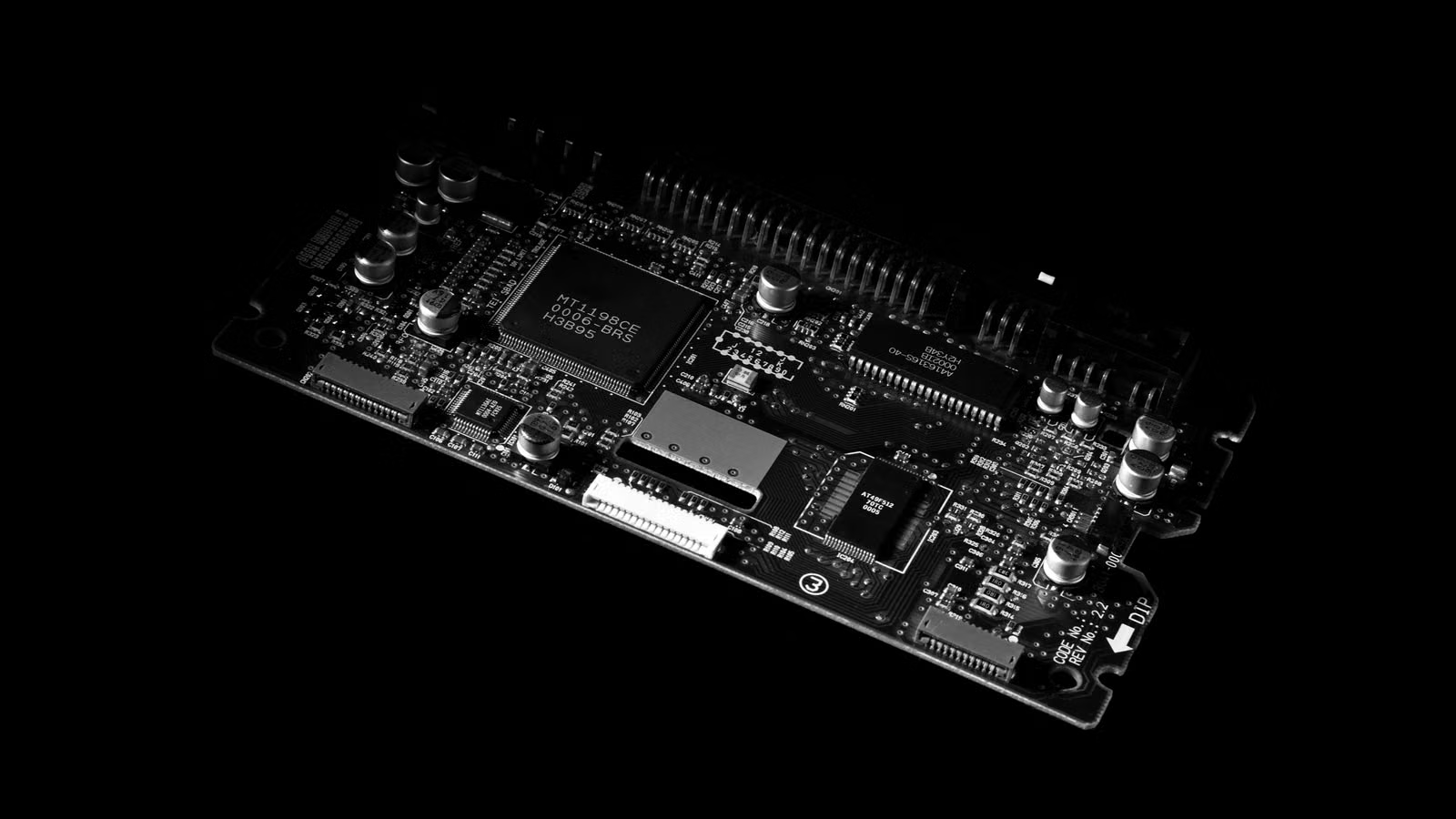
The core difference between SNDK and NTAP lies in their value-chain position. SNDK is an upstream NAND Flash and solid-state storage company, so its results are more affected by pricing, capacity, and data center SSD demand. NTAP is a downstream enterprise storage and data management company, so its value comes more from storage systems, software capabilities, service revenue, and hybrid cloud platforms. Calling both of them “storage stocks” is not wrong, but using the same valuation logic for both can easily lead to misjudgment.
SNDK is the independent company created after Western Digital separated its flash business. According to Sandisk’s 10-Q, Western Digital completed the separation in February 2025, after which Sandisk began trading independently on Nasdaq under the ticker SNDK. This allows the market to value it more clearly as a NAND Flash, SSD, and flash storage cycle stock, rather than mixing it with WDC’s HDD business.
NTAP is not a NAND manufacturer. A more accurate way to understand it is as an enterprise data infrastructure company. It provides unified data storage, all-flash arrays, hybrid cloud data management, public cloud services, data protection, and Storage-as-a-Service. NetApp emphasizes Every Cloud, Every Workload, One Platform, which is very different from SNDK’s logic of “capacity products plus flash supply and demand.”
| Comparison Dimension | SNDK | NTAP |
|---|---|---|
| Company type | NAND Flash and SSD company | Enterprise storage and data management company |
| Value-chain position | Upstream storage chips and solid-state storage products | Downstream enterprise storage systems and cloud data platform |
| Core customers | Data centers, edge devices, consumer storage, enterprise SSD customers | Enterprise IT, cloud customers, AI data infrastructure customers |
| Key variables | NAND pricing, capacity, shipments, product mix | Enterprise IT budgets, all-flash arrays, hybrid cloud, service revenue |
| Investment attribute | Stronger cycle elasticity | More stability and cash-flow characteristics |
| Common misconception | Looking only at AI exposure while ignoring the NAND cycle | Mistaking NTAP for an upstream NAND manufacturer |
At the product level, SNDK is associated with NAND, Flash, SSDs, embedded storage, enterprise SSDs, and consumer storage. NTAP is associated with ONTAP, all-flash arrays, Hybrid Cloud, Public Cloud, Keystone, data protection, and AI data platforms. The former represents storage capacity and pricing, while the latter represents enterprise data management capabilities.
Summary: SNDK and NTAP should not be summarized only as “AI storage stocks.” The key questions for SNDK are whether NAND pricing can remain strong, whether data center SSD demand is durable, and whether the product mix can continue shifting toward higher-value customers. The key questions for NTAP are whether enterprises will keep upgrading their storage architecture, whether hybrid cloud can continue generating revenue, and whether all-flash arrays and service revenue can support margins. When comparing the two, the first question is not “which stock is better,” but “do you want storage-cycle elasticity or enterprise data-infrastructure stability?” Once that is clear, financial, valuation, and risk analysis become much more meaningful.
Business Model Comparison: SNDK Sells Capacity and Flash Products, NTAP Sells Enterprise Data Infrastructure

SNDK’s revenue is closer to “capacity product sales,” where pricing, shipment volume, customer mix, and product mix directly affect revenue and gross margin. NTAP’s revenue is closer to a combination of “hardware platform plus software capability plus support services plus cloud services,” where enterprise customer stickiness and renewal capability matter more. Therefore, SNDK is better analyzed through a semiconductor-cycle framework, while NTAP is better analyzed through an enterprise IT infrastructure and hybrid cloud budget framework.
SNDK’s financial results already show this elasticity clearly. SanDisk’s fiscal 2026 third-quarter results showed quarterly revenue of $5.95 billion, up 97% sequentially and 251% year over year. Datacenter revenue reached $1.467 billion, up 233% sequentially and 645% year over year. This is not the kind of linear growth usually seen in ordinary hardware companies. It is a cyclical amplification driven by NAND supply and demand, AI data center demand, and pricing improvement.
NTAP’s business structure is smoother. According to NetApp’s fiscal 2026 results, the company generated $6.925 billion in fiscal 2026 net revenue, up 5% year over year. Hybrid Cloud segment revenue was $6.237 billion, up 6%, while Public Cloud segment revenue was $688 million, up 3%. Its growth is not as explosive as SNDK’s, but the structure is more enterprise-platform oriented, and long-term investors tend to focus more on cash flow and margins.
| Revenue Driver | Impact on SNDK | Impact on NTAP |
|---|---|---|
| NAND contract and spot prices | Directly affect revenue, gross margin, and EPS | Indirectly affect hardware cost and customer purchasing rhythm |
| Enterprise SSD demand | Directly drives data center revenue | Indirectly benefits storage arrays and AI data platforms |
| Enterprise IT budgets | Relevant, but not the only variable | Highly relevant to storage system purchases |
| Hybrid cloud migration | Indirectly supports flash storage demand | Directly affects Hybrid Cloud and Public Cloud |
| Support services and subscriptions | Less central | Critical for stable revenue and customer stickiness |
| Product refresh cycle | Affects SSD and NAND product mix | Affects all-flash arrays and storage system upgrades |
NTAP does not simply sell SSDs or hard drives to customers. It builds a platform around storing, accessing, protecting, migrating, and governing data. NetApp data storage products cover all-flash storage, hybrid flash, object storage, block storage, and file storage. NetApp Keystone packages storage capacity as Storage-as-a-Service, allowing enterprises to manage on-premises, colocation, and cloud workloads through subscription-based and consumption-based models.
If you use U.S. stock information lookup to track storage companies, SNDK, NTAP, MU, WDC, STX, and PSTG should not be viewed through a simple price-movement table. A better method is to group them first into upstream chips and capacity products, enterprise storage systems, HDD and nearline storage, and cloud data management platforms before comparing financial metrics.
Summary: SNDK’s business model is more dependent on NAND and SSD pricing elasticity. During a strong cycle, revenue, gross margin, and EPS can rise quickly; during a weak cycle, pressure can also appear quickly. NTAP’s business model depends more on enterprise customers, hybrid cloud architecture, all-flash arrays, support services, and data management capabilities. Its growth is usually less dramatic than that of upstream cycle stocks, but its revenue quality and cash-flow visibility are stronger. If you prefer to capture industry inflection points, SNDK is more worth tracking. If you prefer enterprise infrastructure and more stable financial performance, NTAP deserves closer analysis.
AI Data Center Exposure Is Different: SNDK Depends on SSD Demand, NTAP Depends on Data Platform Capability

SNDK and NTAP can both benefit from AI data growth, but SNDK benefits from the need for more high-performance NAND and enterprise SSDs, while NTAP benefits from the need for enterprises to better manage, protect, move, and access AI data. The former is more about hardware capacity and pricing. The latter is more about enterprise data platforms and workload management. AI is not a single variable. It flows through different parts of the value chain and affects each company’s income statement differently.
SNDK’s AI logic is closer to capacity and performance demand. AI training, inference, vector databases, model checkpoints, logs, images, video, and unstructured data all increase the need for high-performance storage. In SanDisk’s fiscal 2026 second-quarter results, Datacenter revenue rose 64% sequentially, driven by AI infrastructure builders, semi-custom customers, and customers deploying large-scale AI workloads. By the third quarter, this trend had accelerated further, with Datacenter revenue rising 233% sequentially.
NTAP’s AI logic is not simply about “putting more drives into servers.” Enterprise AI deployment often gets stuck because data is fragmented, permissions are complicated, data quality is inconsistent, cross-cloud access is slow, and backup and compliance requirements are high. NetApp AI Data Engine highlights collaboration with NVIDIA to help enterprises discover, manage, and prepare data for production AI workloads. NVIDIA AI Data Platform also emphasizes AI-ready enterprise data, low latency, security, and high-performance data infrastructure. These needs are more closely aligned with NTAP’s platform strengths.
AI exposure can be broken down as follows:
| AI Demand Change | SNDK Exposure Path | NTAP Exposure Path |
|---|---|---|
| Larger models and datasets | Higher enterprise SSD and NAND capacity demand | Data platforms must manage more unstructured data |
| More inference workloads | Higher demand for high-performance and low-latency SSDs | Greater need for data access, permissions, and cross-cloud orchestration |
| Enterprise AI moves from pilot to production | Data center customer purchasing may increase | Storage system, governance, and backup budgets may rise |
| Higher data security and compliance requirements | Indirectly supports enterprise-grade product demand | Directly supports data protection and management services |
| Hybrid cloud and on-premises deployment | Indirectly supports high-performance storage demand | Directly supports Hybrid Cloud data management demand |
The market sometimes oversimplifies the phrase “AI storage.” SNDK is not an enterprise data governance company, and NTAP is not an upstream NAND manufacturer. SNDK’s valuation elasticity comes from tight NAND supply and demand, rising SSD ASPs, and a higher-value customer mix. NTAP’s valuation support comes from enterprise data-infrastructure budgets, all-flash array upgrades, cloud integration capabilities, and service revenue.
Summary: AI is an important catalyst for both SNDK and NTAP, but the transmission mechanism is very different. SNDK’s keywords are NAND, SSDs, data center customers, pricing improvement, and supply-demand gaps. NTAP’s keywords are enterprise data platforms, AI data governance, hybrid cloud, data protection, and high-performance access. If you believe AI data centers will continue driving enterprise SSD demand, SNDK has more direct exposure. If you believe enterprise AI will move from pilot projects to production and require unified management of cross-cloud and unstructured data, NTAP is more relevant. Neither is a pure AI stock. Both are different expressions of AI infrastructure expansion.
Financial Elasticity Comparison: SNDK Has More Upside Torque, NTAP Has More Stability
SNDK has stronger financial elasticity because rising NAND prices, expanding data center revenue, and a better high-value customer mix can quickly flow through to gross margin and EPS. NTAP has stronger financial stability because its revenue comes from enterprise storage, services, cloud, and support systems, making cash-flow quality, buybacks, dividends, and margins more important. You should not only look at which company grows faster. You also need to understand whether that growth comes from cycle elasticity or operating quality.
SNDK’s fiscal 2026 third-quarter performance is a typical example. The company reported quarterly revenue of $5.95 billion, GAAP net income of $3.615 billion, and non-GAAP diluted EPS of $23.41. It also guided fiscal fourth-quarter revenue to a range of $7.75 billion to $8.25 billion. This earnings elasticity came from three factors: strong AI data center customer demand, NAND supply-demand imbalance supporting prices, and a product mix shifting toward higher-value customers.
NTAP looks more like a stable infrastructure company financially. In fiscal 2026, the company reported net revenue of $6.925 billion and non-GAAP free cash flow of $1.869 billion, up 40% year over year. It also returned $1.36 billion to shareholders through buybacks and cash dividends. NetApp guided fiscal 2027 net revenue to a range of $7.325 billion to $7.575 billion. This kind of guidance is better analyzed through a framework of revenue visibility, margins, and cash flow.
| Financial Metric | What to Watch for SNDK | What to Watch for NTAP |
|---|---|---|
| Revenue growth | Whether Datacenter and NAND pricing are both driving growth | Whether Hybrid Cloud, All-flash, and Public Cloud support growth |
| Gross margin | Whether it is near a cycle peak and whether it can last | Whether product, service, and cloud margin structure is stable |
| EPS | Strong upside elasticity during favorable cycles | Sustainability and consistency matter more |
| Free cash flow | Whether cyclical profits turn into cash | Whether high free cash flow conversion continues |
| Shareholder return | Whether buybacks align with cycle timing | Buybacks, dividends, and cash-flow coverage |
| Guidance quality | NAND pricing and order durability | Enterprise budgets and the fiscal 2027 revenue range |
When comparing U.S. storage stocks, trading costs should not be ignored. Storage cycle stocks can be volatile around earnings, and investors may be tempted to adjust positions frequently. If the cost structure is unclear, actual returns can be affected by platform fees, external agency fees, trading activity fees, and other charges. Biya charges $0 commission for U.S. stock trades, while platform fees, external agency fees, and other charges are subject to the U.S. stock trading fees and the order page. Service availability depends on the user’s location, identity verification results, platform rules, and applicable laws and regulations.
Summary: SNDK’s financial elasticity comes from the NAND cycle and AI data center demand, so it is best tracked through a framework of price, gross margin, EPS, and guidance. NTAP’s financial stability comes from enterprise customers, all-flash arrays, hybrid cloud, Public Cloud, and service revenue, so it is better tracked through revenue quality, free cash flow, margins, and shareholder returns. High growth does not automatically mean low risk, and stable cash flow does not mean limited opportunity. The key is to judge whether the market has already priced in the next few quarters of growth and margin improvement.
Risk Comparison: SNDK Fears Cycle Reversal, NTAP Fears Enterprise IT Spending and Cloud Competition
SNDK’s biggest risk is a NAND cycle reversal. If supply recovers, customers slow purchases, or prices peak, earnings elasticity can shrink quickly. NTAP’s biggest risks are slower enterprise IT spending, intensifying storage competition, and substitution by cloud-native services. Both companies benefit from AI, but their risk sources are different. If you only look at the AI narrative without tracking prices, orders, budgets, and competition, it is easy to misjudge the margin of safety near a cycle high.
SNDK’s risk comes from its upstream nature. NAND is a cyclical industry. When pricing rises, profit elasticity can be strong; when supply expands, customers pull forward purchases, consumer electronics demand changes, or data center procurement slows, pressure can emerge quickly. The company’s Sandisk S-1/A also discloses various risks related to its business, separation, finances, regulation, and operations. Even if AI demand is strong, investors should not assume NAND prices will only move upward.
SNDK also faces supply-chain and capacity-collaboration risks. NAND manufacturing requires continuous investment, technology iteration, and partner coordination. Kioxia and Sandisk extended their Yokkaichi joint-venture arrangements, showing that both companies still rely on joint development and co-investment in 3D flash memory to remain competitive. Such partnerships can create scale and technology advantages, but investors still need to monitor capacity timing, cost structure, and changes in collaboration agreements.
NTAP’s risks are more downstream. Enterprise customers decide purchases based on budgets, data center refresh cycles, cloud migration timing, and security requirements. When the macro environment weakens or IT budgets tighten, storage system upgrades may be delayed. NTAP also competes with enterprise storage players such as Dell, HPE, and Pure Storage, as well as cloud-native storage services from AWS, Azure, and Google Cloud. It both cooperates with cloud providers and must prove that its hybrid cloud data management capability is not easily replaceable.
Key tracking signals can be divided into two groups:
- SNDK: NAND contract prices, enterprise SSD orders, Datacenter revenue share, gross margin, inventory, long-term supply agreements, and capital expenditure.
- NTAP: All-flash revenue, Hybrid Cloud revenue, Public Cloud growth, support service gross margin, free cash flow, and enterprise IT spending.
- Shared variables: AI data center capital expenditure, customer concentration, product refresh cycles, competitor pricing strategy, and valuation digestion.
It is worth noting that SNDK is trying to improve the volatility profile of the traditional storage industry through long-term customer relationships. Long-term supply contracts can improve revenue visibility, but they cannot fully eliminate the cyclical nature of NAND. NTAP’s services and subscription model can also improve revenue stability, but it is not immune to enterprise budgets or cloud platform competition.
Summary: SNDK’s risk keywords are cycle, pricing, capacity, customer purchasing, and NAND supply-demand balance. NTAP’s risk keywords are enterprise budgets, product competition, cloud substitution, growth slope, and valuation expectations. SNDK is more likely to deliver upside surprises during a favorable cycle, but it may also be more sensitive when the cycle reverses. NTAP may be less volatile, but if Public Cloud growth is weak or AI data platform monetization is slower than expected, its valuation can also come under pressure. Risk analysis should not stop at “AI demand is strong”; it must be tied to financial indicators, industry pricing, and customer budgets.
How Ordinary Investors Can Choose Between SNDK and NTAP
Ordinary investors should choose between SNDK and NTAP based on three questions: Can you tolerate cyclical stock volatility? Are you willing to track NAND pricing and SSD supply-demand trends? Do you prefer aggressive earnings elasticity or cash-flow stability? SNDK is more suitable for investors who are bullish on the NAND upcycle and can tolerate higher volatility. NTAP is more suitable for investors who care more about enterprise storage, hybrid cloud, cash flow, and shareholder returns. The two are not simple substitutes.
If you are more aggressive, SNDK’s appeal lies in elasticity. AI data center expansion, enterprise SSD shortages, rising NAND prices, and a higher-value customer mix can all amplify revenue and profit quickly. But you need to accept one reality: when the market begins to worry about pricing peaking, supply recovering, or customer purchasing slowing, valuation volatility may also increase. SNDK is better viewed as a storage-cycle elasticity position, not as a stable dividend stock.
If you are more conservative, NTAP’s appeal lies in enterprise customers and cash flow. All-flash arrays, hybrid cloud, Public Cloud, Keystone, data protection, and AI data platforms make NTAP more of an enterprise data infrastructure company. Its growth may not be as dramatic as SNDK’s during a strong cycle, but its revenue structure, customer stickiness, and free cash flow make it more suitable for medium- to long-term observation.
| Investor Type | Better to Watch | Decision Logic |
|---|---|---|
| Bullish on continued NAND pricing strength | SNDK | More sensitive to NAND ASP, SSD demand, and gross margin |
| Bullish on enterprise data platform upgrades | NTAP | Benefits from hybrid cloud, all-flash arrays, and data management |
| Higher risk tolerance | SNDK | Strong upside in favorable cycles, but drawdowns may also be larger |
| Focused on cash flow and shareholder returns | NTAP | Better suited for tracking free cash flow, buybacks, and dividends |
| Wants full AI storage value-chain exposure | Both can be tracked | One is upstream, the other is downstream |
| New to storage stocks | Group before comparing | Avoid mixing chips, HDDs, and enterprise storage into one bucket |
A more practical portfolio approach is to treat SNDK as a NAND/Flash cycle observation target and NTAP as an enterprise data infrastructure observation target. You do not need to force a binary choice, nor should you assign the same weight simply because both are related to AI storage. A more reasonable approach is to define different roles based on the industry cycle, valuation position, financial guidance, and your own risk tolerance.
If you need to track both U.S. and Hong Kong storage-related stocks, you can use Biya to follow market quotes, orders, and multi-asset market changes. For beginners, building a table around value-chain position, financial indicators, valuation logic, and risk signals is more important than chasing popular themes. Before trading, you should also confirm order types, fee structure, FX costs, and applicable rules in your location.
Summary: SNDK is more like an aggressive NAND cycle stock, suitable for investors who have a strong view on AI data center SSD demand, NAND supply-demand balance, and pricing improvement. NTAP is more like a stable enterprise storage and hybrid cloud data platform company, suitable for investors who care more about customer base, cash flow, and enterprise IT infrastructure upgrades. Both can appear on a storage value-chain watchlist, but the position logic should be different. The real selection criterion is not “which company looks more like AI,” but “which company’s earnings drivers, volatility profile, and valuation assumptions better match your investment objective.”
If you are comparing U.S. storage-related companies such as SNDK, NTAP, MU, PSTG, WDC, and STX, it is better to first classify them into NAND/DRAM, HDD, enterprise storage systems, and hybrid cloud data management, then track revenue sources, gross margins, free cash flow, and valuation changes separately. If you meet the relevant service availability requirements, you can also use Biya to follow U.S. stock quotes and storage-sector companies, while checking fees, orders, and account rules before trading. Biya charges $0 commission for U.S. stock trades, while platform fees, external agency fees, and other charges are subject to the fee center and order page. If you do not yet have an account, you can review the account registration process according to your location and identity verification requirements. The information above only introduces public market information, trading rules, and fee structures, and does not constitute investment advice.
FAQ
Are SNDK and NTAP both AI storage stocks?
SNDK and NTAP can both be classified as AI storage-related stocks, but their exposure paths are different. SNDK is more tied to NAND Flash, SSDs, and data center capacity demand, while NTAP is more tied to enterprise data platforms, hybrid cloud, and data management services. The key is to examine how AI demand flows into revenue, not just whether a company mentions AI.
Which company is more affected by NAND pricing, SNDK or NTAP?
SNDK is more directly affected by NAND pricing. Its business is closely connected to Flash, SSDs, capacity products, and data center customer purchasing, so NAND price changes can affect revenue, gross margin, and EPS. NTAP is affected more indirectly, mainly through hardware costs, customer budgets, and storage system purchasing cycles.
Is NetApp NTAP a NAND chip manufacturer?
NetApp NTAP is not a NAND chip manufacturer. It mainly provides enterprise storage systems, all-flash arrays, hybrid cloud data management, Public Cloud services, and data protection capabilities. Treating NTAP as an upstream NAND producer would distort its revenue structure, valuation logic, and risk profile.
How can ordinary investors track the SNDK cycle?
Ordinary investors should track NAND contract prices, enterprise SSD demand, Datacenter revenue, gross margin, inventory, and management guidance. SNDK’s strong financial results may come from a favorable cycle and pricing improvement, so investors should not look only at single-quarter growth. They also need to judge whether supply and demand remain sustainable.
How can ordinary investors assess NTAP’s growth quality?
To assess NTAP’s growth quality, investors should focus on All-flash revenue, Hybrid Cloud revenue, Public Cloud growth, support service gross margin, free cash flow, and shareholder returns. The key for NTAP is not one-quarter explosiveness, but whether enterprise customers continue upgrading data infrastructure and whether cash flow can support buybacks and dividends.
Can SNDK and NTAP be held or tracked together?
SNDK and NTAP can be tracked together as different types of storage value-chain exposure, but whether to hold them depends on valuation, risk tolerance, and portfolio objectives. SNDK is more cyclical and elastic, while NTAP is more stable and infrastructure-oriented. Before trading, investors should consider financial results, industry cycles, fee structures, and their own risk tolerance.
*This article is provided for general information purposes and does not constitute legal, tax or other professional advice from BiyaPay or its subsidiaries and its affiliates, and it is not intended as a substitute for obtaining advice from a financial advisor or any other professional.
We make no representations, warranties or warranties, express or implied, as to the accuracy, completeness or timeliness of the contents of this publication.
Related Blogs of

US to Portugal Online Money Transfer Limits: Per-Transaction Caps Explained


Choosing a Stock Trading App: Beginner Checklist


International Wire Transfer Time: What Affects Delivery?



Choose Country or Region to Read Local Blog
 Australia
 Austria
 Belgium
 Canada
 Cyprus
 Czech Republic
 Denmark
 Estonia
 Finland
 France
 Germany
 Greece
 Hong Kong
 India
India Indonesia
 Ireland
 Italy
Italy Japan
Japan Latvia
 Lithuania
 Luxembourg
 Malaysia
 Malta
Malta Morocco
 Nepal
Nepal Netherlands
 New Zealand
 Norway
 Pakistan
 Philippines
 Poland
 Portugal
 Romania
 Singapore
 Slovakia
 Slovenia
 South Africa
 South Korea
 Spain
Spain Sweden
 Thailand
 United States
 Turkey
 United Arab Emirates
 United Kingdom
 Vietnam