
Shanghai Fudan vs Micron: How Are Non-Volatile Memory and the Global DRAM/HBM Leader Different?




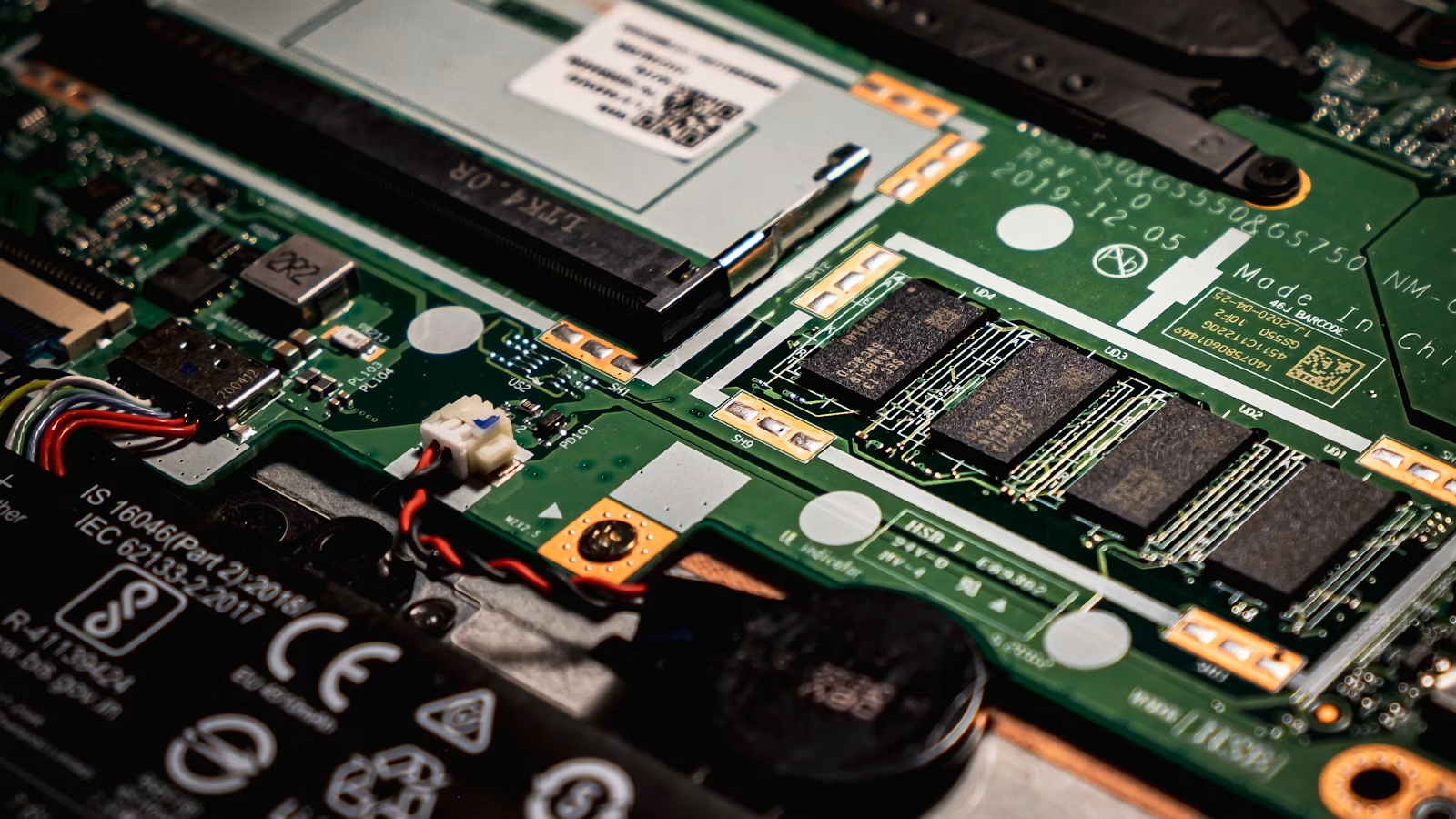
If you are comparing Shanghai Fudan with Micron, the core conclusion is clear: both companies are related to “memory chips,” but they are not the same type of company. Shanghai Fudan is more like a multi-product domestic IC design company in China. Its memory-related business mainly includes non-volatile memory products such as EEPROM, NOR Flash and SLC NAND, while also covering FPGA, smart meter chips, security and identification chips, and other product lines. Micron, by contrast, is a global leader in DRAM, NAND, HBM and data center SSDs, and is directly affected by AI servers, HBM supply and demand, and the global memory cycle.
Key Takeaways
- Shanghai Fudan focuses more on non-volatile memory, FPGA, smart meter chips and domestic IC design.
- Micron focuses more on DRAM, NAND, HBM, DDR5, LPDDR and data center SSDs.
- Shanghai Fudan is not “China’s Micron”; the two differ in product layer and market scale.
- Shanghai Fudan is about domestic substitution and high-reliability applications, while Micron is about the AI memory cycle.
- Investors should compare revenue structure, gross margin, inventory, capital expenditure and valuation logic separately.
Are Shanghai Fudan and Micron the Same Type of Memory Company?
Shanghai Fudan and Micron can both be included in the broader category of “memory-related companies,” but they should not be treated as the same type of memory company. Shanghai Fudan is a multi-product IC design company, with non-volatile memory as only one important business line. Micron is a global memory and storage manufacturer, with core products covering DRAM, NAND, HBM, DDR, LPDDR and data center SSDs. When comparing the two, the key is not which company is stronger, but which layer of the memory value chain each company belongs to.
Shanghai Fudan is closer to a “domestic IC design platform.” According to Shanghai Fudan Microelectronics’ 2025 annual results, the company generated revenue of about RMB 3.982 billion in 2025, up 10.92% year over year, with a gross margin of 56.19% and net profit attributable to shareholders of about RMB 232 million. Its four major product lines include FPGA and other products, security and identification chips, non-volatile memory, smart meter chips, as well as chip testing services through its subsidiary.
This means Shanghai Fudan is not a pure memory manufacturer. Its memory exposure mainly comes from EEPROM, NOR Flash, SLC NAND and high-reliability memory, rather than DRAM, HBM or commodity NAND. It is better analyzed through the lens of domestic semiconductor substitution, specialty memory, FPGA, industrial control, automotive electronics and smart meter chips.
Micron’s positioning is completely different. In fiscal third quarter 2026, Micron reported revenue of $41.456 billion, GAAP gross margin of 84.6% and non-GAAP gross margin of 84.9%. This kind of financial elasticity comes from the global upcycle in DRAM, NAND, HBM and AI data center demand. Micron is not a fabless company designing a small set of embedded memory chips. It is one of the world’s leading memory manufacturers, where capex, wafer capacity, process nodes, packaging capability and customer agreements all affect the cycle position.
| Comparison Dimension | Shanghai Fudan | Micron |
|---|---|---|
| Core identity | Domestic multi-product IC design company in China | Global memory and storage manufacturing leader |
| Memory products | EEPROM, NOR Flash, SLC NAND, high-reliability memory | DRAM, NAND, HBM, DDR5, LPDDR, data center SSDs |
| Pure memory company? | No; FPGA and other chips are also important | Yes; core business revolves around memory and storage |
| Manufacturing model | More fabless and supply-chain coordination oriented | More IDM-like, with heavy capex and capacity management |
| AI relevance | FPGA, FPAI, edge AI, industrial intelligence | HBM, DRAM, data center SSDs, AI accelerators |
| Investment keywords | Domestic substitution, specialty memory, high reliability, FPGA | HBM, DRAM cycle, AI data centers, capex |
Summary: Shanghai Fudan and Micron are both memory-related, but they are not the same type of asset. Shanghai Fudan is more like a domestic IC design platform in China, with its memory business concentrated in non-volatile memory and high-reliability applications, while also requiring analysis of FPGA, security and identification chips, smart meter MCUs and testing services. Micron is a core company in the global commodity memory and AI memory cycle, where DRAM, NAND, HBM and data center SSDs directly affect revenue, gross margin and free cash flow. You should not understand Shanghai Fudan through the simple question of whether it is “China’s Micron.” A more accurate comparison is to place Shanghai Fudan within domestic substitution, specialty memory and industrial chips, and Micron within the global DRAM/HBM cycle and AI data center memory.
Product Structure Differences: How Are Non-Volatile Memory and DRAM/HBM Different?
The biggest differences between Shanghai Fudan’s non-volatile memory and Micron’s DRAM/HBM lie in use cases, performance and industry cycle. Non-volatile memory can retain data after power is turned off, and is commonly used for configuration, code, identity recognition, parameter storage, industrial control and automotive electronics. DRAM and HBM are more focused on high-speed temporary data access, directly determining the memory bandwidth and capacity of AI servers, GPUs, CPUs and high-performance computing systems.
Shanghai Fudan’s non-volatile memory product line includes EEPROM, NOR Flash and SLC NAND, covering different capacities, interfaces and package types. In 2025, this product line generated about RMB 1.042 billion in revenue, of which high-reliability memory revenue was about RMB 681 million. EEPROM is often used for small-capacity, high-reliability, frequently rewritable parameter storage. NOR Flash is often used for code storage, boot programs and embedded systems. SLC NAND is used in higher-capacity device-side storage scenarios that require higher reliability.
These products may not have the same unit value, capacity or market scale as DRAM/HBM, but customer qualification, stable supply, reliability and domestic supply-chain security are important. Shanghai Fudan disclosed that EEPROM products had stable sales in smart meters, mobile phone camera modules and home appliances; automotive-grade EEPROM had begun mass shipment and entered AVL lists of several automakers; NOR Flash was expanding into industrial control, medical and PC markets; and SLC NAND was used in networking, security monitoring and wearable devices.
Micron’s product structure is closer to the global mainstream memory hierarchy. DRAM is the high-speed working memory for CPUs, GPUs and server systems, while HBM is high-bandwidth memory used in AI accelerators and high-performance computing. Micron’s HBM4 uses a 2048-bit interface, delivers more than 2.0 TB/s per stack and improves performance by more than 60% compared with the previous generation. Products like this directly enter the core chain of AI accelerators, GPU memory, advanced packaging and hyperscale data centers.
| Memory Type | Retains Data Without Power? | Typical Capacity | Performance Features | Typical Applications | Investment Focus |
|---|---|---|---|---|---|
| EEPROM | Yes | Small | High reliability, rewritable | Parameters, identity, metering, automotive modules | Customer qualification, automotive-grade adoption |
| NOR Flash | Yes | Small to medium | Fast random read, suitable for code storage | Boot programs, IoT, displays, industrial control | Price competition, domestic substitution |
| SLC NAND | Yes | Medium | More reliable than multilayer NAND | Networking, security, wearables, automotive | Process platform, customer ramp-up |
| DRAM | No | Large | High-speed read/write, system memory | PCs, servers, data centers | Pricing cycle, supply and demand, capex |
| HBM | No | High-bandwidth stacked memory | Ultra-high bandwidth, lower power | AI GPUs, HPC, training and inference | Advanced packaging, customer lock-in, capacity |
Product differences determine valuation differences. Shanghai Fudan’s valuation is more likely to be affected by domestic substitution, industry applications, customer qualification, R&D investment and inventory quality. Micron’s valuation is more affected by DRAM/HBM pricing, AI server demand, capital expenditure, global supply-demand cycles and HBM capacity. Both are called “memory,” but their business cycles are not the same.
Summary: Non-volatile memory and DRAM/HBM both fall under the broad concept of memory, but they solve completely different problems. Shanghai Fudan’s EEPROM, NOR Flash and SLC NAND are more related to embedded systems, industrial applications, automotive electronics, smart meters, medical instruments and high-reliability use cases. The key metrics are customer qualification, product stability, domestic substitution potential and price competition. Micron’s DRAM/HBM is more related to AI servers and high-performance computing. The key metrics are memory bandwidth, memory capacity, advanced packaging, HBM supply, DRAM pricing and global capital expenditure. You should not use the same valuation model simply because both companies are related to memory. Shanghai Fudan should be analyzed through specialty memory and product-line structure, while Micron should be analyzed through the global memory cycle and AI data center demand.
Financial Elasticity Comparison: Shanghai Fudan Depends on Structural Repair, Micron Depends on the AI Memory Cycle

Shanghai Fudan and Micron have different sources of financial elasticity. Shanghai Fudan’s elasticity comes from product-structure changes across FPGA, smart meter chips, non-volatile memory and high-reliability applications. Micron’s elasticity comes from the pricing cycle of DRAM, NAND and HBM, as well as AI data center demand. Shanghai Fudan is more like a multi-product IC design company, while Micron is more like a high-elasticity manufacturing leader during an upcycle in global memory.
Shanghai Fudan’s revenue grew in 2025, but profit did not expand dramatically in parallel. According to Shanghai Fudan’s 2025 operating data, the company generated revenue of about RMB 3.982 billion, with a gross margin of 56.19% and net profit attributable to shareholders of about RMB 232 million. By product line, FPGA and other products generated about RMB 1.420 billion, security and identification chips generated about RMB 855 million, non-volatile memory generated about RMB 1.042 billion, and smart meter chips generated about RMB 518 million. The key point is that revenue growth does not mean all product lines improved at the same time. Competition in non-volatile memory remains intense.
Micron’s financial elasticity is more direct. In its third-quarter results, Micron reported record levels of revenue, gross margin, EPS and cash flow, and guided for next-quarter revenue of $50 billion plus or minus $1 billion. This reflects the repricing of memory value in the AI era: HBM, DDR5, data center SSDs, NAND and traditional DRAM all benefit from tight supply and product-mix upgrades.
Micron’s cash-flow elasticity is also stronger. Third-quarter operating cash flow reached $25.39 billion, while adjusted free cash flow reached $18.304 billion. Compared with Shanghai Fudan, Micron operates at a completely different scale in revenue, capex intensity and cycle elasticity. The benefit is that when the cycle is favorable, profits can be released quickly. The risk is that the market can easily extrapolate a high-growth environment too far.
| Financial Metric | Shanghai Fudan Focus | Micron Focus | Why It Matters |
|---|---|---|---|
| Revenue structure | FPGA, NVM, security and identification, smart meters | DRAM, NAND, HBM, data center SSDs | Determines what is actually driving growth |
| Gross margin | Product-line competition, domestic substitution, high-reliability mix | HBM/DRAM pricing, product mix | Measures profit quality |
| R&D investment | FPGA, FPAI, process platforms, automotive-grade products | Process nodes, packaging, HBM, capacity | Measures technology execution |
| Inventory | Quality of NVM and chip inventory | DRAM/NAND cycle inventory | Measures cycle pressure |
| Cash flow | Operating quality and receivables | Capex, FCF, long-term customer agreements | Measures shareholder returns and expansion capacity |
Summary: Shanghai Fudan’s financial analysis should not focus only on “memory price increases,” because it is not a global commodity memory manufacturer like Micron. You need to track whether product-line structure is improving, whether non-volatile memory is stabilizing, whether FPGA continues to ramp, whether R&D investment converts into revenue, and whether inventory and receivables remain healthy. Micron’s financial analysis is more directly affected by global DRAM/HBM/NAND supply and demand. When AI server demand rises, Micron’s revenue, gross margin, operating cash flow and free cash flow can be amplified quickly. Both companies have growth elasticity, but Shanghai Fudan is more about structural repair, domestic substitution and specialty chip application expansion, while Micron is more about the global memory cycle, HBM ramp-up and AI data center momentum.
AI Relevance Comparison: Shanghai Fudan Is More Edge and Industrial, Micron Is Core Data Center Infrastructure
If you ask which company benefits more directly from AI data centers, Micron is clearly more direct. If you ask which company benefits from domestic chips, industrial intelligence, edge AI and high-reliability applications, Shanghai Fudan is more relevant. Shanghai Fudan’s AI relevance mainly comes from FPGA, FPAI, PSoC, industrial control and edge inference. Micron’s AI relevance comes from HBM, DDR5, LPDDR, data center SSDs and the AI memory hierarchy.
Shanghai Fudan’s AI relevance starts with FPGA and FPAI. Its FPGA and other products include FPGA, PSoC, FPAI chips and proprietary EDA tools. These products can be used in industrial control, testing and measurement, power and energy, consumer electronics, audio and video, artificial intelligence, satellite communications and high-reliability applications. Shanghai Fudan is also advancing FPGA products based on 1x nm FinFET process technology and 2.5D advanced packaging. This shows that its AI story is closer to programmable logic, edge inference and a domestic high-reliability chip ecosystem.
Micron’s AI relevance is more direct. Micron’s AI memory and storage portfolio covers HBM3E, HBM4, DDR5, LPDDR, GDDR and data center SSDs. For AI servers, GPUs are not the only bottleneck. Memory bandwidth, memory capacity, KV cache, long-context inference, data lakes and SSD I/O all affect system efficiency. In AI data center scenarios, Micron emphasizes that DDR5, HBM and data center SSDs are all important components of AI infrastructure.
Micron’s AI memory and storage portfolio at COMPUTEX 2026 also shows that the company is strengthening its positioning from a single memory vendor to a supplier of the AI memory hierarchy. High-bandwidth HBM serves near-accelerator memory for AI accelerators, DDR/LPDDR supports system memory and long-context expansion, and data center SSDs support data lakes, model loading and persistent KV cache.
| AI Scenario | Required Chip Types | How Shanghai Fudan Benefits | How Micron Benefits |
|---|---|---|---|
| AI training | HBM, DDR, SSD, high-speed interconnect | Indirectly, more in edge and control-side scenarios | HBM, DRAM, data center SSDs |
| AI inference | HBM, LPDDR, DDR, NAND | FPAI, edge inference, industrial control devices | HBM4, DDR5, LPDDR, SSDs |
| Industrial intelligence | MCU, FPGA, NVM, sensor chips | FPGA, EEPROM, MCU, high-reliability chips | Indirect benefit from device memory demand |
| Data centers | HBM, DRAM, NAND, SSD | Not the core layer | Core memory and storage supplier |
| Domestic substitution | FPGA, NVM, MCU, security chips | Directly relevant | Less directly relevant |
Why shouldn’t “AI relevance” be treated as one single type of growth? Because AI data center core infrastructure, edge AI, industrial control and embedded applications have very different market sizes, customers, margins and technical barriers. Micron’s high-bandwidth memory directly targets next-generation AI platforms and high-performance computing, while Shanghai Fudan is better understood through FPGA, FPAI, non-volatile memory and industrial applications.
Summary: Micron is the more direct beneficiary of AI data center memory demand, because HBM, DRAM and data center SSDs sit in the core performance layer of AI computing systems. Shanghai Fudan is also AI-related, but mainly through FPGA, FPAI, industrial control, edge inference, high-reliability chips and domestic supply-chain opportunities. You should not equate Shanghai Fudan with a global HBM/DRAM leader like Micron simply because it has FPGA and non-volatile memory products. A more accurate judgment is that Micron captures the core memory dividend of AI computing infrastructure, while Shanghai Fudan captures the expansion of domestic substitution, edge intelligence and specialty chip applications. Both can be connected to AI, but their benefit paths, financial elasticity and valuation methods are completely different.
Risk Comparison: Shanghai Fudan Faces Competition and Inventory Pressure, Micron Faces Cyclicality and Capex Risk
Shanghai Fudan and Micron are both exposed to semiconductor cycles, but the risks show up differently. Shanghai Fudan needs closer attention to non-volatile memory competition, product price declines, R&D return, inventory write-downs, receivables and supply-chain constraints. Micron needs closer attention to the DRAM/HBM pricing cycle, capital expenditure, HBM capacity expansion, customer concentration and any reversal in AI demand expectations.
Shanghai Fudan’s risk is more about “product-line competition + R&D conversion.” Non-volatile memory does not only bring domestic substitution opportunities; it also involves price competition, customer qualification cycles and different application scenarios. In its non-volatile memory business description, the company noted sales declines for NOR Flash in displays, wafer-level packaging and security monitoring, while also expanding into industrial control, medical and PC markets. This means its memory business is not on a simple one-way uptrend, but requires continuous adjustment across sub-markets.
R&D spending is also a double-edged sword. If Shanghai Fudan wants to build barriers in FPGA, FPAI, automotive-grade EEPROM, 2x nm SLC NAND, PSoC and high-reliability memory, it must continue investing. But whether R&D can translate into revenue depends on customer validation, mass-production pace, supply-chain stability and competitive landscape. For products such as the 2x nm SLC NAND process platform, technical progress matters, but mass production, yield, customer adoption and profitability matter even more.
Micron’s risk is more about “extrapolating a strong cycle too far.” Current demand for DRAM, NAND and HBM is strong, with impressive gross margin and cash flow, but the memory industry has always been cyclical. In its earnings call materials, Micron emphasized the rising value of memory in the AI era, as well as strategic customer agreements and tight supply-demand conditions. The issue is that once high expectations are priced into valuation, any price decline, supply release, customer purchasing rhythm change or capex surprise could affect stock performance.
| Risk Type | Shanghai Fudan | Micron | Data to Track |
|---|---|---|---|
| Product competition | EEPROM, NOR, SLC NAND price competition | Global DRAM/NAND price competition | ASP, gross margin, market share |
| Technology execution | FPGA, FPAI, automotive-grade NVM mass production | HBM4, advanced packaging, process nodes | Customer qualification, yield, shipments |
| Inventory risk | Chip inventory and write-down provisions | Memory-cycle inventory reversal | Inventory, inventory days |
| Capital expenditure | Supply-chain coordination and R&D investment | Fabs, packaging, HBM expansion | Capex, depreciation, FCF |
| Valuation risk | Domestic substitution expectations too high | AI memory cycle extrapolated too far | PE, PB, FCF yield |
Summary: Neither Shanghai Fudan nor Micron is a low-risk asset. Shanghai Fudan’s key risks are domestic competition, product pricing, R&D expenses, inventory write-downs, supply-chain constraints and customer expansion. Micron’s key risks are the global memory cycle, capex, AI demand expectations, HBM competition and supply release. Shanghai Fudan is better tracked as a “domestic IC design platform + specialty memory + FPGA” company, while Micron is better analyzed through the “global DRAM/HBM cycle + AI data center memory” framework. You should not look only at thematic excitement or short-term profit changes. What truly matters is whether products can continue to scale, whether gross margin can hold, whether inventory remains healthy and whether valuation has already reflected too much optimism.
Shanghai Fudan vs Micron: How Should You Choose Based on Investment Goals?
If you care about the global AI memory cycle, HBM, DRAM pricing and data center demand, Micron deserves priority research. If you care about China’s domestic IC design, non-volatile memory, FPGA, smart meter chips and domestic substitution, Shanghai Fudan is more suitable for your watchlist. The two companies are not substitutes. They are completely different research samples within the memory value chain.
The case for prioritizing Shanghai Fudan is clear: you care more about domestic semiconductor substitution in China, A+H-listed chip companies, specialty memory, FPGA, smart meters, industrial control and automotive electronics. You need to accept its smaller company scale, complex product lines, profit volatility, inventory pressure and long customer qualification cycles. Shanghai Fudan’s strengths are diverse niche applications, a strong domestic substitution narrative, and long-term tracking value in FPGA and high-reliability memory. Its weakness is that it cannot simply replicate the global DRAM/HBM cycle elasticity of Micron.
The case for prioritizing Micron is also clear: you care more about the global memory cycle, AI data centers, HBM, DRAM, NAND, DDR5, data center SSDs, capital expenditure and global semiconductor momentum. You need to accept that the stock price is highly sensitive to pricing cycles, earnings guidance, HBM supply and AI expectations. Micron’s advantage is that it sits directly in the main AI memory chain. Its weakness is that during strong cycles, the market can price in very high expectations.
Three types of investors can think about the choice this way:
- Domestic substitution investors: Shanghai Fudan is more relevant, with FPGA, NVM, automotive applications and domestic supply chain as key factors.
- AI memory cycle investors: Micron is more relevant, with HBM, DRAM, NAND, gross margin and FCF as key factors.
- Memory value-chain allocation investors: You can track both, but you need two separate valuation frameworks.
- Newer investors: First distinguish “specialty non-volatile memory” from “global commodity memory/HBM,” then read the financials.
If you study both Hong Kong, A-share and U.S. memory value chains, trading-market differences also matter. Shanghai Fudan involves both Hong Kong stocks and the STAR Market, while Micron is a U.S.-listed semiconductor leader. Trading hours, quote currencies, order rules and fee structures differ across markets. Through U.S. stock information search, you can first place MU, WDC, STX, NTAP, PSTG and other overseas storage-related companies in the same observation framework, then return to earnings and valuation analysis. If services are available in your region, you can also review Biya U.S. stock trading fees; Biya’s U.S. stock trading commission is $0, while platform fees, external agency fees and other charges are subject to the fee center and order-page display.
Summary: Choosing between Shanghai Fudan and Micron is not about which one is more like a memory leader. It is about which memory logic you want to study. Shanghai Fudan represents domestic specialty chip design in China, non-volatile memory, FPGA and industrial application expansion. Micron represents the global DRAM/HBM/NAND cycle and core AI data center memory demand. You can include both in a memory value-chain watchlist, but you cannot use the same valuation method: Shanghai Fudan should be assessed through product structure, domestic substitution, R&D conversion and inventory quality, while Micron should be assessed through global supply and demand, HBM competition, AI capex and free cash flow. Investment judgment should return to earnings, valuation, risk tolerance and actual trading costs.
After comparing Shanghai Fudan and Micron, what you really need is a cross-market method for observing the memory value chain: first identify whether a company belongs to specialty memory, memory manufacturing, packaging equipment, enterprise storage systems or data center infrastructure, then examine revenue structure, customers, gross margin, inventory, capex and valuation. The AI storage theme can easily create sentiment-driven valuation premiums, but before trading, you still need to confirm order types, fee structures, FX conversion, market rules and regional availability requirements. When using Biya to follow multi-asset information across U.S. stocks, Hong Kong stocks and crypto assets, you should also complete your own risk assessment first. Before you register an account, it is recommended that you confirm identity verification, service availability, statement details and local regulatory requirements. Public market information and fee structures can help you make clearer decisions, but they do not constitute investment advice.
FAQ
Is Shanghai Fudan a memory chip company?
Shanghai Fudan is a memory-related chip company, but it is not a pure memory manufacturer. Its non-volatile memory products include EEPROM, NOR Flash and SLC NAND, while it also has FPGA, security and identification chips, smart meter chips and testing services. It is better viewed as a multi-product IC design company.
What is the biggest business difference between Shanghai Fudan and Micron?
The biggest difference between Shanghai Fudan and Micron lies in product layer and market scale. Shanghai Fudan focuses more on EEPROM, NOR Flash, SLC NAND, FPGA and industrial applications. Micron focuses more on DRAM, NAND, HBM, DDR and data center SSDs, making it an important company in the global AI memory and commodity memory cycle.
What is the difference between non-volatile memory and HBM?
Non-volatile memory can retain data after power is turned off and is often used for code, configuration, identity recognition and industrial control. HBM is high-bandwidth memory mainly used in AI accelerators and high-performance computing. Both are memory products, but their performance, use cases, customers and business cycles are completely different.
Can Shanghai Fudan be viewed as China’s Micron?
Shanghai Fudan should not simply be viewed as China’s Micron. Shanghai Fudan is a domestic IC design platform in China, with memory business mainly focused on specialty non-volatile memory. Micron is a global DRAM, NAND and HBM manufacturing leader that directly participates in the global AI memory supply chain.
Does AI data center growth benefit Shanghai Fudan or Micron more?
AI data center growth benefits Micron more directly, because HBM, DRAM and data center SSDs are core components of AI computing systems. Shanghai Fudan is also AI-related, but more through FPGA, FPAI, industrial intelligence, edge computing and domestic chip applications.
What metrics should ordinary investors track when comparing Shanghai Fudan and Micron?
When comparing Shanghai Fudan and Micron, ordinary investors should focus on non-volatile memory, FPGA, R&D investment, inventory and gross margin for Shanghai Fudan. For Micron, they should track DRAM, HBM, NAND, data center revenue, free cash flow and capital expenditure. Before trading, they should also consider market rules, fee structure and risk tolerance.
*This article is provided for general information purposes and does not constitute legal, tax or other professional advice from BiyaPay or its subsidiaries and its affiliates, and it is not intended as a substitute for obtaining advice from a financial advisor or any other professional.
We make no representations, warranties or warranties, express or implied, as to the accuracy, completeness or timeliness of the contents of this publication.
Related Blogs of

MACD Crypto Trading Strategy: Settings, Signals, and Risk Management


Crypto-Related Stocks vs Digital Assets: What Investors Actually Own



Choose Country or Region to Read Local Blog
 Australia
 Austria
 Belgium
 Canada
 Cyprus
 Czech Republic
 Denmark
 Estonia
 Finland
 France
 Germany
 Greece
 Hong Kong
 India
India Indonesia
 Ireland
 Italy
Italy Japan
Japan Latvia
 Lithuania
 Luxembourg
 Malaysia
 Malta
Malta Morocco
 Nepal
Nepal Netherlands
 New Zealand
 Norway
 Pakistan
 Philippines
 Poland
 Portugal
 Romania
 Singapore
 Slovakia
 Slovenia
 South Africa
 South Korea
 Spain
Spain Sweden
 Thailand
 United States
 Turkey
 United Arab Emirates
 United Kingdom
 Vietnam