NetApp NTAP Stock Analysis: Enterprise Storage, Cloud Data Management, and Cash Flow




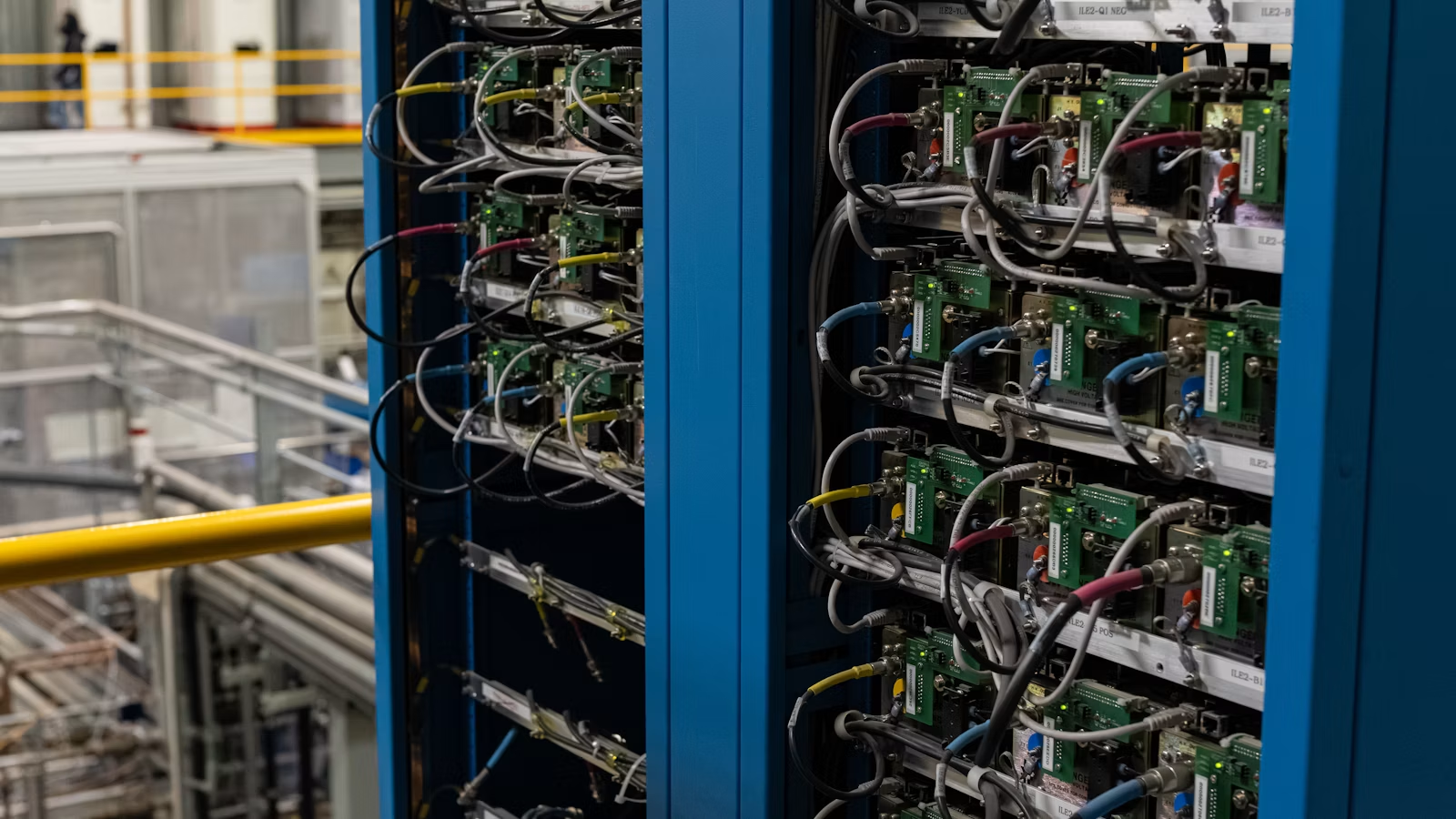
NetApp NTAP should not be analyzed simply as a traditional hardware storage stock. Its core is enterprise data infrastructure built on ONTAP, covering all-flash arrays, hybrid cloud data management, Public Cloud services, Storage-as-a-Service, and AI data platforms. When analyzing NTAP, you need to look at both growth and cash flow: all-flash arrays and AI bring upside potential, Public Cloud determines whether the valuation can be re-rated, while free cash flow, dividends, and buybacks define its mature technology stock profile.
Key Takeaways
- NetApp is an enterprise storage and hybrid cloud data management company, not a NAND manufacturer.
- ONTAP, AFF/ASA, Keystone, and Public Cloud are the main business pillars.
- AI data infrastructure increases growth optionality, but does not change its cash flow profile.
- Gross margin, free cash flow, dividends, and buybacks are core NTAP indicators.
- Key risks come from enterprise IT cycles, cloud competition, NAND costs, and AI expectations.
What Kind of Company Is NetApp / NTAP Today?

NetApp / NTAP is now better understood as an “enterprise data infrastructure company,” rather than simply a vendor selling storage hardware. Its foundation is ONTAP data management software, while its upper layers cover all-flash arrays, hybrid cloud, cloud-native file services, AI data pipelines, and consumption-based subscriptions. In its FY2026 results, the company reported annual revenue of $6.925 billion, up 5% year over year, and Q4 revenue of $1.948 billion, up 12% year over year.
From Traditional Enterprise Storage to Intelligent Data Infrastructure
NetApp used to be associated mainly with NAS, SAN, enterprise storage arrays, and data protection. Its positioning has now evolved into Intelligent Data Infrastructure. The focus is no longer just “storing data,” but helping enterprises manage data consistently across on-premises data centers, AWS, Azure, Google Cloud, and AI workloads.
This shift matters. Traditional storage companies are more likely to be viewed as low-growth hardware stocks, while intelligent data infrastructure companies emphasize data services, automation, cross-cloud consistency, data security, and AI-ready data. For NTAP stock, whether the valuation can hold depends on whether the market believes NetApp can move beyond the hardware cycle and become a platform-based data management company.
Why ONTAP Is NetApp’s Core Asset
ONTAP is NetApp’s most important asset. You can think of it as a unified software layer that connects storage hardware, public cloud services, data protection, snapshots, replication, compression, tiering, and automated management. Hardware arrays can be refreshed, and cloud deployment models can change, but ONTAP allows enterprise customers to maintain a similar data management experience across different environments.
This is also the key difference between NetApp and ordinary SSD or NAND stocks. Micron, Kioxia, and SK hynix are closer to upstream memory chips or NAND supply chain companies. NetApp is closer to enterprise IT budgets, data center architecture, hybrid cloud migration, and long-term service contracts.
| Easily Confused Concept | Correct Interpretation | Relationship with NTAP |
|---|---|---|
| NAND Flash | Flash memory chips and storage media | Cost and supply chain variable |
| Enterprise storage | Enterprise-grade data storage systems | NetApp’s core market |
| ONTAP | Data management software and storage OS | NetApp’s core asset |
| All-flash arrays | AFF, ASA, and related hardware platforms | Revenue and performance foundation |
| Storage-as-a-Service | Consumption-based storage model | Keystone’s service-based direction |
Summary: NetApp / NTAP should be understood through three lenses: enterprise data infrastructure, hybrid cloud data management, and stable cash flow. It is not a NAND price-cycle stock, nor is it a single-product SSD hardware company. You should focus on ONTAP’s platform value, AFF/ASA all-flash growth, Public Cloud expansion, and whether free cash flow can support dividends and buybacks. Only by combining these dimensions can you more accurately judge whether NTAP is primarily a mature cash-flow technology stock or an enterprise storage platform with additional AI and hybrid cloud upside.
How Do NetApp’s Products and Business Lines—AFF, ASA, ONTAP, Keystone, and Public Cloud—Work Together?

NetApp’s product structure can be divided into three layers. The bottom layer includes storage systems such as AFF, ASA, FAS, and E/EF-Series. The middle layer is ONTAP and data protection capability. The top layer includes Keystone, Public Cloud, Cloud Volumes ONTAP, and AI data services. When analyzing NTAP, you should not only look at hardware sales, but also whether these products collectively improve customer stickiness, service revenue, gross margin, and cash flow stability.
AFF / ASA: All-Flash Arrays and Core Enterprise Workloads
AFF A-Series targets high-performance unified storage for databases, virtualization, mission-critical enterprise applications, analytics, and AI data infrastructure. It emphasizes performance, efficiency, and enterprise-grade data protection. ASA is more focused on block storage and SAN workloads. ASA systems are designed for enterprise customers that need simplified, highly available, all-flash block storage.
For NTAP stock, all-flash array revenue is a core growth indicator. NetApp’s FY2026 Q4 all-flash array revenue reached $1.2 billion, up 18% year over year, showing that enterprise customers are still migrating from traditional disk arrays to flash storage. This trend supports NetApp’s hardware base and creates follow-on opportunities for ONTAP and service revenue.
Keystone and Public Cloud: From Hardware Purchasing to Service-Based Consumption
NetApp Keystone is a Storage-as-a-Service model. Customers can consume storage based on usage and service levels, reducing pressure from large upfront capital expenditures. Keystone’s value is not just in changing the billing model. It helps move NetApp from being an equipment supplier to becoming a long-term service partner.
Public Cloud reflects NetApp’s deep integration with the three major cloud platforms. Amazon FSx for NetApp ONTAP embeds ONTAP capabilities into an AWS managed file system. Azure NetApp Files is a high-performance enterprise file storage service on Azure. Google Cloud NetApp Volumes allows enterprises to run high-performance file workloads on Google Cloud.
| Product / Business Line | Main Use Case | Revenue Nature | Investment Analysis Focus |
|---|---|---|---|
| AFF | High-performance unified all-flash storage | Product + services | All-flash growth |
| ASA | SAN and block storage | Product + services | Enterprise core workloads |
| ONTAP | Unified data management | Software platform capability | Customer stickiness |
| Keystone | Storage-as-a-Service | Subscription / consumption-based | Revenue visibility |
| Public Cloud | Cloud-based enterprise storage services | Cloud service revenue | Valuation re-rating potential |
Summary: NetApp’s business is not a single hardware sales model. It is a combination of hardware, software, cloud services, and consumption-based subscriptions. AFF/ASA supports the core enterprise storage base. ONTAP provides unified data management. Keystone allows customers to consume storage as a service. Public Cloud embeds NetApp’s capabilities into AWS, Azure, and Google Cloud. When judging NTAP’s business quality, you need to evaluate whether these products can collectively drive revenue growth, customer renewals, gross margin stability, and future cash flow, rather than focusing only on short-term shipments of a specific array product.
Why Is Cloud Data Management a Key Growth Line for NetApp?

Cloud data management is a key growth line for NetApp because most enterprises do not move all their data into a single public cloud at once. Large enterprises often remain in a long-term state where on-premises data centers, private cloud, public cloud, and multi-cloud environments coexist. NetApp’s opportunity lies in using ONTAP and native cloud services to connect these environments, allowing customers to migrate, protect, replicate, and analyze data without fully rebuilding applications. The company’s FY2026 Q4 Public Cloud revenue reached $182 million, up 11% year over year.
NetApp’s First-Party Cloud Service Relationships with AWS, Azure, and Google Cloud
NetApp’s cloud strategy is not simply about moving on-premises storage into the cloud. It has established first-party service relationships with cloud providers. AWS has FSx for ONTAP, Microsoft Azure has Azure NetApp Files, and Google Cloud has Google Cloud NetApp Volumes. In its cloud storage updates, NetApp also emphasized updates across FSx for ONTAP, Azure NetApp Files, Google Cloud NetApp Volumes, Workload Factory, and Cloud Volumes ONTAP.
The value of these services is clear for customers. When migrating databases, SAP, ERP, VMware, file services, EDA, AI/ML, and analytics workloads, customers want to reduce application refactoring, data duplication, and operational fragmentation. NetApp uses ONTAP consistency to reduce migration costs.
Why Hybrid Cloud Migration Requires a Unified Data Layer
The hard part of cloud migration is not buying cloud resources. The harder problems are data governance, permissions, performance, disaster recovery, compliance, replication, and cost control. A unified data layer allows enterprises to maintain consistent data management across on-premises and cloud environments, while also making AI, analytics, and application migration smoother.
Common NetApp cloud data management scenarios include:
- Migrating on-premises files and databases to AWS, Azure, and Google Cloud;
- Moving SAP, ERP, VMware, and other core enterprise workloads to the cloud;
- Cross-cloud data protection, backup, and disaster recovery;
- Enabling AI/ML and analytics services to access enterprise file data directly;
- Cost optimization and automated management in hybrid cloud environments.
Summary: Public Cloud is an important variable in whether NetApp can move beyond the traditional hardware valuation framework. If Public Cloud revenue continues to grow, it suggests that NetApp is not merely maintaining its business through on-premises arrays, but is gaining a position in enterprise cloud migration and hybrid cloud data management. When tracking NTAP, you should focus on Public Cloud growth, gross margin, cloud partner depth, and whether these cloud services can create stronger customer stickiness. If cloud service growth stalls, NTAP may be valued more like a mature hardware and cash-flow company. If growth accelerates, the market may reassess its platform attributes.
How Much Incremental Growth Can AI Data Infrastructure Bring to NetApp?
AI data infrastructure can bring incremental growth to NetApp, but it is more of a valuation upside factor than an immediate replacement for all traditional business lines. NetApp is not a GPU, HBM, or large model company. Its AI opportunity comes from enterprise data unification, RAG, inference, data governance, metadata catalogs, AI pipelines, and high-performance all-flash storage. As enterprise AI moves from pilots into production, it increasingly needs secure, governable, searchable data infrastructure.
Why AI Training, Inference, and RAG Require Unified Data Infrastructure
The difficulty in enterprise AI is often not the absence of models, but the fact that data is scattered across file systems, databases, SaaS platforms, on-premises servers, and public clouds. RAG needs fast retrieval from enterprise knowledge bases. AI agents need to call context and business systems. Inference applications need continuous access to high-quality data. If data cannot be accessed consistently, GPU utilization, model accuracy, and project deployment speed can all suffer.
NetApp can benefit from AI data infrastructure through five main paths:
- Unifying fragmented enterprise data and reducing AI data silos;
- Supporting RAG, semantic retrieval, and vectorization workflows;
- Providing high-throughput data feeds for GPU clusters;
- Improving data discoverability through metadata catalogs;
- Protecting AI data across on-premises, cloud, and multi-cloud environments.
The Significance of AFX, AI Data Engine, and NVIDIA AI Data Platform
NetApp’s AFX and AI Data Engine point to a clear direction: combining ONTAP, all-flash architecture, AI data services, and NVIDIA reference designs to help enterprises simplify AI data pipelines. NetApp also announced AIPod built on NVIDIA AI Data Platform to support RAG and inferencing, with a focus on building secure, governable, scalable AI data pipelines.
The importance of NVIDIA AI Data Platform is that it pushes enterprise storage platforms closer to AI inference infrastructure. For NetApp, this does not turn the company into a compute provider. Instead, it strengthens the infrastructure value of organizing, governing, and quickly accessing data before it enters AI systems.
Summary: AI strengthens NetApp’s Intelligent Data Infrastructure positioning, but it does not turn NTAP into a pure AI hardware stock. You should watch whether AI products can translate into real orders, all-flash array growth, Public Cloud usage, Keystone subscriptions, and free cash flow. If enterprise AI moves from pilots into production, NetApp’s ONTAP, AFX, AI Data Engine, AIPod, and cloud data services become more valuable. If AI project budgets slow or remain stuck in proof-of-concept stages, the revenue contribution from this narrative may fall short of market expectations.
How Should You Evaluate NetApp’s Financial Quality? Revenue, Gross Margin, Cash Flow, Dividends, and Buybacks
NetApp’s financial quality is closer to that of a mature technology platform than a pure high-growth AI storage stock. You should focus on revenue stability, gross margin, operating cash flow, free cash flow, dividends, and buybacks. In FY2026, the company generated $6.925 billion in revenue and $2.067 billion in operating cash flow, while returning $1.36 billion to shareholders through share repurchases and cash dividends. Its FY2027 guidance calls for revenue of $7.325 billion to $7.575 billion and non-GAAP gross margin of 68.5%–69.5%.
| Financial Metric | What to Watch | Meaning for NTAP |
|---|---|---|
| Net revenue | Total revenue growth | Enterprise IT demand |
| Hybrid Cloud revenue | On-premises and hybrid cloud business | Core business foundation |
| Public Cloud revenue | Cloud service revenue | Platform expansion potential |
| Gross margin | Pricing power and cost pressure | Profitability resilience |
| Operating cash flow | Operating cash generation | Business quality |
| Free cash flow | Distributable cash | Support for dividends and buybacks |
| Dividend / Buyback | Shareholder returns | Mature technology stock profile |
Unlike high-growth software stocks, much of NetApp’s appeal comes from stability. If revenue grows moderately, gross margin stays high, and cash flow remains strong, dividends and buybacks can support valuation. But if enterprise IT budgets slow, Public Cloud growth misses expectations, or flash component costs pressure product gross margin, the market may reassess its defensiveness.
When analyzing U.S.-listed technology stocks such as NTAP, you should also pay attention to actual trading costs, not just stock price volatility, dividends, and buybacks. U.S. stock trading costs usually include more than commissions. They may also include platform fees, external institution fees, transaction activity fees, and other charges. Biya charges $0 commission for U.S. stock trading, while platform fees, external institution fees, and other charges are subject to the U.S. stock trading fee information and the order page. Public market information, trading rules, and fee structures are for reference only and do not constitute investment advice.
Summary: NetApp’s financial quality should be judged through four angles: whether revenue growth is stable, whether gross margin remains high, whether cash flow is sufficient, and whether shareholder returns can continue. NTAP may not pursue explosive growth like a pure AI hardware stock, but if it can maintain all-flash array growth, Public Cloud expansion, and free cash flow resilience, dividends and buybacks can strengthen valuation support. You should not look only at single-quarter EPS or only at the AI narrative. The more important question is whether revenue, margins, cash flow, and capital returns are healthy at the same time.
NTAP Stock Valuation and Risks: Which Indicators Should You Watch?
NTAP stock valuation should not be based only on the price-to-earnings ratio. You should also look at free cash flow yield, revenue growth, Public Cloud growth, all-flash array revenue, shareholder returns, and the quality of AI data infrastructure orders. NetApp being named a Leader in the 2025 Gartner Magic Quadrant for Enterprise Storage Platforms helps demonstrate its enterprise storage platform position, but stock valuation ultimately depends on whether growth, profit, and cash flow are delivered.
You can track eight key indicators:
- Whether total revenue growth stays above mature hardware company levels;
- Whether all-flash array revenue continues to grow;
- Whether Public Cloud revenue accelerates;
- Whether gross margin stays high;
- Whether operating cash flow remains stable;
- Whether free cash flow is sufficient to support buybacks and dividends;
- Whether AI Data Infrastructure customer adoption expands;
- Whether the enterprise IT spending cycle weakens.
The main risks should also be included in your analysis. First, enterprise IT budgets may slow, affecting on-premises storage purchases. Second, cloud-native storage from cloud providers, Dell, HPE, Pure Storage, and other competitors will compete for budgets. Third, fluctuations in NAND and flash component costs may affect product gross margins. Fourth, when AI expectations are too high, valuation may come under pressure if order conversion is slower than expected. Fifth, Public Cloud revenue is still smaller than Hybrid Cloud revenue; if growth is not fast enough, the room for valuation re-rating may be limited.
If you want to track NTAP, enterprise storage, AI data infrastructure, and other U.S. technology companies, you can use U.S. stock information to compare company fundamentals, industry classifications, and price trends. Biya is a global multi-asset trading wallet that supports U.S. stocks, Hong Kong stocks, and cryptocurrency trading. Availability of related services depends on the user’s location, identity verification result, platform rules, and applicable laws and regulations. Before trading, you should consider your own risk tolerance and confirm the fee structure, order types, and market volatility risks.
Summary: NTAP valuation depends on whether “stable cash flow + hybrid cloud growth + AI data infrastructure upside” can all hold at the same time. If all-flash array revenue, Public Cloud, AI data services, and free cash flow remain healthy, NTAP may combine the defensiveness of a mature technology stock with the upside of an AI data platform. If enterprise IT spending slows, cloud service growth falls short, AI orders convert below expectations, or competition pressures pricing, valuation upside may be limited. For you, the more disciplined approach is to put growth, cash flow, shareholder returns, and risks into one framework, instead of relying only on short-term stock price moves or a single AI theme.
If you follow NetApp NTAP, enterprise storage, cloud data management, and AI data infrastructure, the next step is not only watching stock price movements. You should keep tracking quarterly earnings, FY2027 guidance, all-flash array revenue, Public Cloud revenue, free cash flow, and shareholder returns. You can also use Biya to observe multi-asset markets including U.S. stocks, Hong Kong stocks, and cryptocurrency, and compare storage supply chain companies within the same watchlist. Before trading, it is advisable to confirm commissions, platform fees, external institution fees, and other charges shown on the order page, and assess whether related services are available based on your location, identity verification result, platform rules, and applicable laws and regulations. If the applicable conditions are met, you can also use the Biya app to review market data, fees, and account processes. The above content only introduces public market information, industry logic, and fee structures, and does not constitute investment advice.
FAQ
Is NetApp NTAP an AI Stock?
NetApp NTAP can be considered an AI data infrastructure-related company, but it is not a GPU, HBM, or large model company. Its AI relevance comes from ONTAP, AFX, AI Data Engine, AIPod, RAG data access, and enterprise data management. Its stock price will still be affected by earnings, cash flow, valuation, and order conversion.
What Is the Difference Between NetApp and Pure Storage?
NetApp and Pure Storage are both enterprise storage platform companies, but their focuses differ. NetApp’s strengths are ONTAP, hybrid cloud partnerships, Public Cloud services, and cash flow returns. Pure Storage emphasizes all-flash architecture, subscription-based storage, and high-performance AI data platforms. They should not be compared simply by asking which one is better.
Why Is NetApp Public Cloud Revenue Important?
NetApp Public Cloud revenue is important because it reflects whether the company can expand from traditional on-premises storage into hybrid cloud workloads across AWS, Azure, and Google Cloud. If Public Cloud growth keeps accelerating, NTAP’s valuation logic may move closer to that of a cloud data management platform rather than a mature hardware company.
Which Financial Metrics Matter for NTAP Stock?
NTAP stock should be analyzed using revenue growth, all-flash array revenue, Public Cloud revenue, gross margin, operating cash flow, free cash flow, dividends, and buybacks. Looking only at the P/E ratio or single-quarter EPS can overlook cash flow quality, cloud service growth, and shareholder return characteristics.
What Are NetApp’s Main Investment Risks?
NetApp’s main risks include slower enterprise IT spending, competition from cloud-native storage, NAND and flash component cost volatility, excessive AI expectations, weaker-than-expected Public Cloud growth, and valuation pullbacks. Before trading, investors should evaluate company fundamentals, fee structures, and personal risk tolerance.
How Should Retail Investors Track NetApp NTAP?
Retail investors can track quarterly earnings, FY2027 guidance, all-flash array revenue, Public Cloud revenue, AI product progress, free cash flow, and shareholder returns. They should also pay attention to enterprise IT budget cycles, cloud service competition, and trading costs, instead of making decisions based only on short-term stock price moves.
*This article is provided for general information purposes and does not constitute legal, tax or other professional advice from BiyaPay or its subsidiaries and its affiliates, and it is not intended as a substitute for obtaining advice from a financial advisor or any other professional.
We make no representations, warranties or warranties, express or implied, as to the accuracy, completeness or timeliness of the contents of this publication.
Related Blogs of

Pure Storage PSTG vs NetApp NTAP: Which Enterprise Storage Brand Has Greater AI Growth Elasticity?


How Should You Evaluate Pure Storage’s Storage-as-a-Service Model? Revenue Quality and Key Risks


SMIC 0981.HK vs Hua Hong Semiconductor 1347.HK: The Relationship Between Foundry Stocks and the Memory Supply Chain


How to Distinguish A-Share and Hong Kong Stock Memory-Related Companies? H-Shares, A-Shares, and Business Classification Explained
Choose Country or Region to Read Local Blog
 Australia
 Austria
 Belgium
 Canada
 Cyprus
 Czech Republic
 Denmark
 Estonia
 Finland
 France
 Germany
 Greece
 Hong Kong
 India
India Indonesia
 Ireland
 Italy
Italy Japan
Japan Latvia
 Lithuania
 Luxembourg
 Malaysia
 Malta
Malta Morocco
 Nepal
Nepal Netherlands
 New Zealand
 Norway
 Pakistan
 Philippines
 Poland
 Portugal
 Romania
 Singapore
 Slovakia
 Slovenia
 South Africa
 South Korea
 Spain
Spain Sweden
 Thailand
 The United States
 Turkey
 United Arab Emirates
 United Kingdom
 Vietnam
Contact Us




BIYA GLOBAL LLC is registered with the Financial Crimes Enforcement Network (FinCEN), an agency under the U.S. Department of the Treasury, as a Money Services Business (MSB), with registration number 31000218637349, and regulated by the Financial Crimes Enforcement Network (FinCEN).
BIYA GLOBAL LIMITED is a registered Financial Service Provider (FSP) in New Zealand, with registration number FSP1007221, and is also a registered member of the Financial Services Complaints Limited (FSCL), an independent dispute resolution scheme in New Zealand.