
SMIC 0981.HK vs Hua Hong Semiconductor 1347.HK: The Relationship Between Foundry Stocks and the Memory Supply Chain




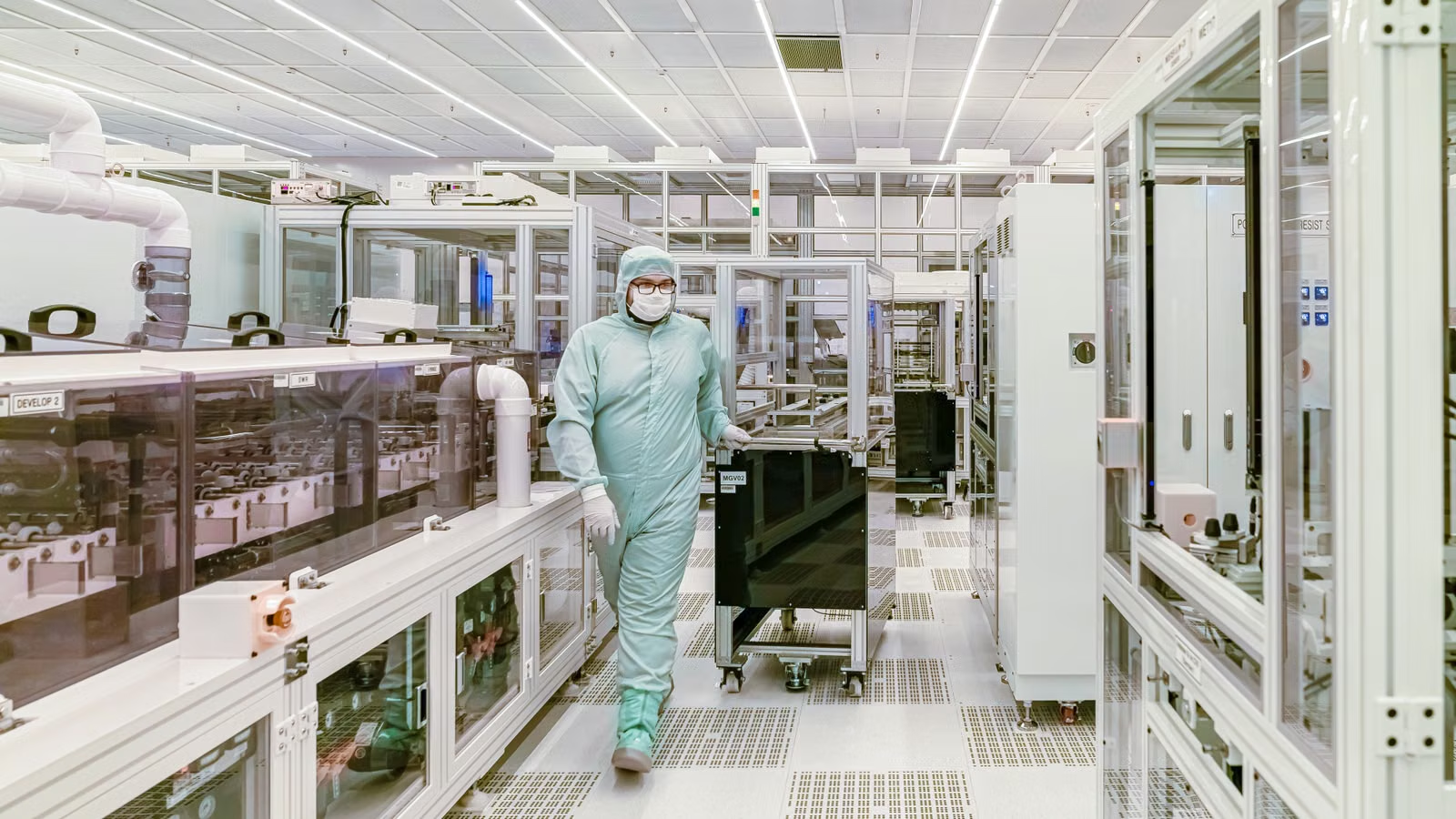
SMIC 0981.HK and Hua Hong Semiconductor 1347.HK are not traditional DRAM, NAND, or HBM memory manufacturers. More accurately, both are foundry stocks, but their relationships with the memory supply chain are different. Hua Hong Semiconductor has a more direct connection through specialty technologies such as eNVM, standalone NVM, NOR Flash, MCU, and smart card ICs. SMIC’s connection is more indirect, coming mainly from its broad foundry platform, mature-node customers, consumer electronics demand, and domestic substitution trends. If you want to compare the two companies, the key question is not simply “which one is a memory stock,” but how their process platforms, customer structures, utilization rates, gross margins, capital expenditure, and depreciation pressure differ.
Key Takeaways
- Hua Hong Semiconductor has a more direct link to eNVM and standalone NVM.
- SMIC is more of a comprehensive foundry leader, not a pure memory stock.
- Rising memory prices do not mean both companies’ earnings will rise in sync.
- SMIC has greater scale, while Hua Hong has more concentrated specialty-process exposure.
- Investment analysis should focus on utilization, margins, depreciation, and product mix.
- Both companies are affected by domestic substitution, mature-node cycles, and semiconductor demand.
Which Company Looks More Like a Memory Supply Chain Stock: SMIC or Hua Hong Semiconductor?
If you compare only SMIC and Hua Hong Semiconductor, Hua Hong looks more like a “memory-related foundry stock,” while SMIC looks more like a comprehensive foundry leader. The reason is straightforward: Hua Hong’s revenue structure clearly includes embedded NVM and standalone NVM, while SMIC serves a broad range of chip design customers and its memory relevance mainly comes from customer orders, mature-node platforms, and end-market demand transmission rather than direct sales of memory chips.
Hua Hong Is More Direct, SMIC Is More Indirect
In its first-quarter 2026 results, Hua Hong Semiconductor disclosed that embedded NVM revenue reached US$184.6 million, accounting for 27.9% of revenue, while standalone NVM revenue reached US$57.1 million, accounting for 8.6%. This means that when you analyze Hua Hong, you do need to pay attention to terms such as embedded non-volatile memory, standalone non-volatile memory, Flash, MCU, and smart card ICs.
SMIC’s logic is different. In its first-quarter 2026 results, SMIC reported revenue of US$2.5055 billion, with 12-inch wafer revenue accounting for 76.4%. Its major applications included consumer electronics, smartphones, computers and tablets, industrial and automotive, connectivity, and IoT. These applications use memory chips and may be affected by memory pricing and supply conditions, but SMIC itself is not a direct supplier of DRAM, NAND, or HBM.
Four Layers for Judging a “Memory-Related Stock”
You can use four layers to judge how closely a company is related to the memory supply chain:
| Layer | Key Question | SMIC | Hua Hong Semiconductor |
|---|---|---|---|
| Product layer | Does it directly sell DRAM, NAND, or HBM? | No | No |
| Process layer | Does it have memory-related process platforms? | Some relevance | More explicit |
| Customer layer | Does it serve MCU, IoT, smart card, and similar customers? | Broad coverage | More concentrated |
| Cycle layer | Does it move directly with memory pricing? | Indirectly | Partly indirectly |
This framework helps avoid a common misunderstanding: treating “memory-related” as the same thing as “memory manufacturer.” Revenue for DRAM, NAND, and HBM manufacturers is usually highly related to memory contract prices, spot prices, bit shipments, and inventory cycles. Foundry revenue, by contrast, mainly depends on customer wafer starts, capacity utilization, average selling price, product mix, and depreciation cost. Hua Hong’s memory label is clearer, but it is still a foundry, not a standard memory product company.
Summary: If your only question is “which company looks more like a memory supply chain stock,” the answer is Hua Hong Semiconductor, while SMIC is more indirectly related. Hua Hong’s eNVM, standalone NVM, Flash, MCU, and smart card IC businesses make it easier to classify as a memory-related specialty foundry stock. SMIC’s strength lies in its overall foundry scale, customer breadth, and domestic substitution position. Neither company should be simply treated as a DRAM, NAND, or HBM manufacturer. Analysis should separate “memory manufacturers,” “memory-related processes,” and “foundry customer demand.”
Company Positioning: Comprehensive Foundry Leader vs Specialty Technology Foundry
The biggest difference between SMIC and Hua Hong Semiconductor is not which one is more popular, but their company positioning. SMIC is more like a platform-style foundry leader in mainland China, with stronger revenue scale, customer coverage, 12-inch capacity, and strategic importance. Hua Hong Semiconductor is more like a specialty technology foundry, focusing on eNVM, power discrete devices, analog and power management, logic, and RF platforms. If you care more about scale and platform value, SMIC deserves more attention. If you care more about specialty processes and NVM segment exposure, Hua Hong is more relevant.
SMIC: Stronger Scale and Platform Attributes
SMIC’s key phrase is “comprehensive foundry.” According to SMIC’s 2025 annual report, the company generated US$9.3268 billion in revenue in 2025, up 16.2% year over year. Its gross margin was 21.0%, utilization rate was 93.5%, and monthly capacity reached 1.05875 million 8-inch equivalent wafers by the end of 2025. This scale is significantly larger than Hua Hong Semiconductor.
From an investment perspective, SMIC is better analyzed through the framework of a “foundry leader.” You need to watch whether mature-node demand is improving, whether 12-inch capacity can be absorbed, whether customer inventories are normalized, whether depreciation pressure is manageable, and whether downstream demand in consumer electronics, industrial, and automotive applications is recovering. The memory cycle affects SMIC’s customers’ costs and order timing, but it is not SMIC’s most direct revenue driver.
Hua Hong Semiconductor: Specialty Technologies and NVM Are More Prominent
Hua Hong Semiconductor’s key phrase is “specialty technology.” In its first-quarter 2026 results, Hua Hong described itself as a specialty technologies pure-play foundry. Its core platforms include embedded and standalone NVM, power discrete, analog and power management, logic, and RF. The company does not define itself by chasing the most advanced logic nodes, but by differentiated processes, reliability, long-term supply, and customer validation on mature nodes.
This is also why Hua Hong is more easily linked to the memory supply chain. Hua Hong’s embedded non-volatile memory business covers 8-inch and 12-inch platforms, with typical applications including MCU, smart cards, security chips, IoT, and automotive electronics. Its standalone non-volatile memory business includes product directions such as NOR Flash and EEPROM.
| Comparison Item | SMIC 0981.HK | Hua Hong Semiconductor 1347.HK |
|---|---|---|
| Company positioning | Comprehensive foundry leader | Specialty technology foundry |
| Revenue scale | Much larger | Smaller but more concentrated exposure |
| Main labels | 12-inch, mature nodes, domestic substitution | eNVM, Flash, PMIC, power devices |
| Memory relevance | Indirect transmission | More direct at the process level |
| Key metrics to watch | Capacity, customer structure, depreciation | NVM share, utilization, product mix |
Summary: SMIC and Hua Hong Semiconductor are not the same type of foundry story. SMIC is better understood through scale, capacity, broad customer coverage, and domestic substitution. Hua Hong is better understood through specialty technologies, eNVM, standalone NVM, power devices, and PMIC. If you simply treat both as generic semiconductor concept stocks, you may miss the variables that truly drive valuation and earnings: SMIC is about platform and scale, while Hua Hong is about specialty processes and product mix.
Memory Supply Chain Relevance: Why Hua Hong Is More Easily Classified as a Memory-Related Stock
Hua Hong Semiconductor is more easily classified as a memory-related stock because NVM platforms are clearly visible in its revenue structure, and these platforms are connected to MCU, smart cards, Flash, EEPROM, IoT, and automotive electronics. SMIC is also affected by the memory cycle, but mainly through wafer demand from smartphone, consumer electronics, IoT, industrial, and automotive customers. If you are studying the AI memory cycle, you should not directly apply HBM, DRAM, or NAND price increases to SMIC or Hua Hong.
eNVM and Standalone NVM Are the Key Clues for Hua Hong
eNVM refers to embedded non-volatile memory, which is usually integrated into MCUs, smart cards, security chips, IoT chips, or automotive control chips to store programs, parameters, identity information, or control data. Standalone NVM is closer to independent non-volatile memory products. Hua Hong’s standalone non-volatile memory business explicitly mentions NOR Flash and EEPROM.
This type of “memory” is not the same as data center HBM. HBM is high-bandwidth memory located close to AI GPUs. DRAM is mainly used as working memory. NAND is mainly used for mass storage. NOR Flash, by contrast, is often used for code storage, firmware booting, and low-power electronic devices. Hua Hong’s memory relevance is closer to a combination of “mature nodes + embedded memory + small-capacity non-volatile memory.”
SMIC’s Relevance Comes from the Foundry Chain and End Demand
SMIC is not a memory manufacturer, but it can be affected by memory supply tightness, customer cost changes, and end-product cycles. In a report related to depreciation pressure, Reuters mentioned that AI-driven memory demand could squeeze supply in other areas, causing low- and mid-end smartphone customers to face memory shortages and rising costs. These effects can be transmitted to foundries through customer inventory, wafer starts, product pricing, and order timing.
Therefore, SMIC’s memory logic is not “memory prices rise, so SMIC’s profits directly rise.” It is closer to “memory supply and demand changes affect customers, and customers then affect foundry orders.” If smartphone customers delay product launches or reduce shipments because memory costs rise, SMIC may face pressure. If domestic chip design customers accelerate migration to SMIC capacity, SMIC may benefit. The direction depends on actual orders and utilization, not memory prices alone.
| Memory Supply Chain Segment | SMIC | Hua Hong Semiconductor | Correct Interpretation |
|---|---|---|---|
| DRAM | Indirect | Indirect | Not a core revenue source |
| NAND | Indirect | Indirect | Not a NAND manufacturer |
| HBM | Indirect | Indirect | More related through AI semiconductor sentiment |
| eNVM | Some process and customer relevance | More explicit | Hua Hong deserves closer attention |
| NOR Flash / EEPROM | May participate indirectly through customers | More direct | Part of the specialty NVM logic |
| MCU / Smart card IC | Customer demand exists | Strong relevance | Linked to eNVM applications |
Summary: Hua Hong looks more like a memory-related foundry stock because it has clear NVM platforms and application scenarios, especially eNVM, standalone NVM, NOR Flash, EEPROM, MCU, and smart card ICs. SMIC is also affected by the memory industry cycle, but the impact comes more from customers and end markets than from direct sales of standard memory chips. When analyzing the two companies, you should separate the “memory pricing cycle” from the “foundry order cycle,” otherwise you may overestimate how directly memory market strength can lift their earnings.
Financial and Cyclical Exposure: Scale, Gross Margin, Utilization, and Depreciation Pressure
SMIC has larger scale and higher gross margin, while Hua Hong Semiconductor has more concentrated utilization and specialty-process exposure. You cannot judge the two companies only by asking which one has faster revenue growth, because foundry profitability depends on revenue scale, capacity utilization, average selling price, depreciation, product mix, and capital expenditure. SMIC’s advantage lies in platform scale and volume, while Hua Hong’s advantage lies in recovery across certain specialty-process platforms. Both companies, however, face depreciation pressure after capacity expansion and competition in mature nodes.
SMIC: Large Scale, but Heavy Depreciation Pressure
SMIC generated US$9.3268 billion in revenue in 2025, with a gross margin of 21.0% and utilization rate of 93.5%. These figures indicate a recovery in fundamentals. However, foundries are not asset-light businesses, and expansion brings significant depreciation. In its 2025 annual report, SMIC disclosed that payments for property, plant, equipment, intangible assets, and land use rights reached US$8.4035 billion in 2025.
This is also why SMIC’s valuation can fluctuate sharply. If new capacity meets strong orders, revenue and utilization may improve. If downstream demand weakens, added depreciation can pressure gross margin. In a February 2026 report, Reuters noted that SMIC planned to continue expanding 12-inch capacity and highlighted the impact of rising depreciation costs on gross margin.
Hua Hong Semiconductor: Low-Base Recovery and More Visible Specialty Platform Elasticity
Hua Hong is smaller than SMIC, but changes in its specialty platforms can have a more visible impact on earnings elasticity. In its 2025 results announcement, Hua Hong reported revenue of US$2.4021 billion, up 19.9% year over year, with a gross margin of 11.8% and an average utilization rate of 106.1%. This shows that Hua Hong’s production lines were highly utilized, but its gross margin was still clearly lower than SMIC’s.
By the first quarter of 2026, Hua Hong’s revenue reached US$660.9 million, up 22.2% year over year, with a gross margin of 13.0%. The company guided for second-quarter revenue of US$690 million to US$700 million and a gross margin of 14% to 16%. This suggests Hua Hong is in a margin recovery phase, though it still needs to absorb 12-inch capacity ramp-up, R&D spending, depreciation, and product mix changes.
| Metric | SMIC | Hua Hong Semiconductor | Interpretation |
|---|---|---|---|
| 2025 revenue | US$9.3268 billion | US$2.4021 billion | SMIC is much larger |
| 2025 gross margin | 21.0% | 11.8% | SMIC has higher profitability |
| 2025 utilization | 93.5% | 106.1% | Hua Hong’s capacity was tighter |
| 2026Q1 revenue | US$2.5055 billion | US$660.9 million | SMIC has a clear scale advantage |
| 2026Q1 gross margin | 20.1% | 13.0% | Hua Hong is still recovering |
| Common pressure | Depreciation, expansion, cycles | Depreciation, expansion, product mix | Neither is a low-volatility asset |
Summary: SMIC’s financial profile is “larger scale, higher gross margin, heavier capital expenditure.” Hua Hong Semiconductor’s profile is “smaller scale, more concentrated specialty-platform exposure, and recovering margins.” If you prefer a platform leader, SMIC fits better. If you prefer improving specialty processes, Hua Hong is worth closer attention. But foundry earnings are highly sensitive to utilization and depreciation, so revenue growth alone is not enough. You also need to examine whether new capacity can be continuously absorbed by customer orders.
Investment Logic: How Different Investors Should Understand SMIC and Hua Hong
If you place more weight on China’s foundry leadership, customer coverage, and platform scale, SMIC fits that logic better. If you place more weight on eNVM, Flash, PMIC, power devices, and specialty-process recovery, Hua Hong Semiconductor is closer to that logic. However, neither company should be analyzed through the simple assumption that “rising memory prices directly benefit them.” You need to break the investment logic into company positioning, supply chain role, financial quality, cycle stage, and valuation expectations.
If You Focus on Platform Leadership, Watch SMIC
SMIC is better observed through the framework of “China’s foundry platform.” Its strengths are scale, customer breadth, 12-inch capacity, and domestic substitution. In a May 2026 report, Reuters also described SMIC as China’s largest contract chipmaker. For you, SMIC is closer to a semiconductor manufacturing infrastructure stock than a single-product segment stock.
SMIC’s risks also come from this positioning: high capital expenditure, heavy depreciation, and valuation sensitivity to policy and external conditions. If new capacity meets strong demand, profit elasticity may improve. If mature-node pricing competition intensifies, gross margin may come under pressure.
If You Focus on Specialty Technologies, Watch Hua Hong Semiconductor
Hua Hong Semiconductor is better observed through the framework of “specialty technology foundry.” Its strengths include eNVM, standalone NVM, power devices, analog and power management, BCD, logic, and RF. Hua Hong’s first-quarter 2026 results mentioned that MCU, standalone Flash, and BCD products grew rapidly, making them key clues for understanding Hua Hong’s earnings elasticity.
Hua Hong’s risks include smaller scale, lower gross margin, and greater sensitivity to product mix and capacity ramp-up. If demand for NVM, PMIC, and power devices continues to improve, Hua Hong’s elasticity may be more concentrated. If restocking by consumer electronics and industrial customers does not continue, utilization and gross margin may fall back.
Trading Costs Also Affect Actual Return Calculations
If you compare Hong Kong semiconductor stocks, AI memory stocks, U.S. semiconductor stocks, or ETFs, you should not only look at price movements but also actual trading costs. Trading costs may include not only commissions, but also platform fees, external agency fees, transaction activity fees, FX costs, and other fees displayed on the order page. Taking U.S. stock trading as an example, Biya charges US$0 commission for U.S. stock trading, while platform fees, external agency fees, and other costs are subject to the Fee Center and order page. Whether related services are available depends on the user’s location, identity verification results, platform rules, and applicable laws and regulations.
| Your Focus | More Relevant Company | Reason |
|---|---|---|
| China foundry platform | SMIC | Stronger scale and customer coverage |
| Memory-related specialty process | Hua Hong Semiconductor | Clearer NVM revenue contribution |
| Stable revenue scale | SMIC | Revenue scale is much larger |
| Segment-cycle elasticity | Hua Hong Semiconductor | eNVM, Flash, and PMIC are more concentrated |
| Risk control | Both require caution | Semiconductor cycles can be volatile |
Summary: If you care more about a platform-style foundry leader, SMIC has a clearer logic. If you care more about NVM, Flash, PMIC, power devices, and other specialty technologies, Hua Hong Semiconductor has a more direct supply chain connection. But neither company should be simply treated as a traditional memory stock. A more reliable comparison method is to first determine company positioning, then examine revenue structure, utilization, gross margin, depreciation pressure, and whether the valuation has already priced in cyclical recovery expectations.
A Beginner’s Decision Framework: How to Track SMIC and Hua Hong Semiconductor Over Time
For ordinary investors, the most effective way to track SMIC and Hua Hong Semiconductor is not to watch daily share price movements, but to build a fixed indicator table. You can follow a five-step framework: company positioning, memory relevance, financial indicators, cyclical risks, and valuation expectations. For SMIC, focus on revenue scale, 12-inch share, utilization, depreciation, and domestic customer demand. For Hua Hong, focus on NVM revenue share, specialty technology platforms, 8-inch and 12-inch structure, margin recovery, and capacity ramp-up.
Six Indicators Matter More Than Short-Term Price Moves
Both SMIC and Hua Hong are cyclical semiconductor manufacturing companies, and their share prices often move ahead of fundamentals. If you focus only on price fluctuations, you may chase at a cycle peak or miss an inflection point before fundamentals improve. A more reasonable approach is to track the following six indicators:
| Indicator | SMIC Focus | Hua Hong Semiconductor Focus |
|---|---|---|
| Revenue growth | Overall foundry demand | NVM, PMIC, power devices |
| Gross margin | Product mix and depreciation | ASP, cost, and capacity ramp-up |
| Utilization rate | Order strength | Whether full utilization can continue |
| Wafer structure | 12-inch revenue share | Balance between 8-inch and 12-inch |
| Technology platform | Mature nodes and customer adoption | eNVM, Flash, BCD, power technologies |
| Risk signals | Depreciation, export restrictions, inventory | Product concentration, low margin, expansion absorption |
The Memory Cycle Must Be Analyzed Through Transmission Paths
When AI drives demand for HBM, DRAM, and NAND, different semiconductor companies benefit through completely different paths. Memory manufacturers may directly benefit from pricing and shipments. Equipment and materials companies may benefit from capacity expansion. Foundries, however, depend more on whether customers increase wafer starts, whether new products are introduced, and whether high utilization can be maintained.
For SMIC, the memory cycle mainly affects customer costs and end demand. For Hua Hong, memory relevance is more reflected in eNVM, standalone NVM, Flash, and MCU demand. You can place the two companies into different watchlists: SMIC under “comprehensive foundry demand” and Hua Hong under “specialty technologies and NVM demand.”
Summary: To track SMIC and Hua Hong Semiconductor over time, you can use a five-step method: first determine company positioning, then assess memory relevance, then examine revenue, gross margin, utilization, and capital expenditure, and finally evaluate whether valuation has already reflected cyclical improvement. SMIC is better analyzed as a platform-style foundry leader, while Hua Hong Semiconductor is better analyzed through specialty technologies and NVM-related exposure. You do not need to predict every price swing, but you should continuously check whether the core indicators still support your original investment thesis.
If you are comparing Hong Kong semiconductor stocks, U.S. semiconductor stocks, AI memory names, and foundry-related companies, you can put company announcements, financial data, market movements, and trading costs into one framework. Through Biya, a multi-asset trading wallet, you can follow U.S. stocks, Hong Kong stocks, and crypto markets in one place. If you also compare U.S. semiconductor companies such as Nvidia, AMD, Micron, and TSMC, you can use U.S. stock information search to organize a watchlist before combining it with earnings reports and risk indicators. Before trading, you should also review the fee structure. Biya charges US$0 commission for U.S. stock trading, while platform fees, external agency fees, and other costs are subject to the Fee Center and order page. If related services are available in your region, you can also download the App to view available features. Public market information, trading rules, and fee structures are for understanding decision-making only and do not constitute investment advice.
FAQ
Is SMIC 0981.HK a memory chip stock?
SMIC 0981.HK is not a traditional memory chip stock. It is a foundry company, not a DRAM, NAND, or HBM manufacturer. Its relationship with the memory supply chain mainly comes from customer orders, mature-node processes, MCU, IoT, consumer electronics, and the impact of memory supply and demand on end customers.
Why is Hua Hong Semiconductor 1347.HK more like a memory-related stock?
Hua Hong Semiconductor 1347.HK looks more like a memory-related stock because it has clear embedded NVM and standalone NVM revenue. These businesses are related to MCU, smart card ICs, Flash, EEPROM, IoT, and automotive electronics, but Hua Hong is still a foundry, not a standard DRAM or NAND manufacturer.
Which company is more affected by the AI memory cycle, SMIC or Hua Hong Semiconductor?
Hua Hong Semiconductor has a more direct NVM-related angle, while SMIC is affected more indirectly. The AI memory cycle may be transmitted through servers, smartphones, MCU, PMIC, consumer electronics restocking, and customer cost changes, but it should not be understood as both companies’ earnings rising in sync with HBM or DRAM prices.
How should ordinary investors compare risks in Hong Kong foundry stocks?
Ordinary investors should first examine revenue, gross margin, utilization rate, capital expenditure, and product structure. Hong Kong foundry stocks also require attention to mature-node supply and demand, depreciation pressure, customer inventory, international trade policies, valuation volatility, and market liquidity, rather than only industry concept popularity.
How is Hua Hong’s eNVM different from DRAM and NAND?
Hua Hong’s eNVM is an embedded non-volatile memory process integrated inside chips, and it is not the same as standard DRAM or NAND. eNVM is commonly used in MCUs, smart cards, security chips, IoT, and automotive electronics. Its core value is embedding memory cells into logic chips, rather than providing large-capacity storage modules.
Which indicators should investors track for SMIC and Hua Hong Semiconductor?
For SMIC and Hua Hong Semiconductor, investors should track revenue growth, gross margin, utilization rate, wafer shipments, technology platforms, and capital expenditure. SMIC is more about 12-inch capacity and customer coverage, while Hua Hong is more about NVM, PMIC, power devices, and specialty technology platform performance.
*This article is provided for general information purposes and does not constitute legal, tax or other professional advice from BiyaPay or its subsidiaries and its affiliates, and it is not intended as a substitute for obtaining advice from a financial advisor or any other professional.
We make no representations, warranties or warranties, express or implied, as to the accuracy, completeness or timeliness of the contents of this publication.
Related Blogs of

US to Portugal Online Money Transfer Limits: Per-Transaction Caps Explained


Online Bank-to-Bank Transfers: Account Linking, Steps, and Limits


Cheapest Way to Transfer Money Internationally: Small vs. Large Transfers


Wire Transfer Requirements: Sender and Beneficiary Details Checklist

Choose Country or Region to Read Local Blog
 Australia
 Austria
 Belgium
 Canada
 Cyprus
 Czech Republic
 Denmark
 Estonia
 Finland
 France
 Germany
 Greece
 Hong Kong
 India
India Indonesia
 Ireland
 Italy
Italy Japan
Japan Latvia
 Lithuania
 Luxembourg
 Malaysia
 Malta
Malta Morocco
 Nepal
Nepal Netherlands
 New Zealand
 Norway
 Pakistan
 Philippines
 Poland
 Portugal
 Romania
 Singapore
 Slovakia
 Slovenia
 South Africa
 South Korea
 Spain
Spain Sweden
 Thailand
 United States
 Turkey
 United Arab Emirates
 United Kingdom
 Vietnam