HBM, DRAM, NAND, SSD, and HDD Explained in One Table: Applications, Companies, and Risks




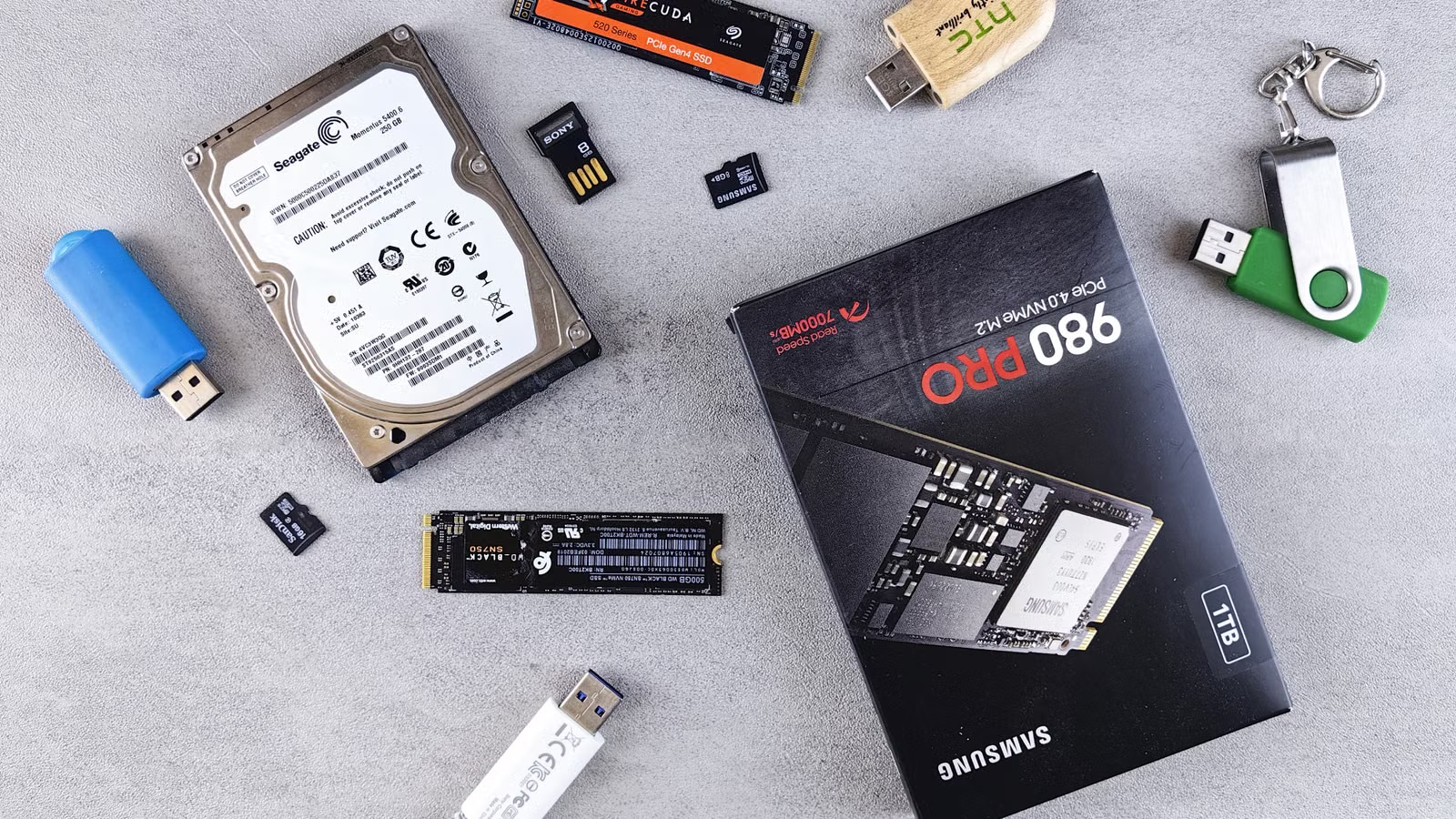
HBM, DRAM, NAND, SSD, and HDD are not products at the same level. You can first divide them into three groups: HBM and DRAM are memory products used for high-speed data access during computation; NAND is a flash memory chip used to retain data after power-off; SSDs and HDDs are complete storage devices, with SSDs emphasizing speed and HDDs emphasizing capacity cost. For investors, the key question is not whether something belongs to the “AI storage” theme, but where it sits in AI servers, cloud data centers, and enterprise storage, as well as its revenue source, pricing cycle, and technology risks.
Key Takeaways
- HBM and DRAM sit closer to computing, with bandwidth, capacity, and customer qualification as key factors.
- NAND is a flash memory chip, while SSD is a complete storage device built around NAND.
- HDDs have not been eliminated by AI and remain a capacity foundation for cloud storage and data lakes.
- Memory chip companies, hard drive makers, and storage system vendors follow different valuation logic.
- Storage opportunities come from AI demand, while risks come from pricing, inventory, and capital spending.
First, Use One Table to Understand the Differences Between HBM, DRAM, NAND, SSD, and HDD
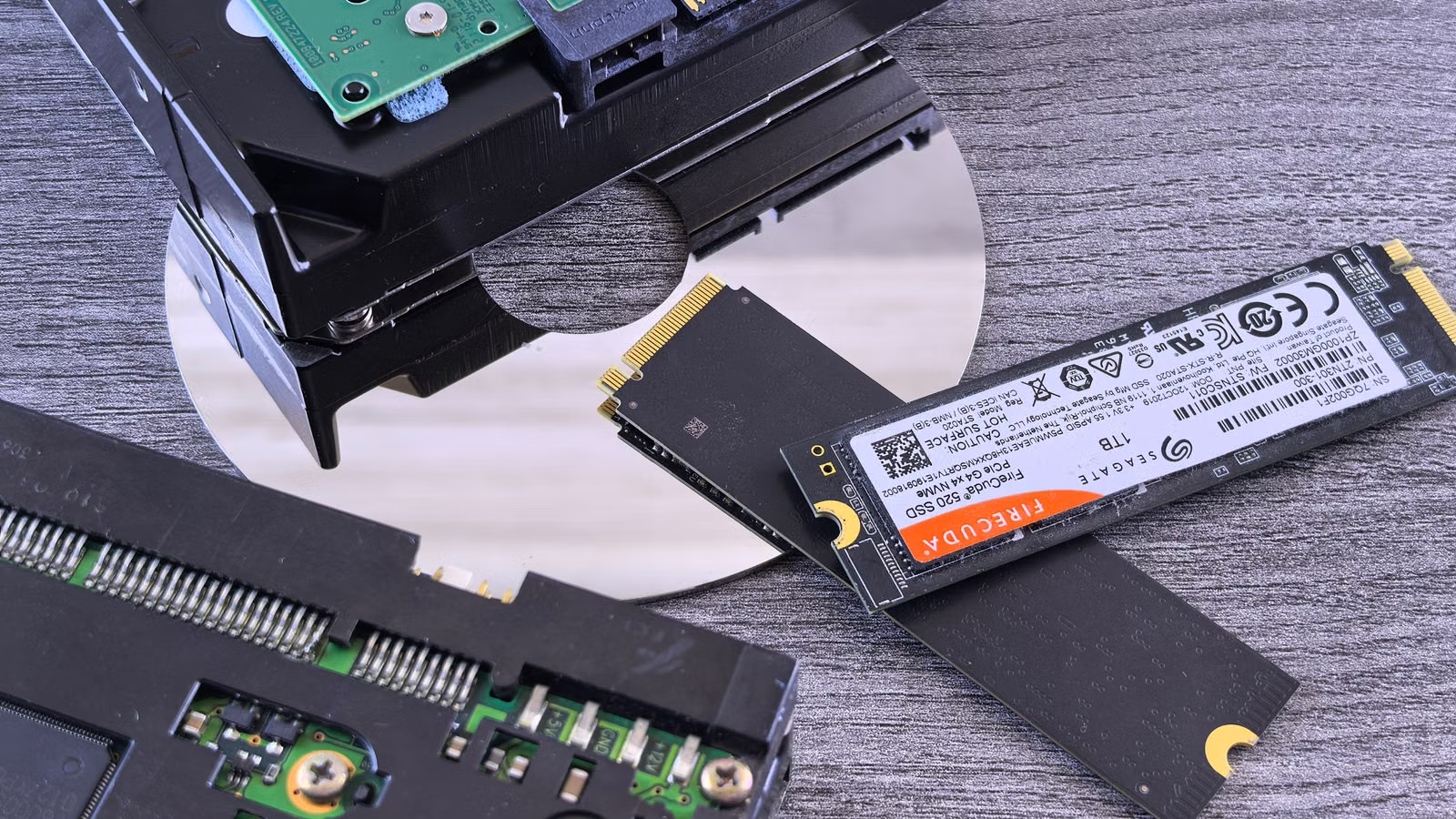
The biggest difference between HBM, DRAM, NAND, SSD, and HDD is that the first two are closer to “memory,” NAND is a “flash storage medium,” and the last two are “storage devices.” When evaluating a product, first ask whether it retains data after power-off, then whether it sits close to the CPU/GPU or the storage layer, and finally whether it solves a bandwidth, capacity, cost, or reliability problem.
| Type | What It Is | Retains Data After Power-Off? | Main Problem Solved | Typical Applications | Representative Companies |
|---|---|---|---|---|---|
| HBM | High-bandwidth DRAM | No | GPU/AI accelerator bandwidth bottleneck | AI training, HPC, AI GPUs | SK hynix, Samsung, Micron |
| DRAM | General-purpose memory | No | Temporary data access for CPUs/servers | Servers, PCs, smartphones | Samsung, SK hynix, Micron |
| NAND | Flash memory chip | Yes | Non-volatile data storage | SSDs, smartphones, memory cards | Samsung, Kioxia, Micron, SanDisk |
| SSD | Solid-state storage device | Yes | High-speed read/write and low latency | Databases, enterprise storage, AI inference cache | Samsung, Micron, Kioxia, Pure Storage, etc. |
| HDD | Magnetic disk storage device | Yes | Low-cost, large-capacity storage | Cloud storage, archiving, backup, data lakes | Seagate, Western Digital, Toshiba |
You can think of a computing system as a data path: CPUs and GPUs perform computation; HBM and DRAM feed data rapidly into computing chips; SSDs handle larger-scale high-performance read/write workloads; HDDs store massive amounts of data at lower cost. According to the industry definition that an SSD is a device that stores data using non-volatile memory, the key point about SSDs is not only that they are fast, but also that they have no moving mechanical parts and typically use NAND Flash to store data.
Beginners most often confuse five things:
- Treating NAND as SSD and ignoring the role of controllers, firmware, and interfaces.
- Treating HBM as ordinary DRAM and ignoring advanced packaging and bandwidth value.
- Assuming HDDs are obsolete and ignoring cloud providers’ large-capacity storage needs.
- Mixing up memory chip companies with enterprise storage system companies.
- Looking only at AI demand while ignoring contract prices, spot prices, and inventory cycles.
Summary: If you only want a quick framework, remember this: HBM and DRAM are memory products close to computation, NAND is a non-volatile flash storage medium, and SSDs and HDDs are complete storage devices. HBM is more expensive and sits closer to AI accelerators; DRAM is more general-purpose; NAND determines the core cost of SSDs; SSDs handle high-performance storage access; HDDs handle low-cost massive capacity. When investing, first identify which layer a company’s revenue comes from, then examine pricing cycles, customer structure, and technology upgrade timelines.
HBM and DRAM: The Memory Closest to Computing Inside AI Servers
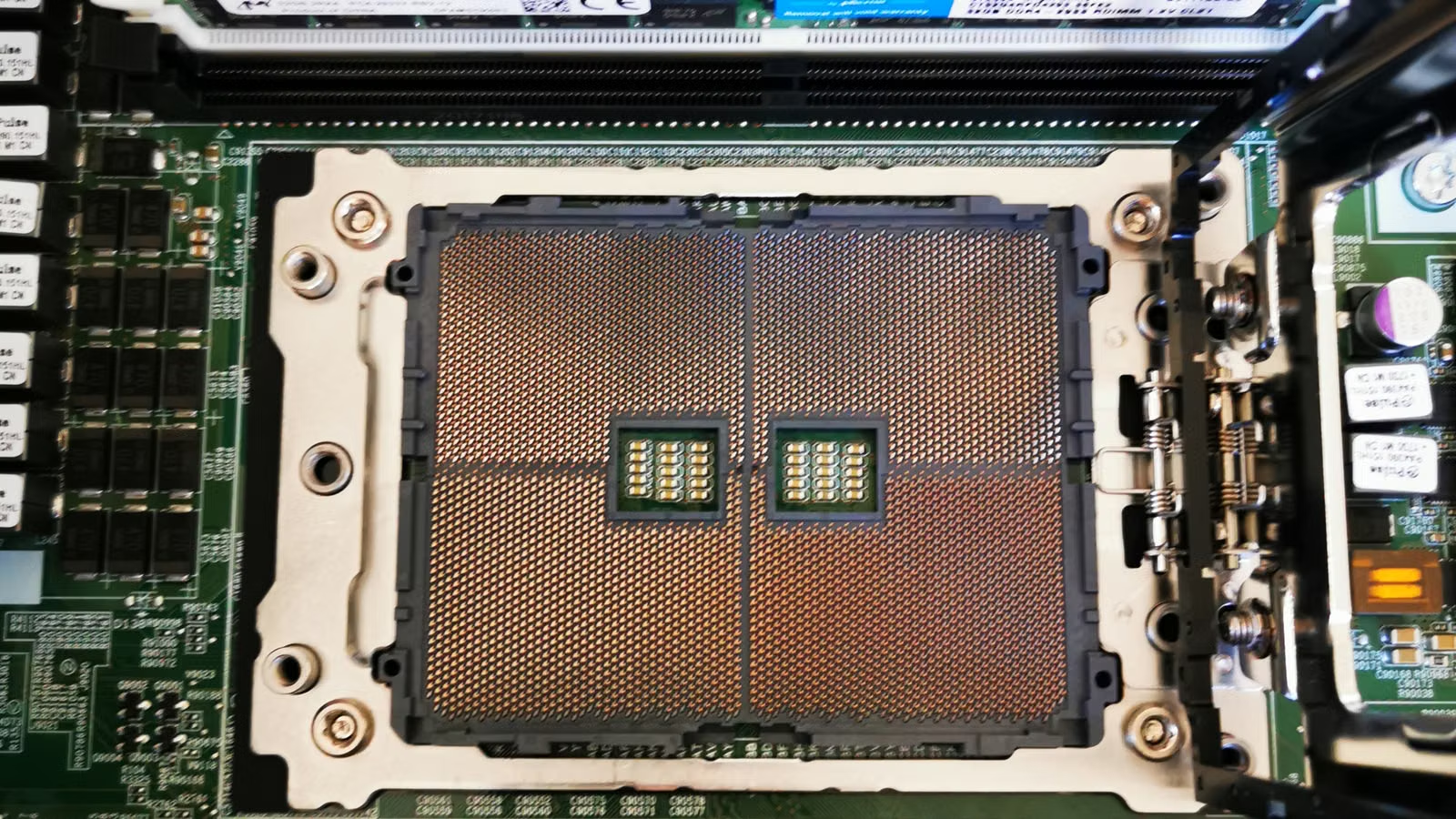
HBM and DRAM are both memory products, but they have different investment implications. The core value of HBM lies in high bandwidth, lower power consumption, and proximity to GPUs or AI accelerators, making it suitable for large model training, inference, and high-performance computing. Ordinary DRAM is more like the basic memory layer for servers, PCs, and smartphones. Its demand base is broader, but its unit value and technical barrier are generally lower than HBM.
HBM stands for High Bandwidth Memory. It is still a form of DRAM, but through stacking, TSV, and advanced packaging, multiple DRAM layers are placed closer to computing chips. Micron’s HBM3E 24GB 8-high product data shows that a single cube can deliver more than 1.2TB/s of bandwidth; NVIDIA also highlights the H200’s 141GB of HBM3e and 4.8TB/s bandwidth as a major selling point. This shows that AI chip competition is no longer only about compute power, but also about whether data can be fed into computing units fast enough.
Ordinary DRAM plays a more foundational role. Server CPUs, databases, virtualization, cloud services, PCs, and smartphones all rely on DRAM. Micron’s 2025 Form 10-K states that data center business sales include HBM, DDR5, DDR4, LPDDR5, and GDDR6, showing that DRAM is not a single product, but a portfolio of memory products differentiated by application scenario.
| Dimension | HBM | Ordinary DRAM |
|---|---|---|
| Main Position | Near GPU/AI accelerators | Main memory for servers, PCs, and phones |
| Core Metrics | Bandwidth, power consumption, packaging yield | Capacity, price, general compatibility |
| Main Customers | AI chip companies, cloud providers, HPC customers | Server, PC, smartphone, industrial customers |
| Investment Sensitivity | High, but customer qualification and capacity constraints are strong | Highly cyclical, affected by supply-demand pricing |
| Main Risks | HBM3E/HBM4 transition, customer qualification, yield | Overcapacity, price declines, inventory correction |
HBM4 raises the technical bar even further. SK hynix has announced the development of HBM4 high-performance AI memory and preparations for mass production. This suggests that the next stage of competition will move from “who has HBM” to “who can supply at the customer’s pace, maintain stable yield, and meet power requirements.” Therefore, HBM can bring stronger profit leverage to memory manufacturers, but the cost of failure is also higher.
Summary: You can think of HBM as high-value memory that addresses a major bottleneck in AI computing, and ordinary DRAM as foundational memory for general computing systems. AI servers can drive demand for HBM, server DRAM, and high-capacity memory modules at the same time. However, investment judgment should not rely on demand alone. You also need to assess customer qualification, advanced packaging capability, yield, capacity allocation, and the pricing cycle. HBM has stronger upside sensitivity, while DRAM has broader coverage. Neither is a storage device used to retain data after power-off.
NAND and SSD: From Flash Memory Chips to Enterprise Storage Devices
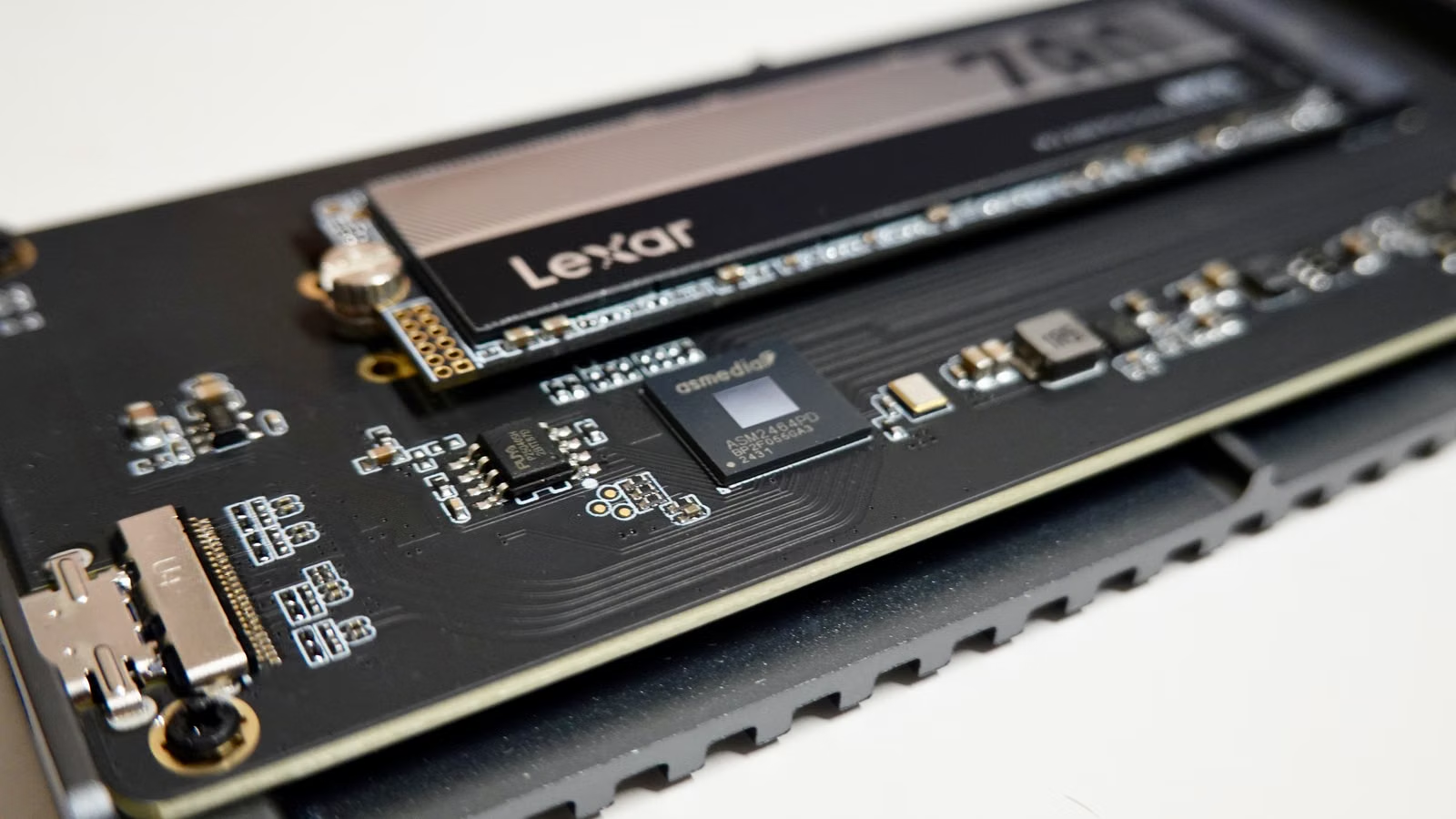
NAND and SSD should not be confused. NAND Flash is a flash memory chip used to store data, while an SSD is a complete device that combines NAND, controllers, firmware, interfaces, cache, and thermal design. When evaluating NAND companies, focus on pricing, layer count, yield, and capacity. When evaluating SSD companies, you also need to consider product qualification, enterprise customers, and system delivery capability.
From a technology layer perspective, NAND belongs to the “materials and chip layer,” while SSD belongs to the “product and system layer.” IBM’s explanation that SSDs typically use NAND Flash to store persistent data helps clarify this distinction. An SSD is not simply several NAND chips put together. It also requires a controller to determine how data is written, how wear leveling is handled, how error correction works, and how the device communicates with servers through PCIe/NVMe interfaces.
Why does AI drive enterprise SSD demand? Because AI workflows involve more than training compute. Before training, large amounts of data must be cleaned and read. During inference, systems may need vector databases, RAG, logs, caches, and model file loading. High-performance enterprise SSDs can handle hot data and high-I/O access, while long-term archives and cold data often still move down to HDDs or object storage.
| Dimension | NAND Flash | Enterprise SSD |
|---|---|---|
| Layer | Flash memory chip | Complete storage device |
| Core Metrics | Layer count, cost, yield, price | IOPS, latency, endurance, power consumption, qualification |
| Applications | Smartphones, SSDs, memory cards, embedded devices | Databases, virtualization, AI inference, enterprise storage |
| Main Risks | Price declines, overcapacity, inventory | Failed customer qualification, controller issues, margin pressure |
| Investment Focus | NAND contract prices, capacity utilization | Enterprise SSD share, customer structure, long-term orders |
TrendForce raised its NAND Flash market forecast in 2026, partly due to improving demand from AI, servers, and enterprise SSDs. This does not mean all NAND companies will benefit equally. Upstream manufacturers may benefit from price increases, but if downstream SSD or storage system vendors cannot pass costs on to customers, their margins may instead come under pressure.
Summary: NAND is a chip, while SSD is a product. NAND’s investment logic is closer to the semiconductor cycle: pricing, inventory, capacity, and yield drive profit sensitivity. SSD’s investment logic is closer to enterprise hardware and system delivery: controllers, firmware, customer qualification, reliability, and product mix matter more. AI will raise the strategic importance of enterprise SSDs, but it will not eliminate NAND price volatility, nor will it automatically benefit every SSD supplier.
HDD: Why AI Data Centers Still Need Large-Capacity Hard Drives
HDDs have not been eliminated by SSDs. Their role in AI data centers is low-cost, large-capacity, scalable storage. SSDs are better suited for hot data, high concurrency, and low latency, while HDDs are better suited for data lakes, backups, archiving, object storage, and long-term storage by cloud providers. When evaluating HDD companies, you should not focus only on speed, but also on cost per TB, capacity per drive, and cloud customer demand.
AI systems generate massive amounts of training data, synthetic data, logs, model versions, and inference records. Not all of this data needs to sit on SSDs. For cloud providers, if a set of data is rarely accessed but must be retained for a long time, HDDs still have a cost advantage. Seagate’s Mozaic 3+ and HAMR technology directly targets 30TB-class drives and AI data center storage demand, showing that HDD vendors are still competing for cloud data center capacity through higher areal density.
Western Digital has also continued pushing capacity higher in nearline hard drives. Its 26TB CMR and 32TB UltraSMR products target data center and cloud storage scenarios. The key phrase here is not “faster than SSD,” but “more TB under the same rack, power, and operating conditions.”
| Dimension | Enterprise SSD | Nearline HDD |
|---|---|---|
| Core Advantage | Low latency, high IOPS, high throughput | Low cost per capacity, large capacity |
| Suitable Data | Hot data, databases, cache, AI inference | Cold data, warm data, archiving, backup, data lakes |
| Main Metrics | Read/write performance, endurance, power consumption, NVMe | Capacity per drive, cost per TB, reliability |
| Representative Companies | Samsung, Micron, Kioxia, Pure Storage | Seagate, Western Digital, Toshiba |
| Main Risks | NAND cost, customer qualification, price competition | Cloud customer orders, technology roadmap, supply-demand cycle |
You can view SSDs and HDDs as complementary rather than simple substitutes. AI data centers typically need tiered storage: the hottest data sits close to compute, in HBM, DRAM, and high-speed SSDs; less frequently accessed but massive-scale data eventually moves into HDDs, object storage, or archive systems.
Summary: The value of HDDs is not speed, but capacity economics. AI training and inference increase total data volume. The larger the total data volume, the more tiered storage becomes necessary. SSDs handle the performance layer, while HDDs handle the capacity layer. When evaluating HDD vendors, focus on nearline HDD shipments, capacity per drive, HAMR/ePMR/SMR roadmaps, cloud customer orders, and cost per TB, instead of judging the industry by consumer hard drive experience.
How to Classify Representative Companies: Chipmakers, Hard Drive Vendors, and Storage System Companies
Storage companies must be analyzed by supply chain layer. SK hynix, Samsung, and Micron are more focused on HBM/DRAM/NAND; Seagate, Western Digital, and Toshiba are more focused on HDDs; Pure Storage, NetApp, Dell, and HPE are more focused on enterprise storage systems. You cannot put all of them into one “storage stock” bucket and evaluate them with the same valuation logic.
Upstream chipmakers’ revenue is more affected by DRAM, HBM, and NAND prices. In 2025, Western Digital completed the separation of its Flash business, with SanDisk trading as an independent company. This shows that the market is increasingly analyzing HDD and Flash/NAND businesses separately. SanDisk also announced that after completing the separation, it would trade on Nasdaq under SNDK, making it easier for investors to observe the HDD and Flash cycles separately.
System vendors follow a different logic. Pure Storage describes Evergreen//One in its Form 10-K as an SLA-based storage-as-a-service model; NetApp emphasizes its positioning in all-flash storage and hybrid cloud data infrastructure. These companies do not necessarily manufacture NAND or HDDs directly. They depend more on enterprise customers, software capabilities, subscription revenue, data management, and channel reach.
| Company Type | Representative Companies | Main Products | Key Metrics | Main Risks |
|---|---|---|---|---|
| HBM/DRAM/NAND manufacturers | SK hynix, Samsung, Micron, Kioxia, SanDisk | Memory and flash chips | Contract prices, yield, product mix | Price declines, overcapacity |
| HDD vendors | Seagate, Western Digital, Toshiba | Nearline HDDs, enterprise hard drives | Shipments, capacity, cloud customer orders | Cloud order cuts, technology transition |
| SSD/module vendors | Samsung, Micron, Kioxia, SanDisk, etc. | Enterprise SSDs, consumer SSDs | eSSD share, controllers, qualification | NAND costs, price competition |
| Enterprise storage systems | Pure Storage, NetApp, Dell, HPE | All-flash arrays, hybrid cloud storage | Subscription revenue, RPO, customer retention | Slowing enterprise IT spending |
If you follow U.S. storage-related companies such as MU, STX, WDC, SNDK, PSTG, and NTAP, you need to look beyond supply chain position and also consider actual trading costs. When tracking these names through U.S. stock information lookup, you should not look only at share prices and price movements. You also need to combine earnings reports, product cycles, and fee structures. Biya charges 0 USD in U.S. stock trading commission, while platform fees, external institutional fees, and other costs are subject to the U.S. stock trading fees and order page displays.
Summary: Storage companies should not be classified only by the “AI concept.” Upstream chipmakers depend on pricing and capacity. HDD vendors depend on cloud storage capacity demand. SSD vendors depend on NAND cost and enterprise-grade products. Enterprise storage system companies depend on customers, subscriptions, and data management capability. The more clearly you identify where revenue comes from, the less likely you are to confuse cyclical stocks, hardware companies, and software-like service providers.
How Investors Can Judge Opportunities and Risks: Pricing, Inventory, Customers, and Technology Roadmaps
Storage industry opportunities come from AI, cloud computing, and data growth, but risks come from pricing cycles, inventory changes, capacity expansion, and technology transitions. You should not use “demand growth” alone to evaluate storage stocks. You also need to watch DRAM contract prices, NAND contract prices, HBM supply progress, enterprise SSD orders, nearline HDD shipments, and company gross margins.
The storage industry is highly cyclical. TrendForce data from June 2026 showed that in 1Q26, DRAM industry revenue increased sharply, driven by rapid increases in conventional DRAM contract prices. This kind of data shows how strongly pricing affects memory manufacturers’ profits. It also reminds you that the faster prices rise, the more you need to watch for excessive customer stocking, pressure on consumer demand, and capital spending expansion.
For monthly tracking of the storage sector, you can watch eight signals:
- Whether DRAM contract and spot prices continue rising.
- Whether NAND contract prices improve alongside enterprise SSD demand.
- Whether HBM3E and HBM4 enter the supply chains of major AI chip customers.
- Whether enterprise SSD orders expand from cloud providers to enterprise customers.
- Whether nearline HDD shipments and capacity per drive improve.
- Whether company inventory days decline or begin accumulating again.
- Whether CAPEX guidance points to rapid supply expansion.
- Whether gross margins improve with pricing or begin to peak.
Technology risk is equally important. HBM requires customer qualification and advanced packaging coordination. NAND must continue improving layer count and yield. HDD vendors must commit to roadmaps such as HAMR, ePMR, and SMR. Successful technology upgrades can expand the profit pool, while failure may lead to delayed orders, wasted capital spending, and customer losses.
For ordinary investors, trading costs and risks should be viewed within the same framework before placing orders. You can use Biya to follow U.S. stocks, Hong Kong stocks, and digital asset markets, but the availability of specific services depends on the user’s location, identity verification result, platform rules, and applicable laws and regulations. Biya charges 0 USD in U.S. stock trading commission, while platform fees, external institutional fees, and other costs are subject to the fee center and order page displays. “Zero commission” should not be interpreted as “zero cost.”
Summary: The storage industry is not as simple as “the stronger AI becomes, the better all companies perform.” AI can increase demand for HBM, server DRAM, enterprise SSDs, and nearline HDDs, but pricing, inventory, capacity, and technology roadmaps determine whether profits can be realized. You need to place each company back into its supply chain position, then combine pricing cycles, customer structure, capital spending, and earnings gross margins to evaluate opportunities and risks. Public market information can help build a framework, but it does not constitute investment advice.
Once you can distinguish the layers of HBM, DRAM, NAND, SSD, and HDD, the next step is to build a watchlist: track MU, STX, WDC, SNDK, PSTG, NTAP, as well as related semiconductor, cloud computing, and AI infrastructure ETFs. Before using the Download App, you should also understand order types, trading fees, exchange rates, platform rules, and your own risk tolerance. Popular storage stocks may experience significant volatility during AI upcycles, and short-term prices can be affected by earnings, supply-demand data, customer orders, and market valuation. Public information, company disclosures, and fee details should be used together. No trading decision should rely solely on one concept or one indicator.
FAQ
What Is the Difference Between HBM and DRAM in AI Servers?
HBM is more suitable for AI GPUs and accelerators, while DRAM is more suitable for server main memory. HBM uses stacking and advanced packaging to increase bandwidth and address data-feeding bottlenecks in large-model computing. Ordinary DRAM has broader coverage and is used in CPUs, servers, PCs, and smartphones. Neither is designed for long-term data retention after power-off.
Why Should NAND Chips and SSD Products Not Be Confused?
NAND is a flash memory chip, while SSD is a complete storage device. An SSD usually includes NAND, a controller, firmware, interfaces, and thermal design, so investment analysis cannot rely only on NAND prices. NAND manufacturers are more affected by chip cycles, while SSD vendors also depend on enterprise customer qualification, product reliability, and system delivery capability.
Why Do AI Data Centers Need Both SSDs and HDDs?
AI data centers need both performance layers and capacity layers. SSDs are suitable for hot data, databases, vector search, and inference caches, while HDDs are suitable for cold data, archiving, backup, and large-scale data lakes. They are not complete substitutes. Instead, they perform different cost and performance roles in tiered storage architectures.
How Can Ordinary Investors Distinguish Storage Chip Stocks from Storage System Stocks?
Ordinary investors should first look at revenue sources and product form. HBM, DRAM, and NAND manufacturers are closer to semiconductor cycles, while enterprise storage system companies depend more on customer budgets, software capability, subscription revenue, and data management solutions. Classifying companies only by the “storage concept” can lead to incorrect valuation and profit-driver assumptions.
Do HBM, DRAM, and NAND Price Increases Benefit All Storage Companies?
Not necessarily. Price increases usually benefit upstream memory manufacturers and companies with favorable inventory structures, but they may compress margins for downstream SSD, server, or storage system vendors. You also need to assess whether companies can pass costs on to customers, how customer contracts are priced, whether inventory is sufficient, and whether the price increase is already reflected in the stock price.
What Risks Matter Most for U.S.-Listed Storage-Related Companies?
The main risks for U.S.-listed storage-related companies include pricing cycles, customer concentration, technology transitions, inventory changes, capital spending, and valuation volatility. HBM companies require close attention to qualification and yield; HDD companies require cloud customer order tracking; system companies require monitoring of enterprise IT spending. Before trading, investors should refer to company filings, platform rules, and local regulatory requirements.
*This article is provided for general information purposes and does not constitute legal, tax or other professional advice from BiyaPay or its subsidiaries and its affiliates, and it is not intended as a substitute for obtaining advice from a financial advisor or any other professional.
We make no representations, warranties or warranties, express or implied, as to the accuracy, completeness or timeliness of the contents of this publication.
Related Blogs of

How Should You Evaluate Pure Storage’s Storage-as-a-Service Model? Revenue Quality and Key Risks


Pure Storage PSTG Stock Analysis: All-Flash Arrays, Enterprise Storage, and AI Data Platforms


How to Distinguish A-Share and Hong Kong Stock Memory-Related Companies? H-Shares, A-Shares, and Business Classification Explained


Choose Country or Region to Read Local Blog
 Australia
 Austria
 Belgium
 Canada
 Cyprus
 Czech Republic
 Denmark
 Estonia
 Finland
 France
 Germany
 Greece
 Hong Kong
 India
India Indonesia
 Ireland
 Italy
Italy Japan
Japan Latvia
 Lithuania
 Luxembourg
 Malaysia
 Malta
Malta Morocco
 Nepal
Nepal Netherlands
 New Zealand
 Norway
 Pakistan
 Philippines
 Poland
 Portugal
 Romania
 Singapore
 Slovakia
 Slovenia
 South Africa
 South Korea
 Spain
Spain Sweden
 Thailand
 The United States
 Turkey
 United Arab Emirates
 United Kingdom
 Vietnam
Contact Us




BIYA GLOBAL LLC is registered with the Financial Crimes Enforcement Network (FinCEN), an agency under the U.S. Department of the Treasury, as a Money Services Business (MSB), with registration number 31000218637349, and regulated by the Financial Crimes Enforcement Network (FinCEN).
BIYA GLOBAL LIMITED is a registered Financial Service Provider (FSP) in New Zealand, with registration number FSP1007221, and is also a registered member of the Financial Services Complaints Limited (FSCL), an independent dispute resolution scheme in New Zealand.