
Pure Storage PSTG vs NetApp NTAP: Which Enterprise Storage Brand Has Greater AI Growth Elasticity?




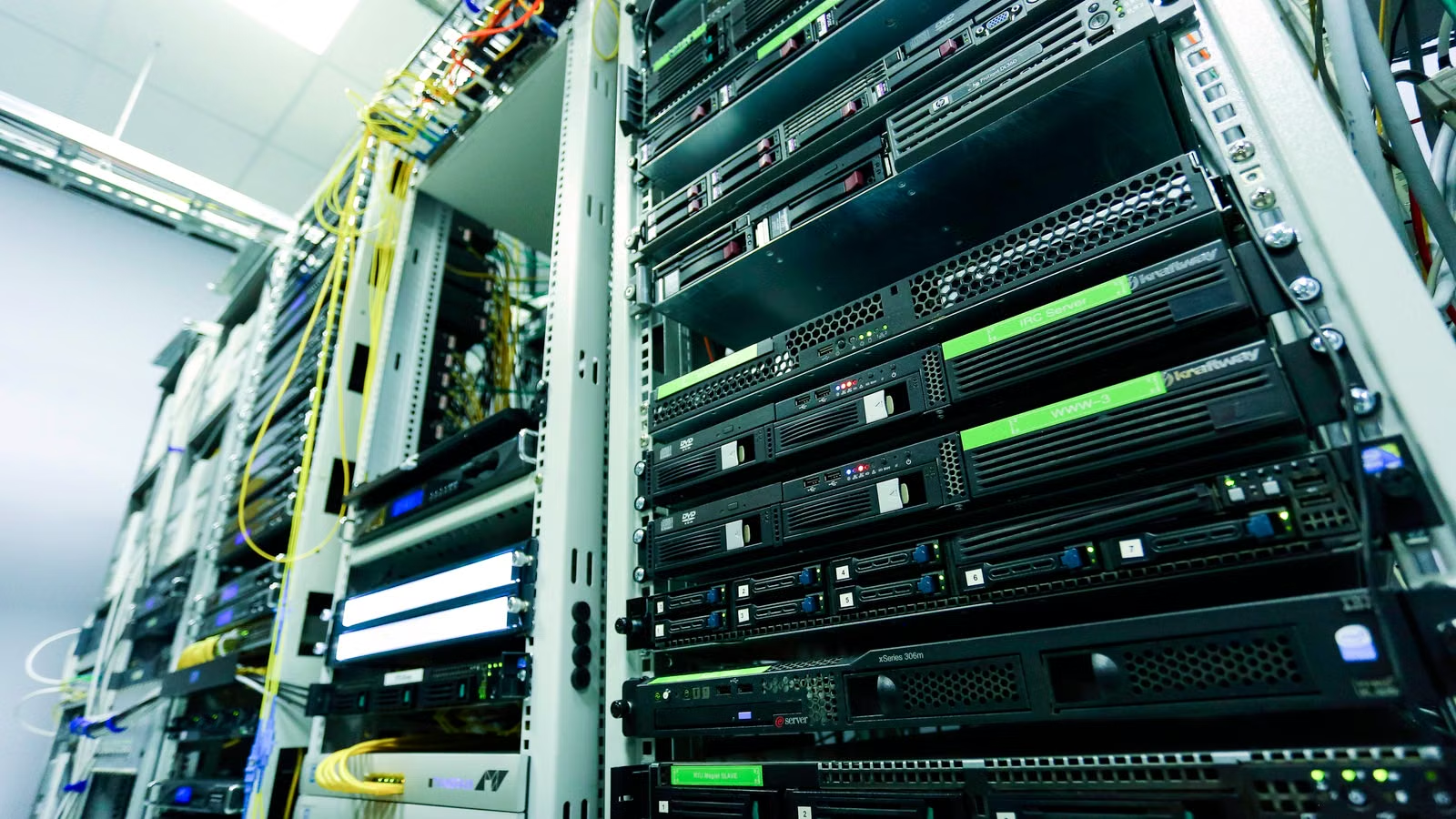
If you want to compare Pure Storage PSTG and NetApp NTAP, the key question is not which one “looks more like an AI stock,” but which one can turn AI data infrastructure demand into more sustainable revenue growth. Pure Storage, now renamed Everpure, is more focused on all-flash storage, high-performance data pipelines, and subscription-based growth. NetApp is more focused on enterprise customer depth, ONTAP, hybrid cloud, and stable cash flow. The former has stronger AI growth elasticity, while the latter has greater maturity and defensive characteristics.
Key Takeaways
- PSTG is more of a high-growth all-flash platform with a more direct AI storage narrative.
- NTAP is more of a mature enterprise storage leader with stronger hybrid cloud and cash flow stability.
- AI storage is not the same as memory chips; systems, software, and data management matter more.
- For PSTG, investors should track ARR, RPO, gross margin, and large customer orders.
- For NTAP, investors should track all-flash revenue, Public Cloud, and shareholder returns.
- Ordinary investors should judge based on valuation, volatility tolerance, and financial execution.
What Are Pure Storage PSTG and NetApp NTAP Really Competing On?

Pure Storage PSTG and NetApp NTAP are not competing on the ability to manufacture DRAM, NAND, or HBM chips. They are competing on how enterprises store, orchestrate, protect, and use data. You can understand both companies as enterprise-grade data infrastructure providers: PSTG emphasizes all-flash storage, AI-ready storage, subscription services, and cloud-native data management; NTAP emphasizes ONTAP, hybrid cloud, enterprise data services, and upgrades among existing customers. In the AI era, data growth creates opportunities for both companies, but their paths to benefiting from that growth are different.
One updated point needs to be clarified first: Pure Storage announced in 2026 that it would rename itself Everpure, while keeping the stock ticker PSTG unchanged. Since the market and users still search heavily for “Pure Storage PSTG,” it is reasonable to continue using Pure Storage / PSTG in analysis. When reading source materials, however, you should note that Everpure, Pure Storage, and PSTG refer to the same company.
PSTG’s product system revolves around FlashArray, FlashBlade, Evergreen, and Portworx. FlashBlade mainly serves unified file and object storage, making it suitable for unstructured data, AI/ML, high-performance computing, and data protection use cases. Evergreen//One shifts storage from one-time hardware purchases toward a service consumption model. Portworx covers Kubernetes, containers, and cloud-native data management.
NTAP’s core lies in ONTAP, AFF, ASA, StorageGRID, Keystone, and Public Cloud services. ONTAP is its unified data storage operating system, emphasizing a consistent data experience across on-premises environments, private clouds, and public clouds. AFF A-Series is more focused on high-performance unified storage and AI data infrastructure, while AFF C-Series is more focused on capacity-optimized all-flash storage for consolidating block, file, and object workloads.
| Comparison Dimension | Pure Storage PSTG | NetApp NTAP |
|---|---|---|
| Company positioning | All-flash and data management platform | Hybrid cloud and enterprise data infrastructure |
| Core products | FlashArray, FlashBlade, Evergreen, Portworx | ONTAP, AFF, ASA, StorageGRID, Keystone |
| AI relevance | High-performance data pipelines, GPU clusters, AI-ready storage | Hybrid cloud data governance, unified storage, enterprise customer upgrades |
| Investment style | Stronger growth elasticity | Stronger maturity and stability |
| Main indicators to watch | ARR, RPO, product revenue, gross margin | All-flash revenue, Public Cloud, cash flow, buybacks and dividends |
Summary: When comparing PSTG and NTAP, you should not treat them as companies that simply “sell hard drives” or “sell SSDs.” Their real competition is for the enterprise data infrastructure entry point. AI model training requires high-throughput storage, enterprise inference requires stable data access, RAG and knowledge bases require the management of large volumes of unstructured data, and hybrid cloud deployment requires data migration, protection, and unified governance. PSTG looks more like a high-growth all-flash and subscription platform, with a clearer AI storage label. NTAP looks more like a mature enterprise storage leader, using ONTAP, hybrid cloud, all-flash products, and a large customer base to unlock value from AI-driven upgrades.
Business Model Comparison: PSTG Looks More Like a High-Growth Platform, While NTAP Looks More Like a Mature Leader

If you only compare business models, PSTG has higher growth elasticity, while NTAP has stronger financial maturity. PSTG’s advantage lies in all-flash replacement, subscription ARR, RPO, and revenue acceleration from AI infrastructure orders. NTAP’s advantage lies in larger revenue scale, a deeper enterprise customer base, a hybrid cloud product portfolio, and cash flow. If you prefer growth stocks, you will pay more attention to PSTG. If you prefer stable technology infrastructure stocks, NTAP’s framework is easier to understand.
Pure Storage’s FY2026 total revenue was $3.663 billion, up 16% year over year. Product revenue was about $1.972 billion, also up 16%, while subscription services revenue was about $1.691 billion, up 15%. This shows that PSTG still has a clear product sales component, but subscription services have already become a very important stabilizer for revenue.
More importantly, subscriptions and order visibility deserve attention. PSTG’s subscription ARR at the end of FY2026 was about $1.924 billion, up 16% year over year. RPO grew 40% year over year, mainly driven by large deals and Evergreen//Forever and Evergreen//One. These indicators help you judge whether the company’s growth is only a one-off hardware delivery cycle, or whether it has already become more sustainable long-term service contracts.
NetApp has a larger revenue base. The company reported FY2026 net revenue of $6.925 billion, up 5% year over year. Q4 FY2026 net revenue was $1.948 billion, up 12% year over year. Within that, the Hybrid Cloud segment generated FY2026 revenue of $6.237 billion, while the Public Cloud segment generated $688 million. NTAP is not growing as fast as PSTG, but its business structure is more mature, with a stronger profit and cash flow foundation.
NetApp’s highlights are all-flash storage and cloud services. Q4 FY2026 all-flash array net revenue reached $1.2 billion, up 18% year over year. Public Cloud net revenue was $182 million, up 11% year over year. This shows that NTAP is not a stagnant traditional storage business. It is still upgrading toward all-flash replacement, hybrid cloud, and AI data infrastructure.
| Indicator | PSTG | NTAP | Investment Meaning |
|---|---|---|---|
| FY2026 revenue | About $3.663 billion | About $6.925 billion | NTAP is larger |
| Revenue growth | About 16% | About 5% | PSTG has stronger growth elasticity |
| Business focus | All-flash, subscriptions, AI data platform | ONTAP, hybrid cloud, all-flash, cloud services | Different paths to benefit |
| Maturity | Growth stage | Mature stage | Different valuation and risk tolerance |
| Key indicators | ARR, RPO, gross margin | All-flash revenue, cash flow, Public Cloud | Different tracking priorities |
Summary: The biggest difference between PSTG and NTAP is the difference between growth speed and business maturity. PSTG has a smaller revenue base, but its growth rate, subscription indicators, and AI order elasticity make it easier for the market to revalue the company. NTAP has a larger revenue base and more moderate growth, but its hybrid cloud, all-flash, Public Cloud, and enterprise customer foundation provide stronger financial support. If you are looking for AI storage elasticity, PSTG stands out more. If you are looking for a more stable enterprise storage name within the long-term infrastructure upgrade cycle, NTAP is easier to include in your watchlist.
AI Storage Demand Comparison: Which Company Benefits More Directly From Enterprise AI and GPU Clusters?

If the question is “which company benefits more directly from AI storage demand,” the answer leans toward PSTG. If the question is “which company can more steadily support enterprise AI deployment,” the answer leans toward NTAP. PSTG’s FlashBlade, AIRI, NVIDIA reference architectures, and high-performance all-flash narrative are more directly tied to GPU clusters, AI factories, and unstructured data training pipelines. NTAP’s strengths lie in complex enterprise data distribution, hybrid cloud management, data protection, and upgrades among existing customers.
The difference between AI storage and traditional enterprise storage lies in access patterns. Traditional business systems focus more on stability, backup, disaster recovery, and cost. AI workloads also need higher throughput, higher concurrency, faster data preparation, and more complex data lifecycle management. Training requires the continuous reading of massive datasets. Inference requires low latency and stable access. RAG and enterprise knowledge bases require management of documents, images, logs, object data, and permissions.
PSTG’s AI narrative is more direct. NVIDIA describes AIRI as a full-stack AI-ready infrastructure supported by NVIDIA DGX BasePOD and Pure Storage FlashBlade. Pure Storage’s NVIDIA Enterprise AI Factory reference architecture also emphasizes combining NVIDIA accelerated computing with Pure’s high-performance flash storage for large model training, inference, and enterprise AI projects.
NTAP’s AI opportunity looks more like an enterprise data infrastructure upgrade. Enterprises do not move all data into GPU clusters at once. They need to call data from on-premises systems, cloud environments, multi-cloud architectures, and edge locations. NetApp’s strengths are ONTAP-driven customer stickiness, AFF’s all-flash upgrade path, StorageGRID’s support for object storage and data lakes, and Keystone’s consumption model. For large enterprises, these capabilities are often more important than single-point performance.
| AI Use Case | More PSTG-Oriented | More NTAP-Oriented |
|---|---|---|
| GPU training clusters | High-throughput FlashBlade, AI-ready architecture | AFF high-performance unified storage |
| Enterprise inference | High-performance data access and subscription expansion | Stable data governance and hybrid cloud access |
| RAG / enterprise knowledge bases | Unstructured data and object/file storage | ONTAP, StorageGRID, permissions, and data lifecycle |
| Hybrid cloud AI | Portworx and cloud-native data management | ONTAP, BlueXP, Keystone |
| Data protection | Snapshots, recovery, subscription services | Mature data protection, ransomware detection, disaster recovery |
Summary: AI storage demand is not simply about “the faster, the better.” You need to look at where the data is, who accesses it, whether it crosses clouds, whether permission governance is involved, and whether long-term retention and rapid recovery are required. PSTG is better understood through the lens of AI growth elasticity because its products are more directly connected to the NVIDIA ecosystem, GPU clusters, and all-flash data pipelines. NTAP is better understood through enterprise AI deployment and hybrid cloud data management because it serves long-term data operations in complex enterprise architectures. Both companies can benefit, but their market pricing logic is different.
Revenue Quality and Profitability Comparison: Is High Growth Always Better Than High Cash Flow?
High growth is not always better than high cash flow. The key is whether growth can be converted into stable gross margin, long-term contracts, and free cash flow. PSTG’s strengths are revenue growth, subscription ARR, RPO, and AI large-order elasticity, but it can still be affected by NAND, component costs, and hardware delivery cycles. NTAP’s strengths are profit maturity, cash flow, buybacks, dividends, and customer depth, but its valuation elasticity is usually not as strong as that of a high-growth company.
PSTG has strong gross margin performance. FY2026 product gross margin was 67%, subscription services gross margin was 74%, and total gross margin was 70%. This shows that PSTG is not a low-margin hardware vendor. It is an enterprise data platform combining hardware, software, and subscription services. However, the company also noted that higher component costs could affect future product gross margins, so all-flash growth should not be understood as “higher revenue will necessarily mean higher profit.”
PSTG’s subscription model is important, but it should not be misunderstood as a pure SaaS model. Evergreen//One, Evergreen//Forever, and subscription services can increase customer stickiness and revenue visibility, but the company still needs to deliver hardware, maintain storage systems, and absorb changes in component prices and supply chains. The stronger AI demand becomes, the more it may boost product revenue in the short term, but it may also bring pressure from component procurement costs.
NTAP looks more like a mature technology infrastructure company. In FY2026, it reached records in revenue, gross profit, operating income, operating cash flow, and free cash flow, while returning $1.36 billion to shareholders through share repurchases and cash dividends. For more defensive investors, this cash return and profit foundation can be more attractive than revenue growth alone.
| Evaluation Dimension | PSTG | NTAP |
|---|---|---|
| Revenue elasticity | Higher | Moderate |
| Gross margin focus | Product mix, NAND cost, subscription share | All-flash mix, operating efficiency, cloud services |
| Revenue quality | ARR, RPO, and NDR matter | Customer base, renewals, and hybrid cloud services matter |
| Shareholder returns | More focused on growth investment | Buybacks and dividends are more prominent |
| Main risks | Growth misses expectations, gross margin pressure | Mature business growth slows, competition intensifies |
If you use Biya to track U.S. enterprise storage companies such as PSTG and NTAP, you should look beyond the stock price and combine financial indicators, order visibility, and fee structure. When trading U.S. stocks, commission is only one part of cost. Platform fees, external agency fees, and other charges can also affect actual execution costs. Biya charges $0 commission for U.S. stock trading, while platform fees, external agency fees, and other charges are subject to the U.S. stock trading fees and order page display.
Summary: The core difference between PSTG and NTAP is the trade-off between growth elasticity and financial maturity. PSTG’s ARR, RPO, product revenue, and AI-related orders create more upside potential, but it is also more exposed to gross margin decline, component cost increases, and growth expectation misses. NTAP’s growth is usually less aggressive than PSTG’s, but its revenue scale, cash flow, buybacks, dividends, and enterprise customer base are more solid. You should not only ask “which one is more AI-related,” but also ask which company’s growth is more sustainable and which valuation has better room for error.
Valuation and Risk Comparison: Which One Is More Likely to Be Repriced by the Market?
If AI storage demand continues to exceed expectations, PSTG is more likely to be repriced by the market as a growth stock. If the market shifts toward cash flow and valuation safety, NTAP’s relative appeal will be stronger. PSTG’s risks include AI growth already being priced in, rising NAND costs, large customer order volatility, and gross margin pressure. NTAP’s risks include mature business growth, the share of cloud revenue, competition among storage vendors, and the speed at which its AI narrative translates into measurable results.
PSTG’s share price elasticity usually comes from three variables. First, whether AI-related product revenue accelerates. Second, whether subscription ARR, RPO, and NDR remain healthy. Third, whether gross margin can withstand component cost volatility. If any of these variables fall below market expectations, a growth stock valuation can contract quickly. Especially when AI themes are hot, share prices often price in future growth early. Even a small earnings miss can amplify volatility.
NTAP’s repricing logic is steadier, but also slower. It does not need to prove whether it can “tell an AI story.” It needs to prove whether all-flash revenue, Public Cloud, Keystone, and ONTAP customer upgrades can continue driving growth. If enterprise AI projects move from pilots into production, NTAP’s data governance, hybrid cloud, and enterprise relationships will become more valuable. But if cloud business growth is not fast enough, the market may still treat it as a mature storage company rather than a high-growth AI infrastructure stock.
Competition is unavoidable for both companies. PSTG faces competition from NetApp, Dell, HPE, IBM, VAST Data, DDN, Weka, MinIO, and others at different layers. NTAP also needs to continue proving product competitiveness in high-performance all-flash, object storage, hybrid cloud control planes, and AI data lakes. Enterprise storage procurement usually has long cycles, high migration costs, and strong customer stickiness, but once technology routes shift, replacement and upgrades can also change market share.
You can use the following checklist to track risks:
- Whether PSTG’s ARR, RPO, and product revenue are growing together;
- Whether PSTG’s product gross margin is being squeezed by NAND and component costs;
- Whether NTAP’s all-flash revenue continues to grow faster than overall company revenue;
- Whether NTAP’s Public Cloud and Keystone expand their revenue contribution;
- Whether AI customer cases at both companies translate into quantifiable orders;
- Whether management guidance beats market expectations instead of only telling a long-term story.
Summary: PSTG has greater repricing potential, but also greater volatility. NTAP’s repricing may be less aggressive, but it depends more on cash flow, profitability, and enterprise customer upgrades. If you seek AI storage growth elasticity, PSTG deserves closer tracking. If you care more about mature business quality, defensive characteristics, and shareholder returns, NTAP is more suitable as a stable enterprise storage name to watch. Either way, AI demand should not be treated as the same thing as certain returns. The real key is whether orders, revenue, margins, and valuation match each other.
How Should Ordinary Investors Decide Between PSTG and NTAP?
Ordinary investors can judge PSTG and NTAP through four dimensions: growth elasticity, revenue quality, valuation tolerance, and risk tolerance. If you can accept larger volatility and are willing to track AI orders, ARR, RPO, and gross margins, PSTG is more suitable for observation. If you care more about mature customers, cash flow, profitability, and buybacks and dividends, NTAP fits the logic of a steadier technology stock.
Investors who are more suited to watching PSTG usually have three characteristics. First, they care more about revenue elasticity driven by enterprise AI, GPU clusters, and all-flash replacement. Second, they can tolerate growth-stock valuation volatility. Third, they are willing to track quarterly earnings rather than only follow AI headlines. PSTG’s appeal is that it can more easily become a high-beta stock when AI storage demand is released, but high beta also means potentially larger drawdowns.
Investors who are more suited to watching NTAP care more about enterprise IT budgets, hybrid cloud, data protection, all-flash upgrades, and cash flow. NTAP may not be the most aggressive AI storage elasticity stock, but it has a deep enterprise customer base and a product line covering block, file, object, cloud, and storage-as-a-service. Keystone and similar subscription storage services also give NTAP an opportunity to shift traditional hardware sales toward a more flexible consumption model.
| Investor Preference | More PSTG-Oriented | More NTAP-Oriented |
|---|---|---|
| Seeking AI growth elasticity | Better fit | Secondary fit |
| Focusing on cash flow and shareholder returns | Secondary fit | Better fit |
| Able to tolerate high valuation volatility | Better fit | Moderate |
| Prefers mature enterprise tech stocks | Secondary fit | Better fit |
| Watching subscription transition | ARR and RPO matter more | Keystone and Public Cloud matter more |
| Earnings focus | Revenue growth, gross margin, large deals | All-flash, cloud revenue, free cash flow |
For most investors, the more reasonable approach is not to simply ask “should I buy PSTG or NTAP,” but to build a watchlist. Through U.S. stock information search, you can put PSTG, NTAP, DELL, HPE, MU, WDC, NVDA, and other AI infrastructure-related stocks into the same group, then compare revenue growth, valuation changes, gross margins, and management guidance quarter by quarter. This makes it easier to see whether AI storage is truly being monetized or whether it remains mostly a market narrative.
Summary: If you ask “which company has greater AI growth elasticity,” the answer leans toward PSTG. If you ask “which company is more stable and has more mature cash flow,” the answer leans toward NTAP. PSTG is more suitable for investors willing to take higher volatility and track AI orders and subscription metrics. NTAP is more suitable for investors who value enterprise customer depth, hybrid cloud upgrades, profitability, and shareholder returns. Neither company is a memory chip stock. Both are enterprise data infrastructure companies, and the real focus should be on how AI demand turns into revenue, profit, and sustainable cash flow.
If you are tracking AI infrastructure opportunities in U.S. stocks, PSTG and NTAP can be observed together with server, chip, memory, networking equipment, and storage companies, rather than compared in isolation. The AI data center investment chain is long. GPUs, HBM, enterprise SSDs, all-flash arrays, object storage, hybrid cloud, and data governance all affect final demand. When using a global multi-asset trading wallet such as Biya, you can monitor changes across U.S. stocks, Hong Kong stocks, and the crypto market, but before trading, you still need to check order types, fee structure, local rules, and your own risk tolerance. Biya charges $0 commission for U.S. stock trading, while platform fees, external agency fees, and other charges are subject to the fee center and order page display. Availability of relevant services depends on the user’s location, identity verification results, platform rules, and applicable laws and regulations. This does not constitute investment advice.
FAQ
Which benefits more from AI storage demand, Pure Storage PSTG or NetApp NTAP?
PSTG has more direct AI growth elasticity, while NTAP benefits more from enterprise hybrid cloud and existing customer upgrades. PSTG is more closely tied to GPU clusters, all-flash storage, and high-performance data pipelines. NTAP relies more on ONTAP, AFF, StorageGRID, and hybrid cloud data governance. The final judgment still depends on orders, revenue, gross margin, and management guidance.
Is Pure Storage PSTG a memory chip company?
Pure Storage PSTG is not a memory chip company. It is an enterprise data storage and data management platform company. It is affected by NAND, SSD, and all-flash demand, but its business model is different from DRAM, NAND, or HBM manufacturers. Investors should focus on product revenue, subscription ARR, RPO, gross margin, and customer deployment.
What is the main AI investment logic for NetApp NTAP?
The main AI investment logic for NetApp NTAP is enterprise data infrastructure upgrades. Key indicators include all-flash array revenue, ONTAP customer stickiness, Public Cloud revenue, Keystone subscription progress, StorageGRID object storage, and hybrid cloud data management capabilities. It is more of an AI infrastructure upgrade beneficiary than a pure AI high-growth stock.
Which has stronger financial stability, PSTG or NTAP?
NTAP usually has stronger financial stability because it has a larger revenue base, more mature cash flow, profitability, and shareholder returns. PSTG has higher growth and more visible AI-related elasticity, but valuation, gross margin, and large customer order changes can also create greater volatility. The two companies suit different investor risk preferences.
How should ordinary investors track PSTG and NTAP earnings?
Ordinary investors should track revenue growth, product revenue, subscription revenue, ARR, RPO, all-flash revenue, Public Cloud revenue, gross margin, operating margin, and next-quarter guidance. When making trading decisions, investors should also check platform fees, order details, and applicable rules in their location, rather than relying on a single earnings metric.
Will AI storage demand directly push up PSTG and NTAP share prices?
AI storage demand will not necessarily push up PSTG and NTAP share prices directly. Industry demand is only a long-term logic. Share prices are also affected by valuation, profitability, order execution, competition, interest rates, and market sentiment. Enterprise AI also takes time to move from pilot projects into production, so demand growth should not be treated as guaranteed returns.
*This article is provided for general information purposes and does not constitute legal, tax or other professional advice from BiyaPay or its subsidiaries and its affiliates, and it is not intended as a substitute for obtaining advice from a financial advisor or any other professional.
We make no representations, warranties or warranties, express or implied, as to the accuracy, completeness or timeliness of the contents of this publication.
Related Blogs of

Online Bank-to-Bank Transfers: Account Linking, Steps, and Limits


Cheapest Way to Transfer Money Internationally: Small vs. Large Transfers





Choose Country or Region to Read Local Blog
 Australia
 Austria
 Belgium
 Canada
 Cyprus
 Czech Republic
 Denmark
 Estonia
 Finland
 France
 Germany
 Greece
 Hong Kong
 India
India Indonesia
 Ireland
 Italy
Italy Japan
Japan Latvia
 Lithuania
 Luxembourg
 Malaysia
 Malta
Malta Morocco
 Nepal
Nepal Netherlands
 New Zealand
 Norway
 Pakistan
 Philippines
 Poland
 Portugal
 Romania
 Singapore
 Slovakia
 Slovenia
 South Africa
 South Korea
 Spain
Spain Sweden
 Thailand
 United States
 Turkey
 United Arab Emirates
 United Kingdom
 Vietnam