
SanDisk SNDK vs Western Digital WDC: How to Distinguish NAND and HDD Business Boundaries After the Spin-Off





After the spin-off, the core difference between SanDisk SNDK and Western Digital WDC is clear: SNDK inherited Western Digital’s Flash business, with a focus on NAND Flash, SSDs, controllers, firmware, and data center flash storage demand; WDC retained the HDD business, with a focus on Nearline HDDs, cloud customer capacity purchases, and low-cost large-capacity storage. If you follow U.S.-listed storage stocks, you should no longer analyze both companies under the old “Western Digital” framework. Instead, you need to separate the NAND cycle from the HDD cycle.
Key Takeaways
- SNDK is the post-spin-off NAND / Flash company, with a focus on SSDs and the flash memory cycle.
- WDC is now closer to a pure HDD company, with a focus on cloud and Nearline HDDs.
- NAND is more affected by pricing cycles, enterprise SSDs, AI inference, and data center customers.
- HDD is more affected by cold data growth, cloud customer purchasing, and cost per TB.
- Both companies benefit from AI-driven data growth, but through very different paths.
- The comparison should focus on product boundaries, customer structure, pricing cycles, gross margin, and cash flow.
What Are the Business Boundaries of SNDK and WDC After the Spin-Off?

After the spin-off, SNDK and WDC are no longer the same type of storage company. You can remember one simple distinction: SNDK means NAND / SSD / Flash, while WDC means HDD / Nearline HDD / cloud capacity drives. The former is closer to the memory chip and enterprise SSD cycle, while the latter is closer to the large-capacity HDD and cloud data center storage cycle.
Western Digital completed the separation of its Flash business in February 2025. After the separation, Western Digital continued trading under the ticker WDC, with its business focus shifting to hard drives. SanDisk became an independent company after the spin-off and began trading on Nasdaq under SNDK. From an investment analysis perspective, this means the Flash and HDD cycles that used to be combined within one company have been separated into two clearer listed entities.
The separation arrangement is also reflected in the Separation and Distribution Agreement signed by Western Digital and SanDisk. For ordinary investors, it is not necessary to examine every detail of the agreement, but it does highlight one important point: this was not merely a brand name change. It was a reallocation of assets, businesses, supply chains, and capital market narratives.
SNDK’s business boundary is data storage devices and solutions based on NAND Flash technology. SanDisk filings describe the company as a provider of storage devices and solutions based on NAND Flash technology, with products including solid-state drives, embedded products, memory cards, USB flash drives, wafers, and components. Its key markets are Datacenter, Edge, and Consumer, with the data center market mainly serving public cloud, private cloud, and enterprise customers.
WDC’s boundary is more focused on HDDs. Western Digital’s business description shows that its products serve Cloud, Client, and Consumer markets, with Cloud covering public cloud, private cloud, and enterprise customers. WDC is no longer a comprehensive storage company that combines hard drives and flash. Instead, it is more concentrated on HDD technology, Nearline HDDs, high-capacity enterprise drives, and cloud data center demand.
| Dimension | SanDisk SNDK | Western Digital WDC |
|---|---|---|
| Post-spin-off positioning | Flash / NAND company | HDD company |
| Core products | NAND, SSDs, controllers, firmware, flash components | HDDs, Nearline HDDs, high-capacity storage devices |
| Main customers | Data centers, enterprises, edge devices, consumer electronics | Cloud providers, enterprise data centers, OEMs, consumers |
| Core cycle | NAND pricing cycle, enterprise SSD demand | HDD supply-demand cycle, Nearline HDD pricing |
| AI benefit path | High-performance SSDs, data center NAND | Large-scale persistent data and low-cost capacity storage |
| Main risks | NAND price reversal, inventory, JV fixed costs | Cloud customer concentration, HDD replacement debate, capacity cycle |
Summary: The biggest difference between SNDK and WDC after the spin-off is not the change in stock tickers, but the separation of business boundaries and valuation logic. SNDK is better analyzed within the framework of NAND Flash, enterprise SSDs, data center flash, and the memory chip cycle. WDC is better analyzed through HDDs, Nearline HDDs, cloud customer capacity purchases, and low-cost large-capacity storage. When comparing the two companies, the first step is not to ask which stock has risen more, but to decide whether you want to track the NAND cycle or the HDD supply-demand cycle.
How Should You Understand the Product Differences Between NAND, SSD, and HDD?

The difference between NAND, SSDs, and HDDs is not as simple as “new technology replaces old technology.” You should understand them by speed, cost, capacity, access frequency, and the data lifecycle. SNDK’s NAND / SSD business is better suited for high-speed access and high-performance storage, while WDC’s HDD / Nearline HDD business is better suited for large-capacity, low-cost, long-term data storage.
NAND Flash is a type of non-volatile memory chip, meaning it can retain data even after power is turned off. SSDs are storage devices built on NAND. They use controllers, firmware, and flash memory cells to handle data reading and writing. SanDisk filings state that the company provides high-performance enterprise solid-state drives for the Datacenter market, serving enterprise servers, high-transaction online businesses, AI-related workloads, and data analytics.
HDDs store data through magnetic recording. Their advantages are lower cost per unit of capacity, large single-drive capacity, and suitability for long-term storage of massive datasets. Western Digital filings state that HDDs provide reliable, low-cost, high-capacity storage, with applications across cloud data centers, enterprise storage systems, edge computing, video surveillance, client devices, and consumer products.
This is why AI data centers do not need only SSDs, nor do they need only HDDs. AI training, inference, data cleaning, vector retrieval, model checkpoints, and high-frequency caching are more SSD-oriented; raw data, logs, backups, video, archives, object storage, and long-term data lakes are more HDD-oriented. The two are part of a tiered architecture, not a simple replacement relationship.
| Comparison Dimension | NAND / SSD | HDD / Nearline HDD |
|---|---|---|
| Speed | High, suitable for low latency and frequent access | Lower than SSDs, better for sequential and capacity storage |
| Cost per unit of capacity | Higher | Lower |
| Suitable data | Hot data, cache, AI inference, vector retrieval | Cold data, archives, logs, object storage |
| Company mapping | SNDK, Micron, Samsung, Kioxia | WDC, Seagate, Toshiba |
| Price driver | NAND supply-demand, enterprise SSD contract pricing | HDD supply-demand, Nearline HDD ASP |
| Main risks | Sharp pricing cycles, inventory volatility | Customer concentration, long-term replacement debate |
If you put both companies into the same “AI storage” basket, it is easy to misjudge them. SNDK’s focus is not the traditional portable storage brand, but NAND Flash, enterprise SSDs, data center customers, and flash product mix. WDC’s focus is also not ordinary PC hard drives, but cloud provider high-capacity HDDs, Nearline HDDs, and long-term data center procurement.
Summary: The difference between NAND / SSD and HDD is fundamentally a division between performance and cost. SNDK represents high-speed flash and enterprise SSDs, with key variables including NAND pricing, data center customers, and product mix improvement. WDC represents large-capacity hard drives, with key variables including cloud customer demand, Nearline HDD shipments, cost per TB, and ASP. The more complex AI data centers become, the more they need tiered storage architectures rather than a single medium replacing all storage types.
How Do SNDK and WDC Differ in Revenue Structure and Earnings Sensitivity?
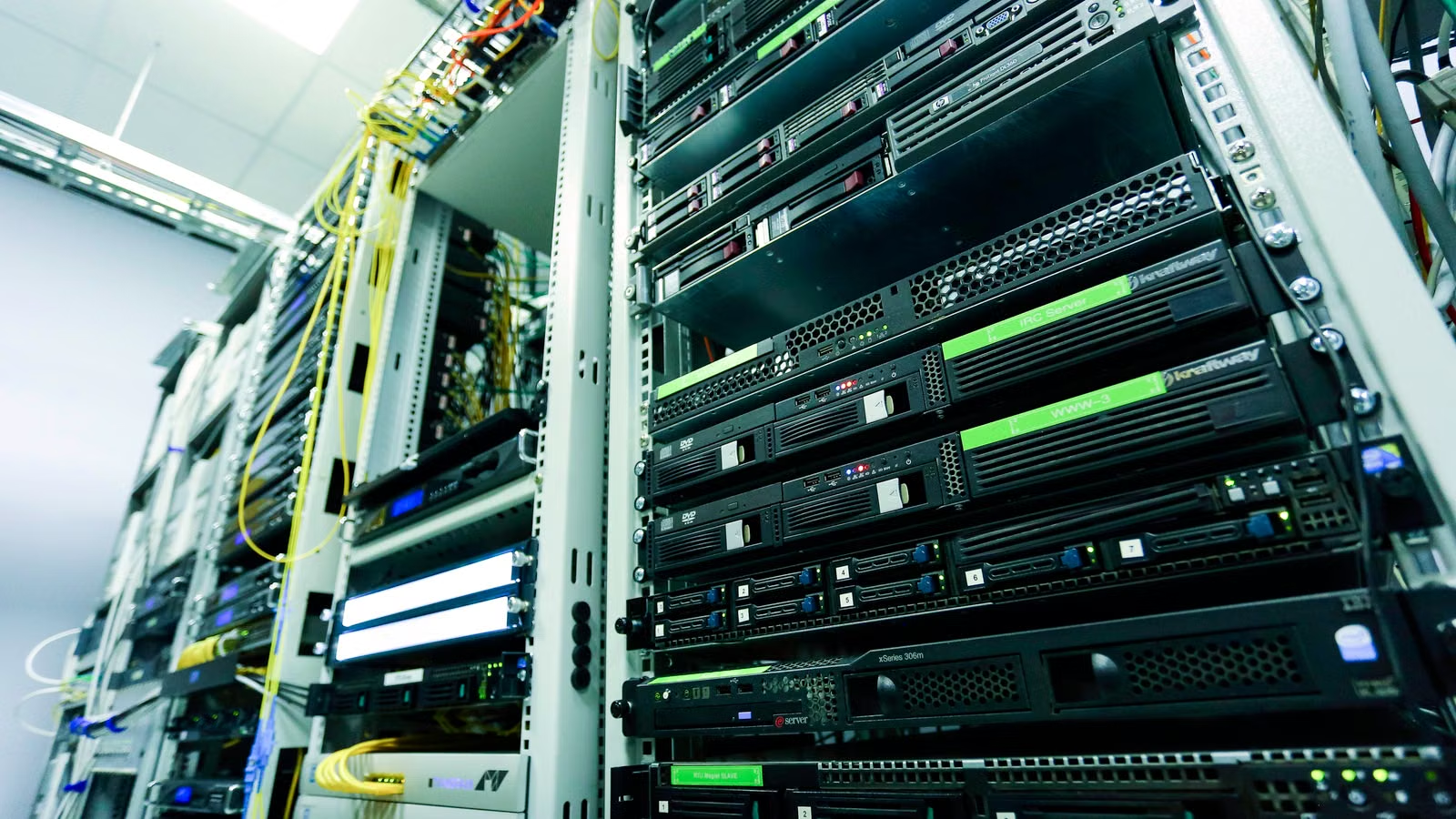
SNDK and WDC have different earnings sensitivity because their pricing variables are different. SNDK is more affected by NAND prices, enterprise SSDs, data center customers, and product mix. WDC is more affected by Nearline HDD supply and demand, cloud customer purchasing, high-capacity drive pricing, and free cash flow. Both companies may benefit from AI data centers, but their financial drivers are different.
SanDisk reported revenue of US$5.95 billion for fiscal Q3 2026, up 97% sequentially and 251% year over year. The company also stated that the upside came from a product mix shift toward higher-value customers and higher pricing; its data center revenue increased 233% sequentially. This shows that during a NAND upcycle, SNDK’s profit sensitivity can be very steep.
WDC’s sensitivity is more tied to HDD supply-demand tightness. Western Digital reported revenue of US$3.337 billion for fiscal Q3 2026, up 45% year over year. Its GAAP gross margin reached 50.2%, with strong cash flow and free cash flow. Management also emphasized that nearly every type of AI workload generates data that needs to be stored persistently and cost-effectively on HDDs.
You can distinguish the financial sensitivity of the two companies through the following framework:
| Driver | Impact on SNDK | Impact on WDC |
|---|---|---|
| NAND contract prices | High | Low |
| Enterprise SSD demand | High | Low |
| Nearline HDD demand | Low | High |
| Long-term cloud customer procurement | Medium-high | High |
| Product mix improvement | High | High |
| Cost per TB advantage | Medium | High |
| Inventory write-down risk | High | Medium |
| Free cash flow sensitivity | Depends on NAND cycle | Depends on HDD pricing and capacity utilization |
The advantage of SNDK is that when NAND prices rise, enterprise SSDs ramp, and data center customers compete for capacity, revenue and gross margin can improve quickly. The risk is that the NAND industry has a history of sharp supply-demand swings. If prices reverse, inventories build, or customer procurement slows, profits may also fall quickly. The advantage of WDC is that the HDD industry is concentrated, and when cloud demand visibility improves, pricing and cash flow can receive stronger support. The risk is that customer concentration, capacity cycles, and long-term SSD replacement concerns will continue to affect valuation.
Summary: SNDK’s earnings sensitivity is more like a NAND upcycle, where revenue and gross margin can change quickly with enterprise SSD and data center customer demand. WDC’s earnings sensitivity is more like an HDD supply-demand tightness cycle, with a focus on cloud customer procurement, high-capacity drive ASP, capacity utilization, and free cash flow. If you track storage stocks, you should not only compare revenue size. You should compare the pricing drivers and cycle positions behind each company.
How Does AI Data Center Demand Affect SNDK and WDC Differently?
AI data centers benefit both SNDK and WDC, but through different paths. SNDK benefits more from enterprise SSDs, high-performance flash, AI inference cache, vector databases, and high-speed data access. WDC benefits more from the large-scale persistent data, logs, backups, raw datasets, video, and cold data retention generated by AI.
For SNDK, the AI opportunity lies in “data access speed.” Inference services, retrieval-augmented generation, vector databases, real-time recommendation, model serving, and high-frequency caching all require low-latency, high-throughput, reliable enterprise SSDs. The growth of SanDisk’s data center business reflects NAND’s role in AI infrastructure shifting from consumer electronics and clients toward higher-value cloud markets.
For WDC, the AI opportunity lies in “data scale.” Western Digital management stated in its fiscal Q3 2026 results that AI workloads ranging from training and inference to agentic AI and physical AI all generate data that needs to be stored persistently and cost-effectively on HDDs. This explains why HDDs have not lost relevance in the AI era. Instead, they are receiving renewed attention in cloud data center capacity expansion.
AI data center storage can be understood through tiers:
| AI Data Scenario | More SNDK / NAND-Oriented | More WDC / HDD-Oriented |
|---|---|---|
| AI inference cache | Yes | Weaker |
| Vector databases | Yes | Weaker |
| Model checkpoints | Yes | Partial |
| Training datasets | Partial | Yes |
| Logs and interaction data | Partial | Yes |
| Raw video and image data | Partial | Yes |
| Data lakes and archives | Weaker | Yes |
| Cloud capacity expansion | Yes, but more performance-oriented | Yes, but more capacity-oriented |
This framework also helps you avoid two common misunderstandings. The first is “SSDs will completely replace HDDs.” In reality, when datasets are massive and access frequency is low, HDDs still have value because of their cost per TB advantage. The second is “HDDs have nothing to do with AI.” In fact, not all AI-generated data needs high-speed access. Large amounts of data need to be stored long term, traced, and reused for retraining, which is exactly where HDDs remain relevant.
Summary: AI data center demand is not a single storage demand, but a tiered storage demand. SNDK is better understood through enterprise SSDs, high-performance NAND, low-latency access, and AI inference. WDC is better understood through Nearline HDDs, cloud capacity expansion, low-cost persistent storage, and cold data retention. Both companies can benefit from AI data growth, but SNDK’s keywords are speed and flash, while WDC’s keywords are capacity and cost.
How Should You Distinguish the Supply Chains, Capital Expenditure, and Risk Boundaries of SNDK and WDC?
SNDK and WDC have different sources of risk. For SNDK, the key areas to watch are NAND supply and demand, Flash Ventures, the Kioxia partnership, node transitions, fixed costs, and inventory cycles. For WDC, the key areas are HDD technology roadmaps, cloud customer procurement, Nearline HDD capacity, ASP, and long-term replacement debates. Both companies belong to the storage cycle, but their risks are not the same.
SNDK’s supply chain core is its Flash Ventures partnership with Kioxia. SanDisk filings show that the company and Kioxia jointly develop and manufacture flash-based memory wafers through Flash Ventures, and SanDisk holds a 49.9% ownership position in each Flash Ventures entity. The filings also state that SanDisk and Kioxia are generally each entitled to purchase approximately 50% of the output, and that SanDisk must bear part of the fixed costs and capital investment obligations.
This has two sides for SNDK. The advantage is access to scaled NAND capacity, technology collaboration, and cost control. The risk is that fixed costs and capacity commitments can amplify cyclical volatility. If NAND prices rise, fixed costs create operating leverage. If demand falls short, fixed costs and inventory pressure may drag on earnings.
WDC’s supply chain core is no longer Flash wafer manufacturing, but HDD technology roadmaps, magnetic recording technology, mechanical components, cloud customer qualification, and capacity discipline. The HDD industry is relatively concentrated, and capacity expansion is not as rapid as in NAND. When supply is tight, pricing power can be stronger. But if cloud customer purchasing patterns change, the impact on orders, pricing, and capacity utilization can also be direct.
| Risk Type | SNDK | WDC |
|---|---|---|
| Pricing cycle | NAND prices fluctuate significantly | HDD ASP and high-capacity drive pricing fluctuate |
| Supply chain | Depends on Kioxia JV system | Depends on HDD manufacturing and components |
| Fixed costs | Flash Ventures fixed cost constraints | HDD factory and capacity utilization constraints |
| Customer concentration | Data center and enterprise SSD customers increasingly important | Cloud providers have greater influence |
| Technology replacement | NAND node and product mix transitions | Long-term SSD replacement debate |
| Capital expenditure | Node transitions and JV investment | HDD technology upgrades and capacity investment |
| Cycle attribute | More memory chip cycle-oriented | More cloud capacity storage cycle-oriented |
Summary: The risk boundaries of SNDK and WDC must be analyzed separately. SNDK’s key risks come from NAND pricing, Flash Ventures fixed costs, enterprise SSD demand, inventory, and capital expenditure. WDC’s key risks come from HDD supply and demand, cloud customer concentration, high-capacity drive ASP, technology roadmaps, and long-term replacement debate. If you analyze both companies only under the label of “AI storage stocks,” you may overlook their completely different supply chain structures.
How Should Retail Investors Decide Between SNDK and WDC?
If you are deciding between SNDK and WDC, do not start by asking “which one is better.” Start by asking, “which storage cycle do I want to track?” If you are bullish on NAND price increases, enterprise SSDs, AI inference storage, and data center Flash, SNDK is the more relevant company to study. If you are bullish on cloud provider purchases of large-capacity HDDs, tight Nearline HDD supply and demand, and low-cost data retention, WDC is the more relevant company to study.
A practical decision framework is:
| What You Care About More | More Relevant Company |
|---|---|
| NAND price increases | SNDK |
| Enterprise SSDs and AI inference | SNDK |
| Data center Flash demand | SNDK |
| Tight large-capacity HDD supply and demand | WDC |
| Long-term cloud capacity procurement | WDC |
| Low-cost cold data storage | WDC |
| Overall AI data growth trend | Track both SNDK and WDC |
The tracking metrics should also be separated. For SNDK, focus on NAND contract prices, enterprise SSD demand, data center revenue, gross margin, inventory, Flash Ventures investment, and long-term customer agreements. For WDC, focus on Nearline HDD shipments, Cloud revenue, ASP, gross margin, free cash flow, long-term purchase agreements, and capacity utilization. Both are affected by AI data center capital expenditure, cloud customer inventory, storage prices, and the interest rate environment.
You also need to include costs in your trading comparison. SNDK and WDC are both U.S.-listed storage cycle stocks, and their share prices may move quickly with earnings reports, contract pricing, cloud provider capital expenditure, and market expectations. If trading frequency is high, commissions, platform fees, external fees, order execution, and FX rates all affect actual results. Biya charges US$0 commission for U.S. stock trading, while platform fees, external fees, and other charges are subject to U.S. stock trading fees and order-level display. Service availability depends on the user’s location, identity verification results, platform rules, and applicable laws and regulations.
If you need to monitor storage stocks such as SNDK, WDC, STX, and MU at the same time, you can use U.S. stock information search to build a comparison list and separately track NAND, HDD, enterprise SSDs, Nearline HDDs, and AI data center capital expenditure. The point is not to chase short-term price gains, but to break the same “storage” theme into different pricing variables and different risk exposures.
Summary: Choosing between SNDK and WDC is essentially choosing between the NAND / SSD cycle and the HDD / Nearline capacity storage cycle. SNDK’s sensitivity comes from NAND pricing, enterprise SSDs, and data center Flash. WDC’s sensitivity comes from HDD supply and demand, cloud customer procurement, and high-capacity drive ASP. Both companies sit within the AI data growth chain, but their products, customers, supply chains, capital expenditure needs, and risk exposures are different.
When following U.S. storage stocks, you can first place SNDK, WDC, STX, and MU into one watchlist: SNDK for NAND and enterprise SSDs, WDC for HDDs and Nearline HDDs, STX for hard drive supply and demand, and MU for DRAM, NAND, and HBM. Users who meet applicable service conditions can also track related market movements through Biya, while considering earnings reports, pricing cycles, order changes, fee structures, and personal risk tolerance before trading. Public market information can help you understand business boundaries and industry logic, but it does not constitute investment advice. Actual trading should follow platform rules, account statements, and local regulatory requirements.
FAQ
After the Spin-Off, Is SNDK or WDC the NAND Company?
SNDK is the post-spin-off NAND / Flash company, while WDC is the HDD company. SNDK inherited Western Digital’s Flash, SSD, controller, firmware, and related storage product businesses, while WDC continues to operate hard drives, Nearline HDDs, and cloud capacity storage.
Does Western Digital WDC Still Make SSDs After the Spin-Off?
After the spin-off, WDC’s core business boundary is HDDs. It is no longer the integrated storage company that previously covered both Flash and HDDs. Consumers may still see transitional branding or legacy product lines in the market, but investment analysis should follow the company’s disclosed post-spin-off business boundaries.
What Is the Difference Between SanDisk SNDK and Micron MU?
SNDK is more focused on NAND Flash and SSDs, while Micron MU covers DRAM, NAND, and HBM. If you focus on HBM, DRAM contract pricing, and AI high-bandwidth memory, MU is more directly relevant. If you focus on NAND, enterprise SSDs, and the Flash cycle, SNDK is more direct.
Why Do AI Data Centers Need Both SSDs and HDDs?
AI data centers need both SSDs and HDDs because hot data and cold data have different storage needs. SSDs are better for frequent access, low latency, and inference caching, while HDDs are better for cost-effective storage of massive raw data, logs, backups, video, and long-term archives.
Is SNDK Stock More Affected by NAND Prices?
Yes. SNDK’s earnings sensitivity is usually more affected by NAND prices, enterprise SSD demand, and product mix. You should also monitor data center customers, Flash Ventures supply, inventory, capital expenditure, and long-term customer agreements instead of relying on a single pricing indicator.
Is WDC Stock Better Analyzed Through the HDD Supply-Demand Cycle?
Yes. After the spin-off, WDC is better analyzed through the HDD supply-demand cycle. Key metrics include Nearline HDD shipments, cloud customer procurement, high-capacity drive ASP, long-term agreements, gross margin, and free cash flow, rather than applying NAND logic to WDC.
*This article is provided for general information purposes and does not constitute legal, tax or other professional advice from BiyaPay or its subsidiaries and its affiliates, and it is not intended as a substitute for obtaining advice from a financial advisor or any other professional.
We make no representations, warranties or warranties, express or implied, as to the accuracy, completeness or timeliness of the contents of this publication.
Related Blogs of

Online Bank-to-Bank Transfers: Account Linking, Steps, and Limits


Crypto Trading Bots: Types, Costs, and Security Risks


Crypto Exchange Fees Comparison: Trading Fees, Spreads, and Withdrawals


International Wire Transfer Time: What Affects Delivery?

Choose Country or Region to Read Local Blog
 Australia
 Austria
 Belgium
 Canada
 Cyprus
 Czech Republic
 Denmark
 Estonia
 Finland
 France
 Germany
 Greece
 Hong Kong
 India
India Indonesia
 Ireland
 Italy
Italy Japan
Japan Latvia
 Lithuania
 Luxembourg
 Malaysia
 Malta
Malta Morocco
 Nepal
Nepal Netherlands
 New Zealand
 Norway
 Pakistan
 Philippines
 Poland
 Portugal
 Romania
 Singapore
 Slovakia
 Slovenia
 South Africa
 South Korea
 Spain
Spain Sweden
 Thailand
 United States
 Turkey
 United Arab Emirates
 United Kingdom
 Vietnam