Micron MU vs Seagate STX: Who Benefits More from AI Server Memory and Nearline Hard Drives?




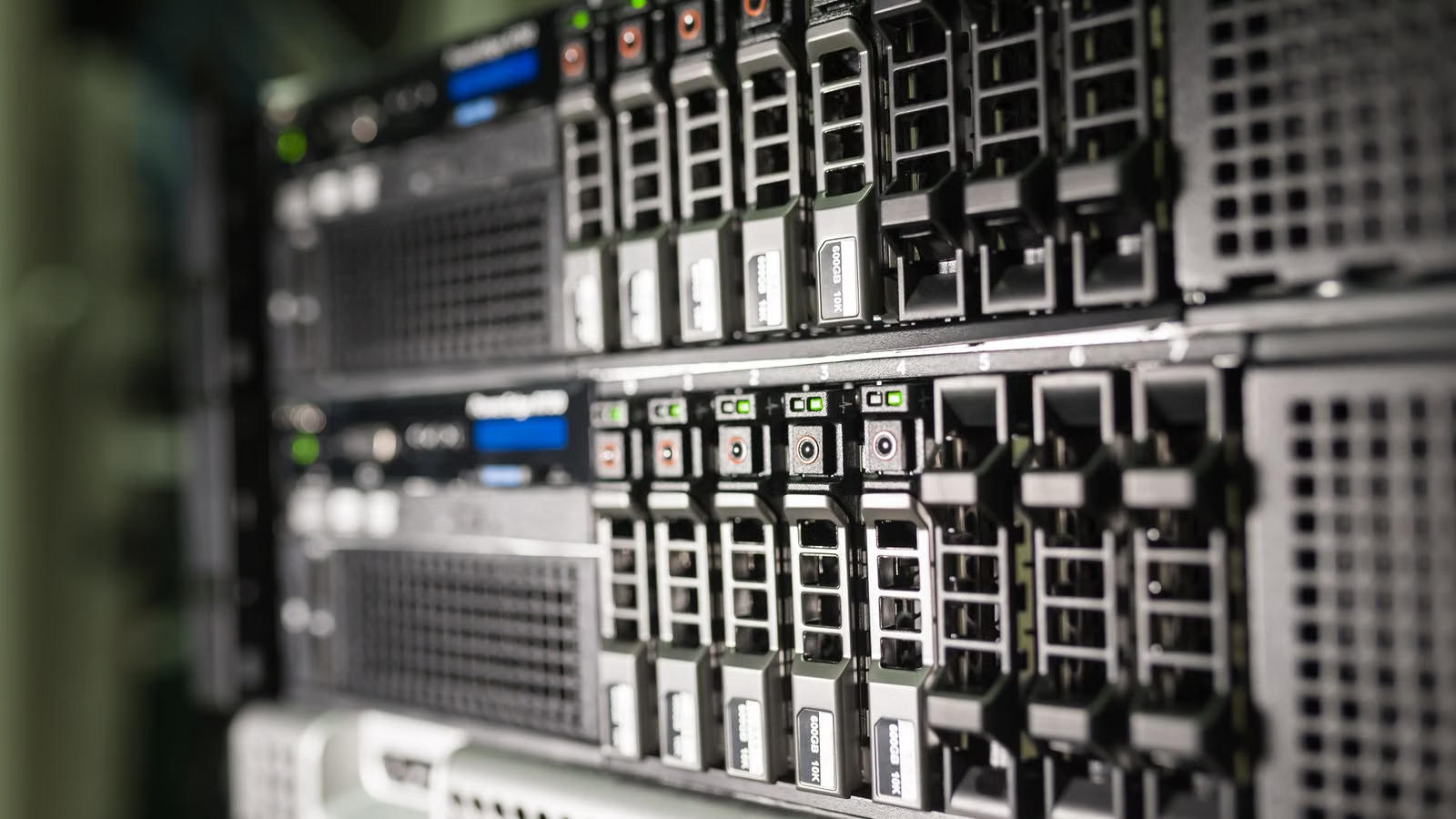
If you are comparing Micron MU and Seagate STX, the key question is not which company “looks more like an AI stock,” but which one is closer to the critical bottlenecks in AI data centers. Micron benefits more directly from AI server memory upgrades, especially HBM, DRAM, DDR5, and data center SSDs. Seagate benefits more from long-term data capacity growth driven by AI training, inference, backup, and archival workloads. Micron offers stronger earnings leverage, while Seagate is more tied to capacity demand and cash flow recovery. The better fit depends on whether you care more about AI compute bottlenecks or long-term data storage bottlenecks.
Key Takeaways
- MU is closer to the AI compute layer, where HBM and server DRAM are key variables.
- STX is closer to the data storage layer, where nearline HDDs benefit from capacity expansion.
- MU has stronger earnings leverage, but memory price cycles can also be more volatile.
- STX has a stronger cash flow profile, but its growth upside is usually weaker than MU’s.
- The two companies are not substitutes; they represent different layers of AI infrastructure.
Where Do MU and STX Sit in the AI Server Supply Chain?
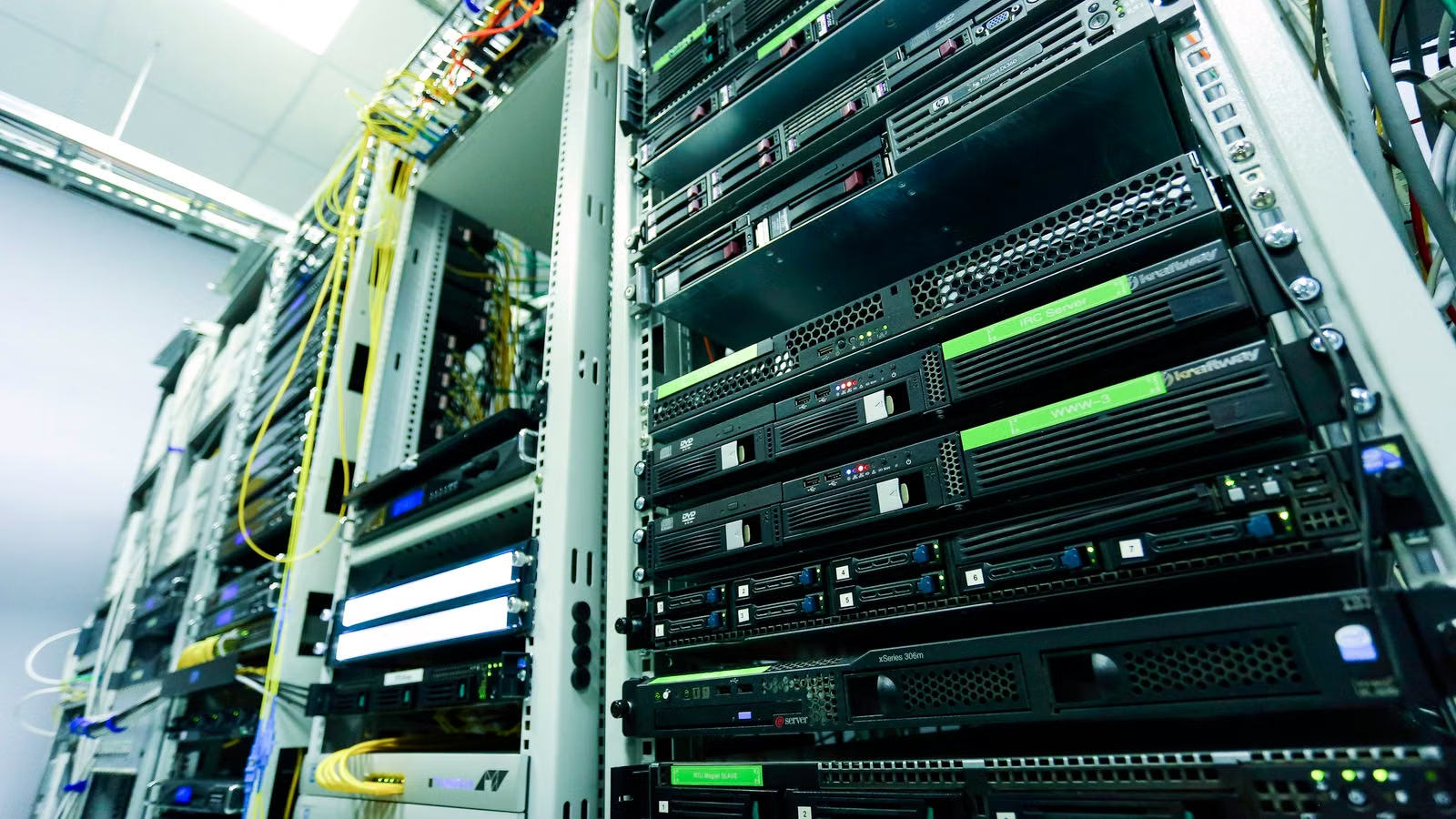
MU and STX both benefit from AI data center growth, but they sit in very different positions. Micron MU mainly operates in the “memory and high-performance storage layer” of AI servers, affecting how quickly GPUs, AI accelerators, and servers can process data. Seagate STX mainly operates in the “capacity storage layer,” supporting training data, inference logs, model versions, backup, and archival storage. You can think of MU as a key component supplier that improves AI computing efficiency, while STX supports the long-term storage foundation behind AI data.
Micron’s core products include DRAM, HBM, DDR5, LPDRAM, NAND, and data center SSDs. In AI servers, HBM provides high-bandwidth data channels for GPUs or AI accelerators, server DRAM supports CPU and system-level memory capacity, and data center SSDs help with high-speed reading, caching, and model loading. Micron’s latest reported US$41.46 billion in revenue shows that AI-related memory demand has become a major driver of the company’s performance.
Seagate’s core products are enterprise HDDs, especially nearline HDDs, high-capacity Exos drives, and HAMR-based Mozaic platforms. AI does not only consume GPU compute; it also creates large amounts of data that must be stored. Training datasets, enterprise knowledge bases, video files, sensor data, logs, backups, and cold data are not all suitable for expensive SSDs or memory. Seagate positions itself as a mass-capacity storage supplier, which directly matches the demand for low-cost-per-TB storage in cloud and AI data centers.
| Dimension | Micron MU | Seagate STX |
|---|---|---|
| Supply chain position | AI server memory layer | AI data center capacity storage layer |
| Core products | HBM, DRAM, DDR5, SSDs | Nearline HDDs, Exos, HAMR |
| Demand source | GPUs, AI accelerators, server upgrades | Cloud providers, data lakes, archival and backup |
| Investment keywords | High bandwidth, high value, strong leverage | High capacity, low cost per TB, cash flow |
| Main risks | Memory price cycles, capacity expansion, inventory | Cloud order timing, HDD substitution, yield |
Summary: MU and STX are not the same type of AI beneficiary. MU is closer to the “compute bottleneck” in AI servers, because large model training and inference require higher bandwidth, larger capacity, and more power-efficient memory systems. STX is closer to the “capacity bottleneck” in AI data centers, because more AI applications create more data that must be stored and archived. If you focus on AI GPU upgrades, HBM supply tightness, and server memory pricing, MU deserves closer attention. If you focus on cloud data center expansion, enterprise data retention, and nearline HDD demand, STX has a clearer logic.
Why Does AI Server Demand Benefit Micron MU More Directly?
If you only focus on AI server upgrades, MU benefits more directly. The reason is that the bottleneck in AI model training and inference is not only GPU compute, but also whether data can move into the compute units fast enough. HBM, DRAM, DDR5, and data center SSDs all belong to this system. The stronger the GPU, the larger the model, and the higher the inference workload, the greater the need for high-bandwidth memory and larger server memory capacity. This directly increases demand for Micron’s high-end products and improves the value of its product mix.
HBM is the core keyword behind MU’s AI exposure. Micron has begun shipping HBM4 36GB 12H designed for NVIDIA’s Vera Rubin platform, showing that it has entered the high-value supply chain for next-generation AI accelerators. Compared with standard DRAM, HBM has higher technical barriers, more complex packaging requirements, longer customer qualification cycles, and higher unit value. During periods of tight supply and demand, HBM can have a much stronger impact on revenue and gross margin.
Beyond HBM, server DRAM and DDR5 are also important variables for MU. Micron’s DDR5 server memory emphasizes higher bandwidth, reliability, and scalability, which aligns with the needs of AI servers, general cloud servers, and high-performance computing. AI data centers are not made only of GPU nodes. They also include CPU servers, storage nodes, network nodes, and database systems, all of which need memory upgrades.
MU benefits from AI servers through five main paths:
- GPU and AI accelerator upgrades increase HBM usage;
- Each AI server requires larger DRAM capacity;
- DDR5 replaces DDR4 and increases server memory value;
- Data center SSDs support model loading, caching, and high-speed reads;
- Long-term supply agreements improve demand visibility and reduce some cyclical uncertainty.
From a financial perspective, Micron’s leverage comes from two directions: product volume growth and higher average selling prices supported by a stronger product mix. The company’s guidance of about US$50 billion in revenue for the next quarter reflects management’s confidence in near-term demand. Reuters also reported that Micron signed US$22 billion in customer agreements with strategic customers, including supply commitments. For a cyclical memory company, this is an important signal of improved revenue visibility.
However, you should also see the other side: memory remains a cyclical industry. Tight supply in HBM and server DRAM today does not mean prices will rise forever. If major suppliers expand capacity too quickly, customer orders slow, or future AI architectures reduce the amount of high-end memory needed per unit of compute, MU’s valuation and earnings expectations could be affected. Micron’s strength is its high leverage, but that is also its weakness. Changes in the cycle can be reflected quickly in both stock price and margins.
Summary: AI server demand benefits MU more directly because high-bandwidth memory, server DRAM, DDR5, and data center SSDs are all embedded in the AI compute system. When evaluating MU, you should not only look at the “AI theme,” but also track HBM shipments, DRAM pricing, data center revenue mix, gross margin, capital expenditure, and customer agreements. If AI server expansion continues, MU’s earnings leverage will usually be stronger than that of traditional hardware companies. But if memory supply and demand reverse, its stock price may also become more volatile.
Why Does AI Data Growth Still Benefit Seagate STX?
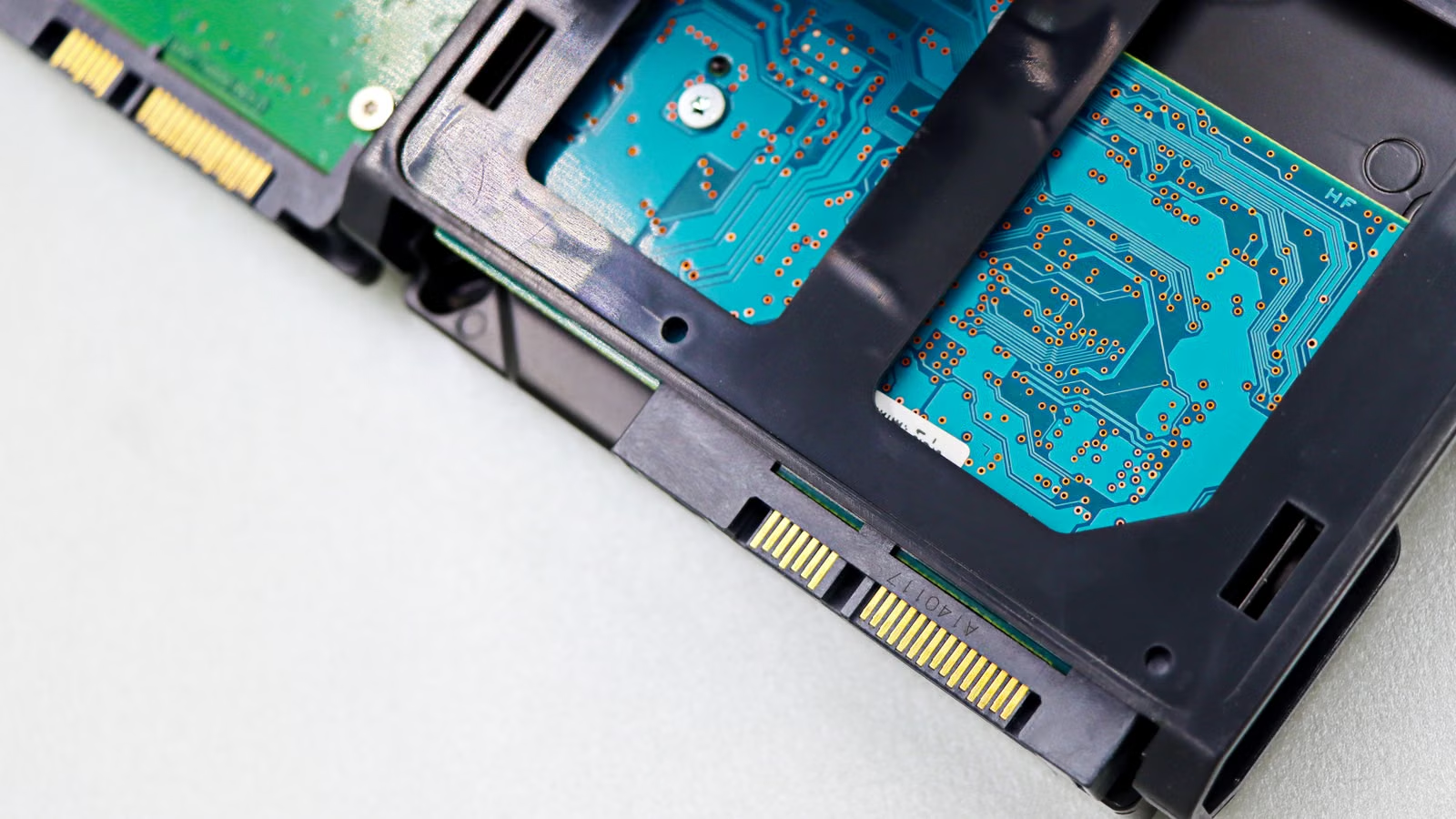
STX is not an AI server memory stock, but AI data growth can still benefit the company. The reason is simple: AI does not only need training and inference; it also needs to store massive amounts of data. Training materials, multimodal assets, enterprise documents, model checkpoints, inference logs, backups, and archives all require long-term, low-cost, scalable capacity storage. For workloads that do not need millisecond-level read and write performance, nearline HDDs still have a clear cost-per-TB advantage, allowing Seagate to benefit from back-end AI data center expansion.
AI data centers typically use a tiered storage architecture. The hottest data may reside in memory and SSDs for training, inference, and high-speed access. Warm data, cold data, backups, and archives are more suitable for HDDs or object storage systems. In its AI storage materials, Seagate clearly states that hard drives, SSDs, GPUs, CPUs, HBM, and DRAM are all parts of the AI workflow. Its discussion of Data Storage for AI highlights this multi-layer collaboration.
Seagate’s key technologies are HAMR and the Mozaic platform. The company’s Exos M 30TB is designed for large-scale data center capacity demand. Its core value is increasing capacity per drive while reducing energy use and space requirements per unit of storage. Seagate has also said that these drives are based on the Mozaic 3+ platform and HAMR technology, targeting scalable storage demand created by AI deployment.
| AI Data Scenario | More MU-Related | More STX-Related | Rationale |
|---|---|---|---|
| Real-time GPU training | Strong | Weak | Requires HBM and high-bandwidth memory |
| Model inference servers | Strong | Moderate | Requires memory, SSDs, and some storage |
| Training data lakes | Moderate | Strong | Requires large-scale, low-cost storage |
| Inference logs and backup | Weak | Strong | Focuses more on capacity and cost per TB |
| High-frequency databases | Strong | Weak | Requires low latency and high-speed reads/writes |
STX’s logic is closer to “the more AI data grows, the tighter back-end capacity becomes.” Seagate reported US$3.11 billion in revenue for fiscal third quarter 2026, along with a significant improvement in free cash flow. Reuters also reported that Seagate’s US$3.45 billion quarterly revenue forecast came in above market expectations, driven by strong demand for data storage hardware powered by AI.
Still, STX’s AI exposure is not as close to the core compute layer as MU’s. The value of nearline HDDs comes from capacity, cost, and disciplined supply, not from upgrades in each generation of GPU. Its growth rate may be slower than HBM, but order visibility, cash flow, and dividend characteristics may be more attractive to investors seeking a steadier profile. The risks include cloud provider purchasing cycles, HAMR yield, falling SSD costs, and enterprise IT spending cycles.
Summary: STX benefits from AI data centers, but its benefit comes from large-scale data retention rather than AI server memory. You can view MU as the memory supplier at the front end of AI compute, while STX serves as the capacity supplier at the back end of AI data. If you believe training datasets, inference logs, enterprise data lakes, and cloud archives will continue to expand, the nearline HDD case for STX remains valid. But it should not be valued as an HBM or GPU supply chain company.
From Earnings Leverage, Cash Flow, and Cyclicality, Which Is Stronger?
MU usually has stronger earnings leverage, while STX has a more visible cash flow profile. To judge which one is stronger, you first need to define whether you are comparing revenue growth speed, gross margin leverage, free cash flow, or cyclical stability. During an AI upcycle, MU is more likely to see amplified profits from rising HBM and DRAM prices. STX is more likely to show cash flow recovery when nearline HDD supply is tight, pricing discipline improves, and large customer orders remain stable.
In terms of revenue scale, MU is much larger than STX and is currently benefiting more visibly from the AI memory cycle. Micron’s AI data center portfolio covers memory and storage products used in both training and inference, allowing it to participate in multiple demand lines, including HBM, server DRAM, and data center SSDs. The closer a product is to a core AI server bottleneck, the more likely the market is to assign it a higher growth expectation.
STX’s advantage lies in margin recovery and cash flow. Seagate reported a 47.0% non-GAAP gross margin for fiscal third quarter 2026, showing that tight nearline HDD supply and a better product mix are already flowing through to profitability. The same report disclosed US$953 million in free cash flow, which helps explain why some investors view STX as a cash flow beneficiary within the AI storage cycle.
| Comparison Dimension | MU | STX |
|---|---|---|
| Growth leverage | Higher, driven by HBM and DRAM | Moderate, driven by nearline HDDs |
| Gross margin driver | Product mix and memory pricing | High-capacity drives, pricing discipline, utilization |
| Cash flow profile | Strong during upcycles, but expansion pressure exists | Clear recovery, stronger dividend characteristics |
| Cyclical risk | Memory pricing and inventory cycle | HDD demand and cloud procurement cycle |
| AI directness | More direct | Indirect but persistent |
Cyclical differences are also important. MU’s cycle is closer to the semiconductor memory cycle, where pricing, inventory levels, and capital expenditure can quickly affect performance. STX’s cycle is closer to enterprise hardware and cloud storage procurement, where order timing, utilization, and large customer contracts matter more. Neither company is a low-risk asset, but their sources of volatility differ.
For ordinary investors, comparing MU and STX should not simply come down to which stock has recently risen more. A better approach is to track different indicators for each company: MU should be evaluated through HBM supply, DRAM contract prices, data center revenue, and gross margin; STX should be evaluated through nearline HDD exabyte shipments, average drive capacity, free cash flow, and HAMR production progress. This helps you avoid mixing up an “AI server memory stock” with an “AI capacity storage stock.”
Summary: If measured by earnings breakout potential, MU is stronger. If measured by cash flow recovery and large-capacity storage demand, STX has its own value. MU’s upside comes from HBM, DRAM, and server memory pricing, which also means it is more exposed to supply-demand reversals. STX’s upside comes from nearline HDDs, HAMR, and large cloud data center purchases. Its growth may be less explosive, but its cash flow and shareholder return characteristics are more visible. You should first define the comparison metric before deciding which company better fits your risk profile.
How Should Ordinary Investors Decide Between MU and STX?
If you can tolerate higher volatility and are willing to follow semiconductor cycles, MU is better suited to a high-leverage AI hardware framework. If you care more about data center capacity expansion, cash flow, and dividend characteristics, STX fits better into an AI storage infrastructure framework. Neither company should be bought simply because it has an “AI label.” You need to evaluate holding period, risk tolerance, valuation, and financial variables.
Investors who should pay closer attention to MU usually have three traits. First, they understand the role of HBM, DRAM, DDR5, and data center SSDs in AI servers. Second, they can tolerate the earnings volatility caused by memory pricing cycles. Third, they are willing to follow earnings reports, industry pricing, and capital expenditure trends. MU’s strength is high leverage: when HBM is in short supply and server DRAM prices rise, earnings can expand quickly. Its weakness is that volatility can also be significant when the cycle turns.
Investors who should pay closer attention to STX tend to value capacity demand, cash flow, and industry supply discipline. STX’s investment logic does not depend on every generation of GPU upgrade. Instead, it depends on long-term AI data growth, cloud expansion, and tight nearline HDD supply. If you believe AI data lakes, archives, backups, and enterprise data management will continue to expand, STX’s logic may be easier to understand.
You can start with these questions:
- Do you care more about high growth leverage or cash flow recovery?
- Can you tolerate large swings in the memory pricing cycle?
- Do you understand the roles of HDDs, SSDs, DRAM, and HBM?
- Are you willing to track earnings reports and industry supply-demand data?
- Is your holding period short-term trading, mid-cycle positioning, or long-term observation?
- Have you considered trading fees, FX rates, order types, and position sizing?
If you plan to follow MU, STX, or other AI infrastructure stocks, transaction costs should also be part of your decision. When using Biya to view relevant stocks, you should not focus only on share price movements, but also check order details, fee structure, and account eligibility. Biya charges US$0 commission for U.S. stock trading, while platform fees, external institution fees, and other charges are subject to the U.S. stock trading fees and the actual order page. Service availability depends on the user’s location, identity verification result, platform rules, and applicable laws and regulations.
Summary: MU is better suited to investors who accept higher risk, focus on growth, and are willing to study the semiconductor memory cycle. STX is better suited to investors who focus on AI data capacity, cash flow recovery, and the storage hardware cycle. The two companies also do not have to be mutually exclusive, because AI infrastructure requires both front-end compute memory and back-end capacity storage. But whichever you choose, you should avoid making decisions based only on the “AI theme.” Valuation, earnings, supply-demand conditions, fees, and your own risk tolerance all matter.
Final Judgment: Who Benefits More from AI Server Memory and Nearline Hard Drives?
If the question is specifically “who benefits more from AI server memory and nearline hard drives,” the answer is: MU has the stronger direct exposure and earnings leverage, while STX has more value in long-term data capacity and cash flow recovery. AI server upgrades first increase demand for HBM, DRAM, DDR5, and high-speed storage, making MU closer to the core bottleneck. But as AI applications continue to expand, more data will need to be stored, backed up, and archived, which continues to support STX’s nearline HDD demand.
From the perspective of “direct AI benefit,” MU is stronger. Every upgrade in AI GPUs and AI accelerators usually requires greater memory bandwidth, larger memory capacity, and more complex packaging. HBM is one of the scarcest and most closely watched components in AI hardware. As MU enters the HBM4 supply cycle, the market is more likely to price it as a core supplier in the AI compute chain.
From the perspective of “long-term capacity demand,” STX still has value. AI data does not disappear after training ends. Enterprises need to store datasets, model weights, logs, backups, and compliance archives. Nearline HDDs continue to have a cost-per-TB advantage in large-scale cloud storage. STX’s role is not to replace MU, but to support the back-end capacity needs of AI data centers.
| Key Question | More MU-Related | More STX-Related |
|---|---|---|
| Who benefits more from AI server upgrades? | Yes | Partially |
| Who benefits more from long-term data growth? | Partially | Yes |
| Who has stronger earnings leverage? | Yes | Relatively weaker |
| Who has stronger cash flow and dividend characteristics? | Not necessarily | Stronger |
| Who has greater cyclicality? | Usually higher | Also cyclical, but from different sources |
Therefore, the final answer is not “MU is always better than STX,” but rather “MU is more direct, while STX is more back-end.” If you want exposure to AI server memory bottlenecks, MU fits the main theme more clearly. If you want exposure to AI data growth and large-scale storage demand, STX has a more complete logic. Both companies should be evaluated together with valuation, earnings reports, industry cycles, and risk tolerance, rather than only by short-term stock price moves or a single news headline.
Summary: MU is more like the main beneficiary of AI server memory upgrades, while STX is more like a back-end beneficiary of AI data capacity expansion. MU depends on high-value upgrades in HBM, DRAM, DDR5, and data center SSDs. STX depends on nearline HDDs, HAMR, and large-capacity cloud data center purchasing. If you only compare “who benefits more from AI server memory,” MU is the clearer answer. If you compare “who benefits from long-term AI data growth,” STX also has a defined role. The more practical approach is to separate the two companies into different investment frameworks instead of ranking them under one broad AI label.
When comparing MU and STX, you need to understand not only their supply chain positions, but also market data, fees, and risk boundaries before trading. You can use U.S. stock information to track MU, STX, and other AI storage, semiconductor, and data center-related stocks. Subject to local laws and platform rules, Biya can also support multi-asset trading needs. If you need to check quotes, orders, and account information on mobile, you can use Download App for follow-up operations. This information is based only on public market data, company financial reports, and fee structure descriptions. It does not constitute investment advice. Before trading, you should fully understand order types, fee structures, FX changes, tax requirements, and your own risk tolerance.
FAQ
Is Micron MU a Core AI Server Memory Stock?
Yes, MU is a core AI server memory-related stock. Its HBM, DRAM, DDR5, and data center SSD products are all connected to AI training, inference, and server upgrades. However, MU is still affected by memory pricing, capacity expansion, customer orders, and inventory cycles, so it should not be evaluated only as an AI concept stock.
Does Seagate STX Directly Benefit from AI Data Center Construction?
Yes, but STX benefits mainly through nearline HDDs and large-capacity data storage. AI data centers need to store training data, inference logs, model versions, and backup data, which supports demand for high-capacity enterprise hard drives. STX is not a GPU or HBM supplier, so its benefit chain is more back-end than MU’s.
Is MU or STX More Suitable for High-Risk Growth Investors?
MU is usually more suitable for high-risk growth investors. HBM and server DRAM have stronger pricing leverage, margin leverage, and direct relevance to AI servers. However, this also means MU is more exposed to memory cycles, valuation changes, and supply-demand reversals.
Will STX Nearline HDDs Be Fully Replaced by Enterprise SSDs?
A full replacement is unlikely in the near term. Enterprise SSDs are better suited for high-performance reads and writes, while nearline HDDs are better suited for large-scale, low-cost-per-TB capacity storage. AI data centers typically use memory, SSDs, and HDDs together, with storage tiers based on data temperature and access frequency.
What Financial Metrics Should Investors Track When Comparing MU and STX?
For MU, investors should focus on HBM shipments, DRAM pricing, data center revenue, gross margin, and capital expenditure. For STX, investors should focus on nearline HDD capacity shipments, average drive capacity, free cash flow, gross margin, and HAMR production progress. Any judgment should be based on original financial reports and risk disclosures.
*This article is provided for general information purposes and does not constitute legal, tax or other professional advice from BiyaPay or its subsidiaries and its affiliates, and it is not intended as a substitute for obtaining advice from a financial advisor or any other professional.
We make no representations, warranties or warranties, express or implied, as to the accuracy, completeness or timeliness of the contents of this publication.
Related Blogs of

How Should You View Seagate’s HAMR Technology? Nearline HDD Capacity Upgrades and the Supply-Demand Cycle


How to View HBM Advanced Packaging Equipment Stocks? ASMPT’s Opportunities and Cyclical Risks


How Should You View Shanghai Fudan’s Non-Volatile Memory Business? Application Scenarios, Competition, and Risks


How to Read Pure Storage and NetApp Earnings? ARR, Cloud Revenue, Gross Margin, and Cash Flow Metrics
Choose Country or Region to Read Local Blog
 Australia
 Austria
 Belgium
 Canada
 Cyprus
 Czech Republic
 Denmark
 Estonia
 Finland
 France
 Germany
 Greece
 Hong Kong
 India
India Indonesia
 Ireland
 Italy
Italy Japan
Japan Latvia
 Lithuania
 Luxembourg
 Malaysia
 Malta
Malta Morocco
 Nepal
Nepal Netherlands
 New Zealand
 Norway
 Pakistan
 Philippines
 Poland
 Portugal
 Romania
 Singapore
 Slovakia
 Slovenia
 South Africa
 South Korea
 Spain
Spain Sweden
 Thailand
 The United States
 Turkey
 United Arab Emirates
 United Kingdom
 Vietnam
Contact Us




BIYA GLOBAL LLC is registered with the Financial Crimes Enforcement Network (FinCEN), an agency under the U.S. Department of the Treasury, as a Money Services Business (MSB), with registration number 31000218637349, and regulated by the Financial Crimes Enforcement Network (FinCEN).
BIYA GLOBAL LIMITED is a registered Financial Service Provider (FSP) in New Zealand, with registration number FSP1007221, and is also a registered member of the Financial Services Complaints Limited (FSCL), an independent dispute resolution scheme in New Zealand.