
How to Buy U.S. Stocks Without a USD Account: Currency Conversion, Funding, and Fee Paths Explained





Not having a USD account does not necessarily stop you from buying U.S. stocks. The key is whether your broker supports non-USD deposits, in-platform currency conversion, automatic FX conversion, or another identifiable funding path. U.S. stocks are usually priced in U.S. dollars, so before buying, your funds ultimately need to become available USD cash or USD buying power. What you really need to assess is not simply whether your bank account can hold USD, but how your local currency becomes USD, how the funds enter your brokerage account, how fees are deducted when placing an order, and whether the money can later be withdrawn through a compliant route.
Key Takeaways
- You may still buy U.S. stocks without a USD account, depending on your broker’s currency rules.
- U.S. stocks are priced in USD, so you must confirm USD buying power before placing orders.
- Currency conversion may happen at a bank, inside a broker platform, or through automatic conversion.
- Costs include more than commissions: FX spread, wire fees, and regulatory fees also matter.
- Multi-currency accounts help with cash management, but not every broker can receive funds from them.
- Beginners should test funding, FX conversion, fees, and withdrawals with a small amount first.
Can You Buy U.S. Stocks Without a USD Account?

You may still buy U.S. stocks without a USD account, provided your funds can become USD buying power through a route accepted by your broker. You need to distinguish three concepts: a bank USD account, brokerage USD cash, and USD-denominated stocks. Not having a bank USD account does not mean you cannot convert currency inside your broker. However, if you do not have enough USD cash or buying power at the time of order placement, the order may be rejected, automatically converted, or create a borrowed currency balance.
A bank USD account is an account at your bank that can hold U.S. dollars. It is useful for USD wire transfers, USD receipts, and cross-border cash management, but it is not the only entry point for buying U.S. stocks. Many international brokers do not require you to already have a bank USD account. Instead, they may allow you to deposit supported currencies and convert them later.
Brokerage USD cash is what directly affects your ability to place an order. This is the USD balance available inside your securities account. A broker may show your total account value in one display currency, but that does not mean every currency in the account can be used directly to buy U.S. stocks. You still need to check the actual USD cash balance, available cash, or buying power shown on the order screen.
Base currency is another commonly misunderstood concept. According to Interactive Brokers’ explanation of Base Currency, base currency is mainly used for account statement conversion and margin requirements. It does not mean you can only deposit that currency. Users may hold cash in different currencies, but a cash account usually cannot maintain long-term negative cash balances. If you use a margin account, you also need to consider negative currency balances and interest risk.
Before buying U.S. stocks, the most important factor is “USD buying power.” Even if your account shows a local currency balance, you need to confirm whether the platform supports converting that local currency into USD, whether you need to convert manually, whether conversion happens automatically at order placement or settlement, and whether the order page shows enough available cash. Do not look only at total account value, because total value may already be converted into your base currency for display purposes, while the actual order still requires USD.
| Concept | Meaning | Impact on Buying U.S. Stocks |
|---|---|---|
| Bank USD account | A bank account that can hold U.S. dollars | Useful for USD wires, but not the only requirement |
| Brokerage USD cash | Available USD balance inside a brokerage account | Directly affects whether you can buy USD-denominated U.S. stocks |
| Base currency | Currency used for reporting and margin conversion | Not necessarily the only deposit currency |
| Local currency balance | Funds not yet converted into USD | Depends on whether the broker supports FX conversion or auto-conversion |
| USD buying power | USD capacity available for U.S. stock orders | The key field to check before placing an order |
Investor.gov notes that opening a brokerage account usually involves identity, tax, financial, and investment objective information. For international users, account opening, funding, currency conversion, and trading permissions are often four separate issues. Passing one step does not automatically mean the others are ready.
Summary: Not having a USD account does not mean you cannot buy U.S. stocks, but you cannot skip the USD buying power requirement. A bank USD account is only one funding route; brokerage USD cash is what directly affects order placement. Base currency mainly affects reports and margin calculations, not the only currency you can use. You should first confirm which deposit currencies the broker supports, whether in-platform conversion is available, whether orders trigger automatic FX conversion, and how fees work in cash or margin accounts. The key question should shift from “Do I have a USD account?” to “Can my funds become USD buying power in a compliant, traceable, and cost-controlled way?”
Common Currency Conversion and Funding Paths Without a USD Account
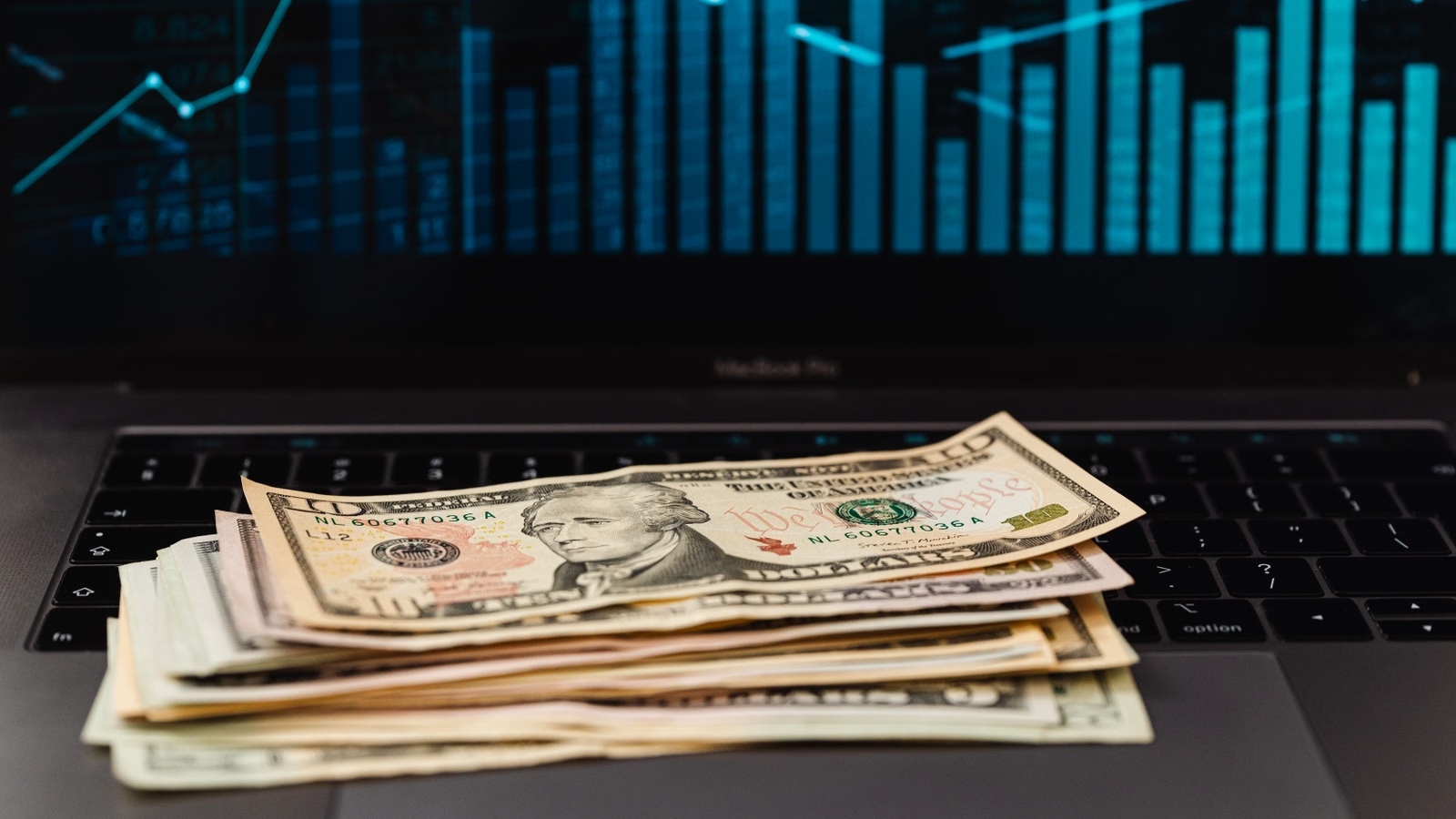
If you do not have a USD account, there are three common paths: convert at your bank first and then wire USD; deposit local currency or another non-USD currency and convert inside the broker; or use a multi-currency account for cash management before funding according to the broker’s rules. You should first decide “where the conversion happens,” then decide “how the funds enter the broker.” The differences mainly involve fees, arrival time, memo requirements, and future withdrawal convenience.
The first path is converting at the bank before wiring funds. You convert your local currency into USD at your bank, then send USD to the broker’s designated account. This path is traditional and clear. It may suit cases where the broker only accepts USD deposits, the amount is relatively large, or you want to lock in the USD amount before sending funds. For example, Schwab International lists wire transfer, account transfer, and USD check as funding methods, showing that traditional international brokers often rely on wires and account transfers as core funding routes.
The downside is also clear. Bank FX rates may include spread, cross-border wires may involve outgoing bank fees, intermediary bank fees, and receiving bank fees, and payment memos must be entered accurately. The U.S. Fedwire Funds Service is used by U.S. financial institutions to send and receive funds, but international wire transfers often pass through cross-border banking networks, so the actual credited amount may be lower than the amount sent.
The second path is depositing non-USD funds and converting inside the broker. Some brokers support multi-currency balances, allowing users to deposit HKD, EUR, SGD, or other supported currencies and then convert them into USD within the platform. IBKR’s Spot Currencies pricing information shows that currency trading commissions are calculated based on trade value and converted into the account’s base currency. This means in-platform FX should not be judged only by whether conversion is available; you also need to check the execution rate, spread, and commission model.
The third path is using a multi-currency account or third-party remittance service. A multi-currency account can help you hold USD, HKD, EUR, and other balances, and it can also make FX cost tracking easier. But it does not necessarily mean it can directly fund every U.S. stock broker. Wise’s rules for USD transfers state that USD cannot be sent to a brokerage account or intermediary bank, and For Further Credit payments are not supported. If your broker requires an FFC memo or a designated intermediary bank, a multi-currency account may not meet the requirements.
| Path | Fund Flow | Advantages | Main Limitations |
|---|---|---|---|
| Bank conversion before wire | Local currency → Bank USD → Brokerage USD | Traditional route, suitable for larger amounts | Bank FX spread, wire fees, intermediary fees |
| Deposit local currency, then convert on platform | Local currency → Broker → USD | Centralized process, easier to record | Depends on supported broker currencies |
| Multi-currency account conversion | Local currency → Multi-currency account → USD | Flexible FX and cash management | May not support brokerage accounts or FFC |
| Local transfer with automatic conversion | Local currency → Platform → Automatic USD conversion | Simpler beginner experience | FX rate, fees, and trigger rules must be checked |
| Brokerage account transfer | Existing broker → New broker | May transfer securities or cash | Time, fees, and eligible assets vary |
If you are still comparing specific U.S. stocks, ETFs, or sector opportunities, you can use the U.S. stock search tool to organize your watchlist before deciding whether to convert currency in advance. This helps avoid converting local currency into USD first, only to later find that the target security does not match your trading plan, account permissions, or risk tolerance.
Summary: Without a USD account, the key decisions are “where to convert currency” and “how to fund the broker.” Converting at a bank before wiring is clear but may cost more. Converting inside a broker keeps the process centralized, but you must confirm supported currencies, execution rates, and FX commissions. Multi-currency accounts are useful for cash management, but they should not be assumed to work as universal brokerage funding tools. The most reliable path is not the one that looks fastest, but the one clearly supported by the broker, with clear source of funds, complete memo information, estimable fees, and a future withdrawal route that also works.
Where Are Fees Charged During Currency Conversion, Funding, and U.S. Stock Trading?

When buying U.S. stocks without a USD account, fees are usually spread across currency conversion, funding, trading, selling, and withdrawal. You should not look only at whether U.S. stock commission is zero. Real costs may include FX spread, FX commission, wire transfer fees, intermediary bank deductions, platform fees, trading activity fees, regulatory charges, and time spent waiting for funds to arrive. Only by linking the full cash path can you understand the real cost.
At the currency conversion stage, the most common cost is FX spread. The exchange rate offered by a bank or platform may differ from the market mid-rate, and that difference is an implicit cost. Some platforms use a marked-up FX rate, while others use a near-market quote and charge a separate commission. IBKR Singapore’s Currency Trading page mentions real-time quotes, low commissions, and no hidden spreads or markups, but actual costs still depend on account type, trade size, and execution.
At the funding stage, the main costs are wire fees and credited amount differences. If you first convert at a bank and then send a cross-border USD wire, you may pay an outgoing bank fee. If the wire passes through intermediary banks, intermediary deductions may apply. The broker or receiving bank may also charge a processing fee. To assess this stage, compare the amount sent with the amount actually credited to the brokerage account.
At the trading stage, you need to look at commission, platform fees, spreads, and regulatory charges. FINRA Fees and Commissions explains that buying and selling stocks, bonds, and other investment products usually involves costs that vary by account type, service type, and product type. Selling stocks may also involve regulatory fees. FINRA’s explanation of the Trading Activity Fee shows that TAF is one of the regulatory fees FINRA charges member firms to help cover regulatory and oversight costs.
| Fee Stage | Common Fees | Where to Check |
|---|---|---|
| Local currency to USD conversion | FX spread, FX commission | FX execution page, bank rate |
| USD wire transfer | Outgoing bank fee, intermediary bank fee | Bank receipt, credited amount |
| Brokerage crediting | Receiving fee, processing difference | Brokerage cash activity |
| Buying U.S. stocks | Commission, platform fee, spread | Order confirmation |
| Selling U.S. stocks | Trading activity fee, regulatory fee | Trade confirmation, fee center |
| Withdrawal and conversion back to local currency | Withdrawal fee, FX spread | Withdrawal confirmation, bank statement |
If you follow U.S. stock trading opportunities, you need to pay attention not only to price movement but also to real trading costs. U.S. stock trading costs may include commissions, platform fees, external institutional fees, trading activity fees, clearing fees, and FX costs. Biya U.S. stock trading charges 0 USD commission, while platform fees, external institutional fees, and other costs are subject to the fee center and order page. Service availability depends on the user’s location, identity verification result, platform rules, and applicable laws and regulations. Public market information, trading rules, and fee structures do not constitute investment advice.
Summary: When buying U.S. stocks without a USD account, fees are often split across different systems. You may pay FX spread when converting at a bank, intermediary bank deductions during a wire transfer, platform or regulatory fees when trading at the broker, and additional costs when selling and withdrawing. Cost analysis should not focus only on “zero commission” or “successful conversion.” You should calculate the full chain: local currency to USD, funding, order placement, selling, and withdrawal. Beginners should pay special attention to execution exchange rates, actual credited amounts, order confirmations, and withdrawal statements.
How Do Brokers Handle Non-USD Balances When You Buy U.S. Stocks?
When you buy U.S. stocks without a USD balance, brokers may handle it in three ways: require you to manually convert first, allow automatic currency conversion at order placement, or create a negative currency balance in a margin account. These methods carry very different risks. Cash accounts usually depend more directly on available USD cash, while margin accounts may involve borrowed currency interest, FX fluctuation, and liquidation risk.
Manual conversion is the clearest approach. You convert local currency, HKD, EUR, SGD, or another supported currency into USD before buying U.S. stocks with USD cash. The advantage is that you can clearly see the FX execution rate, USD balance, and order amount. The disadvantage is that you need to perform the conversion yourself, and the exchange rate may change while you wait to place the order. For beginners, manual conversion adds one step, but it makes the cash flow easier to understand.
Automatic conversion is more convenient, but platform rules matter. Some platforms automatically convert local currency into USD when you buy U.S. stocks, or automatically deduct from a local currency balance at settlement. This may simplify the experience, but you must check the exchange rate source, fees, trigger timing, whether auto-conversion can be disabled, and whether a failed order still creates an FX record. Rules vary significantly across brokers and regions, so you should not assume all platforms operate the same way.
Margin accounts require extra caution. IBKR’s overseas trade mechanics example notes that if you do not convert currency, you may create a negative cash balance in the relevant currency and need to meet margin requirements. A negative currency balance may effectively mean borrowing one currency to buy an asset, exposing you to interest rates, FX moves, and account margin status. For beginners unfamiliar with margin mechanics, total account value alone is not enough to judge risk.
Before placing an order, check these six fields:
- Whether the account already has available USD cash.
- Whether the local currency balance can be automatically converted into USD.
- Whether the FX rate is based on real-time execution or a platform quote.
- Whether FX commission or platform fees are charged separately.
- Whether a cash account may reject the order due to insufficient USD.
- Whether a margin account may create a negative currency balance and interest.
If your account supports multi-currency holdings, also pay attention to how balances are displayed. Some platforms show total assets converted into one base currency, making the balance look sufficient, while the actual order may require USD cash. You should check “available cash,” “tradable cash,” “buying power,” and “currency balance,” not just account net value.
Summary: When using a non-USD balance to buy U.S. stocks, the key is not whether total account value is enough, but whether USD available cash or USD buying power is enough. Manual conversion is more transparent and helps beginners understand costs. Automatic conversion is more convenient, but you must confirm exchange rates, fees, and trigger rules. Margin accounts may allow trades without enough USD cash, but they introduce currency borrowing interest, FX fluctuation, and liquidation risk. Before placing orders, review order previews and fee estimates so you do not overlook insufficient USD balance by looking only at total assets.
How to Avoid Funding Failure and Fee Misjudgment Without a USD Account
When you do not have a USD account, the most common problem is not that you cannot buy U.S. stocks, but that you did not confirm currency, route, memo, and fee rules in advance. Before your first funding attempt, check whether the broker supports non-USD deposits, whether it accepts your same-name account, whether a deposit notification is required, whether FFC memos are supported, and whether funds can be withdrawn later through a compliant route. Do not mistake “can receive USD” for “can fund a broker.”
First, confirm the deposit currencies supported by the broker. Different brokers and regions support different funding currencies and routes. Some platforms allow local currency deposits followed by conversion; some accept only specific currencies; some require you to create a deposit notification before sending funds. IBKR’s Deposit Methods explanation notes that some methods essentially create a deposit notification, while you still need to initiate the actual transfer from your bank. This means “deposit created” on the platform is not the same as “funds received.”
Next, confirm same-name and memo requirements. Common wire transfer issues include payer name mismatch, wrong SWIFT code, wrong receiving account, missing brokerage account number, incomplete FFC information, and bank-truncated memos. Wise’s explanation of For Further Credit describes FFC as a method where funds first enter a central account and are then further allocated to the final recipient account. If the broker uses this structure and your payment tool does not support FFC, the funds may not be accurately matched.
You should also keep complete records. Save FX execution screenshots, wire transfer receipts, brokerage cash activity, trade confirmations, fee details, and withdrawal records. This helps you calculate real costs and respond to any source-of-funds review. For large or frequent deposits, a broker or bank may ask you to explain income sources, transfer purpose, tax status, or trading objectives.
Use this funding path checklist if you do not have a USD account:
- Whether your broker supports non-USD deposits.
- Whether the deposit account name matches the brokerage account name.
- Whether you need to convert first or can convert inside the platform.
- Whether receiving bank, SWIFT, memo, and FFC information are complete.
- Whether FX, funding, trading, and withdrawal fees have all been estimated.
- Whether funds can be withdrawn after selling through the original or another compliant route.
Summary: Without a USD account, the funding route requires more careful checking than an ordinary local transfer. Before making a small test transfer, confirm currency, same-name requirements, receiving details, memo format, and deposit notification requirements. After the first deposit, compare the amount sent, amount credited, FX execution rate, and fee details. Do not use someone else’s account, third-party transfers, or unclear source-of-funds routes. Also, do not assume a multi-currency account is a universal brokerage funding tool. Being able to send or receive USD does not mean it meets a broker’s FFC, intermediary bank, same-name, and compliance requirements.
How Should Beginners Choose a Suitable USD Funding Path?
Beginners should choose a USD funding path based on amount size, funding frequency, broker support, FX cost, and record completeness. Small-amount users should prioritize simple, transparent, traceable paths. Long-term regular investors should compare FX spread and frequency costs. Larger-amount users should prepare source-of-funds proof and a withdrawal plan in advance. Not having a USD account is not the biggest obstacle; an unclear funding chain is the real risk.
Small-amount beginners can prioritize local transfers explicitly supported by the broker, in-platform conversion, or a small wire test. You do not need to start with a complex route. The key is whether each step can be explained: where the funds come from, what currency they enter in, where they convert into USD, how fees are deducted, and how the money can be withdrawn after selling. For a first attempt, use a smaller amount to test arrival time, memo format, and fee details.
Long-term investors should focus on FX frequency. If you dollar-cost average into U.S. stocks or ETFs, monthly cross-border wires may amplify small high-frequency costs. You can compare FX differences across bank conversion, broker conversion, and multi-currency account conversion, and use real-time exchange rates to record costs among USD, HKD, and local currency. Over time, exchange rate records may matter more than any single order.
Multi-market users need cash segmentation. U.S. stocks, Hong Kong stocks, digital assets, USD cash, HKD cash, and local currency cash should not be mixed into one general ledger. Users who meet applicable service conditions can use the Biya App to record multi-asset trades, FX costs, and billing information. Service availability depends on the user’s location, identity verification result, platform rules, and applicable laws and regulations.
| User Type | Preferred Path | Key Checks |
|---|---|---|
| First-time U.S. stock buyer | Local transfer or small wire test | Arrival, fees, and memo accuracy |
| User without a USD account | Non-USD deposit followed by conversion | Whether the platform supports currency conversion |
| Regular investing user | Low-cost FX + stable funding | FX spread and frequency cost |
| Large-amount user | Bank FX + wire or broker-supported route | Source-of-funds proof and withdrawal plan |
| Multi-market user | Multi-currency cash management | Separate USD, HKD, and local currency cost records |
Summary: Beginners should not ask only which USD funding route is fastest. They should ask which route is clearest, easiest to verify, and easiest to track over time. Small-amount beginners should start with a low-complexity route and test with a small transfer. Long-term investors should manage FX spread and frequency costs. Multi-market users should record different currencies and asset classes separately. Not having a USD account is not the decisive barrier. What really matters is whether you can manage currency conversion, funding, trading, and withdrawals in a consistent, compliant, and low-error way.
If you follow U.S. stocks, Hong Kong stocks, digital assets, USD funds, HKD funds, and local currency exchange rates at the same time, it is useful to build a funding record habit before buying U.S. stocks: record the exchange rate for every conversion, keep proof for every deposit, check fees for every trade, and confirm the withdrawal path each time. Biya can be used to record multi-asset trades, FX costs, and billing information. Biya charges 0 USD commission for U.S. stock trades, while platform fees, external institutional fees, and other costs are subject to the fee center and order page. Service availability depends on the user’s location, identity verification result, platform rules, and applicable laws and regulations. Before trading, you should fully understand order types, fee structures, funding paths, and risks, rather than treating currency conversion convenience as any guarantee of investment returns.
FAQ
Can You Buy U.S. Stocks Without a USD Account?
Yes, you may still buy U.S. stocks without a USD account. The condition is that your broker supports non-USD deposits, in-platform currency conversion, automatic conversion, or another compliant funding path. The final test is not whether your bank holds USD, but whether you have enough USD cash or USD buying power before buying.
Must You Convert Local Currency Into USD Before Buying U.S. Stocks?
You usually need USD buying power to buy U.S. stocks, but you do not always have to convert at the bank first. Currency conversion may happen at a bank, before a wire transfer, inside the broker platform, or automatically during order placement on some platforms. The exact method depends on the broker’s currency rules and order page display.
What Extra Fees May Apply When Funding U.S. Stocks With Non-USD Currency?
Funding U.S. stocks with non-USD currency may involve FX spread, currency conversion commission, wire transfer fees, intermediary bank deductions, platform fees, and regulatory fees. You should rely on bank receipts, brokerage cash activity, fee center records, and order confirmations rather than looking only at commission.
Can a Multi-Currency Account Directly Fund a U.S. Stock Broker?
A multi-currency account cannot always directly fund a U.S. stock broker. Being able to send or receive USD does not mean it supports brokerage accounts, FFC instructions, intermediary banks, or same-name funding requirements. You should check both the broker’s receiving rules and the multi-currency account’s payment restrictions before using it.
Can You Place a U.S. Stock Order Without a USD Balance?
Whether you can place a U.S. stock order without a USD balance depends on whether the broker supports automatic FX conversion or margin buying power. Cash accounts usually rely more directly on available USD cash. Margin accounts may create a negative currency balance, which can involve interest and FX risk.
What Should Beginners Prepare First Without a USD Account?
Beginners without a USD account should first confirm the broker’s supported currencies, same-name funding path, currency conversion method, fee structure, withdrawal route, and source-of-funds records. For the first attempt, use a small test transfer and check the credited amount, fee location, and order preview carefully.
*This article is provided for general information purposes and does not constitute legal, tax or other professional advice from BiyaPay or its subsidiaries and its affiliates, and it is not intended as a substitute for obtaining advice from a financial advisor or any other professional.
We make no representations, warranties or warranties, express or implied, as to the accuracy, completeness or timeliness of the contents of this publication.
Related Blogs of
Crypto Trading Bots: Types, Costs, and Security Risks


Choosing a Stock Trading App: Beginner Checklist




Choose Country or Region to Read Local Blog
 Australia
 Austria
 Belgium
 Canada
 Cyprus
 Czech Republic
 Denmark
 Estonia
 Finland
 France
 Germany
 Greece
 Hong Kong
 India
India Indonesia
 Ireland
 Italy
Italy Japan
Japan Latvia
 Lithuania
 Luxembourg
 Malaysia
 Malta
Malta Morocco
 Nepal
Nepal Netherlands
 New Zealand
 Norway
 Pakistan
 Philippines
 Poland
 Portugal
 Romania
 Singapore
 Slovakia
 Slovenia
 South Africa
 South Korea
 Spain
Spain Sweden
 Thailand
 United States
 Turkey
 United Arab Emirates
 United Kingdom
 Vietnam