Why Do Hot IPOs So Often Surge and Plunge? Liquidity, Valuation, and Sentiment Explained





Hot IPOs often surge and plunge in their early trading days not because the company is necessarily “good” or “bad,” but because tradable shares are limited, valuation views are divided, market sentiment is concentrated, and institutions and retail investors participate under different conditions. Using SpaceX as an example, the market is not only watching rockets, Starlink, and AI narratives, but also offering size, valuation, lockup rules, index inclusion, and trading costs. What you really need to judge is whether short-term price movement comes from improving fundamentals, or from supply-demand imbalance and sentiment-driven trading.
Key Takeaways
- Early IPO volatility is essentially concentrated price discovery and short-term supply-demand imbalance.
- Limited float, lockup periods, and share unlock schedules can amplify price swings.
- High-valuation IPOs rely more on future growth assumptions, making valuation disagreement larger.
- SpaceX combines multiple narratives: space, Starlink, AI, and Musk’s influence.
- Before trading a hot IPO, you should review valuation, order rules, fees, and risk.
Why Are Hot IPOs More Volatile Right After Listing?

Hot IPOs are more likely to surge and plunge shortly after listing because the market is pricing the company through real trading for the first time. The offering price is only the price formed by the issuer and underwriters based on bookbuilding, market conditions, and the order book. It is not the same as the post-listing market price. SEC investor education materials note that an IPO’s offering price may have limited relationship with its trading price after listing, and the stock may trade far above or below the offering price in a short period.
SpaceX is a typical example. According to Reuters, SpaceX plans to list on Nasdaq, with its fundraising size and valuation attracting intense attention. Market interest in the SpaceX IPO timeline has already heated up before the listing. The more attention a company receives, the more likely its first trading day will concentrate buying pressure, profit-taking, institutional adjustments, and media amplification.
You can break IPO prices into several layers:
| Price Type | How It Is Formed | Common Misconception |
|---|---|---|
| Offering price | Set through issuer, underwriter, and institutional bookbuilding | Assuming the offering price equals fair value |
| Opening price | Formed by the exchange’s first secondary-market trade | Assuming an opening pop means the stock was undervalued |
| Intraday price | Driven by continuous buyer-seller interaction | Mistaking short-term volatility for a long-term trend |
| Closing price | A stage result after the first trading day | Assuming the first-day result determines long-term performance |
| Long-term value | Determined by financials, growth, cash flow, and competition | Equating market hype with fundamentals |
When hot IPOs rise, the common logic is “scarcity, limited float, and strong story.” When they fall, the common logic is “valuation is too high, profit-taking is heavy, and expectations are overextended.” Both can exist at the same time, so first-day trading often shows sharp volatility instead of calm, rational pricing.
Summary: The first reason hot IPOs surge and plunge is that price discovery is still incomplete. The offering price, opening price, and first-day trading price reflect different stages of supply and demand. For a high-profile IPO like SpaceX, the company’s long-term value, its first-day trading price, and market sentiment should not be treated as the same thing. Short-term prices may be pushed up by buying enthusiasm, but they may also quickly retreat when valuation expectations become too stretched. First-day performance alone is rarely enough to judge a company’s real value.
How Does Liquidity Amplify Hot IPO Price Swings?
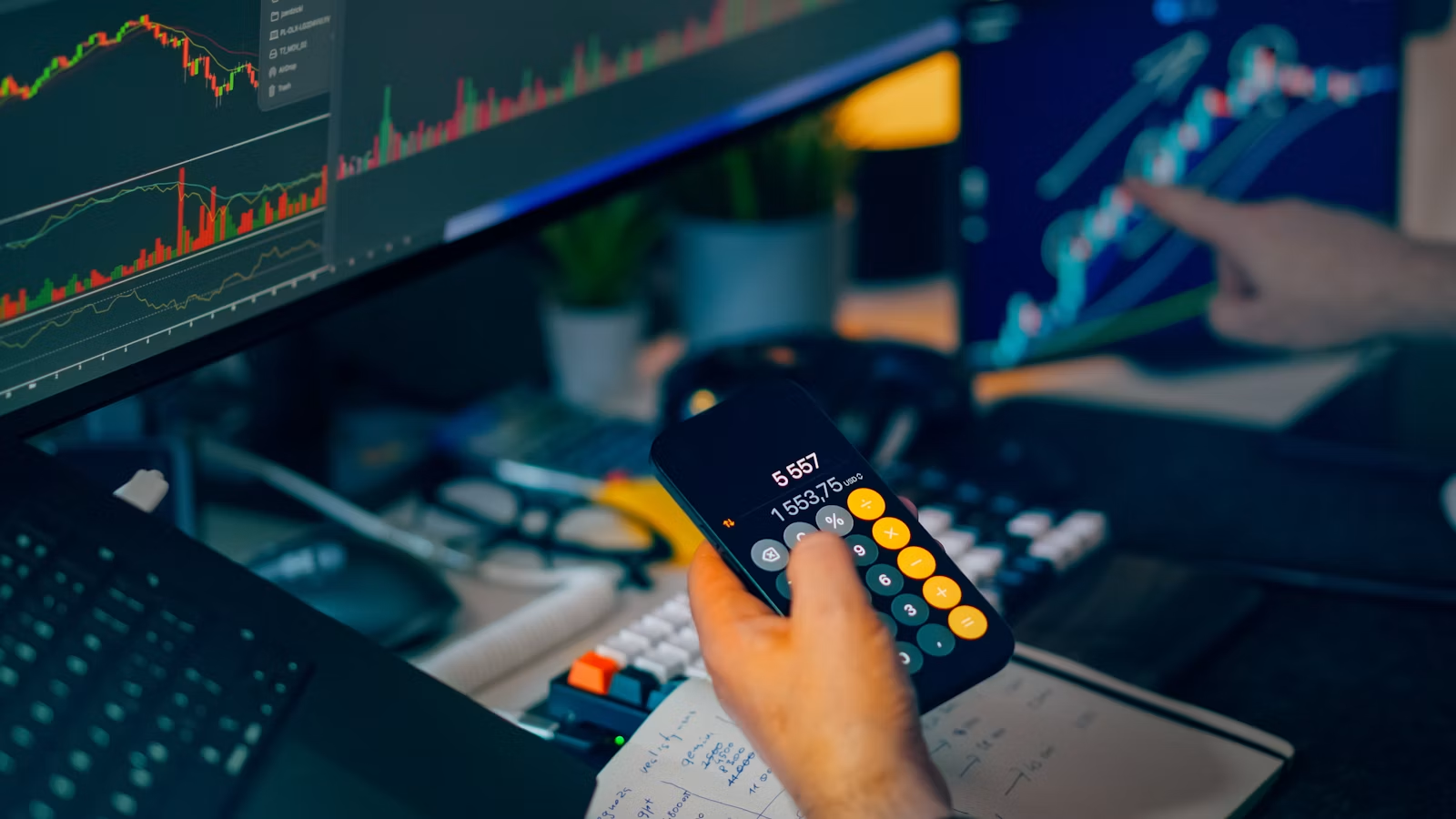
Liquidity is the core amplifier of hot IPO volatility. In the early listing stage, the shares that can actually be traded are often only a portion of the public offering. Shares held by founders, employees, early investors, and some institutions may be restricted. The SEC notes that limited trading volume after an IPO can push trading prices higher when demand is strong, especially for highly sought-after IPOs.
This is why “the company is large” and “the stock is liquid” are not the same thing. SpaceX may have a very high valuation, but if its public float is limited, the number of shares available for trading on day one may still be small. When concentrated buying enters the market, a small number of orders may push prices up quickly. When short-term traders take profits, selling pressure may also trigger a rapid pullback.
Key liquidity indicators include:
- Publicly offered shares as a percentage of total shares outstanding;
- First-day trading value and turnover ratio;
- Whether the bid-ask spread widens meaningfully;
- Whether there are market-making or underwriter stabilization arrangements;
- Lockup periods for insiders and early investors;
- The size of potential share supply after future unlocks.
Lockup periods also matter. Investor.gov explains that lockup agreements usually prevent insiders and large shareholders from selling shares for a period after an IPO, with many lockups lasting 180 days. Lockups can reduce early selling pressure, but they also create expectations of future supply increases.
SpaceX also has special structural considerations. Reuters reported that SpaceX plans to use a staggered resale arrangement, under which some restricted shares may be released earlier under certain conditions, while Musk and some key shareholders face longer restrictions. This structure may reduce the risk of a single large unlock date, but it does not remove supply risk. It merely spreads that risk across multiple time points.
Summary: Liquidity determines the short-term price elasticity of hot IPOs. The fewer shares available for trading, the more concentrated the buying demand, and the more complex the lockup structure, the more easily the stock can be pushed around by relatively small flows. For retail investors, it is not enough to look at how large the company’s valuation is. You also need to ask how many shares are actually tradable, when unlocks may occur, and whether future supply could increase suddenly. When liquidity is thin, both upside and downside moves can be amplified.
Why Do Valuations Create Larger Disagreement for Hot IPOs Like SpaceX?

High-valuation IPOs tend to surge and plunge more because investors are not just buying current earnings; they are buying years of future growth assumptions. SpaceX’s appeal comes from reusable rockets, Starlink, satellite internet, AI infrastructure, and Musk’s personal influence. But the higher the valuation, the more the market demands from future execution. Reuters’ analysis of 50 high-valuation IPOs shows that many large IPOs do not necessarily outperform the S&P 500 over the long term after listing.
Valuation disagreement is especially large for SpaceX because it does not have a fully clear comparable company. You can view it as a commercial space company, a satellite internet company, or even an AI infrastructure company. Each framework can produce a very different valuation multiple.
| Valuation Lens | Key Metrics | Potential Volatility Trigger |
|---|---|---|
| Commercial space | Launch frequency, unit cost, customer orders | Launch accidents, regulatory approvals, stronger competition |
| Starlink | User growth, ARPU, margins | Slower growth, rising capital expenditure |
| AI infrastructure | Data centers, compute demand, future market size | Technology execution falling short |
| High-growth tech stock | Revenue growth, price-to-sales ratio, cash flow | Rising rates, multiple compression |
| Musk ecosystem | Founder control, ecosystem synergies | Governance disputes, related-party concerns |
Reuters reported that SpaceX’s IPO filing disclosed Starlink profitability, overall operating losses, AI division losses, capital expenditure, and Musk’s voting power. These details allow the market to see both growth potential and financial pressure, making bullish and bearish views more sharply divided.
Valuation is not a static number. It is a set of assumptions: whether future revenue can grow, whether margins can improve, whether capital expenditure is controllable, and whether core businesses can remain ahead of competitors. If any of these assumptions is challenged by earnings, regulation, or competition, a high-valuation stock may be repriced quickly.
Summary: Valuation disagreement is the second reason hot IPOs become volatile. The more scarce and ambitious a company’s story is, the more willing the market may be to pay a premium. But a high premium also means a lower margin of error. You need to look beyond “what the valuation is” and ask what business assumptions support that valuation, whether those assumptions are backed by financial data, and which future events could change market expectations.
How Does Market Sentiment Drive Short-Term IPO Trading?
Short-term trading in hot IPOs is often sentiment-driven, especially when a company combines a celebrity founder, a scarce industry position, a large fundraising scale, and heavy media exposure. SpaceX is not only a space company. It also carries narratives around Starlink, AI, Mars exploration, and the Musk ecosystem. When sentiment runs high, investors may mistake “wanting to get in” for “it is worth buying,” and mistake “media attention” for “margin of safety.”
Market sentiment usually affects prices through three channels:
- FOMO buying: investors chase the stock early because they fear missing out;
- Social amplification: short videos, social media, and financial media reinforce one-sided narratives;
- Passive fund expectations: investors trade ahead of possible index inclusion and ETF demand.
Index inclusion is an important part of the SpaceX sentiment story. LSEG’s FTSE Russell has announced IPO Fast Entry enhancements, and Reuters reported that SpaceX may qualify for fast inclusion in the Russell U.S. Equity Indexes and the FTSE Global Equity Index Series. Meanwhile, Nasdaq implemented a Nasdaq-100 methodology update in May 2026, allowing some newly listed mega-cap companies to enter the index more quickly.
Index expectations can create potential passive buying demand, but they should not be interpreted as guaranteed upside. Index funds may need to buy, but active funds may position ahead of time or take profits before the actual event. If the market has already priced in the expectation, the real inclusion event may even become a “sell the news” moment.
You can identify overheated sentiment by watching these signals:
| Sentiment Signal | Possible Meaning |
|---|---|
| Discussion focuses only on first-day gains | Risk information is being downplayed |
| Social media is overwhelmingly bullish | Expectations may be too one-sided |
| Valuation multiples are rarely discussed | Fundamental analysis is insufficient |
| “Must-buy” or “rush in” language increases | Speculative sentiment is heating up |
| Bid-ask spreads widen | Liquidity and volatility risks are rising |
| Index inclusion is treated as certain profit | Demand expectations are oversimplified |
Summary: Sentiment can push hot IPOs higher, but it can also accelerate a reversal. For SpaceX, space, AI, index inclusion, and Musk’s influence can all create intense attention. But attention itself is not investment value. You can treat sentiment as an observation variable, but you should not treat it as a reason to place a trade. The real question is whether the current price has already reflected these narratives, and whether the market is underestimating the risks.
What Stage-by-Stage Risks Should You Watch After a Hot IPO Lists?
The risks of a hot IPO do not only happen on the first trading day. They unfold gradually through trading, earnings, unlocks, and index adjustments. First-day performance is only the first round of price discovery. After that, investors still need to watch the end of underwriter stabilization, the first earnings report, changes in lockup arrangements, index inclusion, and fund rebalancing. Each event can change supply-demand dynamics and valuation expectations.
You can monitor the post-IPO timeline this way:
| Stage | What to Watch | Potential Risk |
|---|---|---|
| First trading day | Opening price, turnover, intraday swings | Overheated sentiment or insufficient liquidity |
| First week | Whether volume starts to fade | Short-term funds exit |
| Around 30 days | Changes in underwriter-related restrictions | Stabilizing support weakens |
| First earnings report | Revenue, profit, cash flow, guidance | Results fail to support valuation |
| 90–180 days | Unlocks and insider trading arrangements | Supply increases |
| Index adjustment date | Passive fund buying or rebalancing | Expectations were priced in early |
The SEC reminds investors that underwriters may support the price of a newly issued stock through trading activities shortly after an IPO, but once that support ends, the stock price may decline significantly. Therefore, price stability in the first few trading days does not necessarily mean real supply and demand have stabilized.
Earnings are the second key checkpoint. If SpaceX lists at an extremely high valuation, the market will quickly demand clearer validation from Starlink, launch operations, AI investment, and capital expenditure. If revenue growth, margins, cash flow, or project progress fall short of listing-time expectations, the valuation may be reset.
The third checkpoint is unlocks. Even with a staggered resale arrangement, future share supply may still increase. You should pay attention to the “Shares Eligible for Future Sale” section, lockup terms, insider holdings, and major shareholder selling plans in the prospectus. If increased supply coincides with cooling sentiment, share-price pressure may become more visible.
Summary: Hot IPO risk is released in stages. It does not end after the first trading day. You need to continue watching first-day trading structure, first-week volume, the first earnings report, unlock arrangements, and index rebalancing. This is especially important for a high-valuation, high-attention company like SpaceX. Because market expectations are already high, any change in business data, capital flows, or share supply can trigger repricing.
How Should Retail Investors Decide Whether to Trade a Hot IPO?
Retail investors should first clarify whether they are investing in a company or trading market sentiment. If you care about long-term value, you need to study the business model, financial quality, valuation, competitive moat, and governance structure. If you are making a short-term trade, you need to define your order type, position size, stop-loss plan, slippage tolerance, and trading costs before entering. Mixing the two goals can make it easy to be pulled around by emotion during high volatility.
Before participating, use this checklist:
| Question | Why It Matters |
|---|---|
| Do you understand the company’s revenue sources? | Avoid buying only the story |
| Have you reviewed the risk factors in the prospectus? | Identify financial, governance, and regulatory risks |
| Can you explain the current valuation? | Judge whether it depends too much on future assumptions |
| Do you know the tradable share ratio? | Understand liquidity risk |
| Can you accept a large drawdown? | Avoid taking a position larger than you can tolerate |
| Do you understand order types and fees? | They affect real execution results |
If you are watching trading opportunities after a hot IPO lists, you also need to pay attention to actual trading costs, not just price movement. U.S. stock trading costs may include not only commissions, but also platform fees, external institution fees, trading activity fees, bid-ask spreads, and slippage. Biya charges US$0 commission for U.S. stock trading, while platform fees, external institution fees, and other fees are subject to the Fee Center and order page. Biya’s U.S. stock trading platform fee is US$0.005 per share, with a minimum of US$0.99 per order and a maximum of 1% of trade value; external institution fees and trading activity fees total US$0.00396 per share. The Fee Center also states that for fractional orders with executed share quantity below 1 share, only a platform fee of 1% of the total transaction amount is charged, capped at US$1.
Where applicable service conditions are met, you can use Biya to further explore U.S. and Hong Kong stock trading, digital asset trading, USDT conversion into major fiat currencies such as USD or HKD, and remittance-related services. If you are only observing before a listing, you can first use the U.S. stock screener to build a watchlist instead of being led by first-day price swings. Service availability depends on the user’s location, identity verification result, platform rules, and applicable laws and regulations.
Summary: Retail investors do not need to rush into a hot IPO just because it is popular. A more practical approach is to first decide whether you are investing long term or trading short term, then review valuation, the prospectus, liquidity, lockup arrangements, order types, and fee structure. Hot IPOs may experience significant price volatility in the early listing stage. Before trading, you should fully understand order types, fee structure, and risk. This information is only for understanding public market information and trading rules, and does not constitute investment advice.
After understanding why hot IPOs are volatile, the next step is not to predict SpaceX’s first-day gain or loss. It is to build a more executable observation framework: study fundamentals, valuation assumptions, float, unlock schedule, index-related flows, and trading costs. If the relevant services are available in your region, you can further explore U.S. stocks, Hong Kong stocks, and multi-asset trading through web trading, while checking actual costs through Biya’s Fee Center, order page, and statement details. For a high-profile IPO like SpaceX, the more important task is to avoid making decisions purely because of market heat. Only after you have sufficient information, understand the risks, and know the trading rules should you consider whether participation is suitable.
FAQ
Why Might the SpaceX IPO Be Highly Volatile on Its First Trading Day?
The SpaceX IPO may be highly volatile on its first trading day because of limited float, large valuation disagreement, intense media attention, and concentrated sentiment-driven trading. First-day gains or losses do not determine long-term value. Investors should also review volume, turnover, prospectus risks, and later earnings.
What Is the Difference Between a Hot IPO’s Offering Price and Opening Price?
A hot IPO’s offering price is set by the issuer and underwriters through bookbuilding and the order book, while the opening price is formed by secondary-market trading after listing. The opening price may be much higher than the offering price, but it can also fall quickly depending on real-time supply and demand.
Should Retail Investors Chase High-Profile IPOs?
Retail investors should not chase high-profile IPOs only because they are popular. A more reasonable approach is to first assess risk tolerance, valuation understanding, order type, and trading costs. If you cannot tolerate large swings, it may be better to observe post-listing earnings and trading structure first.
Why Can the End of an IPO Lockup Period Affect the Stock Price?
The end of an IPO lockup period can affect the stock price because shares held by insiders, employees, or early investors may become eligible for sale. If the unlock size is large and market demand is insufficient, increased supply may pressure the stock. The actual impact still depends on fundamentals and market conditions.
Can Trading Fees Affect Actual Returns When Trading Hot IPOs?
Trading fees can affect actual returns when trading hot IPOs, especially during high volatility, frequent trading, fractional share trading, or wide bid-ask spreads. Investors should consider commissions, platform fees, external fees, slippage, and statement details, and rely on the platform’s actual rules.
How Can Investors Separate IPO Hype From Long-Term Company Value?
IPO hype reflects short-term attention, while long-term company value depends on revenue growth, profitability, cash flow, competitive advantages, governance, and valuation reasonableness. The two may be related, but they are not the same. Even highly followed companies can pull back if valuation is too high.
*This article is provided for general information purposes and does not constitute legal, tax or other professional advice from BiyaPay or its subsidiaries and its affiliates, and it is not intended as a substitute for obtaining advice from a financial advisor or any other professional.
We make no representations, warranties or warranties, express or implied, as to the accuracy, completeness or timeliness of the contents of this publication.
Related Blogs of

What Is the Difference Between a Market Order and a Limit Order in U.S. Stocks? What You Should Know Before Buying a Hot IPO


How to Trade a U.S. IPO After Listing? Basic Rules Ordinary Investors Should Know


Why Is It Hard to Buy U.S. IPOs at an Ideal Price on the First Trading Day? Matching, Liquidity, and Slippage Explained


Why Is the IPO Price Different from the First-Day Trading Price? Using Popular U.S. IPOs as Examples

Choose Country or Region to Read Local Blog
 Australia
 Austria
 Belgium
 Canada
 Cyprus
 Czech Republic
 Denmark
 Estonia
 Finland
 France
 Germany
 Greece
 Hong Kong
 India
India Indonesia
 Ireland
 Italy
Italy Japan
Japan Latvia
 Lithuania
 Luxembourg
 Malaysia
 Malta
Malta Morocco
 Nepal
Nepal Netherlands
 New Zealand
 Norway
 Pakistan
 Philippines
 Poland
 Portugal
 Romania
 Singapore
 Slovakia
 Slovenia
 South Africa
 South Korea
 Spain
Spain Sweden
 Thailand
 The United States
 Turkey
 United Arab Emirates
 United Kingdom
 Vietnam
Contact Us




BIYA GLOBAL LLC is registered with the Financial Crimes Enforcement Network (FinCEN), an agency under the U.S. Department of the Treasury, as a Money Services Business (MSB), with registration number 31000218637349, and regulated by the Financial Crimes Enforcement Network (FinCEN).
BIYA GLOBAL LIMITED is a registered Financial Service Provider (FSP) in New Zealand, with registration number FSP1007221, and is also a registered member of the Financial Services Complaints Limited (FSCL), an independent dispute resolution scheme in New Zealand.