Why Is It Hard to Buy U.S. IPOs at an Ideal Price on the First Trading Day? Matching, Liquidity, and Slippage Explained





When you cannot buy a U.S. IPO at your ideal price on the first trading day, it is usually not caused by a single broker or by slow order placement. It is the result of several factors working together: the IPO offering price, opening auction mechanism, available float, order book depth, order type, and slippage. The IPO offering price, opening reference price, and your actual execution price may be three different concepts. For popular IPOs in particular, price discovery before the opening trade may take longer, and prices may move quickly after the first trade. Understanding these mechanisms can help you decide whether to use a market order or limit order, whether you can accept the risk of non-execution, and how to evaluate real trading costs.
Key Takeaways
- The IPO offering price is not the same as your first-day buy price.
- Popular new listings usually go through price discovery before opening.
- Limited float can amplify volatility when buy demand is concentrated.
- Market orders are more likely to execute, but execution prices are less controllable.
- Limit orders can cap your buy price, but they may not be filled.
- Real costs include execution price, spread, fees, and order details.
Why Is It Hard to Buy a U.S. IPO at an “Ideal Price” on the First Day?

U.S. IPOs are often hard to buy at an ideal price on the first trading day because the “ideal price” in your mind usually comes from the offering price, media-reported price, or a momentary quote on a trading screen. But what actually trades in the public market is the price formed after order matching. The SEC’s guidance on IPO investing risks notes that an IPO’s first-day price may be significantly higher or lower than its offering price, which means the offering price is not a guaranteed buy price in the secondary market.
Many investors see that a company’s IPO offering price is $30 and naturally assume they can buy it near $30 on the first trading day. But the process does not work that way. The offering price mainly belongs to the primary issuance process. Ordinary secondary-market investors face the bid and ask prices formed after the stock opens on the exchange. If a popular IPO has far more buyers than sellers, the opening price may already be much higher than the offering price. If market sentiment weakens, it may also open lower or fall quickly.
What creates even more confusion is that the opening price is not necessarily your final execution price. Suppose an IPO’s first trade prints at $45. If you submit a market buy order, your order may be executed at $45.50, $46, or even higher. If you submit a limit buy order at $43, you may not get filled at all. This does not mean the price is “wrong.” It means your order did not meet enough sell orders at a price that satisfied your order conditions.
| Price Concept | Who Determines It | Common Misunderstanding |
|---|---|---|
| IPO offering price | The company, underwriters, and issuance process | Assuming you can buy at the offering price on the first day |
| First opening price | Exchange opening auction and supply-demand balance | Assuming everyone can trade at the opening price |
| Your execution price | Order type, queue priority, and market quotes | Assuming the quote you see is the price you will get |
The price gap on the first day of an IPO is often caused by several factors at once:
- A lower psychological anchor: You remember the offering price, but the market may have already repriced the stock at the open.
- Fast-moving order book: Best bid and best ask prices may change within seconds.
- Limited tradable shares: Not all company shares are immediately available for sale.
- Concentrated buy demand: Popular IPOs can attract aggressive buying.
- Different order types: Market orders prioritize execution, while limit orders prioritize price boundaries.
- Partial fills are possible: A single order may be executed across multiple price levels.
So, failing to buy at an ideal price on the first trading day does not necessarily mean anything is wrong with your order. It is more often the natural result of IPO price discovery and order matching. What you really need to focus on is not a single price, but three questions: What price are you using as a reference? Does your order allow execution at that price? Was there enough sell-side liquidity at that moment to fill your order?
Summary: The key reason U.S. IPOs are hard to buy at an ideal price on the first day is that your “price anchor” often differs from the actual matched price. The offering price is the price set during the issuance process, not a guaranteed buy price for ordinary investors in the secondary market. The opening price is only the first trade formed by the market, not a price available to every order. Your actual buy price depends on order type, quote depth, market volatility, and tradable share supply. Understanding the difference between offering price, opening price, and execution price is the first step in evaluating IPO first-day trading risk.
How Are U.S. IPOs Opened and Matched on the First Day? Why Don’t They Always Trade at 9:30?
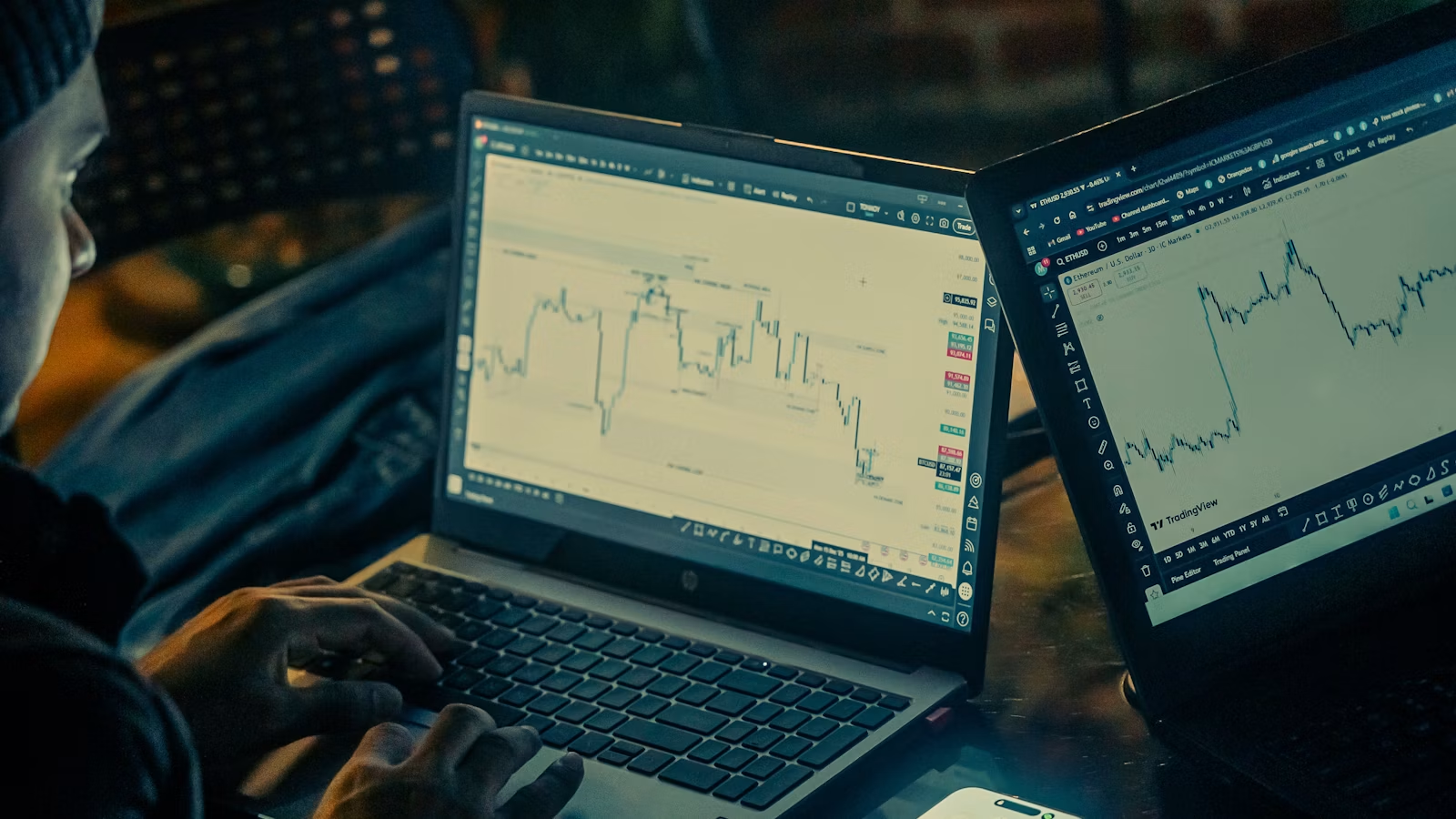
A U.S. IPO may not start trading exactly at 9:30 a.m. New York time because new listings usually need to complete price discovery before trading begins. The exchange must first collect buy and sell orders, observe order imbalances, and then determine the first execution price. If the broader market has already opened but a specific IPO still has no first trade, it is usually because that IPO is still in the opening preparation, quote display, or matching stage.
For Nasdaq listings, the Nasdaq IPO Cross publishes imbalance information before the stock officially begins trading, helping market participants observe the potential opening price and supply-demand conditions. Nasdaq rules also state that if an order imbalance still exists when the initial display period ends, the Display Only Period may be extended. This is why popular IPOs sometimes do not print their first trade until some time after the regular market open.
NYSE’s mechanism also emphasizes price discovery. NYSE’s explanation of the IPO opening process states that the NYSE price discovery process relies on coordination among the designated market maker, underwriters, and market order information. NYSE’s IPO process materials also explain that the DMM is responsible for finding the opening price, with the goal of allowing the stock to begin trading in a relatively orderly supply-demand environment.
How Does the Nasdaq IPO Cross Affect the First Execution Price?
The purpose of the Nasdaq IPO Cross is not to open a new stock as quickly as possible, but to use order collection and reference pricing so that the first trade reflects current supply and demand as much as possible. Before the opening trade, buy and sell orders enter the system, and the market can view imbalance information and a potential clearing price. If buy demand far exceeds sell supply, the reference price may move higher. If selling pressure is stronger, the reference price may move lower.
This leads to a common investor experience: you can already see the stock information on your platform, and you may even have submitted an order, but the stock has not entered continuous trading yet. At this stage, your order may show as waiting, queued, or pending, rather than being executed immediately.
Why Does the NYSE DMM Focus More on Supply-Demand Balance?
The NYSE DMM plays an organizing role in IPO price discovery. The DMM observes market buy and sell demand and communicates with underwriters and other market participants about the opening time and price range. For highly watched new listings, the indicated opening price may change several times because the market needs to keep absorbing changes in buy and sell imbalances.
This does not mean the price is being set arbitrarily. Instead, the exchange aims to ensure that the first execution price incorporates enough real order demand. For ordinary investors, the key point is that neither the opening time nor the opening price of an IPO is a fixed promise.
| Opening Stage | What Investors May See | Mechanism Behind It |
|---|---|---|
| Regular market has opened | The IPO still has no first trade | The IPO is still in price discovery |
| Quotes keep changing | Reference price moves up or down | Buy-sell imbalance is changing |
| Order shows as waiting | Continuous trading has not started | Order has not been matched yet |
| First trade appears | Price may move far from offering price | Result of the opening cross |
| Continuous trading begins | Price may move quickly | More market orders continue to enter |
Summary: A U.S. IPO may not start trading exactly at 9:30 because the exchange must first complete opening matching and price discovery. The greater the imbalance between buy and sell orders in a popular IPO, the more time the exchange may need to find a first execution price that can match supply and demand. Delayed opening, changing reference prices, and pending orders do not necessarily indicate a trading error; they are part of the IPO opening mechanism. After the stock starts trading, prices may still move quickly, so you should confirm whether the first trade has occurred and whether the current quote still fits your price boundary before placing an order.
Why Does Limited Liquidity Amplify Price Volatility on the First Day of a Popular IPO?

High attention does not mean you can easily buy a popular IPO at your ideal price. What really affects execution difficulty is the match between “tradable shares” and “buy demand.” A company may be large and highly discussed in the media, but if the shares actually available for trading on the first day are limited while many investors rush to buy, prices can be pushed higher and bid-ask spreads may widen.
Here, it is important to distinguish among total shares outstanding, publicly offered shares, and freely tradable shares. Total shares outstanding include shares held by founders, employees, early investors, and institutions. Publicly offered shares are only the portion sold in the IPO. Freely tradable shares may also be affected by lock-up periods, restricted securities, and insider ownership arrangements. The SEC’s IPO risk guidance notes that not all shares can immediately enter trading after listing; some shares may be affected by restricted securities and lock-up arrangements.
A Small Float Does Not Mean the Company Is Small
Even a large technology company with a high valuation may offer only a small portion of its shares to the public. In that case, the number of shares available for sale in the market is limited, while many investors may want to buy. The supply-demand gap is then reflected directly in the price. A high trading volume does not mean there are enough shares available at every price level. Trading volume only shows what has already traded; it does not mean there is enough liquidity near your target price.
This is why popular IPOs often create the feeling that you can “see the price but cannot buy at that price.” The quote shown on your screen reflects the price being formed by the market, while your order still has to enter the order book and wait for matching sell orders.
Why Do Concentrated Buy Orders Push the Price Higher?
When many investors are willing to raise their buy prices while sellers are not eager to sell, ask prices move higher. Market buy orders take available sell orders first. If sell-side depth is thin, execution prices may sweep through multiple levels. A limit order can prevent you from chasing prices without a ceiling, but if your limit price is below the actual executable range, the order may remain queued or unfilled.
| Factor Affecting Liquidity | Impact on First-Day Price | What Investors Should Watch |
|---|---|---|
| Public offering size | Smaller issuance can tighten supply | IPO share count and fundraising size |
| Lock-up arrangements | Insider shares may not be sellable yet | Unlock dates and potential selling pressure |
| Institutional allocation | Retail-accessible supply may be limited | Real sell-side supply in the secondary market |
| Market attention | Concentrated buy demand can push quotes higher | Whether buying is driven by momentum |
| Bid-ask spread | Execution cost may increase | Difference between best bid and best ask |
| Order book depth | Large orders may fill across multiple levels | Shares available at each price level |
Investors should also avoid a common misconception: a popular IPO’s price increase does not necessarily mean liquidity is strong. Good liquidity does not only mean many people want to buy. It also requires enough willing sellers, relatively narrow spreads, and sufficient depth across price levels. If buyers are too concentrated on the first day, prices may become even less stable.
Summary: The core issue on the first day of a popular IPO is often not “nobody is trading,” but rather “too many people want to buy while the available sellable shares are limited.” A company’s large size does not mean first-day freely tradable shares are abundant. High market attention also does not mean you can buy at the offering price or opening reference price. When buy demand is concentrated, sell-side liquidity is thin, and order book depth is insufficient, prices can move more sharply. Market orders may experience more obvious slippage, while limit orders may fail to execute if their prices are not competitive enough.
Market Orders, Limit Orders, and Slippage: Which Order Type Is More Likely to Deviate From Expectations?
The most common disappointment for investors on the first day of a U.S. IPO comes from mistaking the “price they see” for the “price they will get.” A market order is usually more likely to execute, but it does not guarantee the execution price. A limit order can set a maximum buy price, but it does not guarantee execution. IPO first-day trading is often fast-moving, quotes can change quickly, and bid-ask spreads may widen, so order type directly affects whether you can buy and whether you end up paying more than expected.
Investor.gov’s explanation of common order types is straightforward: a market order does not guarantee execution price. It usually prioritizes quick execution, not execution at the last price you saw. FINRA also reminds investors that a limit order can restrict price but does not guarantee execution. These two points are especially important on the first trading day of an IPO.
Why Do Market Orders Easily Create Negative Slippage?
Negative slippage on a buy order usually means the actual execution price is higher than the price you expected. Suppose you see the best ask at $50, but only a small number of shares are available at that level. After you submit a market buy order, the system may fill part of the order at $50, then fill the rest at $50.50, $51, or $52. Your average execution price ends up higher than the quote you saw. That is a common form of slippage.
Slippage is more obvious on the first day of an IPO because prices move quickly, many investors submit orders at the same time, and sell-side liquidity may be insufficient. There is always a time gap between quote refresh, order submission, and exchange matching. In a stable stock, this gap may not matter much; in a popular IPO, it can turn into a meaningful execution difference.
Why Can Limit Orders Control Price but Still Fail to Execute?
A buy limit order means the order can only execute at your limit price or lower. For example, if you set a buy limit at $50, the system will not buy at $51 for you. This protects you from being carried away by a fast-rising price, but the tradeoff is that the order may not be filled.
If the ask price remains above $50 after the IPO opens, your order may stay in the queue. If the price briefly touches $50 but your order is behind others in queue priority, you may only receive a partial fill. A limit order does not “guarantee buying low”; it only “guarantees not buying above the price you set.”
Stop Orders and Stop-Limit Orders Also Need Careful Understanding
Some investors treat stop orders as automatic risk-control tools, but in a fast-moving market, the execution price after a stop is triggered can still be unstable. Investor.gov’s explanation of stop orders notes that once triggered, a stop order becomes a market order, which means it may execute at the market price after the trigger, not necessarily at the stop price. If an IPO price gaps or moves rapidly on the first trading day, stop orders can also produce unexpected execution outcomes.
| Order Type | What It Prioritizes | Main Risk | How to Understand It on IPO Day |
|---|---|---|---|
| Market order | Fast execution | Execution price is not controlled | Easier to execute, but more exposed to slippage |
| Limit order | Price boundary | No execution or partial execution | Suitable for investors unwilling to chase price |
| Stop order | Execution after trigger | Triggered price may be uncertain | Use caution in volatile markets |
| Stop-limit order | Limit execution after trigger | May not execute at all | Stronger price control, less execution certainty |
Summary: No order type can guarantee both “low price” and “execution” on the first day of an IPO. A market order prioritizes execution and may suit investors willing to accept price volatility, but it can create slippage. A limit order prioritizes price control and may suit investors who do not want to overpay, but it may not be executed. Investors should not search for a perfect order type. Instead, they should first decide whether they care more about execution certainty or price certainty, then choose the order type that fits their risk tolerance.
Why Do Rules, Broker Execution, and Trading Fees Also Affect the First-Day Experience?
When you cannot buy an IPO at an ideal price on the first day, it may not be because you acted too slowly. Trading rules, broker risk controls, and fee structures can all affect the experience. Before a new listing opens, some market buy orders may be restricted. After the first trade, different platforms may handle order types, fractional shares, pre-open orders, order duration, and execution reports differently. If you only watch the stock price, you may overlook the real execution cost.
FINRA Rule 5131 sets clear requirements for new issue trading: member firms may not accept market orders to buy a new issue before trading in the secondary market begins. FINRA’s FAQ on this rule further explains what counts as “trading has commenced,” meaning that accepting market buy orders before a new issue begins trading is restricted. The background of this rule is exactly that new listings may experience sharp price volatility at the open, and market orders may execute at unpredictable prices.
This means some platforms may only allow limit orders before the first trade, or may require investors to wait until the stock officially enters continuous trading before using certain order types. If you see messages such as “market order not available,” “order pending,” or “order canceled,” it does not necessarily mean there is a platform malfunction. It may be the result of trading rules, risk controls, or unmet order conditions.
More importantly, real trading cost is not just the stock price. If you are watching trading opportunities after a popular IPO lists, you need to pay attention not only to price volatility but also to actual trading costs. U.S. stock trading costs may include commissions, platform fees, external institution fees, trading activity fees, bid-ask spreads, FX costs, or fund transfer costs. Taking Biya as an example, Biya charges $0 commission for U.S. stock trading, while platform fees, external institution fees, and other charges are subject to the Fee Center and order page. Service availability depends on the user’s location, identity verification result, platform rules, and applicable laws and regulations.
| What to Confirm Before Placing an Order | Why It Matters | What to Check |
|---|---|---|
| Whether the first trade has occurred | Determines whether secondary-market trading has started | Quote status and execution time |
| Supported order types | Affects execution and price control | Market, limit, stop, and other orders |
| Fractional share support | Affects small-size trade experience | Minimum trading unit |
| Order duration | Determines when an order expires | Day order or longer-duration order |
| Execution report | Helps identify slippage | Average price and individual fills |
| Fee details | Helps evaluate real cost | Platform fees, external fees, and more |
If you use web trading to monitor popular U.S. stocks or post-listing IPO opportunities, you should not only look at the price chart. You should also check the order type, average execution price, executed quantity, and fee details. Biya is a global multi-asset trading wallet that supports U.S. and Hong Kong stock trading as well as crypto trading, but before making any trade, you should always rely on the order page, Fee Center, and applicable rules.
Summary: The first-day IPO trading experience is shaped by rules, platform execution, and fee structures. Before a new issue has its first trade, market buy orders may be restricted by regulatory rules. After the first trade, platforms may differ in how they handle order types, fractional shares, order duration, and execution reports. To judge whether a first-day IPO trade is reasonable, you should not only look at the stock price. You should also check average execution price, partial fills, bid-ask spread, fee details, and order status. Popular IPOs may experience significant price volatility at the beginning of trading, so investors should fully understand order types, fee structures, and risks before trading.
How Can Ordinary Investors Reduce Chasing, Slippage, and Cost Misjudgment on IPO Day?
Reducing the risk of chasing, slippage, and cost misjudgment on the first day of an IPO is not about guessing the lowest price. It starts with clarifying your trading objective: do you care more about fast execution, or do you care more about setting a price boundary? If you cannot accept significant slippage, a limit-order mindset may be more suitable. If you cannot accept non-execution, you must understand that market orders may bring price uncertainty. You cannot fully guarantee both at the same time.
The first step is to treat IPO first-day trading as execution risk management, not simply as a prediction of price direction. You can ask yourself three questions first: What is the highest buy price I can accept? If my order is not filled, am I willing to walk away? If the stock falls soon after execution, can I still accept the outcome? These questions matter more than whether other investors can “get in.”
The second step is to observe the price formation process instead of only looking at media-reported offering prices. You can watch the offering price, opening indication, first execution price, trading volume, bid-ask spread, and order book depth. For highly popular IPOs, Jay Ritter’s long-running IPO first-day return data also reminds the market that first-day IPO performance is a long-tracked volatility phenomenon. But a first-day rally does not mean long-term performance is certain.
The third step is to evaluate fees and order results together. Suppose two investors buy the same IPO. One executes at $50, while the other executes at $52 due to slippage. Even if commission is the same, their real cost is already different. Add platform fees, external institution fees, FX costs, or funding costs, and the final bill may differ from what the investor expected before placing the order.
| Decision Question | Metric to Watch | Possible Risk | Practical Action |
|---|---|---|---|
| Is it necessary to buy on the first day? | Price volatility and trading volume | Emotional chasing | Observe first-day price action first |
| Can you accept the highest buy price? | Limit price | Price getting out of control | Use a buy limit order |
| Can you accept non-execution? | Order status | Missing the trade | Decide your tradeoff in advance |
| Is execution price higher than expected? | Average execution price | Slippage widening | Check individual fills |
| Are costs underestimated? | Fee details | Real cost rising | Review statements and rules |
| Do you understand company fundamentals? | Prospectus, valuation, financials | Trading only on hype | Return to fundamental analysis |
From a tool-use perspective, you can use U.S. stock search as one way to monitor U.S. stock quotes and basic company information. But no quote displayed by any market tool should be interpreted as a guaranteed execution price. The quote price, order price, and execution price are always different concepts, especially on the first day of an IPO.
You should also avoid treating first-day popularity as a judgment of long-term value. A first-day IPO rally may result from tight supply, limited float, market sentiment, or short-term capital flows. But a company’s long-term performance still depends on its business model, profitability, valuation, industry competition, and future lock-up expirations. Ordinary investors need to pay more attention to prospectus disclosures, financial data, risk factors, and lock-up arrangements, rather than only looking at the opening gain.
Summary: To reduce mistakes on IPO day, ordinary investors should not try to predict the lowest second-by-second price. Instead, they should build an execution framework. You need to decide whether you care more about execution speed or price control, then choose a market order or limit order accordingly. At the same time, check average execution price, individual fills, bid-ask spread, and fee details to avoid focusing only on the offering price or the quote shown on the trading screen. IPO first-day trading does not offer guaranteed profit or an absolutely low-cost path. Any decision should be based on order rules, fee structure, risk tolerance, and applicable local regulatory requirements.
If the relevant services are available in your region, you can further review Biya’s U.S. stock trading fee information and check the details shown on the order page before placing an order. Biya charges $0 commission for U.S. stock trading. The platform fee is $0.005 per share, with a minimum of $0.99 per order and a maximum of 1% of trade value. External institution fees and trading activity fees total $0.00396 per share. The Fee Center also states that for fractional share orders with an executed share quantity of less than one share, only a platform fee of 1% of the total transaction amount is charged, capped at $1. For price-volatile scenarios such as IPO first-day trading, the more important task is not to pursue a “guaranteed buy price,” but to clearly review order type, average execution price, executed quantity, and fee details. Service availability still depends on the user’s location, identity verification result, platform rules, and applicable laws and regulations. The information above only explains public market information, trading rules, and fee structures, and does not constitute investment advice.
FAQ
Is the U.S. IPO Offering Price the Same as the First-Day Buy Price?
No. The U.S. IPO offering price is formed during the issuance process, while ordinary investors buying in the secondary market face the market price after the stock opens on the exchange. A popular IPO may trade above or below its offering price on the first day, and the actual result depends on execution.
Why Does a Limit Order Fail to Execute on the First Day of a U.S. IPO?
A limit order usually fails to execute because the available market price is above your limit price, or because your order is behind others in queue priority. A limit order can control the highest buy price, but it cannot guarantee execution. Partial fills are also common when IPO liquidity is limited.
What Are the Risks of Using a Market Order on the First Day of a U.S. IPO?
The main risk of a market order is that the execution price is not controllable. On the first day of an IPO, prices can move quickly and bid-ask spreads may widen, so a market order may execute at a higher price than expected. Some new issues may also restrict market buy orders before secondary-market trading begins.
How Can Ordinary Investors Judge Whether a U.S. IPO Is Being Chased Too High on the First Day?
You can look at the offering price, first execution price, trading volume, bid-ask spread, float, and your own risk tolerance. A first-day rally does not confirm long-term value. If you cannot accept slippage, volatility, or non-execution risk, continuing to observe may be more appropriate.
Is a Broker Always the Reason You Cannot Buy a U.S. IPO on the First Day?
Not necessarily. Failure to buy may result from opening auction delays, order type restrictions, limited float, a limit price below the market, or fast-moving volatility. If an order status looks unusual, check the cancellation reason, execution report, and platform trading rules.
*This article is provided for general information purposes and does not constitute legal, tax or other professional advice from BiyaPay or its subsidiaries and its affiliates, and it is not intended as a substitute for obtaining advice from a financial advisor or any other professional.
We make no representations, warranties or warranties, express or implied, as to the accuracy, completeness or timeliness of the contents of this publication.
Related Blogs of

What Is a U.S. Stock IPO? What Is the Difference Between the IPO Price, Opening Price, and First-Day Trading Price?


What Is the Difference Between a Market Order and a Limit Order in U.S. Stocks? What You Should Know Before Buying a Hot IPO


Why Do Hot IPOs So Often Surge and Plunge? Liquidity, Valuation, and Sentiment Explained


How to Trade a U.S. IPO After Listing? Basic Rules Ordinary Investors Should Know

Choose Country or Region to Read Local Blog
 Australia
 Austria
 Belgium
 Canada
 Cyprus
 Czech Republic
 Denmark
 Estonia
 Finland
 France
 Germany
 Greece
 Hong Kong
 India
India Indonesia
 Ireland
 Italy
Italy Japan
Japan Latvia
 Lithuania
 Luxembourg
 Malaysia
 Malta
Malta Morocco
 Nepal
Nepal Netherlands
 New Zealand
 Norway
 Pakistan
 Philippines
 Poland
 Portugal
 Romania
 Singapore
 Slovakia
 Slovenia
 South Africa
 South Korea
 Spain
Spain Sweden
 Thailand
 The United States
 Turkey
 United Arab Emirates
 United Kingdom
 Vietnam
Contact Us




BIYA GLOBAL LLC is registered with the Financial Crimes Enforcement Network (FinCEN), an agency under the U.S. Department of the Treasury, as a Money Services Business (MSB), with registration number 31000218637349, and regulated by the Financial Crimes Enforcement Network (FinCEN).
BIYA GLOBAL LIMITED is a registered Financial Service Provider (FSP) in New Zealand, with registration number FSP1007221, and is also a registered member of the Financial Services Complaints Limited (FSCL), an independent dispute resolution scheme in New Zealand.