What Is the Difference Between a Market Order and a Limit Order in U.S. Stocks? What You Should Know Before Buying a Hot IPO




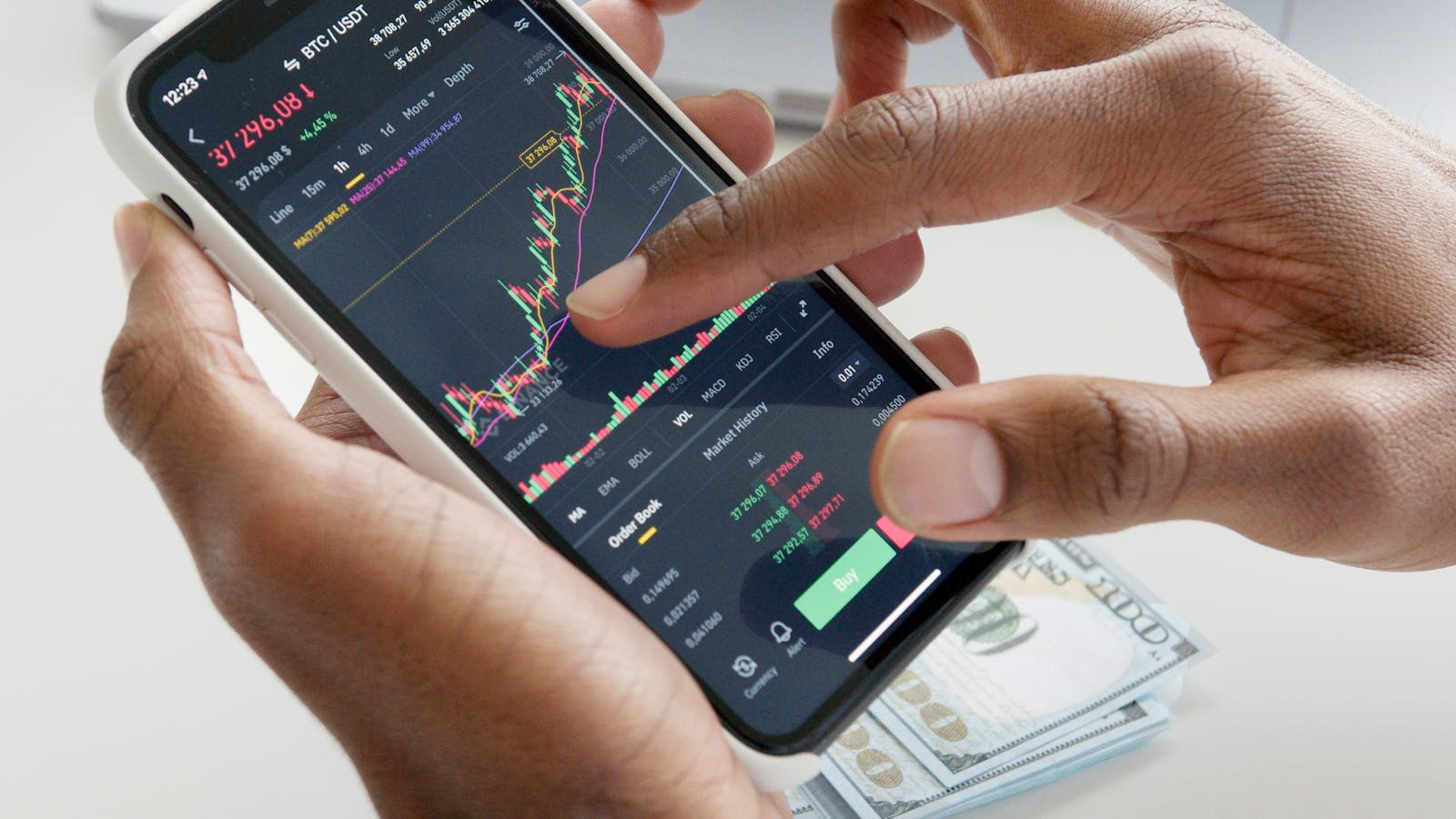
The core difference between a market order and a limit order in U.S. stock trading is this: a market order prioritizes execution speed, but it cannot lock in the final execution price in advance; a limit order prioritizes a price boundary, but it may not be filled. Before buying a hot IPO such as SpaceX, you especially need to understand this difference, because a stock’s first trading day may involve a moving opening price, wider bid-ask spreads, insufficient order book depth, and rapidly changing execution prices. An order type is not just a simple button; it reflects whether you prioritize “getting filled” or “controlling price.”
Key Takeaways
- A market order aims for fast execution, while a limit order aims for price control.
- Hot IPOs can be highly volatile on the first trading day, and market orders may face slippage.
- A limit order can set a maximum buy price, but it does not guarantee execution.
- For the SpaceX IPO, focus on opening price, spread, volume, and order book depth.
- Before placing an order, understand order types, fee structure, and risk tolerance.
What Is the Core Difference Between a Market Order and a Limit Order in U.S. Stocks?
There is no absolute answer to whether a market order or a limit order is better in U.S. stock trading. The difference lies in the trading objective. When you use a market order, you put “fast execution” first. When you use a limit order, you put “the execution price must not exceed a certain boundary” first. Investor.gov explains a market order as an order to buy or sell a stock at the current market price. It is usually easier to execute, but the final execution price may not be the price you expected when placing the order.
A market order is suitable for stocks with high liquidity, narrow bid-ask spreads, and relatively stable price movements. For example, during regular trading hours, large index constituents usually have deeper order books, making market orders more efficient. However, during hot IPOs, pre-market or after-hours trading, post-earnings volatility, or sharp market movements, the weakness of a market order becomes more obvious: the quote you see when clicking “buy” may no longer be the price at which your order is actually matched.
A limit order works in the opposite way. Investor.gov defines a limit order as an order to buy or sell a security at a specific price or better. A buy limit order can only be executed at the limit price or lower; a sell limit order can only be executed at the limit price or higher. Therefore, a limit order helps you set price discipline, but it does not guarantee execution.
| Order Type | Core Objective | Price Control | Execution Certainty | Main Risk |
|---|---|---|---|---|
| Market order | Execute as quickly as possible | Relatively weak | Relatively high | Slippage; execution price differs from expectation |
| Limit order | Control the price | Relatively strong | Uncertain | No execution or partial execution |
| Stop order | Risk control after trigger | Conditional before trigger | Still has price risk after trigger | Execution price may be uncontrollable in extreme volatility |
| Stop-limit order | Limit price after trigger | Relatively strong | More uncertain | May not execute after being triggered |
FINRA’s explanation of Limit Order emphasizes that limit orders are suitable for investors who know what price they are willing to accept and want to manage market risk. When price matters more than speed, a limit order usually matches your trading objective better. When you care more about whether you can buy or sell quickly, a market order better matches your trading objective.
Summary: A market order and a limit order are not about which one is always better. They represent two different trading preferences. A market order is suitable when you value execution speed more and the stock has sufficient liquidity. A limit order is suitable when you value execution price more and are willing to accept the risk that the order may not be filled. Before buying a hot IPO, the real question is: what is harder for you to accept — “not getting filled” or “getting filled at a much higher price than expected”? If you cannot accept a large deviation in execution price, a limit order usually better reflects price discipline.
Why Should You Avoid Using a Market Order Based Only on a Quote When Trading a Hot IPO?
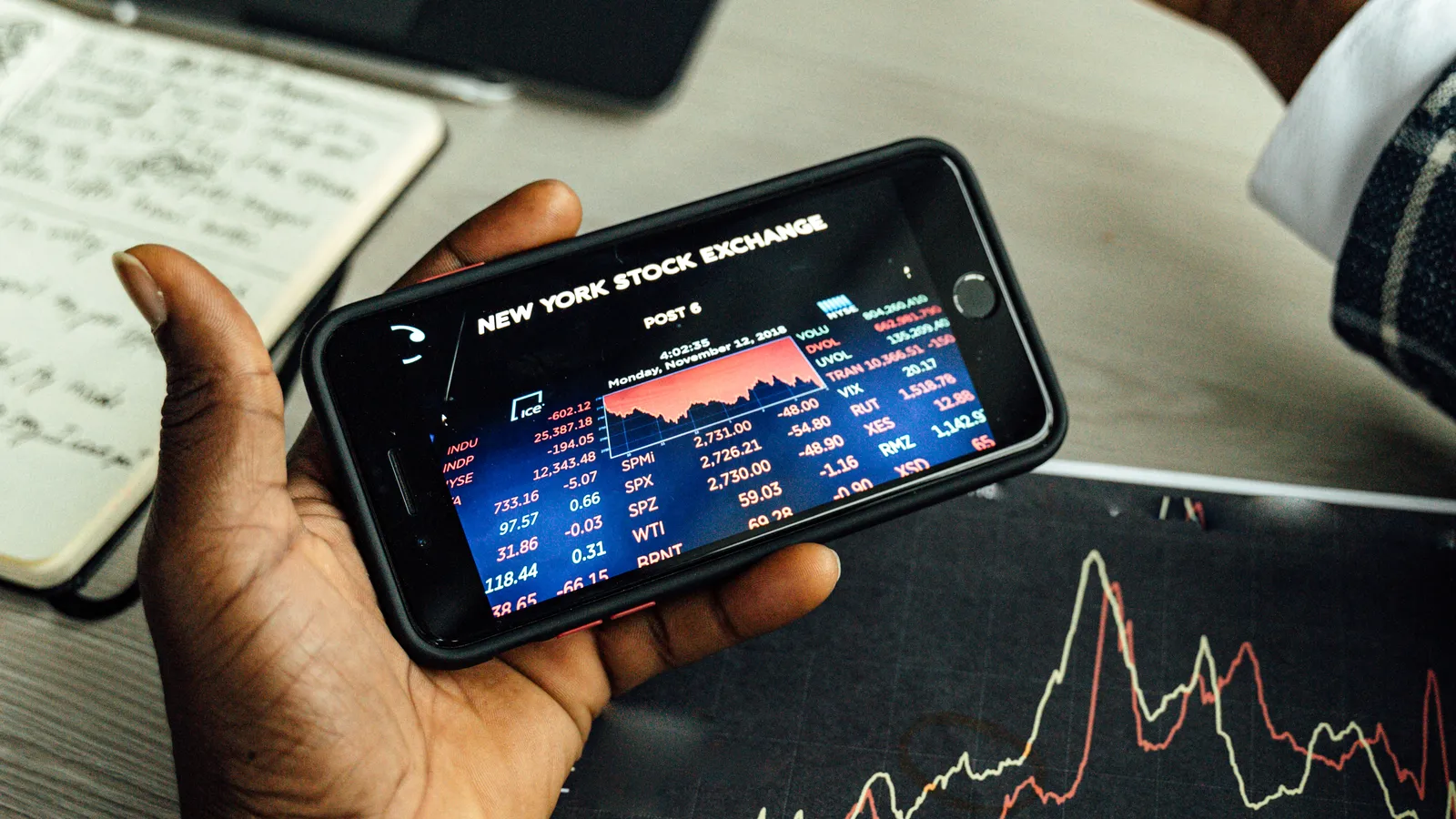
You should avoid using a market order based only on a quote when trading a hot IPO because price discovery is not yet complete on the first trading day. The offering price, reference price, opening price, and first execution price are not the same thing. SEC investor education materials remind investors that post-IPO trading prices may be affected by Limited trading volume. In the early trading stage, the number of shares available for trading may be limited, and prices may change quickly because of supply-demand imbalance.
An IPO stock also may not start trading immediately when the regular U.S. market opens. Hot new listings usually go through exchange matching, quote accumulation, and an opening process. Market demand may keep adjusting before the official matching begins. The media-reported price, offering price, or pre-market discussion price you see is not necessarily the price at which you can actually trade. For a high-profile IPO such as SpaceX, concentrated buying interest, limited selling supply, institutional allocation, and retail chasing may all appear at the same time, making the result of a market order harder to predict.
The typical risk of using a market order in a high-volatility environment is slippage. Investor.gov’s example of a fast-moving market explains that part of a market order may be filled at one price, while another part may be filled at a higher price. In other words, you may think you are buying near a displayed quote, but the actual order may be filled across multiple price levels.
Before using a market order on a hot IPO, check at least these six signals:
- Whether the first-day opening price is already much higher than the offering price;
- Whether the bid-ask spread has widened significantly;
- Whether order book depth is insufficient;
- Whether volume is concentrated in only a few price levels;
- Whether it is during pre-market, after-hours, or right after the stock begins trading;
- Whether the stock price is jumping rapidly within seconds.
This does not mean market orders cannot be used. It means market orders require the right environment. If the stock has sufficient liquidity, stable quotes, and a very narrow spread, a market order can improve execution efficiency. But if you use a market order to chase a hot IPO on the first trading day, you need to accept that the execution price may be far higher than the price you saw when clicking the order.
Summary: The risk of using a market order for a hot IPO mainly comes from price uncertainty, not from the market order itself being flawed. The strength of a market order is execution speed; its weakness is limited price control. When a high-profile IPO such as SpaceX faces crowded buying, limited selling, wider spreads, and fast price movement in the early listing stage, a market order may cause you to lose control over the execution price. A more prudent approach is to first observe the real opening price, order book depth, trading volume, and bid-ask spread, then decide whether a market order is appropriate.
Why Is a Limit Order More Suitable for Controlling the Buy Price of a Hot IPO?

A limit order is more suitable for controlling the buy price of a hot IPO because it sets an upper boundary for your purchase. You can state in advance “the maximum price I am willing to pay.” The system will only execute the order when the market price reaches your limit price or a better price. For a highly watched, potentially volatile IPO such as SpaceX, the value of a limit order is not that it guarantees profit, but that it helps you avoid unlimited execution during extreme chasing.
The essence of a buy limit order is price discipline. For example, if you believe a hot IPO only fits your risk tolerance below US$100, you can set the buy limit at US$100 or lower. If the market jumps directly to US$120, your order may not execute, but you also avoid being passively filled at a price you were not willing to accept. Sometimes, “not getting filled” is itself part of risk control.
The cost of a limit order is also clear: you may not get the stock. If a hot IPO opens and rises quickly, a buy limit set too low may not be filled at all. If there are only a small number of sell orders near your limit price, your order may only be partially filled. FINRA’s explanation of order types notes that limit orders are often used when “a suitable price is more important than fast execution.” The trade-off behind this is simple: you give up some execution certainty in exchange for price control.
Limit prices also should not be set only by looking at the offering price. A hot IPO’s offering price is usually primary-market pricing, while the opening price is the result of secondary-market supply and demand. If you mechanically set the limit price near the offering price, the order may be hard to fill. If you raise the price casually just because of media hype, you may lose price discipline. More reasonable reference points include:
| Limit Price Approach | Price Boundary | Execution Probability | Suitable Scenario |
|---|---|---|---|
| Conservative | Close to your valuation floor | Lower | Unwilling to chase; willing to miss the trade |
| Balanced | Based on the post-opening trading range | Medium | Want to participate while controlling price |
| Aggressive | Close to the current ask or higher | Higher | Prioritize execution, but still set an upper limit |
For a hot IPO, a limit order is not a “safety button”; it is a “boundary button.” After the order is filled, the stock price may still fall. A limit order only addresses the issue of “not buying at an unreasonable price.” It does not solve questions such as whether the company’s valuation is reasonable, whether the stock will pull back after listing, or whether the business will deliver.
Summary: A limit order is suitable for hot IPOs not because it removes all investment risk, but because it lets you define a price boundary before placing an order. On the first trading day of a high-profile IPO such as SpaceX, trading may be driven by sentiment, liquidity, and institutional demand at the same time, and prices may move quickly. A limit order can prevent a market order from executing at an uncontrollable price during extreme volatility, but you must also accept the possibility of no execution or partial execution. You must choose between price discipline and execution certainty.
Using the SpaceX IPO as an Example, What Trading Variables Should You Watch Before Buying on the First Day?
When buying the SpaceX IPO on its first trading day, the key question is not just “can you buy it,” but “at what price, under what liquidity conditions, and with what order rules.” Public information shows that SpaceX’s S-1 registration statement has disclosed information such as the company’s business, financials, risk factors, and share structure. Reuters’ coverage of the SpaceX IPO timeline also mentioned its planned Nasdaq listing, fundraising size, and valuation target. The higher the attention around an IPO, the more easily the difference between order types can be amplified.
SpaceX’s popularity comes from multiple narratives: reusable rockets, Starlink, commercial space, AI infrastructure, Musk’s influence, and potential index inclusion. The hotter the market sentiment, the more concentrated first-day buying interest may become. If the public float is limited, order book depth may be insufficient. In that case, market orders are more likely to face slippage, while limit orders are more likely not to execute if prices rise too quickly.
Before buying on the first trading day, pay attention to these eight variables:
- Whether the stock has officially listed and started continuous trading;
- How much the actual opening price differs from the offering price;
- Whether the bid-ask spread is abnormally wide;
- Whether order book depth is sufficient to absorb orders;
- Whether trading volume is sustained, rather than just a short burst;
- Whether the limit price is based on the actual trading range, not headlines;
- Whether the order supports pre-market/after-hours trading, partial execution, modification, and cancellation;
- Whether the position size is within your acceptable drawdown range.
Also remember that the first trading day is not the only possible participation window. After the first day, there are still first-week trading patterns, the first earnings report, lockup periods, share unlock arrangements, index inclusion, and fund rebalancing to watch. Investor.gov’s explanation of IPO lockup agreements reminds investors that they can review the prospectus to see whether a company has lockup agreements. For hot IPOs, future changes in share supply can also affect the price.
From the perspective of order types, the key to the SpaceX IPO is not simply answering “market order or limit order,” but judging the order type under specific market conditions. If the first-day price rises quickly, spreads widen, and the order book is thin, a limit order provides better upside price control. If later trading becomes more stable, liquidity improves, and bid-ask spreads narrow, the execution risk of a market order becomes relatively lower.
Summary: The order choice for the SpaceX IPO depends on the real trading structure on the first day. You need to observe the opening price, trading volume, spread, order book depth, public float, and order execution rules, rather than relying only on the offering price or social media hype. The difference between a market order and a limit order may not be obvious for stable stocks, but in the early stage of a hot IPO, that difference is amplified by liquidity, valuation, and sentiment. A more reasonable approach is to set your maximum buy price, maximum position size, and acceptable slippage first, then decide whether to place an order.
What Is the Relationship Between Market Orders, Limit Orders, and Real Trading Costs?
The relationship between market orders, limit orders, and trading costs cannot be judged only by commission. Real trading costs include execution price, bid-ask spread, slippage, platform fees, external fees, trading activity fees, and execution differences caused by partial fills or order modifications. A market order may increase the probability of execution, but it can also increase hidden costs when spreads widen. A limit order can restrict the execution price, but it may cause you to miss the trade.
For hot IPOs, order rules and fee structure should be evaluated together. Suppose you use a market order to chase a newly listed stock. On the surface, the order is filled quickly, but if the execution price is much higher than the quote you saw, hidden slippage may exceed visible fees by far. Conversely, if you set a limit order and it never executes, you do not incur a trading cost on the surface, but you may miss the price range you originally wanted to participate in. Neither is absolutely better or worse; they simply involve different types of cost.
| Cost Type | Impact on Market Order | Impact on Limit Order | Hot IPO Scenario |
|---|---|---|---|
| Commission | Weakly related to order type | Weakly related to order type | Depends on platform rules |
| Bid-ask spread | May directly absorb the spread | Can avoid buying too high | More obvious when spreads widen |
| Slippage | Higher risk | More controllable | More pronounced during first-day volatility |
| Execution probability | Usually higher | Uncertain | If prices rise quickly, limit orders may not execute |
| Partial execution | May be filled across levels | May also be partially filled | Common when order book depth is thin |
If you are watching trading opportunities after a hot IPO lists, you should pay attention not only to price movement, but also to actual trading costs. U.S. stock trading costs usually include not only commissions, but also platform fees, external institution fees, trading activity fees, bid-ask spreads, and slippage. Biya charges US$0 commission for U.S. stock trading, while platform fees, external institution fees, and other fees are subject to the Fee Center and order page. Biya’s U.S. stock platform fee is US$0.005 per share, with a minimum of US$0.99 per order and a maximum of 1% of trade value. External institution fees and trading activity fees total US$0.00396 per share. The Fee Center also states that for fractional orders with an executed share quantity below 1 share, only a platform fee of 1% of the total transaction amount is charged, capped at US$1.
Where service conditions are met, you can use Biya to explore U.S. stock trading, Hong Kong stock trading, digital asset trading, and conversion between USDT and major fiat currencies such as USD or HKD. Whether related services are available depends on the user’s location, identity verification result, platform rules, and applicable laws and regulations. Hot IPOs may experience significant price volatility in the early listing stage, so you should fully understand order types, fee structure, and risks before trading.
Summary: Before buying a hot IPO, you should not only look at stock price movement, nor should you only focus on whether the commission is low. A market order may involve slippage, a limit order may fail to execute, and bid-ask spreads and platform fees can also affect the real result. A complete view of trading costs should include both visible fees and hidden execution costs. Before placing an order, confirm the highest buy price you can accept, whether you understand platform fees and external fees, and whether you can tolerate partial execution, slippage, or no execution. Order type and fee structure must be evaluated together.
How Should Retail Investors Choose an Order Type Before Buying a Hot IPO?
Before choosing an order type, retail investors should first define their trading objective: are you more afraid of missing the trade, or more afraid of buying too high? If you are more afraid of missing out, a market order better matches an “execution first” objective, but you must accept price uncertainty. If you are more afraid of buying too high, a limit order better matches a “price first” objective, but you must accept the possibility that the order may not be filled. For a hot IPO such as SpaceX, the stronger the market enthusiasm, the more important it is to define your objective first.
You can use three steps to decide whether it is suitable to place an order:
| Step | What to Check | Purpose |
|---|---|---|
| Step 1 | Whether the price has stabilized | Avoid placing orders during the sharpest price jumps |
| Step 2 | Bid-ask spread and volume | Assess slippage and liquidity risk |
| Step 3 | Maximum acceptable price | Decide whether to use a market order, a limit order, or not trade |
The most common beginner mistake is treating “getting filled” as the only goal. On the first trading day of a hot IPO, execution itself may not be difficult; the difficult part is getting filled within an acceptable price range. Common mistakes include looking only at the offering price and not the opening price; looking only at the percentage gain and not the spread; wanting to buy without setting a price ceiling; and using an oversized position to participate in first-day volatility.
If you only want to track the post-listing performance of the SpaceX IPO, you can first use the U.S. stock screener to build a watchlist and record the opening price, trading volume, bid-ask spread, and later earnings checkpoints before deciding whether to participate. If related services are available in your region, you can also use web trading to learn more about order types, fee displays, and multi-asset trading access. Before placing an order, however, you should still rely on platform rules, the order confirmation page, and statement details.
Order type selection should also be paired with position sizing. Even with a limit order, if the position is too large, a post-execution price decline can still create significant pressure. Even with a market order, if the stock has sufficient liquidity, the position is small, and the trading objective is clear, the risk may still be manageable. An order is only a tool. The real drivers of risk are price, position size, volatility, and your own tolerance.
Summary: Choosing an order type is not just clicking a technical button; it is an expression of risk preference. A market order means you prioritize execution. A limit order means you prioritize price. When facing a hot IPO such as SpaceX, retail investors should first define the maximum acceptable buy price, maximum loss range, position limit, and real trading cost, then decide whether to place an order. This content only introduces public market information, trading rules, and fee structure, and does not constitute investment advice. Specific trading arrangements, fees, and service availability should be based on platform rules and applicable laws and regulations.
After understanding market orders and limit orders, the next step is not to predict whether the SpaceX IPO will definitely rise or fall on the first trading day. Instead, you should put order rules, fee structure, and risk boundaries into one checklist. Biya is a global multi-asset trading wallet. Where service conditions are met, it can be used to explore U.S. stocks, Hong Kong stocks, digital asset trading, conversion between USDT and major fiat currencies such as USD or HKD, as well as remittance-related functions. For hot IPOs, it is more important to understand order types, order book liquidity, bid-ask spreads, and statement costs before deciding whether to participate. Whether related services are available depends on the user’s location, identity verification result, platform rules, and applicable laws and regulations.
FAQ
Is a Market Order Suitable for Buying a Hot IPO in U.S. Stocks?
A U.S. stock market order is not suitable for unrestricted use during the high-volatility stage of a hot IPO. It can improve execution speed, but it cannot guarantee the execution price. If first-day spreads widen, the order book is thin, or prices jump quickly, a market order may face significant slippage.
Why Might a U.S. Stock Limit Order Fail to Execute?
A U.S. stock limit order can only be executed when the market price reaches the limit price or a better price. If a hot IPO rises quickly after opening and the buy limit is set too low, the order may not execute at all, or it may only be partially filled.
What Indicators Should Investors Watch Before Buying the SpaceX IPO on Day One?
Before buying the SpaceX IPO on the first trading day, investors should focus on the actual opening price, trading volume, bid-ask spread, order book depth, public float, and order execution rules. Do not decide whether to place an order based only on the offering price, media hype, or social media discussion.
Does Using a Limit Order Make Hot IPO Trading Safer?
Using a limit order for a hot IPO only helps control the execution price; it does not eliminate investment risk. Even if the order is filled at the limit price, the stock may still fall afterward. Investors still need to assess valuation, liquidity, position size, and risk tolerance.
What Are the Risks of Trading Hot IPOs in Pre-Market or After-Hours Sessions?
Trading hot IPOs in pre-market or after-hours sessions usually involves lower liquidity, wider bid-ask spreads, and more obvious price volatility. Order execution may be less stable than during regular trading hours. Specific tradable hours, order types, and restrictions should follow platform rules.
*This article is provided for general information purposes and does not constitute legal, tax or other professional advice from BiyaPay or its subsidiaries and its affiliates, and it is not intended as a substitute for obtaining advice from a financial advisor or any other professional.
We make no representations, warranties or warranties, express or implied, as to the accuracy, completeness or timeliness of the contents of this publication.
Related Blogs of

How Long Should You Observe a Newly Listed U.S. Stock? Understanding the IPO Volatility Cycle Through the SpaceX IPO


How to Trade a U.S. IPO After Listing? Basic Rules Ordinary Investors Should Know

What Is a U.S. Stock IPO? What Is the Difference Between the IPO Price, Opening Price, and First-Day Trading Price?


What Should You Check Before Buying Hot U.S. Stocks? Price Volatility, Order Types, and Company Fundamentals All Matter

Choose Country or Region to Read Local Blog
 Australia
 Austria
 Belgium
 Canada
 Cyprus
 Czech Republic
 Denmark
 Estonia
 Finland
 France
 Germany
 Greece
 Hong Kong
 India
India Indonesia
 Ireland
 Italy
Italy Japan
Japan Latvia
 Lithuania
 Luxembourg
 Malaysia
 Malta
Malta Morocco
 Nepal
Nepal Netherlands
 New Zealand
 Norway
 Pakistan
 Philippines
 Poland
 Portugal
 Romania
 Singapore
 Slovakia
 Slovenia
 South Africa
 South Korea
 Spain
Spain Sweden
 Thailand
 The United States
 Turkey
 United Arab Emirates
 United Kingdom
 Vietnam
Contact Us




BIYA GLOBAL LLC is registered with the Financial Crimes Enforcement Network (FinCEN), an agency under the U.S. Department of the Treasury, as a Money Services Business (MSB), with registration number 31000218637349, and regulated by the Financial Crimes Enforcement Network (FinCEN).
BIYA GLOBAL LIMITED is a registered Financial Service Provider (FSP) in New Zealand, with registration number FSP1007221, and is also a registered member of the Financial Services Complaints Limited (FSCL), an independent dispute resolution scheme in New Zealand.