Which Themes Could SpaceX’s IPO Drive? Commercial Space, Satellite Internet, and AI Infrastructure Explained




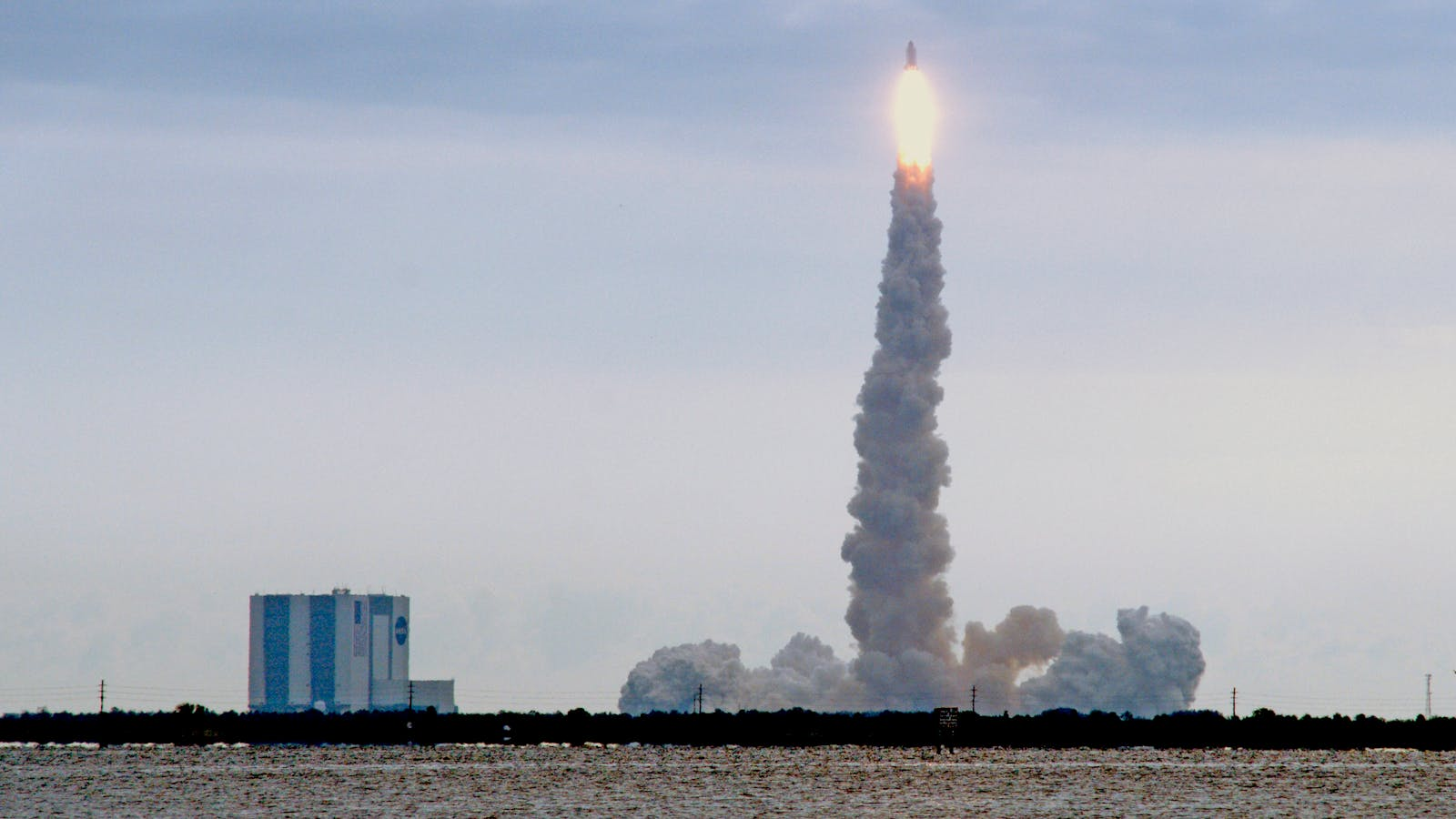
If SpaceX’s IPO moves ahead smoothly, it is unlikely to drive only a “rocket theme.” More likely, it will create a broader market narrative around commercial space, low-Earth orbit satellite internet, AI computing infrastructure, defense space, index inclusion, and U.S. IPO capital flows. The key question is not “which themes will definitely rise,” but how SpaceX’s businesses may affect the industry chain, how capital markets may price such a large IPO, and how ordinary investors can identify valuation, technology, regulatory, liquidity, and trading cost risks when following related opportunities.
Key Takeaways
- SpaceX’s IPO could strengthen the commercial space infrastructure narrative.
- Starlink is the core theme behind low-Earth orbit satellite internet.
- Starship affects launch costs, satellite deployment, and deep-space missions.
- The AI infrastructure narrative includes compute, power, networks, and orbital computing.
- Index inclusion could change ETF and passive fund allocation rhythms.
- Market excitement does not equal certain returns; risk boundaries still matter.
Why Could SpaceX’s IPO Amplify the Commercial Space Theme?
SpaceX’s IPO could amplify the commercial space theme because the company is not merely a rocket launch provider. It combines launch services, reusable rockets, low-Earth orbit satellite networks, government space contracts, and future AI infrastructure into one capital market narrative. A public listing would allow the market to evaluate these businesses under a unified valuation framework and bring topics once scattered across private-market valuations, the space industry, and technology investing into public-market trading.
According to SpaceX’s public SEC S-1 registration statement, the market can more directly observe the company’s business structure, risk factors, use of proceeds, and governance arrangements. Meanwhile, Reuters reported that SpaceX plans to proceed with a Nasdaq listing and use SPCX as its proposed ticker symbol. For investors, this means SpaceX-related discussion may shift from “private-market valuation rumors” to “public-market pricing.”
SpaceX Is Not Just a Rocket Company, but a Space Infrastructure Company
If SpaceX is understood only as a rocket company, its impact on related market themes can easily be underestimated. The Falcon rocket family provides mature commercial launch capability, Starship carries the expectation of greater payload capacity and lower unit launch costs, and Starlink turns satellite deployment into a recurring-revenue communications network. Together, these businesses make SpaceX look more like a “space infrastructure platform”: first sending assets into orbit through rockets, then generating long-term service revenue through satellite networks, and eventually expanding into defense, enterprise communications, AI data transmission, and space computing.
This structure means the market will not only focus on launch frequency, but will also ask more specific questions: Can launch costs continue to fall? Can Starlink user growth translate into stable cash flow? Can Starship support next-generation satellite deployment? How will the revenue mix between government contracts and commercial customers change? These questions will influence how the commercial space theme is priced.
The Listing Changes the Valuation Anchor and Tradability
SpaceX has long attracted attention in private markets, but a public listing would change two things. First, the public market would provide a more transparent valuation anchor. Investors could compare SpaceX with technology, defense, communications, and AI infrastructure companies based on revenue, losses, growth, cash flow, capital expenditures, and risk factors. Second, once the stock is listed, it would generate trading prices, volume, options expectations, ETF allocation discussion, and index inclusion debate. Related thematic stocks could also see sentiment-driven moves.
However, “tradable” does not mean “certain to rise.” Large IPOs often attract short-term capital attention, but they can also face high valuations, limited free float, lock-up periods, institutional allocations, and sharp price volatility in the early listing stage. SpaceX’s IPO is better understood as an industry repricing event rather than a simple thematic speculation signal.
| Theme Level | Representative Directions | Relationship with SpaceX | Key Observation Points |
|---|---|---|---|
| Upstream | Engines, materials, chips, electronic components | Supports rocket and satellite manufacturing | Capacity, reliability, supply chain |
| Midstream | Launch services, satellite manufacturing, ground stations | Corresponds to Falcon, Starship, Starlink | Costs, launch frequency, deployment efficiency |
| Downstream | Satellite internet, defense communications, space data | Corresponds to Starlink, Starshield, enterprise services | Users, contracts, regulation |
| Capital Markets | IPOs, indices, ETFs, thematic stocks | Corresponds to public trading and fund allocation | Valuation, liquidity, fees |
Summary: SpaceX’s IPO could amplify the commercial space theme not because the market suddenly becomes interested in rockets, but because SpaceX places commercial launch, satellite internet, deep-space missions, and AI infrastructure into a public, tradable, comparable valuation framework. Commercial space has often been seen as a high-investment, long-cycle, project-based industry. SpaceX’s listing could make the market reconsider whether it already has the characteristics of an infrastructure company. For ordinary investors, it is more important to distinguish industry trends from investment outcomes. Lower launch costs, satellite network expansion, and growing government contracts may indeed raise industry attention, but thematic linkage does not mean every space-related company will benefit directly. When evaluating the SpaceX theme, investors should prioritize real business relationships, order sources, revenue exposure, technological barriers, and regulatory constraints rather than simply looking for company names containing “space,” “satellite,” or “aerospace.”
Which Parts of the Commercial Space Industry Chain Could Be Driven?
The commercial space segments that could be influenced by SpaceX’s IPO mainly include commercial launch, reusable rockets, satellite manufacturing, ground equipment, tracking and control systems, defense space, and space data services. Each segment has a different benefit logic: launch services depend more on technology and costs, satellite manufacturing depends more on scaled production, ground equipment depends more on terminal adoption, defense space depends more on long-term contracts, and space data depends on whether commercial use cases can generate recurring payments.
Launch Services and Reusable Rockets Are the First-Layer Theme
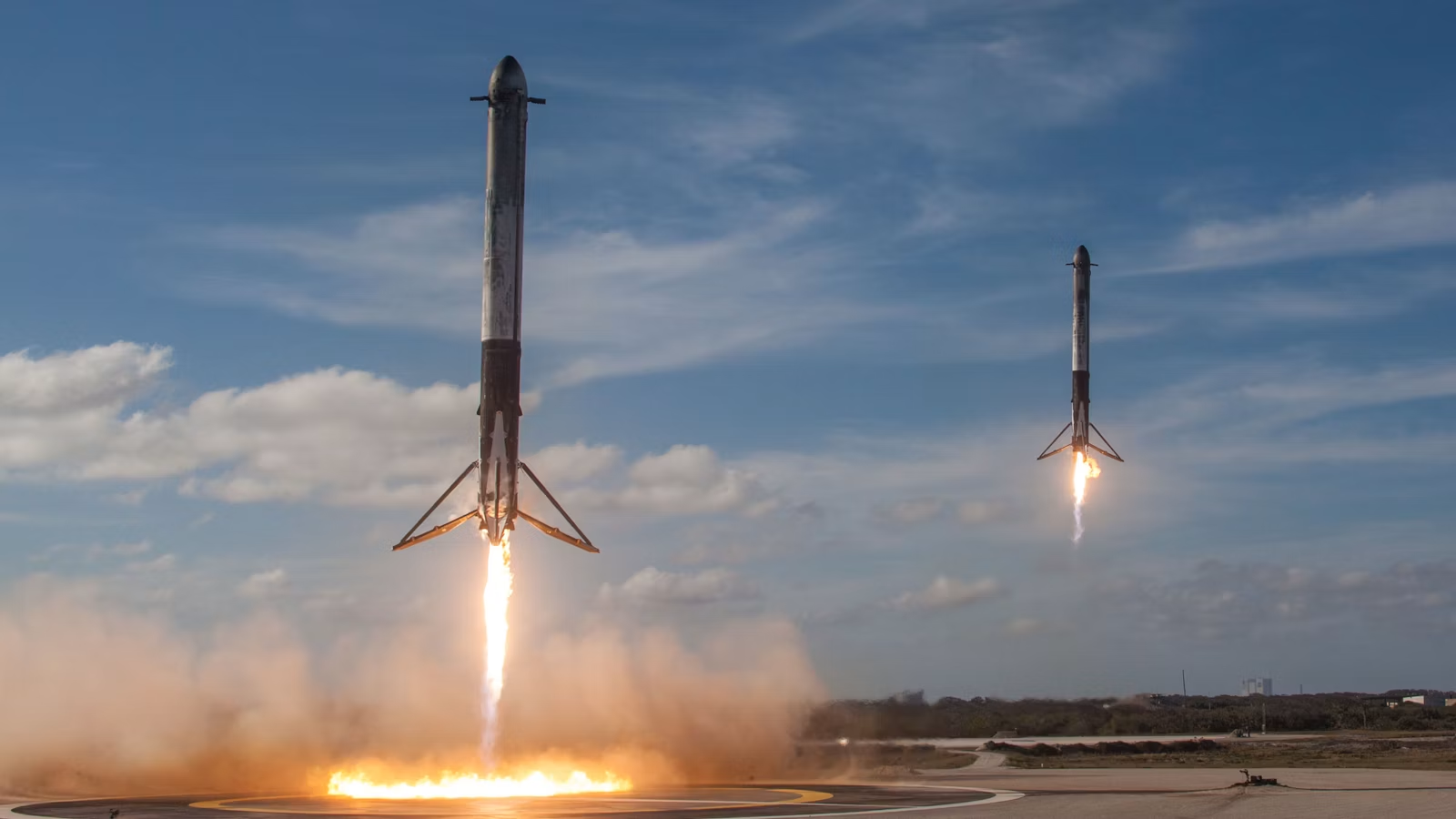
The most direct theme in commercial space is launch services. SpaceX has already demonstrated the cost advantage of reusable rockets in commercial launch through Falcon 9, while Starship is designed as a fully reusable heavy-lift launch system capable of sending more than 100 tons of payload to orbit. Its significance is not merely that it is a “larger rocket,” but that it could change the cost structure of mass satellite deployment, lunar missions, deep-space transportation, and future orbital infrastructure.
However, Starship is still in development and testing. Recent test flights have shown progress such as simulated satellite deployment and controlled spacecraft splashdown, but the FAA investigation also shows that an incident during the Super Heavy booster return phase still requires accident investigation and corrective actions. For investors, this is a typical feature of the commercial space theme: technological progress can expand imagination, while execution risk can also affect valuation.
Satellite Manufacturing, Components, and Ground Equipment Are the Second-Layer Theme
The second layer driven by SpaceX’s IPO is satellite manufacturing and related equipment. A low-Earth orbit satellite network cannot be built by rockets alone. It also requires satellite platforms, solar panels, propulsion systems, communications payloads, chips, phased-array antennas, user terminals, ground gateways, and network management systems. The more satellites are deployed, the greater the demand for manufacturing, testing, launch, maintenance, and replacement.
The SIA satellite industry report divides the satellite industry into segments such as satellite services, satellite manufacturing, launch services, and ground equipment. This classification is more useful for understanding SpaceX’s industry impact. If the market focuses only on rocket launches, it may overlook terminals, ground stations, and communications equipment that are closer to users and revenue.
Defense Space and Government Contracts Are the Third-Layer Theme
Commercial space is not entirely a civilian market. SpaceX’s relationship with NASA, U.S. defense-related agencies, and other government projects means the market will also pay attention to defense space, military communications, launch assurance, and secure networks. NASA’s Artemis III mission has incorporated commercial landers into its lunar mission plan, and SpaceX’s Starship HLS is also related to lunar missions. This shows that commercial space companies are taking on more tasks that were previously dominated by government space systems.
However, government contracts are both an opportunity and a constraint. Defense and government space programs typically involve budget cycles, technical milestones, review requirements, launch licenses, export controls, and security compliance. For related thematic stocks to truly benefit, they need clear orders, certification capabilities, and delivery records rather than simply using terms like “space” or “defense” in business descriptions.
| Industry Segment | Directions Likely to Receive Attention | Core Judgment Criteria |
|---|---|---|
| Commercial Launch | Rocket reuse, launch services, launch sites | Cost, success rate, launch frequency |
| Satellite Manufacturing | Satellite platforms, communications payloads, solar panels | Mass production capability, quality control |
| Ground Equipment | User terminals, gateway stations, antennas | Penetration rate, terminal cost, network stability |
| Defense Space | Military communications, launch assurance, secure networks | Contract cycle, budget source, compliance review |
| Space Data | Remote sensing, weather, maritime, IoT | Data value, customer renewal, application scenarios |
Summary: SpaceX’s IPO could drive multiple parts of the commercial space industry chain, but not every space-related company should be treated as a direct beneficiary. A more reasonable approach is to divide the industry chain into three categories: directly related, indirectly benefiting, and sentiment-linked. Directly related segments usually include launch services, satellite deployment, ground terminals, and government space contracts. Indirect beneficiaries include materials, precision manufacturing, communications equipment, tracking and control systems, and space data services. Sentiment-linked segments may only experience valuation fluctuations because the market is temporarily focused on commercial space. When analyzing related themes, investors should focus on whether a company has real orders, technological barriers, verifiable revenue, and recurring customers rather than simply looking at thematic labels. Commercial space is a long-term trend, but before that trend enters an investment portfolio, it still needs to pass valuation, financial, and risk tolerance screening.
How Could Starlink Affect Satellite Internet and Low-Earth Orbit Communications Themes?
Starlink is the core reason SpaceX’s IPO could drive the satellite internet theme because it has expanded from “remote-area broadband” into aviation, maritime, enterprise connectivity, emergency communications, direct-to-cell services, and defense communications. The value of low-Earth orbit satellite internet is not only sending signals to places that terrestrial networks cannot cover, but turning global connectivity into a recurring-revenue communications infrastructure.
The Core Value of Satellite Internet Is Filling Gaps in Terrestrial Networks
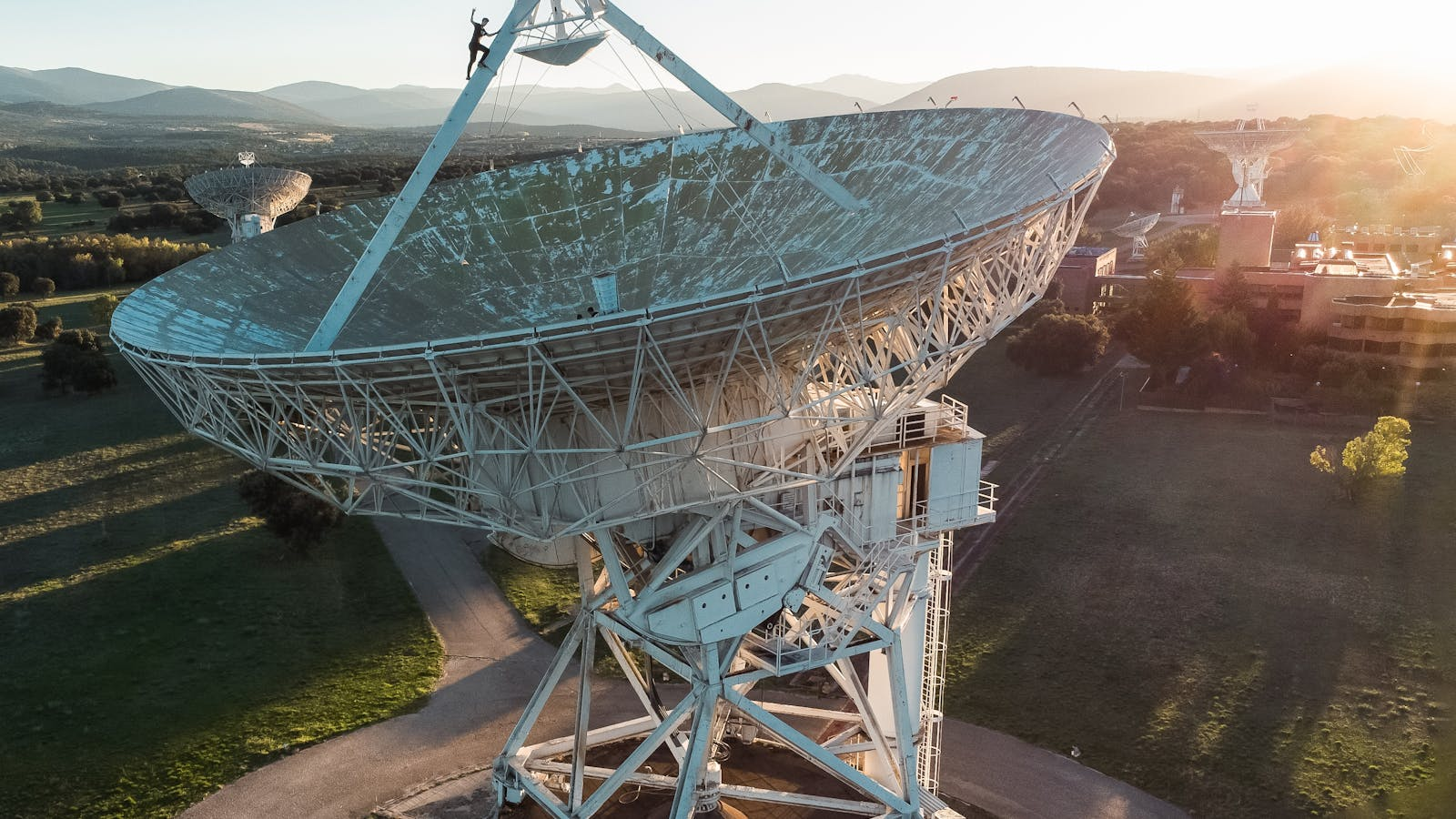
Traditional communications networks rely on base stations, fiber, submarine cables, and ground infrastructure. They are highly efficient in cities and densely populated areas, but costly in maritime environments, mountains, remote villages, disaster zones, and cross-border mobility scenarios. Low-Earth orbit satellites have advantages such as lower orbital altitude, lower latency, and wider coverage, making them suitable for filling gaps left by terrestrial networks.
Starlink’s commercial value comes from this complementary capability. According to the Starlink network update, SpaceX plans to begin launching third-generation Starlink satellites in the first half of 2026, with the new generation designed to increase network capacity. User numbers, covered markets, terminal costs, bandwidth, and latency will all become important indicators for the market when evaluating the satellite internet theme.
Aviation, Maritime, Enterprise, and Direct-to-Cell Are Expansion Scenarios
Starlink’s potential is not limited to home broadband. Aviation Wi-Fi, cruise ships and commercial vessels, oil and gas platforms, remote mining sites, enterprise backup networks, disaster-relief communications, and direct-to-cell services could all create new demand. From a capital market perspective, this may reclassify Starlink from “consumer broadband” into “global connectivity infrastructure.”
These scenarios may also drive more supporting industries: aircraft and ship terminal installation, low-power antennas, communications modules, carrier partnerships, enterprise network management, satellite IoT, and ground gateways. Compared with simply selling terminals, the market cares more about long-term subscription revenue, enterprise customer retention, network capacity utilization, and average revenue per user.
Satellite Internet Still Faces ARPU, Spectrum, and Regulatory Constraints
The satellite internet theme cannot be evaluated by user growth alone. User growth may drive revenue expansion, but it may also come with equipment subsidies, low-price plans, regional pricing differences, spectrum licensing costs, and local regulatory limits. Starlink’s operating qualifications, spectrum approvals, data security requirements, and local partnership models across different countries and regions could all affect commercialization speed.
When evaluating the satellite internet theme, you can break it down using the following dimensions:
| Application Scenario | User Need | Possible Related Themes | Main Risks |
|---|---|---|---|
| Remote-Area Broadband | No stable terrestrial network | Satellite broadband, terminal devices | Payment ability, local regulation |
| Aviation Wi-Fi | High-speed in-flight connectivity | Aviation communications, phased-array antennas | Airline procurement cycle |
| Maritime Communications | Maritime connectivity and fleet management | Vessel communications, enterprise services | Terminal cost, coverage quality |
| Enterprise Backup Network | Disaster recovery and remote operations | Enterprise communications, network management | Customer renewal, service-level requirements |
| Direct-to-Cell | Filling mobile coverage gaps | Mobile chips, carrier partnerships | Spectrum, business model |
Summary: Starlink could drive the satellite internet theme because it turns low-Earth orbit satellites from a one-off space project into a recurring-revenue global communications network. Its value is not merely in having “many satellites,” but in whether satellite deployment, terminal sales, network capacity, and subscription services can be combined into a sustainable business model. For ordinary investors, observing the Starlink theme should not be limited to covered countries, user numbers, or new satellite launches. ARPU, terminal costs, enterprise customer mix, spectrum licensing, and local regulation also matter. Satellite internet has significant long-term potential, but commercialization quality determines the valuation ceiling. Related themes are more likely to move from short-term speculation to long-term industry opportunity only when user growth, network experience, unit economics, and regulatory adaptation improve together.
Why Has AI Infrastructure Become a New Narrative for SpaceX’s IPO?
AI infrastructure has become a new narrative for SpaceX’s IPO because AI training and inference demand is increasing the importance of data centers, power, cooling, network connectivity, and edge computing, while SpaceX has low-Earth orbit satellite networks, launch capability, and future orbital infrastructure potential. A more accurate view is that AI infrastructure can enhance SpaceX’s valuation story, but orbital data centers remain a highly uncertain direction and should not be treated as a mature business.

AI Infrastructure Is Not Just Models, but Compute, Power, and Networks
Many people discuss AI by focusing only on models and applications, but the real foundation supporting AI expansion is infrastructure: GPUs, data centers, power supply, cooling systems, fiber networks, low-latency transmission, edge computing, and data security. SpaceX’s relationship with AI infrastructure mainly comes from three lines: Starlink provides global low-Earth orbit connectivity, Starship could reduce the cost of future space infrastructure deployment, and the narrative around xAI and SpaceX amplifies market attention on computing demand.
This narrative means SpaceX is no longer viewed only as a space company. The market may also compare it with cloud computing companies, AI chip companies, data center operators, power infrastructure companies, and communications networks. However, such comparisons must be based on business maturity. Starlink’s network connectivity is closer to real commercialization, while large-scale orbital AI data centers remain at the concept and validation stage.
Orbital Data Centers Have Large Imagination Space, but Commercialization Is Still Early
The appeal of orbital data centers lies in their imagination space: solar energy is abundant in space, low-Earth orbit networks can connect globally, and future systems may bypass limits related to terrestrial power, water resources, and land. But they also face very real constraints, including launch costs, in-orbit maintenance, heat dissipation, radiation shielding, equipment failure, space debris, data transmission, security regulation, and insurance costs.
Risks related to AI space data centers have already attracted market attention in pre-IPO SpaceX filings. A more prudent approach is not to claim that “space computing will soon be commercialized,” but to place it within a long-term technology roadmap. It can enhance SpaceX’s long-term imagination, but medium-term valuation still needs to return to Starlink revenue, launch services, government contracts, and cash flow.
A More Realistic Link Is Edge Computing and Data Transmission
The more realistic connection between AI and satellite networks may not be directly moving large data centers into orbit, but using satellite networks to support edge computing. For example, remote-sensing satellites can process data in orbit or near the edge. Maritime, aviation, energy, defense, and disaster monitoring scenarios require low-latency transmission, while enterprises in remote regions may need stable connectivity to cloud AI services.
SpaceX’s AI infrastructure narrative can be divided into four layers:
| Layer | Maturity | Relationship with SpaceX | Main Judgment |
|---|---|---|---|
| Terrestrial Data Centers | Relatively mature | Related to AI training and inference demand | Power, GPUs, capital investment |
| Low-Earth Orbit Communications Network | Commercially expanding | Starlink provides connectivity | Users, capacity, ARPU |
| Edge Computing | Developing | Remote sensing, IoT, military data links | Scenarios, latency, customer payment |
| Orbital Data Centers | Highly uncertain | Long-term space computing imagination | Costs, cooling, maintenance, regulation |
Summary: SpaceX’s IPO is being linked to AI infrastructure not because the company already has a mature space data center business, but because it controls launch capability, low-Earth orbit networks, and a gateway to future space infrastructure. In the AI era, the scarce resources are not only model algorithms, but also power, computing capacity, networks, and data transmission. Starlink can be understood as global connectivity infrastructure, while Starship could reduce the cost of future in-orbit deployment. But investors need to distinguish mature businesses from long-term imagination: terrestrial compute and satellite connectivity are more realistic, edge computing is in an expansion phase, and orbital data centers still face high technical and commercial uncertainty. It is reasonable to view AI infrastructure as part of SpaceX’s long-term narrative, but unverified directions should not be treated as confirmed revenue sources.
How Could SpaceX’s IPO Affect Indices, ETFs, and Market Capital Flows?
If SpaceX becomes a mega-scale IPO, its impact may not come only from active investor enthusiasm. It could also come from index rules, ETF rebalancing, and passive fund allocation. For ordinary investors, the key point is this: index funds usually buy stocks not because a theme is hot, but because index rules require them to. If a large IPO is quickly added to major indices, it may improve liquidity while also amplifying early-stage listing volatility.
FTSE Russell has announced FTSE Russell fast-entry rules, allowing qualified large IPOs to enter the Russell U.S. index system more quickly. At the same time, the market is also watching how Nasdaq, S&P, and other index providers handle ultra-large new listings. For a potential mega IPO like SpaceX, index inclusion could affect fund positioning, ETF holdings, and secondary-market liquidity.
Large IPOs Can Change the Timing of Index Fund Attention
After an ordinary IPO, a new stock usually needs to go through an observation period before index providers decide whether to include it. But a mega IPO could change that timing. If a company has a sufficiently large market capitalization after listing but remains outside major indices for a long time, the indices may fail to reflect market structure in a timely way. For index providers, fast-entry rules can improve index representativeness. For ETFs and index funds, this means they may need to respond more quickly to new-stock allocation.
This type of capital flow is not simply about “being bullish on the SpaceX theme.” It is rule-driven. Whether a fund buys, how much it buys, and when it buys depend on index inclusion conditions, free-float market capitalization, weight caps, rebalancing dates, and tracking error requirements.
Passive Funds Care About Index Rules, Not Theme Hype
Many investors tend to interpret “index inclusion” as a one-way positive, but reality is more complex. Index inclusion may bring buying demand and liquidity, but it may also expose a new stock to higher trading volume and greater short-term volatility. This is especially true in the early stage of a large IPO, when free float, institutional allocations, lock-up periods, and valuation disagreements can all affect price performance.
If SpaceX eventually enters certain major indices, related ETFs may allocate to it passively. If it does not, investors may still gain indirect exposure through thematic ETFs, aerospace ETFs, technology ETFs, or related industry-chain stocks. But whether an ETF actually holds SpaceX depends on its holdings disclosure, not whether the fund name contains words such as “space,” “innovation,” or “technology.”
| Impact Path | Possible Change | What Investors Should Watch |
|---|---|---|
| IPO Pricing | Provides a public-market valuation anchor | Offer price, valuation, free-float ratio |
| Index Inclusion | Creates passive fund demand | Nasdaq, Russell, S&P rules |
| ETF Rebalancing | Changes related fund holdings | Weight, rebalancing date, expense ratio |
| Trading Heat | Amplifies early-listing volatility | Volume, spread, order-book depth |
| Theme Expansion | Raises attention on related sectors | Fundamental relevance, revenue exposure |
If you follow hot U.S. IPOs, you can also use U.S. stock search to check related stocks, sectors, and trading information before combining it with prospectuses, index rules, and fund holdings disclosures. A stock search tool can help you understand public-market information, but it cannot replace independent research and risk assessment.
Summary: SpaceX’s IPO may affect indices and ETFs because a mega IPO is not just a company listing; it may also change the composition and weight structure of major market indices. Active investors focus on valuation, growth, and business narratives, while passive funds follow index rules and rebalancing mechanisms. If SpaceX meets fast-entry conditions, some ETFs and index funds may need to allocate within a relatively short period, which could improve liquidity but may also intensify short-term volatility.
Ordinary investors should avoid interpreting “possible index inclusion” as a guaranteed positive. A better observation sequence is to first review listing documents and free-float market capitalization, then examine index inclusion conditions, and then track ETF holdings changes and trading costs. Only by combining fundamentals, capital flows, and market structure can investors more fully understand the impact of SpaceX’s IPO.
How Should Ordinary Investors Judge the Opportunities and Risk Boundaries of the SpaceX Theme?
When evaluating the SpaceX theme, ordinary investors should first separate industry trends from trading decisions. Commercial space, satellite internet, and AI infrastructure all have long-term potential, but IPO valuation, technical uncertainty, regulatory approval, competitive dynamics, index-driven capital flows, and actual trading costs will all affect the final investment experience. A more prudent approach is not to chase the theme, but to build a screening framework.
First Distinguish Three Types of Assets: SpaceX Itself, Related Thematic Stocks, and ETFs
The first category is SpaceX itself. You need to focus on its prospectus, revenue structure, losses, capital expenditures, governance structure, risk factors, Starlink growth, and Starship progress. The second category is related thematic stocks. To judge whether these companies may benefit, you need to see whether they have real business relationships with launch services, satellite manufacturing, ground equipment, communications terminals, defense contracts, or space data. The third category is ETFs. For ETFs, the key is not the name, but holdings, weights, rebalancing rules, and expense ratios.
These three types of assets have different risk profiles. SpaceX itself may be affected by IPO pricing and company fundamentals. Thematic stocks may be more affected by market sentiment. ETFs offer more diversification, but they may also fluctuate because of narrow themes, higher expense ratios, or concentrated holdings.
Then Look at Four Risks: Valuation, Technology, Regulation, and Liquidity
The most important risk boundaries around the SpaceX theme fall into four areas. Valuation risk comes from the possibility that a mega IPO may already price in many years of future growth expectations. Technology risk comes from the need to further validate Starship, next-generation Starlink, orbital computing, and other directions. Regulatory risk includes launch permits, spectrum coordination, space debris, defense security, and cross-border operating approvals. Liquidity risk is concentrated in the early listing stage, including spreads, market depth, lock-up periods, and crowded short-term capital.
You can use the following checklist:
- Have you read SpaceX’s prospectus and risk factors?
- Do you understand the business relationship between Starlink and Starship?
- Have you confirmed whether thematic stocks have real business ties with SpaceX?
- Do you know whether an ETF actually holds SpaceX?
- Can you tolerate large volatility in the early stage of a new listing?
- Have you checked commissions, platform fees, external agency fees, and currency conversion costs?
Separate Theme Hype from Actual Trading Costs
If you are interested in trading opportunities after a hot IPO lists, you also need to pay attention to actual trading costs in addition to stock price volatility. U.S. stock trading costs may include not only commissions, but also platform fees, external agency fees, trading activity fees, settlement fees, FX spreads, and funding-path costs. For highly popular new stocks, short-term spreads, execution speed, and order types may also affect the actual trading experience.
BiyaPay is a global multi-asset trading wallet that supports U.S. and Hong Kong stock trading as well as crypto trading. According to its fee description, BiyaPay charges $0 commission for U.S. stock trading, while platform fees, external agency fees, and other charges are subject to the fee center and order page. Hot IPOs may experience significant price volatility in the early listing stage, so investors should fully understand order types, fee structures, and risks before trading. Whether related services are available also depends on the user’s location, identity verification results, platform rules, and applicable laws and regulations.
| Judgment Dimension | Questions to Check | Common Misunderstanding |
|---|---|---|
| Fundamentals | What are SpaceX’s revenue, losses, and cash flow? | Looking only at valuation and fame |
| Theme Relevance | Do related companies have real orders? | Looking only at thematic names |
| ETF Holdings | Does the fund actually hold SpaceX? | Mistaking the theme name for actual holdings |
| Trading Fees | How are commissions, platform fees, and external fees calculated? | Looking only at “zero commission” |
| Risk Tolerance | Can you accept new-stock volatility? | Treating hot IPOs as low-risk opportunities |
Summary: The most important point for ordinary investors evaluating opportunities related to SpaceX’s IPO is to separate “industry logic” from “trading decisions.” Commercial space, satellite internet, and AI infrastructure do have long-term potential, but investment outcomes depend on listing valuation, business execution, technological progress, regulatory environment, index-driven capital flows, and trading costs. SpaceX itself, related thematic stocks, and ETFs also have different risk structures: buying the new stock requires more attention to the prospectus and valuation, buying thematic stocks requires more attention to real business relevance, and buying ETFs requires more attention to holdings and fees. Hot IPOs can easily attract market sentiment, but sentiment cannot replace fundamentals. A more prudent approach is to first understand the industry chain, then check public documents and trading rules, and finally decide whether to participate based on personal risk tolerance.
When Following the SpaceX Theme, Understand Trading Paths and Fee Structures
SpaceX’s IPO will draw more international investors’ attention to commercial space, satellite internet, and AI infrastructure opportunities. But before actually participating in trading, investors should not look only at theme strength; they also need to consider whether the account, order types, fees, and funding path are suitable for them. Hot IPOs may experience rapid rallies, pullbacks, crowded executions, and wider spreads in the early listing stage. Without understanding trading rules in advance, the actual experience may differ from expectations.
BiyaPay can serve as an entry point for learning about U.S. stock trading, Hong Kong stock trading, and multi-asset fund management. You can use the BiyaPay app to check whether related services are available for your region and identity conditions, or use web trading to learn more about orders, fees, and market information. BiyaPay supports converting USDT into major fiat currencies such as USD or HKD, and also supports U.S. stocks, Hong Kong stocks, and crypto trading. However, any currency conversion, deposits and withdrawals, or trading services should be subject to the platform’s actual rules, identity verification results, fee center, order page, and applicable laws and regulations in your location. Information about public markets, trading rules, and fee structures does not constitute investment advice. Investors should fully assess risks before participating in hot IPOs.
FAQ
Will SpaceX’s IPO Directly Benefit Commercial Space Thematic Stocks?
Not necessarily. SpaceX’s IPO may increase attention on commercial space, but whether thematic stocks benefit depends on orders, supply-chain relationships, revenue exposure, and valuation levels. Similar names or related themes alone do not prove that a company will directly benefit.
What Indicators Matter for the Starlink Satellite Internet Theme?
Key indicators include user numbers, ARPU, terminal costs, network capacity, spectrum licensing, and enterprise customer mix. The number of satellites only reflects deployment scale and does not by itself prove the quality or profitability of the business model.
Can Ordinary Investors Hold SpaceX Indirectly Through ETFs After Its IPO?
Possibly, but it depends on whether SpaceX enters relevant indices or ETF holdings. Investors should check fund holdings, weights, rebalancing cycles, and expense ratios rather than judging whether an ETF includes SpaceX based only on its name.
Are AI Orbital Data Centers a Mature SpaceX Business?
No, they are not a mature business. AI orbital data centers remain an early-stage direction with high imagination but high uncertainty, involving challenges such as launch costs, heat dissipation, maintenance, space safety, and regulation. They should not be treated as a confirmed revenue source.
What Fees Should Investors Consider When Trading SpaceX-Related Themes?
Investors should consider commissions, platform fees, external agency fees, currency conversion costs, funding fees, order types, and spreads. Fee rules differ by platform, so the fee center, order page, and actual account statement should be used as the final reference.
What Is the Relationship Between the SpaceX Theme and the Defense Space Theme?
They overlap, but they are not the same. SpaceX participates in some government space, communications, and security-related missions, but defense space also involves budgets, reviews, contract cycles, and regulatory requirements. The two should not be treated as identical themes.
*This article is provided for general information purposes and does not constitute legal, tax or other professional advice from BiyaPay or its subsidiaries and its affiliates, and it is not intended as a substitute for obtaining advice from a financial advisor or any other professional.
We make no representations, warranties or warranties, express or implied, as to the accuracy, completeness or timeliness of the contents of this publication.
Related Blogs of

What Does Pre-Market and After-Hours Trading in U.S. Stocks Mean? Why Are Hot Stocks Like SpaceX More Closely Watched?


What Is the Difference Between a Market Order and a Limit Order in U.S. Stocks? What You Should Know Before Buying a Hot IPO


How Long Should You Observe a Newly Listed U.S. Stock? Understanding the IPO Volatility Cycle Through the SpaceX IPO


What Is a U.S. Stock IPO? What Is the Difference Between the IPO Price, Opening Price, and First-Day Trading Price?

Choose Country or Region to Read Local Blog
 Australia
 Austria
 Belgium
 Canada
 Cyprus
 Czech Republic
 Denmark
 Estonia
 Finland
 France
 Germany
 Greece
 Hong Kong
 India
India Indonesia
 Ireland
 Italy
Italy Japan
Japan Latvia
 Lithuania
 Luxembourg
 Malaysia
 Malta
Malta Morocco
 Nepal
Nepal Netherlands
 New Zealand
 Norway
 Pakistan
 Philippines
 Poland
 Portugal
 Romania
 Singapore
 Slovakia
 Slovenia
 South Africa
 South Korea
 Spain
Spain Sweden
 Thailand
 The United States
 Turkey
 United Arab Emirates
 United Kingdom
 Vietnam
Contact Us




BIYA GLOBAL LLC is registered with the Financial Crimes Enforcement Network (FinCEN), an agency under the U.S. Department of the Treasury, as a Money Services Business (MSB), with registration number 31000218637349, and regulated by the Financial Crimes Enforcement Network (FinCEN).
BIYA GLOBAL LIMITED is a registered Financial Service Provider (FSP) in New Zealand, with registration number FSP1007221, and is also a registered member of the Financial Services Complaints Limited (FSCL), an independent dispute resolution scheme in New Zealand.