What Are Commercial Space Stocks? Market Themes to Watch After the SpaceX IPO





After the SpaceX IPO, the market’s attention on commercial space stocks should not be limited to “rocket companies.” Instead, the sector can be divided into commercial launch, satellite manufacturing, satellite internet, ground equipment, lunar and deep-space services, defense space, remote sensing data, and ETF / index-related capital flows. What you really need to assess is not “which stocks will definitely benefit,” but whether these companies have real connections with SpaceX’s industry chain, low-Earth orbit communications, government contracts, space systems, and capital market flows, as well as whether their valuation, cash flow, and trading costs match your own risk tolerance.
Key Takeaways
- The SpaceX IPO could increase attention on the commercial space sector.
- Commercial space stocks should be assessed by industry-chain segment.
- Commercial launch, satellite internet, and ground equipment may draw the most attention.
- Rocket Lab and AST SpaceMobile are only observation samples.
- ETF and index flows may amplify short-term trading heat.
- Thematic relevance does not mean a stock will definitely benefit.
Why Will Commercial Space Stocks Attract Market Attention After the SpaceX IPO?
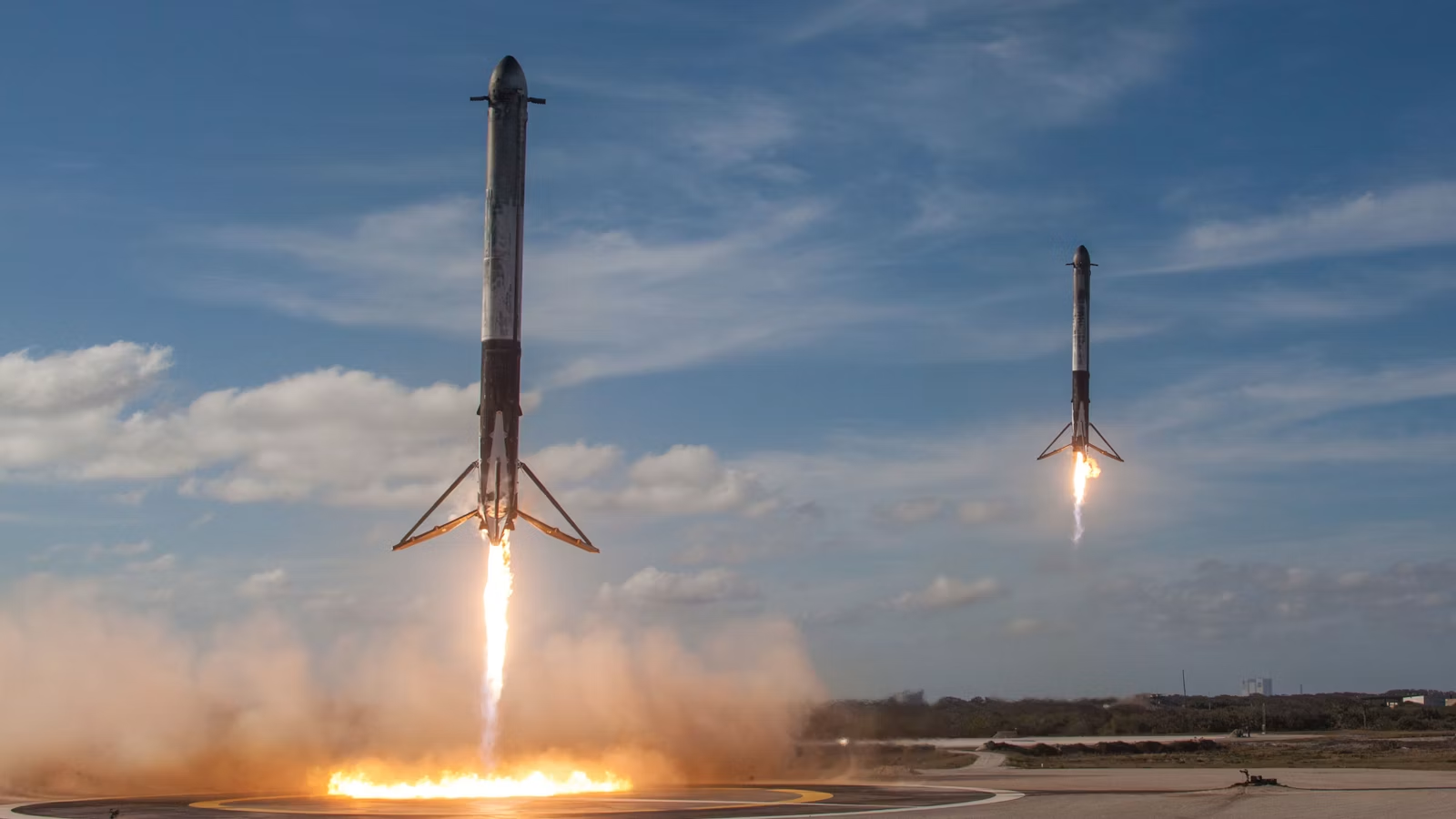
After the SpaceX IPO, commercial space stocks may attract market attention because SpaceX is not just listing as a single company. It could bring reusable rockets, Starlink satellite internet, Starship heavy-lift launch, government contracts, and future space infrastructure into the public-market pricing system. The market may use SpaceX’s valuation, revenue, risk factors, and trading performance to recompare a group of listed or tradable commercial space-related companies.
According to SpaceX’s public SEC S-1 registration statement, the market can more directly observe the company’s business structure, risk factors, governance arrangements, and use of proceeds. Meanwhile, Reuters reported that SpaceX plans to proceed with a Nasdaq listing and use SPCX as its proposed ticker symbol. An IPO of this scale can easily prompt investors to reassess the broader “space economy” sector.
The SpaceX IPO Changes the Valuation Anchor for Commercial Space
SpaceX has long been one of the most important valuation references for commercial space in private markets. After listing, its share price, trading volume, financial disclosures, business segments, and risk factors would all become public-market comparison points. Investors may compare SpaceX with Rocket Lab, AST SpaceMobile, Planet Labs, Intuitive Machines, Redwire, and large defense aerospace contractors to determine which companies are closer to commercial launch, which are closer to satellite communications, and which are merely being pulled along by market sentiment.
The impact of this valuation anchor may not necessarily appear as long-term upside. It could also appear as repricing. Some high-growth commercial space companies may receive more attention because of the SpaceX IPO, but high valuations, ongoing losses, technology execution risk, and financing pressure may also be magnified at the same time.
| Impact Path | Market Focus | Possible Impact on Thematic Stocks |
|---|---|---|
| Valuation Anchor | SpaceX’s public valuation | More comparisons with related companies |
| Business Anchor | Starlink, Starship, launch services | Clearer industry-chain classification |
| Capital Anchor | IPO, indices, ETFs | Higher sector trading heat |
| Risk Anchor | Losses, regulation, technology execution | High-valuation companies may be reassessed |
Commercial Space Is Not Just a Rocket Theme
Commercial space is not only about rocket launches. A fuller industry chain includes launch services, satellite manufacturing, ground equipment, low-Earth orbit communications, remote sensing data, lunar missions, deep-space services, defense space, and space infrastructure. The SIA satellite industry report divides the satellite industry into satellite services, satellite manufacturing, launch services, and ground equipment, a classification that is more useful for investment research than simply looking for a “space stock list.”
This also means that a company whose name includes “space,” “satellite,” or “aerospace” does not necessarily have a direct business relationship with the SpaceX IPO. Some companies are competitors, some are supply-chain companies, some share the same broad theme but have no direct revenue connection, and others may simply be pulled into the same sector by short-term market sentiment.
Who Searches for “What Are Commercial Space Stocks?”
Users searching for this type of question usually fall into four groups. The first group consists of hot IPO trackers who want to know which related stocks may attract attention after SpaceX lists. The second group consists of technology-stock investors who are watching the intersection of AI, satellite internet, defense technology, and space infrastructure. The third group consists of ETF investors who want indirect exposure to the space economy through thematic ETFs or index funds. The fourth group consists of newer investors who want to understand the industry through a classification framework rather than directly looking for “stocks that must rise.”
Therefore, commercial space stock analysis should not focus only on listing ticker symbols. It should build a screening framework: Which part of the industry chain is the company in? Does its revenue come from commercial customers or government contracts? Are its orders verifiable? Has its technology passed key validation milestones? Has its valuation already priced in SpaceX IPO excitement?
Section Summary: After the SpaceX IPO, commercial space stocks may attract attention because the market needs a public valuation anchor to reinterpret the commercial space industry chain. Related companies may receive attention due to business similarity, supply-chain links, thematic ETF positioning, or index-fund expectations, but this attention is more about a change in market narrative and does not mean fundamentals have improved at the same time. When assessing commercial space stocks, investors should first look at industry-chain positioning, then examine orders, revenue, cash flow, technology progress, and regulatory risk. Commercial space is a long-term growth direction, but it is also an industry with high capital expenditure, high technology risk, and heavy regulatory constraints. The SpaceX IPO may increase industry visibility, but it may also make investors compare the real business quality of different companies more strictly. Only by breaking theme heat into business relevance, revenue sources, and risk boundaries can investors avoid mistaking short-term trading sentiment for long-term investment logic.
What Categories Can Commercial Space Stocks Be Divided Into?
Commercial space stocks can be divided into six categories by industry chain: commercial launch and rocket manufacturing, satellite manufacturing and space systems, satellite internet and direct-to-cell, remote sensing and Earth observation, lunar and deep-space services, and defense space / major aerospace contractors. This classification is more valuable than simply listing stocks because each direction has a different revenue model, valuation logic, and risk profile.

Commercial Launch and Rocket Manufacturing
Commercial launch is the direction most closely associated with SpaceX. The reason SpaceX has become an industry benchmark lies in the reusability of the Falcon rocket family and the possibility that Starship could bring greater payload capacity and lower unit launch costs. In public markets, Rocket Lab is often used as an example of a company combining commercial launch and space systems because it is involved in launch services, satellite platforms, and space systems.
When assessing this type of company, investors should not only look at whether a rocket has successfully reached space. They should also evaluate launch frequency, failure rate, backlog, payload capacity, customer structure, cost control, and progress on new rocket models. Small launch companies differ greatly from SpaceX in scale, and the fact that the market discusses them under the same theme does not mean they can replicate SpaceX’s business model.
Satellite Manufacturing, Ground Equipment, and Space Systems
Satellite manufacturing and ground equipment are often overlooked layers of commercial space. Low-Earth orbit networks require large numbers of satellites, solar panels, propulsion systems, communications payloads, chips, phased-array antennas, ground gateways, and user terminals. Even if a company does not launch rockets, it may still participate in industry growth through satellite components, space systems, antenna equipment, or data links.
The core logic for this category is scaled deployment. Starlink’s expansion shows the market that low-Earth orbit satellite networks require continuous launches, replacement, and upgrades, but not every part of the satellite industry chain can generate the same profit margin. Component companies should be judged by technological barriers and customer stability, ground-equipment companies by terminal penetration and cost declines, and space-system companies by whether government and commercial orders can continue.
Satellite Internet, Direct-to-Cell, and Remote Sensing Data
Satellite internet is one of the directions most likely to attract attention after the SpaceX IPO because Starlink has expanded from remote-area broadband into aviation, maritime, enterprise connectivity, and direct-to-cell scenarios. In public markets, AST SpaceMobile is more focused on connecting ordinary mobile phones directly to satellites, Iridium and Viasat are more focused on traditional satellite communications, enterprise customers, and government clients, while Planet Labs represents the remote sensing and Earth observation data direction.
Remote sensing data differs from satellite internet in that the former sells Earth imagery and data analytics, while the latter sells connectivity services. Planet Labs describes its satellite fleet as providing high-frequency Earth imagery and data analytics. This type of company is better understood through data subscriptions, government customers, agriculture, insurance, energy, and environmental monitoring scenarios rather than simply being classified as a “communications theme.”
| Category | Representative Direction | Observation Samples | Key Judgment Points |
|---|---|---|---|
| Commercial Launch | Small rockets, heavy-lift rockets, launch services | Rocket Lab, Firefly Aerospace | Success rate, orders, costs |
| Satellite Manufacturing | Satellite platforms, payloads, space systems | Rocket Lab, Redwire | Capacity, technology, customers |
| Satellite Internet | LEO broadband, direct-to-cell | AST SpaceMobile, Iridium, Viasat | Users, spectrum, ARPU |
| Remote Sensing Data | Earth observation, imagery analytics | Planet Labs | Data value, renewal rate |
| Lunar Services | Landers, lunar surface communications | Intuitive Machines | NASA contracts, mission execution |
| Defense Space | Military communications, missile warning, space security | Lockheed Martin, Northrop Grumman, L3Harris | Government budgets, contract cycles |
Section Summary: Commercial space stocks should not be understood only by company names; they should be classified by business segment. Commercial launch is closest to SpaceX’s rocket reusability narrative. Satellite manufacturing and ground equipment are closer to scaled deployment. Satellite internet and direct-to-cell are closer to recurring service revenue. Remote sensing data and lunar services depend on government and enterprise customers, while defense space is affected by budgets and security needs. The clearer the classification, the easier it is to avoid comparing companies with very different risk profiles as if they were the same. Commercial launch companies may have high technology upside but also high failure risk. Satellite communications companies may have more recurring revenue but face greater capital expenditure and spectrum constraints. Remote sensing data companies need to prove their ability to monetize data. Defense space companies may be more stable, but their growth elasticity may be lower than that of small pure-play commercial space companies. For ordinary investors, classify first and then compare—this is the basic step in understanding commercial space stocks.
Which Publicly Traded Companies Could Become Observation Samples After the SpaceX IPO?
After the SpaceX IPO, the market may pay attention to commercial space observation samples such as Rocket Lab, AST SpaceMobile, Planet Labs, Intuitive Machines, Redwire, Iridium, Viasat, Lockheed Martin, Northrop Grumman, Boeing, and L3Harris. But these companies are not “SpaceX substitutes,” nor are they investment recommendations. They can only be observed by business relevance and risk structure.

Commercial Launch and Space Systems Samples: Rocket Lab, Firefly, Redwire
Rocket Lab is one of the companies most often linked to the commercial launch theme in public markets. Both Rocket Lab and SpaceX are involved in launch services, but they differ greatly in business scale, rocket capability, customer structure, and development stage. Rocket Lab’s value is not limited to small-rocket launch; it also includes space systems, satellite platforms, and component capabilities. The market may treat it as an observation sample after the SpaceX IPO because it reflects public-market pricing for commercial launch and space systems, not because it can directly replace SpaceX.
Firefly Aerospace is more focused on launch services and lunar mission-related directions, while Redwire is more focused on space infrastructure, components, microgravity, and space systems. They represent different types of risk within commercial space: launch companies face mission failure risk, space-system companies face project-cycle and customer-concentration risk, and lunar mission companies also face uncertainty around government contracts and technical milestones.
Satellite Internet and Communications Samples: AST SpaceMobile, Iridium, Viasat
AST SpaceMobile overlaps with Starlink’s direct-to-cell narrative, but the two are not the same. AST focuses more on connecting ordinary mobile phones directly to satellites, and its business model depends on satellite deployment, mobile operator partnerships, spectrum arrangements, and terminal connectivity. Reuters reported that Orange and AST SpaceMobile partnered to advance satellite direct-to-cell services, showing that traditional telecom operators are also entering this direction.
Iridium and Viasat are more focused on mature satellite communications services, with customers across enterprise, government, aviation, maritime, and emergency communications. They both compete with and differ from Starlink: Starlink emphasizes low-Earth orbit broadband and scaled user connectivity, while traditional satellite communications companies emphasize reliability, specialized scenarios, and long-term customer relationships. When comparing these companies, investors should look at user structure, ARPU, capital expenditure, debt pressure, and network upgrade capability.
Lunar Services, Remote Sensing, and Defense Space Samples: LUNR, PL, LMT, NOC
Intuitive Machines represents the lunar services direction. The market usually focuses on its lunar landers, NASA CLPS missions, and lunar communications services. NASA’s Commercial Lunar Payload Services shows that commercial companies are participating in lunar payload delivery and science missions, making lunar services a segment of commercial space. But this direction is heavily tied to mission milestones and project volatility, so it should not be valued using the same logic as a traditional consumer technology company.
Planet Labs is better placed in the remote sensing data category. Its value lies not in launching rockets, but in satellite imagery, Earth data, and analytics services. Lockheed Martin, Northrop Grumman, Boeing, and L3Harris are major defense aerospace contractors. They have government contracts and technical depth, but their revenue sources are more diversified and they are not as closely tied to a single IPO theme as small pure-play commercial space stocks.
| Company Direction | Representative Companies | Relationship with the SpaceX Theme | Main Risks |
|---|---|---|---|
| Launch Services | Rocket Lab, Firefly | Related to rocket launch and space transportation | Launch failure, costs, order execution |
| Space Systems | Redwire, Rocket Lab | Satellite components and space infrastructure | Project cycles, customer concentration |
| Satellite Communications | AST SpaceMobile, Iridium, Viasat | LEO communications, direct-to-cell, enterprise communications | Spectrum, capital expenditure, competition |
| Remote Sensing Data | Planet Labs | Satellite imagery and data analytics | Customer renewal, data monetization |
| Lunar Services | Intuitive Machines | NASA lunar missions and lunar surface services | Mission execution, contract volatility |
| Defense Space | Lockheed, Northrop, L3Harris, Boeing | Government space and security systems | Budgets, regulation, project delays |
Section Summary: After the SpaceX IPO, the market may focus on a group of listed or tradable commercial space-related companies, but these companies are not simple substitutes for SpaceX. Rocket Lab is closer to launch and space systems, AST SpaceMobile is closer to satellite direct-to-cell, Planet Labs is closer to remote sensing data, Intuitive Machines is closer to lunar services, and large defense aerospace companies have stronger government-contract characteristics. When comparing these stocks, investors should first look at business overlap, then financial quality and risk structure, rather than only whether they belong to the “commercial space theme.” Differences within the commercial space sector are large: some companies are still validating technology, some already have stable contracts, some rely on capital markets for continued financing, and some are heavily influenced by government budgets. Placing them in the same table helps build an observation framework, not a buy-or-sell ranking.
How Could the SpaceX IPO Affect ETFs, Indices, and Thematic Capital Flows?
The SpaceX IPO could affect the funding side of commercial space stocks because a mega IPO may attract not only active investors, but also index inclusion, ETF rebalancing, and passive fund allocation. For ordinary investors, funding-side influence does not equal fundamental improvement. ETF and index flows may increase short-term trading heat, but the final judgment still depends on whether related companies have real revenue, orders, and sustainable competitiveness.
FTSE Russell has released IPO fast-entry rules, allowing qualified large IPOs to enter the Russell U.S. index system more quickly. For a potential mega listing like SpaceX, index inclusion discussion could affect the timing of passive fund positioning and draw more attention to commercial space thematic ETFs.
ETF Capital First Looks at the Theme, Then the Holdings
The SpaceX IPO may lead more users to search for aerospace ETFs, space economy ETFs, innovation technology ETFs, and defense technology ETFs. But an ETF whose name includes “space,” “aerospace,” or “innovation” does not necessarily hold SpaceX, nor does it necessarily hold every commercial space stock. The real risks in an ETF come from holdings composition, weight concentration, expense ratio, and rebalancing rules.
When evaluating ETFs, you should first check four things: first, whether the top ten holdings actually cover commercial space companies; second, whether there is a mechanism for adding SpaceX after it lists; third, whether a single-stock weight is too high; and fourth, whether the expense ratio is suitable for long-term holding. Thematic ETFs can reduce the difficulty of selecting individual stocks, but they cannot eliminate sector valuation risk or industry volatility.
Index Inclusion Rules May Affect Early-Listing Capital Timing
After a large IPO enters an index, funds tracking that index may need to allocate according to the rules. This type of capital is not driven by “being bullish on SpaceX,” but by “tracking the index.” Therefore, index inclusion may bring buying demand, trading volume, and liquidity, but it may also increase price volatility in the early listing stage.
Ordinary investors often interpret “index inclusion” as a one-way positive, but reality is more complex. If valuation is high in the early listing stage, free float is limited, and market sentiment is crowded, passive-fund buying may also increase short-term volatility. Index rules, free-float market capitalization, lock-up periods, and rebalancing dates are more important than whether the stock is hot.
| Capital Type | Focus | Possible Impact on Thematic Stocks |
|---|---|---|
| Active Funds | Fundamentals, valuation, growth potential | May position in related sectors early |
| Passive Funds | Index rules, weights, rebalancing | Buy or adjust according to rules |
| Thematic ETFs | Holdings coverage, industry narrative | Amplify sector attention |
| Retail Capital | Hype, social media, trading convenience | Increase short-term volatility |
Thematic Capital May Amplify the “Relevance Illusion”
When thematic capital enters the commercial space sector, it can easily create a “relevance illusion.” For example, a company may merely have “space” in its name, or only a very small portion of its business may involve satellite services, yet it may still be grouped into the same theme in the short term. Such gains are not stable. Once the market refocuses on financial data, orders, and cash flow, low-relevance companies may give back gains.
Commercial space stocks differ greatly from each other: some depend on NASA contracts, some depend on consumer communications, some depend on remote sensing data subscriptions, some depend on defense budgets, and some are still in the technology validation stage. ETF and index flows can affect trading heat, but they do not automatically improve company fundamentals. You need to separate “price moves caused by capital flows” from “long-term value created by the company’s business.”
If you only want to check publicly traded U.S. stocks and sector information first, you can use U.S. stock search to review related companies, market categories, and trading information, then combine that with prospectuses, ETF holdings, and company financial reports for further judgment. A stock search tool can help you understand public market information, but it cannot replace independent research and risk assessment.
Section Summary: The SpaceX IPO may affect commercial space stocks through ETFs, indices, and thematic capital, but this influence is reflected more in capital flows, attention, and short-term trading sentiment. Passive funds focus on rules, active funds focus on valuation and growth, and retail capital focuses on hot topics and trading convenience. Investors should avoid interpreting “being noticed by ETFs” as “the company will definitely benefit.” What truly matters is whether a fund actually holds the company, how large the holding weight is, how the rebalancing mechanism works, and whether the company’s revenue and orders can support its valuation. Indices and ETFs can change the trading rhythm, but they cannot replace fundamentals. Especially in the early stage of a hot IPO, price volatility may be magnified by capital flows, so investors need to pay closer attention to holdings, weights, expense ratios, and their own risk tolerance.
What Core Indicators Should You Use to Evaluate Commercial Space Stocks?
When evaluating commercial space stocks, you should not only ask whether a company belongs to the same sector as SpaceX. Instead, you should focus on five types of indicators: real business relevance, order and customer quality, technology execution progress, cash flow and financing capability, and regulatory / mission execution risk. Commercial space companies often have high capital expenditure, long project cycles, and high technology risk, so both valuation upside and downside risk may be higher than for ordinary technology stocks.
Business Relevance: Is the Company Truly in the SpaceX-Related Industry Chain?
The first step is to judge business relevance. Is the company involved in commercial launch, satellite manufacturing, low-Earth orbit communications, ground equipment, defense space, remote sensing data, or space infrastructure? Is it a competitor, a supply-chain participant, a company in the same theme but with no real business relationship, or almost unrelated? This step can filter out many stocks that move only because of the theme.
For example, Rocket Lab is related to launch services and space systems; Planet Labs is related to remote sensing data; AST SpaceMobile is related to direct-to-cell; and major defense aerospace contractors are related to government space, security systems, and military communications. They can all be placed in a commercial space observation pool, but they cannot be compared using the same valuation logic.
Orders and Revenue: Are There Verifiable Customers and Cash Flow?
Commercial space companies can easily tell big stories, but what truly supports valuation is contracts, revenue, gross margins, backlog, and cash flow. Government contracts should be assessed by budget stability, milestone payments, and mission delivery. Commercial customers should be assessed by renewal ability and demand stability. Consumer or enterprise communications businesses should be assessed by user growth, ARPU, terminal costs, and network capacity.
If a company has only long-term plans but lacks verifiable orders and revenue, its share price is more likely to be driven by financing news, test-flight results, contract announcements, and market sentiment. By contrast, if a company has already built a stable customer structure, it may have stronger resistance to volatility even if its growth rate is not as high as that of hot small-cap stocks.
Risk Boundaries: Technology, Regulation, Financing, and Dilution
The risk boundaries of commercial space are more complex than those of ordinary software or internet companies. Technology risks include launch failures, satellite failures, mission delays, and unsuccessful payload deployment. Regulatory risks include spectrum licenses, launch licenses, export controls, space debris, and defense security reviews. Financing risks come from long-term R&D, launch, and manufacturing investment; some companies may need ongoing share issuance or debt financing to maintain their plans.
Trading risk should not be ignored either. Small-cap commercial space stocks can be heavily affected by hot IPOs, social media, and thematic capital, with short-term price swings far exceeding fundamental changes. When tracking related stocks, you can use the following checklist as a preliminary screen:
- Are there disclosed real orders and customers?
- Does revenue come from commercial customers or government projects?
- Have key technology milestones been validated?
- Can cash reserves cover R&D and launch plans?
- Is there high debt or ongoing dilution risk?
- Has the share price already priced in SpaceX IPO enthusiasm?
| Core Indicator | Key Question | Risk Signal |
|---|---|---|
| Business Relevance | Is the company truly in the commercial space industry chain? | Rising only because of the theme name |
| Order Quality | Are there verifiable customers and contracts? | Many announcements, little revenue |
| Technology Progress | Are launches, satellites, and missions moving as planned? | Frequent delays or failures |
| Financial Capacity | Can cash flow and financing support the plan? | Long-term losses and ongoing dilution |
| Regulatory Environment | Does it involve spectrum, launch licenses, or defense review? | High approval uncertainty |
| Valuation Level | Has the stock already priced in long-term growth? | Valuation depends mainly on sentiment |
Section Summary: When evaluating commercial space stocks, the key question is not “is this a SpaceX theme stock?” but “does it have real business, real customers, real revenue, and bearable risk?” Commercial space is an industry with high capital expenditure, high technological barriers, and heavy regulatory constraints. Short-term theme heat may lift valuations, but long-term performance still depends on order execution, technology success rates, cash flow, and financing capability. For ordinary investors, breaking down the theme by indicators is more prudent than chasing hype. Business relevance determines whether the company truly belongs to the commercial space industry chain. Orders and revenue determine whether it has a commercialization foundation. Technology progress determines whether it can execute its plan. Financing capability determines whether it can survive a long investment cycle. Regulatory risk determines whether it can continue operating. Only when these indicators withstand scrutiny does a commercial space theme become closer to an analyzable asset rather than a short-term narrative.
How Can Ordinary Investors Participate in Commercial Space Opportunities After the SpaceX IPO?
Ordinary investors can participate in commercial space opportunities after the SpaceX IPO through three paths: following SpaceX itself, observing related thematic stocks, or researching thematic ETFs and index funds. Each path carries different risks. Before trading, investors should also confirm account availability, order types, platform fees, external agency fees, currency conversion costs, and applicable rules in their location.
Three Paths: New Stock, Thematic Stocks, and ETFs
The first path is to follow SpaceX itself. You need to look at the prospectus, offer price, valuation, free-float ratio, lock-up period, governance structure, risk factors, and early trading activity after listing. The second path is to observe commercial space thematic stocks, including companies in launch services, satellite communications, remote sensing data, lunar services, and defense space. The third path is to study thematic ETFs or index funds to access the related sector through a portfolio approach.
There is no absolute best or worst among the three paths. A new stock may offer more direct exposure, but early listing volatility can be larger. Thematic stocks offer a wider selection, but they are more vulnerable to theme speculation. ETFs provide more diversification, but their holdings may not fully match the SpaceX theme. You need to choose based on your own experience, risk tolerance, and research ability rather than rushing in because the theme is hot.
Check Fees and Order Rules Before Trading Hot IPOs
If you are interested in trading opportunities after the SpaceX IPO, you should pay attention not only to stock price volatility but also to actual trading costs. U.S. stock trading costs may include not only commissions, but also platform fees, external agency fees, trading activity fees, settlement fees, currency conversion costs, funding costs, and order spreads. If trading is crowded after a hot IPO lists, limit orders, market orders, pre-market and after-hours rules, and fractional-share order rules may also affect the actual execution experience.
BiyaPay is a global multi-asset trading wallet that supports U.S. and Hong Kong stock trading as well as crypto trading. According to its fee description, BiyaPay charges $0 commission for U.S. stock trading, while platform fees, external agency fees, and other charges are subject to the fee center and order page. Whether related services are available depends on the user’s location, identity verification results, platform rules, and applicable laws and regulations. Information about public markets, trading rules, and fee structures does not constitute investment advice.
Avoid Treating Hot-Theme Articles as Investment Advice
Commercial space and the SpaceX IPO are both high-attention themes, but hot information is not investment advice. Any “commercial space stock list” can only help you build an observation framework; it cannot replace financial report research, prospectus reading, and risk assessment. This is especially true for small-cap commercial space companies, which may experience sharp volatility because of contract announcements, test-flight progress, financing news, and index-fund changes.
You can divide participation methods into five types:
| Participation Method | Suitable Focus | Main Risk |
|---|---|---|
| SpaceX New Stock | Prospectus, valuation, listing rules | High valuation, early volatility |
| Commercial Space Thematic Stocks | Industry chain, orders, revenue | Theme overheating, weak fundamentals |
| Thematic ETFs | Holdings, weights, expense ratio | Holdings mismatch, higher fees |
| Index Funds | Index rules, rebalancing cycle | Passive-flow volatility |
| Observation and Research | Industry trends, financial reports, risks | May miss short-term moves but reduces impulsive trading |
If services are available in your region, you can use the BiyaPay app to learn about U.S. stock, Hong Kong stock, and multi-asset trading services, or use web trading to view orders and market information. Before trading, you should still rely on the platform’s rules, fee center, order page, and actual statements.
Section Summary: Ordinary investors do not have only one path—directly buying SpaceX—to participate in commercial space opportunities after the SpaceX IPO. They can also understand market changes through thematic stocks, ETFs, or continued industry research. But no matter which path is chosen, trading routes, fee structures, and risk tolerance should be treated as equally important. In the early stage of a hot IPO, crowded execution, wider spreads, and sharp price swings are common. Before trading, investors should check platform rules, order types, fee details, and applicable laws and regulations in their location. A more prudent approach is to first understand the commercial space industry chain, then confirm the real relationship between the target asset and the SpaceX theme, and finally assess trading costs, valuation, and personal risk tolerance. Public market information can support decision-making, but it should not be treated as a basis for guaranteed returns.
When Following the SpaceX IPO Theme, Understand Market Information, Fees, and Funding Paths
The key to screening commercial space stocks is not finding a long list of tickers, but understanding the real relationship between these companies and the SpaceX IPO, Starlink, satellite internet, defense space, and lunar missions. Before entering the trading stage, you also need to confirm whether market information sources, order rules, fee structures, and funding paths are clear. Hot IPOs may experience significant volatility in the early listing stage, and trading costs may also affect the final experience through spreads, order types, and platform rules.
BiyaPay can serve as one entry point for understanding U.S. stocks, Hong Kong stocks, and multi-asset trading information. BiyaPay supports U.S. stock, Hong Kong stock, and crypto trading, and also supports converting USDT into major fiat currencies such as USD or HKD. Its U.S. stock trading commission is $0, but platform fees, external agency fees, and other charges should be subject to the fee center and order page. For high-attention events such as the SpaceX IPO, it is more appropriate to first use tools to understand related securities, market categories, and fee structures, and then combine that with prospectuses, financial reports, index rules, and personal risk tolerance. Whether related services are available depends on the user’s location, identity verification results, platform rules, and applicable laws and regulations. Any information about public markets, trading rules, or fee structures does not constitute investment advice.
FAQ
Which Commercial Space Stocks May Attract More Attention After the SpaceX IPO?
After the SpaceX IPO, the market may focus more on commercial launch, satellite internet, remote sensing data, lunar services, defense space, and space systems. Investors should assess real business activities, orders, revenue exposure, and valuation levels rather than relying only on theme labels.
Can Rocket Lab Be Viewed as a SpaceX Substitute Stock?
Rocket Lab should not simply be viewed as a SpaceX substitute stock. It is related to commercial launch and space systems, but its scale, rocket capabilities, customer structure, and financial strength differ from SpaceX. It is better treated as a public-market observation sample.
What Is the Difference Between AST SpaceMobile and Starlink?
AST SpaceMobile and Starlink both involve satellite communications, but AST focuses more on connecting ordinary mobile phones directly to satellites, while Starlink is more focused on low-Earth orbit broadband and multi-scenario connectivity. They should be assessed separately by spectrum, operator partnerships, user scale, and business model.
Can Commercial Space ETFs Capture SpaceX IPO Opportunities?
Whether commercial space ETFs can capture SpaceX IPO opportunities depends on ETF holdings and index rules. Even if a fund name includes space or aerospace, it may not hold SpaceX. Investors need to check holdings, weights, and rebalancing timing.
What Should Ordinary Investors Look at When Screening Commercial Space Stocks?
Ordinary investors should focus on business relevance, order quality, revenue sources, technology milestones, cash flow, and valuation levels. Hot themes cannot replace fundamental analysis, especially when high valuations and ongoing financing risks are present.
What Costs Should Investors Consider When Trading Commercial Space Stocks After the SpaceX IPO?
When trading commercial space stocks, investors should consider commissions, platform fees, external agency fees, currency conversion costs, funding fees, and order spreads. Fee rules differ across platforms, so the fee center, order page, and actual statements should be used as the final reference.
*This article is provided for general information purposes and does not constitute legal, tax or other professional advice from BiyaPay or its subsidiaries and its affiliates, and it is not intended as a substitute for obtaining advice from a financial advisor or any other professional.
We make no representations, warranties or warranties, express or implied, as to the accuracy, completeness or timeliness of the contents of this publication.
Related Blogs of

Send Money to Nepal: Best Apps, Fees, Delivery Time and Safety Checklist


ChatGPT Plus UK Pricing and Payment Guide: Plans, VAT and Card Declined Fixes

Remitly vs Wise: Fees, Limits, Exchange Rates and Best Use Cases


What Is the Limit for Personal Overseas Remittances? Reporting, Tax, Settlement and Risk Control Explained
Choose Country or Region to Read Local Blog
 Australia
 Austria
 Belgium
 Canada
 Cyprus
 Czech Republic
 Denmark
 Estonia
 Finland
 France
 Germany
 Greece
 Hong Kong
 India
India Indonesia
 Ireland
 Italy
Italy Japan
Japan Latvia
 Lithuania
 Luxembourg
 Malaysia
 Malta
Malta Morocco
 Nepal
Nepal Netherlands
 New Zealand
 Norway
 Pakistan
 Philippines
 Poland
 Portugal
 Romania
 Singapore
 Slovakia
 Slovenia
 South Africa
 South Korea
 Spain
Spain Sweden
 Thailand
 The United States
 Turkey
 United Arab Emirates
 United Kingdom
 Vietnam
Contact Us




BIYA GLOBAL LLC is registered with the Financial Crimes Enforcement Network (FinCEN), an agency under the U.S. Department of the Treasury, as a Money Services Business (MSB), with registration number 31000218637349, and regulated by the Financial Crimes Enforcement Network (FinCEN).
BIYA GLOBAL LIMITED is a registered Financial Service Provider (FSP) in New Zealand, with registration number FSP1007221, and is also a registered member of the Financial Services Complaints Limited (FSCL), an independent dispute resolution scheme in New Zealand.