Remitly vs Wise: Fees, Limits, Exchange Rates and Best Use Cases





Remitly and Wise serve different international money transfer needs. Wise is usually stronger when you want transparent pricing, bank-to-bank transfers, multi-currency account features and a clear exchange-rate benchmark. Remitly is often better when the recipient needs cash pickup, mobile money, home delivery or country-specific payout options. The right choice is not simply “which app has the lowest fee.” You need to compare the final recipient amount, delivery method, exchange rate, transfer limit, funding method and verification requirements before confirming a transfer. This guide explains how Remitly and Wise differ across fees, limits, exchange rates, speed, safety and best use cases, so you can make a practical decision based on your transfer route and recipient’s needs.
Key Takeaways
- Wise is usually stronger for transparent FX pricing and bank-to-bank transfers.
- Remitly is often better for cash pickup, mobile money and family remittances.
- Total cost depends on both transfer fees and the exchange rate.
- Limits vary by country, currency route, payment method and verification level.
- Urgent transfers should be checked by delivery estimate, not brand reputation alone.
- Both services require compliance checks, especially for large or unusual transfers.
Remitly vs Wise at a Glance: Which Platform Fits Your Transfer Need?
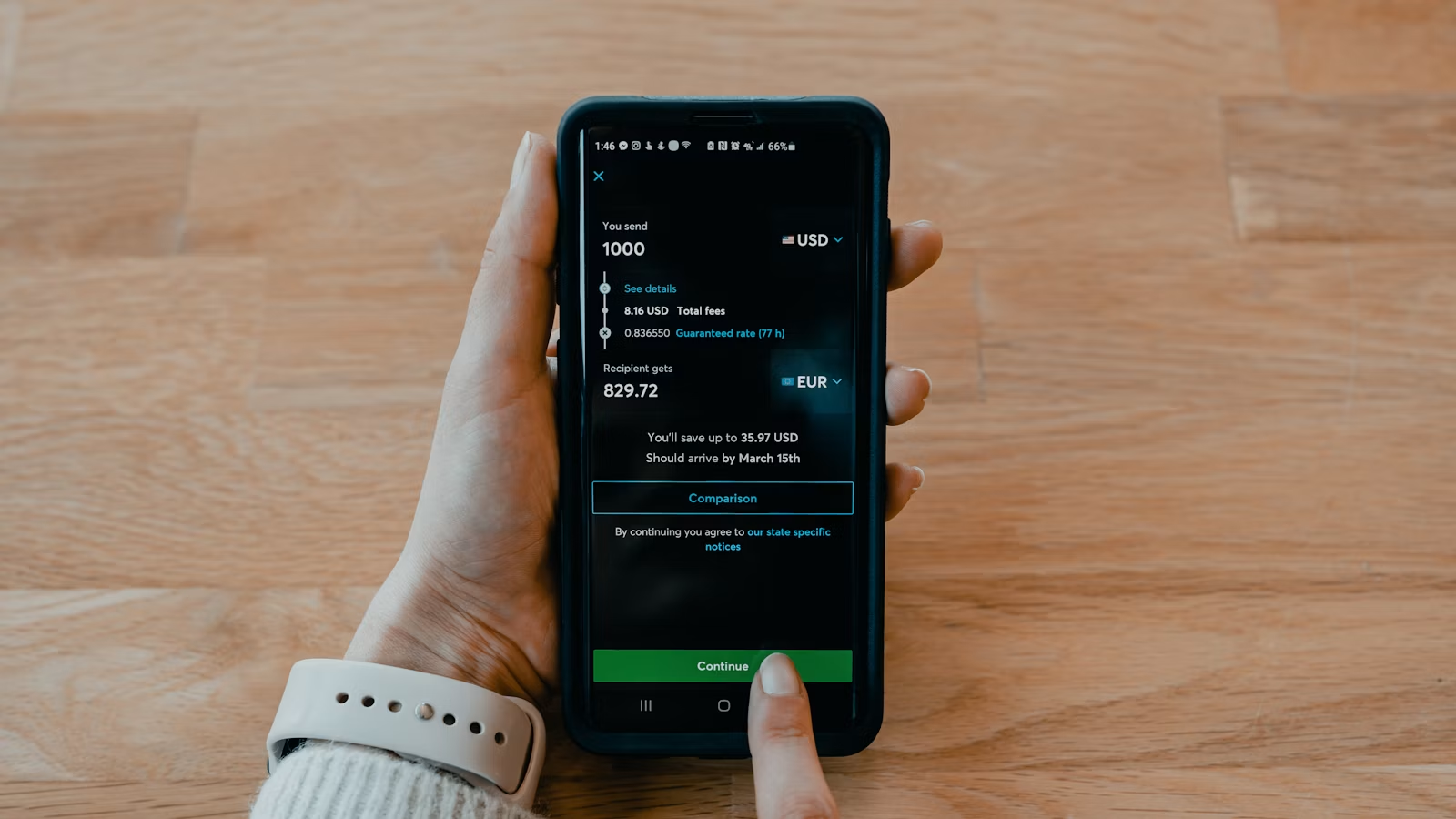
Wise is usually the better fit when your priority is transparent exchange-rate comparison, predictable bank transfers and multi-currency money management. Remitly is usually the better fit when the recipient needs flexible local payout options, such as cash pickup, mobile money or home delivery in supported markets. In simple terms, Wise works more like a cross-border account and transfer platform, while Remitly works more like a remittance-focused service designed around specific sending corridors. If your recipient has a bank account and you care most about fee visibility, Wise often deserves the first comparison. If your recipient depends on local agents, mobile wallets or fast family support, Remitly may be more practical.
The first mistake many users make is treating Remitly vs Wise as a universal ranking. That is not how international transfers work. A transfer from Singapore to India, the United States to Mexico, the UK to the Philippines, or Australia to Vietnam can produce different results because fees, FX rates, payout partners and local rules vary by corridor.
A practical comparison starts with the transfer outcome:
| Comparison point | Wise | Remitly | What it means for you |
|---|---|---|---|
| Main strength | Transparent FX and account-based transfers | Local payout flexibility | Choose based on recipient access |
| Common use case | Bank deposit, multi-currency holding, planned transfers | Family remittance, cash pickup, mobile money | Recipient method matters |
| Exchange-rate style | Mid-market rate focus | Route-based displayed rate | Compare final recipient amount |
| Fee visibility | Strong upfront fee display | Varies by route, speed and method | Check the quote before sending |
| Recipient experience | Usually bank/account-based | Often wider local payout network | Better for unbanked recipients |
| Large transfer fit | Often easier to evaluate | Route and verification dependent | Check limits in-app |
Wise positions itself around upfront pricing, transparent fees and the mid-market exchange rate. That makes it appealing when you want to understand exactly how a transfer is priced. Wise can also be useful for people who receive, hold, convert or send multiple currencies, because the Wise Account is not only a one-off remittance tool.
Remitly is more focused on international remittance use cases. Its value often depends on whether it has strong payout partners in your recipient’s country. For example, if your recipient does not have reliable bank access but can collect money from a local agent or receive funds into a mobile wallet, Remitly may solve a practical problem that Wise does not fully address.
The decision is especially important for family remittances. A sender may care about fees, but the recipient may care more about how the money arrives. A cheaper transfer is less useful if the recipient cannot conveniently access the funds. Conversely, a fast cash pickup option may not be necessary if the recipient can receive a low-cost bank deposit.
Use this quick decision list:
- Choose Wise if the recipient has a bank account and you want transparent FX pricing.
- Choose Wise if you often hold, convert or manage multiple currencies.
- Choose Remitly if the recipient needs cash pickup or mobile money.
- Choose Remitly if your destination country has strong local payout coverage.
- Compare both if the transfer is large, urgent or funded by card.
- Recheck both if you are using a first-time promotion or sending to a less common route.
Summary: Wise and Remitly are not direct substitutes in every situation. Wise is usually stronger for users who want transparent international bank transfers, mid-market exchange-rate comparison and multi-currency account features. Remitly is usually stronger for users sending money to family or recipients who need local payout options such as cash pickup, mobile money or home delivery where available. The best platform depends on your sending country, destination country, payment method, amount, recipient method and urgency. Before choosing, compare the final recipient amount, not only the advertised fee. A low-fee service can still be expensive if the exchange rate is weaker, while a service with a visible fee can still be competitive if the recipient receives more money. For most users, Wise should be checked first for transparent bank-to-bank transfers, while Remitly should be checked first when recipient access and local delivery options matter most.
Fees and Exchange Rates: How Remitly and Wise Calculate Total Cost

Wise is usually easier to compare because it separates the transfer fee from the exchange rate and highlights the mid-market rate. Remitly can still be competitive, especially on specific corridors or first-transfer offers, but you must review both the displayed fee and the rate for your exact route. The real cost of an international money transfer is not the fee alone. It is the difference between what you pay and what the recipient gets after fees, FX conversion, funding costs and delivery-method effects. For that reason, the fairest Remitly vs Wise comparison is to enter the same amount, payment method and destination on both platforms on the same day.
Wise’s pricing model is built around exchange-rate transparency. Wise says it uses the mid-market rate, which is the benchmark rate often used when comparing currencies. It then shows the fee separately before you send. This structure helps users understand whether the cost comes from a visible transfer fee rather than an exchange-rate markup hidden inside the conversion.
Remitly’s pricing is more corridor-based. Its transfer cost can change depending on amount, destination, payment method and delivery option. On some routes, Remitly may show a low or zero transfer fee, but the exchange rate still needs to be compared. Remitly may also provide new customer offers for eligible first transfers, so a first transfer may not represent the long-term cost of using the service.
Here is the practical cost framework:
| Cost item | Why it matters | Wise pattern | Remitly pattern |
|---|---|---|---|
| Transfer fee | Direct platform charge | Usually shown upfront | Varies by route and method |
| Exchange rate | Determines converted amount | Mid-market rate focus | Displayed route-based rate |
| Payment method | Card may cost more than bank transfer | Varies by region and method | Varies by method and speed |
| Delivery method | Cash or wallet routes may price differently | Usually account-based | Can vary by payout type |
| Promotion | May distort first comparison | Less central to pricing | More relevant for first-time users |
| Recipient amount | Best total-cost measure | Easy to compare | Must check quote carefully |
For example, assume you are sending 1,000 SGD to a recipient abroad. A platform showing a 0 SGD transfer fee may look cheaper than a platform showing a 5 SGD fee. But if the “free” platform uses a weaker exchange rate, the recipient may receive less. The correct comparison is not “fee vs no fee.” It is “how much does my recipient receive for the same amount I pay?”
A useful pre-transfer checklist is:
- Enter the same sending amount on both platforms.
- Select the same funding method where possible.
- Select the recipient’s preferred delivery method.
- Compare the exchange rate shown by each provider.
- Compare the final amount the recipient receives.
- Check whether the quote is promotional or standard.
- Confirm whether your bank or card issuer may add a charge.
This matters most for recurring transfers. A small FX difference may not matter on a one-time $100 transfer, but it can become meaningful across monthly remittances or larger payments. For large transfers, even a small exchange-rate gap can exceed the visible transfer fee.
It also matters for urgent transfers. Faster delivery can sometimes be more expensive, especially if you pay by card or select a premium speed option. If the transfer is not urgent, a slower bank-funded option may reduce cost. If the recipient needs money immediately, speed and accessibility may justify a slightly higher cost.
Summary: The best way to compare Remitly and Wise is to focus on total transfer cost rather than headline fees. Wise is usually easier to evaluate because its pricing emphasizes the mid-market exchange rate and upfront fees. Remitly can be attractive in specific corridors, especially when it supports the recipient’s preferred payout method or offers a first-transfer promotion, but its real cost must be checked inside the quote. Always compare the amount you pay, the transfer fee, the exchange rate, the delivery method and the final recipient amount. For recurring or large transfers, the exchange rate can matter more than the visible fee. For urgent or cash-based transfers, Remitly may still be practical even if the price is not the absolute lowest. The safest decision is to run both quotes before sending and choose the option that delivers the best combination of cost, speed and accessibility.
Transfer Limits and Verification: How Much Can You Send with Remitly vs Wise?

Neither Wise nor Remitly has one universal transfer limit for every user. Wise limits depend on the currencies you send from and to, as well as the payment method. Remitly limits depend on sending country, receiving country, delivery method, verification level, payout partner, FX-rate movements and transfer history. For small personal remittances, the limit may not be your main issue. For large transfers, tuition payments, relocation funds, family support, business-related transfers or repeated transactions, you should check the exact route limit before funding the transfer. Extra verification can also delay a transfer, even if the app initially allows you to start the process.
Wise states that Wise transfer limits depend on which currencies you send to and from and how you pay. This is important because a bank transfer limit may differ from a card payment limit, and one currency corridor may allow a higher amount than another. Wise may also notify you during the transfer flow if you exceed a relevant limit.
Remitly’s structure is also variable. Remitly’s Singapore information says Remitly send limits can reach up to 130,000 SGD in a single transaction, while also noting that the amount you can send may vary by country and delivery method and that additional documentation may be requested. This does not mean every user on every corridor can send that amount. It means you must check the available limit for your exact profile and route.
Key limit factors include:
| Limit factor | Why it matters | User action |
|---|---|---|
| Sending country | Local rules affect maximum transfer size | Check your local app quote |
| Receiving country | Recipient-side limits may apply | Confirm destination-specific rules |
| Payment method | Card, bank transfer and balance may differ | Choose the method that supports your amount |
| Delivery method | Cash pickup or wallet limits may be lower | Verify recipient payout capacity |
| Verification level | More documents may unlock higher limits | Prepare ID and source-of-funds evidence |
| Transfer history | New users may face tighter controls | Build in extra review time |
| FX movement | Currency changes can affect limit equivalents | Recheck before confirming |
Large transfers require more preparation. You may need to provide identity documents, proof of address, source-of-funds documents, employment or income evidence, bank statements, purpose of transfer or recipient relationship information. These checks are not unique to Wise or Remitly. Regulated money transfer providers commonly apply anti-money laundering, counter-terrorist financing and fraud-prevention controls.
A large-transfer user should prepare:
- Government-issued ID.
- Recipient’s full legal name and account or payout details.
- Clear purpose of transfer.
- Source-of-funds documents where needed.
- Bank account records matching the sender’s name.
- Extra time for compliance review.
- A backup transfer method if the payment is time-sensitive.
This is especially important for tuition, property-related payments, immigration expenses, family medical support or business invoices. If a deadline is fixed, do not start the transfer at the last moment. A quote may look available, but verification can still slow the process.
There is also a recipient-side issue. Your own sending limit may be high, but the recipient’s payout method may have a lower limit. Cash pickup partners, mobile wallet providers and local banks may impose their own rules. A transfer that works as a bank deposit may not work as a cash pickup for the same amount.
Summary: Wise and Remitly limits are route-specific, method-specific and user-specific. Wise is often easier to understand for account-based transfers because it tells users that limits vary by currency and payment method. Remitly may support high single-transaction amounts in some markets, but its limits can change by country, delivery method, verification level and recipient-side payout rules. For everyday remittances, limits may be a minor concern. For large transfers, they become a core decision factor. The right approach is to check the exact transfer quote inside both platforms, prepare verification documents and allow extra time for review. Never assume that a published maximum applies to your transaction. Your real limit depends on your profile, destination, payment method, recipient method and compliance status.
Speed and Delivery Options: Bank Transfer, Cash Pickup, Mobile Wallet and More
Wise is generally stronger when the recipient can receive money into a bank account or account-based payment route. Remitly is generally stronger when the recipient needs local payout flexibility, such as cash pickup, mobile money, home delivery or debit card deposit where available. Speed is not only about the platform’s brand; it depends on payment method, currency route, local banking hours, payout partner, compliance checks and recipient details. If you are sending money for rent, tuition, family support or emergencies, the right question is not “which app is faster overall?” The right question is “which app can deliver this exact amount to this exact recipient through the method they can actually use?”
Wise’s transfer flow usually shows the payment method, fee and estimated arrival time before confirmation. The Wise payments flow is especially useful when you want to understand how bank transfer, card payment or other local payment methods affect delivery. A bank-funded transfer may be cheaper but slower; a card-funded transfer may be faster but cost more.
Remitly’s strength is local payout diversity. In supported routes, Remitly may offer bank deposit, cash pickup, mobile money, home delivery or debit card deposit. Availability depends on the receiving country. This can be decisive when the recipient does not have a bank account, lives far from major banks, uses a local wallet or needs cash quickly.
Use this scenario table:
| Scenario | Likely better fit | Reason |
|---|---|---|
| Recipient has a bank account | Wise or Remitly | Compare cost and arrival estimate |
| Recipient needs cash pickup | Remitly | Wise is less focused on cash payout |
| Recipient uses mobile money | Remitly | Wallet delivery may be supported by corridor |
| Sender wants transparent FX | Wise | Easier rate and fee comparison |
| Transfer is urgent | Depends | Compare exact delivery time before paying |
| Transfer is large | Depends | Check limits and verification |
| Transfer is recurring | Wise or Remitly | Choose based on total cost and recipient convenience |
For urgent transfers, do not assume that the fastest option is always best. A card-funded transfer may appear fast, but card issuers can decline payments, add cash-advance-like treatment in some cases or apply extra security checks. Bank transfers may be slower but cheaper and more reliable for higher amounts. Cash pickup can be convenient, but the recipient may need identification and must collect within the payout partner’s rules.
For non-urgent transfers, cost usually matters more. If the recipient can wait one or two business days, a lower-cost bank-funded option may be more sensible. Wise may be attractive in this situation because its pricing and exchange-rate approach are easier to compare. Remitly may still be competitive if the destination corridor has strong pricing or if the recipient’s local payout preference makes it more convenient.
The recipient’s location also matters. In major cities, bank deposits and cash pickup points may both be convenient. In rural areas, mobile money or local agent networks can matter more than pure transfer cost. A transfer that is “cheap” but hard to collect can create extra transportation costs or delays for the recipient.
Before sending, confirm:
- The recipient’s full legal name matches their ID or bank record.
- The recipient can access the selected delivery method.
- The recipient understands any pickup or wallet requirements.
- The transfer amount fits the payout partner’s limit.
- The estimated arrival time matches your deadline.
- You have allowed time for compliance checks.
Summary: Wise and Remitly differ most clearly in delivery experience. Wise is usually stronger for account-based transfers, especially when you want a clear cost comparison and the recipient can receive funds through a bank or supported account route. Remitly is usually stronger when local payout flexibility matters, especially cash pickup, mobile money or home delivery where available. Speed should be evaluated by exact quote, not general reputation. Payment method, local banking hours, payout partner rules and verification checks can all affect arrival time. For urgent transfers, compare both platforms immediately before paying and choose the option that gives the recipient usable funds by the required deadline. For non-urgent transfers, compare total cost and consider whether a slower, lower-cost option is acceptable. The best choice is the service that delivers the right amount through the method your recipient can actually use.
Best Use Cases: When Remitly Is Better and When Wise Is Better
Choose Wise when your main needs are transparent FX pricing, bank-to-bank transfers, larger planned payments, multi-currency account use or repeat international payments where cost visibility matters. Choose Remitly when your main needs are family remittances, recipient convenience, cash pickup, mobile money or route-specific delivery flexibility. You should compare both when the amount is large, the transfer is urgent, the destination route is less common or a promotion affects the quote. In practice, Wise is often better for users who think like account managers, while Remitly is often better for users who think like family senders solving a recipient access problem.
Wise is a strong fit for these users:
- Expats sending money between personal accounts.
- Freelancers receiving or paying in multiple currencies.
- Students paying overseas living expenses.
- Travelers who manage balances across currencies.
- Users comparing exchange rates closely.
- Users making planned bank-to-bank transfers.
- Users who want transparent fee breakdowns.
Remitly is a strong fit for these users:
- Migrant workers sending regular family support.
- Recipients without easy bank access.
- Recipients who prefer cash pickup.
- Recipients using mobile money.
- Senders who need local delivery flexibility.
- Users sending to countries where Remitly has strong payout partners.
- Users who value recipient convenience over account features.
There are also mixed cases. Suppose you send money every month to a family member who has a bank account. Wise may be cheaper or more transparent, but Remitly may still be competitive if it has strong pricing on that corridor. Suppose your recipient sometimes needs cash and sometimes can receive a bank deposit. You may use Remitly for urgent cash pickup and Wise for planned bank transfers.
For large transfers, Wise may be easier to evaluate because you can inspect the exchange rate and visible fee. But that does not automatically mean Wise is always better. You still need to check limits, payment method, settlement time and whether the recipient bank can receive the currency. Remitly can be useful for high-value family support in supported markets, but you must verify the actual limit and payout method.
For first-time transfers, Remitly may look especially attractive if a promotional rate or fee discount applies. That can be useful, but do not treat a first-transfer quote as the normal long-term price. If you plan to send every month, compare the standard quote after the promotion.
Here is a practical decision matrix:
| Your main priority | Better starting point | Why |
|---|---|---|
| Lowest transparent FX cost | Wise | Mid-market rate focus helps comparison |
| Cash pickup | Remitly | Stronger remittance payout model |
| Mobile wallet delivery | Remitly | Corridor-based wallet support |
| Multi-currency account use | Wise | Account features beyond transfers |
| Family support to unbanked recipient | Remitly | Local delivery options matter |
| Planned bank transfer | Wise | Clear fee and rate display |
| First transfer with promotion | Remitly and Wise | Compare promo vs standard cost |
| Large transfer | Wise and Remitly | Limits and verification decide outcome |
The best use case is not always fixed. A user may prefer Wise for routine transfers but Remitly for emergencies. Another user may prefer Remitly for family remittances but Wise for personal foreign-currency management. The smarter approach is to create a default preference while still checking quotes when conditions change.
Summary: Wise is often better for users who care most about transparent pricing, mid-market exchange-rate comparison, bank-to-bank transfers and multi-currency account management. Remitly is often better for users who care most about recipient access, cash pickup, mobile money and country-specific remittance delivery. The best use case depends on the sender’s goal and the recipient’s reality. If the recipient has a reliable bank account, Wise is often a strong starting point. If the recipient needs cash or a mobile wallet, Remitly may be more useful. For large, urgent, promotional or unusual transfers, compare both before sending. Your default platform can change by amount, country, deadline and recipient method.
Safety, Regulation and Final Decision Checklist Before You Transfer
Both Wise and Remitly operate under regulatory frameworks in multiple markets, but regulated does not mean risk-free, instant or suitable for every transfer. You still need to verify recipient details, understand platform rules, watch for scams and prepare for compliance checks. Wise lists country-level regulatory information, including UK authorization as an Electronic Money Institution, while Remitly Singapore appears in the Monetary Authority of Singapore directory as a Major Payment Institution. These regulatory details help establish legitimacy, but they do not remove user responsibility. If you send money to the wrong recipient, respond to a scam request or fail verification, regulation alone may not solve the problem.
Wise’s country-level regulatory information is summarized under Wise regulation. Remitly’s Singapore entity is listed by MAS as Remitly Singapore, with Major Payment Institution status. Regulatory status matters because money transfer services must follow rules around safeguarding, compliance, customer checks and transaction monitoring in relevant jurisdictions.
Still, users should treat international transfers carefully. Common risks include wrong recipient details, romance scams, job scams, fake investment requests, impersonation, urgent family fraud, marketplace fraud and account takeover. A transfer service can provide tracking and customer support, but it cannot guarantee recovery if you knowingly send funds to a fraudulent recipient.
Use this safety checklist:
| Risk area | What can go wrong | What to do |
|---|---|---|
| Recipient identity | Money sent to wrong person | Verify name, phone, bank and ID details |
| Scam pressure | Fraudster creates urgency | Pause and confirm through another channel |
| Compliance review | Transfer delayed or cancelled | Prepare documents and honest purpose |
| Payment method | Card or bank may decline | Check issuer rules before urgent transfers |
| Exchange-rate timing | Quote may change | Confirm rate before paying |
| Cash pickup | Recipient may lack required ID | Confirm pickup requirements |
| Large transfer | Source-of-funds questions | Keep records ready |
Before choosing Remitly or Wise, use this final decision process:
- Decide whether recipient convenience or FX transparency matters more.
- Enter the same amount on both platforms.
- Compare the final recipient amount.
- Check the delivery method and estimated arrival time.
- Confirm the exact transfer limit for your route.
- Review required recipient details.
- Consider whether your bank or card may add a charge.
- Prepare documents for large or unusual transfers.
- Avoid sending money under pressure.
- Save the transfer receipt and tracking information.
This checklist is especially useful for new users. Many people choose a money transfer app based on a friend’s recommendation, but the friend’s route may be different. A service that is excellent for sending from the US to Mexico may not be the best for sending from Singapore to Europe or from the UK to South Asia. Your route, currency pair, amount and recipient method are the real variables.
Summary: Wise and Remitly are both established money transfer providers, but safe use still depends on user behavior. Wise provides strong transparency for exchange-rate and fee comparison, while Remitly provides valuable local payout options in many corridors. Before transferring, compare the final recipient amount, delivery method, arrival estimate, limit and verification requirements. For large or urgent transfers, allow extra time and prepare documents. For cash pickup or mobile money, confirm the recipient’s local requirements before paying. Most importantly, never send money under pressure or to someone you cannot verify. The best Remitly vs Wise decision is not only about cost; it is about cost, speed, recipient access, compliance and safety together.
Managing Global Payments Beyond One Transfer App
If you compare Remitly and Wise, you are probably already thinking beyond a single transaction. You may need to send money abroad, manage foreign-currency payments, pay for international subscriptions, support family members, or keep clearer records across different platforms. In that broader workflow, Biya can be considered as an additional global financial account option rather than a direct replacement for every remittance route. For users who frequently handle online payments, digital assets, virtual card spending or cross-border payment records, Biya EasyCard supports global virtual payment scenarios such as online subscriptions, everyday digital spending and card-based payment management. You can also use the Biya app to manage related account activity from mobile devices. If you are comparing transfer providers because you want better visibility into costs, limits and payment records, the Biya Help Center can support account, card and transaction-management questions. As with any financial service, you should review platform rules, available regions, fees, billing records and compliance requirements before using it for a specific payment need.
FAQ
Is Remitly cheaper than Wise for international money transfers?
Remitly is not always cheaper than Wise. The cheaper option depends on the destination country, transfer amount, payment method, delivery method, exchange rate and any first-transfer promotion. Wise is often easier to compare because it separates fees from the exchange rate. Remitly may be competitive on specific corridors, especially where local payout options are strong. Always compare the final recipient amount before sending.
Is Wise better than Remitly for large international transfers?
Wise may be easier to evaluate for large bank-to-bank transfers because its fee and exchange-rate structure is more transparent. However, Wise is not automatically better for every large transfer. Limits, verification requirements, payment method, currency route and recipient bank rules still matter. Remitly may support high limits in some markets, but users should check exact route rules and prepare documents before sending.
Does Remitly or Wise offer better exchange rates for first-time users?
Remitly may offer promotional rates or discounts for eligible first-time users, while Wise focuses on mid-market exchange-rate transparency and upfront fees. A first-transfer Remitly quote may look attractive, but it may not reflect the long-term standard price. For recurring transfers, compare both the first quote and the normal future quote before deciding which platform better fits your needs.
Can recipients collect cash with Wise or Remitly?
Remitly is generally more relevant for cash pickup because many of its remittance routes support local payout partners. Wise is mainly designed around bank transfers, account-based payments and multi-currency money management. Cash pickup availability still depends on the receiving country, payout partner, recipient identification and local rules. Confirm the pickup requirements before paying for an urgent transfer.
Are Remitly and Wise safe for sending money abroad?
Remitly and Wise operate as regulated money transfer providers in multiple markets, but users still need to manage transfer risk carefully. Verify recipient details, avoid scam pressure, keep receipts and follow platform rules. Large or unusual transfers may require extra verification. Regulation can support oversight and compliance, but it does not guarantee recovery if funds are sent to a fraudulent or incorrect recipient.
Which is better for recurring family remittances, Remitly or Wise?
Remitly may be better for recurring family remittances when the recipient needs cash pickup, mobile money or local delivery flexibility. Wise may be better when the recipient can receive bank transfers and the sender wants transparent exchange-rate comparison. For monthly transfers, compare the standard cost after any promotion, not only the first-transfer offer. Final recipient amount and convenience should guide the decision.
*This article is provided for general information purposes and does not constitute legal, tax or other professional advice from BiyaPay or its subsidiaries and its affiliates, and it is not intended as a substitute for obtaining advice from a financial advisor or any other professional.
We make no representations, warranties or warranties, express or implied, as to the accuracy, completeness or timeliness of the contents of this publication.
Related Blogs of

What to Do When OpenAI API Top-Up Fails? Balance, Prepaid Billing, Charges, and Credit Arrival Checks


ChatGPT Plus UK Pricing and Payment Guide: Plans, VAT and Card Declined Fixes



Choose Country or Region to Read Local Blog
 Australia
 Austria
 Belgium
 Canada
 Cyprus
 Czech Republic
 Denmark
 Estonia
 Finland
 France
 Germany
 Greece
 Hong Kong
 India
India Indonesia
 Ireland
 Italy
Italy Japan
Japan Latvia
 Lithuania
 Luxembourg
 Malaysia
 Malta
Malta Morocco
 Nepal
Nepal Netherlands
 New Zealand
 Norway
 Pakistan
 Philippines
 Poland
 Portugal
 Romania
 Singapore
 Slovakia
 Slovenia
 South Africa
 South Korea
 Spain
Spain Sweden
 Thailand
 The United States
 Turkey
 United Arab Emirates
 United Kingdom
 Vietnam
Contact Us




BIYA GLOBAL LLC is registered with the Financial Crimes Enforcement Network (FinCEN), an agency under the U.S. Department of the Treasury, as a Money Services Business (MSB), with registration number 31000218637349, and regulated by the Financial Crimes Enforcement Network (FinCEN).
BIYA GLOBAL LIMITED is a registered Financial Service Provider (FSP) in New Zealand, with registration number FSP1007221, and is also a registered member of the Financial Services Complaints Limited (FSCL), an independent dispute resolution scheme in New Zealand.